
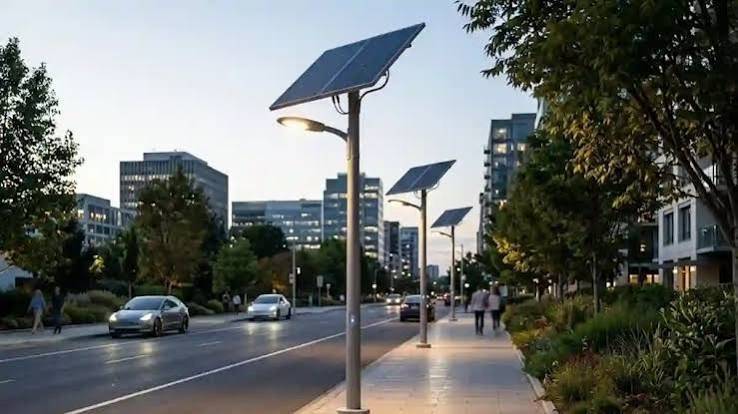
Reliable outdoor lighting is essential for improving security, visibility, accessibility and the appearance of residential and commercial properties. From private homes and apartment complexes to shopping centres, factories, schools, hospitals, hotels and industrial facilities, properly installed outdoor lighting helps create safer and more functional environments.
However, conventional street lighting can increase electricity consumption and expose property owners to ongoing electricity costs. Installing solar street lights provides an alternative by using energy from the sun to illuminate outdoor spaces without depending entirely on the national electricity grid.
Solar street lighting installation in Uganda is becoming an attractive solution for property owners looking for energy-efficient, reliable and flexible outdoor lighting. Solar street lights can be installed along access roads, driveways, parking areas, walkways, gardens, perimeter roads, compounds and other outdoor spaces.
At Daltrevco, we provide professional electrical and solar installation solutions designed to meet the practical requirements of residential, commercial and industrial properties. Understanding how solar street lighting works, which components are required and what to consider before installation can help you invest in a system that delivers dependable performance.
What Is Solar Street Lighting?
Solar street lighting is an outdoor lighting system that uses solar panels to convert sunlight into electrical energy. The energy is stored in rechargeable batteries and used to power LED lights after sunset.
Unlike conventional street lighting, which usually depends on electricity supplied through the national grid, standalone solar street lights can operate independently when correctly designed and installed.
A typical solar street lighting system consists of:
- Solar panels for generating electricity.
- Rechargeable batteries for storing energy.
- LED street lights for outdoor illumination.
- A solar charge controller for managing battery charging and discharging.
- A lighting control system for automatic operation.
- Mounting poles, brackets and supporting structures.
- Electrical cables, connectors and protective accessories where required.
Some solar street lights integrate the solar panel, battery, LED lamp and controller into one unit. Other systems use separate components connected through suitable electrical wiring.
The most appropriate arrangement depends on the lighting requirements, available installation space, expected operating hours and site conditions.
Benefits of Solar Street Lighting Installation for Residential and Commercial Properties
Solar street lighting offers several practical advantages for property owners in Uganda.
1. Reduced Dependence on Grid Electricity
One of the main advantages of solar street lights is their ability to generate and store their own electricity.
Because the system uses sunlight as its primary energy source, it can reduce the need to connect outdoor lighting points to the main electricity supply. This can be particularly useful for properties with long access roads, large compounds or multiple outdoor lighting locations.
Solar street lighting can also be suitable for remote properties where extending conventional electrical connections would be difficult or expensive.
2. Lower Outdoor Lighting Operating Costs
Conventional outdoor lighting can contribute to monthly electricity bills, especially where numerous lights operate throughout the night.
Solar street lights use energy generated by their own solar panels, reducing their dependence on grid electricity. Once installed, the main ongoing costs generally relate to cleaning, inspection, battery replacement when necessary and other maintenance requirements.
The overall financial benefit depends on the initial installation cost, equipment quality, battery lifespan, maintenance requirements and the amount of grid electricity that would otherwise have been consumed.
3. Improved Property Security
Adequate outdoor lighting helps improve visibility around buildings and outdoor spaces.
Solar street lights can illuminate:
- Main entrances and exit points.
- Perimeter walls and boundary areas.
- Parking spaces and vehicle access routes.
- Pedestrian walkways.
- Building surroundings.
- Loading and unloading areas.
- Shared spaces in residential estates.
Well-planned lighting makes it easier for residents, employees, visitors and security personnel to see their surroundings at night.
However, lighting should complement other security measures, including access control, perimeter protection, security cameras and trained security personnel.
4. Flexible Installation Locations
Solar street lights do not always require underground electrical cables or connections to the national grid.
This makes them suitable for outdoor areas where conventional electrical infrastructure is unavailable or difficult to extend.
They can be installed in residential estates, rural homes, commercial compounds, farms, warehouses, schools, parking areas and industrial facilities.
The installation still requires proper pole foundations, structural support, electrical connections and appropriate positioning of solar panels.
5. Environmentally Responsible Lighting
Solar street lights use renewable energy from sunlight, reducing the amount of grid electricity required for outdoor illumination.
When a properly designed solar lighting system replaces grid-powered lighting, it can help reduce the property’s electricity-related environmental impact.
Energy-efficient LED technology also helps maximise the useful lighting output from the stored solar energy.
6. Automatic Night-Time Operation
Many solar street lighting systems use light sensors or programmable controllers to switch lights on when it becomes dark and off when daylight returns.
Some systems also include motion sensors, dimming functions and programmable operating schedules.
These features can improve energy management and help the battery provide lighting throughout the night, depending on the system configuration.
7. Useful During Grid Power Interruptions
Standalone solar street lights with adequate battery storage can continue operating even when the national electricity supply is interrupted.
This is valuable for properties where outdoor visibility is important for security, access and business operations.
The actual backup performance depends on battery capacity, lighting power, operating hours, weather conditions and the condition of the system.
Applications of Solar Street Lighting in Uganda
Solar street lighting can serve different purposes across residential, commercial, institutional and industrial properties.
Solar Street Lighting for Residential Properties
Homeowners can install solar street lights to improve visibility and security around their properties.
Common residential applications include:
- Main gates and driveways.
- Residential compounds.
- Garden paths and walkways.
- Perimeter boundaries.
- Parking spaces.
- Private access roads.
- Outdoor recreation areas.
For individual homes, the system should provide sufficient illumination without creating unnecessary glare towards neighbouring properties or indoor spaces.
Solar Street Lighting for Apartments and Residential Estates
Apartment buildings and housing estates often have shared outdoor spaces that require reliable lighting.
Solar street lights can be installed along internal roads, pedestrian paths, parking areas, playgrounds and common outdoor spaces.
For larger residential developments, a lighting plan helps determine the number of lights, pole locations, required illumination levels and suitable solar equipment.
Solar Street Lighting for Offices and Commercial Buildings
Commercial properties require outdoor lighting to support employees, customers, visitors and security operations.
Solar street lights can illuminate building entrances, parking areas, walkways, external access roads and loading zones.
For office complexes and business premises, lighting should be positioned to improve visibility while maintaining a professional appearance.
Solar Street Lighting for Factories and Industrial Facilities
Factories, warehouses and industrial sites may have extensive outdoor areas that require lighting beyond normal working hours.
Solar street lighting can be installed around:
- Factory access roads.
- Loading and unloading bays.
- External storage areas.
- Staff parking spaces.
- Perimeter access points.
- Internal circulation roads.
Industrial installations require particular attention to structural strength, environmental exposure, equipment protection and the lighting requirements of each working area.
Solar Street Lighting for Schools, Hospitals and Institutions
Schools, hospitals, training centres and other institutions need well-lit outdoor environments to support safe movement after dark.
Solar lighting can be used along pedestrian routes, parking areas, entrances, external corridors and access roads.
The installation should consider the needs of different users, including children, patients, visitors, staff and people with limited mobility.
Solar Street Lighting for Hotels, Resorts and Hospitality Properties
Hotels and hospitality facilities can use solar street lights to illuminate outdoor pathways, parking areas, landscaped gardens, internal roads and guest access routes.
Carefully selected lighting can improve guest comfort, support security and complement the property’s architectural design.
Types of Solar Street Lighting Systems
Different solar street lighting systems are available, and choosing the correct type is important for long-term performance.
1. All-in-One Solar Street Lights
All-in-one solar street lights combine the solar panel, LED lamp, battery and control components in one integrated unit.
<This is a simple installation option for locations where a compact design and straightforward mounting arrangement are preferred.
Advantages include:
- Integrated components.
- Relatively simple installation.
- Reduced external wiring.
- Compact appearance.
- Suitable options for residential and smaller commercial applications.
The battery and solar panel capacity must still be checked carefully to ensure that the unit can meet the required lighting hours and performance expectations.
2. All-in-Two Solar Street Lights
All-in-two systems typically separate the solar panel from the LED lighting and battery assembly.
The solar panel is mounted in a position that receives sufficient sunlight, while the lighting unit is positioned to illuminate the required area.
This arrangement can provide more flexibility in panel positioning and equipment selection.
3. Split-Type Solar Street Lighting Systems
Split-type systems use separate solar panels, batteries, controllers and LED lighting units.
They are often considered for larger installations where equipment capacity, component accessibility and system configuration need greater flexibility.
Potential advantages include:
- Flexible solar panel positioning.
- Greater choice of battery and panel capacity.
- Easier access to individual components.
- Suitability for selected commercial and industrial applications.
The installation must include correctly sized cables, suitable enclosures, appropriate electrical protection and compatible components.
4. Solar Street Lights with Motion Sensors
Some solar street lights include motion sensors that adjust brightness when movement is detected.
For example, a light may operate at a reduced brightness level during periods of inactivity and increase its output when people or vehicles approach.
This feature can help manage battery energy, but the sensor range, response time and lighting behaviour should be assessed before purchase.
Main Components Required for Solar Street Lighting Installation
A reliable solar street lighting system depends on the quality and compatibility of its components.
Solar Panels
Solar panels convert sunlight into electrical energy.
Their capacity should be selected according to the lighting load, battery requirements, available sunlight and expected system performance.
Panels should be positioned where they receive adequate sunlight throughout the day. Shading from trees, buildings and other structures can reduce energy generation.
LED Street Lights
LED lights provide illumination using electrical energy stored in the battery.
The correct LED light should be selected according to the area being illuminated, mounting height, required brightness, beam distribution and operating hours.
Choosing a light based only on its advertised wattage is not sufficient. The actual light output and distribution pattern are also important.
Solar Batteries
Batteries store energy generated during the day for use at night.
Common battery technologies include lithium-based batteries and sealed lead-acid batteries, although the appropriate option depends on the system design, budget, operating conditions and maintenance requirements.
Battery capacity should account for the lighting load, expected operating hours and the required autonomy during periods of limited sunshine.
Solar Charge Controllers
The charge controller manages the flow of electricity between the solar panel and the battery.
It helps regulate battery charging and protects against operating conditions that could damage the battery, depending on the controller’s design and protective features.
The controller must be compatible with the solar panel configuration and battery technology.
Poles and Mounting Structures
Street light poles support the lighting equipment and provide the required mounting height.
Pole selection should consider:
- Height and structural strength.
- Wind exposure.
- Weight of the installed equipment.
- Foundation design.
- Corrosion resistance.
- Site accessibility.
- Required lighting coverage.
The pole foundation should be designed for the site conditions and the loads imposed by the pole and mounted equipment.
Cables, Connectors and Protective Accessories
Electrical connections must be suitable for outdoor use and compatible with the system voltage and current.
Appropriate connectors, cable protection, weather-resistant enclosures, earthing and surge protection should be considered according to the equipment design and installation conditions.
Poor-quality connections can lead to energy losses, water ingress, overheating and system failure.
Solar Street Lighting Installation Process
Professional installation is important for achieving safe, efficient and dependable lighting performance.
At Daltrevco, a properly planned solar street lighting project should follow a structured process.
Step 1: Site Inspection and Assessment
The first stage involves assessing the property and identifying the areas that require illumination.
The assessment considers:
- Total area to be illuminated.
- Number and location of lighting points.
- Existing buildings and structures.
- Trees and other sources of shading.
- Available sunlight.
- Ground and soil conditions.
- Vehicle and pedestrian movement.
- Security and operational requirements.
A site inspection helps establish the practical requirements of the installation before equipment is selected.
Step 2: Lighting Design and Planning
After the site assessment, a lighting layout is developed.
The design determines the number of solar street lights, pole positions, mounting heights and expected illumination coverage.
Lighting distribution should minimise dark spots, excessive glare and unnecessary overlap between adjacent lights.
For large properties, the design should consider different lighting requirements for roads, parking areas, pedestrian routes and working spaces.
Step 3: Solar System Sizing and Equipment Selection
The solar equipment is selected according to the expected lighting load.
The design should consider:
- LED power consumption.
- Daily operating hours.
- Solar panel capacity.
- Battery storage capacity.
- Expected solar energy availability.
- Battery autonomy requirements.
- Controller compatibility.
- System operating temperature and environmental conditions.
A properly sized system is important because undersized solar panels or batteries may result in poor lighting performance, particularly after several cloudy days.
Step 4: Pole Foundation and Structural Preparation
Once the lighting positions have been approved, the installation team prepares the pole foundations.
Foundation dimensions and construction methods should be suitable for the pole height, equipment weight, soil conditions and wind exposure.
The foundation must be allowed to achieve the required strength before the pole and lighting equipment are installed.
Step 5: Installation of Solar Panels and Lighting Equipment
The solar panels, LED lights, batteries and other components are mounted according to the system design.
Panels should be positioned to receive adequate sunlight, while the LED lights should face the intended illumination areas.
The installation team must ensure that mounting brackets, fasteners and supporting structures are secure and suitable for outdoor conditions.
Step 6: Electrical Connections and System Configuration
The electrical components are connected according to the manufacturer’s instructions and the approved system design.
The installer checks cable sizing, polarity, connector compatibility, battery connections and controller settings.
Lighting schedules, automatic switching, dimming and motion-sensor functions are configured where available.
Step 7: Testing and Commissioning
After installation, the system should be inspected and tested before handover.
Testing may include:
- Solar panel operation.
- Battery charging.
- Battery and controller status.
- LED light operation.
- Automatic switching.
- Motion sensor performance.
- Electrical connections.
- Structural stability.
- Lighting coverage.
The property owner should receive guidance on operating the system and maintaining its components.
Factors That Determine the Cost of Solar Street Lighting Installation in Uganda
The cost of solar street lighting installation varies depending on the project requirements. There is no single price that applies to every property.
The main factors include:
1. Number of Solar Street Lights
The number of lights required has a direct influence on the total project cost.
A small residential compound may require only a few lighting points, while an industrial facility or large residential estate may need many units.
2. Solar Panel Capacity
Solar panels with higher capacity generally cost more than smaller units.
The required panel size depends on the energy demand, available sunlight, battery charging requirements and system design.
3. Battery Capacity and Technology
Battery capacity affects how long the lighting system can operate at night and how much energy it can store.
Higher-capacity batteries and certain battery technologies can increase the initial investment but may offer advantages depending on their cycle life, maintenance needs and operating conditions.
4. LED Light Output and Quality
The cost of LED street lights varies according to light output, efficiency, construction quality, optics, control features and manufacturer.
Selecting the right light distribution is as important as selecting an appropriate power rating.
5. Pole Height and Foundation Requirements
Taller poles, heavier equipment and difficult ground conditions can increase installation costs.
Additional foundation work may be required depending on the soil, pole design and site exposure.
6. Site Accessibility and Installation Complexity
Properties with difficult access, uneven terrain, long internal roads or challenging installation locations may require additional labour, transport and equipment.
7. System Type and Additional Features
Integrated solar street lights may have different costs from split-type systems.
Features such as motion sensors, remote monitoring, programmable controls and specialised mounting arrangements can also affect the project budget.
8. Installation Labour and Maintenance Requirements
Professional installation includes site assessment, system design, foundation preparation, mounting, electrical connections, testing and commissioning.
The total project budget should also consider future inspection, cleaning and battery replacement requirements.
For an accurate quotation, property owners should arrange a site assessment so that the number of lights, equipment specifications and installation requirements can be established.
How to Choose the Best Solar Street Lights for Your Property
Choosing the right solar street lighting system requires more than comparing prices or selecting the brightest-looking product.
Consider the following factors before making a purchase.
Determine the Area That Needs Lighting
Identify the roads, parking areas, walkways, entrances and outdoor spaces that need illumination.
Different areas may require different lighting levels and beam distributions.
Choose the Correct Light Output
The LED light should provide adequate illumination for the intended application.
A large parking area or industrial access road may require a different lighting arrangement from a residential pathway.
Ask for technical information about the actual light output, beam angle and recommended mounting height.
Check Solar Panel Capacity
The solar panel must generate enough energy to meet the system’s daily requirements.
Consider local sunlight conditions and possible shading when assessing the panel’s suitability.
Evaluate Battery Performance
Check the battery capacity, chemistry, expected cycle life, operating temperature range and warranty.
The battery should support the required night-time operating hours and the planned autonomy period.
Consider Weather Resistance
Outdoor solar street lights are exposed to rain, dust, heat, moisture and other environmental conditions.
Choose equipment with suitable ingress protection and durable materials for the intended installation environment.
Assess Warranty and Availability of Replacement Parts
A reliable supplier should provide clear warranty information for the solar panels, batteries, LED lights and other major components.
It is also important to consider whether replacement batteries, controllers and other components will be available when maintenance is required.
Work With Qualified Installation Professionals
Professional installers help ensure that the system is correctly sized, securely mounted, properly connected and tested.
They can also recommend a lighting layout that meets the practical needs of the property.
Common Mistakes to Avoid When Installing Solar Street Lights
Poor planning and incorrect equipment selection can reduce the performance and lifespan of a solar street lighting system.
Avoid the following mistakes:
- Choosing lights based on price alone: Very cheap equipment may not provide the required lighting performance or durability.
- Ignoring shading: Trees, buildings and other obstructions can reduce solar panel energy generation.
- Using undersized batteries: Insufficient battery capacity can cause lights to switch off before the end of the night.
- Selecting unsuitable LED lights: A high-wattage light does not automatically guarantee good illumination across the required area.
- Installing poles without proper foundations: Inadequate foundations can create structural and safety risks.
- Ignoring weather protection: Outdoor components and electrical connections must be suitable for exposure to rain and dust.
- Poor positioning of solar panels: Incorrect positioning can reduce the amount of sunlight received.
- Failing to test the system: Commissioning checks are necessary to identify connection, charging and lighting problems.
- Ignoring maintenance: Dirty panels, damaged cables and ageing batteries can reduce system performance.
- Failing to plan for future expansion: Large developments should consider future roads, buildings and additional lighting requirements.
Maintenance of Solar Street Lighting Systems
Solar street lights require periodic maintenance to keep them operating efficiently.
Although these systems generally have fewer electrical infrastructure requirements than conventional grid-connected street lights, they are not maintenance-free.
Important maintenance activities include:
Cleaning Solar Panels
Dust, leaves, bird droppings and other debris can reduce the amount of sunlight reaching the solar panels.
Panels should be inspected and cleaned using suitable methods recommended by the manufacturer.
Inspecting Batteries
Battery condition should be monitored through the controller or appropriate testing procedures.
Batteries showing signs of reduced capacity, abnormal operation or physical damage should be assessed and replaced when necessary.
Checking Electrical Connections
Inspect cables, connectors and enclosures for corrosion, water ingress, loose connections and physical damage.
Any electrical repairs should be carried out by competent personnel.
Inspecting Poles and Mounting Brackets
Check poles, brackets, bolts and foundations for corrosion, movement, cracks or other signs of structural deterioration.
Damaged components should be repaired or replaced promptly.
Testing Lighting Performance
Confirm that the lights operate at the correct times and provide the expected illumination.
Where systems include motion sensors, timers or remote monitoring, these functions should also be checked.
A planned maintenance schedule helps identify developing problems before they lead to complete lighting failure.
Why Professional Solar Street Lighting Installation Matters
The performance of a solar street lighting system depends on more than the quality of the equipment. Proper system design, installation and commissioning are equally important.
Working with an experienced electrical and solar installation company can help property owners avoid common problems such as undersized batteries, poorly positioned panels, inadequate foundations and unsuitable lighting layouts.
A professional installation team can help with:
- Site assessment and lighting requirements.
- Solar street light selection.
- Solar panel and battery sizing.
- Pole and foundation installation.
- Electrical connections and protection.
- System configuration and testing.
- Maintenance planning and technical support.
This approach helps ensure that the installed system meets the property’s actual lighting requirements.
Why Choose Daltrevco for Solar Street Lighting Installation in Uganda?
Daltrevco provides construction, electrical and building-related solutions for residential, commercial and industrial properties.
We understand that every property has different outdoor lighting requirements. A private residence may need lighting around its driveway and perimeter, while a commercial complex may require a coordinated lighting system for parking areas, access roads and pedestrian routes.
Our approach focuses on understanding the project requirements, selecting suitable equipment and delivering an installation that supports the property’s long-term needs.
When planning a solar street lighting project, Daltrevco can assist with:
- Assessment of outdoor lighting requirements.
- Planning and positioning of solar street lights.
- Selection of suitable solar lighting components.
- Installation of poles and supporting structures.
- Solar and electrical system connections.
- Testing and commissioning.
- Maintenance considerations.
Whether you are improving lighting around a home, developing a residential estate, upgrading a business compound or planning an industrial facility, Daltrevco can help you explore suitable solar lighting solutions.
Contact Daltrevco through https://www.daltrevco.com/ to discuss your solar street lighting installation requirements and request a project assessment.

