
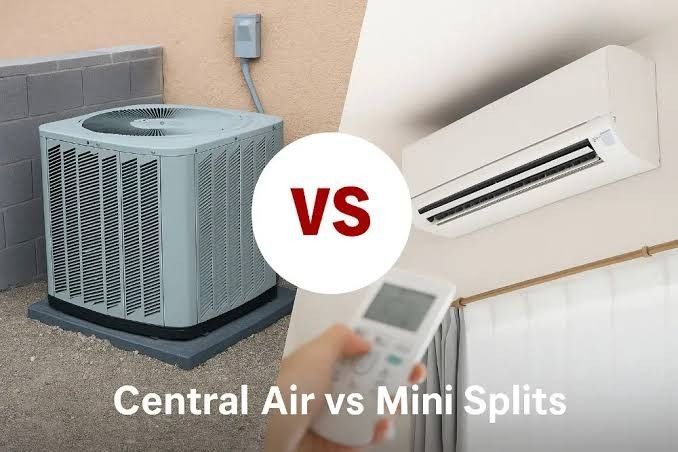
Choosing the right air conditioning system is an important decision when constructing, renovating or upgrading a residential or commercial property. The system you install affects indoor comfort, electricity consumption, installation costs, maintenance requirements and the overall functionality of your building.
Two common options are split air conditioners and central air conditioning systems. Both provide indoor cooling, but they differ significantly in their design, installation requirements, cooling distribution and suitability for different properties.
Split air conditioners are commonly installed in individual rooms, homes, small offices and shops. Central air conditioning systems are generally designed to provide coordinated cooling across multiple rooms, floors or larger commercial spaces.
For property owners in Uganda, deciding between these systems requires careful consideration of building size, room arrangement, electricity supply, cooling requirements and available installation space.
So, which is better: split air conditioners or central air conditioning?
The answer depends on your property and how you intend to use it. This guide by Daltrevco compares both systems to help homeowners, business owners, developers and property managers make an informed decision.
1. What Are Split Air Conditioners?
Split air conditioners are cooling systems consisting of two main units: an indoor unit and an outdoor unit.
The indoor unit is installed inside the room that requires cooling, while the outdoor unit is positioned outside the building. The two units are connected using refrigerant pipes, electrical cables and condensate drainage.
The system removes heat from indoor air and transfers it outside, helping maintain a comfortable indoor temperature.
Split air conditioners are widely used in residential and small commercial properties because they can cool individual rooms without requiring extensive ductwork.
Common Types of Split Air Conditioners
Wall-mounted split air conditioners
These are among the most common air conditioning systems. The indoor unit is mounted on a wall and is suitable for bedrooms, living rooms, offices, shops and reception areas.
Inverter split air conditioners
Inverter models regulate compressor speed according to cooling demand. They can offer improved energy efficiency and more consistent temperatures compared with comparable fixed-speed models.
Ceiling cassette air conditioners
These units are installed within suspended ceilings and distribute cooled air in several directions. They are suitable for offices, restaurants, meeting rooms and commercial spaces.
Floor-standing split air conditioners
These systems have indoor units installed at floor level and are useful in certain commercial spaces where wall or ceiling installation is unsuitable.
Multi-split air conditioning systems
A multi-split system connects several indoor units to a shared outdoor unit. It can cool multiple rooms while reducing the number of outdoor units required.
Where Are Split Air Conditioners Suitable?
Split air conditioners are suitable for:
- Residential houses and apartments.
- Bedrooms and living rooms.
- Small and medium-sized offices.
- Retail shops and showrooms.
- Restaurants and cafés.
- Reception areas.
- Small hotels and guest houses.
- Individual meeting rooms.
- Private clinics and consultation rooms, where the required ventilation and environmental conditions are separately addressed.
Their flexibility makes them a practical option for properties where cooling is needed in selected rooms rather than throughout the entire building.
2. What Is Central Air Conditioning?
Central air conditioning is a coordinated cooling arrangement designed to serve multiple rooms, zones or large areas within a building.
Depending on the technology, centralised systems may use a central cooling plant, ductwork, chilled water distribution or shared outdoor equipment connected to several indoor units.
Unlike a conventional split air conditioner that generally serves one room, a central system is designed to provide cooling across a larger area through coordinated equipment and distribution components.
A central air conditioning installation may include:
- Chillers or central cooling equipment.
- Air handling units.
- Fan coil units.
- Refrigeration equipment.
- Air distribution ducts.
- Chilled water piping, where applicable.
- Supply and return air grilles.
- Pumps and control valves.
- Thermostats and sensors.
- Central control systems.
- Ventilation equipment.
Common Types of Central Air Conditioning Systems
Central ducted air conditioning
A central cooling unit conditions air and distributes it through ducts to different rooms or areas. It is suitable for commercial buildings, hotels, offices and large residential properties.
Chilled water air conditioning systems
These systems use a chiller to cool water, which is circulated through pipes to air handling units or fan coil units. They are commonly considered for large commercial and institutional buildings.
Packaged air conditioning systems
Packaged systems combine major refrigeration components into a factory-assembled unit and can distribute conditioned air through ductwork.
Variable Refrigerant Flow (VRF) and Variable Refrigerant Volume (VRV) systems
These systems connect multiple indoor units to shared outdoor equipment and regulate refrigerant flow according to the cooling requirements of different zones. They are widely considered for hotels, offices and multi-room commercial buildings.
Where Is Central Air Conditioning Suitable?
Central air conditioning is commonly considered for:
- Large office buildings.
- Hotels and resorts.
- Shopping centres.
- Hospitals and specialised healthcare facilities.
- Conference centres.
- Universities and educational institutions.
- Large commercial developments.
- Corporate headquarters.
- Multi-storey buildings.
- Large residential developments.
The choice of system depends on the cooling load, building design, occupancy and operating requirements.
3. Split Air Conditioners vs Central Air Conditioning: Key Differences
Although both systems provide indoor cooling, their designs and applications are different.
| Comparison | Split air conditioners | Central air conditioning |
|---|---|---|
| Main application | Individual rooms or selected spaces | Multiple rooms, zones or large areas |
| Equipment arrangement | Indoor and outdoor units for each system | Coordinated equipment and distribution network |
| Installation | Generally simpler for individual rooms | Usually requires more detailed planning |
| Initial investment | Often lower for a small number of rooms | Can be substantial, depending on system size |
| Cooling distribution | Mainly serves the space connected to the indoor unit | Can distribute cooling across multiple areas |
| Controls | Usually controlled individually | Can provide centralised control and zoning |
| Ductwork | Generally not required for conventional wall-mounted units | Required for ducted systems, but not all centralised systems |
| Maintenance | Each unit is serviced separately | Central equipment and distribution components require planned maintenance |
| Expansion | Additional units can be installed where suitable | Expansion depends on plant and distribution capacity |
| Building appearance | Indoor and outdoor units may be visible | Some systems conceal much of the equipment |
| Best suited for | Homes, apartments, shops and small offices | Large offices, hotels and commercial developments |
Neither option is automatically better in every situation. The right choice depends on the property, budget, operating requirements and long-term plans.
4. Installation Cost: Which System Is More Affordable?
Installation cost is one of the biggest considerations when choosing between split air conditioners and central air conditioning.
However, comparing the cost of one split air conditioner with an entire central system would be misleading. The comparison should consider the number of rooms requiring cooling and the total cooling capacity needed.
Cost of Installing Split Air Conditioners
Split air conditioners are often more affordable when cooling is required in only a few rooms.
A standard installation generally involves:
- Indoor air conditioning unit.
- Outdoor condensing unit.
- Refrigerant copper pipes.
- Electrical connections.
- Mounting brackets.
- Condensate drainage.
- Installation labour.
- Testing and commissioning.
The total cost depends on the unit’s cooling capacity, brand, efficiency, pipe length and installation complexity.
For a home with two or three rooms requiring cooling, individual split air conditioners may offer a practical and affordable arrangement.
However, installing many separate units across a large building can increase equipment, piping, electrical and maintenance costs.
Cost of Installing Central Air Conditioning
Central air conditioning systems generally require more extensive planning and installation.
Depending on the selected technology, the project may involve:
- Chillers or central cooling equipment.
- Air handling units.
- Fan coil units.
- Ductwork.
- Refrigerant or chilled water piping.
- Pumps and valves.
- Electrical distribution.
- Control systems.
- Ceiling and mechanical room preparation.
- Ventilation equipment.
- Testing and commissioning.
These requirements can make central air conditioning more expensive to install initially, particularly in existing buildings that require major modifications.
However, centralised systems can provide a coordinated solution for large properties where multiple rooms require cooling.
What Determines the Installation Cost?
Whether you choose split or central air conditioning, the final cost is influenced by:
- Cooling capacity: Larger spaces require greater cooling capacity and potentially larger equipment.
- Number of rooms: More rooms may require additional indoor units, zones or distribution components.
- Equipment brand: Prices vary according to manufacturer, model, features and efficiency.
- Installation complexity: Long piping routes, ceiling modifications and difficult access increase labour requirements.
- Electrical requirements: Additional circuits, cabling, protection and distribution equipment may be necessary.
- Ductwork and piping: Central systems may require extensive air ducts or chilled water distribution.
- Control systems: Advanced zoning and building automation can affect the initial investment.
- Building condition: New buildings may allow easier installation than completed buildings requiring modifications.
Which is more affordable?
For a small home or office requiring cooling in only a few rooms, split air conditioners are usually the more affordable starting point.
For a large commercial property requiring cooling across many areas, a centralised solution may provide a more coordinated long-term arrangement. A whole-life cost assessment is necessary before deciding.
5. Energy Efficiency: Which System Uses Less Electricity?
Electricity consumption is an important factor when selecting an air conditioning system in Uganda.
Both split and central air conditioning systems can be energy efficient, but their performance depends on equipment quality, correct sizing, operating hours, controls and maintenance.
Energy Efficiency of Split Air Conditioners
Modern split air conditioners, particularly inverter models, can offer good energy performance.
Their main advantages include:
- Cooling only the rooms where units are operating.
- Independent temperature adjustment.
- Ability to switch off unused rooms.
- Availability of inverter technology.
- Relatively simple control arrangements.
For a household that uses air conditioning in only one or two rooms, split systems may help avoid cooling unnecessary spaces.
However, using several separate units simultaneously can increase electricity demand, especially if the units are inefficient or poorly maintained.
Energy Efficiency of Central Air Conditioning
Central air conditioning systems can provide efficient cooling across large buildings when properly designed.
Some systems use:
- Variable-speed compressors.
- Efficient pumps and fans.
- Automated temperature controls.
- Zone-based cooling.
- Occupancy schedules.
- Building management systems.
- Efficient chilled water distribution.
These features can help match cooling output to actual demand.
However, central systems may also consume energy through pumps, fans and other auxiliary equipment. Poorly insulated ducts, excessive ventilation loads and inefficient operating schedules can increase electricity consumption.
How to Reduce Air Conditioning Electricity Costs
Regardless of the system selected, property owners can reduce unnecessary energy consumption by:
- Choosing appropriately sized equipment.
- Selecting energy-efficient models.
- Using inverter technology where suitable.
- Setting reasonable indoor temperatures.
- Cleaning filters regularly.
- Maintaining coils and heat exchangers.
- Insulating refrigerant pipes and air ducts.
- Using suitable zoning and operating schedules.
- Improving roof and window shading.
- Keeping doors and windows closed when cooling is operating.
- Servicing equipment according to manufacturer recommendations.
Which system is more energy efficient?
There is no universal winner. Split systems can be efficient for smaller properties and limited cooling requirements. Central systems can perform well in larger buildings with properly designed equipment, distribution and controls.
The best comparison is based on expected electricity consumption for the actual building and its operating schedule.
6. Cooling Performance and Temperature Control
Cooling performance refers to how effectively a system maintains the required indoor temperature and distributes cooled air.
Split Air Conditioner Performance
Split air conditioners are designed to cool individual rooms or designated spaces.
Their main advantages include:
- Direct cooling of the intended room.
- Independent temperature adjustment.
- Flexible operation.
- Suitable cooling for individual rooms.
- Simple control for many residential applications.
However, a single wall-mounted split unit may not distribute air effectively throughout several enclosed rooms.
Central Air Conditioning Performance
Central systems are designed to serve multiple spaces through coordinated air distribution or shared cooling equipment.
Their advantages include:
- Cooling across several rooms.
- Centralised equipment management.
- Potential for independent zone control.
- Suitable arrangements for large buildings.
- Integration with building automation.
The quality of cooling depends on correct design, airflow calculations, equipment capacity and commissioning.
A poorly designed central system can produce uneven temperatures, just as an incorrectly positioned split air conditioner can leave parts of a room uncomfortable.
7. Maintenance Requirements: Which Is Easier to Maintain?
Maintenance is necessary for both split and central air conditioning systems.
The difference is mainly in the number and complexity of the components that must be serviced.
Split Air Conditioner Maintenance
Routine maintenance generally includes:
- Cleaning or replacing air filters.
- Cleaning indoor and outdoor coils.
- Checking refrigerant circuit performance.
- Inspecting electrical connections.
- Checking condensate drainage.
- Inspecting fan operation.
- Testing cooling performance.
Each unit is maintained separately.
For a small home with two units, maintenance is usually straightforward. However, a large property with many split units can require considerable servicing time.
Central Air Conditioning Maintenance
Central air conditioning systems may require maintenance of:
- Chillers.
- Air handling units.
- Fan coil units.
- Pumps.
- Motors.
- Ductwork.
- Air filters.
- Cooling towers, where installed.
- Refrigeration circuits.
- Control systems.
- Condensate drainage.
- Electrical panels.
Water-cooled systems may also require water treatment and cooling tower maintenance.
Because central systems have interconnected components, planned maintenance is particularly important for commercial buildings where equipment failure can affect several areas.
Which is easier to maintain?
A small number of split air conditioners is generally easier and less complex to maintain than a central air conditioning installation.
For large properties, centralised maintenance programmes can provide a structured way to monitor and service the entire cooling system.
8. Space Requirements and Building Appearance
The physical arrangement of an air conditioning system affects the building’s appearance, available space and construction design.
Split Air Conditioners
Split systems require space for indoor units and outdoor condensers.
Indoor units are commonly visible on walls or ceilings. Outdoor units require suitable external locations with sufficient ventilation and service access.
When several units are installed, multiple outdoor condensers may affect the building’s external appearance.
Central Air Conditioning
Central systems can conceal much of their equipment within:
- Suspended ceilings.
- Mechanical rooms.
- Service areas.
- Rooftop plant areas.
- Designated equipment spaces.
Ducted systems distribute air through ceiling grilles and diffusers, supporting a clean interior appearance.
However, central installations require adequate space for ducts, piping, equipment and maintenance access.
Which system is better for appearance?
Central ducted systems often provide a more integrated appearance in modern commercial buildings. Split systems may be more practical where extensive ceiling or mechanical space is unavailable.
9. Noise Levels: Which System Is Quieter?
Noise is an important consideration in bedrooms, offices, meeting rooms, hotels and other spaces where a quiet environment is necessary.
Split Air Conditioner Noise
Split air conditioners have an indoor unit and an outdoor compressor unit.
The indoor unit is generally quieter than a comparable arrangement with the compressor located inside the room. However, fan noise and vibration can still occur.
Noise levels vary depending on the model, installation quality and operating speed.
Central Air Conditioning Noise
Central systems can locate major equipment away from occupied areas.
However, fans, ducts, pumps and mechanical equipment may generate noise if the system is poorly designed or installed.
Appropriate vibration isolation, acoustic treatment, duct sizing and equipment placement help manage noise.
Which system is quieter?
Both systems can provide quiet operation when correctly selected and installed. Central systems offer more opportunities to isolate major equipment, while modern split units also have low-noise operating modes.
10. Which System Is Better for Different Types of Properties?
The most suitable air conditioning system depends on the size, purpose and layout of the property.
Residential Houses
For most homes, split air conditioners are a practical option because cooling can be installed in selected rooms.
A homeowner may install units in bedrooms, living rooms and other frequently occupied areas.
Larger houses with several rooms requiring cooling may benefit from multi-split or ducted systems, depending on the design and budget.
Recommendation: Split air conditioners are often the most practical option for standard residential properties.
Apartments
Apartments commonly use wall-mounted split systems because individual rooms can be cooled independently.
The building design should provide appropriate locations for outdoor units, refrigerant piping and condensate drainage.
For larger apartment developments, centralised or shared HVAC arrangements may be considered during the design stage.
Recommendation: Individual split systems are suitable for many apartments, while larger developments may benefit from a coordinated HVAC design.
Small Offices
Small offices with a few rooms may be adequately served by split air conditioners.
Each office can have its own unit, allowing separate temperature control.
Recommendation: Split air conditioners are often suitable for small offices.
Large Office Buildings
Large offices may have multiple floors, meeting rooms, open-plan workspaces and reception areas.
A central ducted, chilled water or VRF system may provide more coordinated cooling.
Recommendation: Consider a centralised HVAC solution for larger office buildings.
Hotels and Guest Houses
Hotels require cooling in guest rooms, restaurants, reception areas, conference facilities and other shared spaces.
VRF, chilled water and multi-split arrangements may be considered depending on the size and layout of the property.
Recommendation: Centralised systems are often worth evaluating for large hotels, while smaller guest houses may use split or multi-split systems.
Restaurants and Cafés
Small restaurants may use split or cassette air conditioners, depending on the room layout.
Larger restaurants may require a centralised solution coordinated with kitchen exhaust and fresh-air ventilation.
Recommendation: Select the system according to seating capacity, kitchen heat loads and ventilation requirements.
Shopping Centres
Shopping centres often require cooling across large customer areas and multiple commercial spaces.
Centralised systems may provide better coordination of cooling and building controls.
Recommendation: Central air conditioning is often a suitable option for large shopping centres.
Hospitals and Healthcare Facilities
Healthcare buildings have specialised requirements for ventilation, filtration, temperature, humidity and air pressure relationships.
A properly engineered HVAC solution is essential, especially for operating theatres, isolation rooms and laboratories.
Recommendation: Use specialist HVAC design for healthcare facilities. Ordinary split air conditioners should not be assumed to meet clinical ventilation requirements.
Industrial Buildings
Factories and industrial premises may require cooling for offices, control rooms, production spaces and equipment.
Some areas may need specialised industrial ventilation or process cooling.
Recommendation: Select the system according to the industrial process, heat load, air quality requirements and operating environment.
11. Advantages and Disadvantages of Split Air Conditioners
Advantages
- Lower initial investment for small installations: Suitable where only a few rooms require cooling.
- Flexible installation: Units can be installed in selected rooms without extensive ductwork.
- Independent room control: Different rooms can be cooled separately.
- Easy expansion: Additional units can be installed where electrical and outdoor space requirements allow.
- Wide equipment availability: Different brands, capacities and features are available.
- Straightforward maintenance for small installations: Individual units can be inspected and serviced separately.
Disadvantages
- Multiple units may be needed to cool an entire large building.
- Several outdoor units can affect building appearance.
- Separate maintenance is required for each unit.
- Multiple units can increase electrical demand when operating simultaneously.
- Wall-mounted indoor units may not suit every interior design.
- Air distribution is generally limited to the room or space served by each unit.
12. Advantages and Disadvantages of Central Air Conditioning
Advantages
- Suitable for large properties: Designed to serve multiple rooms and large indoor areas.
- Centralised control: Some systems allow coordinated management of different zones.
- Integrated appearance: Ducted systems can conceal much of the equipment.
- Flexible zoning: Different areas can receive cooling according to their requirements.
- Commercial applications: Suitable for many large offices, hotels and shopping centres.
- Building automation integration: Advanced systems can connect with central building controls.
- Coordinated maintenance: Equipment can be managed through a planned building maintenance programme.
Disadvantages
- Initial installation can be expensive.
- Requires detailed design and technical planning.
- May need additional mechanical rooms or ceiling space.
- Ductwork or piping can make installation more complex.
- Major equipment failures can affect several areas, depending on system configuration.
- Maintenance can require specialised technicians.
- Expanding the system may be difficult if spare capacity was not included in the original design.
13. Important Factors to Consider Before Choosing an Air Conditioning System
Before deciding between split and central air conditioning, property owners should assess the following factors.
1. Building Size
Small properties may not need a complete central air conditioning installation.
Large properties may require a system capable of distributing cooling across several floors and rooms.
2. Number of Rooms Requiring Cooling
If only a few rooms need air conditioning, split units may be more practical.
If most rooms require coordinated cooling, a centralised solution may be worth considering.
3. Available Budget
Consider the total installation cost, expected electricity consumption, maintenance requirements and equipment replacement costs.
Do not select a system based only on its initial purchase price.
4. Electricity Supply
Check whether the building has sufficient electrical capacity to support the proposed equipment.
Larger central systems may require three-phase power, while individual split units have different electrical requirements depending on their capacity.
5. Operating Hours
Buildings that require cooling throughout the day may benefit from efficient equipment and appropriate control systems.
Operating schedules should be considered when comparing energy costs.
6. Building Design
Existing buildings may have limited space for ductwork, pipes and mechanical equipment.
New developments offer more opportunities to integrate HVAC infrastructure during construction.
7. Maintenance Availability
Consider whether qualified technicians, replacement components and servicing support are available for the selected equipment.
8. Future Expansion
If additional rooms or floors may be added later, consider whether the proposed system can accommodate future cooling requirements.
9. Ventilation Requirements
Air conditioning does not automatically provide fresh outdoor air.
Where fresh-air ventilation is required, the system design should include suitable ventilation equipment and air distribution arrangements.
10. Long-Term Operating Costs
Compare the expected electricity consumption, servicing requirements and equipment lifespan.
A slightly higher initial investment may provide better long-term value when the system is correctly designed and maintained.
14. Can Split Air Conditioners and Central Air Conditioning Be Used Together?
Yes. Some buildings benefit from combining different air conditioning technologies.
For example, a commercial property may use central air conditioning for common areas and separate split units for rooms with independent cooling requirements.
A hotel may have a centralised system for conference rooms and restaurants while using individual units or a suitable multi-zone arrangement for selected spaces.
A commercial building may also use dedicated cooling for server rooms and other spaces with special temperature requirements.
Combining systems can provide flexibility, but the design should prevent unnecessary duplication and ensure that the electrical, ventilation and control arrangements work together.
15. Why Professional Air Conditioning Installation Matters
Whether you choose split air conditioners or central air conditioning, professional installation is essential for reliable operation.
Incorrect installation can lead to poor cooling, excessive electricity consumption, refrigerant leaks, water damage and equipment breakdowns.
A professional installation process should include:
- Site inspection.
- Cooling-load assessment.
- Equipment selection.
- Electrical assessment.
- Indoor and outdoor equipment positioning.
- Refrigerant piping or chilled water installation.
- Ductwork installation where applicable.
- Condensate drainage.
- Electrical connections and protection.
- Pressure testing and evacuation where applicable.
- System testing and commissioning.
- Operating and maintenance guidance.
For large commercial systems, the design should also address ventilation, airflow balancing, water flow balancing where applicable, zoning and integration with building controls.
16. Why Choose Daltrevco for Building and HVAC Service Requirements?
Choosing the right air conditioning system is only one part of creating a comfortable and functional building.
The installation must be coordinated with the building’s electrical infrastructure, ceilings, mechanical spaces, ventilation and other technical services.
Daltrevco provides building and construction solutions for residential and commercial properties in Uganda.
When planning an air conditioning project, important considerations include:
- Understanding the property’s cooling requirements.
- Selecting suitable air conditioning technology.
- Planning equipment locations and distribution routes.
- Coordinating mechanical and electrical installations.
- Providing appropriate drainage and ventilation arrangements.
- Ensuring safe installation practices.
- Testing and commissioning the completed system.
- Planning for future servicing and maintenance.
Whether you are constructing a new property, renovating an existing building or upgrading commercial facilities, proper building services planning is important for long-term performance.
Visit https://www.daltrevco.com/ to learn more about Daltrevco’s services and discuss your project requirements.
Frequently Asked Questions About Split Air Conditioners vs Central Air Conditioning
1. Which is better, split air conditioners or central air conditioning?
Split air conditioners are generally more practical for homes, apartments and small offices requiring cooling in a few rooms. Central air conditioning is often more suitable for large commercial buildings requiring coordinated cooling across multiple spaces. The best option depends on the building, budget and cooling requirements.
2. Are split air conditioners cheaper than central air conditioning?
Split air conditioners are usually cheaper to install when only a few rooms need cooling. Central systems can require substantial initial investment because of equipment, ductwork, piping, controls and installation complexity.
3. Which air conditioning system uses less electricity?
Neither system is always more efficient. Split systems can use less electricity when cooling only a few occupied rooms. Efficient central systems can perform well in larger buildings when correctly sized, zoned and maintained.
4. Are inverter split air conditioners more energy efficient?
Inverter split air conditioners can use less electricity than comparable fixed-speed models under suitable operating conditions because they adjust compressor speed according to cooling demand.
5. Is central air conditioning suitable for residential houses?
Yes. Central air conditioning can be installed in large residential properties, particularly where several rooms require coordinated cooling. However, split or multi-split systems may be more practical for many standard homes.
6. Which system is better for an office building?
Small offices may be adequately served by split air conditioners. Large office buildings often benefit from centralised ducted, chilled water or VRF systems, depending on their layout and cooling requirements.
7. Can split air conditioners cool an entire house?
Yes. Multiple split air conditioners can be installed in different rooms to cool an entire house. However, each room generally requires its own indoor unit or an appropriate multi-split arrangement.
8. Does central air conditioning require ductwork?
Not always. Traditional central ducted systems require ductwork, but chilled water systems distribute cooling through water pipes, while VRF systems use refrigerant piping to connect multiple indoor units.
9. Which system is easier to maintain?
A small number of split air conditioners is generally easier to maintain. Central air conditioning requires planned servicing of interconnected equipment such as chillers, pumps, air handling units, filters and controls, depending on the system.
10. Can I replace split air conditioners with central air conditioning?
Yes, but the building must first be assessed. The installation may require new equipment, ducts, pipes, electrical connections, drainage arrangements and ceiling modifications.
11. Which air conditioning system is best for a hotel?
Large hotels often benefit from centralised or multi-zone systems such as VRF or chilled water installations. Smaller guest houses may use split or multi-split systems. The selection depends on room numbers, facilities, operating requirements and budget.
12. Are central air conditioning systems suitable for Uganda?
Yes. Central air conditioning systems can be used in Uganda for offices, hotels, shopping centres, hospitals and other commercial properties. The system must be designed for the building’s cooling load, local operating conditions, electricity supply and maintenance requirements.
13. How long does it take to install a central air conditioning system?
The installation period depends on the system type, building size, equipment availability and construction stage. A large chilled water installation may take considerably longer than installing a small number of split units.
14. Can central air conditioning control different rooms independently?
Yes. Many centralised systems support zoning or individual room controls, depending on their design. VRF systems and suitably designed ducted or chilled water installations can provide different temperature settings for different areas.
15. Does air conditioning provide fresh air?
Most conventional split air conditioners recirculate indoor air and do not provide outdoor fresh air. Some central systems incorporate dedicated ventilation equipment, but fresh-air supply must be specifically included in the design.
16. Should I install air conditioning during building construction?
Where possible, yes. Planning air conditioning during construction allows equipment locations, electrical supplies, ceiling spaces, ductwork, piping and drainage to be coordinated with other building services. This can reduce expensive modifications later.
Final Verdict: Split Air Conditioners or Central Air Conditioning?
Both split air conditioners and central air conditioning systems offer useful cooling solutions, but they serve different building requirements.
For homes, apartments, small shops and offices, split air conditioners are often a practical choice because they are flexible, relatively straightforward to install and allow individual room control.
For large offices, hotels, shopping centres, hospitals and commercial developments, central air conditioning may provide a more coordinated cooling arrangement with opportunities for zoning, centralised monitoring and building automation.
The most important decision is not simply choosing the system with the lowest installation price. It is selecting equipment that matches your property’s cooling requirements, electrical capacity, available space, operating schedule and long-term maintenance budget.
Planning an air conditioning installation or commercial building project in Uganda? Contact Daltrevco to discuss your requirements and explore suitable building and technical service solutions.
Visit https://www.daltrevco.com/ for more information about Daltrevco.

