
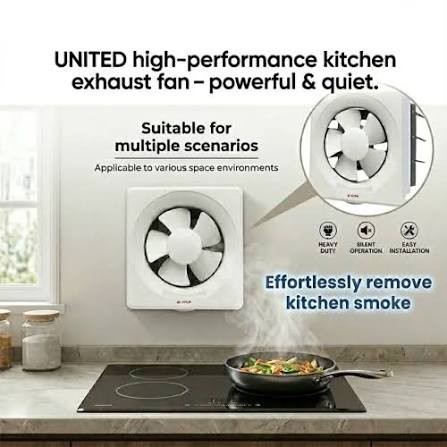
Proper ventilation is essential for maintaining clean, comfortable and healthy indoor environments. In residential houses, restaurants, hotels, offices, shopping centres, factories and other commercial buildings, unwanted heat, moisture, smoke, grease, odours and airborne contaminants must be removed effectively to maintain suitable indoor conditions.
One of the most practical ways to achieve this is through professional exhaust fan installation.
Exhaust fans help remove stale indoor air and discharge it outside the building, reducing the accumulation of moisture, cooking fumes, unpleasant smells and other unwanted airborne substances. When correctly selected and installed, they improve air circulation, support indoor air quality and help protect building materials and interior finishes from moisture-related damage.
However, installing an exhaust fan involves more than purchasing a fan and fixing it to a wall or ceiling. The correct equipment must be selected according to room size, airflow requirements, duct length, operating conditions and the type of contaminants being removed.
A bathroom requires a different exhaust arrangement from a commercial kitchen, while factories, restaurants and large commercial facilities may need specialised mechanical ventilation systems.
For property owners, developers, contractors and facility managers in Uganda, understanding exhaust fan installation is important when constructing new buildings, renovating existing properties or upgrading ventilation systems.
This guide explains the types of exhaust fans, their applications, installation procedures, selection considerations, costs, maintenance requirements and common mistakes to avoid.
1. What Is an Exhaust Fan?
An exhaust fan is a mechanical ventilation device designed to remove unwanted indoor air and discharge it to an appropriate outdoor location.
It uses an electrically powered motor and rotating fan blades or an impeller to create airflow through an opening or duct system.
Depending on the application, an exhaust fan can remove:
- Cooking smoke and fumes.
- Excess heat.
- Steam and moisture.
- Unpleasant odours.
- Dust and airborne particles.
- Certain workplace contaminants.
- Stale indoor air.
- Humid air from bathrooms and laundry areas.
Exhaust fans are commonly installed in kitchens, bathrooms, toilets, restaurants, hotels, offices, factories, workshops, warehouses and other enclosed spaces.
They can operate independently or form part of a larger mechanical ventilation system.
How Does an Exhaust Fan Work?
An exhaust fan works by drawing indoor air towards its inlet and pushing it through an outlet or duct to the outside.
The removal of indoor air creates a pressure difference that allows replacement air to enter through suitable openings, transfer grilles or dedicated supply ventilation systems.
A typical exhaust ventilation arrangement includes:
- An exhaust fan.
- An air intake grille or fan inlet.
- Ductwork where required.
- A discharge outlet.
- Electrical power and controls.
- Backdraft protection where appropriate.
For effective operation, the system must have a suitable path for replacement air. A powerful exhaust fan may perform poorly if a room is too tightly sealed to allow sufficient incoming air.
2. Why Is Exhaust Fan Installation Important?
Exhaust fan installation provides several benefits for residential, commercial and industrial properties.
2.1 Removes Excess Moisture and Humidity
Cooking, showering, washing and other indoor activities release moisture into the air.
When humid air remains trapped inside a building, condensation may form on ceilings, windows, walls and other surfaces.
Persistent moisture can contribute to mould growth, peeling paint, damaged finishes and deterioration of building materials.
Bathroom and kitchen exhaust fans help remove humid air before moisture accumulates.
2.2 Removes Unpleasant Odours
Bathrooms, toilets, kitchens and waste-handling areas can generate unpleasant smells.
An appropriately positioned exhaust fan helps remove odorous air and discharge it outside rather than allowing it to spread throughout the building.
This is particularly important in restaurants, hotels, offices, public facilities and other spaces used by many people.
2.3 Improves Indoor Air Quality
Indoor spaces can accumulate pollutants from cooking, cleaning, industrial processes and other activities.
Exhaust ventilation helps remove certain pollutants at their source or from the general occupied space.
For example, a commercial kitchen extraction system can capture cooking emissions above appliances before they spread into dining areas.
2.4 Reduces Excess Heat
Cooking equipment, machinery and industrial processes can generate considerable heat.
Exhaust fans help remove accumulated warm air, supporting more comfortable working conditions.
However, exhaust ventilation should be coordinated with replacement air and air-conditioning systems to avoid unnecessary cooling-energy losses.
2.5 Helps Prevent Mould Growth
Bathrooms, kitchens and laundry rooms are particularly vulnerable to moisture accumulation.
By removing humid air, exhaust fans can help reduce conditions that encourage mould growth.
They should be combined with effective waterproofing, plumbing maintenance and moisture control. Ventilation alone cannot solve leaks or persistent water penetration.
2.6 Improves Comfort in Commercial Buildings
Offices, restaurants, hotels, shopping centres and other commercial spaces require suitable ventilation to maintain comfortable indoor conditions.
Exhaust fans help manage localised moisture, heat and odours, while larger mechanical ventilation systems can provide broader air circulation and environmental control.
2.7 Supports Better Building Maintenance
Excessive moisture, smoke and grease can damage ceilings, walls, equipment and interior finishes.
Properly designed extraction systems help reduce the accumulation of these substances and support long-term building maintenance.
3. Types of Exhaust Fans Used in Buildings
Different exhaust fans are designed for different ventilation applications.
Choosing the correct type depends on the room arrangement, required airflow, installation location, noise considerations and operating environment.
3.1 Wall-Mounted Exhaust Fans
Wall-mounted exhaust fans are installed directly into an external wall.
They are commonly used in:
- Residential kitchens.
- Bathrooms.
- Toilets.
- Small offices.
- Workshops.
- Utility rooms.
They are relatively straightforward to install where an external wall is available and the discharge location is suitable.
A correctly selected wall-mounted fan can provide effective extraction without requiring extensive ductwork.
3.2 Ceiling-Mounted Exhaust Fans
Ceiling-mounted exhaust fans are installed in ceilings and connected to a discharge route.
They are commonly used in bathrooms, toilets, changing rooms and other spaces where wall installation is impractical.
Some ceiling-mounted fans discharge directly into an appropriate external duct, while others form part of a central extraction arrangement.
The exhaust air must be discharged outdoors or to an approved ventilation outlet. It should not simply be released into an enclosed ceiling void.
3.3 Inline Duct Exhaust Fans
Inline exhaust fans are installed within ductwork rather than directly at the room opening.
They are useful where:
- The exhaust point is far from an external wall.
- A ceiling-mounted fan would create unwanted noise.
- Multiple extraction points need to be served by a suitable duct system.
- The building layout requires concealed ventilation equipment.
Inline fans are available in different capacities and configurations.
Their performance depends on duct size, length, bends, filters and other system resistance.
3.4 Centrifugal Exhaust Fans
Centrifugal fans use a rotating impeller to move air through the system.
They are commonly considered for applications involving higher resistance, longer ductwork or more demanding ventilation arrangements.
They may be suitable for selected commercial and industrial exhaust systems.
3.5 Axial Exhaust Fans
Axial fans move air generally parallel to the fan shaft.
They are commonly used for relatively direct airflow applications, such as wall ventilation and certain roof or general exhaust arrangements.
They are suitable where the system resistance is within the fan’s operating capability.
3.6 Roof-Mounted Exhaust Fans
Roof-mounted exhaust fans are installed on building roofs to discharge indoor air directly outdoors.
They are commonly used in:
- Factories.
- Warehouses.
- Workshops.
- Large commercial kitchens.
- Industrial facilities.
- Large commercial buildings.
Roof fans must be selected and installed with consideration for weather protection, roof structure, vibration, electrical safety and safe maintenance access.
3.7 Commercial Kitchen Exhaust Fans
Commercial kitchen exhaust fans are designed for ventilation systems that remove cooking heat, smoke, grease-laden vapours and odours.
They are commonly integrated with kitchen extraction hoods, grease filters, ductwork and appropriate discharge arrangements.
Because grease accumulation can create a serious fire hazard, commercial kitchen exhaust systems require appropriate design, cleaning access and maintenance.
3.8 Industrial Exhaust Fans
Industrial exhaust fans are used in factories, workshops and manufacturing facilities to remove process-related heat, fumes, dust or other airborne contaminants.
Their selection depends on the materials being handled, the contaminant characteristics, required airflow and applicable occupational safety requirements.
Some industrial applications require specialised local exhaust ventilation rather than ordinary general-purpose exhaust fans.
4. Kitchen Exhaust Fan Installation: Important Considerations
Kitchens generate heat, steam, smoke, grease and cooking odours.
Without adequate ventilation, these substances can accumulate and spread into adjacent rooms.
Kitchen exhaust fan installation should therefore be planned according to the type of kitchen, cooking appliances and expected cooking activity.
Types of Kitchen Exhaust Systems
Domestic kitchen extractor fans
These are used in residential kitchens to remove cooking odours, steam and heat.
They may be installed in walls, windows or suitable ceiling arrangements.
Kitchen range hoods
Range hoods are installed above cooking appliances to capture cooking emissions close to their source.
They may discharge extracted air outdoors through ductwork or use recirculation systems with appropriate filters.
Ducted extraction generally provides a direct route for removing cooking emissions from the building.
Commercial kitchen extraction systems
Restaurants, hotels, institutions and other commercial kitchens often require more extensive extraction systems.
These may include:
- Commercial extraction hoods.
- Grease filters.
- Exhaust fans.
- Ductwork.
- Make-up air arrangements.
- Fire protection provisions where required.
- Access panels for inspection and cleaning.
Important Factors When Installing Kitchen Exhaust Fans
1. Fan capacity
The fan must provide sufficient airflow for the kitchen size, cooking equipment and extraction arrangement.
2. Positioning
Fans and extraction hoods should be positioned to capture cooking emissions effectively.
3. Ductwork design
Ducts should be correctly sized and routed to minimise unnecessary resistance and grease accumulation.
4. Grease management
Commercial kitchen systems require appropriate grease filtration and a cleaning programme.
5. Replacement air
Extracting large volumes of air without providing replacement air can create negative pressure, impair fan performance and interfere with combustion appliances.
6. Discharge location
Exhaust outlets should be positioned to prevent cooking emissions from re-entering the building through windows, doors or outdoor air intakes.
7. Noise and vibration
The fan and ductwork should be installed to avoid unnecessary noise and vibration.
For commercial kitchens, the extraction system should be designed around the actual appliances and cooking operations rather than relying on a general-purpose wall fan.
5. Bathroom Exhaust Fan Installation: Removing Moisture and Odours
Bathrooms are among the most important areas where exhaust fans are needed.
Showering, bathing and washing release moisture into the air. If this moisture is not removed, it can accumulate on ceilings, walls, mirrors and other surfaces.
Over time, persistent dampness may contribute to mould growth and damage to interior finishes.
Bathroom exhaust fan installation helps remove humid air and unpleasant odours.
Common Types of Bathroom Exhaust Fans
- Ceiling-mounted bathroom fans.
- Wall-mounted bathroom fans.
- Inline duct exhaust fans.
- Bathroom fans with integrated lighting.
- Fans with humidity sensors.
- Fans with timers.
- Low-noise bathroom ventilation fans.
Factors to Consider When Installing a Bathroom Exhaust Fan
Bathroom size: Larger bathrooms generally require greater extraction capacity than smaller bathrooms.
Fan airflow capacity: Select a fan that can deliver the required airflow under actual installation conditions.
Installation position: The fan should be positioned to remove humid air effectively, taking account of the shower, bath and room layout.
Duct length: Long or restrictive ductwork can reduce airflow. Duct routing should be planned carefully.
Outdoor discharge: Extracted air should be discharged outdoors through a suitable termination, not into a ceiling void or another enclosed space.
Electrical safety: Bathroom electrical installations must comply with applicable safety requirements, including appropriate equipment selection and protection for the location.
Noise levels: Low-noise equipment may improve comfort, particularly in bedrooms and residential properties.
Benefits of Installing Bathroom Exhaust Fans
- Removes excess humidity.
- Helps reduce condensation.
- Reduces persistent bathroom odours.
- Helps control conditions that encourage mould growth.
- Supports the preservation of ceilings and wall finishes.
- Improves bathroom comfort.
For effective moisture control, exhaust fans should be used together with proper waterproofing, leak repairs and suitable cleaning practices.
6. Exhaust Fan Installation for Commercial Spaces
Commercial buildings have more complex ventilation requirements because they accommodate different activities, occupancy levels and equipment.
A single exhaust fan may be sufficient for a small toilet, but a large restaurant, hotel, factory or shopping centre may need multiple extraction systems.
Commercial exhaust ventilation should be designed according to the purpose of each space and the contaminants generated.
6.1 Restaurants and Hotels
Restaurants and hotel kitchens produce cooking fumes, grease, steam, heat and odours.
Commercial extraction systems should be designed to capture emissions effectively and discharge them safely outside.
Bathrooms, laundry rooms and other service areas may also require dedicated extraction fans.
6.2 Office Buildings
Offices may require exhaust ventilation in:
- Toilets.
- Kitchens and staff break areas.
- Printing and copy rooms where applicable.
- Cleaning and storage rooms.
- Enclosed service areas.
Exhaust ventilation should be coordinated with the main HVAC system to maintain suitable airflow and pressure relationships.
6.3 Shopping Centres
Shopping centres contain restaurants, public toilets, storage spaces, service areas and other facilities with different ventilation needs.
Appropriate exhaust systems help control cooking emissions, moisture and unpleasant odours.
Larger facilities may use centralised ventilation systems alongside local extraction fans.
6.4 Schools and Educational Institutions
Schools require suitable ventilation in toilets, laboratories, kitchens, changing rooms and other specialist areas.
Laboratories may require dedicated local exhaust ventilation depending on the chemicals and activities involved.
6.5 Hospitals and Healthcare Facilities
Healthcare facilities have specialised ventilation requirements.
Certain rooms may require carefully controlled airflow, filtration, pressure relationships and exhaust arrangements.
Isolation rooms, laboratories, treatment areas and other specialist spaces should be designed according to applicable healthcare engineering and infection-control requirements.
Ordinary commercial exhaust fans should not be assumed to meet these requirements.
6.6 Factories and Manufacturing Facilities
Industrial operations may generate:
- Dust.
- Welding fumes.
- Chemical vapours.
- Process heat.
- Smoke.
- Moisture.
- Other airborne contaminants.
Depending on the process, ventilation may require local exhaust hoods, industrial extraction fans, filtration equipment and specially designed ductwork.
The system must be suitable for the specific contaminants and operating conditions.
6.7 Warehouses and Storage Facilities
Warehouses may experience heat accumulation, moisture and odour problems.
Roof-mounted exhaust fans, wall fans and mechanical ventilation systems can help improve general air movement where required.
However, specialised storage conditions may require additional environmental controls.
7. How to Choose the Right Exhaust Fan for Your Building
Selecting the right exhaust fan is essential for achieving effective ventilation and avoiding unnecessary operating costs.
A fan that is too small may fail to remove sufficient air, while an oversized or incorrectly selected fan may consume unnecessary electricity and create excessive noise.
Consider the following factors before purchasing equipment.
7.1 Room Size
The dimensions of the room influence the required ventilation airflow.
Larger rooms generally require greater airflow capacity, although the final requirement also depends on occupancy and room use.
7.2 Required Airflow Rate
Fan airflow is commonly expressed in cubic metres per hour (m³/h) or litres per second (L/s).
The required airflow depends on:
- Room volume.
- Occupancy.
- Type of activity.
- Moisture or contaminant generation.
- Applicable ventilation standards.
- Operating schedule.
For commercial kitchens and industrial spaces, equipment selection should be based on the specific extraction design.
7.3 Static Pressure and Duct Resistance
A fan’s rated airflow under free-air conditions may be higher than the airflow it delivers after installation.
Duct length, bends, filters, grilles, dampers and other restrictions create resistance.
Select a fan based on its performance at the expected system pressure, not only its advertised maximum airflow.
7.4 Noise Levels
Noise is important in residential buildings, offices, hotels and other spaces where people work or sleep.
Check manufacturer sound ratings and consider fan location, vibration isolation and duct noise.
7.5 Energy Efficiency
Efficient fans can reduce electricity consumption, particularly where ventilation operates for extended periods.
Consider motor efficiency, power consumption, operating hours and suitable speed controls.
7.6 Fan Material and Durability
The fan material should be suitable for the operating environment.
Bathrooms require equipment suitable for moisture exposure, while commercial kitchens and industrial facilities may require equipment designed for higher temperatures, grease or specific contaminants.
7.7 Maintenance Requirements
Choose equipment that allows safe access for inspection, cleaning and servicing.
For commercial kitchen systems, cleaning access is especially important because grease can accumulate within hoods and ducts.
7.8 Electrical Compatibility
Check the equipment’s voltage, power rating, wiring requirements and control arrangements.
Electrical connections should be completed by qualified personnel and comply with applicable electrical safety requirements.
8. Exhaust Fan Installation Process: Step-by-Step Guide
Professional exhaust fan installation involves several stages to ensure that the system is safe, effective and suitable for the building.
The exact process varies depending on whether the installation involves a small bathroom fan, a kitchen extractor or a large commercial ventilation system.
Step 1: Site Inspection and Assessment
The installation area is inspected to establish:
- Room dimensions.
- Existing ventilation openings.
- Available external discharge routes.
- Electrical supply arrangements.
- Building structure.
- Possible duct routes.
- Ventilation requirements.
For commercial projects, the assessment should also consider occupancy, equipment and the pollutants being removed.
Step 2: Determine the Required Airflow
The required airflow is calculated or established according to the intended application and applicable standards.
This helps determine the fan capacity and overall system arrangement.
Step 3: Select the Appropriate Exhaust Fan
A suitable fan is selected according to airflow requirements, pressure losses, operating conditions, noise, energy use and maintenance requirements.
Step 4: Identify the Installation Position
The fan location is selected to support effective extraction.
The position should avoid obstructions and allow an appropriate route for discharging air outdoors.
Step 5: Prepare the Installation Opening
The required wall, ceiling or roof opening is prepared.
Structural elements, existing electrical services, plumbing and other building components must be considered before cutting or drilling.
Step 6: Install Ductwork Where Required
Ducts are installed and connected to the fan and discharge terminal.
Ductwork should be properly supported and sealed, with suitable routing to minimise pressure losses.
Step 7: Install the Exhaust Fan
The fan is mounted securely according to the manufacturer’s installation requirements.
Vibration isolation and weather protection should be considered where appropriate.
Step 8: Complete Electrical Connections
Electrical connections, switches, isolators, timers, sensors and controls are installed as required.
Electrical work should be undertaken by qualified personnel using suitable protective devices.
Step 9: Install the External Discharge Outlet
The discharge outlet is positioned to release extracted air safely outside the building.
It should be located to reduce the risk of exhausted air re-entering the building through windows, doors or fresh-air intakes.
Step 10: Test and Commission the System
The completed installation is tested to confirm:
- Correct fan operation.
- Suitable airflow.
- Secure mounting.
- Proper electrical operation.
- Appropriate discharge.
- Acceptable noise and vibration.
- Correct operation of controls.
For larger systems, airflow measurement and balancing may be necessary.
Step 11: Handover and Maintenance Guidance
The property owner or facility manager should receive operating instructions and information about cleaning, servicing and inspection requirements.
9. Common Exhaust Fan Installation Mistakes to Avoid
Incorrect installation can reduce ventilation performance, increase operating costs and create safety problems.
Avoid these common mistakes.
1. Choosing the Wrong Fan Size
A fan that is too small may not provide sufficient extraction, while an unsuitable oversized fan may create noise and unnecessary energy consumption.
2. Ignoring Ductwork Design
Long ducts, excessive bends and undersized ductwork can reduce airflow.
The fan and duct system should be designed together.
3. Discharging Air into Ceiling Voids
Exhaust air should not simply be released into an enclosed roof or ceiling space.
This can transfer moisture, odours and contaminants into areas where they may cause damage.
4. Poor Fan Positioning
A fan installed in an unsuitable position may fail to capture moisture, heat or pollutants effectively.
Its location should reflect the source of the unwanted air and the room layout.
5. Failing to Provide Replacement Air
An exhaust fan needs an adequate supply of replacement air.
Without it, airflow can become restricted, fan performance may decline and unwanted pressure differences can develop.
6. Ignoring External Discharge Locations
Poorly positioned outlets can allow exhaust air to re-enter the building through nearby windows or air intakes.
7. Neglecting Electrical Safety
Incorrect wiring, unsuitable equipment and inadequate electrical protection can create serious hazards.
Electrical installations should be completed by qualified personnel.
8. Ignoring Noise and Vibration
Poor mounting, unsuitable fan selection and inadequate duct support can produce unwanted noise and vibration.
9. Failing to Provide Maintenance Access
Fans, filters, hoods and ductwork need inspection and cleaning.
The installation should allow safe access to serviceable components.
10. Using General-Purpose Fans for Specialised Applications
Commercial kitchens, industrial processes and hazardous environments may require specialised equipment.
A domestic exhaust fan should not be used as a substitute for a properly designed industrial or commercial extraction system.
10. How Much Does Exhaust Fan Installation Cost in Uganda?
The cost of exhaust fan installation in Uganda depends on the type of fan, building size, installation location, ductwork requirements and complexity of the ventilation system.
Installing a small bathroom fan is generally less complex than installing a commercial kitchen extraction system or industrial ventilation arrangement.
For this reason, the final cost should be determined through a site assessment and equipment specification.
Factors That Affect Exhaust Fan Installation Costs
1. Type of exhaust fan
Wall-mounted, ceiling-mounted, inline, roof-mounted and industrial exhaust fans have different purchase and installation requirements.
2. Fan capacity
Higher-capacity fans may require larger motors, stronger mounting arrangements and more extensive electrical or ductwork installations.
3. Ductwork requirements
The length, diameter, material and complexity of the duct route influence the overall project cost.
4. Installation location
Wall, ceiling and roof installations involve different labour, access and structural requirements.
5. Building size
Large commercial buildings may require multiple fans, separate ventilation zones and more extensive controls.
6. Electrical installation
New wiring, switches, control systems and protective devices may add to the installation cost.
7. Access and working conditions
High ceilings, roof access, occupied buildings and restricted installation spaces can increase labour requirements.
8. Filtration and grease management
Commercial kitchen and industrial systems may require filters, access panels and other specialised components.
9. Testing and commissioning
Larger ventilation systems may require airflow measurements, balancing and commissioning.
10. Maintenance arrangements
The total investment should include future inspection, cleaning, filter replacement and servicing where applicable.
Is It Better to Buy a Cheap Exhaust Fan?
Not necessarily.
A low-cost fan may appear attractive initially, but if it has insufficient airflow, poor durability or unsuitable operating characteristics, it may fail to solve the ventilation problem.
Property owners should compare equipment based on:
- Actual airflow performance.
- Pressure capability.
- Motor efficiency.
- Noise rating.
- Material quality.
- Warranty and manufacturer support.
- Maintenance requirements.
- Suitability for the intended application.
A properly selected fan offers better value when assessed over its operating life.
11. Exhaust Fan Maintenance: How to Keep the System Working Efficiently
Regular maintenance is essential for keeping exhaust fans effective and reliable.
Dust, grease, moisture and other deposits can accumulate on fan blades, grilles, filters and duct surfaces.
Neglected equipment may experience reduced airflow, increased noise, higher energy consumption and premature component failure.
Essential Exhaust Fan Maintenance Activities
Clean fan grilles and covers: Remove accumulated dust and dirt that may obstruct airflow.
Inspect fan blades and impellers: Check for deposits, damage and signs of imbalance.
Check the motor: Inspect for unusual noise, vibration or overheating.
Inspect electrical connections: Qualified personnel should check electrical components and protective devices.
Clean filters: Wash or replace filters according to the manufacturer’s instructions.
Inspect ductwork: Check for blockages, damage, leakage and excessive contamination.
Check external outlets: Remove obstructions that may restrict discharge.
Inspect mounting arrangements: Check supports, fasteners and vibration isolation.
Test controls: Confirm that switches, timers, sensors and other controls operate correctly.
Special Maintenance for Commercial Kitchen Exhaust Systems
Commercial kitchen extraction systems require particular attention because grease can accumulate within the hood, filters and ductwork.
Maintenance should include:
- Regular grease-filter cleaning.
- Inspection of extraction hoods.
- Inspection and cleaning of accessible duct sections.
- Fan and impeller inspection.
- Verification of airflow.
- Inspection of access panels.
- Maintenance of fire-safety provisions where applicable.
Cleaning frequency should be based on cooking intensity, operating hours, system design, manufacturer guidance and applicable fire-safety requirements.
12. Exhaust Fans vs General Ventilation Systems: What Is the Difference?
Exhaust fans and general ventilation systems both help improve indoor air quality, but they perform different functions.
An exhaust fan primarily removes indoor air and discharges it outside.
A complete ventilation system may include both supply and exhaust equipment to manage the amount, distribution and movement of air throughout the building.
| Feature | Exhaust Fan | Complete Ventilation System |
|---|---|---|
| Main function | Removes indoor air | Supplies and removes air |
| Air movement | Primarily extraction | Controlled supply and extraction |
| Equipment | Fan and associated components | Fans, ducts, filters, controls and other components |
| Typical applications | Bathrooms, kitchens and local extraction | Offices, factories, hospitals and large commercial buildings |
| Airflow control | Depends on fan and installation | Can provide more extensive control |
| Design complexity | Simple to highly specialised | Often more comprehensive |
| Filtration | May include filters depending on application | Can incorporate dedicated filtration |
For small rooms, a properly selected exhaust fan may be sufficient.
For larger or more complex buildings, a coordinated ventilation system may be necessary to ensure that fresh air is supplied as stale air is removed.
13. Exhaust Fan Installation for New Buildings and Renovation Projects
Exhaust fan installation should be considered during the building design and construction stages rather than treated as an afterthought.
Planning early helps reduce unnecessary structural modifications and makes it easier to coordinate ventilation with electrical installations, ceilings, roofing and other building services.
For New Construction Projects
Developers, architects and contractors should consider:
- The number and location of bathrooms and kitchens.
- Commercial kitchen extraction requirements.
- Required ventilation openings.
- Exhaust duct routes.
- Equipment mounting locations.
- Electrical supply and control arrangements.
- External discharge positions.
- Maintenance access.
- Integration with HVAC systems.
For Existing Buildings and Renovations
Retrofitting exhaust fans requires careful inspection of the existing building.
Consider:
- Available external walls and roof routes.
- Existing ceiling voids.
- Structural restrictions.
- Existing electrical services.
- Ductwork possibilities.
- Noise and vibration.
- The effect on existing ventilation and air-conditioning systems.
A proper assessment helps identify the most practical installation arrangement.
14. Why Professional Exhaust Fan Installation Matters
Professional installation helps ensure that exhaust equipment is suitable for its application and performs according to the intended ventilation requirements.
A qualified building services professional can assess the property, determine the appropriate fan type, plan the ductwork and coordinate electrical connections.
Professional installation is particularly important for commercial and industrial facilities where poor extraction can affect workers, customers, equipment and building operations.
Important considerations include:
- Correct fan sizing.
- Suitable airflow calculations.
- Appropriate ductwork design.
- Safe electrical installation.
- Effective air intake and discharge positioning.
- Noise and vibration control.
- Equipment compatibility.
- System testing and commissioning.
- Long-term maintenance planning.
For specialised environments, such as commercial kitchens, factories and healthcare facilities, ventilation should be designed according to the specific activities and applicable technical and safety requirements.
15. Frequently Asked Questions About Exhaust Fan Installation
1. What is the purpose of an exhaust fan?
An exhaust fan removes unwanted indoor air and discharges it outside. It helps remove moisture, odours, heat, cooking fumes and certain airborne contaminants.
2. Where should an exhaust fan be installed?
Exhaust fans are commonly installed in kitchens, bathrooms, toilets, laundry rooms, restaurants, workshops, factories and other spaces requiring extraction. The location should be selected according to the source of pollutants and the available discharge route.
3. What size exhaust fan do I need for my bathroom?
The required fan capacity depends on bathroom volume, expected moisture generation, ductwork and applicable ventilation requirements. A suitable airflow calculation should be used rather than selecting a fan based on room size alone.
4. Are exhaust fans necessary in bathrooms?
They are particularly useful in bathrooms with limited natural ventilation. They help remove moisture and odours and reduce conditions that contribute to condensation and mould growth.
5. What type of exhaust fan is best for a kitchen?
A residential kitchen may use a suitable extractor fan or range hood. A commercial kitchen generally requires a purpose-designed extraction system with appropriate hoods, grease filtration, ductwork and replacement air.
6. Can an exhaust fan remove cooking smoke?
Yes. A properly designed kitchen extraction system can capture and remove cooking smoke and other emissions. Commercial kitchens usually require extraction hoods positioned close to cooking appliances.
7. Should an exhaust fan discharge into the ceiling?
No. Exhaust air should be discharged outdoors through a suitable outlet. Releasing humid or contaminated air into a ceiling void can create moisture and indoor air quality problems.
8. Does an exhaust fan need a window?
Not necessarily. An exhaust fan can discharge through a suitable wall, roof or duct route. However, the room must have an adequate replacement-air path for effective operation.
9. How long should a bathroom exhaust fan run?
The operating period depends on bathroom use, fan capacity and moisture conditions. A timer or humidity-controlled fan can help continue extraction after showering until moisture levels have reduced.
10. How much does exhaust fan installation cost in Uganda?
The cost depends on fan type, capacity, ductwork, installation location, electrical requirements and building complexity. A site inspection is the best way to obtain an accurate quotation.
11. Can exhaust fans be installed in offices?
Yes. Exhaust fans can be installed in office toilets, kitchens, utility rooms and other areas requiring extraction. Larger offices may also need a complete mechanical ventilation system.
12. How often should exhaust fans be cleaned?
Cleaning frequency depends on operating conditions, dust levels, grease exposure and manufacturer recommendations. Commercial kitchen systems generally require more frequent cleaning than ordinary residential bathroom fans.
13. Do exhaust fans consume a lot of electricity?
Electricity consumption depends on fan power, operating hours and efficiency. Properly selected energy-efficient equipment can help reduce operating costs.
14. What is the difference between an exhaust fan and an extractor fan?
The terms are often used interchangeably. Both generally refer to equipment designed to remove indoor air and discharge it outside, although product terminology can vary between manufacturers.
15. Who should install commercial exhaust fans in Uganda?
Commercial exhaust fans should be installed by qualified ventilation and building services professionals with experience in selecting equipment, designing ductwork, coordinating electrical works and testing system performance.
Conclusion: Invest in Proper Exhaust Fan Installation for Better Building Ventilation
Exhaust fan installation is an important part of creating comfortable, functional and well-ventilated buildings.
Whether you are installing a bathroom extractor fan, upgrading a residential kitchen, fitting a commercial restaurant extraction system or improving ventilation in an industrial facility, choosing the correct equipment and ensuring proper installation are essential.
A well-designed exhaust system helps remove unwanted moisture, odours, heat, cooking emissions and other contaminants. It also supports better indoor air quality, protects building finishes and contributes to the long-term performance of building services.
However, effective ventilation depends on more than the fan itself. Proper airflow calculations, ductwork design, replacement-air provision, safe electrical connections, suitable discharge locations and regular maintenance all contribute to successful operation.
For property developers, homeowners, contractors and facility managers in Uganda, planning exhaust ventilation early can prevent avoidable installation problems and costly modifications.
Daltrevco supports informed building and building-services planning for residential, commercial and industrial projects in Uganda. If you are constructing a new property, renovating an existing building or planning a kitchen, bathroom or commercial ventilation upgrade, contact Daltrevco to discuss your project requirements.
Choose the right exhaust ventilation solution to support cleaner indoor environments, better moisture control and improved building performance.

