
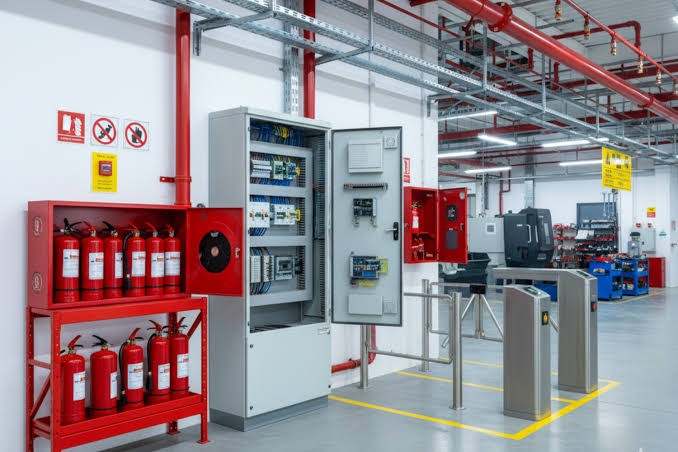
Fire safety is one of the most important considerations when designing, constructing or managing commercial and industrial buildings. Offices, shopping centres, hotels, warehouses, factories, hospitals and other large facilities often contain electrical equipment, machinery, combustible materials and valuable assets that can be seriously damaged by fire.
A reliable fire detection system for commercial and industrial buildings helps identify fire hazards at an early stage and alerts occupants so that appropriate action can be taken before a small incident becomes a major emergency.
Unlike basic smoke alarms designed for individual rooms, commercial and industrial fire detection systems are planned around the size, layout, occupancy, environmental conditions and specific fire risks of a building. They use interconnected devices to detect smoke, heat or other signs of fire and communicate warnings through alarms and control equipment.
At Daltrevco, we recognise the importance of dependable building safety systems. Understanding how fire detection systems work, the available technologies and the installation requirements can help property owners and developers make informed decisions when planning fire protection for their facilities.
This guide explains the types of fire detection systems, their components, applications, installation process, maintenance requirements and factors to consider when choosing a suitable solution in Uganda.
What Is a Fire Detection System?
A fire detection system is an electronic safety system designed to identify signs of fire and provide an early warning to building occupants and responsible personnel.
It works through strategically positioned detection devices connected to a fire alarm control panel. When a detector identifies smoke, excessive heat or another programmed fire condition, it sends a signal to the control panel, which activates the appropriate warning devices.
Depending on the system design, it may also communicate with monitoring stations, building management systems, emergency response teams and other fire protection equipment.
A properly designed system helps organisations:
- Detect potential fires early.
- Alert occupants and visitors.
- Support safe evacuation.
- Reduce the risk of injuries and fatalities.
- Protect buildings, machinery, stock and equipment.
- Support emergency response procedures.
- Reduce potential business interruption.
- Improve compliance with applicable fire safety requirements.
Why Commercial and Industrial Buildings Need Fire Detection Systems
Commercial and industrial facilities often face greater fire protection challenges than ordinary residential properties. Their size, occupancy levels, machinery, electrical installations and storage arrangements can make fire incidents more complicated.
Installing an appropriate fire detection system provides several important benefits.
1. Early Fire Detection
Early detection is essential for preventing a developing fire from spreading throughout a building. Smoke and heat detectors can identify warning signs before occupants become aware of the danger.
This gives people more time to respond, evacuate and contact emergency services.
2. Protection of Employees and Visitors
Offices, shopping centres, hotels, hospitals and factories may accommodate large numbers of people. A reliable alarm system helps notify occupants when evacuation or other emergency procedures are necessary.
3. Protection of Property and Equipment
Industrial machinery, computers, electrical equipment, inventory and building infrastructure can represent significant investments.
Early warnings help reduce the potential extent of fire damage by allowing emergency procedures to begin sooner.
4. Reduced Business Disruption
A major fire can interrupt production, damage stock, destroy records and affect customer confidence.
Although no detection system can guarantee that a fire will be prevented, early warning can support a faster response and help reduce the consequences of an incident.
5. Improved Fire Safety Management
A properly planned system supports an organisation’s wider fire safety strategy, including evacuation procedures, staff training, emergency lighting, firefighting equipment and regular safety inspections.
6. Support for Regulatory Compliance
Commercial and industrial property owners should ensure that fire protection arrangements meet applicable Ugandan building, fire safety and occupational safety requirements.
The appropriate system design should be confirmed with qualified professionals and relevant authorities, taking into account the building’s use, occupancy and fire risks.
Types of Fire Detection Systems for Commercial and Industrial Buildings
Different facilities require different fire detection technologies. The most appropriate option depends on building size, layout, risk level, operating conditions and budget.
1. Conventional Fire Detection Systems
<em>(Use: Conventional fire alarm system with control panel and zone indicators)</em>
Conventional fire detection systems divide a building into separate detection zones. Each zone contains detectors and manual call points connected to a fire alarm control panel.
When a device is activated, the panel identifies the affected zone rather than the exact detector location.
Advantages include:
- Relatively simple system design.
- Suitable for smaller commercial premises.
- Lower initial equipment costs in some applications.
- Straightforward operation and maintenance.
Suitable applications:
- Small office buildings.
- Retail shops.
- Small warehouses.
- Clinics.
- Low-rise commercial premises.
Conventional systems may be less suitable for very large or complex facilities where identifying the precise location of an alarm is important.
2. Addressable Fire Detection Systems
<em>(Use: Addressable fire alarm control panel with digital display)</em>
Addressable fire detection systems assign individual identification addresses to connected devices. When a detector or manual call point activates, the control panel can identify the specific device and its location.
This makes it easier for building managers and emergency personnel to investigate alarms and respond appropriately.
Advantages include:
- Precise identification of activated devices.
- Improved monitoring of large facilities.
- Easier fault identification.
- Flexible system expansion.
- Better integration with other building safety systems when properly designed.
Suitable applications:
- Shopping malls.
- Hotels.
- Hospitals.
- Large office complexes.
- Factories.
- Industrial warehouses.
- Multi-storey commercial buildings.
Addressable systems are often a suitable choice for large facilities with multiple rooms, floors and operational zones.
3. Wireless Fire Detection Systems
<em>(Use: Wireless smoke detectors and fire alarm control equipment)</em>
Wireless fire detection systems use radio communication to connect detectors and other devices to the control panel instead of relying entirely on conventional wired connections.
They can be useful in buildings where installing new cables would be difficult, disruptive or expensive.
Advantages include:
- Reduced cabling requirements.
- Flexible installation.
- Useful for certain existing buildings.
- Easier expansion in suitable applications.
- Less disruption to some occupied premises.
Suitable applications:
- Renovated commercial buildings.
- Historic or difficult-to-modify structures.
- Temporary facilities.
- Selected warehouses and offices.
Wireless systems still require proper radio coverage, device supervision, battery management and compatibility checks. They should be designed and installed by qualified professionals.
4. Intelligent Fire Detection Systems
Intelligent fire detection systems use advanced detectors and control equipment to assess changing environmental conditions and provide more detailed information about potential fire events.
Depending on the technology, they may help distinguish between normal environmental changes and developing fire conditions.
Advantages include:
- More detailed system information.
- Improved monitoring capabilities.
- Advanced fault reporting.
- Support for complex building layouts.
- Potential integration with building management systems.
They are useful in facilities where effective monitoring and coordinated building safety operations are important.
5. Aspirating Smoke Detection Systems
<em>(Use: High-sensitivity aspirating smoke detection equipment with sampling pipes)</em>
Aspirating smoke detection systems continuously draw air through a network of sampling pipes and analyse it for smoke particles.
They can detect very small quantities of smoke and are useful in environments where early detection is particularly important.
Suitable applications include:
- Data centres.
- Server rooms.
- Telecommunications facilities.
- Clean rooms.
- High-value storage areas.
- Selected industrial environments.
These systems require specialist design, commissioning and maintenance.
6. Beam Smoke Detection Systems
Beam smoke detectors use a projected light beam between a transmitter and receiver, or a combined unit with a reflector, to detect smoke across a large open area.
They are particularly useful where installing many individual point detectors would be difficult.
Suitable applications include:
- Large warehouses.
- Factory halls.
- Distribution centres.
- Exhibition halls.
- High-ceiling commercial buildings.
Their performance depends on correct positioning and protection from obstructions, structural movement and environmental interference.
Main Components of a Fire Detection System
A complete fire detection system consists of several devices that work together to identify fire conditions, communicate warnings and support emergency action.
1. Smoke Detectors
Smoke detectors identify smoke particles in the surrounding air. They are commonly installed in offices, corridors, storage areas and other suitable indoor spaces.
Different technologies are available, including photoelectric and other approved detection technologies.
2. Heat Detectors
Heat detectors respond to a specified temperature or a rapid increase in temperature.
They are useful in locations where dust, steam, cooking fumes or other environmental conditions may make ordinary smoke detection unsuitable.
Typical applications include selected kitchens, plant rooms and industrial areas.
3. Flame Detectors
Flame detectors identify the radiation produced by flames. Depending on the technology, they may detect ultraviolet, infrared or combined radiation signatures.
They are used in selected industrial environments where rapid flame detection is necessary, such as certain fuel handling, processing and manufacturing areas.
4. Manual Call Points
Manual call points allow people to activate the fire alarm system when they discover a fire or another emergency condition.
They should be installed at appropriate, accessible locations, particularly along designated escape routes and near exits, in accordance with the approved design.
5. Fire Alarm Control Panel
The fire alarm control panel is the central component of the system. It receives information from detectors and manual call points, processes signals and activates the required alarm outputs.
Addressable systems can provide more detailed information about individual devices and their locations.
6. Audible and Visual Alarm Devices
These devices notify occupants when the system detects a fire condition.
They may include:
- Electronic sounders.
- Bells.
- Sirens.
- Flashing beacons.
- Combined audible and visual alarm units.
The selection and positioning of warning devices should consider building size, background noise, visibility and occupant needs.
7. Backup Power Supply
Fire detection systems need a reliable power supply to remain operational during power interruptions.
Approved backup batteries or other specified power arrangements help maintain system operation when the main electrical supply fails.
8. Communication and Monitoring Equipment
Some systems include communication equipment that transmits alarm and fault information to designated monitoring points, building management systems or other authorised recipients.
The communication arrangement should be reliable and appropriate to the building’s emergency response plan.
Fire Detection Systems for Different Commercial and Industrial Facilities
The fire risks of a building depend on its activities, materials, equipment and occupancy. The system should therefore be selected according to the facility’s specific requirements.
Fire Detection Systems for Office Buildings
Office buildings contain electrical equipment, computers, printers, lighting systems and other potential sources of ignition.
A suitable design may include smoke detectors, manual call points, alarm sounders and an addressable control panel, particularly in larger multi-storey offices.
Fire Detection Systems for Shopping Malls
Shopping malls accommodate large numbers of visitors and contain shops, restaurants, storage spaces, service areas and shared corridors.
Their systems should provide appropriate detection coverage, clear alarm notification and coordination with emergency evacuation arrangements.
Fire Detection Systems for Hotels
Hotels operate around the clock and accommodate guests who may be unfamiliar with the building layout.
Detection and alarm coverage should be planned for guest rooms, corridors, kitchens, service areas, plant rooms and other relevant spaces.
The design should also consider guest notification, accessible warnings and coordination with hotel emergency procedures.
Fire Detection Systems for Hospitals
Hospitals contain patients, medical equipment, oxygen-related facilities and areas where evacuation can be particularly challenging.
Their fire detection systems require careful planning to support early warning, staff response and safe movement of patients.
System design must consider critical care areas, escape arrangements and the operational requirements of the facility.
Fire Detection Systems for Warehouses
Warehouses may contain combustible packaging, stored products, pallets and large quantities of materials.
The appropriate solution depends on storage height, commodity type, ceiling height, environmental conditions and the presence of shelving or racking.
Beam detection, aspirating detection or appropriately positioned point detectors may be considered following a fire risk assessment.
Fire Detection Systems for Factories
Factories can present specialised fire risks associated with machinery, electrical equipment, production processes, combustible dust, flammable liquids and high-temperature operations.
The detection strategy should reflect the specific industrial processes taking place. Depending on the hazards, a facility may require smoke, heat, flame or specialised detection technologies.
Fire Detection Systems for Data Centres
Data centres contain critical servers, network infrastructure and electrical equipment that require continuous operation.
Early smoke detection is especially important because even a small fire event can cause serious disruption.
Aspirating smoke detection may be considered alongside suitable alarm and suppression arrangements designed for the facility.
Fire Detection System Installation Process
Professional installation is essential for ensuring that a fire detection system operates reliably and provides appropriate coverage.
A typical installation project involves the following stages.
Step 1: Building Assessment and Fire Risk Evaluation
The first stage involves assessing the building, its activities, occupancy and potential fire hazards.
The assessment considers:
- Building size and layout.
- Number of floors and rooms.
- Occupancy levels.
- Electrical installations.
- Machinery and industrial processes.
- Storage materials.
- Ventilation and environmental conditions.
- Escape routes and emergency exits.
This information helps determine the appropriate detection technology and system configuration.
Step 2: System Design and Planning
After the assessment, the system is designed to suit the building’s requirements.
The design identifies detector locations, alarm devices, manual call points, control panels, cable routes, power supplies and communication arrangements.
It should also consider relevant standards, manufacturer requirements and applicable local regulations.
Step 3: Equipment Selection
The next stage involves selecting suitable equipment based on the approved design.
All detectors, control panels, cables, alarm devices and accessories should be compatible and appropriate for the intended environment.
Equipment should meet applicable product certification and performance requirements.
Step 4: Installation of Detection Devices
Qualified technicians install detectors, manual call points, control panels and alarm devices in their designated positions.
Correct positioning is essential. Devices should not be obstructed or installed in locations where environmental conditions could compromise their performance.
Step 5: Electrical Connections and System Integration
The devices are connected according to the system design and manufacturer specifications.
For addressable systems, devices are configured and identified within the control panel.
Where required, the system may also be integrated with other building safety equipment, such as approved fire suppression controls, smoke management systems and building management systems.
Step 6: Testing and Commissioning
After installation, the system is tested to confirm that its components function correctly.
Commissioning checks may include:
- Detector operation.
- Manual call point activation.
- Alarm sounder and beacon operation.
- Control panel communication.
- Fault monitoring.
- Backup power performance.
- Device identification.
- Approved system interfaces.
Testing should follow the applicable standards, manufacturer instructions and approved commissioning procedures.
Step 7: Handover and User Training
Once the system has been commissioned, the responsible building personnel should receive the necessary documentation and training.
This may include system operation, alarm response, fault reporting, routine inspection and maintenance procedures.
Factors to Consider When Choosing a Fire Detection System
Selecting a suitable fire detection system requires more than comparing equipment prices. The system must match the building’s actual risks and operational requirements.
Consider the following factors:
1. Building Size and Layout
Small premises may require a relatively simple system, while large commercial and industrial facilities often need addressable technology and more extensive detection coverage.
2. Type of Business or Industrial Activity
A warehouse, hotel, hospital and factory do not have identical fire risks.
The system should reflect the materials stored, equipment used, processes performed and people occupying the building.
3. Environmental Conditions
Dust, steam, humidity, high temperatures and airflow can affect detector performance.
The correct detection technology should be selected for each environment to reduce unsuitable applications and unwanted alarms.
4. System Reliability
Fire detection equipment should be dependable and supported by appropriate power supplies, device supervision, maintenance and fault reporting.
5. Future Expansion
Businesses may expand their premises, introduce new machinery or change building layouts.
Choosing a system that can accommodate future requirements can reduce the complexity of later upgrades.
6. Integration with Other Fire Protection Systems
Some buildings require fire detection systems to operate alongside automatic fire suppression, smoke control, emergency lighting and access control arrangements.
Any integration should be carefully engineered and tested to ensure that the systems operate as intended.
7. Installation and Maintenance Costs
The total cost depends on the building, equipment, wiring, installation complexity, commissioning and ongoing maintenance requirements.
Property owners should evaluate long-term reliability and support rather than selecting equipment based only on the lowest initial price.
How Much Does Fire Detection System Installation Cost in Uganda?
The cost of installing a fire detection system in Uganda varies depending on the size, design and complexity of the building.
A small office may require fewer detectors and simpler control equipment, while a factory, warehouse, hotel or shopping mall may need a more advanced system with extensive coverage.
The main factors affecting installation costs include:
- Size of the building.
- Number and type of detectors required.
- Conventional, addressable or wireless system selection.
- Number of floors and detection zones.
- Cable routes and installation conditions.
- Type of control panel and alarm devices.
- Specialised detection requirements.
- Integration with other fire protection equipment.
- Testing, commissioning and training.
- Ongoing servicing and maintenance arrangements.
For an accurate quotation, property owners should arrange a site assessment and request a system design based on the building’s actual fire safety requirements.
Daltrevco can be contacted to discuss building utility and safety system requirements and the appropriate scope of work for a project.
Common Fire Detection System Installation Mistakes to Avoid
Even quality equipment may fail to provide adequate protection if the system is poorly designed, installed or maintained.
Some common mistakes include:
1. Installing Too Few Detectors
Insufficient detection coverage can leave important areas unprotected.
The number and positioning of detectors should follow the approved design and applicable installation requirements.
2. Choosing the Wrong Detector Type
Using ordinary smoke detectors in unsuitable dusty, humid or high-temperature environments can result in unwanted alarms or unreliable detection.
Detector selection should consider the conditions in each area.
3. Poor Detector Positioning
Incorrect positioning, obstructions and unsuitable installation heights can affect detector performance.
Devices should be installed according to manufacturer instructions and relevant design standards.
4. Ignoring Backup Power Requirements
A fire detection system should have the specified standby power arrangement to maintain operation during a mains power failure.
5. Failing to Test the System
A system that has not been properly tested and commissioned may contain wiring faults, communication problems or incorrectly configured devices.
Testing should be completed before handover and repeated as required during maintenance.
6. Neglecting Regular Maintenance
Dust accumulation, damaged equipment, depleted batteries and disconnected devices can affect system reliability.
Routine inspection and professional servicing help identify problems before they compromise protection.
7. Failing to Train Building Occupants
An alarm is only effective when people know how to respond.
Staff should understand alarm signals, evacuation procedures, assembly points and emergency reporting arrangements.
Fire Detection Systems vs Fire Suppression Systems: What Is the Difference?
Fire detection and fire suppression systems serve different but complementary purposes.
| Feature | Fire Detection System | Fire Suppression System |
|---|---|---|
| Main purpose | Identifies signs of fire and raises an alarm | Controls or extinguishes a fire |
| Main equipment | Smoke, heat and flame detectors, control panels and alarms | Sprinklers, gas suppression equipment and other extinguishing systems |
| Primary function | Early warning | Fire control or extinguishment |
| Response | Notifies occupants and relevant personnel | Releases or delivers an extinguishing agent |
| Typical use | Most types of commercial and industrial facilities, as required by risk and design | Areas requiring specific fire control measures |
A fire detection system does not automatically extinguish a fire. Similarly, a suppression system should not be treated as a replacement for appropriate detection and alarm arrangements.
For many commercial and industrial buildings, the two systems should be planned together as part of a coordinated fire protection strategy.
Fire Detection System Maintenance and Inspection
Installing a fire detection system is only the beginning of effective fire protection. Regular inspection and maintenance are necessary to ensure that equipment remains operational.
A maintenance programme should be based on applicable standards, manufacturer instructions, the building’s risk profile and local requirements.
Important maintenance activities include:
- Inspecting detectors for damage and contamination.
- Testing manual call points.
- Checking alarm sounders and visual indicators.
- Inspecting control panels for faults.
- Checking backup batteries and power supplies.
- Verifying device communication.
- Reviewing fault and alarm records.
- Testing approved system interfaces.
- Updating system records after modifications.
- Replacing faulty or expired components where required.
Building managers should keep records of inspections, tests, repairs and maintenance activities.
How to Choose the Right Fire Detection System Installation Company in Uganda
The performance of a fire detection system depends heavily on the quality of its design, equipment, installation and commissioning.
Before choosing an installation company, consider the following:
Technical experience: Look for a contractor with relevant experience in commercial and industrial building systems.
System design capability: The provider should assess the building and recommend an appropriate solution rather than simply selling equipment.
Quality of equipment: Confirm that the proposed devices are suitable for the application and meet applicable product standards.
Installation workmanship: Proper wiring, device positioning, configuration and documentation are essential.
Testing and commissioning: Ensure that the contractor includes functional testing and commissioning in the project scope.
Maintenance support: Ask whether inspection, troubleshooting and servicing can be arranged after installation.
Compliance awareness: The contractor should understand applicable Ugandan requirements and relevant fire detection standards.
Choosing a qualified provider helps reduce installation errors and supports long-term system reliability.
Why Choose Daltrevco for Building Safety and Utility Solutions?
Daltrevco provides building-related solutions designed to support the safety, functionality and performance of residential, commercial and industrial properties.
When planning fire detection and other building utility installations, it is important to work with professionals who understand the requirements of the project and the importance of reliable building systems.
Whether you are developing a commercial property, upgrading an existing facility or planning an industrial building, Daltrevco can help you discuss the building services required for your project.
For professional guidance on building utility installations and project requirements, contact Daltrevco.
Choose a suitable fire detection solution to improve building safety, support early warning and protect your investment.
Frequently Asked Questions About Fire Detection Systems
1. What is the best fire detection system for commercial buildings?
Addressable fire detection systems are often suitable for large commercial buildings because they can identify the specific detector or device that has activated. Smaller premises may be adequately served by a properly designed conventional system. The best choice depends on the building’s size, layout and fire risks.
2. What type of fire detection system is suitable for factories?
Factories may require smoke, heat, flame or specialised detection systems depending on their manufacturing processes, machinery, stored materials and environmental conditions. A fire risk assessment should determine the appropriate combination.
3. What is the difference between conventional and addressable fire alarm systems?
A conventional system identifies the zone where an alarm originates, while an addressable system can identify the individual device that has activated. Addressable systems are generally more informative for large and complex facilities.
4. Where should fire detectors be installed in commercial buildings?
Detector locations depend on the building design, ceiling configuration, environmental conditions, occupancy and applicable standards. Common areas considered include offices, corridors, storage rooms, plant rooms and other spaces identified by the fire risk assessment.
5. How often should fire detection systems be serviced?
Inspection and servicing frequency should follow applicable standards, manufacturer recommendations, local requirements and the building’s risk assessment. Regular checks and documented professional maintenance are essential.
6. Can fire detection systems operate during a power failure?
Yes. Properly designed systems include an approved standby power supply, usually batteries, to maintain operation during interruptions to the main electrical supply for the required period.
7. Can a fire detection system be connected to a sprinkler system?
Yes. A properly engineered fire detection system can interface with sprinkler monitoring and other approved fire protection equipment. The exact arrangement depends on the system design and applicable requirements.
8. Are wireless fire detection systems suitable for warehouses?
They can be suitable for certain warehouses, particularly where cabling is difficult. However, radio coverage, building structure, interference, device supervision and battery maintenance must be assessed before selecting a wireless solution.
9. Does a fire detection system prevent fires?
A fire detection system does not prevent a fire from starting. Its main purpose is to identify signs of fire and provide an early warning so that people can respond and emergency procedures can begin.
10. How much does it cost to install a fire detection system in Uganda?
Installation costs depend on the building size, number of devices, system type, wiring requirements, equipment specifications and commissioning needs. A site assessment is the best way to obtain an accurate quotation.
Conclusion
Fire detection systems are essential components of effective fire safety planning for commercial and industrial buildings. By identifying early signs of fire and alerting occupants, they help organisations respond quickly, protect people and reduce potential damage to buildings, equipment and business operations.
Whether you manage an office, hotel, hospital, shopping centre, warehouse or factory, choosing the right fire detection technology is important. Conventional, addressable, wireless, aspirating and beam detection systems each offer different advantages depending on the building’s requirements.
A successful installation begins with a proper fire risk assessment, suitable equipment selection, professional system design, correct installation, thorough commissioning and regular maintenance.
Planning a commercial or industrial building project in Uganda? Contact Daltrevco to discuss your building utility and safety system requirements and find a suitable solution for your property.

