
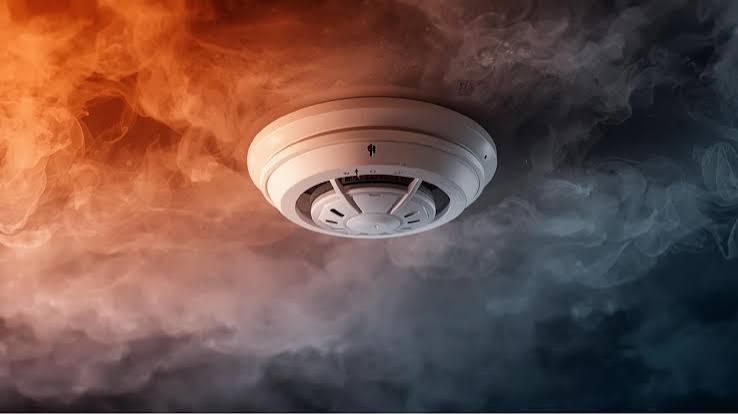
Fire safety is one of the most important considerations when designing, constructing and managing residential, commercial and industrial buildings. Fires can start unexpectedly due to electrical faults, overheating equipment, cooking activities, machinery failures and other hazards. Without early warning, a small fire can quickly develop into a serious emergency, putting lives, property and business operations at risk.
One of the most effective ways to improve early fire warning is through the installation of a smoke detection system. These systems identify smoke particles in the air and activate an alarm or send a signal to a fire alarm control panel, allowing occupants to respond before a fire spreads.
In Uganda, smoke detection systems are important for properties such as offices, hotels, shopping malls, hospitals, schools, apartments, warehouses, factories and other buildings where people and valuable assets need protection.
For property developers, business owners, contractors and facility managers, understanding smoke detection technology is essential when planning a new building or upgrading an existing fire protection system.
Daltrev Co. Ltd supports building projects through utilities works, building installations and fire protection-related product solutions. Its utility product categories include smoke detectors, heat detectors, fire alarm panels, fire extinguishers, water hydrants, fire pumps, hose reels and sprinkler heads.
This guide explains what smoke detection systems are, how they work, their importance, different types, installation requirements, maintenance practices and the factors to consider when selecting a suitable system for your building.
What Is a Smoke Detection System?
A smoke detection system is a fire safety arrangement designed to identify the presence of smoke and provide an early warning of a possible fire.
It uses smoke detectors installed in selected areas of a building. When a detector identifies smoke above its specified detection threshold, it activates an alarm or sends a signal to a connected fire alarm control panel.
Depending on the system design, the warning may activate audible alarms, visual indicators, remote monitoring equipment or other connected fire safety devices.
Smoke detection systems are particularly important because smoke can spread through a building before flames become visible. Early detection gives occupants more time to respond, follow evacuation procedures and contact emergency services.
A complete fire detection arrangement may include:
- Smoke detectors.
- Fire alarm control panels.
- Manual call points.
- Sounders and sirens.
- Visual alarm devices.
- Detector bases and wiring.
- Backup power supplies.
- Monitoring and control accessories.
The exact equipment depends on the building’s size, occupancy, fire risks and approved fire safety design.
How Does a Smoke Detection System Work?
Smoke detection systems operate by continuously monitoring the air within protected areas for signs of smoke.
When smoke enters a detector and reaches the device’s activation threshold, the detector generates a signal.
In a conventional system, the signal is communicated through a designated zone circuit to the fire alarm control panel. In an addressable system, the panel can identify the specific detector or device that has activated.
The general operating process includes the following stages:
- Smoke enters the detector: Smoke particles reach the detector’s sensing chamber or detection mechanism.
- Detection takes place: The detector identifies smoke according to its operating technology and sensitivity settings.
- An alarm signal is generated: The detector sends an activation signal to the fire alarm system.
- The control panel responds: The fire alarm panel processes the signal and indicates the affected zone or device, depending on the system type.
- Occupants receive a warning: Audible and visual alarm devices alert people within the building.
- Emergency procedures begin: Occupants follow the approved evacuation procedure, while responsible personnel contact emergency services and follow the building’s emergency plan.
Some systems can also be integrated with other building safety functions, such as ventilation controls, fire doors and other approved interfaces. These functions must be properly designed and tested.
Importance of Smoke Detection Systems in Buildings
Installing smoke detection systems offers important safety and operational benefits.
1. Provides Early Fire Warning
One of the main advantages of smoke detection systems is their ability to identify potential fire conditions at an early stage.
Early warning allows occupants to respond before smoke and fire spread extensively through the building.
2. Helps Protect Human Life
Smoke inhalation can be extremely dangerous during a fire. It can reduce visibility, cause breathing difficulties and make evacuation more difficult.
Smoke detectors provide an important warning that helps occupants begin evacuation and seek safety.
3. Helps Reduce Property Damage
Early detection can help limit the time available for a fire to develop before people are alerted.
This can support a faster emergency response and potentially reduce damage to buildings, equipment, stock and other assets.
4. Supports Business Continuity
Fires can interrupt business operations, damage equipment and destroy important records.
Smoke detection systems form part of a wider fire protection strategy that helps businesses prepare for emergencies and protect their operations.
5. Improves Safety in Large Buildings
Large properties often contain multiple rooms, floors, corridors and service areas.
A properly planned smoke detection system can provide monitoring across designated areas and help occupants receive warnings when smoke is detected.
6. Supports Building Fire Safety Management
Smoke detectors can be integrated with fire alarm panels, manual call points, sounders, visual alarms and other approved fire protection equipment.
This creates a coordinated fire detection and warning arrangement.
7. Supports Applicable Fire Safety Requirements
Smoke detection systems can help building owners address relevant fire safety requirements.
The specific detectors, coverage, alarm arrangements and installation standards should be determined according to the building’s use, applicable Ugandan requirements and the approved fire protection design.
Types of Smoke Detectors Used in Buildings
Different smoke detectors use different technologies to identify smoke. Selecting the correct type depends on the environment, expected fire risks and the building’s operational requirements.
1. Photoelectric Smoke Detectors
Photoelectric smoke detectors use light-based technology to identify smoke particles.
They typically contain a light source and a sensing arrangement. When smoke enters the detection chamber, it changes the way light reaches the sensor, triggering an alarm when the activation threshold is reached.
Photoelectric detectors are commonly used in areas where detecting smouldering fires is an important consideration.
They may be suitable for:
- Offices.
- Bedrooms and accommodation areas.
- Corridors.
- Living spaces.
- General commercial areas.
The final selection should consider the detector’s specifications and environmental conditions.
2. Ionisation Smoke Detectors
Ionisation smoke detectors use an ionisation chamber to identify changes caused by smoke particles entering the sensing area.
They have traditionally been associated with detecting certain fast-flaming fire conditions.
Their suitability depends on local regulatory requirements, product availability and the building’s fire detection design.
3. Dual-Sensor Smoke Detectors
Dual-sensor smoke detectors combine more than one detection technology within a single device.
Depending on the model, they may use photoelectric and ionisation sensing technologies or other approved combinations.
The aim is to improve detection performance across different fire conditions.
4. Aspirating Smoke Detection Systems
Aspirating smoke detection systems actively draw air through a network of sampling pipes and analyse it for smoke particles.
They can provide very early warning and are useful in environments where early detection is particularly important.
Possible applications include:
- Data centres.
- Server rooms.
- Telecommunications facilities.
- Archives.
- Critical equipment rooms.
- Certain industrial facilities.
These systems require specialist design, sampling pipe calculations and appropriate commissioning.
5. Beam Smoke Detectors
Beam smoke detectors use a projected light beam between a transmitter and receiver to detect smoke across a protected space.
When smoke reduces the strength of the received beam, the system can generate an alarm.
They may be suitable for large open areas with high ceilings, including:
- Warehouses.
- Manufacturing facilities.
- Large halls.
- Distribution centres.
- Industrial buildings.
Correct positioning and alignment are essential for reliable operation.
6. Wireless Smoke Detectors
Wireless smoke detectors communicate with a compatible fire alarm system using radio communication rather than conventional wired connections between devices.
They may be considered for suitable existing buildings where installing new cables would be difficult.
The system must be designed to ensure reliable communication, adequate battery performance and compatibility with the control equipment.
7. Addressable Smoke Detectors
Addressable smoke detectors communicate with an addressable fire alarm control panel.
Each compatible detector has an individual address, allowing the panel to identify the specific device that has activated.
They are particularly useful in large or complex properties where identifying the precise location of an alarm is important.
Conventional vs Addressable Smoke Detection Systems
Conventional and addressable systems are two common approaches to building fire detection.
| Feature | Conventional System | Addressable System |
|---|---|---|
| Device identification | Identifies the activated zone | Identifies the individual addressable device |
| Typical application | Smaller or less complex buildings | Larger or more complex buildings |
| Wiring arrangement | Devices connected in zone circuits | Devices communicate through addressable circuits |
| Fault identification | Generally identified by zone | Can provide more specific device information |
| Expansion | Depends on available zones and panel capacity | Depends on panel capacity and system design |
| Cost | May be more economical for smaller installations | Can require a higher initial equipment investment |
The best option depends on the property size, building layout, fire risk, monitoring requirements and available budget.
Main Components of a Smoke Detection System
A smoke detection system requires several components to operate effectively.
1. Smoke Detectors
Smoke detectors identify smoke particles and generate signals when the specified detection threshold is reached.
They must be selected according to the environment and installed at appropriate locations.
2. Fire Alarm Control Panel
The fire alarm control panel receives and processes signals from connected detectors and other devices.
It provides system status information, identifies alarm conditions and may monitor faults depending on its design.
3. Manual Call Points
Manual call points allow a person to activate the fire alarm system when they discover a fire or other emergency.
They should be positioned along suitable escape routes and at locations specified by the approved design.
4. Alarm Sounders and Sirens
Sounders and sirens provide audible warnings to alert building occupants.
Their number and positioning should ensure that the alarm can be heard in the relevant occupied areas.
5. Visual Alarm Devices
Visual alarm devices, such as flashing beacons, provide visual warnings.
They may be required in selected areas, including noisy environments or locations where visual notification is part of the approved design.
6. Detector Bases and Wiring
Detector bases provide mounting and electrical connections for compatible detectors.
The wiring arrangement must match the selected fire alarm system and manufacturer’s requirements.
7. Backup Power Supply
Fire alarm systems generally require a suitable standby power arrangement so that essential detection and alarm functions can continue during a normal power supply failure.
The battery capacity and backup duration must comply with the applicable design requirements.
Smoke Detection System Installation Requirements in Uganda
Installing a smoke detection system requires proper planning, suitable equipment and compliance with relevant fire safety requirements.
The following considerations are important for building projects in Uganda.
1. Conduct a Fire Risk Assessment
Before installation, the building should be assessed to identify potential fire hazards and determine the areas requiring detection.
Important factors include:
- Building size and number of floors.
- Occupancy and number of people.
- Type of business or industrial activity.
- Electrical installations and equipment.
- Cooking and heating facilities.
- Storage of combustible materials.
- Ceiling height and room layout.
- Environmental conditions.
The assessment helps determine the appropriate detector types and system arrangement.
2. Prepare a Fire Detection System Design
A competent fire protection designer should prepare the detection layout based on the building’s requirements.
The design should consider:
- Detector locations.
- Detector spacing and coverage.
- Ceiling height and construction.
- Areas requiring special detection technology.
- Fire alarm panel location.
- Manual call point locations.
- Alarm sounder and visual device locations.
- Wiring routes and power supply.
- Interfaces with other building systems.
The design should follow applicable standards and manufacturer instructions.
3. Select Suitable Smoke Detectors
The detector type should match the environment where it will be installed.
For example, a detector selected for an office may not be appropriate for a dusty industrial area or a kitchen.
The selection should consider smoke detection technology, sensitivity, environmental protection and compatibility with the fire alarm panel.
4. Determine Appropriate Detector Locations
Smoke detectors should be installed in locations identified by the approved design.
Potential protected areas include:
- Offices.
- Corridors.
- Reception areas.
- Meeting rooms.
- Accommodation spaces.
- Storage rooms.
- Electrical and equipment rooms.
- Other designated occupied or risk areas.
Not every room requires the same type or number of detectors. Areas with steam, dust or cooking fumes may require alternative detection arrangements to reduce unwanted alarms.
5. Install the Fire Alarm Control Panel
The control panel should be installed in a suitable location that allows authorised personnel to access and monitor the system.
It should be protected from unsuitable environmental conditions and installed according to manufacturer specifications.
6. Install Wiring and Connect Equipment
All detectors, manual call points, alarm devices and other accessories should be connected according to the approved drawings.
Cable types, routing, circuit protection and installation methods should comply with the relevant design and technical requirements.
7. Integrate Other Fire Safety Systems Where Required
Where the design requires it, the smoke detection system may be integrated with other building systems.
Examples include:
- Fire alarm notification systems.
- Automatic door release arrangements.
- Fire door controls.
- Ventilation and smoke control systems.
- Lift control interfaces.
- Sprinkler monitoring systems.
Such interfaces should be designed, programmed and tested by competent professionals.
8. Test and Commission the System
Before handover, the system should undergo appropriate inspection, testing and commissioning.
Testing may include:
- Detector activation tests.
- Fire alarm panel operation checks.
- Manual call point tests.
- Sounder and visual alarm tests.
- Wiring and circuit fault checks.
- Backup battery tests.
- System interface verification.
- Confirmation of detector identification.
The completed system should be documented, and identified faults should be corrected before acceptance.
Smoke Detection Systems for Different Types of Buildings
Different buildings have different fire risks and occupancy patterns. The smoke detection system should therefore be selected according to the property and its activities.
Smoke Detection Systems for Office Buildings
Office buildings contain computers, electrical equipment, furniture, documents and meeting facilities.
Smoke detectors may be installed in offices, corridors, reception areas, meeting rooms and other areas identified by the fire risk assessment.
A suitable system should be coordinated with emergency lighting, fire alarm sounders and evacuation signage.
Smoke Detection Systems for Hotels
Hotels accommodate guests who may not be familiar with the building layout.
Smoke detection is important in areas such as:
- Guest accommodation areas.
- Corridors and lobbies.
- Conference rooms.
- Restaurants and service areas.
- Laundry facilities.
- Selected storage and utility rooms.
The detection design should consider the hotel’s layout, occupancy and applicable requirements.
Smoke Detection Systems for Shopping Malls
Shopping malls contain retail outlets, restaurants, entertainment facilities and shared public areas.
Their fire detection systems should account for large open spaces, different tenant units, food preparation areas and complex evacuation routes.
Suitable detection technologies may vary between different areas.
Smoke Detection Systems for Hospitals
Hospitals require carefully planned fire detection because they accommodate patients, staff and visitors, including people who may have limited mobility.
The system should be coordinated with clinical operations, evacuation arrangements and other building safety systems.
Smoke Detection Systems for Schools
Schools contain classrooms, laboratories, offices, libraries, halls and other shared spaces.
Smoke detection systems should be designed to provide appropriate warning across the protected areas and support safe evacuation procedures.
Smoke Detection Systems for Warehouses
Warehouses may contain combustible goods, packaging materials and high storage racks.
The detector type and installation arrangement should consider ceiling height, storage configuration, airflow, dust and the materials stored.
Beam or aspirating detection may be considered for certain large or high-ceiling environments where appropriate.
Smoke Detection Systems for Factories
Factories may contain production equipment, electrical installations, industrial processes and potentially hazardous materials.
The system should be designed around the actual fire hazards and environmental conditions. In some areas, heat or other specialised detection may be more appropriate than standard smoke detectors.
Factors That Affect the Cost of Smoke Detection System Installation in Uganda
The cost of installing a smoke detection system depends on several technical and project-related factors.
There is no single installation price that applies to every building.
1. Size of the Building
Large buildings generally require more detectors, wiring, alarm devices and control equipment.
2. Number of Detectors Required
The number of detectors depends on the building layout, ceiling configuration, coverage requirements and fire risk assessment.
3. Type of Detection System
Conventional, addressable, wireless, beam and aspirating systems have different equipment and installation costs.
4. Fire Alarm Control Panel Capacity
The size and capabilities of the fire alarm panel influence the overall project budget.
5. Building Design and Layout
Complex layouts, multiple floors, high ceilings and difficult installation routes can increase labour and material requirements.
6. Wiring and Electrical Infrastructure
Existing electrical infrastructure, cable routes and the need for additional containment or circuit work affect installation costs.
7. System Integration
Connecting smoke detection equipment to other fire safety or building management systems may require additional equipment, programming and commissioning.
8. Testing and Commissioning
The project budget should include testing, commissioning, documentation and handover.
For an accurate quotation, property owners should provide building drawings, floor plans, details of the building’s use and any existing fire protection specifications.
Common Smoke Detection Installation Mistakes to Avoid
Poor installation can reduce the effectiveness of a smoke detection system and increase the risk of unwanted alarms or missed detections.
Avoid these common mistakes:
- Incorrect detector positioning: Detectors installed in unsuitable locations may not provide the intended coverage.
- Using the wrong detector type: Different environments require different detection technologies.
- Ignoring ceiling height: High ceilings can affect smoke movement and detector selection.
- Installing detectors near unsuitable airflows: Strong ventilation or air movement can affect smoke entry into detectors.
- Ignoring environmental conditions: Dust, steam and cooking fumes may cause unwanted alarms with unsuitable devices.
- Using incompatible equipment: Detectors must be compatible with the selected fire alarm panel.
- Poor wiring practices: Incorrect cable installation can lead to faults and unreliable operation.
- Failing to test the system: Every relevant device and alarm function should be tested before handover.
- Neglecting backup batteries: A faulty standby power supply can affect system operation during power failures.
- Ignoring maintenance: Detectors can become dirty, damaged or defective over time.
Using competent fire protection professionals and following approved design documents helps reduce these problems.
Smoke Detection System Maintenance and Inspection
Installing smoke detectors is not enough. Regular inspection, testing and maintenance are necessary to keep the system operational.
A maintenance programme should follow the manufacturer’s recommendations, applicable standards and approved fire safety procedures.
Important maintenance activities include:
- Inspecting detectors for physical damage.
- Checking detectors for dust and contamination.
- Testing detector operation using approved methods.
- Checking fire alarm panel indicators.
- Testing manual call points.
- Checking audible and visual alarm devices.
- Inspecting wiring and connections.
- Checking backup batteries and charging arrangements.
- Reviewing system fault records.
- Confirming that detector locations remain suitable after building alterations.
- Keeping records of inspections, tests and repairs.
Detectors should not be painted over, covered or removed without an appropriate replacement and system review.
Where building layouts change, the fire detection design should also be reviewed to determine whether additional equipment or relocation is necessary.
Smoke Detection Systems vs Heat Detection Systems
Smoke detectors and heat detectors are both used in fire detection systems, but they identify different signs of fire.
| Feature | Smoke Detector | Heat Detector |
|---|---|---|
| Detection method | Detects smoke particles | Detects specified temperature conditions or temperature rise |
| Typical application | Offices, corridors and suitable occupied spaces | Selected kitchens, plant rooms and dusty environments |
| Early warning | Can detect smoke before substantial temperature increase | Responds when the specified heat condition is reached |
| Environmental suitability | May be affected by dust, steam and cooking fumes | May be more suitable in some environments where smoke detection is prone to unwanted alarms |
| Selection | Based on smoke detection requirements | Based on heat risk and environmental conditions |
Neither detector is universally suitable for every location. A professional fire detection design should determine which device is appropriate for each area.
Integrating Smoke Detection with Other Fire Protection Systems
A reliable building fire safety strategy should coordinate smoke detection with other protection measures.
1. Fire Alarm Systems
Fire alarm panels receive signals from smoke detectors, heat detectors and manual call points and coordinate the warning process.
2. Heat Detection Systems
Heat detectors provide additional detection in areas where smoke detectors may be unsuitable.
3. Fire Extinguishers
Portable extinguishers provide first-response firefighting equipment for appropriate fire risks and trained users.
4. Fire Hydrant Systems
Hydrant systems provide access to firefighting water for trained responders and emergency personnel.
5. Fire Sprinkler Systems
Automatic sprinkler systems are designed to release water when individual sprinkler heads activate under specified conditions.
6. Emergency Exit Lighting
Emergency lighting helps occupants identify escape routes when normal lighting fails.
7. Fire Safety Signage
Exit signs, directional signs and equipment identification signs provide important visual information during emergencies.
These systems have different purposes. Their locations, interfaces and operation should be coordinated through the building’s approved fire protection design.
Why Choose Daltrev Co. Ltd for Building Utilities and Fire Protection Solutions?
Selecting suitable building utility products and installation support is important when constructing, upgrading or maintaining a property.
Daltrev Co. Ltd provides building utilities and installation solutions for residential, commercial, institutional and industrial projects in Uganda.
Our utilities works cover essential building systems, including electrical installations, plumbing, security and internet systems, fire protection, lifts and other building utility solutions.
Our fire protection-related utility product categories include:
- Smoke detectors.
- Heat detectors.
- Fire alarm panels.
- Fire extinguishers.
- Water hydrants.
- Fire pumps.
- Fire hose reels.
- Sprinkler heads.
Daltrev’s Building Solutions Approach
1. Comprehensive Building Utilities Solutions
We support projects involving different building systems and essential utilities.
2. Fire Protection Product Categories
Our utility products include equipment used in fire detection, firefighting and wider building fire protection arrangements.
3. Solutions for Different Property Types
Our building utilities solutions support offices, hotels, schools, apartments, warehouses, factories, shopping centres and other developments.
4. Project-Focused Support
We encourage property owners, contractors and developers to share their building requirements so that suitable products and solutions can be discussed.
5. Integrated Building Systems
We recognise the importance of coordinating fire protection with electrical, plumbing, security and other building systems.
Explore Daltrev Utilities Works to learn more about the company’s building utilities solutions.
You can also visit the Daltrev Utility Products page to explore the available product categories.
Frequently Asked Questions About Smoke Detection Systems
1. What is the main purpose of a smoke detection system?
The main purpose is to detect smoke and provide an early warning of a possible fire. This allows occupants to respond, evacuate and contact emergency services before the fire spreads further.
2. Are smoke detectors necessary in commercial buildings?
Smoke detectors are an important part of fire safety planning in commercial buildings. The required coverage and equipment should be determined by the building’s use, fire risk and applicable safety requirements.
3. What are the different types of smoke detectors?
Common types include photoelectric, ionisation, dual-sensor, aspirating, beam and wireless smoke detectors. Addressable detectors are also used in compatible addressable fire alarm systems.
4. What is the difference between conventional and addressable smoke detection systems?
A conventional system generally identifies the zone where an alarm has occurred, while an addressable system can identify the individual detector or device that has activated.
5. Where should smoke detectors be installed?
Smoke detectors should be installed in locations identified by the approved fire detection design. These may include offices, corridors, accommodation areas, reception spaces and other protected areas.
6. Can smoke detectors be installed in kitchens?
Detector selection in kitchens requires careful consideration because cooking fumes and steam can cause unwanted alarms. The appropriate detection technology should be selected according to the environment and applicable requirements.
7. How often should smoke detectors be maintained?
Maintenance frequency should follow the manufacturer’s recommendations, applicable standards and the approved inspection programme. Regular testing and documented maintenance are important.
8. Can smoke detection systems operate during power failures?
Fire alarm systems should have a suitable standby power arrangement designed to maintain essential operation during normal power interruptions. The battery capacity and duration must meet the applicable requirements.
9. Can smoke detection systems be integrated with fire alarms?
Yes. Smoke detectors are commonly connected to fire alarm control panels, which process signals and activate the appropriate warning devices.
10. Can smoke detection systems be installed in existing buildings?
Yes. Existing buildings can be assessed and upgraded with suitable smoke detection systems. The installation should consider the current building layout, electrical infrastructure, fire risks and applicable requirements.
11. What affects the cost of smoke detection system installation in Uganda?
The cost depends on the building size, number and type of detectors, fire alarm panel, wiring, installation complexity, system integration and testing requirements.
12. Does Daltrev Co. Ltd offer smoke detection products in Uganda?
Daltrev Co. Ltd lists smoke detectors among its utility product categories, alongside fire alarm panels, heat detectors, extinguishers, hydrants, fire pumps, hose reels and sprinkler heads. Contact the company to discuss your product and project requirements.
Conclusion: Improve Building Fire Safety with Reliable Smoke Detection Systems
Smoke detection systems play an important role in protecting people, property and business operations. By identifying smoke and providing an early warning, they give building occupants an opportunity to respond and follow established evacuation procedures.
For property developers, contractors, business owners and facility managers in Uganda, choosing the right system requires careful consideration of building layout, occupancy, fire hazards, detector technology and applicable safety requirements.
Whether you are constructing a new office, hotel, shopping mall, school, warehouse, factory or residential development, smoke detection should be considered as part of the wider fire protection strategy.
Daltrev Co. Ltd supports building projects through utilities works, fire protection solutions and related utility product categories.
If you are planning a new building, upgrading an existing fire detection system or sourcing smoke detection and firefighting equipment, contact Daltrev Co. Ltd to discuss your requirements.
Daltrev Co. Ltd — Building Solutions. Delivering Excellence.

