Concrete products are among the most important construction materials used in Uganda’s building, civil engineering and infrastructure sectors. From concrete blocks and paving blocks to precast concrete components, kerbstones, culverts and drainage products, these materials play a vital role in developing strong, functional and durable structures.
Whether you are constructing a residential house, apartment complex, office building, shopping centre, warehouse, factory, school or road infrastructure, selecting the right concrete products is essential for achieving the required construction quality.
Uganda’s expanding construction industry continues to create demand for reliable building materials that meet project specifications, withstand environmental conditions and provide long-term value. However, choosing concrete products requires more than comparing suppliers and prices. Builders and property developers must also consider compressive strength, dimensions, raw material quality, manufacturing processes, curing methods and compliance with applicable construction standards.
At Daltrev Co. Ltd, we understand the importance of quality construction materials in successful building and infrastructure development. Through our construction materials and building supplies solutions, we support contractors, developers and other construction professionals with material enquiries and sourcing requirements.
This comprehensive guide explains the different types of concrete products in Uganda, their applications, benefits, quality requirements, pricing considerations and how to select suitable products for your construction project.
1. What Are Concrete Products?
Concrete products are construction materials manufactured using cement, water and aggregates such as sand, crushed stone and gravel. Depending on their intended application, they may also incorporate reinforcement steel, chemical admixtures and other materials to achieve specific performance characteristics.
Concrete can be moulded into different shapes, sizes and finishes to produce components for building construction, roadworks, drainage systems, landscaping and infrastructure development.
Some concrete products are manufactured directly at construction sites, while others are produced in specialised facilities and transported to their installation locations after suitable curing and quality checks.
Precast concrete products, for example, are manufactured using moulds under controlled production conditions. This approach can help achieve consistent dimensions, repeatable designs and more organised construction processes.
Concrete products are widely used in:
- Residential house construction.
- Commercial buildings and office developments.
- Industrial buildings and warehouses.
- Roads and transport infrastructure.
- Drainage and stormwater management systems.
- Housing estates and property developments.
- Boundary walls and perimeter construction.
- Landscaping, parking areas and walkways.
- Institutional and public infrastructure projects.
The correct selection of concrete products helps ensure that each construction component performs its intended function.
2. Types of Concrete Products Available in Uganda
Concrete products are available in different forms, each designed for particular construction applications. Understanding their characteristics helps developers and contractors choose suitable materials for their projects.
2.1 Concrete Building Blocks
Concrete blocks are among the most widely used masonry products in Uganda. They are manufactured using cement, sand, aggregates and water, with the mixture compacted into specific shapes and dimensions.
They are commonly used for constructing external walls, internal partitions, boundary walls and other masonry structures.
The main types include:
Hollow concrete blocks
Hollow concrete blocks contain internal cavities that reduce their weight and can make handling and installation easier. They are used in suitable walling applications depending on their dimensions, strength and design specifications.
Solid concrete blocks
Solid concrete blocks contain a greater proportion of concrete material and are used where solid masonry units are required. Their suitability depends on the specified compressive strength and intended application.
Load-bearing concrete blocks
These blocks are designed for masonry applications where walls are required to support specified structural loads. They must meet the strength requirements established by the structural design.
Non-load-bearing concrete blocks
These are used for partitions and walls that are not intended to carry major structural loads beyond their own weight and other specified actions.
When purchasing concrete blocks in Uganda, consider their dimensions, compressive strength, density, curing quality and conformity with applicable standards.
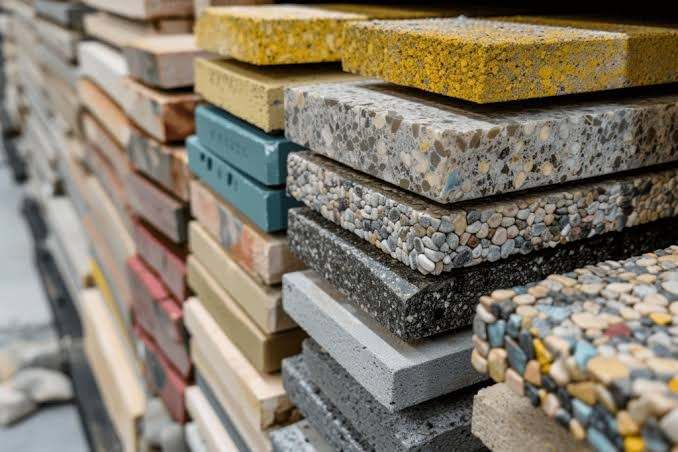
2.2 Concrete Paving Blocks
Concrete paving blocks are manufactured units used to create durable paved surfaces in residential, commercial and industrial developments.
They are available in different shapes, thicknesses, colours and surface finishes.
Common applications include:
- Residential driveways.
- Commercial parking areas.
- Pedestrian walkways and footpaths.
- Shopping centres and business premises.
- Industrial yards and loading areas.
- Estate roads and access areas.
- Recreational and landscaped spaces.
Interlocking paving blocks are particularly useful because their shapes allow them to fit together to form a stable paved surface when properly installed.
The appropriate thickness and strength should be determined by expected traffic, loading conditions, ground preparation and project specifications.
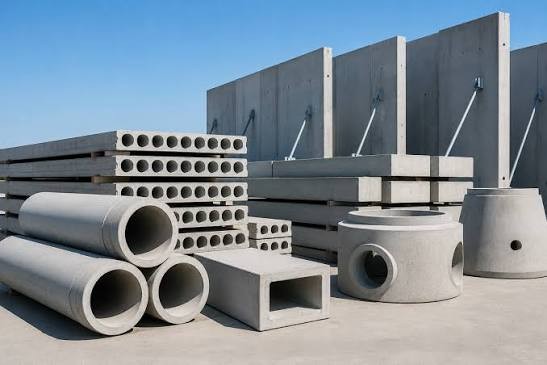
2.3 Precast Concrete Products
Precast concrete products are manufactured in moulds away from their final installation locations. After suitable curing and quality checks, the finished components are transported to construction sites for installation.
They are widely used in building construction and infrastructure projects that require repeatable dimensions and efficient construction methods.
Examples include:
- Precast concrete beams.
- Precast concrete columns.
- Precast concrete wall panels.
- Precast concrete slabs.
- Precast staircases.
- Precast drainage channels.
- Concrete inspection chambers.
- Other reinforced concrete components.
Precast concrete can reduce certain on-site casting activities and formwork requirements. It can also support better production control when appropriate manufacturing and quality assurance procedures are followed.
However, transportation, lifting equipment, structural connections and installation procedures must be properly planned.
2.4 Concrete Kerbstones
Concrete kerbstones are manufactured units used to define the edges of roads, footpaths, parking areas and paved surfaces.
They provide separation between different surface types, help maintain pavement boundaries and can guide surface water towards designated drainage systems.
Common applications include:
- Road construction and rehabilitation.
- Residential estate roads.
- Commercial parking areas.
- Pedestrian walkways.
- Shopping centres.
- Industrial compounds.
- Landscaping projects.
The dimensions, strength and finish of kerbstones should be selected according to their intended application and the relevant project specifications.
2.5 Concrete Culverts and Drainage Products
Concrete drainage products are essential for controlling water movement around buildings, roads, estates and infrastructure developments.
They help direct stormwater, prevent water accumulation, reduce soil erosion and protect surrounding structures from drainage-related damage.
Common products include:
- Reinforced concrete pipes.
- Concrete pipe culverts.
- Precast box culverts.
- Concrete drainage channels.
- Concrete manhole rings.
- Inspection chambers.
- Concrete catch pits.
These products are particularly important in Uganda, where seasonal rainfall can create drainage challenges in residential developments, commercial properties, roads and industrial facilities.
The selection of drainage products should consider water flow, drainage capacity, installation depth, soil conditions, structural loading and the intended drainage system.
2.6 Concrete Slabs
Concrete slabs are flat structural elements used to create floors, roofs, platforms and other horizontal surfaces.
They can be cast in situ or manufactured as precast components.
Common applications include:
- Residential building floors.
- Commercial building floors.
- Industrial floors.
- Roof slabs.
- Parking structures.
- Loading platforms.
- Outdoor working surfaces.
Concrete slabs must be designed according to expected loads, reinforcement requirements, support conditions, concrete specifications and intended use.
For industrial and commercial buildings, floor design is especially important because machinery, vehicles, equipment and stored materials can impose substantial loads.
2.7 Concrete Lintels
Concrete lintels are horizontal structural components installed above openings in masonry walls.
They support the masonry and other specified loads above doors, windows and similar openings, transferring those loads to the surrounding wall structure.
Concrete lintels are commonly used in:
- Residential houses.
- Apartment buildings.
- Commercial developments.
- Schools and institutional buildings.
- Industrial buildings.
- Boundary walls.
Their dimensions, reinforcement and installation details must be appropriate for the opening width, loading conditions and structural design.
2.8 Concrete Manhole Covers
Concrete manhole covers are used to cover inspection chambers and underground utility access points.
They are commonly incorporated into drainage networks, sewerage systems, stormwater installations and other civil engineering works.
Their design must account for the location and anticipated loading. A cover installed in a pedestrian area may have different performance requirements from one installed in a road or industrial yard.
2.9 Concrete Fence Posts
Concrete fence posts are manufactured components used to support fencing materials and establish property boundaries.
They are suitable for:
- Residential property boundaries.
- Agricultural farms.
- Industrial premises.
- Commercial properties.
- Institutional compounds.
- Perimeter fencing projects.
Their suitability depends on post dimensions, reinforcement, embedment depth, soil conditions and the type of fencing they are intended to support.
2.10 Concrete Roofing Tiles
Concrete roofing tiles are manufactured from cement-based mixtures and formed into specific roofing profiles.
They are used in residential, commercial and institutional roofing projects where the roof structure is designed to accommodate their weight.
Important considerations include tile dimensions, water resistance, surface finish, weight, installation requirements and compatibility with the roof design.
3. Applications of Concrete Products in Uganda’s Construction Industry
Concrete products serve different purposes across Uganda’s building, property development and infrastructure sectors.
Their versatility makes them suitable for small residential developments as well as large commercial and civil engineering projects.
Residential Construction
Residential projects require concrete products for foundations, walling, floors, driveways, boundary walls and external works.
Concrete blocks, lintels, slabs and paving units are among the materials commonly incorporated into housing developments.
For residential construction, product selection should follow approved architectural and structural drawings to ensure that materials are suitable for their intended applications.
Commercial Building Construction
Commercial buildings often require materials that support higher occupancy, regular use and specific architectural requirements.
Concrete blocks, structural slabs, paving units, kerbstones and precast components can be used in:
- Office buildings.
- Shopping centres.
- Hotels.
- Restaurants.
- Retail developments.
- Apartment complexes.
- Commercial parking areas.
The selection of concrete products should consider building design, expected loads, durability and the functional requirements of each space.
Industrial Construction
Industrial developments require materials that can withstand demanding operational conditions.
Factories, warehouses, workshops and logistics facilities may require heavy-duty concrete floors, reinforced drainage structures, industrial paving and precast concrete components.
Product specifications should account for machinery loads, vehicle movements, material storage, environmental exposure and other operational requirements.
Road Construction and Infrastructure
Concrete products are important in road construction and supporting infrastructure.
Kerbstones, drainage channels, culverts, concrete pipes and paving blocks help create organised and functional infrastructure.
Proper installation, ground preparation and drainage planning are essential for long-term performance.
Institutional and Public Infrastructure
Schools, hospitals, churches, recreational facilities and other institutions also depend on concrete products for building construction, drainage, walkways, parking areas and external infrastructure.
In these projects, material selection should consider safety, durability, accessibility and the expected level of use.
4. Benefits of Using Quality Concrete Products
Choosing quality concrete products provides several advantages to contractors, developers and property owners.
4.1 Strength and Structural Performance
Concrete products are designed for different load-bearing and non-load-bearing applications.
When properly manufactured, specified and installed, they can provide the strength and stability required for their intended uses.
For structural applications, the specified strength must be verified through appropriate testing and engineering assessment.
4.2 Long-Term Durability
Quality concrete products can withstand regular use and exposure to different environmental conditions.
Their durability depends on factors such as:
- Quality of cement and aggregates.
- Correct concrete mix proportions.
- Appropriate water content.
- Proper compaction.
- Adequate curing.
- Reinforcement detailing where required.
- Installation workmanship.
- Environmental exposure.
Using suitable materials and following good construction practices can reduce premature deterioration.
4.3 Reduced Maintenance Requirements
Concrete products that are correctly manufactured, specified and installed can reduce the frequency of repairs and replacements.
For example, properly installed concrete paving can provide a durable surface for driveways, walkways and parking areas.
Similarly, appropriately designed drainage products can help prevent water-related damage to surrounding infrastructure.
4.4 Versatility in Construction
Concrete can be manufactured into different shapes, dimensions and finishes.
This makes it suitable for structural components, masonry products, paving, drainage systems, roadworks, landscaping and other construction applications.
4.5 Improved Construction Efficiency
Precast concrete products can improve construction efficiency by allowing certain components to be manufactured before they are required on site.
This can reduce on-site casting activities, minimise some formwork requirements and support better construction scheduling.
4.6 Cost Effectiveness Over the Project Lifecycle
The cheapest concrete product is not necessarily the most economical option.
A product with inadequate strength or poor manufacturing quality may require early replacement, repairs or additional maintenance.
Investing in suitable concrete products can help reduce avoidable expenses and improve the long-term value of a construction development.
5. Factors to Consider When Choosing Concrete Products in Uganda
Selecting appropriate concrete products requires more than comparing prices. Contractors and developers should evaluate technical performance, manufacturing quality, supplier reliability and project requirements.
5.1 Compressive Strength
Compressive strength measures the ability of concrete to withstand compressive loading before failure.
Different concrete products require different strength levels depending on their intended applications.
For example, concrete blocks used in load-bearing walls must satisfy the relevant structural requirements. Paving blocks used in vehicle-accessible areas must also meet the performance requirements specified for the expected traffic.
Always request relevant strength specifications and supporting test documentation where applicable.
5.2 Quality of Raw Materials
The quality of raw materials directly influences the performance of concrete products.
Important materials include:
Cement: Should meet applicable quality requirements and be stored properly to prevent moisture damage.
Sand: Should be clean and appropriately graded for the intended concrete application.
Coarse aggregates: Should be durable, clean and suitably graded.
Water: Should be suitable for concrete production.
Reinforcement steel: Where required, should meet the applicable specifications and structural design requirements.
Poor-quality raw materials can compromise strength, durability and consistency.
5.3 Manufacturing Process
Concrete products should be manufactured using appropriate production methods and equipment.
Important production considerations include accurate batching, controlled water content, proper mixing, mould quality, compaction and curing.
Manufacturing consistency is particularly important when purchasing large quantities for commercial and industrial developments.
5.4 Curing Quality
Curing is essential for concrete strength development and durability.
Concrete products should receive appropriate curing to allow cement hydration and the development of their required properties.
Poor curing can result in weak products, surface defects, cracking and reduced durability.
Before accepting concrete products, confirm that they have been adequately cured and are suitable for transportation and installation.
5.5 Product Dimensions and Consistency
Concrete products should have dimensions that match the project’s drawings and technical specifications.
Inconsistent dimensions can cause installation difficulties, uneven surfaces, excessive mortar consumption and unnecessary material wastage.
Check representative samples before placing large orders.
5.6 Environmental Suitability
Uganda’s rainfall patterns, soil conditions and local environmental factors can influence the performance of concrete products.
Products intended for outdoor use should be suitable for their exposure conditions.
Drainage products, for example, must be designed for expected water flow, while paving materials must be appropriate for anticipated traffic and environmental exposure.
5.7 Compliance with Applicable Standards
Conformity with applicable standards is an important consideration when purchasing concrete products in Uganda.
The Uganda National Bureau of Standards (UNBS) provides specifications and conformity assessment services for construction materials and other products.
Buyers should establish the relevant standards for the product being purchased and verify the applicable requirements.
For example, different requirements apply to hollow concrete blocks, solid concrete blocks, precast paving units and concrete kerbs.
Where relevant, request product test reports, conformity documentation and evidence of compliance with applicable Uganda Standards or other recognised specifications.
For structural concrete applications, the relevant design codes and project specifications should also be followed.
6. How to Identify High-Quality Concrete Products
Before purchasing concrete products, assess their condition and verify whether they meet the required specifications.
The following checks can help builders and property developers make informed purchasing decisions.
1. Inspect the product surface
Look for visible cracks, damaged edges, excessive honeycombing, poor compaction and other manufacturing defects.
2. Check product dimensions
Measure representative samples to confirm that the products match the required dimensions.
3. Request technical specifications
Ask the supplier for relevant product grades, intended applications and performance information.
4. Verify curing and maturity
Confirm that products have received appropriate curing and are ready for transportation and installation.
5. Request laboratory test results
For critical applications and major projects, request relevant test reports from an appropriately qualified laboratory.
6. Check conformity documentation
Where applicable, confirm whether the product has the required certification or conformity documentation.
7. Assess product consistency
Products supplied in one batch should demonstrate reasonable consistency in appearance, dimensions and specified performance.
For important construction projects, visual inspection should be supported by appropriate technical verification rather than treated as a substitute for strength testing.
7. What Determines the Price of Concrete Products in Uganda?
Concrete product prices in Uganda vary depending on product type, dimensions, specifications, manufacturing processes, quantities and delivery arrangements.
There is no single price that applies to all concrete products because different applications require different materials and performance characteristics.
The main factors influencing prices include:
Type of Concrete Product
Different products require different quantities of raw materials and manufacturing processes.
For example, a reinforced concrete culvert may require more specialised production and reinforcement than a standard concrete block.
Product Dimensions and Thickness
Larger or thicker concrete products generally require more materials and may involve additional manufacturing requirements.
Required Strength and Performance
Products designed for demanding structural or traffic-loading conditions may require specific mix designs, reinforcement and quality testing.
Quality of Raw Materials
Changes in cement, sand, aggregates and reinforcement costs can affect the final product price.
Manufacturing Technology
The equipment, moulds, compaction methods and production processes used can influence manufacturing costs and product consistency.
Order Quantity
Large orders may provide opportunities for more efficient production and supply arrangements, depending on the supplier.
Transportation and Delivery Location
Delivery costs depend on the distance between the supplier and construction site, product weight, vehicle requirements and accessibility.
Installation Requirements
Some products require specialised equipment, lifting arrangements, skilled labour or additional site preparation.
How to Obtain an Accurate Quotation
When requesting a quotation for concrete products in Uganda, provide the supplier with:
- The specific product required.
- Product dimensions and specifications.
- Required strength or grade.
- Total quantity.
- Project location.
- Delivery requirements.
- Expected procurement schedule.
Providing this information helps suppliers understand your requirements and prepare more accurate quotations.
For construction materials enquiries, visit the Daltrev Co. Ltd Construction Materials page.
8. Concrete Products vs Traditional Building Materials
Concrete products are often compared with other construction materials, including burnt clay bricks, natural stone and other masonry products.
The right choice depends on the intended application, technical requirements, availability and project budget.
| Consideration | Concrete Products | Other Traditional Materials |
|---|---|---|
| Manufacturing | Can be manufactured in controlled moulds | Often involve different production methods |
| Dimensions | Can be produced to specified sizes | May have greater dimensional variations |
| Applications | Building, paving, drainage and infrastructure | Depend on the material type |
| Design flexibility | Different shapes and finishes are possible | Varies by material |
| Quality control | Can be supported by standardised testing | Depends on production and testing |
| Installation | Depends on the particular product | Depends on the material and application |
Concrete products should not automatically replace every traditional building material.
Architects, engineers and quantity surveyors should assess the technical and economic suitability of each option before specifying materials.
9. Common Mistakes to Avoid When Purchasing Concrete Products
Purchasing unsuitable concrete products can affect construction quality, increase expenses and cause avoidable project delays.
Builders and developers should avoid the following mistakes.
Choosing Products Based on Price Alone
Low prices may be attractive, but they should not replace proper assessment of product quality, strength and suitability.
Ignoring Technical Specifications
Using concrete products that do not meet the project’s requirements can create structural or performance problems.
Purchasing Poorly Cured Products
Inadequate curing can affect the strength and durability of concrete products.
Failing to Inspect Deliveries
Damaged products can lead to material wastage, replacement costs and construction delays.
Using the Wrong Product for the Application
A concrete block suitable for a non-load-bearing partition should not automatically be assumed suitable for a load-bearing wall.
Similarly, paving blocks intended for pedestrian areas should not automatically be used in heavily trafficked industrial yards.
Failing to Plan Transportation
Concrete products can be heavy and vulnerable to damage during handling.
Poor transportation arrangements may result in broken units, delayed deliveries and additional expenses.
Ignoring Drainage Requirements
Poor drainage planning can expose concrete pavements, culverts and other infrastructure components to unnecessary water-related damage.
Failing to Work With Qualified Professionals
Structural concrete products and other critical components should be specified and approved by appropriately qualified construction professionals.
10. The Importance of Quality Control in Concrete Product Manufacturing
Quality control is essential for ensuring that concrete products meet their intended performance requirements.
A properly managed production process should include checks at different stages, from raw material selection to final product inspection.
Important quality control activities include:
1. Raw material inspection: Checking cement, aggregates, sand and water for suitability.
2. Batching control: Ensuring that concrete ingredients are measured accurately.
3. Mixing control: Maintaining consistent mixing procedures and appropriate water content.
4. Mould inspection: Ensuring moulds are clean and maintain the required dimensions.
5. Compaction: Reducing excessive air voids and achieving appropriate product density.
6. Curing: Providing suitable curing conditions and duration.
7. Dimensional inspection: Confirming that products meet the specified measurements.
8. Strength testing: Verifying compressive strength and other required performance characteristics.
9. Final inspection: Checking products for visible defects before storage and transportation.
For structural concrete and precast components, quality assurance should also cover reinforcement placement, concrete cover, connection details and other engineering requirements.
Quality control helps manufacturers and suppliers maintain consistency and gives buyers greater confidence in the materials used for construction.
11. How to Choose a Reliable Concrete Products Supplier in Uganda
Selecting a dependable supplier is an important part of construction procurement.
The supplier should understand your project requirements, provide appropriate product information and support reliable supply arrangements.
Consider the following factors when choosing a concrete products supplier.
Product Range
Consider suppliers who can assist with sourcing the concrete products and related building materials required for your project.
Quality Assurance
Ask about product specifications, manufacturing controls and available test documentation.
Technical Knowledge
A knowledgeable supplier should understand the differences between products intended for various construction applications.
Supply Capacity
Confirm that the supplier can meet your required quantities and procurement schedule.
Delivery Arrangements
Discuss transportation, offloading and delivery to your construction site.
Pricing Transparency
Request a quotation that clearly identifies product specifications, quantities, delivery costs and other applicable charges.
Customer Support
Choose a supplier that communicates clearly and responds to project-related enquiries.
For large developments, evaluate suppliers before procurement begins rather than waiting until materials are urgently needed.
12. Construction Products and Building Material Solutions from Daltrev Co. Ltd
Successful construction projects depend on suitable building materials, reliable supply arrangements and an understanding of project specifications.
Daltrev Co. Ltd supports residential, commercial, industrial and infrastructure developments in Uganda through construction products, building materials and related professional services.
Our construction materials offering covers several important categories, including cement and binding materials, steel and reinforcement, sand and aggregates, bricks and building blocks, roofing materials, timber, plumbing supplies, electrical products and finishing materials.
We also support enquiries involving concrete products and other construction materials according to project requirements, product specifications, quantities and availability.
Why Consider Daltrev Co. Ltd for Construction Materials?
1. A Broad Range of Construction Material Categories
We support enquiries across different building and infrastructure material categories, helping contractors and developers identify the supplies required for their projects.
2. Project-Based Material Enquiries
Every construction project has different requirements. We encourage clients to share their material schedules, quantities, technical specifications and project locations so that suitable sourcing options can be discussed.
3. Support for Different Construction Projects
Our construction materials solutions support enquiries relating to residential buildings, commercial developments, industrial facilities, institutional projects and infrastructure works.
4. Construction and Civil Works Experience
In addition to construction material supply, Daltrev Co. Ltd undertakes construction and civil works, including building works, road construction, drainage and infrastructure-related activities.
5. Professional Construction Support
Our wider professional services include construction consultancy, project management, quantity surveying, architectural and structural design, interior design and facilities maintenance.
By bringing together construction products, building materials and related services, we aim to support clients in addressing different requirements throughout the construction process.
Explore our Construction Materials and Building Supplies in Uganda to learn more about our material categories.
You can also visit our Construction and Civil Works page to discover our wider construction solutions.
Whether you are constructing a residential house, developing commercial premises, building an industrial facility or undertaking infrastructure works, Daltrev Co. Ltd welcomes your construction materials enquiries.
13. The Future of Concrete Products in Uganda’s Construction Industry
The demand for reliable construction materials will remain important as Uganda continues to develop residential properties, commercial buildings, industrial facilities and infrastructure.
Several developments are influencing the use of concrete products in modern construction.
Growth in Precast Concrete Technology
Precast concrete manufacturing offers opportunities to improve production consistency and reduce certain on-site construction activities.
Increased Demand for Quality Building Materials
Developers are paying greater attention to construction durability, material performance and long-term maintenance costs.
Expansion of Urban and Residential Developments
The growth of housing estates, apartments, commercial properties and institutional buildings continues to create demand for concrete blocks, paving products, drainage systems and other building components.
Improved Quality Assurance
Greater attention to material testing, product conformity and construction supervision can help improve the quality of concrete products used in building projects.
Sustainable Concrete Production
The construction industry is exploring ways to reduce material wastage, optimise cement consumption, use suitable alternative materials and improve production efficiency.
These developments create opportunities for manufacturers, suppliers, contractors and developers to improve construction quality and efficiency across Uganda.
14. Frequently Asked Questions About Concrete Products in Uganda
1. What are the most commonly used concrete products in Uganda?
Common concrete products include hollow concrete blocks, solid concrete blocks, paving blocks, concrete slabs, kerbstones, lintels, culverts, drainage channels, manhole covers and precast concrete components.
2. What are concrete products used for?
Concrete products are used in residential and commercial building construction, industrial developments, road construction, drainage systems, landscaping, boundary walls and infrastructure projects.
3. Which concrete blocks are best for building a house in Uganda?
The appropriate concrete blocks depend on the building design, wall application, structural requirements and specified compressive strength. Load-bearing and non-load-bearing applications should be assessed separately by qualified professionals.
4. How can I identify high-quality concrete blocks?
Check their dimensions, surface condition, curing quality, manufacturing consistency and relevant strength specifications. For important applications, request laboratory test results and applicable conformity documentation.
5. What determines concrete product prices in Uganda?
Prices depend on the type of product, dimensions, strength requirements, raw material costs, manufacturing process, order quantities and transportation arrangements.
6. Are precast concrete products suitable for commercial construction?
Yes. Precast concrete products can be used in suitable commercial applications, including slabs, beams, columns, wall panels and drainage structures. Their suitability depends on engineering design, product specifications and installation requirements.
7. What is the difference between concrete blocks and paving blocks?
Concrete blocks are primarily manufactured for masonry and wall construction, while paving blocks are designed for constructing external paved surfaces such as driveways, walkways and parking areas.
8. Why is curing important in concrete product manufacturing?
Curing provides suitable conditions for cement hydration and strength development. Proper curing helps improve the strength, durability and overall performance of concrete products.
9. Where can I find concrete products in Uganda?
Concrete products can be sourced from manufacturers, construction material suppliers and specialist precast concrete producers. Buyers should compare product specifications, quality documentation, pricing and delivery arrangements before placing orders.
10. Does Daltrev Co. Ltd supply concrete products in Uganda?
Daltrev Co. Ltd provides construction products, concrete materials and building supplies for contractors, developers and infrastructure projects. Contact the company to discuss specific product requirements, specifications, quantities and availability.
11. How can I request a quotation for concrete products from Daltrev Co. Ltd?
Visit the Daltrev Co. Ltd website or contact the team directly. Provide the product type, dimensions, specifications, required quantities, project location and delivery requirements to help the team assess your enquiry.
15. Conclusion: Choose Quality Concrete Products for Durable Construction
Concrete products are essential to Uganda’s building and infrastructure development. From concrete blocks and paving units to culverts, kerbstones, drainage channels and precast structural components, these materials support different stages of construction.
However, achieving durable construction requires more than purchasing concrete products. Builders and property developers must consider compressive strength, manufacturing quality, curing, dimensions, applicable standards, installation requirements and supplier reliability.
Choosing suitable concrete products helps improve construction quality, minimise avoidable material wastage and support the long-term performance of buildings and infrastructure.
If you are planning a residential, commercial, industrial or infrastructure project, prioritise appropriate construction materials and work with dependable suppliers.
Daltrev Co. Ltd is ready to support your construction materials enquiries in Uganda. Contact our team to discuss your project requirements, explore suitable material categories and request a quotation.