Choosing the right concrete product supplier in Uganda is an important decision for anyone planning a residential, commercial, industrial or infrastructure construction project. The quality of concrete products used during construction directly affects a building’s strength, durability, appearance and long-term maintenance requirements.
Whether you are constructing a family home, developing rental apartments, building commercial premises, installing a paved driveway or undertaking a civil engineering project, sourcing reliable concrete products is essential. Poor-quality blocks, paving stones, precast components and drainage products can lead to structural weaknesses, premature deterioration, costly repairs and construction delays.
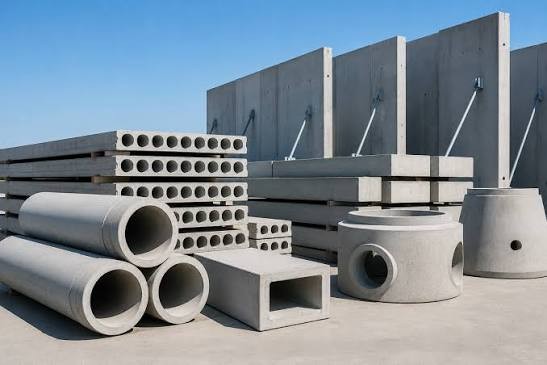
Uganda’s construction industry uses a wide range of concrete products, including concrete blocks, paving blocks, kerbstones, culverts, concrete pipes, precast slabs, lintels and manhole covers. However, not every supplier offers the same product quality, technical support, pricing, delivery arrangements or consistency.
Knowing how to evaluate suppliers before placing an order can help you avoid unnecessary expenses and achieve better construction results.
This guide explains how to choose reliable concrete product suppliers in Uganda, what to consider when comparing quotations, how to assess product quality and which questions to ask before purchasing.
1. Understanding Concrete Products Used in Uganda
Concrete products are construction components manufactured using cement, aggregates, water and, where necessary, additional materials or reinforcement. They can be produced as individual units, moulded components or precast elements for use in different building and infrastructure applications.
Concrete products are widely used because of their strength, versatility, durability and ability to withstand demanding construction conditions when properly designed, manufactured, installed and maintained.
Common concrete products available in Uganda include:
Concrete Building Blocks
Concrete blocks are used in constructing walls for residential houses, apartments, commercial buildings, factories, warehouses and boundary structures.
They may be hollow or solid, depending on their intended application and design requirements.
When purchasing concrete blocks, consider their dimensions, strength, density, appearance and suitability for the intended wall.
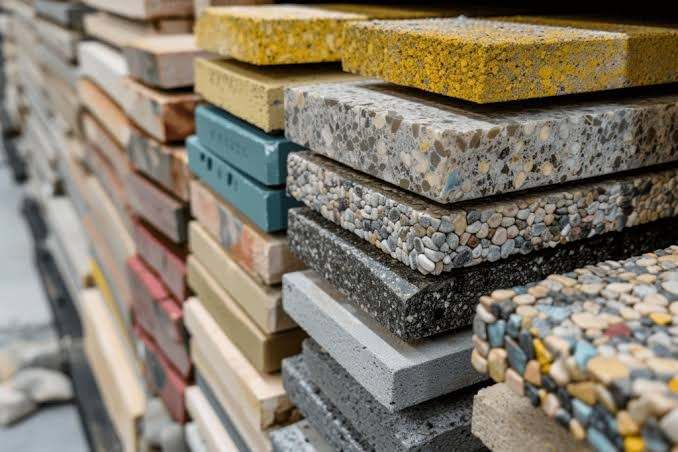
Concrete Paving Blocks
Concrete paving blocks are commonly used for driveways, parking areas, walkways, commercial compounds, residential compounds and outdoor spaces.
They are available in different shapes, thicknesses, colours and surface finishes. Their suitability depends on the expected traffic, ground preparation, laying method and drainage conditions.
Precast Concrete Products
Precast concrete products are manufactured before being transported to the construction site for installation.
Examples include precast slabs, beams, columns, panels, drainage channels, steps and other construction components.
Their dimensions, reinforcement details, lifting requirements and load capacity should be checked against the project specifications.
Concrete Kerbstones
Concrete kerbstones are used to define road edges, parking spaces, walkways, landscaped areas and paved surfaces.
They help separate different surface areas, support paving edges and improve the organisation of external spaces.
Concrete Culverts and Drainage Products
Concrete culverts, pipes and drainage channels are used to manage stormwater and support water flow beneath roads, access routes and other infrastructure.
They are particularly important for projects where effective drainage is necessary to protect roads, buildings and surrounding land from water damage.
Concrete Lintels
Concrete lintels are structural components installed above door and window openings to support the loads above them.
Their dimensions, reinforcement and load-bearing capacity must be appropriate for the design requirements.
Concrete Slabs and Other Precast Components
Concrete slabs and related precast elements are used in selected building, paving and infrastructure applications.
The required thickness, reinforcement, strength and installation method depend on the intended use.
Understanding the products required for your project makes it easier to identify a supplier with the right product range and technical capabilities.
2. Why Choosing the Right Concrete Product Supplier Matters
The supplier you select can influence the quality, cost and progress of your construction project.
Working with a reliable concrete product supplier offers several important benefits.
Better Construction Quality
Quality concrete products help contractors achieve the required construction performance when they are correctly specified and installed.
Products that meet the required dimensions and strength specifications reduce the risk of defects associated with unsuitable materials.
Improved Project Durability
Concrete products used in walls, pavements, drainage systems and other construction components must withstand the conditions for which they are designed.
Selecting suitable products from a dependable supplier contributes to the long-term performance of the completed project.
Reduced Material Wastage
Inconsistent dimensions, damaged products and defective units can increase material wastage.
A supplier who provides products that match the agreed specifications can help reduce unnecessary replacements and site losses.
More Reliable Construction Planning
Construction projects depend on materials arriving at the right time and in the correct quantities.
Reliable supply arrangements make it easier to coordinate contractors, labour, equipment and other construction activities.
Better Cost Management
The cheapest quotation does not always represent the lowest overall construction cost.
Quality products, accurate quantities, dependable delivery and fewer replacements can provide better value over the life of a project.
3. Key Factors to Consider When Choosing Concrete Product Suppliers in Uganda
Before selecting a supplier, evaluate several factors rather than relying on price alone.
3.1 Product Quality and Strength
Product quality should be one of your first considerations.
Concrete products must be suitable for their intended application and comply with the relevant project specifications and applicable standards.
For example, concrete blocks intended for particular load-bearing applications must have appropriate strength characteristics. Similarly, paving blocks for vehicle parking areas must be suitable for the expected traffic and service conditions.
Ask the supplier whether relevant product testing information, technical specifications or quality documentation is available.
Where strength is critical, request appropriate test results rather than relying only on visual inspection.
3.2 Product Dimensions and Consistency
Concrete products should have dimensions that match the construction drawings and project requirements.
Inconsistent block sizes, uneven paving stones or poorly formed precast components can create installation difficulties and affect the finished work.
Check whether the supplier can consistently provide the specified:
- Length, width and thickness.
- Shape and profile.
- Surface finish.
- Product tolerances.
- Reinforcement details, where applicable.
Consistent dimensions help contractors plan construction activities more accurately.
3.3 Manufacturing and Curing Practices
The way concrete products are manufactured has a significant effect on their quality.
The quality of cement, aggregates, water, mix proportions, compaction and curing all influence the performance of finished products.
Proper curing allows concrete to develop its intended strength and durability.
When assessing a supplier, ask about the manufacturing process and how products are handled before delivery.
Avoid assuming that a product is ready for use simply because it looks dry or has a hard surface.
3.4 Range of Available Concrete Products
A supplier offering a suitable range of concrete products can make procurement easier, particularly for projects requiring several types of materials.
Depending on your project, you may need:
- Concrete blocks.
- Concrete paving blocks.
- Precast concrete products.
- Concrete kerbstones.
- Concrete culverts.
- Concrete drainage channels.
- Concrete lintels.
- Concrete slabs.
- Manhole covers.
- Other specialised concrete components.
However, a large product catalogue alone does not guarantee quality. Confirm that the supplier can provide the specific products, specifications and quantities required.
3.5 Supply Capacity and Stock Availability
A supplier should be able to meet your project’s material requirements within the agreed delivery period.
This is especially important for large developments, housing estates, commercial buildings and infrastructure projects.
Before placing an order, establish:
- Whether the required products are currently available.
- Whether the supplier can handle your order quantity.
- How much notice is required for large orders.
- Whether production can be scheduled for future deliveries.
- What happens if additional materials are needed.
A supplier who communicates clearly about availability can help prevent disruptions.
3.6 Delivery and Transportation Arrangements
Concrete products can be heavy, bulky and vulnerable to damage during handling and transportation.
Delivery arrangements should therefore be considered before confirming an order.
Ask whether the supplier provides transportation to your construction site, whether delivery charges are included in the quotation and how products are protected during loading and unloading.
Also consider the accessibility of your site, road conditions, offloading arrangements and the type of vehicle required.
For projects outside major urban centres, transport planning can significantly affect the final material cost.
3.7 Pricing and Value for Money
Compare quotations from different concrete product suppliers in Uganda, but make sure you are comparing products with equivalent specifications.
A lower price may reflect differences in dimensions, strength, manufacturing quality, curing, delivery or other supply conditions.
Your comparison should consider:
- Price per unit.
- Product dimensions and specifications.
- Required quantity.
- Delivery charges.
- Loading and offloading costs.
- Taxes and other applicable charges.
- Replacement arrangements for defective or damaged products.
The most suitable supplier is one who offers the right balance of quality, price, reliability and service.
3.8 Technical Knowledge and Customer Support
A good supplier should understand the products being supplied and be able to explain their intended applications and limitations.
For example, a buyer may need help distinguishing between paving blocks suitable for pedestrian walkways and those designed for heavier traffic.
Similarly, precast concrete components may require technical information concerning dimensions, reinforcement, lifting and installation.
Where the application is structural or safety-critical, the supplier’s product information should be reviewed by the project’s qualified engineer or relevant technical professional.
4. How to Check the Quality of Concrete Products Before Buying
Before making a large purchase, inspect samples or arrange a suitable quality assessment.
Visual inspection can identify obvious defects, although it cannot establish the actual compressive strength or full performance of a concrete product.
The following checks can help you assess general product condition.
Check for Visible Cracks
Inspect blocks, paving stones and precast products for significant cracks, damaged edges or visible signs of poor handling.
Cracks may indicate manufacturing, curing, handling or transportation problems. Their significance should be assessed according to the product type and application.
Examine Product Shape and Dimensions
Products should have reasonably consistent dimensions and shapes within the agreed specifications.
Poorly formed products can make installation difficult and affect alignment, joint spacing and finished appearance.
Inspect the Surface Finish
Look for excessive honeycombing, large voids, crumbling edges, uneven surfaces or other visible defects.
The acceptable finish will depend on whether the product is intended for structural, functional or decorative use.
Ask About Strength Testing
For products where strength is important, request relevant test results or technical documentation.
Visual appearance and a simple hand inspection cannot reliably determine concrete compressive strength.
Where required, independent laboratory testing can provide more dependable evidence of product performance.
Check Storage and Handling Conditions
Products should be stored and handled in a way that minimises damage and contamination.
Ask how long products have been curing, whether they are protected during storage and how they will be transported to your site.
5. Questions to Ask Before Choosing a Concrete Product Supplier
Before confirming an order, ask the supplier questions that help establish whether the products and supply arrangements are suitable for your project.
Important questions include:
- Which concrete products do you currently supply?
- What product dimensions and specifications are available?
- Can you provide technical information or relevant test results?
- How do you control manufacturing quality?
- What curing procedures are followed?
- Can you supply the quantities required for my project?
- What is the expected production or delivery timeline?
- Do you provide transportation to construction sites?
- Are delivery charges included in the quotation?
- What arrangements apply to defective or damaged products?
- Can you provide samples before a large order is confirmed?
- Can you supply products according to project drawings and specifications?
The answers will help you compare suppliers and identify potential risks before committing your construction budget.
6. Comparing Concrete Product Suppliers in Uganda
Comparing several suppliers is a useful way to make an informed purchasing decision.
However, a fair comparison requires more than collecting prices.
Request written quotations that clearly describe the products being offered.
A quotation should ideally include the product name, dimensions, relevant specifications, unit price, quantity, total cost, delivery charges and expected delivery period.
The following comparison framework can help:
| Evaluation factor | What to check |
|---|---|
| Product quality | Relevant specifications, testing and visible condition |
| Dimensions | Consistency with project requirements |
| Product range | Availability of required concrete products |
| Pricing | Total cost for equivalent products |
| Supply capacity | Ability to meet required quantities |
| Delivery | Transportation, timing and offloading arrangements |
| Communication | Responsiveness and clarity |
| Documentation | Quotations, specifications and order confirmation |
| After-sales support | Procedures for addressing supply problems |
Do not select a supplier solely because their quotation is the cheapest. Consider the total cost and the likelihood that the supplier can deliver products that meet your requirements.
7. Common Mistakes to Avoid When Buying Concrete Products
Purchasing unsuitable concrete products can create problems that are expensive to correct.
Avoid the following mistakes.
Choosing the Cheapest Supplier Without Checking Quality
Low prices can be attractive, particularly when purchasing large quantities.
However, products that do not meet the required specifications may lead to breakages, poor installation and premature deterioration.
Always compare quality and specifications alongside price.
Failing to Confirm Product Dimensions
Ordering products without confirming their dimensions can result in materials that do not match the construction drawings.
This may cause installation problems, unnecessary cutting and material wastage.
Ignoring the Intended Application
Not every concrete product is suitable for every construction activity.
For example, paving products intended for pedestrian walkways may not be appropriate for heavy vehicle traffic.
Always specify how the products will be used.
Ordering Without Checking Quantities
Incorrect quantity estimates can result in shortages or excess materials.
Prepare a proper material schedule based on drawings, measurements and expected wastage.
For large or technically demanding projects, involve the relevant construction professional or quantity surveyor.
Ignoring Transportation and Handling Costs
A product may appear affordable at the supplier’s premises but become expensive after transportation and offloading.
Compare the full delivered cost before making a decision.
Failing to Agree on Delivery Schedules
Late deliveries can interrupt construction activities and increase labour or equipment costs.
Agree on delivery dates and quantities before confirming the order.
Failing to Inspect Deliveries
Products can be damaged during loading, transportation or offloading.
Inspect deliveries against the order and document any shortages or visible damage as soon as possible.
8. How Much Do Concrete Products Cost in Uganda?
The cost of concrete products in Uganda varies depending on the product type, specifications, dimensions, quality, quantity and supplier.
For example, the price of concrete blocks is influenced by their size, thickness, manufacturing method and strength requirements. Paving block prices may vary according to thickness, shape, colour and intended traffic loading.
Precast concrete products can have different pricing structures depending on their dimensions, reinforcement, design complexity, mould requirements and production quantities.
Other factors that affect concrete product prices include:
1. Raw material costs: Changes in cement, aggregates and other production inputs can affect manufacturing costs.
2. Product specifications: Larger, thicker or specially designed products may cost more than standard units.
3. Manufacturing processes: Products requiring specialised moulds, reinforcement or additional quality control may have higher production costs.
4. Order quantities: Bulk orders may offer different pricing arrangements depending on production capacity and supply conditions.
5. Transportation distance: Delivery to distant or difficult-to-access sites may increase the total purchase cost.
6. Market availability: Availability of specific products and materials can influence pricing and delivery periods.
7. Quality requirements: Products requiring particular performance specifications, testing or documentation may have different costs.
For accurate pricing, request a quotation based on your actual product requirements, quantities and delivery location rather than relying on general market estimates.
9. Choosing Concrete Products for Different Construction Projects
Different construction projects require different types of concrete products. Selecting materials according to their intended application helps improve performance and avoid unnecessary expenses.
Residential Construction
Residential developments may require concrete blocks, lintels, paving blocks, drainage products, precast slabs and other building components.
The selection should be based on the architectural and structural designs, building use and site conditions.
Commercial Construction
Commercial buildings such as offices, shopping centres, hotels and retail developments may require concrete products for walls, parking areas, walkways, drainage systems and external works.
Consistency, durability and suitability for expected use are particularly important.
Industrial Construction
Factories, warehouses and industrial facilities may require concrete products capable of meeting demanding operational and environmental conditions.
Material selection should consider expected loads, equipment movement, drainage requirements and the intended service environment.
Road and Infrastructure Projects
Road construction and infrastructure developments may require culverts, kerbstones, drainage channels, paving blocks and other precast components.
The required specifications should be established according to the engineering design, expected traffic, drainage conditions and applicable project standards.
Institutional Developments
Schools, hospitals, churches and other institutional buildings may require a combination of concrete blocks, paving products, drainage components and precast elements.
The products selected should support the building’s intended use, accessibility, durability and maintenance requirements.
10. The Importance of Reliable Concrete Product Supply for Construction Projects
Reliable material supply is an important part of effective construction project management.
Even when a construction project has good designs, an adequate budget and experienced contractors, inconsistent material availability can affect progress.
Working with dependable suppliers helps construction teams plan procurement, coordinate deliveries and manage material requirements.
It can also reduce the risk of receiving unsuitable products or experiencing avoidable delays.
For large developments, procurement should be coordinated with the construction programme. Materials should be ordered early enough to allow for production, testing, transportation and site preparation.
The project team should also maintain proper records of purchase orders, delivery notes, product specifications and inspection findings.
11. Why Work with Daltrev Co. Ltd for Construction Materials and Building Solutions?
Selecting suitable construction materials requires careful attention to project requirements, quality, availability and cost.
Daltrev Co. Ltd supports construction and development projects in Uganda through its range of construction-related products and professional services.
For clients planning residential, commercial, industrial and infrastructure developments, Daltrev provides a point of contact for construction materials enquiries and broader project requirements.
Depending on project specifications and availability, clients can make enquiries about concrete products and other construction materials required for their developments.
In addition to construction materials, Daltrev Co. Ltd provides services in areas such as:
- Building construction and civil engineering works.
- Road construction and rehabilitation.
- Drainage and infrastructure works.
- Construction consultancy and project management.
- Quantity surveying and cost management.
- Architectural and structural design.
- Interior design and facilities maintenance.
Working with a company that understands broader construction requirements can help clients coordinate materials enquiries with other project needs.
Explore Daltrev Co. Ltd construction materials and building supplies to learn more about available solutions.
You can also explore Daltrev’s construction and civil works and professional construction consultancy services.
For enquiries about construction materials or project requirements, contact Daltrev Co. Ltd.
12. Tips for Getting the Best Value When Purchasing Concrete Products in Uganda
Getting value for money involves making informed decisions throughout the purchasing process.
Consider these practical recommendations:
Plan your material requirements early. Use construction drawings, bills of quantities and project specifications to determine the products and quantities needed.
Request detailed quotations. Make sure suppliers are quoting for equivalent products and specifications.
Inspect samples where appropriate. Samples can help you assess dimensions, finish and general product condition before placing a large order.
Prioritise product suitability. Select concrete products according to their intended application rather than choosing based on appearance or price alone.
Confirm delivery arrangements. Establish transportation costs, delivery dates, access requirements and offloading responsibilities.
Keep procurement records. Maintain quotations, purchase orders, delivery notes and relevant quality documents.
Involve qualified professionals. Consult engineers, architects, quantity surveyors or other relevant professionals when selecting products for structural and specialised applications.
These steps can help reduce procurement risks and support better construction outcomes.
13. Frequently Asked Questions About Concrete Product Suppliers in Uganda
1. Where can I find concrete product suppliers in Uganda?
Concrete products can be sourced from construction material suppliers, concrete product manufacturers, precast concrete companies and other building materials providers operating in Uganda.
When choosing a supplier, compare product quality, specifications, availability, pricing, delivery arrangements and customer support.
2. What concrete products are commonly available in Uganda?
Common concrete products include concrete building blocks, paving blocks, kerbstones, precast slabs, lintels, culverts, drainage channels, concrete pipes and manhole covers.
Availability varies between suppliers and locations.
3. How do I choose the best concrete product supplier in Uganda?
Choose a supplier based on product quality, technical specifications, manufacturing practices, supply capacity, pricing, transportation arrangements and reliability.
Request written quotations and confirm that the products meet your project requirements.
4. How can I identify high-quality concrete blocks?
Check their dimensions, shape, surface condition and visible defects. Ask about the manufacturing and curing processes and request relevant strength test results where necessary.
Visual inspection alone cannot confirm compressive strength.
5. How much do concrete blocks cost in Uganda?
Concrete block prices vary according to dimensions, thickness, strength requirements, manufacturing quality, order quantities and delivery location.
Request current quotations from suppliers based on the exact block specifications and quantity required.
6. Do concrete product suppliers deliver to construction sites?
Some suppliers provide transportation, while others sell products on a collection basis. Confirm delivery availability, charges, vehicle requirements and offloading arrangements before placing your order.
7. What should I consider when buying concrete paving blocks?
Consider thickness, strength, shape, surface finish, intended traffic, ground preparation, installation requirements and drainage conditions.
Paving products should be selected according to the expected use of the paved area.
8. Are precast concrete products suitable for commercial and industrial buildings?
Yes. Precast concrete products are used in various commercial and industrial applications. However, their dimensions, strength, reinforcement, lifting arrangements and installation requirements must match the project design.
9. Why is proper curing important in concrete product manufacturing?
Curing helps concrete develop its intended strength and durability by maintaining suitable moisture and temperature conditions during the curing period.
Poor curing can affect the quality and performance of finished concrete products.
10. Should I compare several concrete product suppliers before buying?
Yes. Comparing suppliers helps you understand available products, prices, specifications, delivery arrangements and service levels.
Ensure that quotations cover equivalent products before making your final decision.
11. Can I order concrete products in bulk for a large construction project?
Many suppliers can accommodate bulk orders, depending on their production capacity and product availability.
For large projects, confirm quantities, production schedules, delivery arrangements and quality requirements in advance.
14. Conclusion: Choose a Reliable Concrete Product Supplier for Better Construction Results
Choosing the right concrete product supplier in Uganda is essential for achieving quality, durability and cost efficiency in construction projects.
Before making a purchasing decision, assess product specifications, strength, dimensions, manufacturing practices, curing, supply capacity, delivery arrangements and total cost.
Avoid selecting suppliers based on price alone. Instead, focus on finding a dependable supplier who can provide products that meet your project’s requirements and support your construction schedule.
Whether you are building a residential property, commercial development, industrial facility or infrastructure project, careful material selection can help reduce construction risks and improve long-term performance.
Daltrev Co. Ltd supports construction and development projects through construction materials enquiries, building and civil works, consultancy and other professional construction services.
Planning a construction project in Uganda? Contact Daltrev Co. Ltd to discuss your construction materials requirements and project needs.