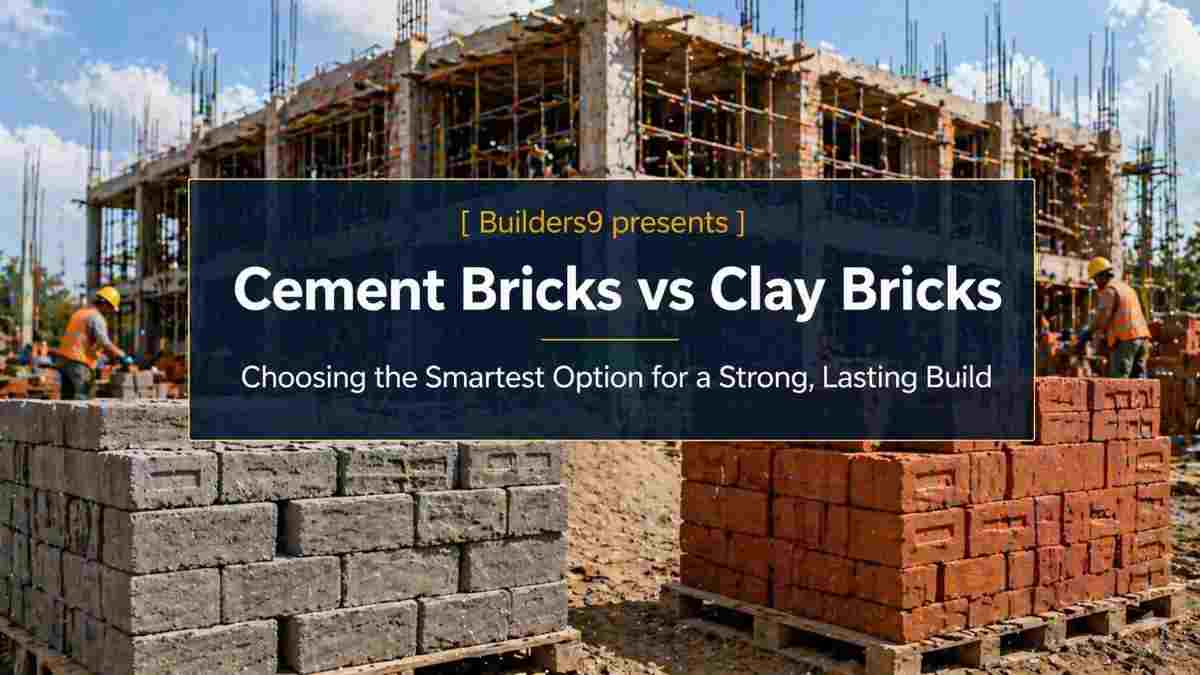
Choosing the right building materials is one of the most important decisions when constructing a house, commercial property or industrial building. Among the common masonry options available to builders and property developers in Uganda are concrete bricks and clay bricks.
Both materials are used for wall construction, but they differ in their raw materials, manufacturing processes, physical properties, cost considerations and construction requirements. Understanding these differences helps property owners select materials that suit their building designs, budgets and long-term performance expectations.
So, between concrete bricks and clay bricks, which is better for building in Uganda?
The answer depends on the intended application, product quality, structural design, local availability, workmanship and environmental conditions. Neither material is automatically superior in every situation.
This guide compares concrete bricks vs clay bricks, explains their advantages and disadvantages, examines their applications in Uganda and provides practical advice on choosing the right option for your construction project.
1. What Are Concrete Bricks?
Concrete bricks are masonry units manufactured using cement, aggregates and water. Depending on the production method and intended application, the aggregates may include sand, crushed stone, fine aggregates or other suitable materials.
The mixture is placed into moulds, compacted and cured to develop the required properties.
Concrete bricks are manufactured in different shapes, dimensions, finishes and strengths. Some are solid, while others may have cavities or specially designed profiles.
They are used in various construction applications, including:
- Residential building walls
- Commercial building walls
- Boundary walls
- Selected industrial structures
- Landscaping and external works
- Paving and other specialised applications where the product is designed for that purpose
The suitability of a concrete brick depends on its dimensions, compressive strength, manufacturing quality and compliance with the project requirements.
Advantages of Concrete Bricks
1. Consistent dimensions when properly manufactured
Concrete bricks produced using well-maintained moulds can have consistent dimensions. This helps masons maintain uniform courses and control mortar joint thickness.
2. Availability in different designs
Concrete masonry units are available in various shapes and sizes, allowing builders to select products for different walling and construction requirements.
3. Potentially good compressive strength
Properly manufactured and cured concrete bricks can achieve the strength required for their intended applications. The actual performance must be confirmed through specifications and appropriate testing.
4. Useful for different construction projects
Depending on their design and strength, concrete bricks can be used in residential, commercial, industrial and selected external construction works.
5. Potential for efficient production
Mechanical moulding and compaction can support consistent production when the manufacturing process is properly controlled.
6. Suitable for modern construction designs
Concrete masonry units can be incorporated into different architectural styles, including contemporary buildings, boundary walls and selected exposed masonry finishes.
Disadvantages of Concrete Bricks
Concrete bricks also have limitations that should be considered:
- Poorly manufactured products may have inadequate strength or inconsistent dimensions.
- Some concrete units may have relatively high weight, depending on their size and density.
- Their performance depends heavily on correct mix proportions, compaction and curing.
- Some products may require plastering or other finishing to achieve the desired appearance.
- Concrete masonry can absorb moisture, making appropriate detailing and protection important.
- The thermal performance of a wall depends on the unit’s density, thickness, cavities, finishes and overall wall design.
2. What Are Clay Bricks?
Clay bricks are masonry units manufactured mainly from suitable natural clay or clay-rich soil. The raw material is prepared, shaped into bricks, dried and fired in a kiln at controlled temperatures.
The firing process transforms the clay into a hardened ceramic material.
Clay bricks are widely recognised for their traditional appearance and have been used in building construction for many generations.
They are commonly used for:
- Residential house walls
- Commercial buildings
- Boundary walls
- Architectural features
- Decorative masonry
- Landscaping and selected paving applications using suitable products
Clay bricks are available in different colours, sizes, textures and finishes depending on the clay composition, manufacturing process and firing conditions.
Advantages of Clay Bricks
1. Traditional and attractive appearance
Clay bricks have a natural appearance that suits traditional, contemporary and decorative architectural designs.
Their colours may range from reddish and brown shades to other earthy tones depending on the clay and firing conditions.
2. Good durability when properly manufactured
Well-fired clay bricks can provide long-lasting performance when correctly selected, laid and protected against unsuitable moisture exposure.
3. Good thermal mass
Clay masonry can absorb, store and gradually release heat. This thermal mass can help moderate indoor temperature changes, although actual comfort depends on wall thickness, building orientation, ventilation, insulation and other design features.
4. Fire resistance
Clay bricks are fired during manufacture and are generally non-combustible. Their performance as part of a fire-resisting wall depends on the brick type, wall thickness, mortar, construction details and applicable fire requirements.
5. Variety of finishes
Clay bricks can be used in exposed masonry where their natural texture and colour form part of the building’s architectural design.
6. Familiarity in traditional construction
Clay bricks are widely recognised by builders and property owners, and their use is familiar in many traditional masonry construction methods.
Disadvantages of Clay Bricks
Clay bricks also have some disadvantages:
- Their quality can vary depending on the clay source and firing conditions.
- Poorly fired bricks may be weak, brittle or inconsistent.
- Some clay bricks may absorb significant amounts of water.
- Irregular dimensions can increase mortar consumption and affect wall alignment.
- Transport costs can be significant depending on the source and delivery distance.
- Firing requires energy, and the environmental impact depends on the fuel, kiln technology and production practices.
- Some exposed clay brick finishes require careful detailing to prevent moisture-related problems.
3. Concrete Bricks vs Clay Bricks: Key Differences
The two materials differ in several important areas. The following comparison provides a practical overview for construction projects in Uganda.
| Comparison factor | Concrete bricks | Clay bricks |
|---|---|---|
| Main raw materials | Cement, aggregates and water | Natural clay or suitable clay-rich soil |
| Manufacturing process | Moulding, compaction and curing | Shaping, drying and kiln firing |
| Appearance | Often uniform, with different manufactured finishes | Natural earthy colours and textures |
| Dimensional consistency | Can be highly consistent with controlled moulding | Depends on shaping, drying and firing quality |
| Strength | Depends on mix design, compaction and curing | Depends on clay quality and firing conditions |
| Water absorption | Varies with density, mix and curing | Varies with clay composition and firing |
| Thermal performance | Depends on density, cavities and wall design | Benefits from thermal mass; depends on wall design |
| Fire performance | Concrete is non-combustible, but assembly performance varies | Fired clay is generally non-combustible |
| Weight | Varies by size, density and cavities | Varies by size, density and composition |
| Finishing | May require plastering, painting or other finishes | Can be plastered or left exposed if suitable |
| Cost | Depends on cement, aggregates, production and delivery | Depends on clay, firing, labour and transport |
| Environmental considerations | Cement production and aggregate sourcing affect impact | Clay extraction and kiln fuel use affect impact |
The table provides general comparisons. Actual performance should be determined using the technical specifications and test results for the particular products being considered.
4. Which Is Stronger: Concrete Bricks or Clay Bricks?
Strength is one of the most important considerations when choosing masonry materials.
However, it is not accurate to assume that every concrete brick is stronger than every clay brick, or that clay bricks are always stronger than concrete bricks.
The strength of concrete bricks depends on:
- Cement quality and quantity
- Aggregate grading and quality
- Water content
- Mixing consistency
- Compaction
- Moulding process
- Curing conditions
- Product dimensions and density
For clay bricks, strength depends on:
- Clay composition
- Preparation and shaping
- Drying conditions
- Kiln temperature
- Firing duration
- Cooling process
- Final brick dimensions and quality
How to Compare Brick Strength
When buying bricks for a building project, consider the following:
- Ask for the specified compressive strength.
- Request test results where appropriate.
- Confirm that the product is suitable for the intended wall application.
- Check the manufacturer’s technical information.
- Inspect bricks for visible defects, cracks and inconsistent dimensions.
- Confirm that the material meets applicable standards and project specifications.
For load-bearing walls and other structural applications, the engineer should specify the required masonry strength and construction details.
Important: Do not select bricks for structural walls based only on appearance, weight or the sound they make when struck together.
5. Which Bricks Are More Durable in Uganda?
Both concrete bricks and clay bricks can be durable when properly manufactured, specified, installed and maintained.
Durability in Uganda depends on several factors, including rainfall exposure, moisture movement, drainage, workmanship, wall detailing and the quality of the materials.
Durability of Concrete Bricks
Concrete bricks can provide reliable service when manufactured with suitable materials and properly cured.
However, poor curing, inadequate compaction, unsuitable mix proportions and exposure to aggressive environmental conditions can affect their performance.
Moisture management is important, particularly for external walls and areas exposed to rain.
Durability of Clay Bricks
Well-fired clay bricks can be durable and suitable for long-term masonry construction.
However, poorly fired bricks may be weak or prone to deterioration. Excessive water absorption and poor wall detailing can also contribute to moisture-related problems.
What Determines Long-Term Durability?
Regardless of the brick type, long-term performance depends on:
- Material quality
- Compressive strength
- Water absorption
- Proper mortar selection
- Correct wall construction
- Damp-proofing where required
- Roof overhangs and rain protection
- Adequate drainage
- Good workmanship
- Regular maintenance
A properly designed and constructed wall using suitable materials will generally perform better than a wall built with poor-quality materials, even if the latter are initially cheaper.
6. Concrete Bricks vs Clay Bricks: Which Is More Affordable in Uganda?
Cost is a major consideration for homeowners, developers and contractors working within construction budgets.
However, the cheapest brick per unit is not necessarily the most economical option for the complete building project.
The total cost depends on purchasing, transportation, laying, mortar consumption, finishing, wastage and long-term maintenance.
Factors Affecting Concrete Brick Prices
The price of concrete bricks in Uganda may be influenced by:
- Cement prices
- Aggregate and sand costs
- Manufacturing equipment and production methods
- Block or brick dimensions
- Required compressive strength
- Production volume
- Curing and quality-control processes
- Supplier location
- Transportation distance
- Order quantity
Factors Affecting Clay Brick Prices
Clay brick prices may depend on:
- Clay availability and quality
- Brick dimensions
- Labour requirements
- Drying and firing processes
- Fuel and energy costs
- Manufacturing location
- Production quantity
- Brick quality and firing consistency
- Transportation and delivery distance
Compare the Total Wall Construction Cost
When comparing concrete bricks and clay bricks, consider the following costs:
| Cost component | What to evaluate |
|---|---|
| Material purchase | Price per brick or masonry unit |
| Transportation | Delivery distance, vehicle capacity and handling |
| Mortar | Cement, sand and water requirements |
| Labour | Masonry productivity and installation time |
| Wastage | Breakage, rejected units and cutting |
| Finishing | Plastering, painting or exposed brick treatment |
| Structural requirements | Reinforcement, lintels and other specified elements |
| Maintenance | Moisture protection, repairs and future finishing |
How to Make a Fair Price Comparison
Ask suppliers to quote for products with comparable dimensions, intended applications and technical specifications.
Then calculate the number of units required per square metre of walling, taking account of the specified joint thickness and openings.
A brick that costs less per unit may require more units per square metre or additional finishing. The correct comparison is the complete cost of constructing an equivalent wall that meets the same performance requirements.
Always obtain current quotations because material prices and transportation costs change.
7. Which Bricks Provide Better Thermal Performance?
Thermal performance is important when designing comfortable homes and buildings in Uganda.
Concrete bricks and clay bricks behave differently depending on their density, thickness, cavities and overall wall construction.
Thermal Performance of Concrete Bricks
Concrete has thermal mass, meaning it can absorb and store heat. However, dense concrete masonry can also conduct heat differently from lighter or cavity-based wall systems.
The thermal performance of a concrete brick wall depends on:
- Unit density
- Wall thickness
- Presence and arrangement of cavities
- Plaster and finishing materials
- Building orientation
- Shading and ventilation
Thermal Performance of Clay Bricks
Clay bricks also have thermal mass. They can absorb heat during warmer periods and release it gradually.
The effect on indoor comfort depends on:
- Brick density
- Wall thickness
- Climate and daily temperature changes
- Window placement
- Roof insulation
- Ventilation
- Shading
Which Is Better for a Comfortable House?
Neither material automatically provides better indoor comfort.
For a residential building in Uganda, consider the complete building design rather than focusing on the brick alone. Roof design, ventilation, shading, window orientation and wall thickness can have a major influence on indoor temperatures.
An architect or building professional can help select a suitable wall system for the location and intended use.
8. Which Bricks Are Better for Residential House Construction?
Both concrete bricks and clay bricks can be used in residential construction when their specifications meet the building design.
The right choice depends on the house type, structural requirements, appearance, availability and budget.
Concrete Bricks for Residential Buildings
Concrete bricks may be suitable for:
- External and internal walls where specified
- Selected load-bearing masonry applications
- Boundary walls
- Utility structures
- Garage and service-area walls
- Other approved masonry applications
Their dimensional consistency can help simplify setting out and masonry work when products are properly manufactured.
Clay Bricks for Residential Buildings
Clay bricks may be suitable for:
- External house walls
- Internal partition walls
- Decorative masonry
- Exposed brick features
- Boundary walls
- Traditional architectural designs
Their natural colours and textures can be attractive where exposed brickwork is part of the intended design.
What Should Homeowners Consider?
Before selecting either material, establish:
- Whether the walls are load-bearing or non-load-bearing
- Required wall thickness
- Structural design requirements
- Desired architectural appearance
- Material availability
- Supplier reliability
- Construction budget
- Moisture protection requirements
- Plastering and finishing expectations
The architect and structural engineer should specify the appropriate masonry system rather than leaving the decision entirely to the supplier or construction team.
9. Which Bricks Are Better for Commercial and Industrial Buildings?
Commercial and industrial buildings may have different masonry requirements from residential houses.
The choice of material depends on building function, wall height, expected loads, fire requirements, environmental exposure and the intended finish.
Concrete Bricks in Commercial Construction
Concrete masonry may be considered for:
- Office buildings
- Shops and retail properties
- Commercial boundary walls
- Storage facilities
- Service buildings
- Selected industrial enclosures
The specific product must meet the wall’s structural and functional requirements.
Clay Bricks in Commercial Construction
Clay bricks may be selected for:
- Office building finishes
- Retail and hospitality developments
- Decorative facades
- Internal and external masonry
- Commercial boundary walls
They can provide a distinctive architectural finish, particularly where exposed brickwork is desired.
Considerations for Industrial Projects
Industrial buildings may require additional attention to:
- Impact resistance
- Fire performance
- Moisture exposure
- Chemical exposure
- Structural loads
- Maintenance requirements
- Internal environmental conditions
Neither concrete nor clay bricks should be selected without confirming that the proposed masonry system is suitable for the industrial environment.
10. Environmental Impact: Concrete Bricks vs Clay Bricks
Sustainable construction involves considering how building materials are sourced, manufactured, transported, used and maintained.
Both concrete bricks and clay bricks have environmental impacts, but these depend on the production process and the specific materials used.
Environmental Considerations for Concrete Bricks
Concrete brick production involves cement, aggregates and water.
Cement manufacturing is an important source of carbon emissions. Aggregate extraction can also affect land and natural resources.
Potential environmental improvements include:
- Efficient use of cement
- Responsible aggregate sourcing
- Controlled production to reduce rejected units
- Efficient curing and water management
- Recycling suitable production waste
- Reducing unnecessary transportation
Environmental Considerations for Clay Bricks
Clay brick production involves extracting clay and using energy to dry and fire the products.
Environmental considerations include:
- Responsible clay extraction
- Land restoration
- Fuel consumption
- Kiln efficiency
- Air emissions
- Transportation
- Waste management
Which Is More Environmentally Friendly?
There is no universal answer. The environmental performance of each material depends on the source of raw materials, manufacturing technology, energy use, transportation distance, durability and service life.
Buyers should consider locally available products from responsible manufacturers and avoid assuming that one material is always more sustainable than the other.
11. How to Choose Quality Concrete Bricks and Clay Bricks in Uganda
Selecting quality bricks is essential for achieving strong, durable and properly finished masonry.
Whether purchasing concrete bricks or clay bricks, use the following checks.
11.1 Check Product Dimensions
Bricks should have dimensions suitable for the approved building design.
Inconsistent sizes can cause uneven courses, excessive mortar use and difficulties maintaining wall alignment.
11.2 Inspect Physical Condition
Look for:
- Major cracks
- Broken corners
- Distorted shapes
- Excessive surface defects
- Inconsistent dimensions
- Signs of poor manufacturing
Some minor surface variations may be acceptable depending on the product type and intended finish, but serious defects should be investigated.
11.3 Confirm Strength Requirements
Ask the supplier for product specifications and relevant test results.
For structural masonry, the required strength must be established by the engineer and verified against the applicable requirements.
11.4 Assess Water Absorption
Water absorption influences the behaviour of masonry units, including their interaction with mortar and exposure to moisture.
Where relevant, request test information and ensure that the product is suitable for the intended environment.
11.5 Check Manufacturing Quality
For concrete bricks, ask about mixing, moulding, compaction and curing.
For clay bricks, consider clay preparation, drying and firing quality.
11.6 Confirm Applicable Standards
Check the applicable Uganda National Bureau of Standards (UNBS) requirements and the specifications for the particular project.
Do not assume that a product is compliant simply because it is commonly sold or used.
11.7 Compare Supplier Quotations
Obtain quotations from different suppliers and compare:
- Product dimensions
- Strength specifications
- Quality documentation
- Unit prices
- Minimum order quantities
- Delivery charges
- Replacement arrangements for damaged products
- Delivery timelines
A fair comparison should involve equivalent products and specifications.
12. Common Mistakes to Avoid When Choosing Building Bricks
Property owners and contractors can make costly mistakes when selecting masonry materials.
Mistake 1: Choosing Bricks Based Only on Price
Low-priced products may have inconsistent dimensions, inadequate strength or poor manufacturing quality.
Compare performance and total wall construction cost, not just unit price.
Mistake 2: Assuming All Concrete Bricks Are Strong
Concrete bricks vary significantly in quality. Their performance depends on the mix, compaction, curing and manufacturing process.
Mistake 3: Assuming All Clay Bricks Are Properly Fired
Clay bricks require suitable drying and firing. Poorly fired products may have inadequate strength and durability.
Mistake 4: Ignoring Structural Requirements
The bricks used in load-bearing walls must meet the engineer’s specified requirements.
Do not substitute one masonry product for another without professional approval.
Mistake 5: Ignoring Moisture Protection
Poor damp-proofing, drainage and wall detailing can contribute to moisture-related defects regardless of the masonry material.
Mistake 6: Failing to Account for Finishing Costs
Some walls require plastering, painting or other finishes. Include these costs when comparing construction alternatives.
Mistake 7: Buying Without Inspecting the Products
Inspect delivered materials before they are incorporated into the building. This helps identify defects early and reduces the risk of disputes or expensive rework.
13. Practical Checklist Before Buying Bricks for Your Building Project
Use this checklist when comparing concrete bricks and clay bricks in Uganda.
- Confirm the type of wall being constructed.
- Obtain the approved architectural and structural specifications.
- Confirm the required brick dimensions.
- Check the required compressive strength.
- Inspect product quality and consistency.
- Request technical information or test results where appropriate.
- Confirm applicable standards.
- Compare prices from different suppliers.
- Include transport and handling costs.
- Estimate mortar and finishing requirements.
- Confirm delivery quantities and timelines.
- Arrange proper storage on site.
- Obtain professional approval before using products in structural applications.
14. Frequently Asked Questions About Concrete Bricks vs Clay Bricks
Are concrete bricks better than clay bricks in Uganda?
Not in every situation. Concrete bricks may offer dimensional consistency and useful performance for suitable applications, while clay bricks can provide attractive finishes and good durability when properly manufactured. The better option depends on the project design, product quality, cost and intended use.
Which is stronger, concrete bricks or clay bricks?
Neither material is always stronger. Strength depends on the quality of the raw materials, manufacturing process, dimensions and testing results. Compare products using verified compressive strength information and the project’s requirements.
Which bricks are cheaper in Uganda?
Prices vary by product type, dimensions, quality, supplier location, order quantity and transport distance. Concrete bricks and clay bricks should be compared using current supplier quotations and the total cost of constructing an equivalent wall.
Are concrete bricks suitable for building houses?
Yes. Suitable concrete masonry units can be used for residential walls when they meet the architectural and structural specifications. The engineer should confirm the appropriate product and wall construction details.
Are clay bricks suitable for modern buildings?
Yes. Clay bricks can be used in modern residential and commercial buildings, including exposed brick facades and decorative architectural features. Their suitability depends on product quality and the building design.
Which bricks absorb more water?
Water absorption varies among individual products. Concrete brick absorption depends on its mix, density, compaction and curing, while clay brick absorption depends on clay composition and firing conditions. Testing is the most reliable way to compare specific products.
Do concrete bricks require plastering?
Some concrete brick walls are plastered or otherwise finished, while others may be designed for exposed masonry. The finishing method depends on the product’s appearance, wall detailing and architectural requirements.
Can clay bricks be used for load-bearing walls?
Yes, suitable clay masonry units can be used in load-bearing construction when their strength and other properties meet the structural design requirements. Professional design and appropriate workmanship are essential.
Which brick is better for boundary walls?
Both concrete and clay bricks can be suitable for boundary walls, depending on the required height, design, strength, exposure and foundation conditions. Higher or structurally demanding walls may require engineering assessment.
How can I identify quality concrete bricks?
Check dimensions, visible defects, manufacturing consistency and relevant technical specifications. Where required, request compressive strength and other test results from the supplier.
15. Why Professional Material Selection Matters
Choosing between concrete bricks and clay bricks is only one part of successful building construction. The selected materials must work with the building design, foundation system, structural requirements, mortar specifications, moisture protection and finishing details.
Poor material selection can lead to uneven walls, cracking, moisture problems, excessive finishing costs and avoidable repairs.
Daltrev Co. Ltd. supports construction-related enquiries, material selection considerations and project planning for residential, commercial and industrial developments in Uganda.
Whether you are constructing a new home, developing commercial premises or planning an industrial facility, careful selection of building materials and proper construction planning can help improve project quality and control avoidable costs.
Explore Daltrev’s construction materials services, construction works and construction consultancy services.
For assistance with your construction requirements, contact Daltrev Co. Ltd..
Conclusion: Concrete Bricks or Clay Bricks – Which Should You Choose?
Concrete bricks and clay bricks can both be effective building materials in Uganda when they are properly manufactured, selected and installed.
Concrete bricks may be a suitable choice where consistent dimensions, specified concrete masonry performance and availability meet the project’s requirements. Clay bricks may be preferable where their natural appearance, thermal mass and suitability for the chosen masonry design are important.
However, the final decision should not be based on assumptions about strength, durability or price. Compare the actual products, check their technical specifications, evaluate the complete wall construction cost and follow the approved building design.
For the best results, involve qualified construction professionals when selecting materials for structural walls and other critical building elements. The right material, combined with good workmanship and proper supervision, contributes to a safer, more durable and cost-effective building.