Concrete kerbs are essential components of modern road construction. They provide a defined boundary between roadways and surrounding areas, help control surface water, protect pedestrian spaces and improve the overall appearance and organisation of roads. From urban streets and highways to residential estates, commercial developments, parking areas and industrial facilities, concrete kerbs play an important role in creating functional and durable road infrastructure.
In Uganda, where road construction, urban expansion and property development continue to create demand for reliable infrastructure, selecting and installing appropriate concrete kerbs is an important part of successful project planning.
However, not all concrete kerbs serve the same purpose. Different designs are available for road edges, drainage channels, pedestrian walkways, traffic islands, parking areas and landscaping. Their performance depends on factors such as concrete quality, dimensions, installation methods, ground preparation and drainage design.
This guide explains everything you need to know about concrete kerbs in road construction, including their types, uses, benefits, installation process, material requirements, quality considerations and factors to consider when choosing kerbs for a construction project in Uganda.
What Are Concrete Kerbs in Road Construction?
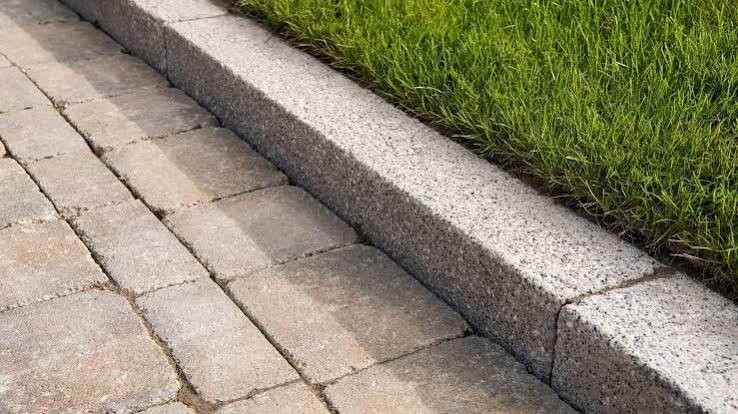
Concrete kerbs are precast or cast-in-place concrete elements installed along the edges of roads, pavements, parking areas and other paved surfaces. They create a physical boundary between different areas and help maintain the intended shape and alignment of the road.
They are commonly installed between:
- Carriageways and pedestrian walkways.
- Roads and roadside drainage channels.
- Paved roads and landscaped areas.
- Parking spaces and pedestrian zones.
- Roadways and traffic islands.
- Driveways and surrounding ground surfaces.
Concrete kerbs are generally manufactured using cement, aggregates and water in carefully controlled proportions. Depending on the design and intended application, they may also incorporate reinforcement or other specialised construction details.
Most road projects use precast concrete kerbs because they can be manufactured before installation, transported to the site and placed along prepared alignments. Cast-in-place kerbs may also be used where project conditions, design requirements or construction methods make them appropriate.
The primary purpose of a concrete kerb is not simply to create an attractive road edge. It also contributes to pavement stability, drainage management, traffic organisation and pedestrian safety.
Importance of Concrete Kerbs in Road Construction
Road construction involves more than preparing a surface for vehicles. A properly designed road must manage traffic, protect pedestrians, control water movement and maintain the integrity of its pavement structure.
Concrete kerbs contribute to these objectives by providing clearly defined boundaries and supporting the performance of adjoining road elements.
Their importance includes:
1. Defining road boundaries
Concrete kerbs separate the carriageway from walkways, drainage areas, parking spaces and landscaped sections. This creates a clear distinction between different road-use zones.
2. Supporting pavement edges
Where appropriately designed and installed, kerbs and their supporting haunching can help restrain the edges of adjoining paving systems. This is particularly important for block-paved surfaces and other pavement arrangements that rely on edge restraint.
3. Improving drainage management
Kerbs can guide surface runoff towards designated drainage channels, gullies and inlets. Their design and positioning must work together with the road’s gradients and drainage system.
4. Protecting pedestrian areas
Kerbs help distinguish vehicle movement areas from pedestrian walkways, reducing the likelihood of vehicles entering designated pedestrian spaces.
5. Organising traffic movement
They can define traffic islands, roundabouts, road medians, parking bays and other areas where physical separation is required.
6. Improving road appearance
Concrete kerbs create neat and consistent road edges, giving residential developments, commercial properties and public roads a more organised appearance.
Types of Concrete Kerbs Used in Road Construction
Concrete kerbs are manufactured in different shapes, sizes and profiles to suit their intended functions. Selecting the right type is important because a kerb designed for a pedestrian walkway may not be appropriate for a heavily trafficked road.
Below are some of the common types used in road construction and external paving projects.
1. Straight Concrete Kerbs
Straight concrete kerbs are among the most common types used in road construction. They have a relatively simple profile and are installed along straight road sections, pavement boundaries and parking areas.
<ADD IMAGE: Straight precast concrete kerbs installed along a paved road>
Common applications:
- Urban roads.
- Residential estate roads.
- Commercial developments.
- Parking areas.
- Pedestrian walkways.
- Roadside drainage boundaries.
Their simple design makes them suitable for projects requiring continuous, well-defined road edges.
2. Barrier Concrete Kerbs
Barrier kerbs are designed with a relatively steep face that creates a more pronounced separation between the roadway and adjacent areas.
They are commonly used where a stronger physical boundary is required, although their suitability depends on the road design, vehicle speeds, pedestrian requirements and safety considerations.
Common applications:
- Road medians.
- Traffic islands.
- Selected urban road boundaries.
- Restricted vehicle-access areas.
- Certain parking and commercial developments.
Barrier kerbs should not automatically be treated as crash barriers. Their ability to influence vehicle movement depends on their geometry and the overall road safety design.
3. Mountable Concrete Kerbs
Mountable kerbs have a sloping or lower-profile face that allows vehicles to cross them more easily when necessary.
They are useful in locations where access between paved surfaces is required or where the road design allows occasional vehicle movement across the kerb.
Common applications:
- Residential driveways.
- Commercial property entrances.
- Parking facilities.
- Access roads.
- Selected traffic management arrangements.
Mountable kerbs should be selected according to the expected vehicle movements and the requirements of the project.
4. Half-Battered Concrete Kerbs
Half-battered kerbs have a sloping upper face that creates a transition between the roadway and the adjoining paved area.
They are frequently used in road construction because they provide a defined boundary while offering a less abrupt profile than some vertical-faced kerbs.
Common applications:
- Urban streets.
- Estate roads.
- Pedestrian walkways.
- Roadside paving.
- Commercial developments.
Their suitability depends on the road layout, pedestrian access requirements and drainage arrangements.
5. Bullnose Concrete Kerbs
Bullnose kerbs have a rounded upper edge or profile. This design provides a smoother transition between adjoining surfaces and can be useful in areas where a less sharp kerb profile is preferred.
Common applications:
- Pedestrian walkways.
- Residential developments.
- Landscaped areas.
- Parking facilities.
- Selected access points.
The rounded profile can also contribute to an attractive finish in external paving projects.
6. Dropped Concrete Kerbs
Dropped kerbs are specially designed sections that provide a lower transition between a roadway and an adjoining surface.
They are particularly important where pedestrians, wheelchair users, cyclists and vehicles need to move between different pavement levels.
Common applications:
- Pedestrian crossings.
- Driveway entrances.
- Building access points.
- Commercial entrances.
- Accessible pedestrian routes.
Dropped kerbs should be incorporated into an accessibility-conscious design, with suitable gradients, surface finishes and drainage details.
7. Channel Kerbs
Channel kerbs are designed to help collect and direct surface water along road edges. Depending on the design, they may combine a kerb function with a drainage channel.
Common applications:
- Urban road drainage.
- Roadside water collection.
- Parking areas.
- Paved compounds.
- Stormwater management systems.
They must be installed according to the drainage design, including the required gradients, channel dimensions and discharge arrangements.
8. Radius and Curved Concrete Kerbs
Radius kerbs are manufactured or arranged to follow curved road sections. They are important in areas where straight kerbs cannot provide the required alignment.
Common applications:
- Roundabouts.
- Road junctions.
- Traffic islands.
- Curved driveways.
- Estate entrances.
- Landscaping features.
Their dimensions and curvature should be coordinated with the road layout to achieve a consistent finish without unnecessary gaps or alignment problems.
Comparison of Common Concrete Kerb Types
| Kerb type | Main characteristic | Common application |
|---|---|---|
| Straight kerb | Straight, defined profile | Road edges and parking areas |
| Barrier kerb | Steeper face | Medians and selected traffic boundaries |
| Mountable kerb | Sloping, accessible face | Driveways and access areas |
| Half-battered kerb | Angled upper face | Urban roads and walkways |
| Bullnose kerb | Rounded upper edge | Pedestrian and landscaped areas |
| Dropped kerb | Lowered transition | Crossings and entrances |
| Channel kerb | Supports water collection | Roadside drainage |
| Radius kerb | Curved alignment | Roundabouts and road junctions |
The final selection should always follow the project drawings, engineering specifications and intended road use.
Main Uses of Concrete Kerbs in Road Construction
Concrete kerbs are used in various types of infrastructure and property development projects. Their applications extend beyond ordinary road edges.
1. Road Edge Construction
One of the most common applications is defining the boundaries of paved roads.
Kerbs help separate the carriageway from adjoining surfaces and create a consistent edge along the road. They can also provide edge restraint for suitable pavement systems when supported by an appropriate foundation and installation arrangement.
2. Roadside Drainage Systems
Concrete kerbs are important components of many roadside drainage arrangements.
They help direct surface runoff towards designated drainage channels, catchpits, gullies and stormwater inlets.
In areas that experience heavy rainfall, effective drainage is essential because uncontrolled water can weaken pavement layers, cause erosion and contribute to road deterioration.
However, kerbs alone do not provide a complete drainage solution. The road must have suitable crossfalls, longitudinal gradients, inlets and discharge points.
3. Pedestrian Walkways and Footpaths
Concrete kerbs provide a physical boundary between vehicle carriageways and pedestrian walkways.
They help define pedestrian areas and protect adjoining paving from vehicle encroachment. Dropped kerbs and suitable transitions should be provided at designated crossing and access points.
4. Parking Areas
Commercial properties, shopping centres, offices, hotels, residential estates and industrial facilities often use concrete kerbs to organise parking areas.
They can be used to:
- Separate parking bays.
- Define vehicle circulation routes.
- Protect landscaped sections.
- Mark pedestrian walkways.
- Create boundaries around paved parking surfaces.
5. Road Medians and Traffic Islands
Concrete kerbs are widely used to define medians and traffic islands.
These structures help organise traffic movement, separate opposing traffic flows where designed to do so and identify areas that vehicles should not enter.
Their dimensions, visibility and placement must follow the applicable road design and traffic safety requirements.
6. Residential Estate Roads
Residential developments often require kerbs to create organised roads, pedestrian routes, driveways and drainage boundaries.
Concrete kerbs help give internal estate roads a finished appearance while separating different areas of the development.
7. Commercial and Industrial Developments
Factories, warehouses, shopping complexes, business parks and logistics facilities use concrete kerbs to define paved access roads, loading areas, parking sections and drainage routes.
In industrial environments, the kerb design should consider the size and movement of vehicles, including trucks and other heavy equipment.
8. Landscaping and External Paving
Concrete kerbs can also be used in landscaping and external works.
They provide boundaries around gardens, paved courtyards, walkways and decorative outdoor spaces. Their use helps maintain the separation between different surface materials and landscaping features.
Benefits of Using Concrete Kerbs in Road Construction
Choosing suitable concrete kerbs offers several functional, structural and aesthetic benefits.
1. Improved Road Organisation
Concrete kerbs create clearly defined boundaries between roadways, pedestrian areas, parking sections and landscaped spaces.
This makes infrastructure easier to organise and helps different road users understand the intended use of each area.
2. Better Drainage Management
Properly positioned kerbs can help guide stormwater towards designated drainage facilities.
This is especially valuable in urban areas where rainfall can generate substantial surface runoff.
By working with correctly designed drainage channels and inlets, kerbs can help reduce uncontrolled water movement across roads and adjoining properties.
3. Support for Pavement Edge Stability
Kerbs can provide lateral restraint to adjoining paving systems when correctly supported.
This is particularly important for interlocking concrete paving blocks, where edge restraint helps maintain the position of the paving units under repeated traffic loading.
The kerb must be supported by suitable bedding, foundation and haunching details. Simply placing a kerb beside a paved surface does not guarantee effective restraint.
4. Improved Pedestrian Safety
Kerbs help distinguish vehicle carriageways from pedestrian walkways and other restricted areas.
When combined with appropriate crossings, signage, road markings and traffic management, they contribute to safer road environments.
5. Durability
Concrete kerbs can provide long service life when manufactured using suitable materials and installed correctly.
Their durability depends on concrete quality, curing, exposure conditions, loading, drainage, workmanship and maintenance.
Poor-quality kerbs or inadequate foundations can lead to cracking, movement and premature deterioration.
6. Low Maintenance Requirements
Well-manufactured and properly installed concrete kerbs generally require relatively little routine maintenance.
However, regular inspection is necessary to identify damaged sections, displaced units, blocked drainage points and deterioration around joints.
7. Consistent Road Appearance
Concrete kerbs create neat and uniform road edges. They can improve the appearance of residential estates, commercial developments, parking facilities and public infrastructure.
Their consistent shape and finish also contribute to a professional overall construction outcome.
8. Versatility
Concrete kerbs are available in different shapes, dimensions and profiles. This makes them suitable for a wide range of projects, from small residential driveways to large road infrastructure developments.
9. Support for Sustainable Infrastructure Planning
Durable kerbs can reduce the need for frequent replacement when they are appropriately designed and maintained.
Concrete elements can also be incorporated into drainage, paving and landscaping systems as part of an integrated infrastructure design.
Their environmental impact should nevertheless be considered alongside cement production, material sourcing, transport and the project’s overall construction approach.
Materials Used in Manufacturing Concrete Kerbs
The performance of concrete kerbs depends significantly on the quality of the materials used during manufacturing.
The main materials include:
Cement
Cement acts as the binding material that holds the aggregates together after mixing with water.
The type and quality of cement should be appropriate for the specified concrete mix and intended application.
Fine Aggregates
Fine aggregates, commonly sand, fill the smaller spaces between coarse aggregate particles and contribute to the concrete mixture’s workability and final properties.
Sand should be clean and suitable for concrete production. Excessive clay, organic matter or other contaminants can negatively affect concrete quality.
Coarse Aggregates
Coarse aggregates provide the main granular structure of the concrete.
Their grading, cleanliness, strength and suitability should be considered during mix design.
Water
Water is required for cement hydration and concrete workability.
Clean water suitable for concrete production should be used. Excessive water can reduce concrete strength and increase the risk of defects.
Reinforcement, Where Required
Some specialised kerb designs may require reinforcement or additional structural detailing depending on the loading conditions and engineering specifications.
Not every kerb requires reinforcement. The decision should be based on the approved design rather than assumptions.
How Concrete Kerbs Are Manufactured
Concrete kerbs can be manufactured using controlled precasting processes or produced through cast-in-place construction methods.
Precast manufacturing commonly involves the following stages.
1. Material Selection
Cement, fine aggregates, coarse aggregates and water are selected according to the required concrete properties.
Materials should be checked for suitability before production begins.
2. Batching
The materials are measured according to the approved mix proportions.
Accurate batching is important because inconsistent proportions can lead to variations in concrete strength, density and durability.
3. Mixing
The measured materials are mixed until a consistent concrete mixture is achieved.
The mixing process should produce concrete that is suitable for the selected moulding and compaction method.
4. Mould Preparation
Kerb moulds are cleaned and prepared before concrete is placed inside them.
The moulds determine the shape, dimensions and profile of the finished kerb.
5. Concrete Placement and Compaction
Concrete is placed into the moulds and compacted using an appropriate method.
Proper compaction helps minimise air voids and improves the consistency of the finished product.
6. Demoulding
After achieving sufficient initial stability, the kerbs are removed from their moulds using a method that minimises damage.
Premature handling can result in chipped edges, cracks or deformation.
7. Curing
The concrete kerbs are cured under suitable conditions to support cement hydration and strength development.
Curing is an important part of concrete manufacturing and should not be neglected.
8. Inspection and Storage
Finished kerbs are inspected for dimensions, appearance, cracks and other visible defects.
They should be stored on stable, level surfaces and handled carefully to prevent damage before delivery.
Concrete Kerb Installation Process
Correct installation is essential for achieving stable, aligned and durable kerbs.
Even high-quality concrete kerbs can fail when they are placed on poorly prepared ground or installed without adequate support.
The typical installation process includes the following stages.
Step 1: Review the Road Design and Setting Out
Before installation begins, the contractor should review the approved drawings and establish the required kerb alignment, levels, curves and gradients.
The setting-out process should identify:
- Road boundaries.
- Kerb lines.
- Junctions and access points.
- Drainage locations.
- Pedestrian crossing points.
- Changes in road levels.
- Curved sections and transitions.
Accurate setting out helps prevent alignment errors and unnecessary adjustments during installation.
Step 2: Prepare the Foundation
The ground beneath the kerb should be excavated and prepared according to the design.
Loose, unsuitable or unstable material should be addressed before the supporting layer is placed.
The foundation must provide adequate support for the anticipated loads and ground conditions.
Step 3: Construct the Bedding Layer
Kerbs are installed on an appropriate bedding or foundation arrangement, which may consist of a specified concrete bed or another approved supporting system.
The bedding must be consistent with the project drawings and technical requirements.
Step 4: Position the Concrete Kerbs
The kerbs are placed along the established alignment.
Each unit should be checked for:
- Correct position.
- Required height.
- Straightness.
- Consistent joints.
- Appropriate curvature.
- Correct relationship with the adjoining pavement.
Step 5: Provide Haunching and Side Support
Concrete haunching or another specified restraint arrangement may be installed behind the kerbs.
This provides lateral support and helps prevent displacement under the expected loading conditions.
The size and arrangement of the haunching should follow the design rather than a standard assumption applied to every project.
Step 6: Construct Drainage Connections
Where kerbs form part of a drainage arrangement, the contractor should ensure that surface water can flow towards the intended channels, gullies and inlets.
Drainage openings and lowered sections must be coordinated with the kerb alignment and road levels.
Step 7: Check Levels and Alignment
The installed kerbs should be inspected to confirm that they follow the intended line and level.
Any displaced, damaged or incorrectly positioned units should be corrected before adjoining construction work proceeds.
Step 8: Complete Adjoining Pavement Works
After the kerbs have been properly installed and supported, adjoining pavement works can proceed according to the construction sequence.
These may include road base construction, asphalt surfacing, concrete paving blocks, footpaths or drainage finishes.
The completed work should be inspected to confirm that the kerbs integrate properly with surrounding surfaces.
Factors to Consider When Choosing Concrete Kerbs
Selecting the correct kerbs requires an understanding of the project’s purpose, loading conditions, drainage requirements and design specifications.
The following factors should be evaluated before purchasing or installing concrete kerbs.
1. Intended Application
Determine where the kerbs will be installed.
A kerb intended for a residential footpath may have different design requirements from one used along a heavily trafficked road or industrial access route.
2. Traffic Loading
Consider the vehicles expected to use or approach the adjoining road surface.
Projects involving buses, trucks, trailers and heavy equipment may require different kerb profiles, dimensions and supporting details from pedestrian-only areas.
3. Kerb Dimensions
The dimensions should match the approved design.
Important measurements include:
- Height.
- Width.
- Length.
- Face profile.
- Base dimensions.
- Radius for curved sections.
Incorrect dimensions can affect road levels, drainage performance and pavement alignment.
4. Concrete Quality
Kerbs should be manufactured using suitable materials and an appropriate production process.
Where required, obtain test records or other evidence demonstrating that the product meets the applicable project specifications.
5. Drainage Requirements
The kerb design should support the intended movement of surface water.
Consider road gradients, drainage channels, gullies, inlets and discharge points before selecting and positioning kerbs.
6. Installation Conditions
Ground conditions, excavation depth, available working space and access to installation equipment can influence the selection and installation method.
7. Supplier Reliability
Where precast kerbs are being purchased, assess the supplier’s production consistency, quality-control procedures, ability to meet the required dimensions and delivery arrangements.
8. Project Budget
The total cost should include more than the purchase price of the kerbs.
Consider transportation, unloading, excavation, bedding, haunching, labour, equipment and replacement of damaged units.
Common Concrete Kerb Problems and How to Prevent Them
Concrete kerb problems can arise from poor manufacturing, inadequate foundations, incorrect installation or insufficient drainage planning.
| Common problem | Possible cause | Recommended prevention |
|---|---|---|
| Cracked kerbs | Poor concrete quality, handling damage or inadequate support | Use suitable concrete and provide proper support |
| Misaligned kerbs | Inaccurate setting out or poor workmanship | Check line and level during installation |
| Displaced kerbs | Inadequate bedding or haunching | Follow approved foundation and restraint details |
| Chipped edges | Improper handling or transportation | Use suitable lifting and storage methods |
| Water accumulation | Poor gradients or blocked drainage inlets | Coordinate kerb levels with drainage design |
| Uneven kerb heights | Inconsistent installation levels | Use proper surveying and level checks |
| Joint gaps | Poor positioning or incorrect unit selection | Maintain consistent joints and suitable units |
| Premature deterioration | Unsuitable materials or poor curing | Apply quality control during production |
Regular inspection and proper construction supervision can help identify these problems before they affect the performance of the completed road.
Concrete Kerbs vs Other Road Edge Materials
Concrete is not the only material used to define road boundaries. Depending on the project, alternative materials may include natural stone, granite, precast masonry products or other engineered edge systems.
| Feature | Concrete kerbs | Natural stone kerbs | Other manufactured edge systems |
|---|---|---|---|
| Availability | Widely used in many construction projects | Depends on suitable stone sources | Depends on product and supplier |
| Shape options | Various moulded profiles | Depends on cutting and shaping | Varies by product |
| Appearance | Consistent manufactured finish | Natural appearance | Varies |
| Installation | Requires proper bedding and support | Requires suitable handling and installation | Depends on system |
| Cost | Depends on design, quality and transport | Depends on stone and processing | Depends on material |
| Applications | Roads, walkways, parking and drainage | Roads, landscaping and selected paving | Project-specific applications |
The most appropriate option depends on design requirements, expected loads, availability, budget, durability and maintenance considerations.
Quality Control and Inspection of Concrete Kerbs
Quality control should take place during manufacturing, delivery and installation.
A kerb that appears acceptable at first glance may still have inadequate strength, unsuitable dimensions or hidden defects.
Important quality-control checks include:
Visual inspection: Check for cracks, significant chips, honeycombing, exposed reinforcement where applicable and other visible defects.
Dimensional checks: Measure the length, width, height and profile against the approved specifications.
Concrete quality: Where required, verify that the kerbs meet the specified concrete strength and durability requirements through appropriate testing and production records.
Curing and handling: Confirm that kerbs have been adequately cured and handled without unnecessary damage.
Storage inspection: Check that products are stored on stable surfaces and protected against damage before installation.
Installation inspection: Verify bedding, alignment, levels, joints, haunching and drainage integration.
The applicable Uganda Standards, project specifications and relevant road authority requirements should be confirmed before procurement and construction. Where testing is required, it should be carried out using appropriate methods by competent personnel or laboratories.
Factors That Determine the Cost of Concrete Kerbs in Uganda
The cost of concrete kerbs varies depending on their specifications, manufacturing quality, location and installation requirements.
There is no single price that applies to every project.
The following factors influence the overall cost.
1. Type of Kerb
Different kerb profiles require different moulds, production arrangements and finishing processes.
Specialised curved, dropped or channel kerbs may have different costs from standard straight kerbs.
2. Dimensions and Design
Larger or more complex kerbs may require additional materials and production effort.
The required length, height, width and profile all influence the quantity of concrete needed.
3. Concrete Quality
The specified concrete properties, materials and production controls can affect the manufacturing cost.
Kerbs intended for demanding applications may require more stringent quality requirements.
4. Order Quantity
Large orders may benefit from more efficient production and transportation arrangements, depending on supplier capacity and delivery distance.
Smaller orders may have a higher transport cost per unit.
5. Transportation and Delivery
Concrete kerbs are relatively heavy construction products. Delivery costs depend on the distance from the manufacturing location, quantity ordered, vehicle requirements, site accessibility and unloading arrangements.
6. Installation Labour
The installation cost depends on the length of the kerb line, site conditions, excavation requirements, labour availability and construction method.
7. Foundation and Haunching Requirements
The supporting concrete bed, haunching or other specified restraint arrangement adds to the total installation cost.
8. Site Conditions
Rocky ground, soft soils, existing services, restricted access and difficult working conditions can increase installation costs.
9. Drainage and Road Design
Projects requiring channel kerbs, special drainage transitions, curved sections and multiple access points may involve additional work.
How to Estimate the Quantity of Concrete Kerbs Required
Accurate quantity estimation helps contractors and property developers prepare realistic budgets and avoid unnecessary material shortages.
The quantity is generally calculated using the total length of the kerb line and the effective length of each kerb unit.
Formula:
Number of kerbs required = Total kerb length ÷ Effective length of one kerb unit
For example, assume a project requires 240 metres of straight kerb and the selected kerb units have an effective length of 1 metre each.
240 ÷ 1 = 240 kerb units.
An allowance may then be added for cutting, breakages, curved sections and construction adjustments, based on the project layout and procurement plan.
For projects with multiple kerb types, calculate each type separately. Curved sections, junctions, dropped kerbs and drainage transitions should be measured from the drawings rather than estimated using the straight-kerb length alone.
Concrete Kerbs for Different Construction Projects in Uganda
The choice of concrete kerbs varies according to the type of development and its infrastructure requirements.
Residential Construction Projects
Residential estates, apartments and individual properties use concrete kerbs for internal roads, pedestrian walkways, driveways, parking spaces and landscaping.
The design should support convenient access, proper drainage and safe movement for residents and visitors.
Commercial Construction Projects
Shopping centres, office buildings, hotels and business parks require well-organised external spaces.
Concrete kerbs help define parking areas, vehicle routes, pedestrian walkways and landscaped sections.
Industrial Construction Projects
Industrial facilities and warehouses often experience heavy vehicle movement.
Kerb selection should consider truck turning movements, loading and unloading areas, drainage requirements and potential impact from heavy equipment.
Public Road Construction
Public road projects may require different kerb profiles for carriageways, pedestrian areas, medians, junctions and drainage systems.
The selection and installation should follow the relevant road authority’s drawings, technical specifications and safety requirements.
Institutional Developments
Schools, hospitals, universities and other institutional facilities require road boundaries that support pedestrian movement, vehicle access, drainage and accessibility.
Dropped kerbs and properly designed crossing points are particularly important in areas used by people with different mobility needs.
Common Mistakes to Avoid When Installing Concrete Kerbs
Even good-quality concrete kerbs can perform poorly when construction mistakes are made.
Avoid the following:
- Choosing the wrong kerb profile: Different applications require different kerb designs. Select the profile according to the project requirements.
- Ignoring road levels: Incorrect levels can affect drainage and create uneven transitions.
- Installing on weak foundations: Poor support can lead to settlement, cracking and displacement.
- Using damaged kerbs: Cracked or significantly chipped products should be assessed and rejected where they do not meet the project specifications.
- Neglecting haunching: Inadequate lateral support can allow kerbs to move under loading.
- Poor joint alignment: Inconsistent joints can create an untidy finish and complicate curved sections.
- Ignoring drainage: Kerbs should not obstruct intended water flow or create unintended low points.
- Poor handling and storage: Dropping or stacking units incorrectly can damage them before installation.
- Failing to inspect completed work: Levels, alignment, stability and drainage connections should be checked before the work is accepted.
- Selecting products based only on price: The cheapest option may not meet the project’s quality and performance requirements.
How to Choose a Reliable Concrete Kerb Supplier in Uganda
Choosing a suitable supplier is an important part of successful kerb procurement.
Before placing an order, consider the following:
- Confirm that the supplier can provide the required kerb type and dimensions.
- Ask about the materials and manufacturing process.
- Request product specifications and available quality records.
- Inspect samples or completed products where possible.
- Confirm the consistency of dimensions and finish.
- Discuss the expected production and delivery schedule.
- Establish how damaged products will be handled.
- Compare quotations based on equivalent specifications.
- Confirm transport and unloading arrangements.
- Ensure that the products comply with the project requirements and applicable standards.
A supplier should be evaluated on product quality, consistency, delivery reliability and overall value rather than price alone.
Frequently Asked Questions About Concrete Kerbs in Road Construction
1. What are concrete kerbs used for in road construction?
Concrete kerbs are used to define road boundaries, separate carriageways from pedestrian walkways, support selected pavement edges, organise parking areas and help direct surface water towards drainage systems.
2. What are the different types of concrete kerbs?
Common types include straight kerbs, barrier kerbs, mountable kerbs, half-battered kerbs, bullnose kerbs, dropped kerbs, channel kerbs and radius kerbs.
3. Why are concrete kerbs important in road construction?
They improve road organisation, support pedestrian separation, assist drainage management, provide boundaries for paved surfaces and contribute to the appearance and functionality of road infrastructure.
4. Are concrete kerbs suitable for heavy traffic roads?
They can be suitable for many road applications, provided their dimensions, concrete properties, foundation and installation details are designed for the intended conditions. Heavy vehicle movements and traffic safety requirements must be considered.
5. What materials are used to manufacture concrete kerbs?
Concrete kerbs are commonly manufactured using cement, fine aggregates, coarse aggregates and water. Reinforcement may be incorporated in specialised designs where required.
6. How are concrete kerbs installed?
Installation generally involves setting out, excavation, foundation preparation, bedding, kerb positioning, haunching or other restraint, drainage coordination and final alignment checks.
7. Do concrete kerbs help with road drainage?
Yes. They can guide surface water towards drainage channels and inlets when correctly integrated into the road’s drainage design. They must work with suitable gradients and drainage outlets.
8. How long do concrete kerbs last?
Their service life depends on concrete quality, manufacturing, curing, installation, traffic exposure, drainage conditions and maintenance. Properly specified and installed kerbs can provide long-term service.
9. What determines concrete kerb prices in Uganda?
Prices depend on the kerb type, dimensions, concrete quality, manufacturing process, order quantity, supplier location, transportation and delivery arrangements. Installation costs also depend on foundations, labour and site conditions.
10. How many concrete kerbs are required for a road project?
The quantity depends on the total length of the kerb line and the effective length of each unit. Additional quantities may be needed for curved sections, transitions, cutting and reasonable wastage allowances.
11. What is the difference between a barrier kerb and a mountable kerb?
A barrier kerb has a relatively steep face that creates a more pronounced boundary, while a mountable kerb has a sloping profile that allows vehicles to cross it more easily where the design permits.
12. Are concrete kerbs necessary for interlocking paving blocks?
Where an interlocking paving system requires edge restraint, suitable kerbs or other engineered edge restraints are important for maintaining the position of the paving units. The restraint must be properly supported and designed for the expected loads.
Conclusion: Choosing the Right Concrete Kerbs for Durable Road Construction
Concrete kerbs are important components of road construction because they define road boundaries, support selected pavement edges, assist drainage management, organise traffic spaces and improve pedestrian environments.
However, successful performance depends on choosing the correct kerb profile, using quality concrete products, preparing suitable foundations and following proper installation procedures.
For road contractors, property developers, engineers and project managers in Uganda, kerb selection should be guided by the road design, expected traffic loads, drainage requirements, accessibility considerations and project specifications.
Whether you are constructing residential estate roads, commercial parking areas, industrial access roads or public infrastructure, careful planning and quality control can help achieve durable, functional and professionally finished road edges.
Work with Daltrev Co. Ltd. on Your Construction Project
Daltrev Co. Ltd. supports construction-related project requirements in Uganda, including building works, construction materials and construction consultancy.
If you are planning a road construction project, residential development, commercial property or industrial facility, proper material selection, project planning and construction supervision are important for achieving quality results.
Explore Daltrev’s construction materials services, construction works and construction consultancy services.
For enquiries about your next construction project, contact Daltrev Co. Ltd. to discuss your requirements.