
Choosing the right glass for your building is an important decision that affects safety, security, durability, appearance and overall functionality. Whether you are constructing a residential house, commercial property, office, hotel or shopping centre in Uganda, understanding the difference between tempered glass and laminated glass can help you make a better investment.
Tempered glass and laminated glass are two popular safety glazing options used in modern construction. Both offer advantages over ordinary annealed glass, but they perform differently when exposed to impact, breakage and other conditions.
Tempered glass is heat-treated to improve its strength and change how it breaks. Laminated glass consists of two or more glass layers bonded together with a plastic interlayer that helps hold broken fragments in place.
So, which is better for your building: tempered glass or laminated glass?
The answer depends on where the glass will be installed, the level of safety required, security expectations, building design and available budget.
In this guide, we explain the differences between tempered glass and laminated glass, their benefits, disadvantages, applications and the factors to consider before choosing either option for your construction project in Uganda.
What Is Tempered Glass?
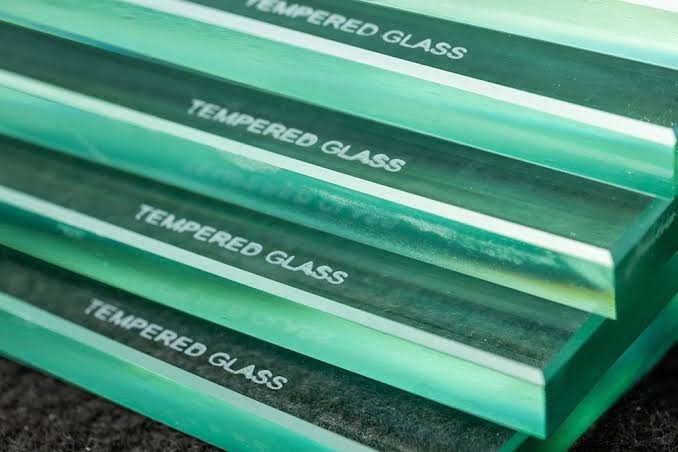
Tempered glass, also known as toughened glass, is a type of safety glass produced through a controlled heating and rapid cooling process.
During manufacturing, ordinary glass is heated to a high temperature and then rapidly cooled using controlled air. This process creates compressive stress on the glass surface and tensile stress within its core, making it stronger than ordinary annealed glass of the same thickness.
When tempered glass breaks, it generally shatters into many smaller pieces rather than forming large, sharp shards. This reduces certain injury risks, although broken fragments can still cause harm.
Tempered glass is commonly used in:
- Glass doors.
- Shower enclosures.
- Office partitions.
- Sliding glass doors.
- Shopfronts.
- Certain windows.
- Glass furniture.
- Selected balustrade systems.
Benefits of Tempered Glass
1. Increased Strength
Tempered glass is generally several times stronger than ordinary annealed glass of the same thickness under comparable loading conditions. This makes it suitable for applications where improved resistance to impact and thermal stress is required.
2. Safer Breakage Pattern
One of its main advantages is its breakage behaviour. When it fails, it usually breaks into smaller fragments, reducing the risk of severe cuts from large, sharp pieces.
3. Resistance to Thermal Stress
Tempered glass can withstand greater temperature differences than ordinary annealed glass of comparable thickness. This makes it useful in applications where glass may experience changes in temperature.
4. Modern Appearance
Tempered glass provides a clean, transparent finish that works well in contemporary residential and commercial architecture.
5. Suitable for Frameless Installations
It is frequently used in shower screens, glass doors and selected frameless applications where properly specified safety glazing is required.
Disadvantages of Tempered Glass
Despite its advantages, tempered glass has some limitations.
- Once tempered, it cannot normally be cut, drilled or reshaped without causing it to break.
- When it breaks, the entire pane generally loses its integrity.
- It does not have the same fragment-retention characteristics as laminated glass.
- It is not automatically the best choice for every security-sensitive application.
- Poor manufacturing, handling or installation can increase the risk of failure.
For projects requiring holes, cut-outs or special shapes, all necessary processing must generally be completed before the glass is tempered.
What Is Laminated Glass?
Laminated glass is manufactured by bonding two or more glass layers together using a transparent or decorative interlayer.
Common interlayer materials include polyvinyl butyral (PVB), ionoplast and other specialised materials.
The layers are bonded through a controlled manufacturing process involving heat and pressure. This creates a glass assembly that is designed to remain partly intact when broken.
Unlike ordinary tempered glass, laminated glass can hold many broken fragments together because the interlayer helps retain them.
Laminated glass is commonly used in:
- Building windows.
- Commercial entrances.
- Shopfronts.
- Skylights and overhead glazing.
- Glass façades.
- Balconies and balustrades.
- Security glazing.
- Sound-control applications.
The performance of laminated glass depends on the glass layers, interlayer material, thickness, manufacturing quality and installation system.
Benefits of Laminated Glass
1. Holds Broken Fragments Together
One of the most important advantages of laminated glass is its ability to retain many broken fragments on the interlayer after breakage.
This can reduce the risk of falling glass fragments and help maintain a barrier, depending on the glass construction and support system.
2. Additional Security Benefits
Laminated glass can make it more difficult for an intruder to create an opening through a glazed panel, depending on its construction and tested performance.
However, ordinary laminated glass should not automatically be considered burglar-resistant or bullet-resistant. Specialised security glazing may be required for higher-risk locations.
3. Improved Acoustic Performance
The interlayer in laminated glass can help reduce the transmission of certain sounds.
This can be useful for buildings located near busy roads, commercial centres and other noisy environments. Actual sound insulation depends on the complete glazing construction, thickness and installation.
4. UV Protection
Some laminated glass interlayers help reduce the transmission of ultraviolet radiation through the glazing.
This can help protect interior furnishings, flooring, curtains and displayed products from certain UV-related fading.
5. Suitable for Selected Overhead and Safety Applications
Laminated glass is commonly considered for skylights, overhead glazing and certain balustrade applications because it can retain fragments after breakage.
The correct glass composition, support system and structural design must still be established for each application.
Disadvantages of Laminated Glass
Laminated glass also has limitations that property owners should understand.
- It can cost more than standard tempered glass, depending on the specifications.
- It is generally heavier than a single glass pane of similar thickness.
- It requires suitable supporting frames and hardware.
- Damaged edges or failed seals can allow moisture to affect some laminated constructions.
- Specialised processing and replacement may require additional time.
- Its safety and security performance varies according to the interlayer and overall construction.
Tempered Glass vs Laminated Glass: Key Differences
Although both are safety glazing options, tempered and laminated glass differ in manufacturing, strength, breakage behaviour and applications.
| Feature | Tempered Glass | Laminated Glass |
|---|---|---|
| Manufacturing | Heat-treated and rapidly cooled | Two or more glass layers bonded with an interlayer |
| Strength | Improved resistance to impact and thermal stress compared with ordinary glass | Performance depends on the glass layers and interlayer construction |
| Breakage | Usually breaks into smaller fragments | Broken fragments are generally held by the interlayer |
| Fragment retention | Limited | Main advantage |
| Security | Depends on the complete system | Can provide improved resistance to penetration when specially specified |
| Noise control | Depends on thickness and glazing system | Specialised interlayers can improve acoustic performance |
| UV protection | Depends on glass specification | Some interlayers provide significant UV reduction |
| Processing | Cannot normally be cut or drilled after tempering | Processing depends on the laminated construction and manufacturing method |
| Common applications | Doors, shower screens and selected partitions | Shopfronts, skylights, security glazing and selected façades |
| Cost | Often less expensive than specialised laminated systems | Often more expensive, depending on specification |
The most important difference is how the two types of glass behave when they break. Tempered glass generally breaks into smaller pieces, while laminated glass is designed to hold many fragments together.
Which Is Stronger: Tempered Glass or Laminated Glass?
This is one of the most common questions when choosing glass for construction.
The answer depends on what type of strength you are comparing.
Impact Resistance
Tempered glass is generally stronger than ordinary annealed glass of the same thickness and has improved resistance to certain impacts.
Laminated glass performance depends on the thickness and type of glass layers, the interlayer and the overall construction.
It is therefore not accurate to say that every laminated glass panel is stronger than every tempered glass panel.
Breakage Resistance
Both types of glass can break under sufficient force or unsuitable loading conditions.
Tempered glass is designed to resist certain impacts and thermal stresses better than ordinary glass, while laminated glass offers the additional benefit of retaining many fragments after breakage.
Resistance to Penetration
Laminated glass can offer better resistance to penetration than ordinary single-pane glass because the interlayer helps hold the broken pieces together.
Specialised laminated constructions can be designed and tested for higher security requirements.
For properties where security is a major concern, the complete system must be considered, including glass, frame strength, locks, fixings and surrounding building elements.
Which Glass Is Safer for Your Building?
Both tempered and laminated glass can improve safety when correctly specified, but they reduce different risks.
When Tempered Glass Is the Better Choice
Tempered glass is often suitable where the main requirements include improved resistance to impact and a safer breakage pattern.
It may be appropriate for:
- Shower enclosures.
- Glass doors.
- Certain interior partitions.
- Selected windows.
- Some frameless glass installations.
Its suitability should be confirmed according to the location, panel size and applicable safety requirements.
When Laminated Glass Is the Better Choice
Laminated glass is often preferable where retaining broken glass is important.
It may be suitable for:
- Skylights.
- Overhead glazing.
- Selected balcony and stair balustrades.
- Security-sensitive shopfronts.
- Certain external windows.
- Areas where falling glass fragments present a particular risk.
For overhead and protective installations, the design must account for the possibility of glass breakage and the loads the system must withstand.
Can Tempered and Laminated Glass Be Combined?
Yes. Tempered laminated glass combines heat-treated glass layers with an interlayer.
This type of construction can offer the strength and breakage characteristics associated with tempered glass together with the fragment-retention benefits of laminated glass.
It is commonly considered for demanding applications such as selected façades, balustrades, overhead glazing and other specialised architectural installations.
However, the final specification must be based on the actual design, structural requirements and intended use.
Best Applications of Tempered and Laminated Glass in Buildings
Choosing between tempered and laminated glass becomes easier when you understand the requirements of different building areas.
1. Glass Doors
Tempered glass is commonly used for glass doors because it offers improved strength and a safer breakage pattern than ordinary annealed glass.
For entrances where security or fragment retention is a higher priority, appropriately specified laminated or tempered laminated glass may be considered.
The door system should also include suitable hinges, handles, locks and supporting frames.
2. Shower Enclosures
Tempered safety glass is widely used in shower enclosures.
It provides an attractive, modern finish and is suitable for many bathroom installations when the correct thickness and fittings are selected.
3. Office Partitions
Both tempered and laminated glass can be used for office partitions.
Tempered glass may be appropriate for many standard partition systems, while laminated glass can be considered where additional fragment retention or acoustic performance is required.
Frosted, clear and decorative finishes are available depending on privacy requirements.
4. Shopfronts and Commercial Buildings
Shopfronts require a balance between visibility, appearance, safety and security.
Laminated glass may be useful where resistance to penetration and fragment retention are priorities. Tempered glass can also be suitable for certain applications.
The choice should be based on the building’s security needs, glass dimensions and framing system.
5. Balconies and Staircases
Glass balustrades are popular in modern residential and commercial buildings.
Laminated glass is commonly considered for these applications because its interlayer helps retain fragments after breakage.
Depending on the design, tempered laminated glass may also be specified.
The glass, fixings, handrails and supporting structure must be designed as a complete protective system.
6. Windows and Building Façades
Both glass types can be used in windows and façades, depending on the building’s requirements.
Laminated glass may be selected for improved fragment retention, acoustic performance or security, while tempered glass may be suitable where impact resistance and thermal performance are important.
For larger façades, factors such as wind loading, solar heat gain, water penetration, thermal performance and structural movement should be considered.
7. Skylights and Roof Glazing
Skylights and overhead glazing require careful safety planning because broken glass can fall into occupied spaces.
Laminated glass is often considered for overhead applications because it can retain fragments after breakage.
The complete assembly must be appropriately designed, supported and specified for the expected loads and conditions.
Tempered Glass vs Laminated Glass: Which Is More Affordable in Uganda?
The cost of tempered glass and laminated glass in Uganda depends on the required specifications and the complexity of the installation.
In many standard applications, tempered glass may be less expensive than specialised laminated glass. However, there is no fixed price difference that applies to every project.
Several factors influence the final cost.
1. Glass thickness: Thicker or specially constructed glass generally requires more material and may affect processing costs.
2. Glass dimensions: Large panels may require specialised handling, transportation and installation equipment.
3. Glass type: Clear, tinted, frosted, laminated, tempered and double-glazed products have different manufacturing and supply costs.
4. Interlayer specification: Laminated glass with specialised interlayers may cost more than standard laminated options.
5. Aluminium framing: The profile type, dimensions, finish and supporting system affect the total project cost.
6. Hardware and accessories: Hinges, handles, locks, brackets, rollers, seals and other fittings contribute to the final quotation.
7. Installation requirements: High-level glazing, frameless systems, large façades and difficult site access may require additional labour and equipment.
8. Transportation: Delivery distance, handling requirements and the risk of transporting large glass panels can affect the overall budget.
How to Compare Glass Installation Quotations
When requesting quotations in Uganda, do not compare prices alone.
Ask each provider to specify:
- Whether the glass is tempered, laminated or tempered laminated.
- Glass thickness and construction.
- Interlayer type and specification, where applicable.
- Aluminium profile details, if frames are included.
- Hardware and accessories.
- Measurements and quantities.
- Fabrication and installation charges.
- Transportation and additional site requirements.
This helps you compare similar products and avoid choosing an installation that does not meet your building’s safety requirements.
Factors to Consider Before Choosing Tempered or Laminated Glass
Before making your final decision, consider these important factors.
1. Location of Installation
A glass panel installed in a shower enclosure has different requirements from one used in a balcony balustrade, shopfront or skylight.
Identify the intended location before choosing the glass type.
2. Safety Requirements
Consider whether the glass is installed near walking areas, doors, stairs, balconies, overhead spaces or other locations where human impact or falling fragments could create a risk.
Applicable building and safety requirements should guide the selection.
3. Security Expectations
For ground-floor windows, commercial entrances and shopfronts, consider whether additional resistance to forced entry is required.
Laminated security glazing may be appropriate in certain situations, but it should be selected according to tested performance requirements.
4. Noise Reduction
Buildings near busy roads, markets, industrial areas or other noisy environments may benefit from specialised laminated glass or other acoustic glazing systems.
Consider the complete window or façade system, including frames and seals.
5. Natural Lighting and Appearance
Both tempered and laminated glass can be manufactured in different appearances and finishes.
Consider whether you need clear visibility, tinted glass, frosted privacy or decorative glazing.
6. Budget
Set a realistic budget based on the required safety, performance and appearance.
Avoid selecting glass solely because it is cheaper. A suitable specification should meet the installation requirements and provide long-term value.
7. Professional Installation
Correct installation is essential for the performance of both glass types.
Poor support, incorrect clearances, unsuitable fittings and inadequate sealing can cause problems even when high-quality glass is used.
Work with a provider who understands the technical requirements of your intended installation.
Common Mistakes to Avoid When Choosing Safety Glass
Property owners sometimes make avoidable mistakes when ordering glass for residential and commercial buildings.
Here are some important issues to watch out for.
Choosing ordinary glass for a safety-critical area: Not all glass is suitable for doors, shower enclosures, balustrades and overhead installations.
Assuming tempered glass cannot break: Tempered glass is stronger than ordinary glass in many respects, but it can still break under sufficient impact, damage or unsuitable conditions.
Assuming all laminated glass is security glass: Security performance depends on the glass construction, interlayer and relevant testing.
Ignoring the supporting frame: Glass performance depends on the complete installation, including frames, fixings, hardware and structural support.
Ordering glass before confirming measurements: Specialised glass should be fabricated according to confirmed dimensions and approved specifications.
Using unsuitable hardware: Poor-quality or incompatible fittings can affect safety, stability and operation.
Ignoring professional advice: Different installations require different glass specifications. A product suitable for one area may not be appropriate for another.
How to Ensure Quality Tempered and Laminated Glass Installation
The quality of the installation is just as important as the quality of the glass.
Follow these steps to achieve a reliable result.
- Assess the building requirements: Identify the installation location, intended function and safety considerations.
- Choose the appropriate glass: Select tempered, laminated or tempered laminated glass based on the required performance.
- Confirm measurements: Have the installation openings measured accurately before fabrication.
- Select suitable framing and fittings: Ensure the aluminium profiles, hardware and supporting materials are compatible with the glass.
- Use appropriate fabrication methods: Glass should be processed according to the manufacturer’s specifications.
- Install professionally: Ensure the glass is properly supported, aligned, fixed and sealed.
- Inspect the finished work: Check the appearance, fittings, stability and operation of the installation.
For complex glazing systems, especially overhead glass, façades and balustrades, obtain the necessary technical design and engineering input.
Why Choose Professional Glass and Aluminium Services in Uganda?
Professional glass and aluminium services help property owners select appropriate products and achieve installations that meet their building requirements.
A suitable service provider should be able to discuss material specifications, measurements, fabrication, hardware, installation and finishing.
When evaluating a company, consider its relevant project experience, workmanship, material information, quotation transparency and ability to explain the proposed installation.
Daltrev Co. can be contacted to discuss glass and aluminium requirements for residential and commercial projects in Uganda.
Whether you are planning glass doors, office partitions, shopfronts, windows or other architectural glazing, it is important to establish the right glass specification before fabrication and installation.
Frequently Asked Questions About Tempered Glass and Laminated Glass
1. What is the main difference between tempered glass and laminated glass?
Tempered glass is heat-treated to improve its strength and designed to break into smaller fragments. Laminated glass consists of two or more glass layers bonded with an interlayer that helps hold broken fragments together.
2. Is tempered glass stronger than laminated glass?
Tempered glass is generally stronger than ordinary annealed glass of the same thickness under comparable conditions. Laminated glass performance depends on its glass layers and interlayer. Neither type is automatically stronger in every application.
3. Which is safer, tempered glass or laminated glass?
Both can improve safety when correctly specified. Tempered glass generally breaks into smaller pieces, while laminated glass helps retain fragments after breakage. The safer option depends on the location and intended use.
4. Is laminated glass bulletproof?
Ordinary laminated glass is not automatically bulletproof. Specialised bullet-resistant glazing uses specific glass constructions designed and tested for defined levels of ballistic protection.
5. Can tempered glass be laminated?
Yes. Two or more tempered glass panes can be bonded together using a suitable interlayer to produce tempered laminated glass.
6. Is laminated glass more expensive than tempered glass?
Laminated glass is often more expensive than standard tempered glass, particularly when specialised interlayers or thicker constructions are required. Actual costs depend on specifications, dimensions, processing and installation.
7. Which glass is best for shower doors?
Tempered safety glass is commonly used for shower doors and enclosures. The appropriate specification should consider panel dimensions, support, hardware and applicable safety requirements.
8. Which glass is best for balcony railings?
Laminated glass is commonly considered for balcony balustrades because its interlayer helps retain fragments after breakage. Tempered laminated glass may also be suitable. The complete system must be structurally designed for the intended loads.
9. Does laminated glass reduce noise?
Certain laminated glass constructions can improve sound insulation because of the interlayer. The actual result depends on the glass composition, thickness, frame, seals and overall window or façade design.
10. Can tempered glass be cut after installation?
No. Tempered glass cannot normally be cut, drilled or reshaped after tempering because doing so can cause the pane to break. Required measurements and processing must be completed before the tempering process.
11. Which glass is best for commercial buildings in Uganda?
The best option depends on the building’s purpose. Tempered glass may suit certain doors and partitions, while laminated or tempered laminated glass may be preferable for selected shopfronts, façades, overhead glazing and balustrades.
12. Where can I get glass and aluminium installation services in Uganda?
You can contact Daltrev Co. to discuss your residential or commercial glass and aluminium project requirements, including suitable glass options, framing systems and installation considerations.
Conclusion: Should You Choose Tempered Glass or Laminated Glass?
Tempered glass and laminated glass both offer valuable benefits for modern buildings, but they are designed to address different requirements.
Tempered glass is a suitable choice for many doors, shower enclosures and selected partitions because of its improved strength and safer breakage pattern.
Laminated glass is particularly useful where retaining broken fragments, improving certain security characteristics or achieving specialised acoustic performance is important.
For demanding applications, tempered laminated glass may combine useful characteristics of both materials.
The best choice ultimately depends on the installation location, safety requirements, glass specifications, building design and budget.
Before ordering glass for your property in Uganda, consult a suitable glass and aluminium professional to establish the correct specification.
Planning a glass installation for your home, office or commercial building? Contact Daltrev Co. to discuss your glass and aluminium requirements and find a suitable solution for your project.

