A commercial shopfront is more than an entrance to a business. It is one of the first things customers notice when approaching a retail store, showroom, office, restaurant or other commercial property. A well-designed shopfront creates a professional first impression, improves visibility, supports security and makes a business premises more attractive.
Today, commercial glass shopfronts with aluminium frames are a popular choice for businesses looking for a modern, durable and practical entrance solution. They combine the clean appearance of glass with the strength and versatility of aluminium, making them suitable for different commercial environments.
In Uganda, where businesses continue to invest in modern commercial buildings and attractive retail spaces, aluminium-framed glass shopfronts offer a practical way to improve building appearance and functionality.
At Daltrevco, we provide glass and aluminium solutions designed to meet the needs of residential and commercial properties. This guide explains why businesses prefer aluminium frames for commercial glass shopfronts, the available designs, their benefits and what to consider before installation.
What Are Commercial Glass Shopfronts?
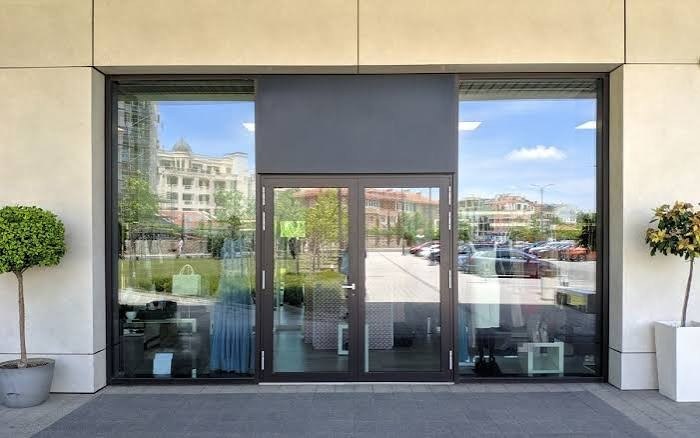
Commercial glass shopfronts are glazed entrance and frontage systems installed at the front of business premises. They commonly feature large glass panels supported by aluminium frames, creating an attractive frontage that allows customers to see into the premises.
These installations are widely used in:
- Retail shops and supermarkets
- Shopping centres and malls
- Banks and financial institutions
- Hotels and restaurants
- Office buildings
- Car showrooms
- Pharmacies and boutiques
- Commercial complexes
- Reception areas and business centres
The design may include fixed glass panels, aluminium-framed doors, sliding doors, hinged entrance doors or a combination of different glazing arrangements.
The main purpose is to create an attractive, functional and secure entrance while allowing natural light and visibility into the business.
Why Businesses Prefer Aluminium Frames for Commercial Glass Shopfronts
Aluminium has become a preferred material for commercial shopfront construction because of its strength, appearance, versatility and relatively low maintenance requirements.
Here are the main reasons businesses choose aluminium-framed glass shopfronts.
1. Modern and Professional Appearance
First impressions matter in business. An attractive shopfront can make a commercial property appear more professional, organised and welcoming.
Aluminium frames provide clean lines and a contemporary appearance that complements modern architectural designs. When combined with large glass panels, they create an open and elegant frontage.
Businesses can choose from different aluminium frame colours and finishes to complement their branding, building exterior and interior design.
Popular options include:
- Black aluminium frames
- Natural silver aluminium frames
- White aluminium frames
- Bronze and other decorative finishes
- Custom colours to match corporate branding
This flexibility makes aluminium-framed glass shopfronts suitable for both small retail outlets and large commercial developments.
2. Strength and Durability
Commercial entrances experience frequent use. They must withstand repeated door opening and closing, everyday contact and exposure to environmental conditions.
Aluminium is valued for its strength-to-weight ratio, making it suitable for many commercial framing applications. When correctly specified, fabricated and installed, aluminium frames can provide dependable support for glass panels and entrance doors.
Aluminium also does not rust in the same way as ordinary steel, although its surface finish and fittings still require appropriate care.
For long-term performance, businesses should select suitable aluminium profiles, glazing systems and hardware based on the size and intended use of the shopfront.
3. Excellent Natural Lighting
One major advantage of glass shopfronts is their ability to allow natural light into commercial spaces.
Large glazed panels help brighten reception areas, retail spaces and showrooms during daylight hours. This can create a more inviting environment for customers and employees.
Natural lighting also helps businesses display products more clearly and create a sense of openness.
Aluminium frames support the glass while allowing designers to create attractive glazed areas without relying on large solid wall sections.
4. Improved Product Visibility
For retail businesses, product presentation is essential. Customers often want to see what a shop offers before entering.
Glass shopfronts provide clear visibility into the premises, allowing businesses to display merchandise, promotional materials and interior arrangements.
This is particularly useful for:
- Clothing and fashion stores
- Electronics shops
- Furniture showrooms
- Supermarkets
- Jewellery stores
- Car dealerships
- Beauty and cosmetic shops
A well-designed aluminium-framed glass shopfront can help attract attention and encourage potential customers to explore the business.
5. Low Maintenance Requirements
Businesses generally prefer building materials that do not require frequent repairs or complicated maintenance.
Aluminium frames are relatively easy to maintain. Routine cleaning helps preserve their appearance, while periodic inspection helps identify loose fittings, damaged seals or other developing issues.
Glass panels can be cleaned using suitable glass-cleaning products and non-abrasive materials.
To maintain a commercial glass shopfront:
- Clean glass surfaces regularly.
- Remove dirt and debris from door tracks.
- Check handles, locks and hinges.
- Inspect silicone seals and glazing gaskets.
- Look for damaged glass or loose fittings.
- Arrange repairs when components show signs of wear.
Proper maintenance helps preserve the appearance, operation and service life of the installation.
6. Flexible Designs for Different Businesses
Aluminium framing systems offer considerable design flexibility. They can be fabricated to suit different frontage dimensions, entrance configurations and architectural requirements.
Businesses can select designs based on their available space, customer traffic, branding and operational needs.
Whether a business needs a simple entrance or a full glass frontage, aluminium framing provides options for different commercial applications.
7. Resistance to Corrosion
Unlike ordinary untreated steel, aluminium naturally forms a protective oxide layer that helps resist corrosion.
This makes it a useful framing material for buildings exposed to changing weather conditions. Suitable surface treatments and finishes can provide additional protection and help preserve the appearance of the frames.
However, aluminium is not completely maintenance-free. Cleaning, suitable installation details and the selection of compatible fittings remain important.
8. Better Use of Commercial Space
Glass shopfronts can make business premises appear more open and connected to their surroundings.
They allow customers to view products and displays without the visual obstruction of solid frontage walls. Aluminium framing also supports different door configurations that can be selected according to available space.
For example, sliding glass doors may be useful where there is limited clearance for a hinged door, while hinged doors may suit entrances that require a straightforward opening arrangement.
The right configuration depends on the building layout and expected pedestrian traffic.
Popular Types of Aluminium-Framed Commercial Glass Shopfronts
Businesses can choose from several shopfront designs depending on their preferred appearance, security requirements and building layout.
1. Aluminium-Framed Glass Shopfronts
<AsyncImage query=”modern commercial retail storefront clear glass panels black aluminium frames exterior” aspectRatio=”16:9″ width=”100%”/>
This is one of the most common commercial shopfront designs. Glass panels are fitted within aluminium framing systems to create a structured and attractive frontage.
They are suitable for shops, offices, restaurants and commercial buildings.
2. Frameless-Look Glass Shopfronts
<AsyncImage query=”modern frameless glass commercial retail shopfront entrance” aspectRatio=”16:9″ width=”100%”/>
Frameless-look shopfronts use glass with minimal visible framing to create a clean and open appearance.
Although the design minimises visible framing, appropriate structural support, glass specifications and fixing systems are still essential.
These shopfronts are popular in premium retail outlets, showrooms and modern commercial spaces.
3. Aluminium Sliding Glass Shopfronts
<AsyncImage query=”commercial aluminium framed glass sliding entrance doors retail storefront” aspectRatio=”16:9″ width=”100%”/>
Sliding glass doors move along tracks instead of swinging into the entrance area.
They are suitable for businesses where saving opening space is important. Depending on the selected system, they may be designed for manual or automatic operation.
4. Double-Hinged Glass Shopfront Doors
<AsyncImage query=”commercial double hinged aluminium framed glass entrance doors storefront” aspectRatio=”16:9″ width=”100%”/>
Double-hinged glass doors provide a wider entrance opening and can create an attractive appearance for commercial properties.
They are commonly used in hotels, office buildings, showrooms and larger retail premises.
5. Tinted Glass Shopfronts
<AsyncImage query=”modern commercial storefront bronze tinted glass aluminium frames” aspectRatio=”16:9″ width=”100%”/>
Tinted glass can help control glare and provide a different visual appearance.
The appropriate glass selection depends on the building’s lighting requirements, visibility preferences, solar exposure and safety considerations.
6. Automatic Glass Shopfront Entrances
<AsyncImage query=”modern commercial automatic sliding glass entrance aluminium frame office retail building” aspectRatio=”16:9″ width=”100%”/>
Automatic sliding glass entrances are useful in commercial premises with high customer traffic.
They provide convenient access and can be integrated with suitable access-control and safety systems. Professional installation and regular servicing are important for reliable operation.
Aluminium Frames vs Other Shopfront Framing Materials
When planning a commercial glass shopfront, businesses may consider aluminium, steel or other framing materials.
| Feature | Aluminium frames | Steel frames |
|---|---|---|
| Appearance | Modern and versatile | Can be modern or industrial |
| Weight | Relatively lightweight | Generally heavier |
| Corrosion | Naturally corrosion-resistant | Requires suitable corrosion protection |
| Maintenance | Generally straightforward | Depends on protective coating and condition |
| Design flexibility | Available in many profile systems | Depends on fabrication and system |
| Applications | Retail, offices and commercial buildings | Commercial and specialised applications |
Aluminium is often preferred for modern glazed shopfronts because it combines a relatively lightweight structure with a clean finish and flexible design options.
However, the best material depends on the building’s structural requirements, design, budget and intended use.
Important Factors to Consider Before Installing a Commercial Glass Shopfront
Choosing the right shopfront involves more than selecting attractive glass and aluminium frames. Businesses should consider the following factors before starting installation.
1. Quality of Aluminium Profiles
The aluminium profiles must be appropriate for the dimensions and design of the shopfront.
Consider the profile dimensions, wall thickness, finish, compatibility with the glazing system and suitability for the expected loads.
Avoid selecting framing materials based on appearance or price alone.
2. Correct Glass Type and Thickness
Glass selection is one of the most important parts of shopfront planning.
Depending on the application, suitable options may include:
- Tempered glass: Heat-treated glass designed to improve strength and, when broken, generally fragments into smaller pieces.
- Laminated glass: Glass made with an interlayer that helps hold fragments together if breakage occurs.
- Tinted glass: Glass with a tinted appearance that can help manage glare and light transmission.
- Clear glass: A popular option for businesses that want maximum visibility.
Glass thickness and type should be determined by panel dimensions, support conditions, exposure, safety requirements and the intended use.
Safety glazing should be considered carefully in doors and large glass panels in locations where people may collide with the glass.
3. Security Requirements
Commercial shopfronts must support the security needs of the business.
Important features may include:
- Suitable commercial door locks
- Strong hinges and handles
- Appropriate safety glazing
- Secure frame connections
- Quality door hardware
- Access-control systems where required
For businesses handling valuable merchandise or equipment, additional security measures may be necessary.
The shopfront should be designed as part of the property’s overall security plan.
4. Door Configuration
The type of entrance door affects accessibility, convenience and available space.
Consider whether the premises would benefit from:
- Sliding glass doors
- Single-hinged glass doors
- Double-hinged glass doors
- Automatic sliding doors
The choice should account for pedestrian traffic, opening clearance, accessibility and the daily operations of the business.
5. Weather Protection and Sealing
Commercial shopfronts must be properly designed to manage exposure to rain, dust and wind.
Correct installation of glazing gaskets, sealants, drainage provisions and frame connections helps reduce water penetration and other weather-related problems.
The system should be suitable for the building’s exposure conditions.
6. Budget and Long-Term Value
The cost of a commercial glass shopfront depends on several factors, including:
- Overall frontage dimensions
- Type and thickness of glass
- Aluminium profile specification
- Frame colour and finish
- Number and type of entrance doors
- Locks, handles and other hardware
- Site conditions and installation complexity
- Special requirements such as automatic doors
Businesses should compare quotations based on the materials, specifications and work included rather than choosing a contractor based only on the lowest price.
The Commercial Glass Shopfront Installation Process
Professional installation is essential for ensuring that the shopfront fits correctly, operates smoothly and performs as intended.
A typical installation process involves the following stages.
Step 1: Site Assessment and Measurements
The installation team assesses the building frontage, checks the available opening and takes accurate measurements.
This helps determine the appropriate frame dimensions, glass panel sizes and entrance configuration.
Step 2: Design and Material Selection
The business selects the preferred shopfront design, aluminium finish, glass type and door arrangement.
The specifications should be reviewed against the building’s requirements and intended use.
Step 3: Aluminium Frame Fabrication
Aluminium profiles are measured, cut and assembled according to the approved design.
Accurate fabrication helps ensure that the frames fit the site dimensions and accommodate the selected glazing system.
Step 4: Frame Installation
The aluminium frames are positioned and fixed securely to the building structure using suitable installation methods.
The installer checks alignment, level and the stability of the assembly.
Step 5: Glass Installation
The glass panels are fitted using the appropriate glazing materials, gaskets and support arrangements.
Careful handling is essential to reduce the risk of damage and ensure correct positioning.
Step 6: Door and Hardware Fitting
Doors, locks, handles, hinges, rollers and other fittings are installed according to the selected system.
Step 7: Sealing and Finishing
Suitable sealants and weatherproofing details are applied where required.
The team checks the appearance of the frames, joints and glass panels.
Step 8: Final Inspection
The completed shopfront is inspected to confirm that the doors operate correctly, the panels are properly supported and the installation meets the agreed specifications.
Common Mistakes to Avoid When Installing Commercial Glass Shopfronts
Even a high-quality shopfront can experience problems when design, material selection or installation is poorly handled.
Businesses should avoid these common mistakes.
Choosing glass based only on appearance: Glass must meet the safety and performance requirements of the application.
Using unsuitable aluminium profiles: The framing system should be selected according to panel dimensions, structural support and exposure conditions.
Ignoring security requirements: A beautiful shopfront is not enough if the locks, doors and glazing do not meet the business’s security needs.
Poor measurements: Incorrect measurements can lead to gaps, alignment problems and costly adjustments.
Using inexperienced installers: Poor fabrication and installation may affect the appearance, operation and service life of the shopfront.
Neglecting maintenance: Door tracks, locks, seals and fittings require periodic inspection and care.
Failing to consider customer access: The entrance should be convenient and appropriate for the expected number of customers.
Avoiding these mistakes helps businesses achieve a more functional and attractive commercial frontage.
How Much Does Commercial Glass Shopfront Installation Cost in Uganda?
The cost of installing a commercial glass shopfront in Uganda varies depending on the size, design, materials and complexity of the project.
There is no single price that applies to every business because a small retail entrance requires different materials and installation work from a large showroom frontage.
The main factors that influence the cost include:
- Shopfront dimensions: Larger frontages generally require more aluminium profiles, glass and installation work.
- Glass specifications: The selected glass type, thickness and finish influence the overall cost.
- Aluminium frame quality: Profile dimensions, finish and system specifications affect material costs.
- Door design: Sliding, hinged and automatic doors have different hardware and installation requirements.
- Security features: Special locks, access-control systems and other security components may increase the project cost.
- Installation conditions: Site accessibility, existing building conditions and installation complexity can affect labour requirements.
For an accurate quotation, businesses should arrange a site assessment and provide their preferred design, dimensions and specifications.
Why Choose Daltrevco for Commercial Glass and Aluminium Shopfronts?
Selecting an experienced glass and aluminium contractor is important when investing in a commercial shopfront.
Daltrevco provides glass and aluminium solutions for commercial and other building projects, with attention to design, material selection, fabrication and installation requirements.
Businesses looking for commercial glass shopfronts can benefit from professional guidance on:
- Suitable aluminium framing systems
- Glass types and specifications
- Commercial entrance door designs
- Shopfront layouts and appearance
- Material selection and project requirements
- Installation planning and finishing
Whether you are developing a new retail outlet, renovating an existing shop or upgrading a commercial building, choosing the right shopfront design can improve the appearance and functionality of your premises.
Visit Daltrevco to learn more about its building, glass and aluminium solutions.
Frequently Asked Questions About Commercial Glass Shopfronts
1. Why are aluminium frames popular for commercial glass shopfronts?
Aluminium frames are popular because they are relatively lightweight, durable, corrosion-resistant and available in different designs and finishes. They also support modern glass frontage systems suitable for many commercial buildings.
2. Are aluminium-framed glass shopfronts suitable for retail shops?
Yes. They are widely used in retail shops because they provide product visibility, allow natural light into the premises and create a professional appearance.
3. Which glass is best for commercial shopfronts?
The best glass depends on the size and location of the panels, safety requirements and the intended use. Tempered and laminated glass are common safety-glazing options, while clear and tinted finishes can be selected according to design preferences.
4. Are aluminium glass shopfronts secure?
They can provide a suitable level of security when designed with appropriate glass, strong frame connections, quality locks and suitable entrance hardware. Security requirements should be considered during the design stage.
5. Can aluminium shopfronts be customised?
Yes. Aluminium shopfronts can be customised according to frontage dimensions, frame colours, glass types, door configurations and architectural requirements.
6. Are aluminium frames suitable for outdoor commercial shopfronts?
Yes. Aluminium is commonly used in external commercial framing because it naturally resists corrosion. The correct profile, finish, glazing system and weatherproofing details should still be selected for the building’s exposure conditions.
7. How long does commercial glass shopfront installation take?
The installation period depends on the size of the frontage, design complexity, material availability, fabrication requirements and site conditions. A contractor can provide a more accurate schedule after assessing the project.
8. How do I maintain an aluminium-framed glass shopfront?
Clean the glass and aluminium surfaces regularly, inspect door hardware, remove debris from sliding tracks and check seals and fittings periodically. Damaged glass or faulty hardware should be repaired by qualified personnel.
9. Can aluminium shopfronts be used in office buildings?
Yes. Aluminium-framed glass shopfront systems are suitable for office entrances, reception areas, commercial buildings and other spaces where a modern glazed frontage is desired.
10. Where can I get commercial glass shopfront installation services in Uganda?
Businesses can contact Daltrevco to discuss glass and aluminium solutions for commercial properties, including shopfront design and installation requirements.
Conclusion
Commercial glass shopfronts with aluminium frames offer businesses an attractive combination of modern design, durability, natural lighting, product visibility and practical functionality.
Their flexibility makes them suitable for retail shops, showrooms, restaurants, offices and other commercial buildings. However, achieving a successful installation requires the right aluminium profiles, appropriate glass specifications, quality hardware and professional workmanship.
For businesses planning to install or upgrade a commercial shopfront in Uganda, Daltrevco can help with glass and aluminium solutions suited to different commercial building requirements.
Contact Daltrevco today to discuss your commercial glass shopfront project and create a professional frontage that reflects your business.