
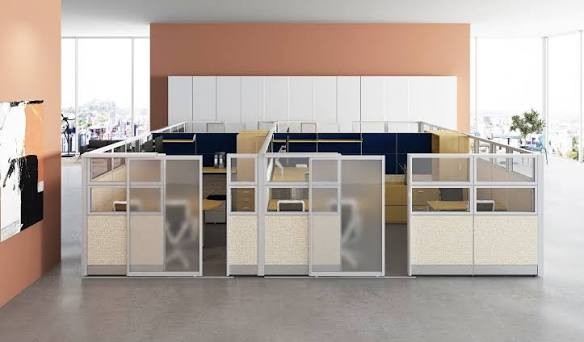
Modern workplaces are constantly changing as businesses look for better ways to use available space, improve employee productivity and create professional working environments. Whether setting up a new office, renovating an existing workspace or expanding business operations, choosing the right office layout is an important decision.
One of the most effective ways to organise a modern office is through office partition installation. Office partitions divide large spaces into functional areas without necessarily requiring permanent walls or major structural changes. They provide businesses with greater flexibility while maintaining an attractive and organised working environment.
From glass and aluminium partitions to gypsum and movable partition systems, businesses can choose solutions that match their office design, operational requirements and budget.
In Uganda, where businesses increasingly value efficient office layouts, professional office partitioning offers a practical way to maximise available space while creating comfortable and productive workplaces.
This guide explores the major benefits of installing office partitions, the different types available, important considerations when choosing them and why professional installation matters.
What Are Office Partitions?
Office partitions are dividing structures installed within an office to create separate rooms, workstations, meeting spaces, reception areas and private offices.
Unlike conventional brick walls, many partition systems are lightweight, quicker to install and easier to modify when office requirements change.
Depending on the design and intended application, office partitions can be made from:
- Aluminium frames and glass panels
- Frameless glass
- Frosted or tinted glass
- Gypsum boards
- Timber and other suitable panel materials
- Movable and demountable partition systems
Office partitions can be designed to complement modern office interiors while providing practical solutions for privacy, organisation and space management.
12 Major Benefits of Installing Office Partitions in Modern Workplaces
1. Maximising Available Office Space
One of the biggest benefits of installing office partitions is the ability to make better use of available office space.
Large, open office areas can sometimes become difficult to organise, particularly when different departments need separate working environments. Office partitions help divide these spaces into functional sections without requiring extensive construction.
Businesses can create:
- Individual offices for managers and supervisors
- Separate departments for different teams
- Meeting and conference rooms
- Reception and waiting areas
- Private consultation rooms
- Employee workstations
This allows businesses to accommodate more functions within the same building while maintaining an organised layout.
2. Improving Employee Privacy
Privacy is essential in workplaces where employees handle confidential information, communicate with clients or perform tasks that require concentration.
Office partitions help establish boundaries between different working areas, reducing unnecessary interruptions and creating a more comfortable environment.
For example, glass partitions with frosted sections can provide visual privacy while allowing natural light to enter the office.
Businesses such as law firms, financial institutions, consultancy companies and healthcare facilities can benefit from partition systems designed to provide appropriate levels of privacy.
3. Creating a Professional Office Appearance
The appearance of an office influences how clients, visitors, employees and business partners perceive an organisation.
Modern office partitions help create clean, organised and professional interiors. Glass and aluminium partitions, in particular, offer a contemporary appearance that complements modern commercial buildings.
They can be customised to match:
- Corporate colours and branding
- Existing interior finishes
- Office furniture and fittings
- Reception and meeting room designs
- The overall architectural style of the building
A well-designed partition system can transform an ordinary office into a more attractive and welcoming business environment.
4. Allowing Natural Light to Flow Through the Office
Natural lighting is an important consideration when designing comfortable workplaces.
Traditional solid walls can block sunlight from reaching interior rooms, making some office areas dark and dependent on artificial lighting.
Glass office partitions provide an effective alternative because they allow natural light to pass between different sections of the workspace.
The benefits include:
- Brighter working areas
- Better use of available daylight
- A more open and spacious appearance
- Reduced reliance on artificial lighting during daylight hours, where conditions allow
Businesses that want to maintain an open atmosphere while creating separate rooms can consider clear, frosted or partially glazed glass partitions.
5. Enhancing Employee Productivity and Concentration
A well-organised office environment can help employees perform their duties more effectively.
Open office layouts encourage interaction, but they can also expose employees to unnecessary movement, conversations and distractions.
Partitions help create designated working areas that support different activities.
For example:
- Quiet sections can be created for tasks requiring concentration.
- Meeting rooms can be separated from general workstations.
- Reception areas can be positioned away from employee workspaces.
- Management offices can be separated from busy operational departments.
By reducing visual distractions and improving workplace organisation, suitable partition systems can contribute to a more productive working environment.
6. Providing Better Noise Management
Noise can be a major challenge in busy workplaces, especially where several departments operate within one large room.
Office partitions can help reduce the direct spread of sound between different sections, depending on their materials, construction and installation quality.
For improved acoustic performance, businesses can consider:
- Properly sealed partition systems
- Double-glazed glass partitions
- Acoustic glass
- Insulated gypsum partitions
- Specialist acoustic panels
It is important to understand that ordinary glass or lightweight partitions do not automatically provide complete soundproofing. Businesses that require high levels of sound privacy should select systems designed and tested for acoustic performance.
7. Offering Flexibility for Future Office Changes
Business operations change over time. A company may employ more staff, introduce new departments, expand its services or require additional meeting rooms.
Permanent walls can make office renovations expensive and complicated.
Many modern partition systems are designed to be modified, relocated or extended when workplace requirements change.
Movable and demountable partitions are particularly useful for businesses that expect future changes to their office layout.
This flexibility allows organisations to adapt their workspaces without undertaking major structural renovations.
8. Reducing Construction Time and Disruption
Installing office partitions can be faster and less disruptive than constructing conventional permanent walls, although installation time depends on the size and complexity of the project.
Many aluminium and glass partition systems are manufactured to specific measurements and assembled on-site.
This can help businesses:
- Complete office renovations more efficiently
- Reduce disruption to daily operations
- Organise new office spaces faster
- Avoid some of the work associated with traditional masonry construction
For organisations operating from rented commercial premises, partition systems can also provide a practical way to organise the interior without extensive structural alterations, subject to the landlord’s approval.
9. Supporting Better Workplace Organisation
An organised office makes it easier for employees and visitors to understand how different areas are arranged.
Partitions help establish clear boundaries between departments and activities.
For example, a business can use office partitions to separate:
- Customer service departments
- Administration offices
- Finance and accounting sections
- Human resource departments
- Meeting rooms
- Management offices
- Staff relaxation areas
This arrangement helps create a structured working environment and reduces unnecessary movement between unrelated activities.
10. Improving Client and Visitor Experience
The office environment communicates a lot about a business before a meeting even begins.
A properly organised reception area, private consultation room and professional meeting space can create a positive impression on visitors.
Office partitions make it easier to create dedicated areas for receiving clients, conducting discussions and handling confidential consultations.
Glass partitions can also maintain visibility between selected areas, helping offices feel welcoming rather than enclosed.
11. Offering Cost-Effective Office Design Solutions
Office partitions can provide a practical alternative to constructing permanent walls, particularly when a business needs to divide an existing open space.
The overall cost depends on several factors, including:
- Type of partition material
- Size and number of partition sections
- Glass thickness and specification
- Aluminium frame design
- Door types and hardware
- Acoustic and privacy requirements
- Site conditions
- Installation complexity
Although some premium glass and acoustic systems require a higher initial investment, choosing suitable materials and professional installation can help reduce future maintenance and replacement costs.
Businesses should compare the complete installation requirements rather than selecting a partition system based on material price alone.
12. Allowing Customised Office Designs
Every business has different operational requirements and interior design preferences.
Modern office partition systems can be customised to suit the available space, desired appearance and functional needs.
Customisation options include:
- Full-height glass partitions
- Aluminium-framed glass partitions
- Frosted glass for additional privacy
- Sliding glass doors
- Hinged partition doors
- Decorative glass finishes
- Solid and glazed combinations
- Different frame colours and finishes
This makes it possible to create office interiors that reflect a company’s identity while supporting its daily operations.
Types of Office Partitions Used in Modern Workplaces
Choosing the right partition material is important because different systems offer different levels of privacy, appearance, flexibility and acoustic performance.
1. Aluminium and Glass Office Partitions
Aluminium and glass partitions combine aluminium framing with glass panels to create attractive and functional office divisions.
They are suitable for:
- Corporate offices
- Meeting rooms
- Management offices
- Reception areas
- Commercial buildings
Aluminium frames provide structural support, while glass panels allow natural light to flow through the workspace.
<PRIVATE_PERSON>### 2. Frameless Glass Partitions
Frameless glass partitions use specially designed glass panels and appropriate fittings to create a clean, minimal appearance.
They are popular in modern offices that prioritise openness, transparency and contemporary interior design.
They can be used for meeting rooms, executive offices and selected reception areas. The glass specification, fixing system and safety requirements should be carefully considered.
3. Frosted Glass Partitions
Frosted glass partitions are suitable for offices that require a balance between natural lighting and visual privacy.
The glass surface can be treated or finished to reduce visibility while still allowing light to pass through.
They are commonly used in:
- Boardrooms
- Consultation rooms
- Human resource offices
- Management offices
- Confidential meeting spaces
4. Gypsum Office Partitions
Gypsum partitions use boards fixed to a supporting framework to create solid internal divisions.
They are suitable for offices that require greater visual privacy and enclosed rooms.
They can also be finished with paint and other decorative treatments to match the office interior.
5. Movable and Demountable Partitions
Movable partitions allow businesses to change the arrangement of their workspace when necessary.
They are particularly useful in offices that need flexible meeting areas, training rooms or multipurpose spaces.
The suitability of these systems depends on the intended frequency of movement, available space and required performance.
Where Can Office Partitions Be Installed?
Office partition systems can be used in many types of commercial and institutional environments.
Common applications include:
- Corporate offices
- Banks and financial institutions
- Law firms
- Hospitals and medical centres
- Hotels
- Educational institutions
- Government offices
- Consultancy firms
- Real estate offices
- Commercial buildings
- Customer service centres
The design should reflect the activities taking place in each area. For example, a boardroom may require acoustic privacy, while a reception area may benefit from transparent glass partitions.
Important Factors to Consider Before Installing Office Partitions
Before choosing an office partition system, businesses should evaluate the following factors.
1. Purpose of the Partition
Determine whether the partition is intended to provide privacy, divide departments, reduce noise, improve appearance or create meeting rooms.
The intended function will help determine the most suitable material and design.
2. Available Office Space
Measure the office carefully before installation.
Consider ceiling height, floor space, existing doors, windows, electrical fittings and ventilation requirements.
Proper measurements help ensure the partitions fit the available space.
3. Material Selection
Choose materials based on durability, appearance, maintenance requirements and intended use.
Aluminium and glass are suitable for many modern office environments, while gypsum may be more appropriate where solid divisions are required.
4. Privacy and Acoustic Requirements
Consider whether the office requires visual privacy, sound reduction or both.
A clear glass partition may provide separation without offering visual privacy, while frosted glass or solid partitions can provide greater visual screening.
For confidential meetings, consider professionally specified acoustic systems.
5. Lighting and Ventilation
Partition designs should not unnecessarily block natural light or interfere with ventilation.
Consider how the new layout will affect airflow, lighting and access to existing building services.
6. Safety and Glass Quality
Where glass is used, select suitable safety glazing for the intended application.
The specification should consider glass thickness, panel dimensions, support systems, impact risks and applicable building requirements.
7. Budget and Long-Term Maintenance
Compare installation costs, durability, cleaning requirements and possible future modifications.
A well-selected partition system should meet the business’s needs while offering good long-term value.
8. Professional Installation
Correct installation is essential for the stability, appearance and performance of office partitions.
Work with an experienced contractor who can assess the site, take accurate measurements, recommend suitable materials and complete the installation properly.
The Office Partition Installation Process
Professional office partition installation normally involves several stages.
Step 1: Site Assessment
The contractor evaluates the available space, existing layout, ceiling height and intended use of each section.
Step 2: Measurements and Planning
Accurate measurements are taken to determine partition dimensions, door positions, panel arrangements and installation requirements.
Step 3: Material and Design Selection
The client selects suitable partition materials, frame finishes, glass specifications and door systems based on the project’s requirements.
Step 4: Preparation of the Installation Area
The installation area is prepared, and relevant building services and site conditions are checked.
Step 5: Frame and Panel Installation
Supporting frames, glass panels or other selected partition materials are installed according to the approved design.
Step 6: Door and Hardware Fitting
Suitable doors, handles, hinges, locks and other accessories are installed where required.
Step 7: Finishing and Inspection
The contractor checks alignment, stability, fittings, finishing and general installation quality before handing over the completed work.
Why Professional Office Partition Installation Matters
Even high-quality partition materials may perform poorly when they are incorrectly measured or installed.
Professional installation helps ensure that partitions are properly aligned, securely supported and suitable for their intended application.
A qualified contractor should be able to:
- Assess the office layout and requirements
- Recommend suitable partition materials
- Take accurate measurements
- Provide appropriate glass and aluminium specifications
- Install frames, panels and doors correctly
- Pay attention to safety and finishing
- Deliver a neat and functional workspace
Businesses should prioritise workmanship and material quality when selecting an office partitioning contractor.
Why Choose Daltrevco for Office Partitioning Solutions in Uganda?
Choosing the right contractor is an important part of achieving a functional and attractive office interior.
Daltrevco provides building-related and aluminium works solutions for clients seeking practical improvements to commercial and residential properties.
For office partitioning projects, businesses should look for solutions that combine suitable materials, accurate measurements, professional workmanship and a design that supports daily operations.
Whether you are planning to divide an open office, create private meeting rooms or improve the appearance of a commercial workspace, contact Daltrevco to discuss your project requirements and explore suitable partitioning solutions.
A properly planned office partition system can help transform your workplace into a more organised, comfortable and professional environment.
Frequently Asked Questions About Office Partitions
1. What are the main benefits of installing office partitions?
Office partitions help maximise available space, improve privacy, organise departments, create meeting rooms, enhance office appearance and support flexible workplace layouts.
2. Which type of office partition is best for a modern workplace?
Aluminium and glass partitions are popular in modern workplaces because they combine a professional appearance with natural light and functional space division. However, the best option depends on privacy, acoustic, safety and budget requirements.
3. Do glass office partitions provide privacy?
Clear glass partitions provide visual separation but limited visual privacy. Frosted, tinted or patterned glass can provide greater privacy while still allowing natural light to enter the office.
4. Can office partitions reduce noise?
Some office partitions can help reduce noise transmission. However, performance depends on the materials, thickness, construction, seals and installation. Specialist acoustic partitions may be necessary for confidential rooms.
5. Are office partitions cheaper than permanent walls?
Office partitions can be more economical than conventional walls in many projects because they may require less construction work and can be quicker to install. Actual costs depend on materials, dimensions, design and site conditions.
6. Can office partitions be removed or relocated?
Some systems, particularly movable and demountable partitions, are designed for removal or relocation. Other systems may require more work to modify. The choice should depend on the expected future use of the office.
7. How long does office partition installation take?
Installation time depends on the size of the office, partition type, design complexity, site preparation and material availability. Smaller projects may take less time than large commercial installations.
8. How do I choose a reliable office partitioning contractor in Uganda?
Look for a contractor with relevant installation experience, quality materials, accurate measurement practices, clear quotations and a commitment to proper finishing and safety.
9. Are aluminium and glass partitions suitable for small offices?
Yes. They can help divide smaller offices into functional sections without making the interior feel as enclosed as traditional solid walls. Careful planning is important to preserve adequate space, lighting and movement.
10. How do I maintain office partitions?
Clean glass panels with suitable glass-cleaning products, wipe aluminium frames with a soft cloth and inspect hinges, handles, locks and other fittings regularly. Avoid abrasive materials that may damage finishes.
Conclusion
Installing office partitions is an effective way to improve the functionality, appearance and organisation of modern workplaces. From maximising available office space and improving privacy to allowing natural light and creating flexible working areas, the right partition system can make a significant difference to how a business operates.
Aluminium, glass, gypsum and movable partitions each offer different advantages. The best choice depends on the office layout, intended use, privacy requirements, budget and future business needs.
For businesses planning to upgrade or organise their workspaces, professional office partitioning is a worthwhile investment in a more efficient and attractive working environment.
Contact Daltrevco to discuss your office partitioning requirements in Uganda and find a suitable solution for your workplace.

