Introduction
Technology is changing the way people interact with their homes. From controlling lights using smartphones to monitoring security cameras remotely, modern homes are becoming more intelligent, connected and convenient. One of the most important technologies driving this transformation is the Internet of Things (IoT).
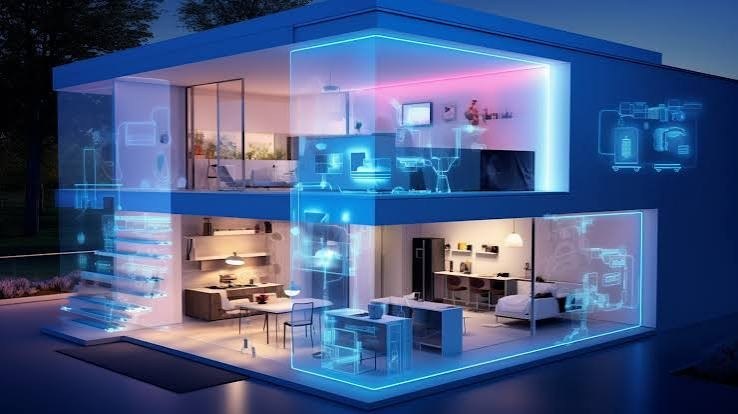
The Internet of Things connects everyday devices and household systems to the internet, allowing them to communicate, exchange information and perform tasks automatically. In smart homes, IoT technology makes it possible for lighting, security systems, air conditioning, entertainment devices and household appliances to work together.
As smart home technology becomes more accessible, homeowners are increasingly exploring IoT solutions to improve comfort, safety, energy efficiency and convenience.
In this guide, we explore the role of the Internet of Things in modern smart homes, how it works, its major applications, benefits, challenges and its future in Uganda and across Africa.
1. What Is the Internet of Things (IoT)?
The Internet of Things, commonly known as IoT, refers to a network of physical objects connected to the internet or other communication networks. These objects contain sensors, software and communication technologies that allow them to collect, send and receive information.
IoT devices can include:
- Smart lighting systems
- Smart televisions
- Intelligent security cameras
- Smart door locks
- Temperature sensors
- Motion detectors
- Smart refrigerators
- Automated curtains
- Smart energy meters
- Connected home appliances
In a smart home, these devices can communicate with one another and respond to instructions from homeowners.
For example, a motion sensor can detect someone entering a room and automatically switch on the lights. A smart thermostat can adjust indoor temperatures based on programmed settings, while a connected security camera can send alerts to a smartphone when it detects unusual activity.
This level of communication is what makes IoT an essential part of modern home automation.
2. How Does IoT Work in Smart Homes?
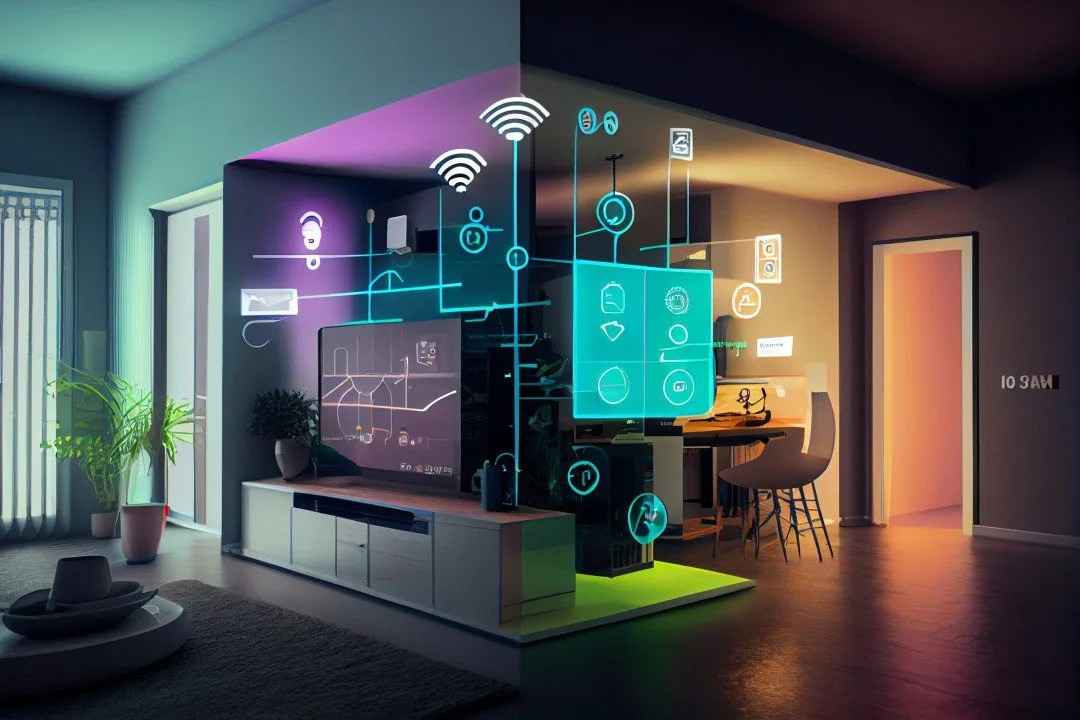
IoT technology works by connecting devices through communication networks and allowing them to exchange information. A typical smart home system includes several important components.
Smart Devices and Sensors
Smart devices are the physical products that perform specific functions. Sensors collect information about the surrounding environment, such as movement, temperature, humidity, light levels and door activity.
For example, a smart motion detector identifies movement, while a temperature sensor monitors indoor conditions.
Internet and Communication Networks
IoT devices communicate through technologies such as Wi-Fi, Bluetooth, Zigbee, Z-Wave and Thread. The technology used depends on the device, its capabilities and the smart home system.
Some devices communicate directly with a home network, while others use a central hub or gateway.
Smart Home Hubs and Controllers
A smart home hub or controller helps coordinate connected devices. It allows different products to work together, particularly when they use different communication technologies.
Some modern systems use a smartphone, smart speaker or dedicated controller to manage connected devices.
Mobile Applications
Smartphone applications provide homeowners with remote access to their smart home systems.
Through an app, users may be able to:
- Switch lights on or off.
- Lock or unlock compatible doors.
- Monitor security cameras.
- Adjust room temperatures.
- Control entertainment systems.
- Receive security notifications.
- Monitor energy consumption.
Cloud Computing and Local Processing
Some smart home systems use cloud services to store information, process commands and enable remote access. Other systems process certain commands locally within the home.
Local processing can help some automations continue working when internet access is unavailable. However, the capabilities depend on the devices and system configuration.
3. Major Applications of IoT in Modern Smart Homes
The Internet of Things has numerous applications that make residential environments more comfortable, secure and efficient.
A. Smart Lighting Systems
<PRIVATE_PERSON>
Smart lighting is one of the most common applications of IoT in modern homes.
Connected lighting systems allow homeowners to control bulbs, switches and lighting schedules using smartphones, voice assistants or automated routines.
Some smart lighting features include:
- Automatic switching based on occupancy.
- Scheduling lights to turn on or off.
- Adjusting brightness remotely.
- Changing lighting colours on compatible bulbs.
- Creating customised lighting scenes.
For example, homeowners can programme outdoor lights to switch on at sunset and turn off at a selected time.
B. Smart Home Security Systems
Home security is another important area where IoT technology plays a significant role.
Connected security devices allow homeowners to monitor their properties and receive alerts when unusual activity is detected.
Common IoT security solutions include:
- Smart surveillance cameras.
- Video doorbells.
- Intelligent door locks.
- Motion detectors.
- Glass-break sensors.
- Door and window sensors.
- Smart alarm systems.
These devices can send notifications to a homeowner’s smartphone when someone approaches the entrance or opens a monitored door.
Some systems also allow authorised users to view live camera footage and manage access remotely.
However, connected security devices should be protected with strong passwords, software updates and secure network settings.
C. Smart Temperature and Climate Control
IoT technology helps regulate indoor temperatures and improve comfort.
Smart thermostats and compatible air-conditioning systems can monitor environmental conditions and adjust temperature settings according to user preferences.
For example, a homeowner can schedule air conditioning to operate during particular hours or adjust the temperature remotely before arriving home.
These systems may also help reduce unnecessary energy consumption when configured correctly.
D. Smart Entertainment Systems
Modern entertainment systems increasingly use IoT technology to provide convenient control and connectivity.
Examples include:
- Smart televisions.
- Connected speakers.
- Wireless sound systems.
- Streaming devices.
- Multi-room audio systems.
Homeowners can control compatible entertainment devices through mobile applications or voice commands.
Some systems allow music, television and audio content to be managed across different rooms.
E. Smart Appliances
Household appliances are becoming more connected through IoT technology.
Examples include smart refrigerators, washing machines, ovens and robotic vacuum cleaners.
Depending on the model, these appliances may allow homeowners to:
- Monitor operating status.
- Receive maintenance notifications.
- Schedule certain activities.
- Track energy consumption.
- Control selected functions remotely.
Smart appliances can make everyday household tasks more convenient and easier to manage.
F. Smart Energy Management
Energy management is one of the most valuable applications of IoT in modern homes.
Smart energy monitoring systems collect information about electricity consumption and help homeowners understand how energy is being used.
These systems can work with:
- Smart electricity meters.
- Solar power systems.
- Battery storage systems.
- Smart plugs.
- Energy monitoring devices.
- Automated lighting and appliances.
In homes using solar power, compatible monitoring systems can display solar generation, battery levels and electricity consumption.
This information can help homeowners make better decisions about when to use appliances and how to manage available energy.
G. Smart Water Management
IoT is also useful for monitoring and managing household water systems.
Connected sensors can monitor water tank levels, detect leaks and provide alerts when unusual water usage occurs.
For homes that depend on water storage tanks or pumping systems, automated controls can help manage water availability more efficiently.
For example, a compatible water-level sensor can notify the homeowner when a tank is nearly empty or trigger an automatic pump according to configured safety conditions.
4. Benefits of IoT in Modern Smart Homes
The growing adoption of IoT technology is transforming residential living in several ways.
Increased Convenience
IoT allows homeowners to control different household systems from a central application or compatible voice assistant.
Instead of manually operating every device, users can manage multiple functions through connected controls and automated routines.
Improved Home Security
Connected cameras, smart locks and motion sensors provide additional ways to monitor residential properties.
Homeowners can receive notifications, view camera footage and manage compatible security devices remotely.
Better Energy Efficiency
Smart energy monitoring and automation can help identify unnecessary electricity consumption.
For example, occupancy-based lighting can switch off lights in empty rooms, while smart plugs can help manage compatible appliances.
Actual savings depend on usage patterns, device efficiency and installation quality.
Greater Comfort
Automated lighting, temperature control and entertainment systems can create comfortable living environments based on personal preferences.
Homeowners can programme routines for different times of the day.
Remote Home Monitoring
One of the biggest advantages of IoT is the ability to monitor connected devices from different locations.
Whether travelling, working or away from home, users can access compatible systems through internet-connected applications.
Better Resource Management
IoT monitoring can help households understand how they use electricity and water.
This information supports more informed decisions about household resource consumption.
5. The Importance of IoT in Smart Homes in Uganda and Africa
The Internet of Things has significant potential to improve residential living in Uganda and other African countries.
As internet connectivity, smartphone adoption, solar technology and digital services continue to develop, more homeowners are exploring connected home solutions.
Several applications are particularly relevant to the region.
Solar Energy Monitoring
Many households and businesses use solar power as an alternative or supplement to grid electricity.
IoT-enabled solar monitoring systems can help users monitor electricity generation, battery performance and energy consumption.
This can make it easier to understand how a solar installation is performing.
Water Tank Monitoring
Water storage is important in many residential areas.
Connected water-level sensors can help homeowners monitor tank levels and receive alerts when water is running low.
Remote Property Security
For homeowners who travel frequently or manage properties from different locations, connected surveillance cameras and smart alarm systems can provide additional monitoring options.
Reliable internet connectivity and secure installation are important for these solutions.
Electricity Management
Smart meters and energy monitoring devices can help households understand their electricity consumption.
This is particularly useful for homes operating a combination of grid electricity, solar panels and battery storage.
Smart Irrigation and Garden Management
Connected moisture sensors and irrigation controllers can help manage garden watering.
When configured correctly, these systems can reduce unnecessary watering and support more efficient use of available water.
6. Challenges of Using IoT in Smart Homes
Although IoT offers many benefits, homeowners should understand its limitations before investing in connected technology.
Internet Connectivity
Many IoT devices rely on internet connectivity for remote access, notifications and cloud-based features.
Unstable internet connections can affect performance.
Homeowners should consider devices that support local control where appropriate.
Cybersecurity and Privacy
Connected devices can create security risks when they are poorly configured or not regularly updated.
Weak passwords, outdated software and insecure networks may expose devices to unauthorised access.
To improve security:
- Use strong and unique passwords.
- Enable two-factor authentication where available.
- Keep device software updated.
- Secure the home Wi-Fi network.
- Avoid unnecessary access permissions.
- Buy devices from reputable manufacturers.
- Review privacy settings and camera access.
Compatibility Problems
Not every smart device works with every smart home platform.
Before purchasing equipment, homeowners should check whether the products support the same ecosystem or communication standards.
Matter, for example, is an interoperability standard designed to improve compatibility among supported smart home devices.
However, compatibility still depends on product features and implementation.
Installation and Maintenance Costs
Smart home technology may require an initial investment in devices, controllers, networking equipment and professional installation.
Homeowners should consider the full cost of ownership, including maintenance, subscriptions and future replacements.
Dependence on Electricity
Most IoT devices require electricity to operate.
Power interruptions can affect connected systems, although some devices have backup batteries or alternative power options.
For important functions such as security and networking, backup power may be worth considering.
7. IoT and Artificial Intelligence in Smart Homes
The combination of the Internet of Things and Artificial Intelligence (AI) is making smart homes more advanced.
IoT devices collect information from the home, while AI systems can analyse available information and support more intelligent decisions.
For example, an intelligent home system may learn household routines and suggest suitable lighting or temperature settings.
AI-enabled security systems may also help distinguish between certain types of movement, reducing unnecessary alerts when properly configured.
Other possible applications include:
- Predictive appliance maintenance.
- Intelligent energy management.
- Personalised lighting schedules.
- Voice-controlled home assistants.
- Automated climate adjustments.
- Improved security monitoring.
As these technologies develop, smart homes are likely to become more responsive and easier to manage.
8. How to Start Building an IoT Smart Home
You do not need to automate your entire house at once. A gradual approach can make smart home technology more affordable and easier to manage.
Consider the following steps:
Step 1: Identify Your Needs
Decide what you want to improve. Your priorities might include security, lighting, energy management, entertainment or convenience.
Step 2: Choose Compatible Devices
Select devices that work with a common smart home platform or support suitable interoperability standards.
Step 3: Improve Your Home Network
A reliable Wi-Fi network is important for many connected devices. Consider router placement, network coverage and security.
Step 4: Start with Essential Automation
Begin with practical devices such as smart lights, smart plugs, security cameras or water-level sensors.
Step 5: Create Automation Routines
Configure devices to perform tasks automatically, such as switching off lights at bedtime or sending notifications when a monitored door opens.
Step 6: Secure and Maintain Your System
Install updates, use strong passwords and regularly review device settings.
Step 7: Expand Gradually
Once the initial system works reliably, add other compatible devices according to your needs and budget.
9. The Future of IoT in Smart Homes
The future of IoT in residential environments is expected to involve greater connectivity, improved automation and more intelligent resource management.
Several developments are likely to influence smart home technology.
More Connected Household Devices
An increasing number of household appliances and residential systems are being designed with connectivity features.
Improved Device Compatibility
Interoperability standards such as Matter are helping supported devices from different manufacturers work together more easily.
Intelligent Energy Management
Smart homes are expected to make greater use of connected solar systems, battery storage, energy monitoring and automated power management.
More Advanced Security
Connected cameras, access-control systems and intelligent sensors are likely to become more sophisticated.
Smarter Water Management
Leak detection, automated pumps and water-level monitoring may become increasingly useful in residential properties.
Greater Use of AI
AI-powered systems may make it easier for smart homes to respond to household routines and environmental conditions.
The overall direction is towards homes that are more connected, efficient, responsive and convenient.
10. Frequently Asked Questions About IoT in Smart Homes
What is the role of IoT in smart homes?
IoT connects household devices and systems, allowing them to communicate, exchange information and perform automated tasks. It supports smart lighting, security, climate control, energy monitoring and other home automation applications.
What are examples of IoT devices in a smart home?
Examples include smart bulbs, security cameras, intelligent door locks, motion sensors, smart thermostats, connected appliances, smart plugs and water-level sensors.
Does a smart home need internet access?
Many smart home features require internet access, especially remote control and cloud services. However, some devices and systems support local automation without an active internet connection.
Is IoT technology expensive?
The cost depends on the number and type of devices, installation requirements and the chosen smart home platform. Homeowners can start with a few affordable devices and expand gradually.
Is IoT safe for home security?
IoT can improve home monitoring, but connected devices must be secured properly. Strong passwords, software updates, secure networks and appropriate privacy settings are important.
Can IoT help reduce electricity bills?
IoT energy monitoring and automation can help identify unnecessary electricity use. Savings depend on how effectively the devices are configured and how much energy the household consumes.
How is IoT useful in Uganda?
IoT can support solar energy monitoring, home security, water tank monitoring, electricity management and automated irrigation. These applications can be particularly useful for households managing their own energy and water systems.
What is the difference between IoT and home automation?
IoT refers to the network of connected physical devices that collect and exchange information. Home automation refers to the automatic control of household systems. IoT often provides the connectivity that enables modern home automation.
Conclusion
The Internet of Things is one of the key technologies transforming modern smart homes. By connecting household devices, sensors and control systems, IoT makes it possible to manage lighting, security, temperature, entertainment, electricity and water more efficiently.
Its benefits include improved convenience, remote monitoring, better resource management and greater control over household environments.
For homeowners in Uganda and across Africa, IoT also presents opportunities in solar energy monitoring, water management and residential security.
As connectivity, artificial intelligence and smart device compatibility continue to improve, the role of IoT in modern homes will become increasingly important.
Building a smart home does not require changing everything at once. Starting with a few practical IoT devices can be the first step towards a more connected, secure and intelligent living environment.