
Water is one of the most important resources in any residential, commercial or industrial property. However, increasing water demand, rising utility costs, unreliable water supply in some areas and environmental concerns have made efficient water management a priority for modern buildings.
Installing effective water conservation systems for residential and commercial buildings helps property owners reduce water consumption, lower operating expenses, minimise wastage and support environmental sustainability.
In Uganda, where buildings range from private homes and apartments to hotels, hospitals, offices, factories and shopping centres, water conservation is becoming an essential part of sustainable building design and property management.
Modern water conservation systems combine efficient plumbing fixtures, rainwater harvesting, water recycling, smart monitoring technologies, leak detection and efficient water storage solutions. These technologies help buildings use available water responsibly without compromising comfort, hygiene or daily operations.
At Daltrevco Company, we recognise the importance of integrating efficient building utility solutions into modern properties. This guide explains the different water conservation systems, their benefits, applications, installation considerations and how property owners can improve water efficiency.
What Are Water Conservation Systems?
Water conservation systems are technologies, equipment and management practices designed to reduce unnecessary water consumption, prevent leaks, reuse suitable water and improve the overall efficiency of water distribution within a building.
These systems help ensure that water is used appropriately for activities such as bathing, cleaning, cooking, irrigation, sanitation, manufacturing and other building operations.
Depending on the building’s requirements, a water conservation system may include:
- Rainwater harvesting systems.
- Low-flow taps and showerheads.
- Dual-flush and water-efficient toilets.
- Greywater recycling systems.
- Leak detection and monitoring equipment.
- Smart water meters.
- Water-efficient irrigation systems.
- Efficient water pumps and storage tanks.
- Wastewater treatment and reuse systems.
Combining appropriate technologies can significantly improve water management in both new and existing buildings.
Why Water Conservation Is Important in Modern Buildings
Water conservation is no longer simply an environmental consideration. It is also an important part of reducing building operating costs and improving property management.
1. Reduces Water Bills
Residential and commercial properties can consume substantial amounts of water every day. Inefficient fixtures, leaking pipes, unnecessary usage and poor water management can increase monthly water expenses.
Water-efficient fixtures, rainwater harvesting and water monitoring systems help reduce dependence on supplied water and control unnecessary consumption.
2. Prevents Water Wastage
Undetected leaks, overflowing storage tanks, faulty taps and inefficient plumbing systems can waste significant quantities of water.
Water conservation technologies help identify and address these problems before they become expensive.
3. Supports Environmental Sustainability
Freshwater resources need responsible management. Reducing unnecessary consumption helps conserve available water resources and encourages sustainable property development.
4. Improves Building Efficiency
Modern water management systems help property owners monitor consumption, identify inefficient areas and improve the performance of plumbing installations.
5. Improves Water Availability
Rainwater harvesting and properly designed storage systems can provide additional water for suitable non-potable applications, reducing pressure on the main water supply.
6. Supports Sustainable Building Development
Water efficiency is an important consideration in sustainable construction. Developers can incorporate water-saving technologies into building designs to improve resource management throughout a property’s lifespan.
Types of Water Conservation Systems for Residential and Commercial Buildings
Different buildings require different water conservation solutions. The most suitable combination depends on occupancy, water demand, available space, plumbing design, water quality and operating requirements.
1. Rainwater Harvesting Systems
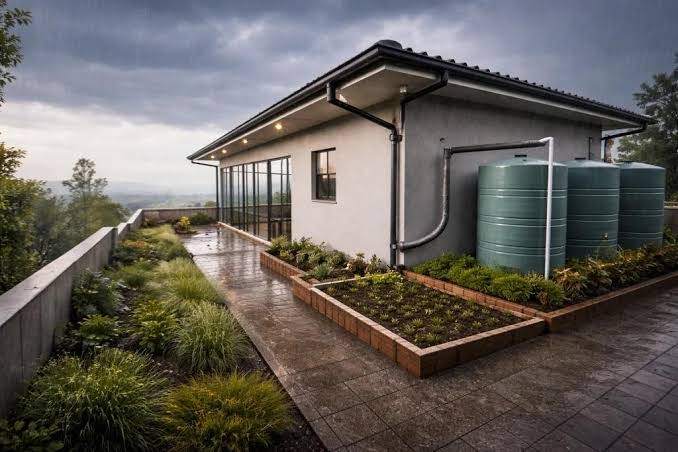
Rainwater harvesting is one of the most practical water conservation solutions for residential and commercial buildings in Uganda.
The system collects rainwater from rooftops and directs it through gutters and downpipes into storage tanks. Appropriate filtration and treatment can then be used depending on the intended application.
A typical rainwater harvesting system includes:
- Roof collection surfaces.
- Gutters and downpipes.
- Leaf screens and debris filters.
- First-flush diversion equipment.
- Water storage tanks.
- Appropriate filtration and treatment.
- Distribution pipes and pumps where required.
Harvested rainwater can be used for toilet flushing, cleaning, gardening, landscaping and other suitable non-potable applications.
Where drinking or cooking is intended, additional treatment and regular water-quality testing are necessary to confirm that the water is safe.
2. Low-Flow Water Fixtures
Low-flow fixtures reduce the quantity of water used during everyday activities without necessarily compromising user comfort.
Common examples include:
- Low-flow taps.
- Water-efficient showerheads.
- Sensor-operated taps.
- Flow restrictors.
- Water-efficient kitchen faucets.
- Efficient handwashing fixtures.
These fixtures are suitable for homes, hotels, offices, hospitals, restaurants, schools and other properties with frequent water use.
Installing water-efficient fixtures is often one of the simplest ways to improve water conservation in an existing building.
3. Dual-Flush Toilet Systems
Toilets account for a considerable proportion of indoor water consumption in many buildings.
Dual-flush toilets provide different flushing volumes for liquid and solid waste. This allows users to select an appropriate flush rather than using the same volume every time.
Water-efficient toilet systems are particularly useful in:
- Residential houses.
- Apartment buildings.
- Office complexes.
- Hotels and guesthouses.
- Shopping centres.
- Schools and universities.
- Hospitals and healthcare facilities.
When selecting a dual-flush toilet, property owners should consider product quality, flushing performance, maintenance requirements and compatibility with the existing plumbing system.
4. Greywater Recycling Systems
Greywater recycling systems collect and treat suitable wastewater from sources such as showers, baths and bathroom washbasins for approved non-potable reuse.
Instead of sending all suitable greywater directly into the wastewater system, a properly designed treatment system can make it available for applications such as toilet flushing and landscape irrigation.
A typical greywater recycling system may include:
- Collection pipes.
- Screening and filtration.
- Treatment equipment.
- Storage tanks.
- Pumps and distribution pipes.
- Monitoring and maintenance equipment.
Greywater systems require careful design to prevent contamination, odours, cross-connections and exposure to untreated wastewater.
They should be kept separate from potable water supplies and designed in accordance with applicable public health and plumbing requirements.
5. Smart Water Metering Systems
Smart water meters help property owners and facility managers monitor water consumption more effectively.
Unlike basic meters that require manual readings, smart metering solutions can provide more frequent consumption information and, depending on the technology, remote monitoring.
Benefits include:
- Tracking daily and monthly water usage.
- Identifying unusual consumption patterns.
- Supporting leak investigations.
- Monitoring consumption across different building sections.
- Improving water budgeting.
- Supporting facility management decisions.
Smart water metering is especially valuable for hotels, commercial buildings, apartment complexes, hospitals and industrial facilities where water consumption can vary considerably.
6. Automatic Leak Detection Systems
Water leaks can occur in underground pipes, concealed plumbing, storage tanks, bathrooms, kitchens and mechanical rooms.
Some leaks remain unnoticed for long periods, increasing water bills and potentially causing structural damage, dampness and mould.
Automatic leak detection systems use sensors, monitoring devices and control equipment to identify abnormal water flow or moisture.
Depending on the system, the technology may:
- Detect unexpected water flow.
- Identify possible pipe leaks.
- Monitor moisture in vulnerable areas.
- Send alerts to property managers.
- Activate automatic shut-off valves.
These systems are useful in apartment buildings, hotels, offices, server rooms, healthcare facilities and properties with extensive plumbing networks.
7. Water-Efficient Irrigation Systems
Landscaped areas, gardens and lawns can consume significant amounts of water, particularly when irrigation is poorly managed.
Water-efficient irrigation systems help deliver water where it is needed while reducing unnecessary runoff and evaporation.
Common solutions include:
- Drip irrigation.
- Soil moisture sensors.
- Automatic irrigation controllers.
- Timed sprinkler systems.
- Rainwater-fed irrigation.
- Zoned irrigation networks.
Drip irrigation is particularly useful for gardens, landscaped commercial properties, farms and residential compounds because it delivers water close to plant roots.
8. Efficient Water Pumps and Storage Systems
Water pumps and storage tanks play an important role in building water distribution.
Poorly selected pumps, overflowing tanks and incorrectly configured controls can result in unnecessary water and energy consumption.
Efficient water management solutions may include:
- Correctly sized water pumps.
- Variable-speed pump controls where appropriate.
- Automatic tank level controllers.
- Overflow prevention systems.
- Pressure control equipment.
- Properly sized water storage tanks.
These solutions help maintain reliable water distribution while reducing avoidable pumping and storage losses.
9. Wastewater Treatment and Reuse Systems
Larger buildings may generate considerable quantities of wastewater from bathrooms, kitchens, laundry facilities and other operations.
Wastewater treatment systems process wastewater to meet the required quality for an approved discharge or reuse application.
Depending on the treatment process and regulatory requirements, treated water may be suitable for certain non-potable uses, such as landscape irrigation or toilet flushing.
These systems are particularly relevant to:
- Hotels and resorts.
- Hospitals.
- Shopping centres.
- Industrial facilities.
- Apartment developments.
- Educational institutions.
- Large commercial properties.
Wastewater treatment and reuse require professional assessment, appropriate treatment technology, safe distribution and ongoing water-quality monitoring.
10. Water Monitoring and Management Systems
Modern buildings can integrate water monitoring technologies into their wider building management systems.
These solutions provide information about water usage, storage levels, pump performance and possible system faults.
A well-designed water management system can help property managers:
- Monitor water consumption.
- Identify areas with unusually high usage.
- Detect possible leaks.
- Manage water storage.
- Improve maintenance planning.
- Monitor pumping operations.
Integrating water monitoring with other building management technologies can improve the overall efficiency of a property.
Water Conservation Solutions for Different Types of Buildings
The most effective water conservation strategy depends on the building’s purpose, size, occupancy and daily water requirements.
Water Conservation Systems for Residential Buildings
Homes and apartments can benefit from simple and advanced water-saving technologies.
Recommended solutions include:
- Low-flow taps and showerheads.
- Dual-flush toilets.
- Rainwater harvesting.
- Efficient water storage tanks.
- Leak detection equipment.
- Water-efficient washing machines.
- Drip irrigation for gardens.
For apartment buildings, sub-metering can also help property managers monitor consumption across individual units or shared facilities.
Water Conservation Systems for Hotels and Lodges
Hotels and lodges use water for guest bathrooms, laundry, kitchens, swimming pools, landscaping and cleaning.
Suitable water conservation solutions include:
- Water-efficient bathroom fixtures.
- Linen and towel reuse programmes.
- Rainwater harvesting.
- Smart water metering.
- Leak detection systems.
- Efficient laundry equipment.
- Wastewater treatment and reuse.
- Water-efficient irrigation.
These solutions can help reduce operating expenses while maintaining guest comfort and hygiene.
Water Conservation Systems for Offices and Commercial Buildings
Office buildings often have substantial water demand from washrooms, kitchens, cleaning operations and landscaping.
Recommended systems include:
- Sensor-operated taps.
- Dual-flush toilets.
- Smart water meters.
- Leak detection sensors.
- Rainwater harvesting.
- Efficient water pumps.
- Automated irrigation controls.
Large commercial buildings can also benefit from monitoring water consumption across different floors, facilities and departments.
Water Conservation Systems for Hospitals and Healthcare Facilities
Hospitals require reliable water supplies for sanitation, patient care, cleaning, laundry and specialised operations.
Water conservation must never compromise hygiene, infection prevention or healthcare standards.
Suitable solutions may include:
- Efficient plumbing fixtures in appropriate areas.
- Leak detection and monitoring.
- Water-efficient laundry equipment.
- Rainwater harvesting for approved non-clinical applications.
- Properly designed wastewater treatment.
- Reliable water storage and distribution.
Any water reuse system in a healthcare facility requires careful assessment to ensure that it does not introduce contamination risks.
Water Conservation Systems for Industrial Buildings and Factories
Industrial facilities may use water for manufacturing, equipment cooling, cleaning, processing and sanitation.
Depending on the production process, suitable systems may include:
- Industrial water recycling.
- Process water monitoring.
- Efficient pumps.
- Leak detection.
- Rainwater harvesting.
- Wastewater treatment.
- Cooling system optimisation.
- Water-efficient cleaning equipment.
Industrial water conservation should begin with an assessment of where water enters, how it is used and where wastewater is generated.
Benefits of Installing Water Conservation Systems
Investing in appropriate water conservation technologies provides several long-term advantages.
Reduced Operating Costs
Reducing water consumption can lower utility expenses, particularly in buildings with high daily demand.
Better Water Management
Monitoring equipment helps property owners understand consumption patterns and identify areas that require improvement.
Reduced Maintenance Problems
Leak detection and automatic monitoring can help identify plumbing problems before they cause extensive damage.
Improved Property Sustainability
Water-efficient buildings support responsible resource management and contribute to wider sustainability objectives.
Greater Water Supply Resilience
Rainwater harvesting and suitable storage solutions provide additional water sources for approved uses, helping buildings manage interruptions in the main supply.
Improved Property Value and Market Appeal
Buildings with efficient utility systems may appeal to tenants, investors, developers and organisations seeking lower operating costs and more sustainable facilities.
How to Choose the Right Water Conservation System for Your Building
Selecting a suitable water conservation system requires an understanding of the building’s water demand, plumbing infrastructure and operating conditions.
Consider the following factors before investing.
1. Assess Current Water Consumption
Start by reviewing water bills, meter readings and consumption patterns.
Identify the areas that use the most water and determine whether consumption is unusually high.
2. Identify Water-Wasting Problems
Inspect taps, toilets, pipes, storage tanks, pumps and irrigation systems for leaks, overflow and inefficient operation.
3. Determine Your Water Conservation Goals
Decide whether your priority is reducing water bills, improving water availability, recycling wastewater, detecting leaks or supporting environmental sustainability.
4. Evaluate the Building’s Plumbing Infrastructure
The existing pipework, water pressure, drainage arrangements and storage facilities influence which technologies can be installed.
5. Consider Building Occupancy and Usage
A private home has different water requirements from a hotel, hospital, office complex or factory.
The system should be sized according to actual demand rather than assumptions.
6. Evaluate Installation and Maintenance Costs
Consider the initial equipment cost, installation requirements, electricity consumption, replacement parts and long-term maintenance.
7. Choose Appropriate Technology
Select systems that are reliable, suitable for the intended application and supported by available maintenance services.
8. Work With Qualified Professionals
Professional assessment and installation help ensure that water conservation systems are correctly designed, integrated and maintained.
Water Conservation System Installation Process
Installing a water conservation system involves several stages to ensure that the selected solution meets the property’s requirements.
Step 1: Site Assessment
The installation team evaluates the building’s plumbing network, water sources, storage facilities, drainage arrangements and consumption requirements.
Step 2: Water Usage Analysis
Water consumption is reviewed to identify high-demand areas, inefficiencies and opportunities for conservation.
Step 3: System Design and Selection
Appropriate technologies are selected based on the building’s size, water demand, budget and intended applications.
Step 4: Equipment and Material Selection
The required pipes, fittings, tanks, filters, sensors, meters, pumps and control equipment are identified.
Step 5: Installation
The selected systems are installed and connected to the appropriate plumbing and drainage infrastructure.
Step 6: Testing and Commissioning
The system is tested to confirm that it operates correctly, has no unacceptable leaks and meets the intended performance requirements.
Step 7: User Training and Handover
Property owners or facility managers receive guidance on system operation, monitoring and maintenance.
Step 8: Routine Maintenance
Regular inspections and servicing help maintain efficiency and identify problems early.
Factors That Affect the Cost of Water Conservation Systems in Uganda
The cost of installing water conservation systems varies depending on the building and the technology selected.
Important cost factors include:
- Type of water conservation system.
- Size of the property.
- Daily water consumption.
- Number of bathrooms and plumbing fixtures.
- Rainwater harvesting tank capacity.
- Water filtration and treatment requirements.
- Number of monitoring sensors and meters.
- Pump capacity and control requirements.
- Existing plumbing and drainage infrastructure.
- Installation complexity.
- Maintenance and replacement requirements.
For example, replacing conventional taps with low-flow fixtures is generally a smaller project than installing a complete greywater recycling or wastewater treatment system.
Property owners should obtain a site assessment and a detailed quotation before committing to installation.
Common Water Conservation Mistakes to Avoid
Even well-intentioned water-saving projects can underperform when systems are poorly selected or installed.
Avoid the following mistakes:
- Installing systems without assessing water demand: This can result in equipment that is too large, too small or unsuitable.
- Ignoring plumbing leaks: Installing water-efficient fixtures will not solve wastage caused by leaking pipes.
- Choosing poor-quality equipment: Low-quality fixtures, sensors and pumps may require frequent repairs or replacements.
- Failing to maintain storage tanks: Poor tank maintenance can affect stored water quality.
- Reusing untreated wastewater: Greywater and wastewater must receive appropriate treatment for their intended applications.
- Connecting non-potable water to drinking water pipes: Cross-connections can create serious contamination risks.
- Ignoring water pressure: Some water-efficient fixtures and appliances require suitable pressure conditions.
- Overlooking maintenance costs: Filters, pumps, sensors and treatment components need periodic servicing.
- Failing to monitor consumption: Without monitoring, it can be difficult to establish whether conservation measures are delivering results.
Maintenance of Water Conservation Systems
Regular maintenance is essential for keeping water conservation systems safe and efficient.
Recommended maintenance activities include:
- Inspecting pipes and fittings for leaks.
- Cleaning rainwater gutters and filters.
- Checking storage tanks for cleanliness and damage.
- Servicing pumps and automatic controls.
- Inspecting low-flow fixtures.
- Testing leak detection sensors.
- Checking smart meter operation.
- Maintaining irrigation equipment.
- Servicing greywater and wastewater treatment systems.
- Conducting water-quality tests where required.
Maintenance frequency depends on the technology, water quality, operating conditions and manufacturer’s recommendations.
Why Professional Water Conservation System Installation Matters
Water conservation technologies must work together with the building’s plumbing, drainage, storage and water distribution infrastructure.
Professional installation helps ensure that:
- Equipment is correctly selected and sized.
- Plumbing connections are properly configured.
- Potable and non-potable water systems remain safely separated.
- Pumps and controls operate correctly.
- Water treatment systems meet their intended applications.
- Leaks and operational faults can be identified during commissioning.
- Maintenance requirements are understood.
For property developers, homeowners and facility managers, professional planning can reduce installation problems and improve long-term system performance.
Building More Sustainable Properties With Daltrevco Company
Water efficiency is an important part of modern building design and property management. Whether you are constructing a new home, developing apartments, managing a hotel or operating a commercial or industrial facility, appropriate water conservation solutions can help reduce wastage and improve resource management.
Daltrevco Company supports the development of efficient, functional and sustainable building utility solutions. Choosing suitable water conservation technologies begins with understanding your property’s water requirements, existing infrastructure and long-term operational needs.
If you are planning a new building or upgrading an existing property, contact Daltrevco Company to discuss your building utility requirements and explore suitable water conservation solutions.
Make water efficiency part of your next building project with Daltrevco Company.
Frequently Asked Questions About Water Conservation Systems
1. What are the best water conservation systems for modern buildings?
Some of the most useful systems include rainwater harvesting, low-flow taps, dual-flush toilets, greywater recycling, smart water meters, leak detection equipment and water-efficient irrigation systems. The best combination depends on the building’s water requirements and infrastructure.
2. How can I reduce water consumption in my home?
You can reduce household water consumption by installing low-flow taps and showerheads, using dual-flush toilets, repairing leaking pipes, harvesting rainwater and selecting water-efficient appliances.
3. What is rainwater harvesting in buildings?
Rainwater harvesting is the process of collecting rainwater from roofs or other suitable surfaces, filtering it and storing it for later use. Depending on the quality and treatment, harvested water can be used for gardening, cleaning and toilet flushing.
4. What is a greywater recycling system?
A greywater recycling system collects and treats suitable wastewater from sources such as showers and washbasins so that it can be reused for approved non-potable purposes, including irrigation and toilet flushing.
5. Are water conservation systems suitable for commercial buildings?
Yes. Offices, hotels, hospitals, shopping centres, schools and factories can benefit from water conservation systems designed around their water consumption patterns and operational requirements.
6. Can rainwater harvesting reduce water bills in Uganda?
Yes. Harvested rainwater can reduce the amount of supplied water required for suitable activities such as gardening, cleaning and toilet flushing. The actual savings depend on rainfall, roof area, storage capacity, water demand and system maintenance.
7. How do smart water meters help conserve water?
Smart water meters help monitor consumption and identify unusual usage patterns. Some systems can provide alerts that help property managers investigate possible leaks and reduce unnecessary water use.
8. What is the difference between greywater recycling and wastewater treatment?
Greywater recycling focuses on treating suitable wastewater from sources such as showers and washbasins. Wastewater treatment may involve a broader range of wastewater streams, including toilet wastewater, and usually requires more extensive treatment processes.
9. How much does it cost to install a water conservation system in Uganda?
The cost depends on the selected technology, property size, water demand, equipment quality, storage capacity, plumbing requirements and installation complexity. A site assessment is necessary to prepare an accurate quotation.
10. Can water conservation systems be installed in existing buildings?
Yes. Many solutions, including low-flow fixtures, leak detection sensors, smart meters and rainwater harvesting systems, can be retrofitted into existing properties. More complex recycling systems may require plumbing modifications.
11. Do water conservation systems require maintenance?
Yes. Filters, tanks, pumps, sensors, irrigation equipment and treatment units require periodic inspection and servicing to maintain performance and water quality.
12. Why should water conservation be included in building design?
Including water conservation during the design stage makes it easier to integrate efficient plumbing fixtures, rainwater harvesting, storage, monitoring and recycling systems. It can also reduce the need for costly modifications later.

