
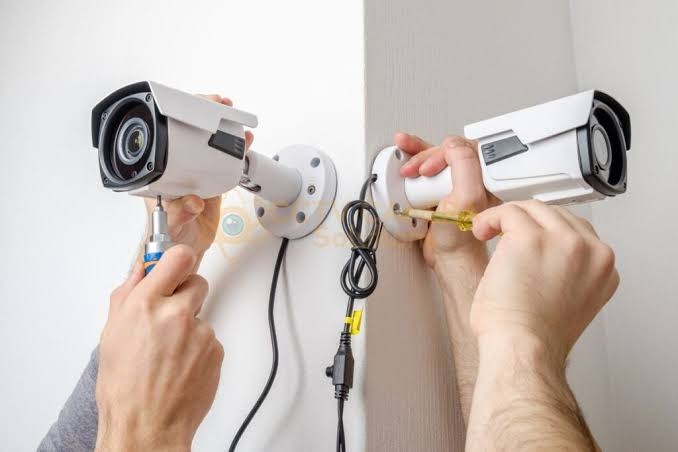
Installing CCTV cameras is one of the most practical ways to improve security in residential homes, commercial buildings, offices, shops, hotels, schools, warehouses and industrial facilities. Across Uganda, property owners are increasingly considering CCTV surveillance to monitor their premises, protect valuable assets, improve security management and access recorded footage when incidents occur.
However, one of the first questions people ask before installing a security system is: How much does CCTV camera installation cost in Uganda?
The answer depends on several factors. The number of cameras, camera quality, recording equipment, storage capacity, cabling, installation complexity and additional security features all influence the final price.
A basic CCTV installation for a small home or shop will generally cost less than a comprehensive surveillance system designed for a hotel, factory, warehouse or large commercial building. Similarly, a system with standard cameras will have different equipment and installation requirements from one using high-resolution IP cameras, advanced night vision, remote monitoring and intelligent video analytics.
Understanding these cost factors helps you plan your budget, compare installation quotations and choose a CCTV system that provides reliable security without unnecessary expenditure.
This guide explains CCTV camera installation costs in Uganda, the main factors that determine the price, the differences between residential and commercial systems, additional expenses to consider and how to choose the right CCTV installation solution for your property.
Whether you are planning CCTV installation in Kampala, Wakiso, Entebbe or another part of Uganda, this guide will help you make an informed investment.
How Much Does CCTV Camera Installation Cost in Uganda?
CCTV camera installation costs in Uganda vary depending on the type of surveillance system, equipment specifications, property size and installation requirements.
A small installation involving a few cameras will usually require less equipment, cabling and labour than a large commercial or industrial surveillance project.
For an accurate quotation, an installer should consider:
- The number of CCTV cameras required.
- Camera resolution and technical specifications.
- Indoor and outdoor camera requirements.
- DVR or NVR recording equipment.
- Hard-drive storage capacity.
- Cabling and network infrastructure.
- Installation labour and accessibility.
- Power supply and backup requirements.
- Remote monitoring and additional features.
- Testing, configuration and after-sales support.
There is no single fixed CCTV installation price that applies to every property. Two installations with the same number of cameras can have significantly different costs because of differences in camera quality, cable distances, storage requirements and site conditions.
The best way to establish your actual CCTV installation budget is to obtain a detailed quotation based on your property’s security requirements.
1. Number of CCTV Cameras Required
The number of cameras is one of the biggest factors affecting CCTV camera installation costs in Uganda.
Every additional camera increases the cost of equipment and may also increase the amount of cabling, recording capacity, network infrastructure and installation labour required.
For example, a small home may need cameras covering the main entrance, compound, driveway and rear access area. A commercial property may require additional cameras for reception areas, offices, corridors, parking spaces, stockrooms and entrances.
Typical CCTV installation requirements include:
Small residential properties: A few strategically positioned cameras may be sufficient to monitor the main entrances, compound and other vulnerable areas.
Retail shops: Cameras may be required at entrances, cashier points, shelves, storage areas and external access points.
Office buildings: Surveillance may cover reception areas, corridors, offices, parking areas and restricted sections.
Hotels and commercial complexes: Larger systems may be required to monitor entrances, lobbies, corridors, parking facilities and service areas.
Factories and warehouses: More extensive surveillance may be needed for loading bays, storage areas, production sections, machinery zones and perimeter boundaries.
The objective should be to achieve effective surveillance coverage rather than simply installing the largest possible number of cameras.
A professional site assessment helps determine how many cameras are necessary and where they should be positioned.
2. Type and Quality of CCTV Cameras
The type and quality of CCTV cameras have a direct impact on installation costs.
Different cameras are designed for different environments and surveillance purposes. A standard indoor camera may cost less than a specialised outdoor camera or a high-performance PTZ camera.
Before selecting cameras, consider the following options.
Dome CCTV Cameras
<escape>Dome</escape> cameras have a compact, rounded design and are commonly installed on ceilings or walls.
They are suitable for:
- Offices.
- Shops and supermarkets.
- Reception areas.
- Hotels.
- Corridors.
- Indoor commercial spaces.
Their discreet appearance makes them suitable for environments where a less prominent camera design is preferred.
Bullet CCTV Cameras
Bullet cameras have an elongated design and are commonly used for outdoor surveillance.
They are suitable for:
- Compound entrances.
- Building perimeters.
- Parking areas.
- Driveways.
- External walls.
- Loading and unloading zones.
Outdoor models should have suitable weather protection for their installation environment.
PTZ CCTV Cameras
Pan-Tilt-Zoom cameras allow authorised users to move the camera horizontally and vertically and adjust the zoom remotely.
They are commonly considered for:
- Large compounds.
- Industrial facilities.
- Warehouse yards.
- Commercial parking areas.
- Large outdoor spaces.
Because of their additional mechanical and optical features, PTZ cameras generally cost more than basic fixed cameras.
IP CCTV Cameras
Internet Protocol cameras transmit digital video over a network.
They are commonly used in modern residential, commercial and industrial surveillance systems because they can support high-resolution images, flexible network configurations and system expansion.
IP cameras may require suitable network switches, structured cabling and NVR equipment, depending on the system design.
Wireless CCTV Cameras
Wireless cameras use wireless communication to transmit video, although many models still require a reliable electrical power source.
They may be suitable for locations where installing data cables is difficult. However, wireless signal strength, interference, power availability and network reliability must be considered.
The camera type should be selected according to the property’s security requirements rather than price alone.
3. Camera Resolution and Image Quality
Camera resolution is another important factor affecting CCTV installation costs.
Resolution determines the level of detail captured in video footage. Common options include 2MP, 4MP, 5MP and 8MP (4K) cameras.
Higher-resolution cameras can provide more detailed images, which may be useful when monitoring entrances, cashier points, vehicle access areas and other locations where identifying important details matters.
However, higher resolution also increases storage requirements and may require greater network bandwidth.
When choosing camera resolution, consider:
- The size of the area being monitored.
- The distance between the camera and the subject.
- Whether identification or general monitoring is required.
- Lighting conditions.
- Available recording storage.
- Network capacity.
For example, a camera monitoring a small office entrance may have different resolution requirements from one monitoring a large warehouse or vehicle entrance.
A professional installer should recommend the appropriate resolution for each location to avoid unnecessary equipment costs.
4. Night Vision and Low-Light Camera Features
A CCTV system should provide useful surveillance during both daytime and night-time conditions.
Many properties require cameras that can monitor entrances, parking areas, compounds and other outdoor spaces when natural lighting is limited.
Cameras with infrared night vision use infrared illumination to capture images in low-light or dark environments.
Other models use advanced low-light technology or colour night vision to provide more detailed images under suitable lighting conditions.
The cost of cameras can increase depending on their night-time capabilities and additional image-processing features.
When selecting night vision cameras, consider:
- Infrared illumination range.
- Image clarity in darkness.
- Availability of external lighting.
- Distance from the camera to the monitored area.
- Whether colour footage is required at night.
It is important to understand that the advertised infrared range does not automatically guarantee clear identification at the maximum distance.
The installer should consider the actual environment and recommend cameras that can provide suitable footage.
5. DVR and NVR Recording Equipment
CCTV cameras need recording equipment to store and manage video footage.
The type and capacity of the recording device contribute to the total CCTV installation cost.
Two commonly used recording systems are Digital Video Recorders (DVRs) and Network Video Recorders (NVRs).
Digital Video Recorder (DVR)
A DVR is generally used with compatible analog CCTV cameras.
It receives video signals through suitable cabling and stores recordings on an internal hard drive.
DVR systems may be suitable for smaller installations and projects that use existing analog CCTV infrastructure.
Network Video Recorder (NVR)
An NVR is generally used with IP cameras and records digital video transmitted through a network.
NVR systems can support high-resolution surveillance, network-based management and flexible expansion, depending on the model.
The cost of recording equipment depends on:
- Number of supported camera channels.
- Video resolution compatibility.
- Recording performance.
- Network connectivity.
- Storage capacity.
- Available expansion options.
- Supported video compression technology.
For example, an installation with four cameras may require a smaller recording device than a system with sixteen or thirty-two cameras.
The installer should recommend recording equipment that can support both the current camera quantity and any planned future expansion.
6. Hard Drive Storage Capacity and Recording Duration
Storage capacity is an important part of CCTV installation pricing because security cameras generate video data that must be stored for later review.
A CCTV system with insufficient storage may overwrite older recordings sooner than expected.
The amount of storage required depends on:
- Number of cameras.
- Camera resolution.
- Frame rate.
- Video compression.
- Continuous or motion-based recording.
- Recording schedules.
- Required footage retention period.
For example, a property that requires several weeks of continuous recording will generally need more storage than one using motion-triggered recording for selected areas.
Surveillance-rated hard drives should be considered because CCTV systems may write video continuously over extended periods.
When requesting a quotation, ask the installer to specify:
- The hard-drive capacity.
- The number of cameras supported.
- The proposed recording settings.
- The estimated footage retention period.
- Whether additional storage can be installed later.
Do not assume that a system advertised as including storage will retain footage for a particular number of days. Confirm the estimated recording duration based on the proposed configuration.
7. Cabling, Network Infrastructure and Installation Materials
Cabling and network infrastructure can significantly influence CCTV installation costs, particularly in large buildings and properties with complex layouts.
A small installation may require relatively short cable runs, while a large office, warehouse or multi-storey building may need extensive cabling and additional network equipment.
The cost may depend on:
- Total cable length.
- Cable type and quality.
- Number of camera connection points.
- Conduits and trunking.
- Junction boxes and connectors.
- Network switches.
- Cable routing complexity.
- Installation accessories.
IP CCTV systems commonly use Ethernet cabling, such as Cat5e or Cat6, depending on the network design and performance requirements.
Power over Ethernet (PoE) technology can allow compatible cameras to receive power and transmit data through one Ethernet cable, potentially simplifying installation.
However, the network switches must have sufficient power capacity to support the connected cameras.
For outdoor installations, cables and connections should be appropriately protected against weather exposure and physical damage.
Proper cable management improves the appearance, safety and long-term reliability of the CCTV system.
8. Size and Layout of the Property
The size and physical layout of your property can have a major effect on CCTV installation costs.
A compact residential home generally has different installation requirements from a large commercial building or industrial facility.
Larger properties may require:
- More cameras.
- Longer cable routes.
- Additional network switches.
- Larger recording capacity.
- Multiple recording devices.
- More installation technicians.
- Additional mounting equipment.
- More complex configuration and testing.
The building layout also matters.
For example, installing CCTV cameras in a building with accessible ceilings may be easier than routing cables through concrete walls, multiple floors or restricted areas.
Properties with several buildings may require separate network connections or a centralised surveillance system.
This is why a site assessment is important before determining the final installation price.
9. Installation Labour and Technical Expertise
Professional installation labour is another component of the total CCTV installation cost in Uganda.
The amount of labour required depends on the number of cameras, site accessibility, cable routing, mounting requirements and complexity of the system.
Installation work may include:
- Mounting cameras.
- Drilling and fixing brackets.
- Routing cables.
- Installing conduits and trunking.
- Connecting recording equipment.
- Configuring network devices.
- Setting up remote monitoring.
- Adjusting camera positions.
- Testing video quality and recording.
- Demonstrating system operation.
Complex installations may require additional technical expertise, particularly when working with large IP camera networks, multi-storey buildings or industrial facilities.
Although reducing labour costs may appear attractive, poor installation can create expensive problems later.
Choose an installation provider that prioritises secure mounting, neat cable management, correct configuration and proper system testing.
10. Power Supply, UPS and Surge Protection
Reliable electrical power is essential for continuous CCTV surveillance.
A standard CCTV system may stop recording during a power outage unless suitable backup power is provided.
For this reason, power supply arrangements can affect the total installation budget.
Additional power-related equipment may include:
Uninterruptible Power Supply (UPS)
A UPS can provide temporary backup power to compatible CCTV equipment when the main electricity supply is interrupted.
The required UPS capacity depends on the number of devices connected and the desired backup duration.
Surge Protection
Surge protection helps reduce the risk of damage caused by electrical surges.
Appropriate protection should be considered for recording equipment, power supplies and exposed outdoor camera connections where required.
Power Supplies and Distribution
Some systems require separate power supplies or additional electrical distribution equipment.
IP cameras using PoE may simplify power distribution, but the network switch must be properly sized.
For properties in Uganda, it is sensible to discuss power reliability and protection with the installer when planning the CCTV system.
11. Remote Viewing and Smart CCTV Features
Modern CCTV systems can offer features that improve convenience, monitoring and security management.
Remote viewing allows authorised users to access live camera feeds and recorded footage through compatible smartphones, tablets or computers.
Depending on the equipment, additional features may include:
- Motion detection.
- Human and vehicle detection.
- Mobile notifications.
- Two-way audio.
- Line-crossing detection.
- Smart search and playback.
- Remote camera management.
- Video analytics.
These features can affect equipment selection and overall installation costs.
For example, a basic surveillance system may only require live viewing and recording, while a commercial facility may need advanced analytics and multiple authorised users.
Remote viewing also requires suitable network connectivity and secure configuration.
Ask the installer to explain which features are included in the quotation and whether any additional software, licences or subscriptions are required.
12. Residential, Commercial and Industrial CCTV Installation Costs
CCTV installation costs vary considerably depending on the type of property and its security requirements.
Residential CCTV Installation Costs
Residential CCTV systems are designed for homes, apartments and private compounds.
Common monitoring areas include:
- Main gates.
- Front and rear entrances.
- Driveways.
- Garages.
- Compound areas.
- Perimeter boundaries.
- Other vulnerable access points.
A residential installation may use a combination of indoor dome cameras and outdoor bullet cameras.
The cost depends on the size of the home, camera quantity, recording requirements and whether remote monitoring or backup power is needed.
Commercial CCTV Installation Costs
Commercial properties often require more extensive surveillance coverage.
Businesses such as shops, supermarkets, offices, hotels, restaurants and shopping centres may need cameras covering entrances, reception areas, customer spaces, cash-handling points, corridors and storage facilities.
Commercial installations may require larger NVR systems, additional storage, network switches and more complex cable routing.
The final cost depends on the business layout, operational requirements and level of surveillance needed.
Industrial CCTV Installation Costs
Industrial facilities usually have more demanding surveillance requirements because of their size, equipment, stock and operational activities.
Factories, warehouses, manufacturing plants and distribution facilities may require cameras for:
- Production areas.
- Loading bays.
- Storage sections.
- Machinery zones.
- Vehicle entrances.
- Restricted areas.
- Outdoor compounds.
- Perimeter boundaries.
Some industrial projects may also require specialised cameras, long-distance network connections, additional recording capacity and integration with other security systems.
A professional assessment is particularly important for these projects because the installation design can significantly influence the total cost.
13. Indicative CCTV Installation Budget Examples in Uganda
Although every project is different, looking at typical system configurations can help you understand why CCTV installation quotations vary.
The following examples describe possible system sizes rather than fixed prices.
| Installation type | Typical configuration | Main cost considerations |
|---|---|---|
| Small home or shop | 4 cameras | Camera quality, recorder, storage and basic cabling |
| Small office | 4–8 cameras | Indoor and outdoor cameras, recording capacity and network setup |
| Medium commercial property | 8–16 cameras | Larger NVR, more storage, cabling and installation labour |
| Large commercial building | 16–32 cameras | Multiple recording channels, network switches and extended cabling |
| Industrial facility | 32 or more cameras | Specialised equipment, large storage capacity, network infrastructure and complex installation |
Published Kampala supplier examples show that even four-camera installed packages can vary from approximately UGX 1.5 million to UGX 3.8 million, depending on the equipment and services included. Larger sixteen-camera installations also show substantial variation in advertised prices.
These figures are indicative examples from individual providers, not official Uganda-wide market rates or Daltrevco quotations. The specifications and inclusions must be compared before using them as a budget. Your actual price may be lower or higher depending on the project.
The most reliable way to determine the cost is to request an itemised quotation after a site assessment.
14. Additional Costs to Consider When Installing CCTV Cameras
When planning your CCTV budget, remember that the initial equipment and installation charges may not represent the entire cost of operating the system.
Other expenses may include:
Internet Connectivity
Remote CCTV monitoring requires a suitable internet connection. The required bandwidth depends on camera resolution, number of cameras and how many feeds are viewed remotely.
Maintenance and Servicing
Regular maintenance may involve cleaning cameras, inspecting connections, checking recording devices and testing system performance.
Hard Drive Replacement
CCTV hard drives operate under demanding recording conditions and may eventually require replacement.
UPS Battery Replacement
If your installation includes backup power, UPS batteries may need replacement as they age.
Camera Upgrades
Future security requirements may require additional cameras or higher-resolution equipment.
Software and Licensing
Some advanced surveillance platforms or analytics features may require additional licences or subscriptions. Confirm these costs before approving the system.
Planning for these expenses helps you avoid unexpected costs after installation.
15. How to Reduce CCTV Installation Costs Without Compromising Security
It is possible to control CCTV installation costs while maintaining effective surveillance.
The key is to spend money on the components that make the biggest difference to system performance.
Consider these practical recommendations:
Conduct a Proper Site Assessment
A site assessment helps identify important camera locations and avoid purchasing unnecessary equipment.
Prioritise High-Risk Areas
Focus on entrances, exits, parking areas, storage facilities and other vulnerable locations.
Choose Suitable Camera Specifications
Not every location needs the highest-resolution camera. Select specifications according to the distance, lighting and monitoring purpose.
Plan Camera Locations Carefully
Good camera positioning can provide effective coverage without unnecessarily increasing the camera quantity.
Select Appropriate Recording Storage
Calculate storage requirements based on the desired retention period and recording settings.
Use Compatible Equipment
Choose cameras, recorders, cables and network devices that are compatible with one another.
Consider Future Expansion
If you plan to add more cameras later, select recording and network equipment that can accommodate reasonable expansion.
Compare Detailed Quotations
Compare equipment models, storage, cabling, labour, warranties and support rather than choosing the cheapest total price.
Avoid Unnecessarily Cheap Equipment
Low-cost, unsuitable or unsupported equipment can create recurring faults and replacement expenses.
The best way to save money is to install a properly designed system that meets your security needs from the beginning.
16. How to Compare CCTV Installation Quotations in Uganda
Before selecting a CCTV installation company, request written quotations from providers and compare what each one includes.
A professional CCTV quotation should clearly identify:
| Quotation item | Details to verify |
|---|---|
| Cameras | Brand, model, resolution and quantity |
| Recorder | DVR or NVR model and channel capacity |
| Storage | Hard-drive brand, type and capacity |
| Cabling | Cable type, length and accessories |
| Network equipment | Switches, PoE capacity and other devices |
| Power protection | UPS, surge protection and power supplies |
| Installation | Labour, mounting and cable routing |
| Configuration | Recording, playback and remote viewing |
| Testing | Camera checks and system commissioning |
| Warranty | Equipment and workmanship coverage |
| Maintenance | Available servicing and support |
Ask whether the quotation includes all required installation materials and whether any additional charges may arise.
You should also confirm the warranty terms, expected installation schedule and what support is available after handover.
A detailed quotation makes it easier to identify the best value rather than simply the lowest price.
17. Why Professional CCTV Installation Is Worth the Investment
Professional CCTV installation is important because the performance of a surveillance system depends on more than the cameras themselves.
An experienced installation team should understand camera positioning, network configuration, cable protection, recording storage and system testing.
Professional installation can help you achieve:
- Better surveillance coverage.
- Reduced camera blind spots.
- Appropriate equipment selection.
- Correct recording and storage configuration.
- Secure camera mounting.
- Neat cable management.
- Reliable remote monitoring.
- Easier system maintenance.
- Better long-term value.
For businesses, professionally installed CCTV can also support security management, monitoring of operational areas and the review of incidents.
For homeowners, it can provide greater visibility of entrances, compounds and other important areas.
18. Why Consider Daltrevco for CCTV Installation in Uganda?
Choosing the right CCTV installation solution begins with understanding the security needs of your property and identifying the equipment and installation work required.
Daltrevco serves customers exploring building-related electrical, mechanical and security installation solutions in Uganda.
When planning a CCTV installation project, important considerations include the property layout, number of cameras, equipment specifications, recording requirements, cabling, power arrangements and future maintenance.
Whether you are planning surveillance for a residential home, office, retail shop, hotel, school, warehouse or industrial facility, the right system should be designed around your actual security requirements.
A detailed installation proposal helps you understand the equipment, work involved and expected investment before making a decision.
Planning to install CCTV cameras in Uganda? Contact Daltrevco to discuss your property’s security requirements and request a suitable CCTV installation proposal.
Conclusion
CCTV camera installation costs in Uganda depend on several factors, including the number of cameras, camera quality, resolution, recording equipment, storage capacity, cabling, property size, installation labour and additional security features.
A small residential installation will generally have different requirements from a large commercial or industrial surveillance project.
Before investing in CCTV cameras, assess your property’s security needs, identify important monitoring areas and compare detailed quotations from installation providers.
Do not choose a system based on price alone. Consider equipment quality, installation workmanship, recording reliability, warranty and long-term maintenance.
A properly planned CCTV system can provide effective surveillance, improve security management and help protect valuable property.
For a CCTV installation solution that meets your property’s requirements, consult Daltrevco and take the next step towards improving your security.
Frequently Asked Questions About CCTV Camera Installation Costs in Uganda
1. How much does CCTV camera installation cost in Uganda?
The cost depends on the number of cameras, camera specifications, recording equipment, storage, cabling and installation complexity. Small systems generally cost less than large commercial or industrial installations. A site assessment and itemised quotation provide the most accurate price.
2. What is the cost of installing four CCTV cameras in Uganda?
A four-camera installation depends on the camera type, resolution, recording device, storage capacity, cabling and labour. Published Kampala supplier examples show varying package prices, so customers should compare the equipment and services included rather than relying on one advertised figure.
3. What factors determine CCTV installation prices?
The main factors include camera quantity, camera resolution, night vision, camera type, DVR or NVR equipment, hard-drive storage, cabling, network infrastructure, power backup, installation labour and remote monitoring features.
4. Are IP cameras more expensive than analog CCTV cameras?
IP CCTV systems may require more advanced network equipment, but costs vary according to camera specifications and system design. They offer network-based video transmission and flexible expansion, while analog systems may be suitable for some smaller installations or existing infrastructure.
5. Does the number of CCTV cameras affect installation costs?
Yes. More cameras generally require additional equipment, recording channels, cabling and installation labour. However, camera positioning and the property’s layout also affect the final price.
6. How much storage is required for a CCTV system?
Storage requirements depend on the number of cameras, resolution, frame rate, compression settings, recording schedule and required footage retention period. An installer should calculate the appropriate hard-drive capacity for your system.
7. Does CCTV installation include remote viewing?
Remote viewing may be included in a CCTV installation package, but this should be confirmed in the quotation. It requires compatible equipment, suitable internet connectivity and secure configuration.
8. Is night vision included in CCTV camera installation?
Many modern CCTV cameras include infrared night vision or other low-light capabilities. However, performance varies between models, so confirm the specifications before purchasing.
9. Do I need a UPS for my CCTV system?
A UPS is recommended where continued surveillance during power interruptions is important. It can provide temporary backup power to compatible CCTV equipment. The required capacity depends on the connected devices and desired backup duration.
10. Are wireless CCTV cameras cheaper to install?
Wireless cameras may reduce some data-cabling requirements, but they still need power and a reliable wireless connection. Their total cost depends on camera quality, network requirements and installation conditions.
11. How long does CCTV camera installation take?
Installation time depends on the number of cameras, property size, cable routing, accessibility and system complexity. A small installation may take less time than a multi-storey commercial or industrial project.
12. What is included in professional CCTV installation?
Professional installation may include site assessment, camera positioning, mounting, cabling, recorder installation, configuration, remote viewing setup, testing and user guidance. Confirm the exact inclusions in the quotation.
13. Can I expand my CCTV system in the future?
Yes, provided the recording equipment, network infrastructure and power arrangements support additional cameras. Discuss future expansion before selecting the initial system.
14. How often should CCTV systems be maintained?
Maintenance frequency depends on the installation environment and system usage. Periodic inspections should include camera cleaning, cable checks, recording tests, storage health checks and verification of remote viewing.
15. How can I get an accurate CCTV installation quotation in Uganda?
Identify the areas that need surveillance and request a site assessment from a professional installation provider. Provide information about the property, security requirements and preferred features. Ask for an itemised quotation showing equipment, labour, storage, cabling, configuration and warranty details.

