
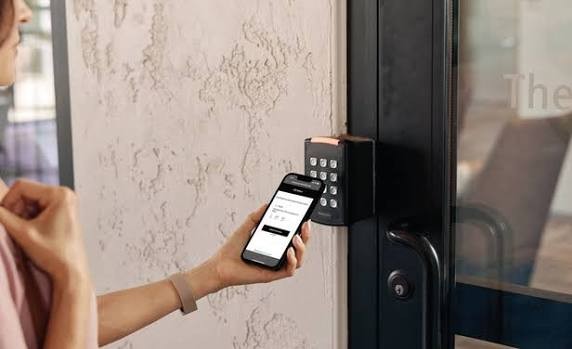
Building security is becoming increasingly important for homeowners, businesses, property managers, institutions and commercial developers across Uganda. As buildings become more sophisticated, traditional keys and conventional locks are no longer sufficient for every security requirement. Modern properties need smarter ways to control who enters, monitor access activities and protect restricted areas.
Smart door access systems provide an advanced approach to building security by allowing authorised people to enter using access cards, PIN codes, fingerprints, facial recognition, smartphones and other electronic credentials. Instead of depending entirely on physical keys, property owners can manage entry permissions electronically and improve control over different areas of a building.
In Uganda, smart door access systems are increasingly relevant for offices, hotels, apartments, hospitals, schools, warehouses, shopping centres, industrial facilities and residential properties. They help businesses manage staff access, protect sensitive rooms, reduce the risks associated with lost keys and improve the overall management of building security.
Whether you are constructing a new building, upgrading an existing security system or managing several properties, choosing the right access control solution can make a significant difference.
This guide explains what smart door access systems are, how they work, the different technologies available, their benefits, installation requirements and the factors that influence their cost in Uganda.
What Are Smart Door Access Systems?
Smart door access systems are electronic security solutions that control and manage entry into buildings, rooms and restricted areas. They use electronic locks, access readers, credentials, control panels and management software to determine whether someone is authorised to enter.
Unlike traditional locks that rely mainly on physical keys, smart access systems use digital identification methods. A user presents an approved credential, the system verifies their access permission and the electronic locking mechanism responds accordingly.
Depending on the technology installed, users may gain entry through:
- RFID or proximity access cards.
- PIN codes entered on a digital keypad.
- Fingerprint recognition.
- Facial recognition.
- Smartphone applications.
- Bluetooth or mobile credentials.
- Smart keys and other electronic credentials.
Smart door access systems can operate independently on individual doors or form part of a larger integrated access control network covering an entire building.
For example, a commercial office in Kampala may use card readers at the main entrance, fingerprint authentication for sensitive departments and restricted access permissions for server rooms. Management can then control which employees can enter particular areas and during which hours.
How Do Smart Door Access Systems Work?
A smart door access system works by verifying a person’s identity or access credential before allowing the door to unlock.
Although different systems use different technologies, the general process follows several steps.
1. User Registration
The system administrator registers authorised users and assigns their access credentials. Depending on the system, these may include access cards, PIN codes, fingerprints, facial profiles or smartphone credentials.
Each user can be assigned specific access permissions.
For example, an employee may be allowed to enter the office reception and their department but restricted from accessing management offices or storage areas.
2. Credential Authentication
When someone approaches a secured door, they present their credential to the access reader.
The reader may scan a card, receive a PIN code, capture a fingerprint, recognise an enrolled face or communicate with an authorised smartphone.
3. Access Verification
The access control system checks the presented credential against its registered users and access permissions.
It determines whether the person is authorised to enter the particular door at that time.
4. Door Unlocking
If access is approved, the controller activates the electronic locking mechanism. Depending on the installation, this may be an electromagnetic lock, electric strike, smart lock or another compatible locking device.
The door can then be opened.
If access is denied, the locking mechanism remains secured and the system may record the unsuccessful attempt.
5. Access Monitoring and Reporting
Many smart access control systems record entry events, including the user credential, door location, date and time.
Administrators can review these records to monitor access activity, investigate security incidents and manage building entry permissions.
The available reporting features depend on the system and its software.
Types of Smart Door Access Systems
Smart door access systems are available in several technologies. The best option depends on the building’s security requirements, number of users, budget, door design and level of access management required.
1. RFID and Proximity Card Access Systems
RFID access control systems use electronic cards or key fobs that communicate with a reader installed near a secured entrance.
When an authorised card is presented, the reader communicates with the access controller, which verifies the credential and grants or denies entry.
RFID systems are widely used in:
- Office buildings.
- Hotels and serviced apartments.
- Schools and universities.
- Hospitals.
- Commercial properties.
- Staff-only areas.
One major advantage is convenient user management. If an employee loses an access card or leaves an organisation, their credential can be deactivated without replacing the physical lock.
However, the security of a card-based system depends on the credential technology, encryption, reader configuration and protection against card cloning or unauthorised use.
2. PIN Code Door Access Systems
PIN-based access systems allow users to enter through a keypad by entering an authorised numerical code.
They are useful for areas where organisations want controlled access without issuing physical cards to every user.
Applications include:
- Residential properties.
- Small offices.
- Staff entrances.
- Storage rooms.
- Restricted internal doors.
Some systems support individual PIN codes, temporary codes and scheduled access permissions.
Shared PIN codes should be avoided where individual accountability is important. Codes should also be changed when users leave or when a code is suspected to have been compromised.
3. Fingerprint Recognition Door Access Systems
Fingerprint access control systems identify users through biometric information captured from their fingerprints.
An authorised person places a registered finger on the scanner. The system compares the captured biometric information with the enrolled template and makes an access decision.
Fingerprint systems are suitable for:
- Corporate offices.
- Staff-only entrances.
- Laboratories.
- Records rooms.
- Administrative departments.
- Restricted commercial facilities.
They reduce dependence on physical access cards and can provide individual access records.
However, performance may be affected by damaged fingerprints, dirty sensors, moisture or poor-quality equipment. Organisations should also consider privacy, biometric data protection and alternative entry arrangements for users who cannot reliably use fingerprint authentication.
4. Facial Recognition Door Access Systems
Facial recognition access systems use cameras and biometric software to verify authorised users based on their facial characteristics.
A person approaches the entrance, the system captures an image and compares it with an enrolled facial profile. If the authentication requirements are satisfied, access is granted.
These systems can be useful in:
- Corporate office buildings.
- Hotels.
- High-security facilities.
- Modern commercial developments.
- Selected institutional buildings.
Some systems offer liveness detection to help distinguish a real person from photographs or other presentation attacks. The effectiveness of this feature varies between products.
Facial recognition should be selected carefully, with attention to accuracy, lighting conditions, privacy requirements and the availability of alternative authentication methods.
5. Smartphone and Mobile Access Systems
Mobile access control allows authorised users to unlock doors using a smartphone.
Depending on the system, communication may use Bluetooth, NFC, mobile applications or secure digital credentials.
Mobile access can be useful for modern offices, apartments, hotels and commercial buildings where users prefer digital credentials instead of physical cards.
Potential benefits include:
- Convenient access using smartphones.
- Easier digital credential management.
- Remote issuing and revocation of permissions on supported platforms.
- Reduced need to distribute physical access cards.
- Integration with selected building management systems.
The system should have appropriate safeguards for lost or stolen phones, compromised accounts and unauthorised credential sharing.
6. Smart Electronic Door Locks
Smart electronic door locks replace or supplement conventional locking arrangements with electronically controlled locking mechanisms.
Depending on the model, they may support PIN codes, fingerprint recognition, cards, mobile applications or mechanical keys.
They are commonly used in residential properties, apartments, offices, meeting rooms and selected commercial facilities.
Some smart locks operate independently, while others connect to a central access control platform.
When selecting a smart lock, it is important to consider door compatibility, locking strength, emergency access, battery life, weather protection and the manufacturer’s security features.
7. Cloud-Based Access Control Systems
Cloud-based access control systems allow authorised administrators to manage connected doors through an online platform.
Instead of managing every access point separately, property managers can use a central dashboard to create users, assign permissions, deactivate credentials and review access records.
Depending on the system, cloud-based management may support:
- Multiple buildings and locations.
- Remote user administration.
- Real-time or near-real-time event monitoring.
- Access schedules.
- Centralised reporting.
- Integration with other security technologies.
Cloud access control depends on reliable connectivity for certain remote management features. Buyers should confirm what happens when internet access is interrupted and whether the system can continue authenticating authorised users locally.
Key Features of Modern Smart Door Access Systems
Modern access control solutions offer more than simply unlocking doors. Their features can help organisations manage building security, user permissions and access activity.
Keyless Entry
Users can enter secured areas using cards, PINs, biometrics or mobile credentials instead of carrying traditional keys.
User Permission Management
Administrators can assign access rights based on departments, job roles, locations and security requirements.
Time-Based Access
Some systems allow access to be restricted according to working hours, shifts, days or temporary schedules.
For example, cleaning personnel may be permitted to access selected areas during approved hours without having unrestricted entry throughout the day.
Access Activity Reports
Electronic records can help property managers understand who accessed particular doors and when access occurred.
These records can support internal investigations and security reviews, subject to appropriate privacy and retention policies.
Remote Administration
Supported systems allow administrators to manage access permissions from another location using an approved application or web platform.
Door Status Monitoring
Some access control systems can detect whether a door is open, closed or being held open beyond an approved period.
This can help security teams identify potential security problems.
Multiple Authentication Methods
Some systems support more than one credential type, allowing organisations to select the appropriate authentication method for different doors and users.
Integration with Other Security Systems
Smart door access systems can be integrated with selected CCTV cameras, alarm systems, visitor management platforms, intercoms and building management solutions.
Integration capabilities depend on hardware compatibility, software support and the system’s configuration.
Benefits of Smart Door Access Systems for Buildings in Uganda
Installing a smart door access system can improve security and make building management more efficient.
1. Improved Building Security
Smart access control helps prevent unauthorised people from entering restricted areas.
Instead of relying entirely on physical keys, administrators can verify credentials and control entry permissions electronically.
This is particularly useful in office buildings, hotels, schools, hospitals, warehouses and commercial facilities where different people require access to different areas.
2. Better Control Over Staff Access
Businesses can assign permissions according to staff responsibilities.
For example, reception employees may access public and administrative areas, while finance employees may receive additional permissions for restricted records rooms.
When an employee leaves the organisation, their access credentials can be deactivated without changing every door lock.
3. Reduced Risks Associated with Lost Keys
Traditional keys can be lost, copied or shared without the owner’s knowledge. Replacing locks after a key is lost may also create additional expenses.
Smart access systems reduce dependence on physical keys and allow administrators to revoke supported digital credentials.
4. Convenient Entry for Authorised Users
Employees, residents, guests and authorised visitors can enter using credentials suited to the building’s requirements.
Mobile credentials, access cards and biometric authentication can make daily entry more convenient.
5. Improved Access Accountability
Access logs can help organisations review entry activities and identify unusual access patterns.
For example, management may investigate an unexpected entry into a restricted storage room or determine which authorised credential was used to access a particular door.
Access logs should be configured and reviewed responsibly, with suitable privacy safeguards.
6. Better Management of Multiple Doors
Large buildings may have several entrances, offices, floors and restricted rooms.
A centralised access control system can make it easier to manage these access points from one platform.
This is especially useful for commercial buildings, educational institutions, hospitals and industrial facilities.
7. Support for Visitor Management
Some access control systems can work with visitor management platforms to support temporary credentials and controlled visitor entry.
Visitors can receive permissions for specific areas and approved periods instead of being given unrestricted access.
8. Integration with CCTV Surveillance
When compatible systems are integrated, access events can be reviewed alongside CCTV footage.
For example, if an access control system records an entry event at a particular time, security personnel can review the corresponding camera footage to understand what happened.
This can improve incident investigation and security monitoring.
9. More Efficient Property Management
Smart access control can reduce manual key administration and simplify the management of staff, residents, contractors and visitors.
For property managers responsible for several buildings, centralised administration can make access management more organised.
10. Flexible Security Upgrades
Many modern access control systems can be expanded by adding compatible doors, readers and credentials.
This allows property owners to begin with essential entrances and expand the system as security needs change.
Applications of Smart Door Access Systems in Different Buildings
Smart access control can be adapted to different property types. The system should be selected according to the building’s layout, users and security requirements.
Smart Door Access Systems for Office Buildings
Offices require controlled access for employees, management, visitors and contractors.
A smart access control system can secure:
- Main office entrances.
- Executive offices.
- Server rooms.
- Finance departments.
- Records storage rooms.
- Staff-only facilities.
Businesses can assign permissions according to employee roles and working schedules.
Smart Access Control for Hotels and Hospitality Facilities
Hotels need to manage access for guests, employees, suppliers and management personnel.
Smart access systems can support controlled access to guest rooms, staff areas, service entrances and selected facilities.
Depending on the solution, guest credentials may be issued for a specific booking period and deactivated after checkout.
Smart Door Access for Apartments and Residential Buildings
Apartment complexes often have several shared entrances and restricted areas.
Smart access control can help manage entry to:
- Main residential gates.
- Apartment entrances.
- Parking areas.
- Gym facilities.
- Shared amenities.
- Management offices.
Property managers can issue and deactivate credentials as residents move in or leave.
Smart Access Systems for Schools and Universities
Educational institutions need to protect students, employees, visitors and sensitive facilities.
Access control can be installed at administrative offices, laboratories, staff rooms, libraries, examination storage areas and selected building entrances.
Access permissions should be designed around safeguarding requirements, emergency procedures and the daily movement of students and staff.
Smart Door Access for Hospitals and Healthcare Facilities
Hospitals contain areas with different security and privacy requirements.
Smart access systems can help control entry to:
- Medical records departments.
- Pharmacies.
- Laboratories.
- Staff-only areas.
- Equipment storage rooms.
- Administrative offices.
Access arrangements should not obstruct emergency response, patient movement or evacuation.
Smart Access Control for Warehouses and Industrial Facilities
Warehouses and factories may contain expensive equipment, inventory, restricted materials and operational areas.
Access control can help manage entry by employees, supervisors, contractors and authorised delivery personnel.
Restricted permissions can be assigned to sensitive production areas, equipment rooms and inventory storage facilities.
Smart Door Access for Shopping Centres and Commercial Buildings
Commercial properties have public areas as well as private offices and operational facilities.
Smart access control can protect management offices, security control rooms, maintenance areas, storage rooms and other restricted spaces.
Components of a Smart Door Access Control System
A complete installation involves several components that work together.
1. Access Control Reader
The reader captures the user’s credential. Depending on the system, it may support cards, PINs, fingerprints, facial recognition or mobile access.
2. Access Control Panel
The controller processes access information and determines whether a credential should be granted entry.
Some systems use a central control panel, while others have controllers installed at individual doors.
3. Electronic Door Lock
The electronic lock secures the door until an authorised access request is approved.
Common options include electromagnetic locks, electric strikes and electronic mortise or smart locks.
The correct lock depends on the door material, door frame, required security level and emergency exit arrangement.
4. Access Credentials
Credentials identify authorised users. These may include cards, PIN codes, fingerprints, facial profiles or digital mobile credentials.
5. Power Supply and Backup
Access control equipment requires a suitable power source.
Depending on the design, installations may include backup batteries or an uninterruptible power supply (UPS) to support operation during power interruptions.
6. Management Software
Access management software allows administrators to register users, assign permissions, configure schedules and review access events.
The available features vary between manufacturers and system models.
7. Exit Devices and Emergency Release
Depending on the door and lock arrangement, the system may require exit buttons, request-to-exit sensors, mechanical escape hardware or emergency release devices.
These components must be selected and installed to support safe evacuation and applicable building and fire safety requirements.
Smart Door Access System Installation Process in Uganda
Proper installation is important for system reliability, security and long-term performance.
Although installation requirements vary, a professional project generally involves the following stages.
Step 1: Site Assessment
The installation team evaluates the property to understand its layout, entrances, existing locks, security concerns and access requirements.
This helps determine the number of doors that need protection and the appropriate technology for each entrance.
Step 2: Security Requirements Assessment
The property owner and installation team identify who needs access, which areas should be restricted and how access permissions should be managed.
For example, a hospital may require different access levels for doctors, nurses, administrators, patients and visitors.
Step 3: System Selection
The appropriate access control technology is selected based on security requirements, budget, number of users and building design.
This may involve RFID readers, biometric devices, PIN keypads, smart locks or a combination of technologies.
Step 4: Hardware Installation
The selected readers, electronic locks, control panels, power supplies and other components are installed.
Door alignment, wiring routes, controller locations and the compatibility of the locking hardware should be checked carefully.
Step 5: Software Configuration
The access control platform is configured, users are registered and permissions are assigned.
Access schedules and security settings are also established where supported.
Step 6: Integration and Testing
The system is tested to confirm that authorised users can enter and unauthorised credentials are rejected.
Testing should also cover door sensors, exit devices, emergency release arrangements, backup power and any connected security systems.
Step 7: User Training and Handover
Building managers and authorised administrators should receive instructions on managing users, changing credentials, reviewing access records and responding to system problems.
Documentation and maintenance recommendations should also be provided.
How Much Do Smart Door Access Systems Cost in Uganda?
The cost of installing smart door access systems in Uganda varies according to the technology, number of doors, hardware quality, building design and installation requirements.
A basic standalone smart lock for a single door will generally have different costs from a centralised access control system covering several floors of a commercial building.
There is no single price that applies to every property. A proper quotation should be based on a site assessment and the required system specification.
Factors That Determine Smart Door Access System Installation Costs
1. Type of access technology
RFID, PIN, fingerprint, facial recognition and mobile access systems have different equipment and software requirements.
More advanced authentication and management features may increase the overall investment.
2. Number of doors
The more doors that require access control, the more readers, locks, controllers, cabling and installation work may be needed.
3. Type of electronic locks
Different doors require different locking mechanisms. The cost depends on the lock type, door construction, frame condition and required security level.
4. Number of users
A system designed for a small office may have different licensing, credential and administration requirements from one serving hundreds of employees or residents.
5. Software and management requirements
Standalone systems may have simpler management requirements than networked or cloud-based platforms with centralised reporting and multiple-location support.
6. Integration with CCTV and other security systems
Connecting access control to CCTV, alarms, intercoms or visitor management software may require additional equipment, configuration and compatible software.
7. Power backup requirements
Installations that require backup batteries, UPS equipment or additional power infrastructure may have higher initial costs.
8. Building structure and installation complexity
Existing wiring, door materials, building layout, access to installation routes and the condition of door frames can affect labour and installation costs.
9. Maintenance and technical support
Property owners should consider ongoing maintenance, software support, replacement credentials, battery changes and future upgrades when budgeting for an access control system.
How to Get an Accurate Quotation
Before requesting a quotation, identify:
- The number of doors that need access control.
- The type of building and its security requirements.
- The expected number of users.
- Whether biometric, card, PIN or mobile access is required.
- Whether CCTV or other security systems should be integrated.
- Whether centralised or remote administration is necessary.
- The required backup power arrangements.
Daltrevco can be contacted to discuss the access control requirements of a residential, commercial or institutional building and determine a suitable solution.
How to Choose the Best Smart Door Access System for Your Building
Selecting the right access control system requires more than comparing equipment prices. The solution should meet the property’s current security needs while allowing for future changes.
Consider the following factors before making a decision.
1. Identify Your Security Requirements
Determine which entrances and rooms require protection.
A small office may need access control at its main entrance and records room, while a large commercial building may require a centralised system covering multiple floors and departments.
2. Choose the Right Authentication Method
Select a credential method that is suitable for the people who will use the building.
RFID cards may be convenient for large workforces, while biometric authentication may be appropriate for selected restricted areas.
Mobile access can also be useful where users have compatible smartphones and the system supports secure digital credentials.
3. Consider the Number of Doors and Users
The system should support the expected number of users and controlled entrances.
If the property is likely to expand, select equipment and software that can accommodate additional doors and users.
4. Check Hardware Compatibility
Not every electronic lock or reader is suitable for every door.
Consider door thickness, frame construction, opening direction, locking requirements and environmental conditions.
5. Evaluate Power and Connectivity Requirements
Check whether the system requires continuous internet access, a local network or only a direct power supply.
Ask how the system behaves during power failures, internet interruptions and equipment faults.
6. Prioritise Cybersecurity
Networked access control systems should have appropriate security measures.
Look for features such as secure communication, encrypted credentials where supported, administrator access controls, software updates and protected user accounts.
Default passwords should be changed, and administrator accounts should use strong authentication.
7. Consider Privacy and Data Protection
Biometric systems process sensitive personal information. Before deploying fingerprint or facial recognition technology, organisations should understand their obligations under Uganda’s Data Protection and Privacy Act, 2019, and applicable regulations.
They should establish an appropriate lawful basis for processing, provide clear privacy information, restrict access to biometric information, protect stored data and establish appropriate retention and deletion practices.
Where possible, use systems that store protected biometric templates rather than unnecessary raw biometric images. The actual data architecture should be verified with the supplier.
8. Check Emergency Exit Arrangements
Security should never prevent people from escaping safely during an emergency.
The locking system, exit devices, emergency release mechanisms and fire safety arrangements must be properly designed for the building and comply with applicable requirements.
9. Consider Maintenance and Technical Support
Choose equipment with suitable warranty arrangements, replacement parts and accessible technical support.
A well-designed system should also allow authorised technicians to diagnose faults and carry out maintenance without compromising security.
10. Work with an Experienced Installer
Professional installation helps ensure that the access readers, locks, wiring, controllers and software work together correctly.
A qualified installer should also test the system and explain how to manage users and maintain the equipment.
Common Smart Door Access System Problems and Their Solutions
Like other electronic security technologies, smart access control systems may experience technical problems. Understanding common issues can help building managers respond quickly.
Door Does Not Unlock
Possible causes include power failure, incorrect access permissions, a faulty reader, wiring problems or an electronic lock malfunction.
Recommended solution: Check the power supply, credential permissions and lock connections. A qualified technician should inspect the equipment if the fault continues.
Access Cards Are Not Recognised
This may result from damaged cards, incompatible card technology, reader faults or incorrect credential registration.
Recommended solution: Test the card on a compatible reader and confirm that it is registered and active in the system.
Fingerprint Recognition Fails
Dirty sensors, wet fingers, damaged fingerprints or poor-quality scanners can affect biometric authentication.
Recommended solution: Clean the scanner, check the enrolled fingerprint and consider an alternative authorised credential.
Smart Lock Battery Runs Low
Battery-powered locks may stop functioning correctly when their batteries become depleted.
Recommended solution: Follow the manufacturer’s battery replacement schedule and understand the approved emergency access method.
System Loses Network Connectivity
Network interruptions may affect remote administration, cloud-based reporting or communication between system components.
Recommended solution: Check network equipment and configuration. Confirm whether the system supports local authentication when internet access is unavailable.
Access Permissions Are Incorrect
Users may be denied entry because their permissions have expired or were assigned incorrectly.
Recommended solution: Review user profiles, access schedules and credential status through the management platform.
Maintenance Tips for Smart Door Access Systems
Regular maintenance helps keep access control equipment operating reliably.
Property owners and facility managers should:
- Inspect access readers and keypads for physical damage.
- Clean fingerprint scanners and other sensors according to manufacturer instructions.
- Check electronic locks and door alignment.
- Test exit buttons and emergency release devices.
- Check backup batteries and power supplies.
- Review access permissions when employees or tenants leave.
- Remove lost or compromised credentials promptly.
- Install approved firmware and software updates.
- Review administrator accounts and security settings.
- Test connected CCTV, alarms and other integrated systems.
- Maintain an appropriate backup of system configuration where supported.
- Arrange professional inspections and servicing.
Maintenance frequency should be based on equipment specifications, the building’s usage and the importance of the secured areas.
Why Professional Smart Door Access System Installation Matters
Smart access control involves more than fitting a reader and electronic lock to a door. The complete system must be properly designed, installed, configured and tested.
Professional installation helps ensure:
- Correct selection of access control hardware.
- Compatibility between readers, controllers and locks.
- Secure wiring and equipment placement.
- Appropriate access permissions.
- Reliable power and backup arrangements.
- Safe emergency exit operation.
- Proper integration with other security systems.
- Clear user training and system handover.
Poor installation can result in unreliable authentication, doors that fail to lock correctly, security weaknesses and difficulties managing users.
For this reason, property owners should consider the experience, technical capability and support arrangements of the installation provider before choosing a smart access control solution.
Smart Door Access Systems and the Future of Building Security in Uganda
Building security is moving towards connected and centrally managed technologies. Smart door access systems are an important part of this development because they combine electronic locking, user authentication and access monitoring.
As businesses, institutions and property developers invest in modern infrastructure, demand for convenient and manageable access control solutions is likely to remain important.
Future building security solutions may increasingly combine:
- Mobile-based access credentials.
- Cloud-managed access control.
- Advanced biometric authentication.
- CCTV and access event integration.
- Visitor management platforms.
- Smart building management systems.
- Automated access reporting.
- Multi-location security administration.
However, technology alone does not guarantee effective security. Buildings still need suitable physical protection, responsible user management, regular maintenance, cybersecurity controls and safe emergency procedures.
Why Choose Daltrevco for Smart Door Access Control Solutions?
Choosing an appropriate access control system is an important investment in the safety and management of a property.
Daltrevco provides a point of contact for property owners, businesses, institutions and developers looking to explore security and building technology solutions in Uganda.
When planning a smart door access installation, it is important to consider the property’s layout, number of entry points, user requirements, preferred authentication methods and integration needs.
Whether you are securing an office entrance, apartment building, hotel, school, hospital, warehouse or commercial facility, the right system should be selected according to the property’s actual security requirements.
Contact Daltrevco to discuss your smart door access control requirements and explore suitable security solutions for your building in Uganda.
Frequently Asked Questions About Smart Door Access Systems
1. What is a smart door access system?
A smart door access system is an electronic security solution that controls who can enter a building or restricted area. It uses credentials such as access cards, PIN codes, fingerprints, facial recognition or smartphones to authenticate authorised users.
2. How do smart door access systems work?
The user presents an approved credential to a reader. The access controller checks whether the credential has permission to enter. If access is approved, the controller activates the electronic lock and allows the door to open.
3. Are smart door access systems suitable for commercial buildings?
Yes. They are suitable for offices, shopping centres, hotels, warehouses, hospitals and other commercial facilities. They allow administrators to control entry permissions and manage access to different areas.
4. Can smart door access systems work without internet?
Some systems can continue authenticating users locally without an internet connection. However, cloud-based functions such as remote administration and online reporting may require connectivity. Buyers should confirm the offline capabilities of the selected system.
5. Can smart door access systems be connected to CCTV cameras?
Yes. Compatible access control systems can be integrated with CCTV surveillance solutions. This allows security personnel to review camera footage alongside recorded access events.
6. Which is better: fingerprint or card access control?
Neither is automatically best for every building. Card access is convenient for managing large numbers of users, while fingerprint access reduces dependence on physical cards. The appropriate choice depends on security requirements, user needs, privacy considerations and budget.
7. Can smart access systems control multiple doors?
Yes. Networked access control systems can manage multiple doors through a central platform. This is useful for large offices, institutions, apartment complexes and commercial buildings.
8. Do smart door access systems work during power outages?
Their operation during a power outage depends on the system design. Backup batteries or a UPS can support operation for a specified period. Emergency exit arrangements must also remain safe and functional.
9. How much does smart door access system installation cost in Uganda?
The cost depends on the number of doors, access technology, electronic locks, control panels, software, installation complexity, integration requirements and backup power. A site assessment is recommended before preparing an accurate quotation.
10. Are biometric door access systems safe to use?
Biometric systems can provide useful identity verification, but their security depends on the quality of the equipment, authentication features, configuration and data protection practices. Organisations must also handle biometric information responsibly and comply with applicable data protection requirements.
11. Can smart door access systems be installed in existing buildings?
Yes. Many systems can be installed in existing properties, although the work required depends on the door construction, wiring routes, power supply and compatibility of the existing locks.
12. How often should smart door access systems be maintained?
Maintenance should follow the manufacturer’s recommendations and the building’s usage requirements. Regular checks should cover readers, locks, power supplies, backup batteries, software, credentials and emergency exit devices.
Conclusion
Smart door access systems are modern security solutions that help property owners and organisations manage building entry more effectively. By replacing or supplementing traditional keys with electronic credentials, they provide better control over authorised users, support access monitoring and make it easier to manage multiple entrances.
From RFID cards and PIN keypads to fingerprint recognition, facial recognition and mobile access, different technologies offer different advantages for residential, commercial and institutional properties.
For buildings in Uganda, selecting the right solution requires careful consideration of security requirements, installation costs, door compatibility, power backup, data protection and emergency exit arrangements.
Whether you are securing a home, office, hotel, school, hospital, warehouse or commercial building, a properly designed and professionally installed smart door access system can strengthen your overall security strategy.
Contact Daltrevco to discuss smart door access systems and modern security solutions for your building in Uganda.

