
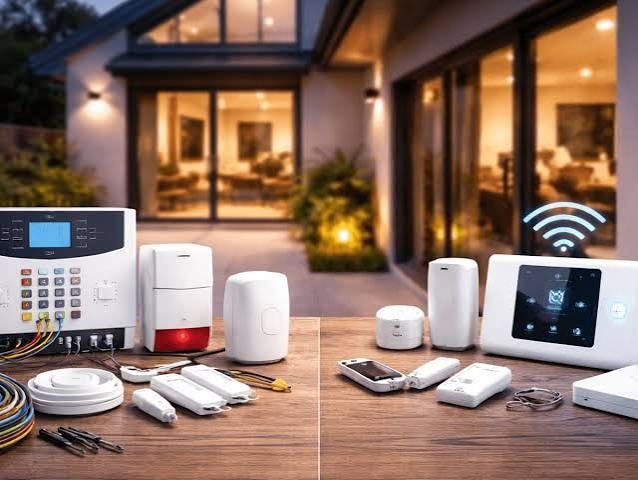
Choosing the right alarm system is an important decision when protecting a home, office, shop, warehouse or commercial building. With different security technologies available in Uganda, property owners often face one major question: should they install a wired alarm system or choose a wireless alarm system?
Both technologies are designed to detect potential intrusions, alert property owners and support faster responses to security incidents. However, they differ in installation requirements, communication methods, maintenance, flexibility and overall costs.
A wired alarm system uses physical cables to connect detection devices to a central control panel, while a wireless alarm system communicates through radio signals. Each technology has advantages, and the most suitable option depends on the building’s structure, security requirements, installation conditions and long-term maintenance plans.
For homeowners in Kampala, businesses in Wakiso, offices in Entebbe, warehouses and industrial facilities across Uganda, understanding these differences can help prevent costly installation mistakes and ensure the chosen system provides appropriate security coverage.
At Daltrevco, we understand that effective property security starts with selecting solutions that match the actual needs of a building. This guide compares wired and wireless alarm systems, explains their advantages and disadvantages, examines installation and maintenance costs, and helps you choose the best option for your property.
What Is the Difference Between Wired and Wireless Alarm Systems?
The main difference between wired and wireless alarm systems is how their security devices communicate with the alarm control panel.
Wired alarm systems use physical cables to connect devices such as motion detectors, door contacts, glass-break detectors and keypads to the central control panel. When a sensor detects a configured intrusion event, it sends a signal through the cable connection.
Wireless alarm systems use radio-frequency communication to transmit signals between compatible sensors and the control panel. Wireless sensors commonly operate using batteries, reducing the need for individual signal cables.
Both systems can activate sirens and support remote notifications when the necessary communication equipment and services are available.
The following factors are particularly important when comparing the two technologies:
- Installation requirements and building modifications.
- Reliability of communication between devices.
- Equipment and installation costs.
- Battery and maintenance requirements.
- Flexibility when adding or relocating sensors.
- Suitability for residential and commercial buildings.
- Compatibility with CCTV and other security systems.
Understanding these factors makes it easier to select an alarm system that meets your security objectives.
1. Wired Alarm Systems: How They Work
A wired alarm system connects its detection devices to a central control panel using physical cables. These cables transmit signals between sensors and the panel, allowing the system to monitor designated areas of a property.
When the alarm is armed, connected sensors monitor protected doors, windows and rooms. If a sensor detects an event that meets the programmed conditions, it sends a signal to the control panel.
The panel processes the signal and activates the configured response. Depending on the system, this may include sounding an internal or external siren, identifying the affected security zone or sending an alert through a compatible communication device.
Main Components of a Wired Alarm System
A typical wired alarm installation may include:
- Alarm control panel: The central unit responsible for receiving sensor signals and managing alarm operations.
- Wired motion detectors: Monitor designated areas for movement.
- Door and window contact sensors: Detect when protected doors or windows are opened.
- Glass-break detectors: Detect events associated with breaking glass.
- Wired keypads: Allow authorised users to arm and disarm the system.
- Alarm sirens: Produce audible warnings when configured alarm events occur.
- Communication modules: Support alerts through compatible internet, cellular or telephone connections.
- Power supply and backup battery: Provide the required operating power and backup support.
Advantages of Wired Alarm Systems
1. Stable physical communication
Wired alarm systems use physical connections between sensors and the control panel. This avoids dependence on radio signals for communication between those connected devices.
2. Reduced dependence on individual sensor batteries
Many wired sensors receive power through their connections or use a separate power arrangement. This can reduce the number of individual batteries that need regular replacement.
The control panel and other equipment may still require backup batteries.
3. Suitable for new construction projects
Wired systems are particularly practical when installed during construction or major renovation. Cables can be routed through walls, ceilings and conduits before building finishes are completed.
4. Suitable for permanent installations
Where sensor locations are unlikely to change, a wired system can provide a structured and fixed security arrangement.
5. Less affected by wireless signal interference
Since connected devices communicate through cables, the sensor-to-panel connection does not depend on radio-frequency coverage.
Disadvantages of Wired Alarm Systems
Despite their advantages, wired alarm systems have limitations.
- Complex installation in existing buildings: Installing cables may require drilling, surface conduits or modifications to walls and ceilings.
- Higher installation labour in some properties: Long or difficult cable routes can increase installation time and labour requirements.
- Limited flexibility: Relocating a sensor may require additional cabling.
- Cable damage risks: Poorly protected wiring can be damaged during renovations, maintenance or other building work.
- Installation planning: Cable routes must be properly designed to ensure neat installation and long-term protection.
Wired alarm systems are often a good choice when the building allows convenient cable installation.
2. Wireless Alarm Systems: How They Work
A wireless alarm system uses radio communication to connect compatible security sensors to a central control panel.
Instead of relying on individual signal cables, wireless devices transmit information through radio signals. When a sensor detects a programmed intrusion event, it communicates with the control panel, which initiates the appropriate response.
Wireless alarm systems are particularly useful in existing buildings where installing cables may be disruptive, expensive or impractical.
Main Components of a Wireless Alarm System
A wireless alarm installation may include:
- Wireless alarm control panel: Receives and processes signals from wireless devices.
- Wireless motion detectors: Detect movement in protected rooms and spaces.
- Wireless door and window sensors: Monitor protected entrances and openings.
- Wireless glass-break detectors: Provide additional detection around vulnerable glass areas.
- Wireless keypads: Allow authorised users to manage the alarm.
- Wireless sirens: Provide audible warnings, depending on the system design.
- Communication module: Supports compatible mobile, internet or cellular alerts.
- Batteries: Power wireless sensors and require periodic monitoring.
Advantages of Wireless Alarm Systems
1. Easier installation in completed buildings
Wireless sensors generally require less signal cabling. This can reduce drilling, cable routing and disruption in occupied homes, offices and commercial buildings.
2. Flexible sensor placement
Wireless devices can often be positioned in locations where running cables would be difficult. This makes them useful for monitoring additional doors, windows and rooms.
3. Convenient for renovation projects
Property owners upgrading existing security systems may prefer wireless technology because it can reduce alterations to finished walls and ceilings.
4. Easier expansion in compatible systems
Additional sensors can often be added when the control panel supports them and sufficient radio coverage is available.
5. Remote monitoring features
Many modern wireless alarm systems support mobile applications and remote management. Depending on the equipment, authorised users may receive notifications, check system status and arm or disarm the alarm remotely.
Disadvantages of Wireless Alarm Systems
Wireless systems also have limitations that should be considered before installation.
- Battery replacement: Most wireless sensors require batteries that must be monitored and replaced.
- Signal interference: Radio communication may be affected by interference from other devices or unsuitable environmental conditions.
- Building material limitations: Thick concrete walls, metal structures and other obstacles may weaken signals.
- Device compatibility: Wireless sensors are not necessarily compatible with every alarm control panel.
- Coverage limitations: Large properties may require additional compatible equipment to achieve adequate signal coverage.
- Long-term maintenance: Battery replacement and communication checks must be included in the maintenance plan.
A professional assessment should establish whether the proposed wireless equipment can communicate reliably throughout the property.
3. Wired vs Wireless Alarm Systems: Detailed Comparison
The following table highlights the major differences between wired and wireless alarm systems.
| Feature | Wired alarm system | Wireless alarm system |
|---|---|---|
| Communication | Physical cables | Radio signals |
| Installation | Requires cable routing | Usually requires less sensor cabling |
| Installation disruption | Can be significant in finished buildings | Generally less disruptive |
| Sensor power | Depends on system design; may be supplied through wiring | Commonly battery-powered |
| Battery maintenance | Often fewer individual sensor batteries | Regular sensor battery monitoring |
| Communication challenges | Cable faults and connection problems | Signal range and interference |
| Sensor relocation | May require additional wiring | Often easier with compatible equipment |
| Expansion | May require additional cables and panel capacity | Depends on device compatibility and panel capacity |
| New buildings | Very suitable when wiring is planned | Suitable where flexibility is preferred |
| Existing buildings | Cable installation may be difficult | Often convenient |
| Maintenance | Cable, connection and power checks | Battery, signal and power checks |
| Long-term suitability | Good for permanent installations | Good for flexible installations |
Important: Neither technology is automatically more reliable or more secure in every situation. Equipment quality, installation standards, system configuration and maintenance all influence performance.
4. Which Is Better for Residential Properties in Uganda?
For homeowners, the decision between wired and wireless alarm systems depends on the building’s construction stage, size, layout and security requirements.
When a Wired Alarm System Is Better for a Home
A wired alarm system may be suitable when:
- The house is still under construction.
- Major renovation work is being carried out.
- Cable routes are accessible.
- Sensor locations are expected to remain permanent.
- The property requires a planned installation across several rooms.
- The homeowner prefers physical connections between sensors and the control panel.
For example, a homeowner constructing a new property in Kampala can plan alarm cabling alongside electrical and other building installations.
When a Wireless Alarm System Is Better for a Home
A wireless alarm system may be preferable when:
- The house is already completed.
- The homeowner wants to avoid extensive drilling.
- Cable installation would be expensive or disruptive.
- Flexible sensor positioning is important.
- The property may require additional sensors in the future.
For many existing homes, wireless technology provides a convenient installation option, provided that signal coverage and battery maintenance are properly addressed.
5. Which Is Better for Offices and Commercial Buildings?
Offices and commercial buildings contain valuable equipment, business records, stock and other assets that require protection.
The best alarm system depends on the building’s size, number of access points, working hours, security zones and existing infrastructure.
Wired Alarm Systems for Offices
Wired alarm systems can be appropriate for:
- Newly constructed office buildings.
- Permanent commercial installations.
- Large offices with accessible cable routes.
- Buildings with several fixed security zones.
- Facilities with established maintenance arrangements.
They can be designed to monitor reception areas, management offices, records rooms, server rooms and other restricted spaces.
Wireless Alarm Systems for Offices
Wireless alarm systems may be more practical for:
- Existing office premises.
- Leased buildings where structural changes are restricted.
- Smaller commercial spaces.
- Offices undergoing refurbishment.
- Properties requiring flexible sensor placement.
Before installation, wireless signal strength should be checked throughout the building, particularly in multi-storey premises with reinforced concrete walls and metal partitions.
6. Wired vs Wireless Alarm Systems for Warehouses and Industrial Facilities
Warehouses, factories and industrial facilities often have more complex security requirements than residential buildings.
They may include loading bays, large storage areas, multiple entrances, workshops, offices and restricted equipment rooms.
Wired Systems for Warehouses
Wired alarm systems may be appropriate where:
- The facility has planned cable routes.
- The building is under construction or renovation.
- Sensor locations are permanent.
- Several detection zones need to be connected.
- The installation can accommodate protected cable routes.
Wireless Systems for Warehouses
Wireless systems may be useful where:
- Existing structures make cable installation difficult.
- Some sections are difficult to access.
- The facility requires flexible sensor placement.
- Additional detection devices may be needed later.
However, large warehouse spaces can present wireless communication challenges. Metal shelving, equipment, long distances and building materials may affect radio coverage.
A site assessment and signal test should be completed before selecting the equipment.
7. Which Alarm System Is More Reliable?
Reliability is one of the most important considerations when choosing between wired and wireless alarm systems.
However, it is inaccurate to assume that all wired systems are reliable or that all wireless systems experience communication problems. Both technologies can perform well when correctly designed and maintained.
Reliability of Wired Alarm Systems
Wired systems use physical connections, which can provide stable communication between connected devices and the control panel.
Their performance depends on:
- Correct cable selection and installation.
- Secure electrical connections.
- Proper cable protection.
- Suitable power supply.
- Functional sensors and control equipment.
- Regular inspection and testing.
Damaged cables, loose connections and power problems can affect performance.
Reliability of Wireless Alarm Systems
Wireless systems depend on radio communication between devices and the control panel.
Their performance depends on:
- Adequate signal strength.
- Appropriate sensor placement.
- Distance between devices.
- Building materials.
- Radio interference.
- Battery condition.
- Device supervision and compatibility.
Modern wireless systems may include features such as encrypted communication, low-battery warnings and supervision of device connections. These capabilities vary by manufacturer and model.
Which Should You Choose?
Choose a wired system when physical sensor connections and accessible cable routes are priorities.
Choose a wireless system when installation flexibility and minimal building disruption are more important.
For large or complex properties, consider a hybrid system that uses both technologies.
8. Which Is More Affordable to Install in Uganda?
The cost of installing a wired or wireless alarm system in Uganda depends on the equipment, building layout, installation requirements and security coverage needed.
There is no single price that applies to every property. A small house with a few sensors has different requirements from a multi-storey office or industrial warehouse.
Factors Affecting Wired Alarm Installation Costs
The cost of a wired system may depend on:
- Number of motion detectors and contact sensors.
- Length and type of cables required.
- Cable conduits and protective materials.
- Accessibility of walls, ceilings and installation routes.
- Labour required for cable installation.
- Control panel capacity.
- Backup power requirements.
- Integration with CCTV and other security systems.
Wired systems may be economical during new construction because cables can be installed before building finishes are completed. Retrofitting an existing property may require additional work.
Factors Affecting Wireless Alarm Installation Costs
The cost of a wireless system may depend on:
- Number and type of wireless sensors.
- Control panel specifications.
- Battery requirements.
- Signal repeaters or additional communication devices.
- Compatibility of wireless equipment.
- Mobile application and monitoring features.
- Installation and configuration requirements.
- Future expansion needs.
Wireless systems can reduce cabling and installation work, but the price of equipment and ongoing battery replacement should be considered.
Is a Wireless Alarm System Always Cheaper?
No. Wireless systems may reduce installation labour in some properties, but the equipment and maintenance costs can be higher.
Similarly, wired systems may require more installation work but can be economical where cable routes are easily accessible.
The best way to compare costs is to request quotations based on the same number of sensors, security zones, backup requirements and communication features.
9. What Is a Hybrid Alarm System?
A hybrid alarm system combines wired and wireless security devices within one compatible alarm installation.
This allows property owners to use wired equipment in areas where cables can be installed conveniently and wireless devices in areas where cabling would be difficult.
For example, a commercial building may use wired sensors in its main offices and wireless detectors in a separate storeroom or renovated section.
Benefits of Hybrid Alarm Systems
- Combines the advantages of wired and wireless technologies.
- Provides greater installation flexibility.
- Can reduce the need for extensive cabling in difficult areas.
- Supports different building sections and security requirements.
- May allow compatible existing wired equipment to be retained.
- Can accommodate future expansion where the control panel supports it.
When Should You Consider a Hybrid Alarm System?
Consider hybrid technology if your property:
- Has both new and existing building sections.
- Contains areas with accessible and difficult cable routes.
- Requires a combination of permanent and flexible sensors.
- Needs additional detection devices over time.
- Has existing alarm equipment that may be compatible with a hybrid control panel.
Before choosing a hybrid system, confirm that the control panel supports the intended wired and wireless devices.
10. Maintenance: Wired vs Wireless Alarm Systems
Both wired and wireless alarm systems require regular maintenance. The difference is mainly in the components that need attention.
Wired Alarm System Maintenance
Maintenance should include:
- Testing all connected sensors.
- Inspecting cables for damage.
- Checking connections and terminals.
- Testing keypads and alarm sirens.
- Checking the control panel.
- Testing backup batteries.
- Reviewing user permissions and alarm zones.
Wireless Alarm System Maintenance
Maintenance should include:
- Checking wireless sensor battery levels.
- Replacing batteries according to manufacturer recommendations.
- Testing signal strength.
- Checking communication between devices and the control panel.
- Inspecting sensors for physical damage.
- Testing sirens and notification functions.
- Checking backup power arrangements.
Which Requires Less Maintenance?
Neither system is maintenance-free.
Wireless systems generally require more attention to individual sensor batteries. Wired systems require inspection of their cables and connections.
Both require functional testing, power checks and attention to faults.
11. Can Wired and Wireless Alarm Systems Work Without Internet?
Yes, some alarm systems can detect intrusion and activate local sirens without an internet connection.
However, internet requirements depend on the specific equipment and features.
For example:
- Local detection may continue without internet on supported systems.
- Local sirens may operate without internet.
- Mobile application notifications may require internet or cellular communication.
- Cloud-based monitoring and remote management may require an active connection.
- Professional monitoring depends on the communication method and service arrangement.
When choosing an alarm system in Uganda, ask the installer what functions remain operational during internet interruptions.
It is also important to confirm whether the system can use cellular communication as an alternative to internet connectivity.
12. Can Alarm Systems Be Integrated with CCTV and Access Control?
Yes. Compatible alarm systems can be integrated with other security technologies to create a more coordinated security arrangement.
Integration with CCTV Cameras
CCTV cameras capture video footage, while alarm sensors detect configured intrusion events.
When integrated, an alarm event may be associated with relevant camera views or recordings, helping authorised personnel investigate what happened.
Integration with Access Control Systems
Access control systems manage authorised entry through doors, gates and restricted areas.
Burglar alarms monitor selected spaces for unauthorised activity. Together, they can support better security management in offices, institutions and commercial buildings.
Integration with Electric Fencing
Electric fencing provides an additional perimeter security layer, while alarm systems monitor selected building entrances and internal areas.
The two technologies perform different functions but can complement each other.
Integration with Intercom Systems
Intercom and video door phone systems allow occupants to communicate with visitors before granting access.
A burglar alarm performs a separate intrusion-detection function. Compatible equipment can support a more complete security arrangement.
13. Common Mistakes to Avoid When Choosing an Alarm System
Choosing an alarm system without assessing the property can result in unnecessary expenses and poor security coverage.
Avoid these common mistakes:
Choosing based only on price: A cheap system may not provide the required detection coverage, equipment quality or communication features.
Ignoring building construction: Reinforced concrete and metal structures may affect wireless communication, while complicated building layouts can increase wired installation work.
Assuming wireless systems work everywhere: Wireless communication must be tested in all intended installation areas.
Assuming wired systems never fail: Cables can become damaged, connections can loosen and power supplies can develop faults.
Overlooking backup power: Ask how the alarm will operate during power interruptions and how long the backup arrangement is expected to support it.
Installing too few sensors: Vulnerable doors, windows and rooms may remain unprotected if the system is poorly planned.
Ignoring maintenance requirements: Every alarm system needs regular testing and inspection.
Failing to train users: Authorised users should know how to arm and disarm the system and respond to alerts.
14. How to Choose the Best Alarm System for Your Property
Before selecting wired or wireless technology, assess the following factors.
Property Size and Layout
Identify the number of rooms, doors, windows, floors and vulnerable areas that require protection.
Building Construction
Consider whether the building is under construction, newly completed or already occupied. This affects the practicality of installing cables.
Security Requirements
Determine whether the property needs motion detection, door and window contacts, glass-break detection, outdoor monitoring or several separate security zones.
Communication Requirements
Decide whether local sirens are sufficient or whether you also need mobile alerts, cellular communication or professional monitoring.
Power Backup
Confirm the backup battery arrangements and the expected operating duration under the proposed system configuration.
Future Expansion
Choose equipment with suitable capacity if you expect to add more rooms, sensors or security features.
Maintenance Arrangements
Consider battery replacement, equipment servicing, system testing and technical support before making your final decision.
15. Final Verdict: Wireless vs Wired Alarm Systems – Which Is Better?
The best alarm system is the one that provides suitable security coverage while fitting the building’s construction, budget and maintenance requirements.
The following guide provides a practical starting point:
| Property or installation requirement | Option to consider |
|---|---|
| New house under construction | Wired or hybrid |
| Completed residential home | Wireless or hybrid |
| Existing office with limited cabling options | Wireless or hybrid |
| Large commercial building with planned cable routes | Wired or hybrid |
| Warehouse with difficult cable routes | Wireless or hybrid |
| Property with new and existing sections | Hybrid |
| Flexible sensor placement | Wireless |
| Fixed sensor locations and accessible cabling | Wired |
These are recommendations to guide the selection process, not strict rules. The final choice should be based on a proper site assessment.
Why Choose Daltrevco for Security System Solutions?
Choosing between wired and wireless alarm systems is only one part of protecting your property. The equipment must also be suitable for the building, installed correctly and configured to provide the intended detection coverage.
Daltrevco provides a point of contact for homeowners, businesses and organisations exploring security and building protection solutions in Uganda.
Whether you are planning security for a residential home, office, retail shop, warehouse or commercial building, understanding your property’s vulnerabilities is the first step towards selecting the right system.
If you are considering a new alarm installation or upgrading existing security equipment, contact Daltrevco to discuss your project and suitable options.
A well-planned alarm system can also complement CCTV surveillance, access control, intercom systems and perimeter security measures.
Frequently Asked Questions About Wired and Wireless Alarm Systems
1. What is the main difference between wired and wireless alarm systems?
Wired alarm systems use physical cables to connect sensors to the control panel. Wireless alarm systems use radio signals to communicate between compatible devices and the control panel.
2. Which is better, wired or wireless burglar alarms?
Neither is universally better. Wired alarms are often suitable for new buildings and permanent installations, while wireless alarms can be more convenient for existing properties where installing cables would be disruptive.
3. Are wireless alarm systems reliable in Uganda?
Yes, wireless systems can provide dependable performance when correctly installed and maintained. Their performance depends on radio coverage, building materials, equipment quality, interference and battery condition.
4. Are wired alarm systems more secure than wireless systems?
Not necessarily. Security depends on the quality of the equipment, communication protection, installation and configuration. Modern wireless systems may include encrypted communication and device supervision, while wired systems rely on correctly installed physical connections.
5. Do wireless alarm systems require batteries?
Most wireless sensors use batteries. These should be monitored and replaced according to the manufacturer’s recommendations.
6. Do wired alarm systems require backup batteries?
Many wired systems use backup batteries in the control panel to support operation during power interruptions. The backup capacity depends on the equipment and installation.
7. Can a wireless alarm system work without internet?
Some wireless systems can detect intrusion and activate local sirens without internet. Remote notifications and cloud-based features may require internet or cellular communication.
8. Can a wired alarm system send mobile notifications?
Yes. A wired alarm system can support mobile notifications when connected to compatible communication equipment and the required network service.
9. Which alarm system is easier to install?
Wireless systems generally require less sensor cabling and can be easier to install in completed buildings. Wired systems can be easier to incorporate during construction when cable routes are accessible.
10. Which alarm system is cheaper in Uganda?
The total cost depends on the number of sensors, equipment specifications, installation labour, cable requirements, backup power and communication features. Wireless may reduce cabling costs, while wired systems may be economical where installation routes are already available.
11. Can I add more sensors to a wireless alarm system?
Many wireless systems support expansion, provided the control panel has sufficient capacity and the additional sensors are compatible and within reliable communication range.
12. What is a hybrid alarm system?
A hybrid alarm system combines wired and wireless components, allowing both technologies to be used in one compatible installation.
13. Which alarm system is best for warehouses?
The most suitable system depends on the warehouse’s size, building materials, cable routes, storage arrangement and security requirements. Wired, wireless or hybrid technology may be appropriate.
14. Can burglar alarm systems be connected to CCTV cameras?
Yes. Compatible systems can be integrated so that alarm events are associated with relevant camera views or recordings.
15. How long does a burglar alarm system last?
The lifespan depends on equipment quality, operating conditions, maintenance and the availability of replacement components. Batteries, sensors and other parts may need replacement at different intervals.
16. How often should an alarm system be serviced?
Follow the manufacturer’s maintenance recommendations and arrange regular functional checks. Professional inspection is advisable when the system develops faults, undergoes expansion or experiences repeated false alarms.
17. Can I install a burglar alarm system in an existing building?
Yes. Both wired and wireless systems can be installed in existing buildings. Wireless technology may reduce structural disruption, while wired installation is possible where suitable cable routes are available.
Conclusion
When comparing wired vs wireless alarm systems in Uganda, the right choice depends on your property’s construction, security requirements, installation conditions and long-term maintenance plans.
Wired alarm systems are often suitable for new buildings and permanent installations where cables can be installed conveniently. Wireless alarm systems offer greater installation flexibility and can be useful in completed homes, offices and commercial properties. Hybrid systems provide an alternative for buildings that need a combination of both technologies.
Before making a decision, consider the total installation cost, sensor coverage, communication reliability, power backup and future expansion requirements.
For dependable property protection, choose an alarm system that is properly planned, professionally installed and regularly maintained.
Contact Daltrevco to discuss suitable security alarm solutions for your home, office or commercial property in Uganda.

