Successful construction projects do not happen by chance. They require careful preparation, realistic budgeting, coordinated designs, effective contractor management, continuous monitoring and proper control of construction activities. Whether you are building a residential house, developing apartments, constructing commercial premises or establishing an industrial facility, every stage must be managed carefully to achieve the intended results.
In Uganda, construction projects often involve several professionals, contractors, suppliers, regulatory authorities and other stakeholders. Coordinating these parties while managing project costs, schedules, materials, workmanship and technical requirements can be challenging without a structured management approach.
This is why understanding the construction project management process in Uganda is important for property owners, investors, developers and organisations planning building or infrastructure projects.
Construction project management provides an organised framework for guiding a development from the initial idea to final completion and handover. It helps establish project objectives, allocate responsibilities, monitor expenditure, coordinate professionals, manage risks and assess whether construction activities are progressing according to the agreed requirements.
This comprehensive guide explains the construction project management process step by step, the responsibilities involved at each stage, the challenges that may arise and how professional project management can support better construction outcomes.
What Is the Construction Project Management Process?
The construction project management process refers to the sequence of activities used to plan, organise, coordinate, monitor and control a construction project throughout its lifecycle.
It begins when the client identifies a development need and continues through feasibility assessment, design, budgeting, procurement, construction, monitoring, completion and handover.
The process ensures that the different parts of a construction project are coordinated rather than handled as unrelated activities.
Depending on the project and the management appointment, the process may involve:
- Defining project objectives and scope.
- Assessing land and site conditions.
- Conducting feasibility studies.
- Preparing project budgets.
- Coordinating architectural and engineering designs.
- Identifying regulatory requirements.
- Selecting contractors and suppliers.
- Developing construction schedules.
- Managing procurement.
- Monitoring construction progress.
- Managing project costs and variations.
- Coordinating quality inspections.
- Managing project risks.
- Preparing for completion and handover.
The precise stages and responsibilities vary according to the size, complexity and procurement arrangement of the project.
A residential building may require a relatively straightforward management structure, while a multi-storey commercial development, factory or infrastructure project may involve several specialist consultants, contractors and approval processes.
Why Is the Construction Project Management Process Important?
A structured project management process helps prevent construction activities from becoming disorganised. It provides a clear framework for making decisions, managing resources and measuring performance.
1. Improves Project Organisation
Construction involves many activities that must happen in a coordinated sequence.
For example, foundation construction depends on completed site preparation, suitable designs, relevant approvals and the availability of labour and materials.
Project management helps establish the correct order of activities and clarifies who is responsible for each task.
2. Strengthens Cost Control
Construction costs can increase when project requirements are unclear, designs change frequently, materials are poorly managed or contractor performance is not monitored.
The project management process establishes a budget and provides procedures for monitoring expenditure, reviewing variations and forecasting the cost of completing the project.
3. Supports Timely Project Delivery
A construction programme identifies the activities required to complete a project and establishes their expected duration and sequence.
Regular monitoring helps identify delays, understand their causes and determine whether corrective action is needed.
4. Improves Quality Management
Quality requirements should be established before construction begins.
Project management helps coordinate inspections, monitor workmanship, review relevant records and follow up on defects.
5. Encourages Effective Communication
Construction projects involve communication between the client, consultants, contractors, suppliers and regulatory authorities.
A structured management process establishes reporting procedures, meeting arrangements and decision-making responsibilities.
6. Helps Manage Construction Risks
Project risks can affect budgets, schedules, safety, quality and successful completion.
Early identification and continuous monitoring help the project team prepare appropriate responses.
7. Provides Accountability
Clearly defined responsibilities and documented decisions make it easier to understand who is responsible for particular activities and outstanding issues.
The Construction Project Management Process: 10 Essential Stages
Although individual projects differ, most construction developments follow a series of connected management stages.
Stage 1: Project Initiation and Definition
<text> </text>
<AsyncImage query=”property developer and construction architect discussing architectural building plans at an office table before construction project begins” aspectRatio=”16:9″ width=”100%”/>
The first stage involves identifying the need for the project and defining what the client wants to achieve.
Before engaging contractors or committing significant financial resources, the client should establish the purpose, scope and intended outcomes of the development.
Key Activities During Project Initiation
1. Identify the project purpose
Determine why the development is being undertaken and what it should accomplish.
For example, the project may involve constructing a family residence, developing rental apartments, establishing an office building or creating a warehouse for business operations.
2. Define the project objectives
Establish the expected outcomes, including the building’s intended use, size, functionality, quality expectations and financial objectives.
3. Identify stakeholders
Determine the people and organisations involved in the development.
These may include:
- Property owners and investors.
- Project managers.
- Architects.
- Structural and civil engineers.
- Quantity surveyors.
- Specialist consultants.
- Construction contractors.
- Suppliers.
- Relevant regulatory authorities.
- Future building users or occupants.
4. Prepare a project brief
A project brief documents the client’s requirements and provides a reference for the design and planning teams.
It may include the proposed building type, site location, expected facilities, preferred construction standards, budget expectations and target completion period.
5. Establish preliminary project constraints
Identify potential limitations such as available funding, site access, land conditions, planning requirements, infrastructure availability and time expectations.
Deliverables at the Initiation Stage
Depending on the project, the main outputs may include:
- Project brief.
- Initial scope statement.
- Stakeholder list.
- Preliminary development objectives.
- Initial risk considerations.
- Preliminary project feasibility requirements.
A clearly defined project helps prevent misunderstandings during later stages.
Stage 2: Feasibility Assessment and Site Investigation
<AsyncImage query=”construction engineer surveying building plot conducting site investigation with surveying equipment on Uganda development site” aspectRatio=”16:9″ width=”100%”/>
After defining the project, the next step is to determine whether the proposed development is practical.
A feasibility assessment examines the technical, financial, operational and regulatory considerations that may affect the project.
Site Investigation
The project team should assess the land and its suitability for the intended development.
Important considerations include:
- Land ownership and legal status.
- Site boundaries and dimensions.
- Topography and ground levels.
- Soil and ground conditions.
- Surface water drainage.
- Flooding risks.
- Access roads.
- Existing buildings and structures.
- Availability of electricity and water.
- Sewerage and wastewater arrangements.
- Surrounding land uses.
Depending on the project, professional land surveys, geotechnical investigations and other technical assessments may be necessary.
Land ownership verification and legal due diligence should be undertaken with appropriate legal and land professionals.
Technical Feasibility
Technical feasibility considers whether the proposed development can be designed and constructed on the available site.
It may examine foundation requirements, structural considerations, building services, access arrangements and infrastructure needs.
Financial Feasibility
Financial feasibility considers whether the proposed development is compatible with the client’s available resources and financial objectives.
For an income-generating development, this may also involve assessing expected operating costs, rental income, demand and potential returns.
Regulatory Feasibility
The project team should identify the applicable planning, building, environmental and other approval requirements.
The requirements depend on the location, project type and intended use.
Deliverables at the Feasibility Stage
Typical outputs may include:
- Site assessment information.
- Survey and investigation reports.
- Preliminary development options.
- Initial cost estimates.
- Feasibility findings.
- Identified project constraints.
- Initial risk register.
- Recommendations for proceeding.
The feasibility stage allows the client to make informed decisions before proceeding with detailed design and major expenditure.
Stage 3: Project Planning, Budgeting and Scheduling
<AsyncImage query=”quantity surveyor construction project manager reviewing building cost estimate construction budget schedule spreadsheet architectural plans” aspectRatio=”16:9″ width=”100%”/>
Once the project has been assessed and found suitable for further development, detailed planning begins.
This stage establishes how the project will be implemented, what resources will be required, how much it is expected to cost and how the activities will be scheduled.
Construction Project Budgeting
A project budget should cover the full development rather than only the visible building works.
Depending on the project, it may include:
- Site preparation.
- Professional fees.
- Design and engineering services.
- Statutory application and approval charges.
- Construction materials.
- Labour.
- Equipment and machinery.
- Contractor payments.
- Electrical and mechanical installations.
- External works.
- Utility connections.
- Project management services.
- Contingency allowances.
A quantity surveyor may prepare detailed cost estimates, bills of quantities and cost plans as part of the professional team.
Construction Scheduling
A construction schedule identifies the major activities and their expected start and completion dates.
Typical activities include:
- Site preparation.
- Excavation and foundations.
- Structural construction.
- Walling and roofing.
- Building services installations.
- Internal and external finishes.
- External works.
- Testing and commissioning.
- Final inspections and handover.
The programme should identify dependencies between activities and allow for important procurement, inspection and approval requirements.
Resource Planning
The project team should determine the labour, materials, equipment, professional services and financial resources required at different stages.
Risk Planning
Potential risks should be identified, assessed and assigned to responsible parties.
Examples include material shortages, weather-related disruption, unexpected ground conditions, design changes, contractor delays and budget pressure.
Deliverables at the Planning Stage
- Project management plan.
- Approved project brief.
- Cost plan or project budget.
- Construction programme.
- Resource plan.
- Procurement strategy.
- Risk register.
- Communication and reporting arrangements.
- Quality and safety requirements.
The planning stage provides the framework against which the project will be managed.
Stage 4: Design Development and Technical Coordination
<AsyncImage query=”architect and structural engineer collaborating over architectural and structural construction drawings on large office table” aspectRatio=”16:9″ width=”100%”/>
The design stage translates the client’s requirements into technical drawings, specifications and other information needed to guide construction.
Effective coordination is essential because different building systems must work together.
Architectural Design
Architectural design establishes the building’s layout, appearance and functionality.
It may include:
- Floor plans.
- Elevations.
- Building sections.
- Roof plans.
- Site layouts.
- Door and window schedules.
- Finishing specifications.
- Accessibility considerations.
Structural Design
Structural engineering addresses the strength and stability of the building.
Depending on the development, structural design may cover foundations, columns, beams, slabs, retaining structures, roof supports and other structural elements.
Electrical and Mechanical Design
Building services should be coordinated with the architectural and structural designs.
These may include:
- Electrical power distribution.
- Lighting.
- Plumbing.
- Water supply.
- Wastewater systems.
- Ventilation.
- Air conditioning.
- Fire protection.
- Communication systems.
Civil and External Works Design
Civil engineering information may address drainage, access roads, parking areas, site levels, water infrastructure and other external works.
Design Coordination
Design coordination involves reviewing information from different professionals to identify inconsistencies and potential conflicts.
For example, a drainage route may conflict with a foundation element, or electrical installations may require space that has not been considered in the architectural layout.
Resolving these matters before construction can help reduce rework and unnecessary expenditure.
Deliverables at the Design Stage
Depending on the development, outputs may include:
- Coordinated architectural drawings.
- Structural and engineering drawings.
- Building services designs.
- Technical specifications.
- Bills of quantities.
- Design review records.
- Information required for approval applications.
Regulated design work must be undertaken by appropriately qualified and registered professionals where required.
Stage 5: Regulatory Approvals and Compliance
Before the relevant construction activities begin, the client should establish and obtain the approvals required for the proposed development.
The applicable requirements depend on the building type, location, land use, project characteristics and relevant laws.
Common Approval and Compliance Considerations
These may include:
- Land-use and physical planning requirements.
- Building plan approval.
- Development permission.
- Environmental assessment or approval where applicable.
- Fire and life-safety requirements.
- Utility and infrastructure permissions.
- Occupational health and safety obligations.
- Other project-specific permissions.
In Uganda, the relevant local authority and regulatory bodies should be consulted to confirm the requirements for each development.
The Building Industry Management System (BIMS) is a relevant platform for building approval processes:
The Project Manager’s Role in Approval Coordination
Where included in the appointment, a project manager may:
- Track approval requirements.
- Coordinate submission information.
- Follow up on outstanding documentation.
- Monitor approval-related milestones.
- Communicate approval status to the client.
- Coordinate responses to technical queries.
However, coordinating the approval process does not automatically make the project manager responsible for every legal obligation or professional submission.
The client and appointed professionals should establish who is responsible for each application and approval.
Deliverables at This Stage
- Required approval documentation.
- Relevant permits and approvals.
- Compliance records.
- Updated project programme.
- Confirmation of outstanding regulatory requirements.
Construction should only proceed where the applicable legal and approval requirements for the relevant work have been satisfied.
Stage 6: Procurement and Contractor Selection
<AsyncImage query=”construction procurement tender evaluation meeting professionals reviewing contractor quotations construction plans and tender documents” aspectRatio=”16:9″ width=”100%”/>
Procurement is the process of obtaining the contractors, materials, equipment and professional services needed to deliver the project.
Selecting suitable contractors and suppliers is important because their performance can directly affect construction quality, cost and programme.
Preparing Tender Documents
The client and project team should prepare clear documentation explaining the required scope of work.
Depending on the procurement arrangement, tender documents may include:
- Project drawings.
- Technical specifications.
- Bills of quantities.
- Scope of work.
- Construction programme requirements.
- Contract conditions.
- Submission instructions.
- Contractor qualification requirements.
Inviting Contractor Proposals
Suitable contractors may be invited to submit quotations or formal tender proposals.
The project team should ensure that the proposals respond to a sufficiently clear and consistent scope.
Evaluating Contractor Submissions
Contractors should be assessed using relevant criteria, including:
- Technical competence.
- Relevant project experience.
- Financial capacity.
- Availability of labour and equipment.
- Proposed construction methods.
- Programme and delivery approach.
- Quality management arrangements.
- Health and safety arrangements.
- Price and contractual terms.
The lowest quotation is not necessarily the best choice.
Contract Award and Appointment
Once the preferred contractor has been selected, the client should ensure that the construction contract clearly defines the responsibilities and obligations of the parties.
Important contract provisions may include:
- Scope of work.
- Contract price.
- Payment arrangements.
- Programme and completion requirements.
- Quality standards.
- Variations.
- Defects and correction procedures.
- Insurance and risk allocation.
- Dispute resolution.
- Termination provisions.
Deliverables at the Procurement Stage
- Tender documentation.
- Contractor submissions.
- Tender evaluation records.
- Appointment recommendations.
- Signed construction contract.
- Procurement schedule.
A well-managed procurement process reduces uncertainty and establishes clearer expectations before construction starts.
Stage 7: Construction Implementation and Site Coordination
<AsyncImage query=”active building construction site in Uganda engineers contractors workers coordinating reinforced concrete construction and building works” aspectRatio=”16:9″ width=”100%”/>
This is the stage when physical construction begins.
The contractor carries out the agreed construction work while the project management team coordinates and monitors delivery according to the approved project arrangements.
Site Mobilisation
Before major work begins, the contractor may need to:
- Establish site offices.
- Organise site access.
- Arrange temporary facilities.
- Mobilise labour and equipment.
- Set up material storage.
- Establish site safety arrangements.
- Review construction drawings and specifications.
- Coordinate initial inspections.
Executing Construction Activities
Construction activities proceed according to the project programme and technical requirements.
Depending on the development, this may include:
- Site clearing and earthworks.
- Excavation.
- Foundation construction.
- Structural works.
- Wall construction.
- Roofing.
- Plumbing installations.
- Electrical installations.
- Finishing works.
- External infrastructure.
Contractor Coordination
Different contractors may be responsible for separate parts of the development.
Project management helps coordinate their activities, identify dependencies and address issues that affect overall progress.
Site Meetings
Regular site meetings provide an opportunity to review progress and discuss outstanding matters.
Typical agenda items include:
- Work completed.
- Planned activities.
- Contractor performance.
- Material deliveries.
- Design queries.
- Quality issues.
- Safety matters.
- Programme concerns.
- Variations.
- Decisions required from the client.
Project Documentation
Construction activities and important decisions should be documented.
Records may include site reports, meeting minutes, inspection reports, photographs, instructions, approved drawings and variation records.
Deliverables at the Construction Stage
- Progress reports.
- Site meeting minutes.
- Updated construction programme.
- Inspection records.
- Material delivery records.
- Risk updates.
- Quality records.
- Variation documentation.
The project management team should keep the client informed about progress and issues requiring attention.
Stage 8: Project Monitoring, Cost Control and Quality Management
<AsyncImage query=”construction project manager inspecting building construction quality with engineer reviewing structural work on commercial site” aspectRatio=”16:9″ width=”100%”/>
Monitoring and control take place throughout construction.
The purpose is to compare actual project performance with the approved scope, budget, programme and quality requirements.
Construction Progress Monitoring
Progress monitoring examines whether completed work matches the planned construction programme.
It may involve:
- Site inspections.
- Contractor progress reports.
- Work measurement.
- Programme reviews.
- Progress photographs.
- Review of outstanding activities.
- Identification of delays.
When delays occur, their causes and effects should be assessed before corrective actions are agreed.
Construction Cost Control
Cost control helps the client understand the financial position of the development.
Depending on the project arrangement, monitoring may include:
- Actual expenditure.
- Approved commitments.
- Contractor payment applications.
- Cost forecasts.
- Variations.
- Additional work.
- Potential claims.
- Estimated cost to complete.
A quantity surveyor may provide specialist cost assessment, valuation and payment certification services where appointed.
Variation Management
Construction variations occur when changes are made to the agreed scope, design, specifications or quantities.
Examples include:
- Changing room layouts.
- Adding new facilities.
- Substituting materials.
- Revising structural details.
- Changing building finishes.
- Introducing additional external works.
Before a variation is approved, its implications for cost, time, quality and contractual obligations should be assessed.
All approved changes should be documented.
Quality Assurance and Quality Control
Quality management helps ensure that construction work meets the approved specifications and relevant requirements.
Activities may include:
- Reviewing material submissions.
- Coordinating inspections.
- Monitoring workmanship.
- Checking relevant construction records.
- Recording defects.
- Following up corrective actions.
- Coordinating tests where required.
Technical inspection, testing and certification should be carried out by the appropriately qualified and appointed professionals.
Risk Monitoring
The project risk register should be reviewed regularly to identify new risks and assess whether existing risks have changed.
This is especially important when there are design changes, contractor difficulties, material shortages or unexpected site conditions.
Deliverables at the Monitoring Stage
- Progress and performance reports.
- Cost reports.
- Updated project schedules.
- Quality inspection records.
- Variation registers.
- Updated risk register.
- Corrective action records.
Continuous monitoring helps the project team identify problems early and make informed decisions.
Stage 9: Testing, Commissioning and Construction Completion
<AsyncImage query=”newly completed commercial building engineer conducting building services commissioning inspection electrical mechanical systems” aspectRatio=”16:9″ width=”100%”/>
When the main construction activities are complete, the project enters the completion stage.
However, finishing the physical building works does not automatically mean that the development is ready for occupation or operation.
The project team must confirm that the agreed completion requirements have been satisfied.
Completion Inspections
Final inspections help identify incomplete work, defects and outstanding contractual obligations.
Depending on the project, the inspection may cover:
- Structural and architectural works.
- Roofing and waterproofing.
- Doors and windows.
- Internal finishes.
- Plumbing installations.
- Electrical installations.
- Drainage.
- External works.
- Safety-related features.
- Specialist equipment.
Testing and Commissioning
Building services and equipment may require testing to establish that they function as intended.
This can include:
- Electrical testing.
- Plumbing and water system testing.
- Drainage testing.
- Air conditioning and ventilation testing.
- Fire protection system testing.
- Security system testing.
- Specialist equipment commissioning.
The relevant tests should be undertaken by competent professionals according to the applicable requirements and specifications.
Defect Identification
Defects should be recorded in a snagging or defect list.
Each item should identify the problem, its location, the responsible party and the required corrective action.
Completion Documentation
The project team should establish which completion documents must be provided.
These may include:
- Inspection records.
- Test and commissioning reports.
- Relevant certificates.
- As-built drawings.
- Equipment manuals.
- Product information.
- Warranty documentation.
- Outstanding defect records.
Deliverables at the Completion Stage
- Completion inspection reports.
- Defect and snagging lists.
- Testing and commissioning records.
- Updated project documentation.
- Completion recommendations.
Stage 10: Project Handover and Closeout
<AsyncImage query=”property owner receiving keys from construction project manager in front of completed modern commercial building handover” aspectRatio=”16:9″ width=”100%”/>
The final stage involves transferring the completed development to the client and formally closing out the project.
A proper handover ensures that the client receives the building and the information needed to operate and maintain it.
Handover Activities
Depending on the project, these may include:
1. Final inspections: Confirm that the agreed completion requirements have been addressed.
2. Defect follow-up: Record and coordinate correction of outstanding defects according to the contract.
3. Documentation handover: Collect approved drawings, as-built information, manuals, test records and other required documents.
4. Equipment orientation: Where appropriate, explain the operation of installed equipment and building systems.
5. Warranty information: Provide available product and workmanship warranty documentation in accordance with the relevant contracts.
6. Final account and contractual closeout: Coordinate outstanding financial and contractual matters according to the agreed arrangements.
7. Handover confirmation: Document the transfer of the completed facility to the client.
Post-Completion Support
Some construction contracts include a defects liability period or other post-completion obligations.
During the applicable period, identified defects should be addressed according to the contract.
The project team should also ensure that the client understands the maintenance requirements of the completed building.
Deliverables at the Handover Stage
- Handover documentation.
- As-built drawings where required.
- Operation and maintenance manuals.
- Testing and commissioning reports.
- Warranty documentation.
- Defect records.
- Final project reports.
- Contractual closeout records.
Proper closeout provides a clear record of what was delivered and helps the client manage the building after construction.
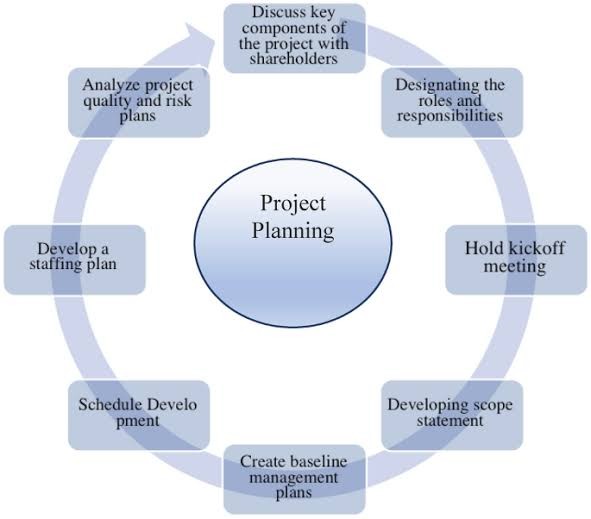
Construction Project Management Process Flowchart
The following simplified sequence shows how the stages connect.
- Project initiation and definition.
- Feasibility assessment and site investigation.
- Project planning, budgeting and scheduling.
- Design development and coordination.
- Regulatory approvals and compliance.
- Procurement and contractor selection.
- Construction implementation.
- Monitoring, cost control and quality management.
- Testing and completion.
- Handover and project closeout.
These stages are not always strictly sequential. Some activities overlap, and the project team may revisit earlier decisions when new information or changes arise.
Key Responsibilities of a Construction Project Manager at Each Stage
The project manager’s responsibilities change as the project progresses.
| Project stage | Typical project management responsibilities |
|---|---|
| Initiation | Understand client objectives and define the project scope |
| Feasibility | Coordinate assessments and identify project constraints |
| Planning | Coordinate budgets, schedules, resources and risks |
| Design | Coordinate consultants and monitor design information |
| Approvals | Track applicable approval requirements where appointed |
| Procurement | Coordinate tendering and contractor selection processes |
| Construction | Coordinate contractors, communication and project activities |
| Monitoring | Review time, cost, quality and risk performance |
| Completion | Coordinate inspections, testing and defect follow-up |
| Handover | Coordinate documentation and project closeout |
The precise authority of the project manager must be established in writing.
For example, authority to issue contractual instructions, approve variations, certify payments or make decisions on behalf of the client should be expressly defined in the appointment and relevant construction contracts.
How Long Does the Construction Project Management Process Take in Uganda?
The duration depends on the nature of the development, its size, complexity, design requirements, procurement strategy, approval processes and construction period.
A small residential project may require a different preparation and delivery period from a multi-storey commercial building, warehouse or industrial facility.
The overall project timeline is influenced by several factors.
1. Project Size and Complexity
Larger projects usually involve more design work, contractors, materials, inspections and coordination.
2. Site Conditions
Difficult access, poor drainage, steep terrain and unexpected ground conditions may increase preparation and construction time.
3. Design Requirements
Specialised buildings and developments with complex technical systems may require more detailed design and coordination.
4. Approval Processes
The time required to obtain applicable approvals depends on the relevant authorities, documentation and project circumstances.
5. Procurement and Material Availability
Long delivery periods for specialist materials and equipment can affect the construction programme.
6. Contractor Performance
Labour availability, construction methods, equipment, supervision and contractor organisation can influence project duration.
7. Weather Conditions
Rainfall and other site conditions can affect excavation, earthworks, transportation, concrete activities and external construction.
A realistic project programme should account for these factors and be updated when circumstances change.
Construction Project Management Costs in Uganda
The cost of construction project management services varies according to the level of professional involvement, project duration, size and complexity.
There is no single fee that applies to all developments.
Factors That Influence Project Management Fees
Project size: Larger developments may require more management resources and coordination.
Project complexity: Specialist facilities and multi-contractor projects may require more intensive management.
Duration: Longer appointments may involve additional reporting, meetings and site coordination.
Service scope: A limited planning appointment differs from comprehensive management covering procurement, construction monitoring and handover.
Site location: Travel and site accessibility may influence service delivery costs.
Reporting requirements: Frequent site inspections and detailed reports may affect the overall fee.
Common Fee Structures
Construction project management fees may be structured in several ways:
- Fixed fee for a defined scope.
- Percentage-based fee calculated against an agreed project cost.
- Time-based professional charges.
- Monthly management fee.
- Stage-based payments linked to agreed deliverables.
Before appointment, request a written proposal explaining the fee, services included, exclusions, payment schedule and additional charges.
The client should compare the actual scope and deliverables rather than selecting a provider based on price alone.
Challenges That Can Affect the Construction Project Management Process in Uganda
Even well-planned construction projects may encounter challenges during implementation.
Understanding these challenges helps the project team prepare suitable management responses.
1. Rising Material Costs
Changes in the prices of cement, steel, timber, roofing products, electrical materials and finishes can affect the project budget.
Regular cost monitoring and timely procurement decisions can help manage exposure to price changes.
2. Material Supply Delays
Delayed delivery of materials can interrupt construction activities.
Procurement schedules should identify critical materials and account for their expected delivery periods.
3. Incomplete Construction Drawings
Missing or conflicting technical information can lead to errors, rework and delays.
Design coordination and timely responses to technical queries are important.
4. Contractor Underperformance
Contractors may struggle with labour, equipment, financial resources, technical capacity or project organisation.
Their performance should be monitored against the agreed contractual requirements.
5. Poor Site Conditions
Unexpected soil conditions, drainage problems, difficult access and flooding can affect construction activities.
Appropriate site investigations and risk planning help identify these issues earlier.
6. Delayed Decisions
When the client takes too long to approve materials, drawings or variations, construction activities may be affected.
Clear decision-making procedures and reporting arrangements can help reduce delays.
7. Uncontrolled Variations
Frequent changes can increase expenditure and extend the construction period.
Changes should be properly assessed, approved and documented.
8. Inadequate Quality Control
Failure to identify defects during construction can result in costly remedial work.
Quality inspections and appropriate testing should be coordinated throughout implementation.
How to Improve the Construction Project Management Process
Property owners and developers can improve project performance by adopting practical management measures from the beginning.
Establish Clear Project Objectives
Document what the development must achieve and communicate the requirements to the professionals involved.
Engage Professionals Early
Involve the relevant architects, engineers, quantity surveyors and project managers before major design and construction decisions are finalised.
Prepare Detailed Cost Information
Use appropriate cost professionals to establish realistic estimates and monitor financial performance.
Coordinate All Technical Designs
Review architectural, structural, electrical, mechanical and civil information before the affected work begins.
Use a Realistic Construction Programme
Identify activity dependencies, procurement requirements and important milestones.
Select Contractors Carefully
Evaluate technical competence, resources, relevant experience and commercial proposals.
Maintain Regular Communication
Hold structured progress meetings and document important decisions.
Monitor Project Performance
Use progress reports, cost reports, inspection records and risk registers to assess performance.
Control Changes
Assess variations before approval and record their effects on project cost, time and quality.
Plan for Handover Early
Establish completion requirements and documentation needs during the initial planning stages.
Construction Project Management for Different Types of Developments
The process remains broadly similar across construction sectors, but the priorities differ according to the type of project.
Residential Construction Projects
Residential developments include private houses, apartments, housing estates and staff accommodation.
Important management priorities include:
- Functional design.
- Construction affordability.
- Structural quality.
- Water supply and drainage.
- Electrical and plumbing installations.
- Material selection.
- Contractor coordination.
- Finishing quality.
- Handover documentation.
Commercial Construction Projects
Commercial developments include office buildings, shopping centres, hotels, restaurants, retail premises and mixed-use properties.
Project management priorities may include:
- Commercial space planning.
- Tenant and user requirements.
- Parking and access.
- Building services coordination.
- Fire and life-safety systems.
- Security and communication systems.
- Programme management.
- Operational readiness.
Industrial Construction Projects
Industrial developments include factories, warehouses, workshops, processing facilities and distribution centres.
Important priorities include:
- Production requirements.
- Equipment and machinery coordination.
- Structural loading.
- Floor specifications.
- Electrical capacity.
- Ventilation.
- Water and wastewater systems.
- Fire and safety systems.
- Vehicle movement and logistics.
Infrastructure Projects
Infrastructure developments may involve roads, bridges, drainage systems, water supply and wastewater networks.
These projects may require additional coordination of engineering investigations, surveys, environmental and social considerations, utilities, procurement and stakeholder requirements.
Why Consider Daltrevco for Construction Project Requirements?
Successful construction development requires careful planning, organised implementation and continuous attention to project requirements.
From the initial development concept to construction completion, property owners and developers need to understand the work involved, the professionals required and the management arrangements necessary to support the project.
Daltrevco provides a point of contact for discussing construction and development requirements. Whether you are considering a residential building, commercial development, industrial facility or infrastructure project, you can contact Daltrevco to discuss your objectives and the support required.
Before engaging a construction project management provider, establish the exact services available, the qualifications of the professionals involved and the scope of the proposed appointment.
Planning or managing a construction development in Uganda? Contact Daltrevco through https://www.daltrevco.com/ to discuss your project requirements and identify suitable next steps.
Frequently Asked Questions About the Construction Project Management Process
1. What is the construction project management process?
It is the structured sequence of activities used to plan, coordinate, monitor and control a construction project from initial definition to completion and handover.
2. What are the main stages of construction project management?
The main stages include project initiation, feasibility assessment, planning, design, approvals, procurement, construction, monitoring, completion and handover.
3. What is the first stage of construction project management?
The first stage is project initiation, where the client’s objectives, intended development, scope, stakeholders and preliminary requirements are established.
4. Why is project planning important before construction?
Planning establishes the budget, scope, schedule, resources, responsibilities and risk management arrangements needed to guide the development.
5. What happens during a construction feasibility study?
A feasibility study examines whether a proposed development is practical by assessing its technical, financial, operational and regulatory considerations.
6. Who is responsible for managing a construction project?
Responsibility depends on the contractual arrangement. A client may appoint a construction project manager to coordinate and monitor project delivery within a defined scope of services.
7. What does a construction project manager do during the planning stage?
The project manager may coordinate the project brief, programme, budget, resources, risk register, communication arrangements and procurement strategy.
8. What is the role of a quantity surveyor in project management?
A quantity surveyor provides specialist cost advice, including cost estimates, bills of quantities, tender evaluation, valuations and cost monitoring according to the appointment.
9. How does contractor procurement work?
Procurement involves defining the scope, preparing tender documents, inviting submissions, evaluating contractors and appointing the selected contractor under an appropriate contract.
10. Why is design coordination important?
Design coordination helps identify inconsistencies between architectural, structural, civil, electrical and mechanical information before they cause construction problems.
11. How are construction project costs monitored?
Costs may be monitored through budgets, expenditure reports, contractor payment assessments, variation records, cost forecasts and estimates of the remaining project cost.
12. What is construction progress monitoring?
It is the process of comparing completed work with the approved construction programme and identifying delays, outstanding activities and performance issues.
13. What is a construction project risk register?
A risk register is a document that records identified project risks, their potential effects, assigned responsibilities and proposed management actions.
14. How are construction variations managed?
Variations should be assessed for their technical, financial, programme and contractual implications before approval. Approved changes should be documented.
15. What happens during construction site meetings?
The project team reviews progress, programme performance, contractor activities, material deliveries, quality concerns, safety issues, technical queries and outstanding decisions.
16. What is quality management in construction?
Quality management involves establishing requirements, coordinating inspections, monitoring workmanship, reviewing materials and following up on defects to help ensure compliance with the project specifications.
17. What happens during construction project completion?
Completion involves inspections, defect identification, testing, commissioning, documentation review and confirmation that the agreed completion requirements have been met.
18. What is construction project handover?
Handover is the process of transferring the completed development and relevant documentation to the client according to the agreed contractual requirements.
19. How long does construction project management take?
The duration depends on project size, complexity, design requirements, approvals, procurement arrangements and construction period. Each development requires its own realistic programme.
20. How much do construction project management services cost in Uganda?
Fees depend on the project size, complexity, duration, scope of services and management requirements. They may be fixed, percentage-based, time-based, monthly or stage-based.
21. Can construction project management prevent delays?
It can help reduce avoidable delays through better planning, scheduling, procurement and coordination. However, external factors and unforeseen conditions can still affect completion.
22. Does construction project management include site supervision?
Some appointments include site monitoring or supervision coordination. Technical inspections, certification and professional supervision must be assigned to appropriately qualified professionals as required.
23. What documents are required for construction project management?
Common documents include the project brief, land information, drawings, cost estimates, bills of quantities, specifications, approvals, construction contracts and schedules.
24. What are the common challenges in construction project management in Uganda?
Challenges may include material price changes, supply delays, difficult site conditions, contractor underperformance, incomplete drawings, delayed approvals and uncontrolled project variations.
25. Is construction project management necessary for residential buildings?
It can be valuable for residential developments by supporting budget control, design coordination, contractor management, progress monitoring and quality oversight.
26. What is the difference between construction project management and construction consultancy?
Project management focuses on coordinating and controlling project delivery, while construction consultancy may provide specialist professional advice such as architecture, engineering, quantity surveying and feasibility assessments.
27. Can construction project management services be used for industrial projects?
Yes. Industrial developments can benefit from project management because they often involve complex structures, specialist equipment, utilities, multiple contractors and operational requirements.
28. What should a construction project management agreement include?
It should define the services, deliverables, responsibilities, reporting arrangements, fees, exclusions, authority limits, duration and procedures for additional work.
29. Why is post-construction support important?
Post-construction support helps address applicable defects, complete outstanding contractual obligations and provide the client with the information needed to operate and maintain the building.
30. How can I discuss construction project management with Daltrevco?
Visit https://www.daltrevco.com/ to contact Daltrevco and discuss your residential, commercial, industrial or infrastructure development requirements.
Conclusion
The construction project management process provides a structured approach to delivering building and infrastructure developments from planning to completion. Each stage plays an important role, from defining the client’s objectives and assessing the site to preparing budgets, coordinating designs, selecting contractors, managing construction activities and completing the final handover.
For property owners and developers in Uganda, understanding these stages makes it easier to prepare for the decisions, resources and professional input required throughout the development.
Effective construction project management also depends on clear responsibilities, realistic schedules, accurate cost information, appropriate technical expertise, proper documentation and continuous monitoring.
Whether you are building a residential home in Wakiso, developing commercial property in Kampala, constructing a warehouse or undertaking an industrial project, a well-organised management process can improve coordination and provide greater control over the development.
For construction and development enquiries in Uganda, contact Daltrevco through https://www.daltrevco.com/ to discuss your project requirements and suitable next steps.