Choosing quality construction materials is one of the most important steps in delivering a safe, durable and cost-effective building project. Whether you are constructing a residential house, commercial building, apartment complex, warehouse, factory or institutional facility, the concrete products you select can significantly influence construction quality, structural performance and long-term maintenance costs.
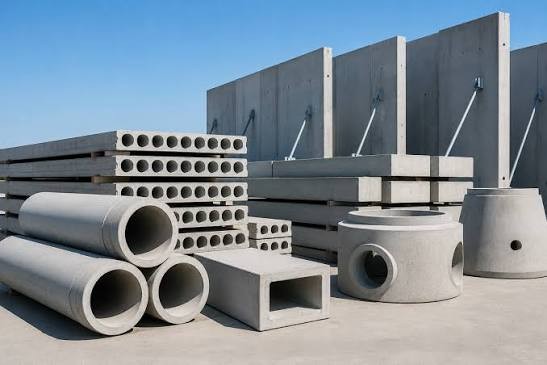
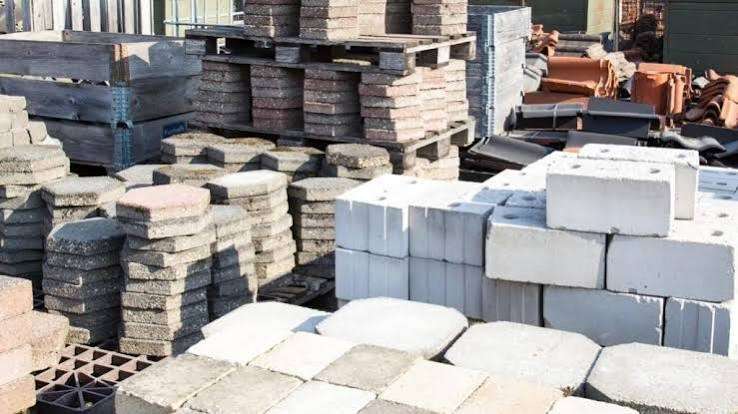
Concrete products are widely used throughout Uganda’s construction industry. They include concrete blocks, precast concrete slabs, beams, columns, paving blocks, kerbstones, concrete pipes, culverts, lintels, drainage channels and other building components.
Although these products may look similar, their quality can differ considerably depending on the raw materials, manufacturing methods, mix proportions, compaction, curing and quality-control procedures used during production.
Purchasing concrete products based only on price or appearance can expose your project to serious problems. Poor-quality materials may crack, break during handling, create installation difficulties, increase construction wastage and compromise the performance of building components.
For this reason, property owners, contractors, developers and engineers should understand what to inspect before purchasing concrete products.
This guide explains how to choose quality concrete products for your building project in Uganda, including the important specifications to check, quality tests to consider, supplier selection criteria, pricing factors and common mistakes to avoid.
1. Understand Your Building Project Requirements Before Buying
The first step when selecting concrete products is understanding what your construction project requires.
Different buildings have different structural, architectural and operational requirements. A concrete product suitable for a residential partition wall may not be appropriate for a structural wall, industrial floor or drainage installation.
Before approaching suppliers, review your approved architectural drawings, structural drawings, bills of quantities and technical specifications.
These documents help establish:
- The type of concrete products required.
- Product dimensions and thickness.
- Required concrete strength.
- Reinforcement specifications, where applicable.
- Expected structural and operational loads.
- Quantity requirements.
- Installation and delivery considerations.
- Applicable quality standards.
For example, a residential building may require concrete blocks, lintels, paving blocks and drainage products. A commercial development may need precast slabs, structural components, kerbstones and drainage chambers. An industrial facility may require heavy-duty concrete floors, machinery foundations, culverts and specialised precast products.
Important: Never select structural concrete products without confirming their suitability with the project’s structural engineer.
2. Choose the Right Type of Concrete Product
Concrete products are manufactured for different applications. Selecting the correct type is essential for achieving the required performance and avoiding unnecessary construction expenses.
2.1 Concrete Blocks
Concrete blocks are commonly used for constructing external walls, internal partitions, boundary walls and other masonry structures.
They are available in solid and hollow configurations, with different sizes and strength classifications.
When selecting concrete blocks, check:
- Whether solid or hollow blocks are required.
- Dimensions and dimensional consistency.
- Compressive strength.
- Water absorption requirements.
- Surface finish and workmanship.
- Suitability for load-bearing or non-load-bearing walls.
For load-bearing applications, the blocks must meet the strength and performance requirements specified by the structural engineer.
2.2 Precast Concrete Slabs
Precast concrete slabs are manufactured before being transported to the construction site for installation.
They may be used in suitable floor systems, roofing applications, balconies and other structural components.
Before purchasing, confirm the slab dimensions, thickness, reinforcement, concrete strength, bearing details and intended loading capacity.
Also consider transportation, lifting equipment and installation requirements.
2.3 Concrete Beams and Columns
Concrete beams and columns are structural components that transfer loads through a building’s structural system.
They may be cast on-site or manufactured as precast components.
Their selection must follow the approved structural design, including:
- Required dimensions.
- Concrete strength.
- Reinforcement arrangement.
- Concrete cover.
- Connection details.
- Installation requirements.
These components should be manufactured and installed according to approved engineering specifications.
2.4 Concrete Paving Blocks
Concrete paving blocks are used for driveways, parking areas, walkways, courtyards and outdoor spaces.
Important selection factors include:
- Block thickness.
- Strength requirements.
- Surface finish.
- Shape and dimensions.
- Expected pedestrian or vehicle traffic.
- Colour and appearance.
- Suitability for the pavement design.
The quality of a paved surface also depends on proper ground preparation, sub-base construction, bedding material, joint filling and drainage.
2.5 Concrete Pipes and Culverts
Concrete pipes and culverts are used in stormwater drainage, road crossings and other infrastructure applications.
Before purchasing, consider:
- Required diameter and dimensions.
- Hydraulic capacity.
- Structural loading.
- Installation depth.
- Soil conditions.
- Jointing requirements.
- Applicable product classification.
The drainage engineer should determine the appropriate product based on the project’s hydraulic and structural requirements.
2.6 Concrete Kerbstones and Drainage Channels
Kerbstones are used to define road edges, parking spaces, walkways and paved areas. Concrete drainage channels help direct surface water away from buildings and other developed areas.
Quality products should have consistent dimensions, suitable strength and workmanship appropriate for their intended use.
Correct installation is equally important for achieving proper alignment and effective drainage.
3. Check the Quality of Raw Materials
The quality of concrete products begins with the raw materials used during manufacturing.
Concrete generally consists of cement, fine aggregates, coarse aggregates and water. Some products also contain reinforcement, approved admixtures or specialised additives.
Poor-quality raw materials can affect strength, durability, dimensional stability and the overall performance of the finished product.
Cement
Cement is the binding material that holds the aggregates together.
When evaluating a concrete product manufacturer, consider whether suitable cement is used and whether it is stored correctly.
Good manufacturing practices include:
- Purchasing cement from reliable sources.
- Protecting cement from moisture.
- Storing cement in dry, covered conditions.
- Avoiding deteriorated cement that has formed hard lumps.
- Maintaining consistent cement proportions during production.
Sand and Aggregates
Sand and coarse aggregates provide the particle structure of concrete.
Suitable aggregates should be clean, properly graded and free from harmful levels of clay, silt, organic matter and other contaminants.
Poor-quality aggregates can affect concrete strength, compaction and durability.
Water
Water is required for cement hydration and the development of concrete strength.
Manufacturers should use water suitable for concrete production. Water containing excessive harmful salts, oils, chemicals or organic impurities may interfere with cement hydration.
Reinforcement Materials
Reinforcement is used in concrete products designed to resist tensile forces and other structural demands.
Where reinforcement is required, its type, placement, spacing, detailing and concrete cover should follow the approved structural specifications.
4. Verify the Compressive Strength of Concrete Products
Compressive strength is one of the most important properties to consider when purchasing concrete products for structural and load-bearing applications.
It measures the ability of concrete to withstand crushing under an applied load.
The required strength varies according to the product type and its intended application.
For example:
- Load-bearing concrete blocks must meet the specified masonry strength requirements.
- Non-load-bearing blocks must meet the requirements appropriate to their intended use.
- Structural slabs, beams and columns must satisfy the approved structural design.
- Concrete paving products must be suitable for their expected traffic and loading conditions.
- Culverts and pipes must meet the relevant structural and product requirements.
Before purchasing, follow these steps:
- Identify the required strength from the project specifications.
- Ask the supplier whether the product has undergone strength testing.
- Request relevant laboratory test reports where necessary.
- Confirm that the test method is suitable for the product.
- Check that the report identifies the product and relevant test details.
- Seek technical confirmation for structural applications.
Do not assume that a concrete product is strong because it looks thick, heavy or well finished.
Where strength is important, laboratory testing provides more reliable evidence than visual inspection alone.
5. Inspect Product Dimensions and Dimensional Accuracy
Concrete products should have dimensions that comply with the applicable product specification.
Dimensional accuracy is important because it affects installation, alignment, material consumption and the appearance of the finished building.
For concrete blocks, inconsistent dimensions can result in uneven wall courses and irregular mortar joints.
For precast slabs, incorrect dimensions can create difficulties during installation and connection to supporting structures.
During inspection, check:
- Length.
- Width.
- Thickness or height.
- Shape consistency.
- Edge alignment.
- Surface uniformity.
- Compatibility with adjoining components.
For large orders, inspect samples from different parts of the production batch instead of relying on one sample.
Also confirm the manufacturer’s specified dimensional tolerances rather than assuming every concrete product must have exactly identical measurements.
6. Examine the Physical Condition and Surface Finish
Visual inspection is a useful first step when evaluating concrete products.
Although appearance cannot prove compressive strength, it can reveal defects associated with poor manufacturing, handling, transportation or storage.
Look for the following warning signs:
Major cracks: Significant cracks may indicate manufacturing, curing, handling or storage problems.
Broken corners and edges: Excessive damage may affect installation and the finished appearance.
Large surface voids: Excessive voids may indicate inadequate filling, poor compaction or unsuitable materials.
Uneven surfaces: Distorted or irregular surfaces can create installation and finishing difficulties.
Exposed reinforcement: Reinforcement exposed where it is not permitted may indicate inadequate concrete cover or manufacturing defects.
Visible deformation: Products should retain the shape and dimensions required by their specifications.
Minor surface variations should be assessed against the relevant product specification. However, products with serious defects should not be accepted without clarification and appropriate technical assessment.
7. Consider Water Absorption and Durability
Concrete products may be exposed to rain, moisture, soil conditions, temperature changes and other environmental factors.
Water absorption is therefore an important property for many concrete products, particularly masonry units and certain precast components.
Excessive water absorption may affect moisture performance and contribute to deterioration under unsuitable exposure conditions.
Durability depends on several factors, including:
- Cement and aggregate quality.
- Concrete mix design.
- Water content.
- Compaction.
- Curing.
- Reinforcement detailing.
- Environmental exposure.
- Manufacturing and installation workmanship.
For products intended for demanding environments, confirm the relevant durability requirements in the project specification and request appropriate test evidence.
8. Confirm Compliance with Applicable Uganda Quality Standards
When purchasing concrete products in Uganda, it is important to establish whether the products meet the applicable Uganda Standards (US), relevant East African standards and any additional requirements specified in the construction contract.
The Uganda National Bureau of Standards (UNBS) is an important source of information about product standards and conformity requirements.
Different concrete products have different technical specifications. Requirements for concrete masonry units may differ from those for paving blocks, concrete pipes, culverts and structural precast components.
Before purchasing, confirm:
- The applicable product standard.
- The required product classification.
- The relevant testing methods.
- The acceptable performance limits.
- Whether certification or other conformity documentation is required.
- Whether the product meets the project’s approved specifications.
Where a supplier claims that a product is certified or compliant, request supporting documentation and verify that it applies to the actual product being purchased.
Avoid relying on general statements such as “standard quality” without technical evidence.
9. Evaluate the Manufacturer’s Production Process
The manufacturing process has a direct influence on the quality and consistency of concrete products.
A reliable manufacturer should have procedures for controlling raw materials, batching, mixing, moulding, compaction, curing and inspection.
Accurate Batching
Materials should be measured using controlled procedures to maintain consistent mix proportions.
Inaccurate batching can produce variations in strength and quality between production batches.
Proper Mixing
Cement, aggregates and water should be mixed adequately to achieve a uniform mixture.
Poor mixing may result in weak areas and inconsistent product performance.
Effective Compaction
Compaction helps reduce unwanted air spaces and improve the density and consistency of suitable concrete products.
The process should follow the requirements of the product and manufacturing equipment.
Proper Curing
Curing allows cement hydration to continue and supports strength development.
Manufactured products should be protected from rapid moisture loss and other conditions that may interfere with curing.
Routine Quality Inspection
Manufacturers should inspect finished products and arrange appropriate tests to verify that products meet the required specifications.
For large orders, consider manufacturers who can explain their production procedures and provide relevant quality records.
10. Choose a Reliable Concrete Products Supplier
Even high-quality products can create project problems if the supplier cannot deliver the correct quantities on time or maintain consistent quality.
Supplier selection should therefore be part of your construction procurement process.
Evaluate suppliers using the following criteria:
| Supplier consideration | What you should verify |
|---|---|
| Product range | Whether the supplier offers the required concrete products |
| Product specifications | Dimensions, strength and intended application |
| Quality documentation | Relevant test reports and conformity documents |
| Supply capacity | Ability to meet the required order quantities |
| Consistency | Ability to maintain quality across deliveries |
| Delivery arrangements | Transportation, loading and offloading arrangements |
| Communication | Clear information about prices, availability and delivery |
| Reliability | References and evidence of previous supply performance |
For large projects, it is advisable to assess suppliers before placing substantial orders.
Request quotations from suppliers using the same product specifications so that comparisons are fair and meaningful.
11. Compare Prices Without Sacrificing Quality
The price of concrete products in Uganda varies depending on product type, dimensions, strength requirements, raw material prices, manufacturing method, order quantity and delivery location.
However, selecting products based only on the lowest quotation can increase the total cost of construction.
Poor-quality products may result in:
- Increased breakages.
- Higher material wastage.
- Additional installation work.
- Construction delays.
- Premature deterioration.
- Repair and replacement expenses.
When comparing quotations, consider the complete cost rather than the unit price alone.
Important cost considerations include:
Product price: The amount charged per block, slab, pipe or other concrete component.
Product specifications: Dimensions, strength, classification and other technical requirements.
Transportation: Distance between the supplier and the construction site.
Handling: Loading, offloading and equipment requirements.
Installation: Additional labour, lifting equipment and site preparation.
Quantity: Total units required and allowance for reasonable wastage.
Quality assurance: Testing, inspection and conformity documentation.
A slightly more expensive product that meets the project’s specifications may offer better overall value than a cheaper product that creates installation or performance problems.
12. Inspect Concrete Products Before and After Delivery
Quality checks should not stop when an order is placed.
Inspecting products before purchase and upon delivery helps identify defects and discrepancies before they affect construction work.
Before Purchasing
- Inspect representative product samples.
- Confirm dimensions and specifications.
- Ask for relevant test documentation.
- Check the physical condition of the products.
- Confirm the product’s intended application.
During Delivery
- Verify the product type and quantity.
- Check for cracks and excessive breakages.
- Inspect products for visible damage.
- Confirm that delivered products match the agreed specifications.
- Record and report discrepancies promptly.
During Storage
- Store products on stable ground.
- Avoid rough handling and unnecessary movement.
- Protect products from damage.
- Follow suitable curing and storage requirements where applicable.
For structural products, visual inspection should be supported by the required technical checks and approvals.
13. Common Mistakes to Avoid When Buying Concrete Products
Many construction problems begin during material selection and procurement.
Avoid these common mistakes:
1. Buying without reviewing drawings: This can result in selecting products with incorrect dimensions, strength or specifications.
2. Choosing based on appearance alone: A smooth surface does not automatically mean that a product has adequate strength.
3. Selecting the cheapest supplier: Low prices may come with inconsistent quality, unsuitable specifications or unreliable delivery.
4. Ignoring testing: Products with important performance requirements should have appropriate test evidence.
5. Using the wrong product for the application: Concrete products are designed for different functions and loading conditions.
6. Failing to inspect deliveries: Damaged or incorrect products may go unnoticed and enter construction work.
7. Ignoring transportation costs: Heavy concrete products can be expensive to transport over long distances.
8. Ordering without accurate quantities: Poor quantity estimation can cause shortages, delays or excess stock.
9. Overlooking installation requirements: Some precast products require specialised lifting equipment, prepared supports and skilled installation.
Avoiding these mistakes helps improve procurement decisions and reduces unnecessary project risks.
14. Quality Concrete Products Selection Checklist
Before confirming a concrete products order, use the following checklist:
- Confirm the intended application of each product.
- Review approved architectural and structural drawings.
- Verify product dimensions and tolerances.
- Confirm strength and performance requirements.
- Check applicable Uganda Standards and project specifications.
- Request relevant test reports where necessary.
- Inspect samples for cracks, damage and visible defects.
- Confirm manufacturing and quality-control procedures.
- Evaluate the supplier’s reliability and production capacity.
- Compare quotations using identical specifications.
- Confirm order quantities and delivery schedules.
- Include transportation, handling and installation costs.
- Inspect delivered materials before acceptance.
Following this checklist helps property owners, contractors and developers make better material purchasing decisions.
15. Why Quality Concrete Products Are Important for Long-Term Building Performance
Concrete products influence more than the immediate construction process. They also affect the performance, durability, maintenance requirements and service life of a building.
Selecting suitable products can contribute to:
Structural reliability: Products that meet approved engineering specifications support the intended performance of the building.
Construction efficiency: Consistent dimensions and quality reduce installation difficulties and unnecessary material wastage.
Durability: Properly manufactured and installed products can withstand their intended environmental and operational conditions.
Cost control: Reducing defective materials, breakages and premature repairs helps manage total construction expenditure.
Better workmanship: Suitable materials make it easier for contractors to achieve the required construction quality.
Reduced maintenance: Products selected for the correct application can reduce the likelihood of avoidable deterioration and replacement.
For these reasons, concrete product selection should be treated as an important part of project planning, procurement and quality management.
16. How Daltrev Co. Ltd Supports Construction Projects in Uganda
Selecting suitable construction materials requires careful consideration of project specifications, quantities, quality requirements, availability and delivery arrangements.
Daltrev Co. Ltd supports construction projects through construction materials enquiries and sourcing based on client requirements, specifications, quantities and product availability.
The company also provides construction and civil engineering works, construction consultancy and related project support services.
Whether you are developing a residential property, commercial building, warehouse, factory or infrastructure project, proper material selection and construction planning can help improve project coordination and delivery.
Explore our construction materials services, learn more about our construction and civil engineering works, or discover our construction consultancy services.
For assistance with construction materials enquiries or your next building project, contact Daltrev Co. Ltd.
17. Frequently Asked Questions About Choosing Quality Concrete Products
How can I identify quality concrete products?
Check the product dimensions, physical condition, surface finish and consistency. For products with specific strength or durability requirements, request relevant laboratory test reports and confirm compliance with the applicable standards.
What should I check before buying concrete blocks in Uganda?
Check the block type, dimensions, compressive strength, water absorption requirements, appearance and suitability for the intended wall application. For load-bearing walls, follow the structural engineer’s specifications.
Why is compressive strength important in concrete products?
Compressive strength indicates the ability of concrete to resist crushing under an applied load. It is particularly important for products used in structural and load-bearing applications.
Are all concrete blocks suitable for load-bearing walls?
No. Concrete blocks have different strength classifications and intended applications. Only products that meet the structural design requirements should be used for load-bearing masonry.
What causes poor-quality concrete products?
Poor-quality products can result from unsuitable raw materials, inaccurate batching, poor mixing, inadequate compaction, improper curing, damaged moulds and insufficient quality control.
What standards apply to concrete products in Uganda?
The applicable standards depend on the product, including concrete masonry units, paving blocks, pipes and precast components. Buyers should confirm current requirements with UNBS and the project’s technical specifications.
Should I request test reports when buying concrete products?
Yes, where product strength, durability or other performance characteristics are important. Test reports provide evidence of measured performance and should relate to the actual product and appropriate testing method.
What determines the price of concrete products in Uganda?
Prices depend on product type, dimensions, material requirements, strength classification, manufacturing method, order quantity, transportation and installation requirements.
Is precast concrete better than cast-in-place concrete?
Neither method is automatically better for every project. Precast concrete can improve production control and installation efficiency for suitable components, while cast-in-place concrete offers flexibility for site-specific structural work. The project design should determine the appropriate method.
Where can I get construction materials for my building project in Uganda?
Contact construction materials providers and suppliers to discuss product specifications, quantities, availability and delivery requirements. Always confirm that products meet the technical requirements of your project before purchasing.