Choosing the right concrete construction method is an important decision that can affect the cost, quality, construction speed and long-term performance of a building or infrastructure project. Two widely used approaches are precast concrete and cast-in-situ concrete. Both offer reliable structural solutions when properly designed, produced, installed and supervised, but they differ significantly in how concrete components are manufactured and incorporated into a project.
For property developers, building contractors, engineers and construction project managers in Uganda, understanding the difference between precast concrete and cast-in-situ concrete can help determine the most appropriate construction approach.
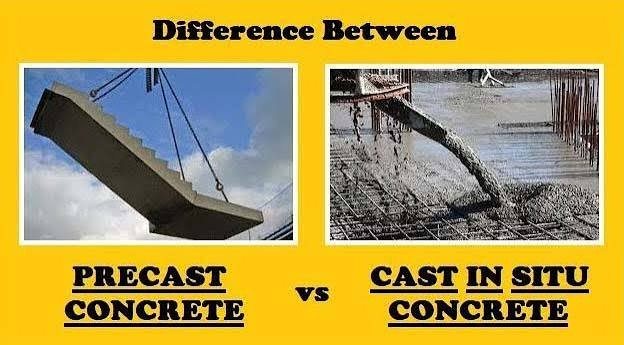
Precast concrete involves manufacturing concrete components in a controlled production environment before transporting them to the construction site for installation. Cast-in-situ concrete, also known as in-situ or site-cast concrete, is poured into formwork at the actual construction site and allowed to harden into the required structural shape.
So, which option is better for your project?
The answer depends on several factors, including project size, structural design, construction schedule, site accessibility, transportation requirements, available equipment, labour, budget and quality control requirements.
This guide explains the differences between precast concrete and cast-in-situ concrete, their advantages and disadvantages, applications, cost considerations and how to choose the right option for your construction project in Uganda.
1. What Is Precast Concrete?
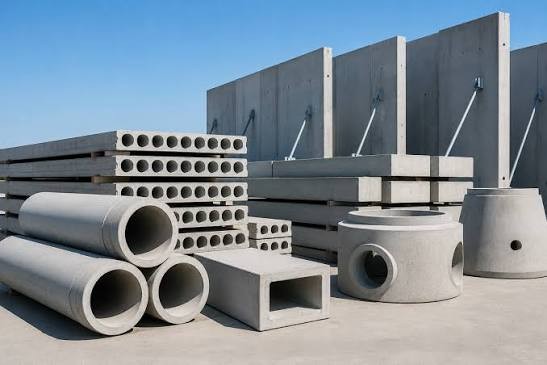
Precast concrete is a construction material produced by casting concrete into specially prepared moulds or formwork in a controlled manufacturing environment. After the concrete has achieved the required strength and is properly cured, the finished components are transported to the construction site for installation.
Instead of forming every concrete component directly on the building site, precast construction allows selected elements to be manufactured before they are needed.
Common precast concrete products include:
- Precast concrete beams and columns.
- Concrete wall panels.
- Precast floor slabs.
- Concrete staircases and stair units.
- Concrete lintels.
- Concrete culverts and drainage channels.
- Precast kerbstones.
- Concrete paving blocks.
- Manhole rings and covers.
- Concrete boundary wall components.
- Precast foundation elements where suitable for the design.
Precast concrete is commonly used in residential developments, commercial buildings, industrial facilities, warehouses, roads, drainage systems and infrastructure projects.
How Is Precast Concrete Manufactured?
The production process generally involves several stages:
1. Design and preparation
The required concrete component is designed according to the structural drawings, dimensions, loading requirements and project specifications. Moulds are prepared to match the required shape and size.
2. Material selection
Cement, aggregates, water and any specified admixtures are selected according to the approved concrete mix design. Reinforcement is also prepared where required.
3. Mixing and casting
The concrete ingredients are measured and mixed according to the approved proportions. The concrete is then placed into the prepared moulds.
4. Compaction
Appropriate compaction methods, including vibration where required, are used to reduce trapped air and help achieve a dense concrete component.
5. Curing
The concrete is cured under controlled conditions to support proper strength development and durability.
6. Inspection and testing
Components are inspected for dimensions, surface quality, visible defects and compliance with project requirements. Specified tests are carried out where necessary.
7. Transportation and installation
After meeting the required handling and installation strength, the components are transported to the construction site and installed using suitable lifting equipment and connection systems.
The controlled production process makes precast concrete particularly useful where consistency, repeatability and efficient installation are important.
2. What Is Cast-in-Situ Concrete?
Cast-in-situ concrete is concrete that is mixed or delivered to a construction site, placed into formwork and allowed to harden in its final position.
Unlike precast concrete, which is manufactured separately and transported to the site, cast-in-situ concrete is formed directly where the structural element is required.
It is one of the most common concrete construction methods used in Uganda, particularly for buildings with reinforced concrete foundations, columns, beams, suspended slabs and staircases.
Common Applications of Cast-in-Situ Concrete
Cast-in-situ concrete is widely used for:
- Building foundations and footings.
- Reinforced concrete columns.
- Structural beams.
- Ground and suspended floor slabs.
- Concrete staircases.
- Retaining walls.
- Shear walls and structural cores.
- Concrete water tanks.
- Raft foundations.
- Structural slabs and other complex concrete elements.
- Roads, pavements and other infrastructure works.
How Is Cast-in-Situ Concrete Constructed?
The process generally involves the following activities:
1. Site preparation
The construction area is prepared, excavated where necessary and checked against the approved drawings.
2. Formwork installation
Temporary moulds are constructed to provide the required dimensions and shape of the concrete element. Formwork must be adequately supported and secured.
3. Reinforcement installation
Steel reinforcement is cut, bent and positioned according to the structural drawings. Required cover, spacing, laps and anchorage details must be checked.
4. Concrete mixing or delivery
Concrete is produced on-site or delivered from an appropriate batching facility. The mix must comply with the approved project requirements.
5. Concrete placement
Concrete is poured into the prepared formwork using an appropriate method to avoid segregation and excessive delays.
6. Compaction
Concrete is compacted using suitable equipment, commonly mechanical vibrators, to minimise voids and honeycombing.
7. Curing
The concrete is protected and cured to support strength development and reduce premature moisture loss.
8. Formwork removal and inspection
Formwork is removed when the concrete has achieved sufficient strength for the operation, as determined by the project requirements. The finished concrete is inspected for defects and compliance.
Cast-in-situ construction offers considerable flexibility because concrete can be formed into different shapes and dimensions directly at the construction site.
3. Difference Between Precast Concrete and Cast-in-Situ Concrete
Although both methods use concrete as their primary construction material, they differ in production, transportation, installation, quality control and project requirements.
The following table highlights the main differences.
| Comparison factor | Precast concrete | Cast-in-situ concrete |
|---|---|---|
| Production location | Manufactured away from its final position, usually in a production facility or casting yard | Cast directly at the construction site |
| Quality control | Production can take place under controlled conditions | Depends heavily on site supervision and working conditions |
| Construction speed | Can reduce on-site construction time | Requires several site activities before and after pouring |
| Transportation | Components must be transported to the site | Materials or ready-mixed concrete are brought to the site |
| Installation | Often requires lifting equipment and planned connections | Placed directly into prepared formwork |
| Formwork | Reusable moulds are commonly used | Temporary formwork is generally required for each casting operation |
| Labour | Skilled production, lifting and installation teams are needed | Skilled site workers, formwork teams and concrete specialists are needed |
| Design flexibility | Component dimensions and shapes depend on moulds, production and transport limitations | Offers greater flexibility for irregular shapes and site-specific geometry |
| Joints and connections | Connections between components require careful detailing | Continuous pours can provide monolithic structural elements |
| Site space | Requires storage and access for component delivery and lifting | Requires working space for formwork, reinforcement and concrete placement |
| Weather exposure | Production can be less affected by site weather | Site operations can be affected by rain, heat and other conditions |
| Best suited for | Repetitive components and projects benefiting from off-site production | Foundations, complex structures and elements requiring site-specific construction |
Neither method is automatically superior. The right option depends on the structural design and conditions of the project.
4. Advantages of Precast Concrete
Precast concrete offers several benefits that make it attractive for modern construction projects.
4.1 Faster Construction and Installation
One of the main advantages of precast concrete is the potential to reduce construction time.
Concrete components can be manufactured while excavation, foundation work or other site preparations are taking place. This allows certain activities to proceed simultaneously rather than waiting for each concrete element to be formed and cast on-site.
Once the components are ready and the supporting structures are prepared, installation can be completed relatively quickly.
This can be particularly useful for:
- Commercial buildings.
- Residential housing developments.
- Warehouses.
- Industrial facilities.
- Drainage infrastructure.
- Projects with repetitive concrete components.
However, the actual time savings depend on production capacity, delivery schedules, site readiness and installation arrangements.
4.2 Better Production Control
Precast concrete is often manufactured in controlled environments where important production activities can be monitored more consistently.
These may include:
- Measurement of concrete ingredients.
- Mixing procedures.
- Reinforcement positioning.
- Concrete compaction.
- Curing conditions.
- Dimensional accuracy.
- Product inspection.
Improved production control can help achieve consistent concrete components when suitable equipment, trained personnel and effective quality assurance procedures are in place.
4.3 Reusable Moulds Reduce Repeated Formwork Work
Precast production often uses reusable moulds. This is particularly beneficial when a project requires many components with similar dimensions and shapes.
For example, a housing development requiring repeated lintels, stair units, paving blocks or wall panels may benefit from standardised production.
Reusable moulds can reduce repeated formwork preparation and improve consistency across multiple components.
4.4 Reduced On-Site Concrete Activities
Because precast components are manufactured before delivery, some concrete-related activities are transferred away from the construction site.
This may reduce the amount of on-site:
- Formwork construction.
- Concrete mixing.
- Concrete pouring.
- Compaction.
- Curing management.
- Concrete waste management.
Reducing these activities can help improve site organisation and make better use of available construction space.
4.5 Consistent Product Dimensions
Precast concrete components are produced using prepared moulds, making it easier to maintain consistent dimensions across repeated units.
This can simplify installation, alignment and coordination with other building components.
Dimensional accuracy is especially important for concrete blocks, paving units, wall panels, drainage components and standardised structural elements.
4.6 Suitable for Large and Repetitive Projects
Precast concrete can be highly effective when a project requires large quantities of similar components.
Examples include:
- Housing estates.
- Apartment developments.
- Industrial warehouses.
- Commercial buildings.
- Road drainage systems.
- Large paving projects.
- Infrastructure developments.
Where production can be planned efficiently, standardised components may improve construction coordination.
5. Disadvantages of Precast Concrete
Despite its advantages, precast concrete also presents challenges that should be considered before selecting it.
5.1 Transportation Challenges
Precast components must be transported from the production location to the construction site.
Large or heavy elements may require specialised vehicles, lifting arrangements and careful route planning.
In Uganda, transportation considerations may include:
- Distance between the production facility and project site.
- Road conditions.
- Vehicle access.
- Component dimensions and weight.
- Loading and unloading requirements.
- Delivery schedules.
- Traffic and route restrictions.
Transportation can significantly affect the overall project cost, particularly when components are large or the site is far from the production facility.
5.2 Need for Lifting Equipment
Many precast structural components require cranes, lifting frames or other mechanical equipment for handling and installation.
The project must provide appropriate equipment, safe lifting procedures and trained personnel.
Limited access to suitable lifting equipment can affect the feasibility and cost of precast construction.
5.3 Joint and Connection Requirements
Precast structures often consist of individual components that must be connected to form a complete structural system.
The joints and connections must be properly designed and executed to transfer the required forces and provide the necessary stability.
Poorly detailed or incorrectly installed connections can compromise structural performance.
5.4 Storage Requirements
Precast components may need temporary storage before installation.
The site must have sufficient space and suitable ground conditions to store the components safely without causing damage, excessive handling or obstruction of other construction activities.
5.5 Limited Flexibility for Last-Minute Changes
Precast components are manufactured according to approved dimensions and designs.
Changing the dimensions, openings or reinforcement details after production has started can result in additional costs, delays or wasted components.
For this reason, accurate design coordination and approval are important before manufacturing begins.
6. Advantages of Cast-in-Situ Concrete
Cast-in-situ concrete remains a preferred construction method for many building and infrastructure projects because it provides flexibility and allows concrete to be formed directly in its final position.
6.1 Greater Design Flexibility
One of the biggest advantages of cast-in-situ concrete is its ability to accommodate different shapes, dimensions and structural arrangements.
Concrete can be poured into formwork designed for:
- Irregular building layouts.
- Curved structural elements.
- Complex foundations.
- Retaining walls.
- Structural cores.
- Customised beams and columns.
- Site-specific structural configurations.
This flexibility makes cast-in-situ construction suitable for projects where standardised components may not be practical.
6.2 Continuous Structural Construction
Cast-in-situ concrete can create continuous or monolithic structural elements when designed and poured appropriately.
For example, reinforced concrete slabs, beams, columns and walls can be connected through properly detailed reinforcement and construction joints.
This can simplify certain structural arrangements compared with systems that require numerous separate precast connections.
However, construction joints must still be planned and executed according to the structural design.
6.3 No Need to Transport Large Finished Components
Unlike precast construction, cast-in-situ concrete does not require finished structural elements to be transported from an external production location.
Instead, the required materials are delivered to the site and concrete is placed directly into prepared formwork.
This can be advantageous where:
- The site is difficult to access.
- Large components cannot be transported conveniently.
- Suitable lifting equipment is unavailable.
- The project has irregular structural dimensions.
6.4 Suitable for Foundations and Complex Structures
Cast-in-situ concrete is widely used for foundations, retaining walls, raft foundations, columns, beams and suspended slabs.
These elements are often closely integrated with the building’s structural arrangement and site conditions.
Casting them in their final positions can make construction easier where the geometry or reinforcement arrangement is complex.
6.5 Easier Adaptation to Site Conditions
Construction sites may have different soil conditions, ground levels, access limitations and structural requirements.
Cast-in-situ concrete allows engineers and contractors to accommodate approved site-specific details during construction.
This is useful for projects involving irregular terrain, unique foundation arrangements or customised structural elements.
7. Disadvantages of Cast-in-Situ Concrete
Although cast-in-situ concrete is widely used, it also has limitations.
7.1 Longer On-Site Construction Activities
Cast-in-situ construction involves several activities, including formwork installation, reinforcement fixing, concrete placement, compaction and curing.
These activities must be properly coordinated before the next construction stage can proceed.
Where large quantities of concrete are required, this may increase the time spent on-site.
7.2 Greater Dependence on Site Conditions
Cast-in-situ concrete operations can be affected by weather and environmental conditions.
Heavy rainfall may interfere with concrete placement and curing arrangements, while excessive heat can accelerate moisture loss.
In Uganda, project teams should plan concrete works around local weather conditions and provide suitable protection and curing arrangements.
7.3 Quality Depends on Site Supervision
The quality of cast-in-situ concrete depends on proper control of materials, mix proportions, reinforcement, formwork, placement, compaction and curing.
Poor workmanship or inadequate supervision can lead to:
- Honeycombing.
- Concrete segregation.
- Cracking.
- Inadequate concrete cover.
- Weak concrete.
- Incorrect dimensions.
- Surface defects.
- Premature deterioration.
Effective quality control is therefore essential throughout the construction process.
7.4 More Temporary Formwork Requirements
Cast-in-situ construction generally requires formwork to support and shape the concrete until it can safely support itself.
The formwork must be properly designed, installed, supported and removed at the appropriate time.
For projects involving many repeated concrete elements, repeated formwork activities may increase labour and material requirements.
7.5 Site Space and Organisation
Concrete construction requires space for reinforcement preparation, formwork, material storage, mixing or delivery operations and concrete placement.
On congested sites, coordinating these activities can be challenging.
8. Precast Concrete vs Cast-in-Situ Concrete: Cost Comparison
Cost is one of the most important factors when deciding between precast concrete and cast-in-situ concrete.
However, it is not accurate to assume that precast concrete is always more expensive or that cast-in-situ concrete is always cheaper.
The total cost depends on the specific project, quantities, location, design, construction method and available resources.
Factors Affecting Precast Concrete Costs
The cost of precast concrete may be influenced by:
1. Manufacturing costs
These include materials, labour, moulds, equipment, production facilities, quality control and curing.
2. Component dimensions and complexity
Large, heavy or unusually shaped components may require specialised moulds, reinforcement and handling arrangements.
3. Production quantities
Large quantities of repeated components may make production more economical because moulds and production processes can be reused.
4. Transportation costs
Delivery distance, vehicle requirements, loading, unloading and route conditions affect the final cost.
5. Installation costs
Cranes, lifting equipment, installation labour, temporary supports and connection materials may contribute to the total project cost.
6. Storage and handling
Temporary storage, protection and repeated handling may add to project expenses.
Factors Affecting Cast-in-Situ Concrete Costs
The cost of cast-in-situ concrete may depend on:
1. Concrete materials
Cement, sand, aggregates, water and specified admixtures contribute to the overall material cost.
2. Reinforcement
Steel reinforcement quantities, cutting, bending, fixing and supporting materials affect the project budget.
3. Formwork
Timber, plywood, steel formwork or other systems may be required depending on the structural element and number of repeated uses.
4. Labour
Workers are needed for excavation, formwork, reinforcement installation, concrete placement, compaction, finishing and curing.
5. Concrete equipment
Mixers, vibrators, pumps and other equipment may be needed depending on the size and nature of the project.
6. Site conditions
Difficult access, limited working space, ground conditions and weather protection can increase construction costs.
Which Method Is More Affordable?
Precast concrete may offer better value when a project requires many repeated components, has reliable access to production facilities and can efficiently organise transportation and installation.
Cast-in-situ concrete may be more economical where the project involves smaller quantities, irregular structural elements, difficult transportation conditions or limited access to lifting equipment.
The most accurate comparison should consider the complete installed cost rather than the price of concrete alone.
A project cost comparison should include materials, labour, equipment, formwork, transportation, installation, supervision, testing, waste and the impact of construction time.
9. Which Method Is Faster: Precast or Cast-in-Situ Concrete?
Precast concrete can often accelerate construction because manufacturing can take place simultaneously with other site activities.
For example, while the foundation works for a commercial building are underway, selected precast wall panels, staircases or other components can be manufactured separately.
Once the site is ready, these components can be delivered and installed.
Cast-in-situ construction generally requires the relevant formwork and reinforcement activities to be completed before concrete is poured. The concrete must then be adequately cured and must achieve sufficient strength before subsequent operations can safely proceed.
However, precast construction is not automatically faster in every situation.
Production delays, transportation problems, insufficient storage space, unavailable cranes or poorly coordinated connections can reduce its time advantage.
The best construction programme should consider the entire process, from design approval and procurement to manufacturing, delivery, installation and completion.
10. Quality and Durability: Which Concrete Method Performs Better?
Both precast concrete and cast-in-situ concrete can provide strong, durable and reliable structures when properly designed, produced, placed, cured and maintained.
The method alone does not determine the final quality.
Quality Considerations for Precast Concrete
Important quality control activities include:
- Verifying the approved concrete mix design.
- Checking cement and aggregate quality.
- Ensuring correct reinforcement positioning.
- Monitoring concrete batching and mixing.
- Providing adequate compaction.
- Maintaining appropriate curing conditions.
- Checking component dimensions.
- Inspecting lifting points and connection details.
- Carrying out specified concrete tests.
- Inspecting components before delivery and installation.
Quality Considerations for Cast-in-Situ Concrete
Important site quality control activities include:
- Inspecting formwork stability and dimensions.
- Checking reinforcement size, spacing and cover.
- Verifying concrete mix requirements.
- Monitoring concrete delivery and placement.
- Preventing segregation.
- Using suitable compaction equipment.
- Providing adequate curing.
- Conducting specified fresh and hardened concrete tests.
- Inspecting finished concrete for defects.
Which One Is More Durable?
Neither method is inherently more durable.
Durability depends on factors such as concrete quality, water-cement ratio, concrete cover, reinforcement protection, exposure conditions, workmanship, curing, drainage and maintenance.
For example, a properly manufactured precast concrete component may perform very well, but poor transportation or installation can damage it.
Similarly, well-designed cast-in-situ concrete can achieve excellent performance, but inadequate compaction or curing may reduce its durability.
For both methods, the concrete must comply with the applicable project specifications and relevant standards.
11. Applications of Precast Concrete in Uganda
Precast concrete is useful for construction projects requiring standardised components, efficient installation and repeatable production.
Common applications include:
Residential Construction
Precast products may be used for:
- Concrete lintels.
- Paving blocks.
- Boundary wall components.
- Drainage channels.
- Precast stairs.
- Selected wall and floor systems.
For housing estates and developments with repeated designs, precast components can help standardise construction.
Commercial Construction
Commercial developments may use precast concrete for:
- Wall panels.
- Staircases.
- Floor components.
- Beams and columns.
- Paving units.
- Drainage structures.
These products can support construction planning where delivery and installation are properly coordinated.
Industrial Construction
Industrial facilities may require:
- Precast wall panels.
- Drainage channels.
- Concrete kerbstones.
- Floor components.
- Structural elements.
- Equipment support components designed for the relevant loads.
Roads and Infrastructure
Precast concrete products are commonly useful in infrastructure works, including:
- Culverts.
- Drainage channels.
- Kerbstones.
- Concrete paving blocks.
- Manhole components.
- Other precast drainage and utility products.
12. Applications of Cast-in-Situ Concrete in Uganda
Cast-in-situ concrete remains suitable for a wide range of building and infrastructure applications.
Residential Buildings
Common applications include:
- Strip foundations.
- Pad foundations.
- Reinforced concrete columns.
- Ground beams.
- Suspended slabs.
- Staircases.
- Retaining walls.
Commercial Buildings
Commercial construction often uses cast-in-situ concrete for:
- Foundations.
- Structural frames.
- Floor slabs.
- Columns and beams.
- Lift cores.
- Shear walls.
- Reinforced concrete staircases.
Industrial Buildings
Cast-in-situ concrete may be used for:
- Machine foundations.
- Heavy-duty floor slabs.
- Retaining structures.
- Equipment bases.
- Foundations for industrial buildings.
- Specialised reinforced concrete structures.
Infrastructure Projects
Other applications include:
- Bridge elements cast on-site where specified.
- Concrete road sections.
- Drainage structures.
- Retaining walls.
- Water storage structures.
- Culvert headwalls and associated works.
13. Factors to Consider When Choosing Between Precast and Cast-in-Situ Concrete
Before selecting a concrete construction method, project owners and contractors should evaluate several important considerations.
13.1 Project Size and Quantity of Components
The size of the project and the number of repeated components can influence the choice.
Precast concrete may be more suitable where a project requires many similar elements, while cast-in-situ construction may be more practical for smaller or highly customised structures.
13.2 Site Accessibility
The construction site must be accessible for the transportation of materials, equipment and, where necessary, finished precast components.
If the site has narrow access roads, difficult terrain or limited turning space, transporting large concrete components may be challenging.
13.3 Availability of Equipment
Precast installation may require cranes, lifting equipment and suitable transport vehicles.
Cast-in-situ construction may require concrete mixers, vibrators, pumps, formwork systems and reinforcement equipment.
The available equipment should be considered before choosing the construction method.
13.4 Construction Timeline
If the project has a tight completion schedule, precast construction may offer advantages through parallel production and site preparation.
However, manufacturing and delivery lead times must be included in the programme.
13.5 Structural Design Requirements
The structural engineer should determine whether the proposed construction method is appropriate for the building’s loads, spans, stability, connections and foundation conditions.
Not every structural element can be changed from cast-in-situ to precast without reviewing the design.
13.6 Budget and Total Project Cost
Compare the complete cost of both alternatives.
Include manufacturing, transportation, formwork, reinforcement, labour, equipment, installation, supervision and testing.
13.7 Quality Control Requirements
Consider whether the project has access to the necessary production controls, trained personnel, testing facilities and site inspection procedures.
13.8 Future Maintenance and Durability
The selected system should provide suitable performance under the expected environmental and operating conditions.
Connections, joints, drainage, reinforcement protection and maintenance requirements should all be considered.
14. Can Precast and Cast-in-Situ Concrete Be Used Together?
Yes. A construction project can combine precast and cast-in-situ concrete where the structural design allows it.
This is known as a hybrid concrete construction approach.
For example, a commercial building may use:
- Cast-in-situ foundations.
- Precast staircases.
- Precast wall panels.
- Cast-in-situ floor slabs.
- Precast drainage channels.
- Cast-in-situ retaining walls.
A residential development may also combine precast lintels and paving blocks with cast-in-situ foundations, columns and beams.
The hybrid approach can take advantage of the strengths of both methods.
However, combining the systems requires careful structural coordination. Connections, reinforcement continuity, bearing arrangements, tolerances, movement and construction sequencing must be addressed in the design.
The structural engineer should approve the complete system before construction begins.
15. Common Mistakes to Avoid When Choosing a Concrete Construction Method
Selecting the wrong construction method can increase project costs, create delays and affect structural performance.
The following mistakes should be avoided.
1. Choosing based on material price alone
The lowest concrete price does not necessarily represent the lowest total project cost. Consider transportation, labour, equipment, installation, formwork and quality control.
2. Ignoring transportation requirements
Large precast components may be difficult or expensive to transport to remote or restricted construction sites.
3. Failing to consider lifting arrangements
Precast components require appropriate lifting equipment, lifting points and installation procedures.
4. Overlooking structural connections
Precast joints and connections must be properly designed and installed. They should never be treated as minor details.
5. Poor concrete quality control
Both precast and cast-in-situ concrete require proper material selection, mix control, compaction, curing and testing.
6. Making design changes after production
Late changes can result in wasted precast components, additional costs and delays.
7. Inadequate site supervision
Poor supervision can affect formwork, reinforcement, concrete placement, curing and installation quality.
8. Failing to plan the construction sequence
The selected method should fit the overall construction programme, delivery arrangements and availability of equipment.
16. Importance of Professional Construction Planning and Supervision
Choosing between precast concrete and cast-in-situ concrete should be part of the wider construction planning and structural design process.
Professional construction planning helps establish whether the proposed method is technically suitable, financially practical and achievable within the project schedule.
Important professional services may include:
- Structural design review.
- Construction method assessment.
- Material specification.
- Quantity estimation.
- Cost planning.
- Procurement coordination.
- Construction scheduling.
- Site supervision.
- Concrete quality control.
- Inspection and testing coordination.
At Daltrev Co. Ltd., we recognise the importance of appropriate construction materials, sound project planning and quality workmanship in delivering successful construction projects.
Whether your project involves residential construction, commercial development, industrial facilities or infrastructure works, selecting the right concrete products and construction approach is an important step towards achieving the required quality and performance.
Explore our construction materials services, construction works and construction consultancy services.
For project-related enquiries, visit our contact page.
17. Precast Concrete vs Cast-in-Situ Concrete: Which Is Better for Your Project?
The best construction method depends on the specific requirements of your project.
Choose precast concrete when:
- The project requires many repeated concrete components.
- Faster on-site installation is important.
- Suitable manufacturing facilities are accessible.
- Transportation and lifting equipment are available.
- Standardised dimensions and controlled production are beneficial.
- The design and connections can be finalised before production.
Choose cast-in-situ concrete when:
- The structure has complex or irregular dimensions.
- The project requires site-specific structural elements.
- Large precast components are difficult to transport.
- Suitable lifting equipment is unavailable.
- Foundations, retaining walls or continuous structural elements are required.
- Site-based concrete construction is more practical.
Consider a hybrid approach when:
- Some components are repetitive and suitable for precast production.
- Other structural elements require site-specific casting.
- The design can integrate both systems safely.
- The combination provides practical construction or cost advantages.
Ultimately, the right choice should be based on structural suitability, total project cost, construction time, site conditions and quality requirements.
Frequently Asked Questions About Precast Concrete vs Cast-in-Situ Concrete
1. What is the main difference between precast concrete and cast-in-situ concrete?
The main difference is where the concrete is produced and hardened. Precast concrete components are manufactured separately, usually in a production facility or casting yard, before being transported to the construction site. Cast-in-situ concrete is poured into formwork and hardened in its final position at the construction site.
2. Is precast concrete stronger than cast-in-situ concrete?
Not necessarily. Both methods can achieve the required concrete strength when properly designed, produced, placed, cured and tested. Actual performance depends on the concrete mix, materials, reinforcement, workmanship and quality control.
3. Which is cheaper: precast concrete or cast-in-situ concrete?
The cheaper option depends on the project. Precast concrete may be economical for large projects requiring repeated components, while cast-in-situ concrete may be more affordable for smaller or irregular structures. A proper comparison should include manufacturing, materials, labour, formwork, transportation, equipment and installation.
4. Is precast concrete faster to install?
Precast concrete can reduce on-site construction time because components are manufactured before they are needed. However, the overall programme depends on production lead times, transportation, site readiness, lifting equipment and installation coordination.
5. Can precast concrete be used for building foundations?
Yes, precast foundation elements can be used in suitable projects where the structural design and site conditions permit. However, foundation systems must be designed according to soil conditions, structural loads, groundwater considerations and other relevant project requirements.
6. Is cast-in-situ concrete suitable for high-rise buildings?
Yes. Cast-in-situ reinforced concrete is widely used in multi-storey and high-rise construction for foundations, columns, beams, slabs, shear walls and structural cores. The structural system must be properly designed and constructed.
7. Can precast and cast-in-situ concrete be combined in one project?
Yes. A hybrid construction system can combine precast components with cast-in-situ structural elements. For example, a building may use cast-in-situ foundations and slabs with precast staircases or wall panels. The structural design must account for the connections and interaction between the systems.
8. Does precast concrete require special equipment?
Many precast structural components require suitable lifting equipment, transport vehicles and installation tools. Smaller products may be handled differently depending on their weight, dimensions and manufacturer’s handling instructions.
9. What quality tests are important for concrete construction?
Depending on the project specifications, tests may include fresh concrete workability checks, compressive strength testing of concrete specimens, dimensional inspections and other relevant assessments. The testing programme should be determined by the engineer and applicable standards.
10. Which concrete method is best for construction projects in Uganda?
There is no single best method for every project in Uganda. Precast concrete may be suitable for repetitive products and developments with good transport and installation arrangements. Cast-in-situ concrete may be more practical for foundations, customised structures and sites where transporting large components is difficult. The choice should be based on the project’s design, budget, site conditions and construction programme.
Conclusion
Precast concrete and cast-in-situ concrete are both valuable construction methods for residential, commercial, industrial and infrastructure projects in Uganda.
Precast concrete offers advantages in controlled production, repeatability and potentially faster on-site installation. Cast-in-situ concrete provides flexibility, site-specific construction and the ability to create continuous structural elements.
The most appropriate choice depends on the project’s structural requirements, construction schedule, budget, transportation arrangements, equipment availability and quality control procedures.
For successful construction, the decision should be made during the planning and design stages, with input from qualified engineers, quantity surveyors and construction professionals.
Daltrev Co. Ltd. supports construction projects through construction-related services, materials enquiries and project solutions. Contact our team to discuss your project requirements and identify suitable construction approaches and materials.
Build with the right materials, proper planning and professional construction support.