Concrete paving blocks are widely used in Uganda for constructing residential compounds, driveways, parking areas, walkways, commercial premises, industrial yards and landscaped outdoor spaces. Their durability, attractive designs and flexibility make them a practical option for property owners and developers looking to improve outdoor surfaces.
However, concrete paving block prices in Uganda vary depending on several factors. The type of block, dimensions, thickness, concrete quality, colour, manufacturing process, order quantity, supplier location and transportation arrangements can all influence the final cost.
For anyone planning a paving project, understanding these factors is important when preparing a realistic construction budget. Choosing paving blocks based only on the lowest quoted price can result in additional expenses if the products are unsuitable for the intended application or do not meet the required quality specifications.
This guide explains concrete paving block prices in Uganda, the factors that determine their cost, the different types available, additional installation expenses and how to select quality paving blocks without exceeding your project budget.
Understanding Concrete Paving Blocks
Concrete paving blocks are precast concrete units manufactured in different shapes, sizes, colours and thicknesses for creating outdoor paved surfaces.
They are installed individually over a prepared bedding layer supported by a compacted foundation. Depending on the design, the blocks can be arranged in patterns such as herringbone, stretcher bond, basket weave and decorative geometric layouts.
Concrete paving blocks are commonly used for:
- Residential compounds and driveways.
- Commercial parking areas.
- Pedestrian walkways and footpaths.
- Hotel and lodge compounds.
- Shopping centres and office premises.
- Industrial yards and service areas.
- Institutional and public spaces.
- Garden paths and landscaped areas.
The cost of paving blocks depends partly on their intended application. Blocks designed for pedestrian walkways may have different specifications from those required for vehicle parking or heavy-duty industrial surfaces.
How Much Do Concrete Paving Blocks Cost in Uganda?
There is no single price for all concrete paving blocks in Uganda. Suppliers may quote different amounts depending on the product specifications, production quality, order quantity and delivery location.
For an accurate comparison, buyers should request quotations that clearly identify the following:
- Type and shape of paving block.
- Length, width and thickness.
- Concrete quality and relevant test information.
- Colour and surface finish.
- Number of blocks supplied or coverage per square metre.
- Delivery charges.
- Loading and offloading arrangements.
- Whether the quotation includes installation.
It is important to compare products with equivalent specifications. A cheaper block may not provide the same dimensions, concrete quality or intended loading capacity as a more expensive alternative.
When preparing a budget, consider the total cost of purchasing and installing the paving system rather than focusing only on the price per individual block.
Main Factors That Determine Concrete Paving Block Prices in Uganda
Several technical, manufacturing and logistical factors influence the cost of concrete paving blocks.
1. Type and Shape of Paving Blocks
The type of paving block is one of the factors that determines its price.
Different designs require different moulds, production arrangements and finishing processes.
Common types include:
Rectangular paving blocks: These are versatile units used for driveways, compounds, walkways and parking areas. Their simple shape makes them suitable for several laying patterns.
Interlocking paving blocks: These are designed with profiles that fit together to form a connected paving arrangement. They are commonly considered for driveways, parking spaces and other areas exposed to vehicle movement.
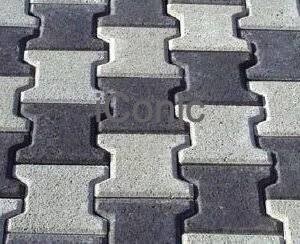
Zigzag paving blocks: Their distinctive shape creates an interlocking arrangement and is used in various residential and commercial paving applications.
Square paving blocks: These are commonly used for decorative compounds, courtyards, garden paths and pedestrian areas.
Hexagonal paving blocks: Their geometric appearance makes them suitable for decorative outdoor surfaces and landscaping.
Decorative paving blocks: These may feature special colours, textures and shapes that improve the appearance of outdoor spaces.
Because their manufacturing requirements differ, these products may have different prices even when their coverage areas are similar.
2. Block Thickness and Dimensions
The dimensions and thickness of concrete paving blocks influence the quantity of concrete required during manufacturing.
Thicker or larger blocks may require more raw materials and different production arrangements.
Block specifications should match the intended use of the paved area.
For example:
- Pedestrian walkways have different loading requirements from driveways.
- Residential parking areas must accommodate the expected vehicle weights.
- Commercial parking areas may experience more frequent traffic.
- Industrial yards may require specially designed heavy-duty pavement systems.
Thickness alone does not determine pavement performance. Concrete quality, block geometry, foundation preparation and installation are equally important.
Always confirm the dimensions and thickness before comparing supplier quotations.
3. Quality of Concrete Used
Concrete quality is a major consideration when evaluating paving block prices.
The materials and manufacturing processes used to produce the blocks influence their strength, durability and resistance to wear.
Important quality factors include:
- Cement quality.
- Aggregate grading and cleanliness.
- Water quality and quantity.
- Correct material proportions.
- Effective mixing.
- Adequate compaction.
- Proper curing.
- Dimensional consistency.
- Quality inspection and testing.
Blocks manufactured using controlled production processes may have different costs from products made without consistent quality control.
Although cheaper products may appear attractive initially, buyers should consider whether they meet the requirements of the intended project.
4. Manufacturing Process and Equipment
The production process can influence the cost and consistency of concrete paving blocks.
Manufacturers may use manual, semi-automatic or automated block-making equipment.
Manual production: This generally involves more direct labour and may have limitations in production consistency depending on equipment and quality control.
Semi-automatic production: This uses machinery for selected production stages, improving efficiency and consistency when properly operated.
Automated production: This uses more advanced machinery to control different stages of production and support higher production volumes.
The equipment used does not automatically guarantee quality. Material selection, machine calibration, compaction, curing and quality control remain essential.
Manufacturing costs can also be affected by equipment maintenance, electricity, labour, production capacity and factory operating expenses.
5. Colour and Surface Finish
Concrete paving blocks are available in standard grey finishes and different coloured or decorative options.
Some manufacturers use pigments or specialised finishing processes to achieve particular appearances.
Prices may differ depending on:
- Pigment requirements.
- Colour consistency.
- Decorative surface treatments.
- Textured finishes.
- Custom designs.
- Special production arrangements.
For large paving projects, request samples before placing an order. This helps confirm that the colour and finish are appropriate for the intended design.
6. Order Quantity
The number of paving blocks required can influence the overall purchase price.
Large orders may allow suppliers to plan production, material procurement and transportation more efficiently.
However, the lowest unit price should not be the only consideration. Buyers should also check product quality, delivery capacity and whether the supplier can maintain consistent specifications throughout the order.
Before ordering, calculate the total area to be paved and include an appropriate allowance for cutting, breakages and replacement units.
7. Supplier Location
The location of the manufacturer or supplier can affect the price paid by the customer.
A supplier located near the construction site may offer more favourable transportation arrangements than one located far away.
However, buyers should compare the complete delivered cost rather than assuming that the nearest supplier is automatically the cheapest.
Consider product quality, availability, transport arrangements and delivery reliability when selecting a supplier.
8. Transportation and Delivery Costs
Transportation is an important component of concrete paving block costs in Uganda.
Paving blocks are heavy construction materials, and delivery expenses may vary according to:
- Distance from the production facility.
- Number of blocks ordered.
- Vehicle capacity.
- Road conditions.
- Accessibility of the project site.
- Loading and offloading arrangements.
- Delivery schedule.
- Number of required trips.
For projects outside major urban centres, transportation can represent a significant part of the total material expenditure.
Request a quotation that clearly indicates whether delivery is included.
9. Product Testing and Quality Assurance
Manufacturers that conduct product inspection and relevant testing incur additional production and quality-control expenses.
Depending on the project specification, important checks may include:
- Compressive strength.
- Dimensions and dimensional consistency.
- Water absorption where specified.
- Surface condition.
- Resistance to wear where required.
- General product uniformity.
For projects with defined technical requirements, buyers should request relevant test reports or arrange independent testing.
The applicable acceptance criteria should be confirmed against the relevant current Uganda Standards and project specifications.
10. Market Conditions and Raw Material Availability
The availability and cost of raw materials can influence paving block production expenses.
Changes in the cost of cement, aggregates, pigments, fuel, electricity, labour and equipment maintenance may affect supplier quotations.
Transport costs and general operating expenses may also change over time.
For this reason, buyers should obtain current quotations instead of relying on old price information when preparing a construction budget.
Types of Concrete Paving Blocks and Their Cost Considerations
Different paving products have different manufacturing and application requirements.
| Paving block type | Common applications | Cost considerations |
|---|---|---|
| Rectangular blocks | Compounds, walkways and driveways | Dimensions, thickness and concrete quality |
| Interlocking blocks | Driveways and parking areas | Shape, specifications and production method |
| Zigzag blocks | Vehicle areas and commercial paving | Mould design, thickness and quality |
| Square blocks | Courtyards and pedestrian spaces | Size, finish and quantity |
| Hexagonal blocks | Landscaping and decorative areas | Shape, moulding and production volume |
| Coloured blocks | Decorative compounds and commercial premises | Pigments and colour consistency |
| Special decorative blocks | Hotels, offices and landscaped developments | Customisation and finishing requirements |
The final choice should be guided by the project’s technical requirements and budget.
Concrete Paving Block Prices vs Total Paving Installation Costs
One common budgeting mistake is considering only the purchase price of the paving blocks.
The total cost of a paving project includes several additional construction activities.
1. Site Clearing
The site may require the removal of vegetation, debris, existing paving materials and other obstructions before construction begins.
The cost depends on the size and condition of the area.
2. Excavation
Excavation involves removing existing soil or unsuitable material to the depth required by the pavement design.
The amount of excavation depends on ground conditions, the required pavement layers and the intended loading.
3. Subgrade Preparation
The exposed ground must be shaped and compacted as required.
Weak or unsuitable soil may require treatment or replacement, increasing the project cost.
4. Base and Sub-Base Materials
Granular materials are commonly used to create supporting pavement layers.
The required materials, layer thicknesses and compaction depend on the soil conditions, drainage and expected traffic.
5. Bedding Materials
A suitable bedding layer is prepared over the compacted base to provide a consistent surface for laying the blocks.
The selected material and quantity should follow the installation specification.
6. Edge Restraints
Edge restraints help prevent blocks from spreading or moving outward.
They are important for maintaining the integrity of driveways, parking spaces and other exposed paving boundaries.
7. Labour and Installation
Installation costs depend on the size of the area, paving pattern, site accessibility, cutting requirements and complexity of the work.
Decorative patterns and irregular boundaries may require additional labour.
8. Drainage Works
Proper drainage helps prevent water accumulation and damage to the pavement structure.
Depending on the site, drainage expenses may include channels, gullies, pipes, collection points and adjustments to surface levels.
9. Equipment and Compaction
Paving projects may require excavation machinery, compactors, cutting equipment and other construction tools.
Equipment hire, fuel, maintenance and operator costs should be considered.
10. Transportation and Offloading
The blocks and other construction materials must be delivered to the project site.
Include delivery charges, unloading arrangements and any additional handling costs in the budget.
How to Calculate the Quantity of Concrete Paving Blocks Required
Accurate quantity estimation helps property owners and contractors avoid unnecessary purchases and material shortages.
The basic calculation is:
Total paved area × Number of blocks required per square metre = Total number of blocks
For example, assume a residential compound has a paved area of 120 square metres.
If the selected paving block covers 0.025 square metres, the approximate quantity is:
120 ÷ 0.025 = 4,800 blocks.
An additional allowance should be included for cutting, breakages and future replacement. The appropriate allowance depends on the design, shape of the paved area and installation arrangement.
This example is for illustration only. Use the actual block dimensions and manufacturer’s coverage information when calculating quantities.
For irregular sites, divide the area into manageable sections, calculate each section and add the results.
Practical Example of a Concrete Paving Project Budget
Consider a hypothetical project involving the paving of a 120-square-metre residential compound.
The budget should account for the following:
| Cost component | What to include |
|---|---|
| Paving blocks | Quantity, dimensions, thickness and product specification |
| Delivery | Transportation, loading and offloading |
| Site preparation | Clearing and excavation |
| Subgrade preparation | Shaping, treatment and compaction |
| Base materials | Approved granular materials and placement |
| Bedding layer | Suitable bedding material and preparation |
| Edge restraints | Supply and installation |
| Labour | Laying, cutting and finishing |
| Equipment | Compaction and cutting equipment |
| Drainage | Channels, outlets and associated works |
| Contingency | Allowance for unforeseen site requirements |
The actual cost should be calculated using current supplier quotations and measured site quantities.
A detailed bill of quantities can help identify the major cost components and reduce the risk of overlooking important work items.
How to Reduce Concrete Paving Costs Without Compromising Quality
It is possible to manage paving project expenses without purchasing unsuitable products or reducing essential construction requirements.
Consider the following strategies.
1. Measure the Site Accurately
Accurate measurements help prevent over-ordering and unnecessary material wastage.
Prepare a proper site layout before requesting quotations.
2. Choose the Correct Block Specification
Do not automatically select the thickest or most expensive block.
Choose products that meet the technical requirements of the intended application.
A pedestrian path does not necessarily require the same paving specification as an industrial loading area.
3. Compare Multiple Suppliers
Obtain quotations from different suppliers and compare equivalent products.
Consider product quality, dimensions, delivery costs and availability rather than focusing only on the lowest price.
4. Purchase the Required Quantity in a Planned Order
Proper planning can reduce repeated deliveries and unnecessary transport expenses.
However, avoid ordering excessive quantities without considering storage conditions and the risk of damage.
5. Select Practical Paving Patterns
Simple patterns may reduce cutting, installation time and material wastage.
Complex decorative arrangements may require additional labour and specialised cutting.
6. Prepare the Foundation Properly
Do not reduce essential excavation, subgrade preparation or base compaction to save money.
Poor foundation construction can lead to settlement, block displacement and expensive repairs.
7. Plan Drainage Before Installation
Correct drainage planning helps prevent water-related pavement problems.
It is generally more economical to incorporate drainage into the original construction than to correct serious drainage defects after completion.
8. Use Competent Installers
Poor workmanship can increase costs through rework, material damage and premature pavement failure.
Use experienced personnel and inspect important construction stages.
How to Identify Quality Concrete Paving Blocks Before Buying
Before purchasing paving blocks, inspect the products and request relevant technical information.
1. Check Dimensions
Measure samples and confirm that their dimensions are consistent with the manufacturer’s specifications.
Significant variations may cause uneven joints and installation difficulties.
2. Examine the Surface Finish
Inspect the blocks for visible cracks, excessive chipping, poor finishing and other defects.
Minor surface variations should be assessed against the product specification rather than judged by appearance alone.
3. Ask About Manufacturing and Curing
Find out how the blocks are manufactured and cured.
Proper mixing, compaction and curing contribute to the quality and durability of concrete paving products.
4. Request Test Information
Where required, request relevant product test reports or arrange independent testing.
Testing requirements should reflect the intended application and applicable standards.
5. Confirm the Intended Application
Ensure that the selected blocks are appropriate for the expected pedestrian or vehicle traffic.
Do not assume that all paving blocks can carry the same loads.
6. Inspect the Delivered Products
Check the quantity, dimensions, appearance and condition of the delivered blocks.
Report damaged or inconsistent products before installation begins.
Common Mistakes to Avoid When Buying Concrete Paving Blocks
Property owners and contractors should avoid the following mistakes:
- Choosing blocks based only on the lowest price.
- Failing to confirm dimensions and thickness.
- Purchasing products without understanding their intended application.
- Ignoring transportation and offloading expenses.
- Ordering incorrect quantities.
- Failing to inspect samples before placing large orders.
- Ignoring concrete quality and curing.
- Using pedestrian-grade products in heavy vehicle areas.
- Underestimating foundation preparation costs.
- Failing to plan drainage and edge restraints.
- Comparing quotations with different product specifications.
- Ignoring installation and maintenance requirements.
Avoiding these mistakes can help improve cost control and reduce unnecessary expenditure.
Concrete Paving Blocks for Different Projects in Uganda
Different construction projects require different paving specifications and budget considerations.
Residential Paving Projects
Homeowners may use concrete paving blocks for driveways, compounds, walkways and landscaped areas.
The budget should consider the paved area, design preferences, expected vehicle traffic and site preparation requirements.
Commercial Paving Projects
Shopping centres, office buildings, hotels and retail premises may require larger paved areas for parking, pedestrian circulation and outdoor access.
The design should account for traffic volumes, appearance, drainage and maintenance requirements.
Industrial Paving Projects
Factories, warehouses and other industrial facilities may require specialised pavement systems.
The design should consider vehicle loads, machinery movement, turning forces, operational conditions and the durability of the entire pavement structure.
Institutional and Public Projects
Schools, hospitals, churches and public facilities may require durable walkways, access paths and outdoor circulation areas.
Accessibility, drainage, safety and long-term maintenance should be considered when selecting the paving system.
Why Professional Planning Matters When Budgeting for Paving Projects
A well-planned paving project begins with an assessment of the site, intended use, ground conditions, drainage and required material specifications.
Professional construction planning can help property owners and developers:
- Estimate the required quantities.
- Identify suitable paving materials.
- Prepare realistic project budgets.
- Plan foundation and drainage requirements.
- Compare supplier quotations.
- Coordinate material delivery.
- Monitor construction quality.
- Reduce avoidable rework and wastage.
Daltrev Co. Ltd. supports construction-related project enquiries and planning considerations. Property owners, developers and contractors can explore the company’s construction materials, construction works and consultancy services when planning their construction projects.
Frequently Asked Questions About Concrete Paving Block Prices in Uganda
1. How much do concrete paving blocks cost in Uganda?
Prices vary according to the type, dimensions, thickness, concrete quality, colour, supplier, order quantity and delivery location. Request current quotations using clear product specifications.
2. What determines the price of interlocking paving blocks?
The main factors include block design, thickness, dimensions, concrete quality, manufacturing process, order quantity and transportation costs.
3. Are thicker paving blocks more expensive?
They may cost more because they can require additional concrete material and different production arrangements. However, thickness should be selected according to the intended application and pavement design.
4. Which paving blocks are best for driveways?
Interlocking and other appropriately specified concrete paving blocks can be suitable for driveways. The selection should consider vehicle loads, concrete quality, block thickness, foundation preparation and drainage.
5. How many paving blocks are required per square metre?
The number depends on the dimensions and shape of the selected blocks. Use the manufacturer’s coverage information or calculate the quantity from the effective area covered by each unit.
6. Does the price of paving blocks include installation?
Not necessarily. Some quotations cover only the supply of blocks, while others may include delivery or installation. Always confirm what is included.
7. Why do paving block prices differ between suppliers?
Differences may result from raw material costs, manufacturing methods, product specifications, quality control, supplier location, operating expenses and delivery arrangements.
8. Are cheap concrete paving blocks worth buying?
A low purchase price may appear attractive, but buyers should verify dimensions, concrete quality, strength and suitability for the intended application. Poor-quality products can increase long-term repair and replacement costs.
9. What additional costs should I consider when paving a compound?
Additional expenses may include clearing, excavation, subgrade preparation, base materials, bedding, edge restraints, labour, equipment, drainage and transportation.
10. How can I reduce paving project costs?
Measure the site accurately, select suitable block specifications, compare equivalent supplier quotations, plan deliveries, minimise cutting wastage and ensure proper installation.
11. Are concrete paving blocks suitable for commercial parking areas?
Yes. They can be used where the blocks and supporting pavement structure are designed for the expected vehicle loads and traffic conditions.
12. How can I estimate the total paving project cost?
Calculate the paving area, estimate the required blocks, obtain material and delivery quotations, and include site preparation, foundation construction, drainage, labour, equipment and contingency costs.
Conclusion
Concrete paving block prices in Uganda depend on several factors, including block type, dimensions, thickness, concrete quality, manufacturing process, colour, order quantity and transportation arrangements.
However, the purchase price of the blocks is only one part of the total paving project cost. Site clearing, excavation, foundation preparation, base materials, bedding, edge restraints, drainage, labour and equipment must also be considered when preparing a realistic budget.
For the best results, compare supplier quotations using equivalent specifications, inspect product quality and select blocks that are appropriate for the intended application. Avoid compromising essential foundation preparation and installation requirements simply to reduce initial expenditure.
Whether you are paving a residential compound, driveway, commercial parking area or industrial yard, careful budgeting and professional planning can help you achieve a durable and attractive outdoor surface.
For construction-related enquiries and project support, visit Daltrev Co. Ltd. and explore its construction materials, construction works and consultancy services.
Make informed material choices, plan your paving budget carefully and invest in quality construction.