Choosing the right concrete paving materials for heavy-traffic areas is essential for constructing strong, durable and reliable surfaces. Areas such as commercial parking lots, industrial yards, warehouse compounds, loading bays, access roads and busy driveways experience continuous vehicle movement, heavy loads and environmental exposure. Using unsuitable paving materials can result in cracking, surface deterioration, uneven settlement and expensive repairs.
In Uganda, where commercial developments, industrial facilities, residential estates and road infrastructure continue to expand, the demand for durable concrete paving solutions is increasing. Property developers and construction contractors must select paving materials capable of withstanding regular vehicle traffic, heavy equipment, seasonal rainfall and demanding operating conditions.
However, not all concrete paving materials are designed for heavy-duty applications. The appropriate choice depends on several factors, including concrete strength, slab or block thickness, reinforcement requirements, aggregate quality, ground preparation, installation workmanship and expected traffic loads.
Whether you are constructing a commercial parking area, an industrial compound, a warehouse access road or a heavily used residential driveway, selecting the right concrete paving materials can significantly influence the performance and lifespan of the finished surface.
This guide explains how to choose durable concrete paving materials for heavy-traffic areas in Uganda, the different materials available, important quality considerations, installation requirements, common mistakes to avoid and factors that influence overall project costs.
What Are Concrete Paving Materials for Heavy-Traffic Areas?
Concrete paving materials are construction products used to create durable paved surfaces for pedestrian movement, vehicle access, parking, industrial operations and other outdoor applications.
For heavy-traffic areas, these materials must be capable of withstanding repeated loading, vehicle movement, environmental exposure and stresses transmitted through the supporting ground.
Common concrete paving materials include:
- Heavy-duty concrete paving blocks.
- Interlocking concrete paving blocks.
- Reinforced concrete paving slabs.
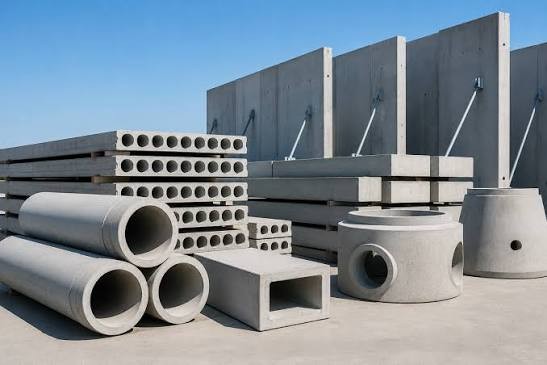
- Precast concrete paving slabs.
- Cast-in-situ concrete pavements.
- Industrial concrete floor and yard paving systems.
- Concrete kerbs and edge restraints.
The most suitable material depends on the intended use, expected vehicle loads, traffic frequency, ground conditions and project design.
A surface intended for pedestrians and light vehicles requires different specifications from one designed for loaded trucks, buses, forklifts and industrial machinery.
Why Choosing the Right Concrete Paving Materials Matters
Heavy-traffic areas experience greater structural demands than ordinary residential pathways and garden pavements. Selecting unsuitable materials can compromise the entire pavement system.
Here are the main reasons why material selection is important.
1. Preventing Premature Cracking
Repeated vehicle loading places stress on concrete paving materials. Products with inadequate strength, insufficient thickness or poor support may develop cracks over time.
Choosing appropriately specified concrete paving materials helps reduce the risk of premature pavement failure.
2. Supporting Heavy Vehicle Loads
Commercial and industrial paved surfaces may carry delivery trucks, buses, construction vehicles, forklifts and other heavy equipment.
The paving materials must be suitable for the expected wheel loads and traffic frequency.
3. Reducing Maintenance Costs
Poor-quality paving materials may require frequent repairs, replacement and maintenance.
Durable materials, combined with proper installation, can reduce long-term maintenance requirements and improve the overall value of a construction investment.
4. Improving Surface Safety
Heavy-traffic surfaces must provide suitable traction and stable movement for vehicles and pedestrians.
Appropriate surface finishes, correct levels and effective drainage help reduce slipping, standing water and other hazards.
5. Protecting the Supporting Ground
A properly designed pavement distributes applied loads through its different layers.
Suitable concrete paving materials and foundation preparation help prevent excessive stress on the subgrade, reducing settlement and surface deformation.
6. Improving Long-Term Property Value
Well-constructed parking areas, access roads, loading bays and industrial yards improve the functionality and appearance of commercial and residential developments.
Types of Concrete Paving Materials Suitable for Heavy-Traffic Areas
Different concrete paving materials offer different advantages. Understanding their characteristics helps determine which option is suitable for a particular project.
1. Heavy-Duty Interlocking Concrete Paving Blocks
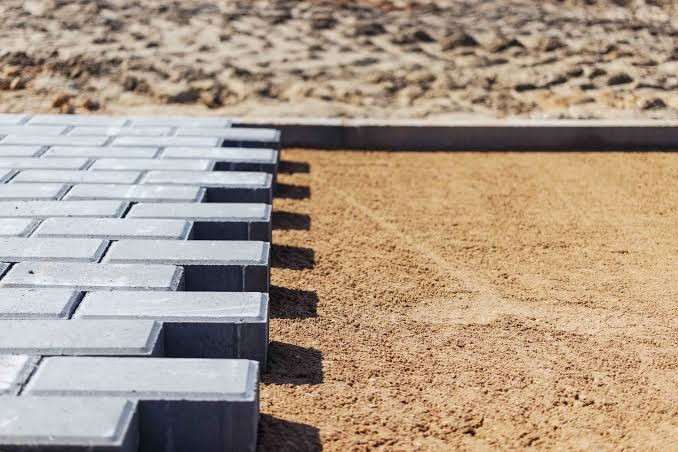
Interlocking concrete paving blocks are manufactured concrete units designed to fit together in a planned arrangement.
Their interlocking configuration helps distribute loads across adjacent units when the pavement is properly designed, installed and restrained.
They are widely used in commercial and industrial paving applications.
Common applications include:
- Commercial parking areas.
- Industrial compounds.
- Warehouse yards.
- Truck parking spaces.
- Commercial driveways.
- Access roads.
- Loading and service areas.
Advantages:
- Individual blocks can be replaced when damaged.
- Different shapes and patterns are available.
- Suitable for modular pavement construction.
- Can provide good load distribution when properly designed.
- Repairs can often be carried out without reconstructing the entire paved surface.
For heavy-traffic applications, block thickness, concrete strength, bedding, jointing, edge restraints and sub-base design must all be appropriate.
2. Reinforced Concrete Paving Slabs
Reinforced concrete paving slabs contain steel reinforcement intended to improve their structural performance under specified loading conditions.
They are useful in applications where pavement design requires a concrete slab system capable of carrying demanding loads.
Common applications include:
- Industrial yards.
- Heavy-duty parking areas.
- Loading platforms.
- Warehouse facilities.
- Commercial access areas.
- Specialised vehicle circulation zones.
The reinforcement arrangement, slab thickness, joint detailing and support conditions should be determined through engineering design.
3. Precast Concrete Paving Slabs
Precast concrete paving slabs are manufactured in moulds before being transported to the site for installation.
They are available in different dimensions, thicknesses and surface finishes.
Common applications include:
- Commercial compounds.
- Pedestrian and service areas.
- Selected vehicle access areas.
- Industrial facilities.
- Outdoor platforms.
- Institutional developments.
For heavy-traffic use, the slabs must be specifically designed for the intended loading and supported by an appropriate foundation.
4. Cast-in-Situ Concrete Pavements
Cast-in-situ concrete pavements are constructed directly at the project site by placing concrete over a prepared foundation.
They can provide continuous paved surfaces suitable for many commercial and industrial applications.
Common applications include:
- Warehouse floors.
- Industrial yards.
- Truck parking areas.
- Loading and unloading zones.
- Commercial access roads.
- Service compounds.
Their performance depends on concrete specifications, slab thickness, reinforcement where required, joint design, curing and foundation preparation.
5. Heavy-Duty Concrete Paving Blocks
Heavy-duty concrete paving blocks are manufactured for applications involving higher traffic demands than ordinary pedestrian paving.
Their specifications may include increased thickness, suitable concrete strength and dimensional requirements appropriate for the intended use.
Common applications include:
- Bus terminals.
- Truck parking facilities.
- Industrial access routes.
- Commercial vehicle yards.
- Warehouse compounds.
- Logistics facilities.
The actual suitability of a paving block should be established through its specified performance and pavement design, not simply its description as heavy-duty.
10 Important Factors to Consider When Choosing Durable Concrete Paving Materials
Selecting the right materials requires careful evaluation of the conditions in which the paved surface will operate.
The following factors are particularly important when planning heavy-traffic paving projects.
1. Concrete Compressive Strength
Concrete strength is one of the most important considerations when selecting paving materials.
It indicates the ability of concrete to resist compressive stresses under specified testing conditions.
Heavy-traffic paving materials should meet the strength requirements established by the pavement design and relevant product specifications.
When evaluating concrete paving blocks or slabs, ask the manufacturer or supplier about:
- Specified concrete strength.
- Applicable product standards.
- Quality-control procedures.
- Available test results.
- Manufacturing and curing processes.
Do not assume that a product is suitable for heavy traffic simply because it looks thick or solid.
2. Paving Block or Slab Thickness
Thickness influences the ability of concrete paving materials to withstand applied loads.
Materials intended for pedestrian pathways may be unsuitable for truck parking areas or industrial loading zones.
The appropriate thickness depends on:
- Expected vehicle types.
- Wheel loads.
- Traffic frequency.
- Pavement configuration.
- Subgrade strength.
- Bedding and sub-base design.
For heavy-duty applications, thickness should be determined through appropriate engineering assessment.
3. Aggregate Quality
Aggregates form a significant proportion of concrete and influence its strength, durability and workability.
Poor-quality aggregates can negatively affect the performance of finished concrete paving products.
When selecting concrete materials, consider:
- Aggregate grading.
- Particle strength.
- Cleanliness.
- Resistance to degradation.
- Suitability for the specified concrete mix.
Reliable manufacturers should use suitable aggregates that meet the relevant material specifications.
4. Reinforcement Requirements
Some concrete paving systems require reinforcement to control cracking or provide the required structural capacity.
Steel reinforcement may be used in cast-in-situ pavements and certain precast slabs.
However, not every concrete paving product requires reinforcement.
The decision depends on the pavement design, slab dimensions, support conditions, expected loads and joint arrangement.
5. Subgrade Strength and Ground Conditions
Even the strongest concrete paving materials can fail when installed on weak or poorly prepared ground.
The subgrade is the natural or improved soil that supports the pavement structure.
Before construction, the site should be assessed to establish whether the existing ground can support the intended traffic.
Where necessary, soil improvement, stabilisation or additional sub-base layers may be required.
6. Water Absorption and Concrete Durability
Concrete paving materials are exposed to rainwater, moisture and changing environmental conditions.
Excessive water absorption and poor concrete quality can contribute to deterioration, particularly where drainage is inadequate.
Consider product specifications relating to water absorption, permeability and durability where applicable.
Good concrete production, appropriate curing and effective surface drainage help improve long-term performance.
7. Abrasion and Wear Resistance
Heavy-traffic areas experience repeated surface wear from vehicle tyres, pedestrian movement, equipment and turning forces.
Paving materials should have suitable surface quality and abrasion resistance for their intended application.
This is particularly important in loading bays, warehouse yards, industrial compounds and busy parking facilities.
8. Surface Texture and Slip Resistance
The surface finish influences vehicle traction and pedestrian safety.
Smooth surfaces may be suitable for some applications, but exposed outdoor paving often requires an appropriate texture to reduce slipping risks when wet.
Choose a finish that balances appearance, ease of cleaning and safe movement.
9. Drainage Performance
Drainage is essential for the long-term performance of concrete paving systems.
Standing water can weaken supporting materials, enter joints, contribute to settlement and create unsafe operating conditions.
Paved surfaces should incorporate suitable gradients, drainage channels and outlets to manage stormwater effectively.
10. Installation and Workmanship
The quality of installation has a direct influence on pavement durability.
Even high-quality concrete products may fail when the foundation is poorly prepared, bedding is uneven, joints are inadequate or compaction is insufficient.
Choose a contractor with the appropriate technical experience and equipment for the intended pavement system.
How to Choose the Best Concrete Paving Material for Different Heavy-Traffic Applications
Different heavy-traffic environments have different operational requirements.
The following guidance helps identify suitable options for common construction applications.
1. Commercial Parking Areas
Commercial parking facilities accommodate cars, delivery vehicles and sometimes buses or heavier service vehicles.
Interlocking concrete paving blocks and properly designed concrete pavements are common options.
The material should be selected based on the heaviest expected vehicle, traffic frequency, turning movements and parking layout.
2. Industrial Yards
Industrial yards may accommodate heavy trucks, forklifts, equipment and frequent loading activities.
Heavy-duty interlocking concrete blocks or appropriately designed cast-in-situ concrete pavements may be suitable.
Particular attention should be given to foundation strength, joint performance, abrasion resistance and drainage.
3. Warehouse Access Roads
Warehouse access roads may carry frequent delivery vehicles and heavy goods transport trucks.
Concrete pavement systems should be designed for the expected traffic loading and ground conditions.
Adequate sub-base preparation and suitable pavement thickness are essential.
4. Truck Parking and Loading Bays
Truck parking areas and loading bays experience concentrated wheel loads, braking forces and turning stresses.
Reinforced or appropriately designed concrete pavements and heavy-duty interlocking systems may be considered.
The design should also account for loading equipment, operational traffic patterns and drainage.
5. Commercial Driveways
Commercial driveways may accommodate regular passenger vehicles, delivery vans and heavier service vehicles.
Suitable concrete paving blocks, precast systems or cast-in-situ pavements can be selected depending on the anticipated loading.
6. Bus Terminals and Transport Facilities
Bus terminals experience repeated vehicle movement, braking, turning and concentrated loading.
The selected paving system should be designed for the relevant vehicle loads and operating conditions.
Abrasion resistance, surface safety and maintenance access are also important.
Interlocking Concrete Pavers vs Reinforced Concrete Pavements for Heavy Traffic
Two common options for heavy-duty paving projects are interlocking concrete paving blocks and reinforced or appropriately designed cast-in-situ concrete pavements.
Both can provide durable surfaces when properly specified and installed.
| Feature | Interlocking Concrete Pavers | Concrete Pavements |
|---|---|---|
| Construction | Individual concrete units | Continuous concrete slabs |
| Load distribution | Through blocks, joints and supporting layers | Through slab action and supporting layers |
| Maintenance | Individual units can often be replaced | Repairs may involve cutting or replacing concrete sections |
| Installation | Requires accurate laying and jointing | Requires formwork, placement and curing |
| Design flexibility | Different patterns and colours | Different surface finishes and joint layouts |
| Best applications | Parking areas, yards and modular paving | Industrial floors, loading zones and heavy-duty pavements |
Which is better for heavy traffic?
There is no universal winner. Properly engineered interlocking paving can perform well in demanding applications, while concrete pavements can be appropriate for continuous heavy-duty surfaces.
The best choice depends on traffic loads, ground conditions, construction costs, maintenance requirements and operational needs.
How to Assess the Quality of Concrete Paving Materials Before Buying
Before purchasing concrete paving products, it is important to verify their quality and suitability.
The following checks can help reduce the risk of buying unsuitable materials.
1. Inspect the Surface
Examine the products for significant cracks, honeycombing, excessive voids and poor finishing.
2. Check Dimensional Consistency
Paving blocks and slabs should meet the specified dimensions and tolerances.
Inconsistent sizes can make installation difficult and affect the finished surface.
3. Request Strength Specifications
Ask the supplier for the specified concrete strength and relevant quality-control documentation.
Where necessary, request test certificates or independent laboratory test results.
4. Examine the Edges and Corners
Damaged edges and corners can affect product appearance, joint consistency and installation quality.
5. Ask About Manufacturing Standards
Find out whether the manufacturer follows controlled batching, compaction, mould preparation and curing procedures.
6. Check the Product’s Intended Application
Ensure that the product is designed for the traffic conditions in your project.
Pedestrian paving blocks should not automatically be used in areas exposed to heavy vehicles.
7. Evaluate Supplier Reliability
Choose suppliers capable of providing consistent products, technical information and reliable delivery arrangements.
Step-by-Step Installation of Concrete Paving Materials in Heavy-Traffic Areas
Correct installation is just as important as choosing quality paving materials.
A typical heavy-duty paving project involves the following stages.
Step 1: Site Assessment and Traffic Evaluation
The first stage involves inspecting the site and understanding how the paved area will be used.
The assessment should identify:
- Expected vehicle types.
- Wheel loads.
- Traffic frequency.
- Turning and braking locations.
- Existing soil conditions.
- Surface levels.
- Drainage requirements.
- Access and construction constraints.
This information guides pavement design and material selection.
Step 2: Pavement Design and Setting Out
The pavement should be designed according to the anticipated loading and site conditions.
The design should establish the required pavement layers, material specifications, thicknesses, joint arrangements and drainage provisions.
The installation area is then measured and marked.
Step 3: Excavation
The existing ground is excavated to the required formation depth.
Unsuitable soil, organic material and weak ground should be removed or treated according to the project design.
Step 4: Subgrade Preparation and Compaction
The exposed subgrade is prepared and compacted to achieve the specified support conditions.
Field testing may be required to verify the degree of compaction and other relevant ground properties.
Step 5: Sub-Base Installation
Suitable granular or stabilised sub-base materials are placed in specified layers.
Each layer is spread, levelled and compacted according to the pavement design.
Adequate sub-base preparation helps distribute traffic loads and reduce settlement.
Step 6: Bedding Layer Preparation
For interlocking concrete pavers, the specified bedding material is placed and levelled.
For other pavement systems, the appropriate supporting or preparation layer is installed according to the design.
Step 7: Installation of Concrete Paving Materials
Concrete blocks or slabs are positioned according to the approved layout.
For interlocking blocks, correct laying patterns and alignment are important for achieving stable pavement performance.
For cast-in-situ concrete pavements, formwork and reinforcement are installed where required before concrete placement.
Step 8: Jointing and Compaction
Interlocking pavers are jointed using suitable material and compacted with appropriate equipment.
For concrete pavements, specified joints are constructed to accommodate movement and control cracking.
Step 9: Drainage and Edge Restraints
Suitable edge restraints are installed where required to prevent lateral movement of paving units.
Drainage channels, gullies and surface falls are completed to manage stormwater.
Step 10: Final Inspection and Handover
The finished pavement is inspected for:
- Surface levels.
- Alignment.
- Joint quality.
- Settlement.
- Cracking.
- Drainage performance.
- Edge restraint stability.
- Compliance with design requirements.
The pavement should only be opened to traffic when it has achieved the required installation and strength conditions.
Common Mistakes to Avoid When Choosing Concrete Paving Materials for Heavy-Traffic Areas
Some construction mistakes can significantly reduce pavement lifespan and increase repair costs.
1. Choosing Materials Based on Price Alone
The cheapest paving materials may not provide the strength or durability required for heavy traffic.
Solution: Compare product specifications, quality documentation, installation requirements and expected service life.
2. Ignoring Traffic Loads
Using pedestrian-grade paving materials in truck parking areas can lead to premature failure.
Solution: Identify the heaviest expected vehicles and design the pavement accordingly.
3. Using Inadequate Thickness
Insufficient paving thickness can compromise structural performance.
Solution: Select block or slab dimensions based on engineering assessment.
4. Poor Subgrade Preparation
Weak foundations can cause settlement, uneven surfaces and cracking.
Solution: Prepare, improve and compact the ground according to the pavement design.
5. Ignoring Drainage
Poor drainage allows water to accumulate and can weaken pavement foundations.
Solution: Provide suitable surface gradients, drainage channels and discharge arrangements.
6. Poor Joint Installation
Incorrect jointing can affect the stability of interlocking paving systems and the performance of concrete pavements.
Solution: Follow the specified jointing and construction procedures.
7. Inadequate Quality Control
Failure to inspect materials and construction workmanship can allow defects to go unnoticed.
Solution: Implement quality checks during material procurement, installation and project completion.
How to Maintain Concrete Paving in Heavy-Traffic Areas
Regular maintenance helps preserve pavement performance and reduce unexpected repair costs.
Recommended activities include:
- Sweeping and removing debris.
- Clearing drainage channels and gullies.
- Inspecting for cracks and surface deterioration.
- Checking for uneven settlement.
- Replacing damaged paving blocks.
- Replenishing jointing material where necessary.
- Repairing damaged edge restraints.
- Inspecting areas exposed to repeated heavy loading.
- Checking for standing water after rainfall.
- Repairing defects before they spread.
Industrial and commercial facilities should establish planned maintenance schedules based on traffic intensity and pavement condition.
Concrete Paving Materials and Their Costs in Uganda
The cost of concrete paving materials in Uganda depends on product quality, dimensions, concrete strength, reinforcement, manufacturing processes, transportation and installation requirements.
For heavy-traffic applications, the total project cost should include both the paving products and the supporting pavement structure.
Important cost factors include:
1. Type of paving material: Heavy-duty interlocking blocks, reinforced slabs and cast-in-situ concrete pavements have different production and installation costs.
2. Thickness and dimensions: Larger or thicker products generally require more material and may involve additional handling costs.
3. Concrete strength: Specified concrete strength and production requirements influence manufacturing costs.
4. Reinforcement: Steel reinforcement increases material and fabrication costs where it is required.
5. Ground preparation: Excavation, soil improvement and compaction can significantly influence the total project budget.
6. Sub-base materials: The thickness and quality of supporting layers affect overall construction costs.
7. Transportation: Delivery costs depend on distance, product weight and handling requirements.
8. Labour and equipment: Installation may require skilled workers, compactors, lifting equipment and other machinery.
9. Drainage works: Additional drainage channels, kerbs and stormwater infrastructure may be necessary.
For an accurate quotation, provide the contractor with the site location, approximate paved area, intended use, expected vehicle types and preferred paving materials.
Why Professional Construction Expertise Matters
Heavy-traffic paving projects require more than purchasing strong concrete products. They involve technical decisions relating to pavement design, ground conditions, material specifications, construction methods and quality control.
Professional construction expertise helps ensure that:
- Appropriate materials are selected.
- Traffic requirements are properly assessed.
- Pavement thickness is correctly specified.
- Foundations are adequately prepared.
- Concrete products meet quality requirements.
- Installation procedures are followed.
- Drainage systems are properly integrated.
- Completed surfaces are inspected.
Poorly planned paving projects can result in expensive repairs, operational interruptions and premature pavement failure.
Working with experienced construction professionals helps minimise these risks and supports long-term pavement performance.
Why Choose Daltrevco for Concrete Paving and Construction Solutions in Uganda?
Choosing a reliable construction partner is an important part of achieving durable paving and infrastructure projects.
Daltrevco provides construction solutions for residential, commercial, industrial and infrastructure development projects in Uganda.
Whether you are developing a commercial parking area, constructing an industrial compound, improving a warehouse yard or undertaking road and paving works, proper planning and quality workmanship are essential.
When planning heavy-traffic paving, important considerations include traffic loading, concrete material specifications, foundation preparation, drainage and installation quality.
Daltrevco can help you assess your construction requirements and identify appropriate solutions for your project.
From concrete works and paving-related construction to broader civil engineering and infrastructure improvements, the focus should always be on achieving functional, durable and reliable results.
Contact Daltrevco to discuss your paving or construction project and request guidance on suitable construction solutions in Uganda.
Frequently Asked Questions About Durable Concrete Paving Materials
1. What is the best concrete paving material for heavy-traffic areas?
Heavy-duty interlocking concrete paving blocks and appropriately designed concrete pavements are common options. The best material depends on vehicle loads, traffic frequency, ground conditions and project requirements.
2. Which concrete paving blocks are suitable for trucks?
Concrete paving blocks specifically designed and tested for heavy vehicle loading may be suitable for truck areas. Their thickness, strength, laying pattern, bedding, jointing and supporting pavement layers must all be properly specified.
3. How thick should concrete paving blocks be for heavy traffic?
There is no single thickness suitable for every heavy-traffic project. The required thickness depends on vehicle loads, traffic frequency, subgrade conditions and pavement design.
4. Are interlocking concrete blocks suitable for industrial yards?
Yes. Properly designed and installed interlocking concrete blocks can be used in industrial yards, warehouses, truck parking areas and commercial compounds.
5. What makes concrete paving materials durable?
Durability depends on concrete strength, aggregate quality, appropriate thickness, manufacturing quality, curing, installation workmanship, ground preparation and drainage.
6. Is reinforced concrete better than interlocking paving blocks?
Neither option is universally better. Reinforced concrete may be suitable for continuous heavy-duty pavement applications, while interlocking blocks offer modular construction and easier individual unit replacement.
7. Why do concrete paving blocks crack?
Cracking may result from poor concrete quality, inadequate thickness, excessive loading, weak foundations, poor installation or handling damage.
8. How can I prevent concrete paving from sinking?
Prepare and compact the subgrade properly, use suitable sub-base materials, provide uniform bedding and ensure that drainage is effective.
9. Are concrete paving materials suitable for commercial parking lots?
Yes. Appropriately specified concrete blocks, slabs and cast-in-situ pavements can be used for commercial parking facilities.
10. How long does heavy-duty concrete paving last?
Service life depends on the pavement design, concrete quality, traffic intensity, ground conditions, drainage and maintenance. Properly designed and maintained concrete pavements can provide many years of service.
11. What determines the cost of heavy-duty concrete paving in Uganda?
The cost depends on paving material specifications, thickness, concrete strength, reinforcement, site preparation, sub-base requirements, transportation, labour and drainage works.
12. Why is drainage important in heavy-traffic paving?
Drainage prevents water from accumulating on paved surfaces and weakening supporting pavement layers. Proper water management reduces the risk of settlement, cracking and premature pavement deterioration.
13. Can ordinary residential paving blocks be used in industrial areas?
Not automatically. Residential paving products may not have the strength or thickness required for heavy industrial loading. Always verify product specifications and pavement design requirements.
14. How do I choose a reliable concrete paving materials supplier in Uganda?
Look for suppliers who provide consistent products, clear technical specifications, relevant quality documentation, reliable delivery and products appropriate for your project’s intended loading conditions.
Conclusion: Invest in Durable Concrete Paving Materials for Long-Term Performance
Choosing durable concrete paving materials for heavy-traffic areas is an important decision that influences the safety, strength, functionality and lifespan of commercial and industrial infrastructure.
Whether you are constructing a warehouse yard, commercial parking lot, truck loading area, industrial compound or busy access road, selecting suitable concrete paving products is essential for achieving reliable results.
Heavy-duty interlocking concrete blocks, reinforced concrete slabs, precast concrete products and cast-in-situ concrete pavements all offer potential advantages depending on the application.
However, long-term pavement performance depends on more than material selection. Proper pavement design, quality concrete, adequate thickness, stable foundations, correct installation and effective drainage must work together.
For property developers, industrial facility owners, commercial investors and construction contractors in Uganda, investing in quality concrete paving materials and professional construction workmanship can reduce premature pavement failure and protect long-term infrastructure investments.
Planning a commercial, industrial or residential paving project in Uganda? Contact Daltrevco for professional construction solutions and assistance with your project requirements.
Daltrevco – Building Reliable Construction Solutions in Uganda.