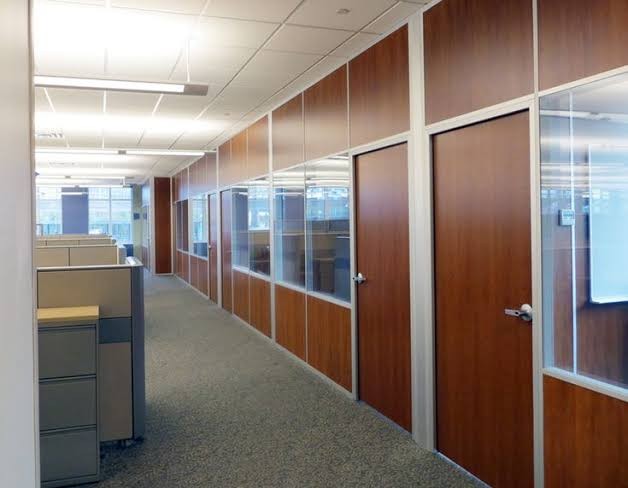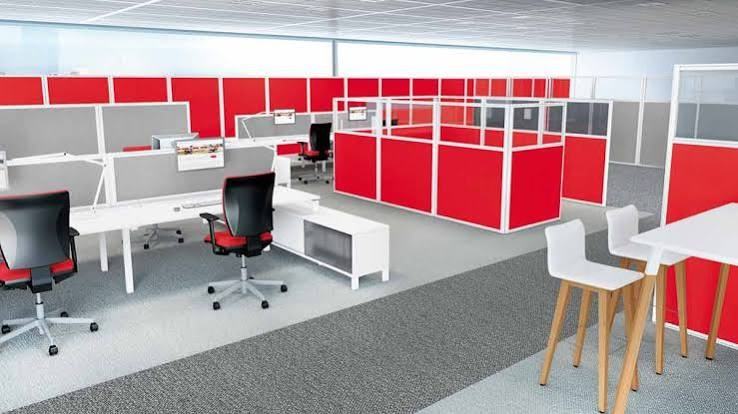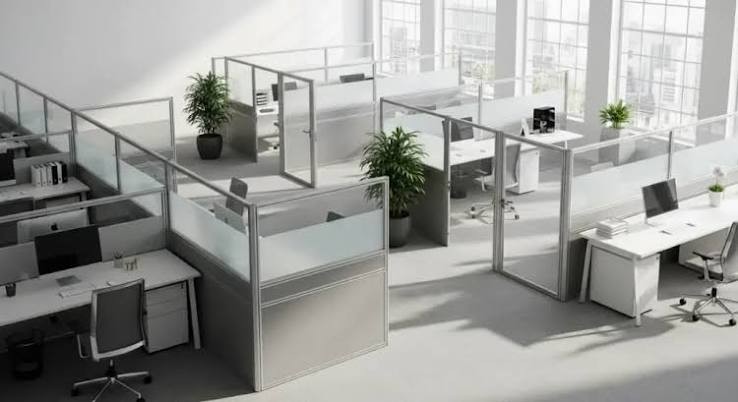
Choosing the right office partitioning system is an important part of creating a functional, attractive and productive workplace. Modern businesses need office layouts that provide privacy, maximise available space, support natural lighting and create a professional environment for employees and visitors.
Two commonly considered options are aluminium partitions and gypsum partitions. Both can be used to divide office spaces, create meeting rooms and establish private working areas. However, they differ in materials, appearance, installation methods, maintenance requirements, flexibility and overall performance.
For businesses planning office renovations or new commercial interiors in Uganda, understanding the differences between aluminium and gypsum partitions can help in selecting a suitable solution.
So, aluminium partitions vs gypsum partitions: which is better for offices?
The answer depends on the purpose of the partition, desired appearance, privacy requirements, budget and future office needs.
This guide compares both systems, explains their benefits and limitations, explores their applications and helps you determine which option is suitable for your workplace.
What Are Aluminium Office Partitions?
Aluminium office partitions are interior dividing systems constructed using aluminium frames and supporting profiles. They can incorporate glass panels, solid infill panels or a combination of materials.
They are commonly used to create modern office spaces where businesses want a clean appearance, defined working areas and, in glass configurations, improved natural light.
Popular aluminium partition designs include:
- Aluminium-framed glass partitions.
- Full-height aluminium partitions.
- Frosted glass partitions.
- Clear glass partitions.
- Aluminium partitions with solid panels.
- Sliding glass partition systems.
- Modular aluminium partition systems.
These systems are suitable for corporate offices, reception areas, meeting rooms, executive offices and commercial workspaces.
What Are Gypsum Office Partitions?
Gypsum partitions are interior walls constructed using gypsum boards fixed to a supporting framework, commonly made from metal or timber studs.
The boards are joined, finished and decorated to create a smooth wall surface. Depending on the design, gypsum partitions can be constructed to different heights and configurations.
They are commonly used to create enclosed rooms and private office spaces.
Typical applications include:
- Private executive offices.
- Meeting rooms.
- Departmental offices.
- Storage rooms.
- Internal office divisions.
- Administrative spaces.
- Enclosed work areas.
Gypsum partitions can also incorporate insulation materials within the wall cavity where improved acoustic or thermal performance is required.
Aluminium Partitions vs Gypsum Partitions: Main Differences
Although both systems divide office spaces, their construction and performance characteristics are different.
| Feature | Aluminium partitions | Gypsum partitions |
|---|---|---|
| Main materials | Aluminium frames with glass or other infill panels | Gypsum boards fixed to a supporting framework |
| Appearance | Modern, often suited to contemporary interiors | Smooth, solid-wall appearance |
| Natural lighting | Glass options allow light to pass through | Generally blocks light unless openings or glazed sections are included |
| Visual privacy | Depends on clear glass, frosted glass or solid panels | Provides solid visual separation |
| Acoustic performance | Depends on glazing, frames, doors and seals | Can provide good sound reduction when properly designed |
| Installation | Often relatively quick, depending on the system | Requires framing, board fixing, jointing and finishing |
| Maintenance | Cleaning and hardware inspection | May require repainting and surface repairs |
| Flexibility | Some modular systems can be reconfigured | Changes usually involve more construction work |
| Customisation | Glass types, aluminium finishes and door configurations | Wall finishes, paint colours, openings and insulation |
| Typical applications | Meeting rooms, reception areas and modern offices | Private offices, enclosed rooms and internal divisions |
The best option depends on the specific requirements of the workplace rather than one material being universally superior.
Benefits of Aluminium Office Partitions
Aluminium partitions offer several advantages for modern businesses.
1. Modern and Professional Appearance
Aluminium partitions, particularly glass and aluminium systems, create a clean and contemporary office interior.
Their neat frames and glass surfaces complement modern furniture, reception desks, boardrooms and executive workspaces.
They are especially suitable for businesses that want an open and professional appearance.
2. Improved Natural Lighting
One of the main advantages of glass aluminium partitions is their ability to allow daylight to pass between different office sections.
Clear glass panels help distribute available natural light into interior meeting rooms and offices.
This can make workplaces feel brighter and more spacious.
For businesses operating in commercial buildings with limited windows, carefully positioned glass partitions can help improve the use of available daylight.
3. Better Visual Openness
Aluminium-framed glass partitions separate workspaces without completely disconnecting them visually.
Employees can maintain visibility across different office sections while still benefiting from clearly defined working areas.
This is useful in collaborative environments where communication and visual connection are important.
4. Design Flexibility
Aluminium partition systems can be customised using different glass types, frame finishes, panel arrangements and door configurations.
Businesses can choose:
- Clear glass.
- Frosted glass.
- Decorative glass.
- Solid infill panels.
- Sliding doors.
- Hinged doors.
- Different aluminium finishes.
This makes aluminium partitions suitable for a wide range of office interiors.
5. Durable Aluminium Frames
Aluminium is widely used in commercial building applications because it is lightweight and resistant to rust under normal conditions.
When correctly specified, finished and installed, aluminium frames can provide long-term service.
The durability of the complete partition system also depends on the quality of the glass, fittings, supporting components and maintenance.
6. Easier Cleaning and Routine Maintenance
Aluminium-framed glass partitions can generally be maintained through regular cleaning and periodic hardware inspections.
Glass panels can be cleaned using suitable glass-cleaning products, while aluminium frames can be wiped with appropriate non-abrasive materials.
Door hinges, handles and sliding tracks should also be inspected regularly.
7. Suitable for Contemporary Office Layouts
Aluminium partitions work well in open-plan offices, corporate buildings, reception areas and modern meeting rooms.
They can help businesses divide larger spaces while preserving an attractive and organised interior.
Benefits of Gypsum Office Partitions
Gypsum partitions are also useful in commercial interiors, especially where solid walls and enclosed rooms are required.
1. Excellent Visual Privacy
Gypsum partitions provide solid separation between different office areas.
They are suitable for departments and rooms where employees need to work without being visually exposed to surrounding spaces.
Examples include:
- Human resource offices.
- Finance departments.
- Private executive offices.
- Storage rooms.
- Confidential consultation rooms.
2. Smooth and Customisable Wall Finishes
Gypsum boards can be finished with paint, wallpaper and other suitable interior treatments.
This makes it possible to match the partition walls with the office’s colour scheme and interior design.
Businesses can create simple, elegant or decorative wall finishes depending on their preferences.
3. Potential for Good Acoustic Performance
Gypsum partitions can be designed to reduce sound transmission between rooms.
Performance depends on the number and type of boards, supporting framework, insulation within the cavity, perimeter sealing and door construction.
Where sound privacy is important, a properly specified gypsum wall system may be a suitable option.
It is important to note that ordinary gypsum board alone does not automatically create a soundproof room.
4. Concealed Services
Gypsum partition systems can accommodate electrical wiring, communication cables and other services within the wall cavity, subject to suitable design and installation.
This can create a neat interior appearance without exposing all the service installations.
5. Suitable for Permanent Office Divisions
Gypsum partitions are useful when businesses need enclosed rooms that are intended to remain in place for an extended period.
They provide a conventional wall appearance and can be integrated into different commercial interior layouts.
6. Fire-Resistant System Options
Certain gypsum board products and tested wall assemblies are designed to provide specified fire-resistance performance.
However, fire performance depends on the complete tested system, including board type, number of layers, framing, joints, insulation and installation details.
Businesses should select a system with documented performance where fire resistance is required.
Which Partition Is Better for Natural Lighting?
<image-placeholder></image-placeholder>
Aluminium-framed glass partitions are generally the better option when natural lighting is a major priority.
Clear glass allows daylight to pass from one office area to another, helping reduce the enclosed appearance associated with solid internal walls.
Gypsum partitions, on the other hand, are opaque and normally prevent light from passing through them.
However, gypsum office layouts can incorporate glazed sections, internal windows or glass doors where additional light is required.
Best choice: Aluminium-framed glass partitions for offices that prioritise daylight and visual openness.
Which Partition Is Better for Privacy?
The answer depends on the type of privacy required.
Gypsum partitions provide solid visual separation and can be appropriate for confidential office areas.
Aluminium partitions can also provide visual privacy when designed with frosted glass, decorative films or solid infill panels.
For sound privacy, neither material should be judged by appearance alone. The complete wall or partition assembly, including doors, joints and seals, determines how effectively sound is reduced.
Best choice: Gypsum for straightforward solid visual separation; either system can be designed for greater privacy when the appropriate materials and details are selected.
Which Partition Is Better for Sound Insulation?
Sound insulation is an important consideration in offices where employees hold meetings, make calls or handle confidential information.
A properly designed gypsum partition with suitable insulation and sealed joints can provide effective sound reduction.
Aluminium-framed glass partitions can also be designed with acoustic glazing, suitable frames and well-sealed doors.
However, gaps around doors, ceilings, floors and adjoining walls can significantly reduce the performance of either system.
Best choice: A properly specified gypsum wall may be suitable for many enclosed rooms requiring acoustic separation, while specialist acoustic glass systems can be considered where a glazed appearance is preferred.
The required performance should be established before choosing the partition type.
Which Partition Is More Cost-Effective in Uganda?
The cost of aluminium and gypsum partitions in Uganda depends on the design, material specifications, dimensions and installation requirements.
Neither system is always cheaper in every situation.
Factors Affecting Aluminium Partition Costs
- Type and thickness of glass.
- Aluminium profile specifications.
- Clear, frosted or decorative glass.
- Number of doors.
- Hinges, handles and sliding hardware.
- Partition dimensions.
- Custom finishes.
- Transportation and installation complexity.
Factors Affecting Gypsum Partition Costs
- Type and thickness of gypsum boards.
- Supporting framework.
- Number of board layers.
- Insulation requirements.
- Jointing and finishing materials.
- Painting and decoration.
- Door and opening arrangements.
- Installation complexity.
For an accurate comparison, businesses should request quotations for systems with equivalent dimensions and performance requirements.
For example, comparing a basic aluminium-framed glass partition with a multi-layer insulated gypsum wall would not provide a fair cost comparison because the systems serve different purposes.
Best choice: The most cost-effective option depends on the intended use, required performance and long-term maintenance needs.
Aluminium Partitions vs Gypsum Partitions: Which Is More Durable?
Both systems can provide long-term service when properly specified, installed and maintained.
However, they experience different types of wear.
Aluminium Partition Durability
Aluminium frames are generally resistant to rust under normal conditions. Their durability depends on the quality of the profiles, surface finish, glass, hardware and installation.
Potential maintenance issues include:
- Scratched frame finishes.
- Loose fittings.
- Damaged glass panels.
- Worn door hinges.
- Sliding track problems.
- Deteriorated seals.
Regular cleaning and hardware inspections help maintain the system.
Gypsum Partition Durability
Gypsum partitions can remain in good condition for many years when protected from excessive moisture, impact and structural movement.
Potential maintenance issues include:
- Surface cracks.
- Damaged corners.
- Scratches and dents.
- Paint deterioration.
- Joint separation.
- Moisture damage.
Damaged sections can often be repaired and refinished, depending on the extent of the problem.
Best choice: Both can be durable. Aluminium systems are particularly useful where cleanable glass and metal finishes are preferred, while gypsum systems are suitable for solid internal walls that are properly protected and maintained.
Where Should Aluminium Partitions Be Used in Offices?
Aluminium partitions are particularly suitable for workplaces that require modern designs, glass finishes and natural lighting.
Common applications include:
1. Reception Areas
Aluminium and glass partitions can separate reception spaces from administrative offices while maintaining visibility and a welcoming appearance.
2. Boardrooms and Meeting Rooms
Glass and aluminium systems create professional meeting spaces that allow natural light to reach enclosed rooms.
Frosted glass can be added where visual privacy is required.
3. Executive Offices
Aluminium-framed glass partitions can create private management offices while maintaining a connection with the wider workplace.
4. Open-Plan Workspaces
They help divide large office areas into smaller functional sections without creating a completely enclosed atmosphere.
5. Customer Service Areas
Businesses can use aluminium partitions to organise customer-facing areas and separate staff workspaces.
Where Should Gypsum Partitions Be Used in Offices?
Gypsum partitions are particularly useful where solid walls and enclosed spaces are required.
Common applications include:
1. Private Offices
Gypsum partitions can create enclosed offices for managers, administrators and other employees who require visual separation.
2. Human Resource and Finance Departments
These departments may handle confidential documents and discussions, making solid partitions a suitable option for visual privacy.
3. Storage Rooms
Gypsum walls can be used to create enclosed storage spaces within larger commercial interiors.
4. Administrative Departments
They can divide larger office floors into separate departments with defined working areas.
5. Rooms Requiring Special Acoustic Design
Gypsum wall assemblies can be designed with suitable insulation and multiple board layers to improve sound reduction between rooms.
Can Aluminium and Gypsum Partitions Be Used Together?
Yes. Combining aluminium and gypsum partitions can provide a practical solution for offices with different functional requirements.
Rather than using one system throughout the entire building, businesses can select each material according to the purpose of the space.
For example:
- Aluminium-framed glass partitions for reception areas.
- Glass partitions for meeting rooms.
- Gypsum walls for private offices.
- Gypsum partitions for storage areas.
- Frosted glass partitions for consultation rooms.
- Insulated gypsum walls for areas requiring greater acoustic separation.
This combination helps businesses balance privacy, lighting, appearance and functionality.
How to Choose Between Aluminium and Gypsum Partitions
Before making a decision, consider the following factors.
1. Identify the Purpose of Each Room
Determine whether the room requires visibility, visual privacy, sound reduction or a combination of these features.
2. Consider Natural Lighting
If daylight is important, glass aluminium partitions may be more appropriate.
If the space requires complete visual separation, gypsum may be suitable.
3. Evaluate Acoustic Requirements
For confidential meetings or noisy work areas, consider the sound reduction performance of the complete partition system.
4. Assess Your Office Budget
Compare quotations that include materials, installation, finishing, doors and any additional requirements.
5. Consider Future Changes
If the office layout may change, consider whether a modular aluminium system offers useful flexibility.
6. Evaluate Maintenance Needs
Consider how frequently the partitions will be cleaned, the likelihood of impact damage and the availability of replacement components.
7. Work with an Experienced Contractor
A professional contractor can assess the workplace and help determine which partitioning system is appropriate for each area.
Aluminium and Gypsum Partition Installation Process
Although the installation methods differ, both systems require accurate measurements and proper workmanship.
Aluminium Partition Installation
- Site assessment: Evaluate the office layout, floor condition and ceiling height.
- Measurements: Establish panel dimensions and door positions.
- Material selection: Select aluminium profiles, glass and suitable fittings.
- Frame installation: Fix and align the aluminium supporting profiles.
- Panel fitting: Install glass or other specified infill materials.
- Door installation: Fit the required hinges, handles or sliding mechanisms.
- Final inspection: Check stability, alignment and door operation.
Gypsum Partition Installation
- Site assessment: Determine the wall layout and identify existing services.
- Measurements: Mark the wall positions and dimensions.
- Framework installation: Install the appropriate supporting studs and tracks.
- Service provision: Coordinate electrical and other services within the cavity where required.
- Board installation: Fix gypsum boards to the supporting framework.
- Joint finishing: Apply suitable jointing materials and finish the board surfaces.
- Decoration: Sand and paint the completed wall as specified.
- Final inspection: Check the finish, joints and overall installation.
Professional installation is important for both systems because poor workmanship can affect appearance, durability and performance.
Common Mistakes to Avoid When Choosing Office Partitions
Businesses should avoid these common planning mistakes:
- Choosing based only on appearance: A partition must meet the practical needs of the room.
- Ignoring privacy requirements: Open glass may not be suitable for every department.
- Overlooking natural lighting: Solid walls can make some office layouts feel darker.
- Ignoring acoustic performance: Ordinary glass and gypsum boards do not automatically provide soundproof rooms.
- Using unsuitable materials: Materials should be selected for the intended environment.
- Poor space planning: Incorrect positioning can obstruct movement and reduce usable office space.
- Hiring installers without suitable experience: Poor measurements and installation can create costly problems.
- Failing to consider future needs: Office layouts should accommodate possible growth and operational changes.
Why Choose Daltrevco for Office Partitioning Solutions in Uganda?
Selecting the right office partitioning contractor is important for achieving a professional and functional interior.
Businesses need suitable materials, accurate measurements, practical designs and quality installation to ensure that their partition systems meet workplace requirements.
Daltrevco provides glass and aluminium works solutions for clients seeking to improve commercial and professional spaces in Uganda.
Whether you are planning aluminium-framed glass partitions, modern meeting rooms, reception area divisions or other glass and aluminium installations, Daltrevco can help you discuss suitable options for your project.
If you are comparing aluminium partitions with other office partitioning systems, consider the intended use of each room, your privacy requirements, available space and preferred interior appearance.
Contact Daltrevco today to discuss your office partitioning requirements and request a quotation for glass and aluminium solutions in Uganda.
Frequently Asked Questions About Aluminium and Gypsum Office Partitions
1. Which is better for offices: aluminium partitions or gypsum partitions?
Neither is universally better. Aluminium partitions are suitable for modern offices that require glass designs, natural lighting and visual openness. Gypsum partitions are suitable for solid enclosed rooms requiring visual separation and potentially improved acoustic performance when properly designed.
2. Are aluminium partitions more expensive than gypsum partitions?
The cost depends on materials, dimensions, design and installation requirements. Glass specifications, aluminium finishes and hardware influence aluminium partition costs, while board layers, framework, insulation and finishing influence gypsum partition costs.
3. Do aluminium partitions provide soundproofing?
Ordinary aluminium-framed glass partitions do not provide complete soundproofing. Acoustic performance can be improved through specialised glazing, suitable frames, seals and door systems.
4. Are gypsum partitions suitable for office meeting rooms?
Yes. Gypsum partitions can be used to create enclosed meeting rooms. Where sound privacy is important, the wall assembly should incorporate suitable boards, insulation and sealing details.
5. Which partition allows more natural light?
Aluminium-framed glass partitions allow natural light to pass through clear glass panels. Standard gypsum partitions are solid and do not transmit light, although they can incorporate glazed sections or internal windows.
6. Can aluminium and gypsum partitions be combined?
Yes. Businesses can use glass and aluminium partitions in reception areas and meeting rooms while using gypsum partitions for private offices, storage areas and other enclosed spaces.
7. Are aluminium office partitions durable?
Aluminium frames are generally durable and resistant to rust under normal conditions. Their performance depends on material quality, surface finish, installation and maintenance.
8. How much do office partitions cost in Uganda?
The cost varies depending on the type of partition, materials, dimensions, design, accessories and labour. A site assessment is recommended to establish an accurate project quotation.
9. Can gypsum partitions be modified after installation?
Yes, but modifications may involve removing or cutting board sections, adjusting the framework, relocating services and refinishing the wall. The amount of work depends on the proposed change.
10. Which partition is best for a small office?
Aluminium-framed glass partitions can be useful in small offices because they maintain visual openness and allow light to pass through. Gypsum can still be appropriate where enclosed rooms and greater visual privacy are needed.
Conclusion: Which Is Better for Your Office?
Aluminium partitions and gypsum partitions both offer useful solutions for modern office interiors, but they serve different purposes.
Aluminium-framed glass partitions are particularly suitable for businesses that value natural lighting, contemporary designs, visual openness and flexible office layouts.
Gypsum partitions are useful for creating solid enclosed rooms, private departments and office spaces that require a conventional wall finish.
For many businesses, combining both systems provides the best balance between privacy, functionality and appearance.
The right choice should be based on the purpose of each room, acoustic requirements, available space, budget and long-term office needs.
Planning to upgrade your workplace? Contact Daltrevco for professional glass and aluminium partitioning solutions in Uganda and discuss a design that suits your office.