Modern offices require interior spaces that are functional, attractive, comfortable and adaptable to changing business needs. One of the most effective ways to achieve this is through professional office interior partitioning. Among the available partitioning materials, gypsum board has become a popular choice for businesses looking to create organised and professional working environments.
Gypsum board office partitions offer several advantages, including smooth finishes, improved sound insulation, flexibility in office layouts, faster installation and cost-effective interior solutions. Whether you are designing a new office, renovating an existing workspace or dividing a large commercial building into smaller rooms, gypsum board provides a practical solution.
At Daltrevco, we understand the importance of well-designed office interiors. Our office partitioning and interior design solutions help businesses create functional workspaces that support productivity, privacy and professional appearance.
In this guide, we explore the major benefits of using gypsum board for office interior partitioning and why it is a suitable option for modern offices in Uganda.
What Is Gypsum Board Office Partitioning?
Gypsum board office partitioning is an interior construction method that uses gypsum panels fixed onto a supporting framework, usually made from galvanised steel or timber, to create separate spaces within a building.
The panels consist of a gypsum core covered with protective paper liners. Once installed, the joints are treated, sanded and finished to create a smooth surface that can be painted or decorated.
Gypsum partitions are commonly used to create:
- Private office rooms and executive offices.
- Meeting rooms and conference rooms.
- Reception areas and waiting rooms.
- Boardrooms and management offices.
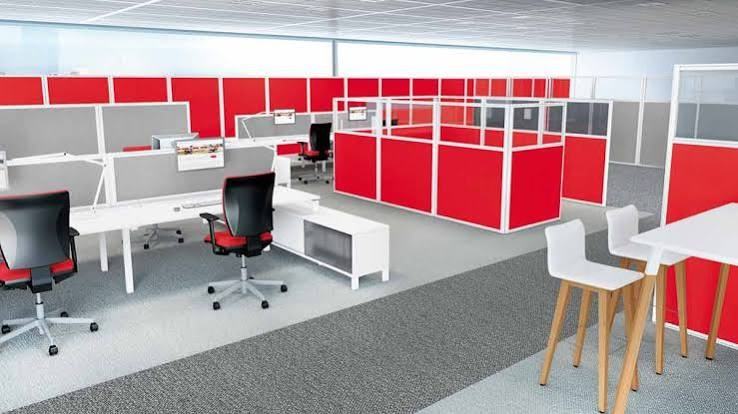
- Staff workstations and departmental spaces.
- Storage rooms and internal office divisions.
- Training rooms and consultation spaces.
Unlike traditional brick walls, gypsum board partitions are generally lighter, quicker to install and easier to modify when office requirements change.
1. Cost-Effective Office Interior Partitioning
One of the biggest benefits of gypsum board for office partitioning is its cost-effectiveness.
Constructing traditional brick or block walls can involve significant expenses related to materials, labour, plastering and finishing. Gypsum board partitions provide an alternative that can reduce construction time and simplify the installation process.
Businesses can use gypsum partitions to divide large office spaces without undertaking extensive masonry work.
The overall cost depends on factors such as:
- Size and number of partitions required.
- Type and thickness of gypsum boards.
- Quality of the supporting framework.
- Insulation requirements.
- Design complexity and finishing options.
- Installation labour and site conditions.
For businesses in Uganda seeking affordable office partitioning solutions, gypsum board can provide excellent value when properly specified and professionally installed.
2. Creates a Modern and Professional Office Appearance
The appearance of an office plays an important role in creating a positive impression on clients, visitors, employees and business partners.
Gypsum board partitions provide smooth, clean surfaces that can be finished in different colours and designs to complement an organisation’s interior style.
They can be painted to match corporate colours, combined with glass partitions or designed with decorative features to create an attractive working environment.
Some popular gypsum partition designs include:
- Full-height gypsum office partitions.
- Half-height gypsum partitions.
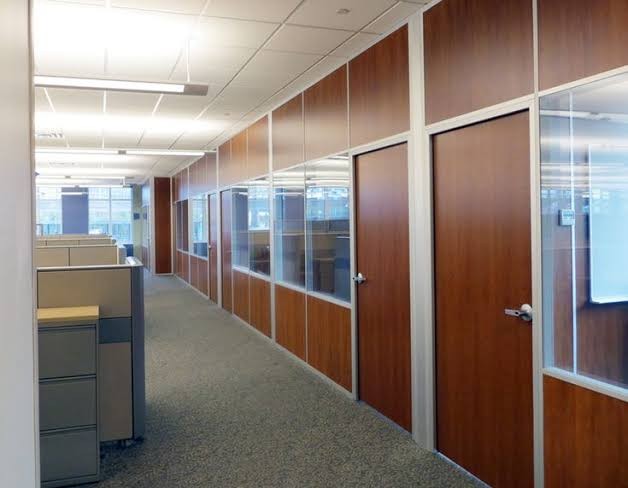
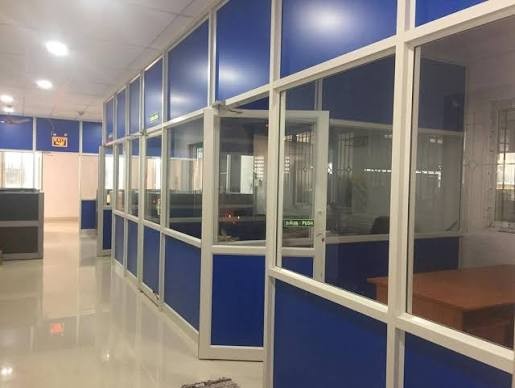
- Gypsum partitions with glass panels.
- Decorative feature walls.
- Recessed shelving and display sections.
- Contemporary meeting room partitions.
These options allow businesses to achieve a professional office appearance while maintaining practical space separation.
3. Improves Office Privacy
Privacy is essential in many working environments, particularly where employees handle confidential information, conduct private meetings or serve clients.
Gypsum board partitions help create separate rooms and enclosed spaces within open office layouts.
They are suitable for:
- Human resource departments.
- Finance and accounting offices.
- Executive offices.
- Consultation rooms.
- Private meeting rooms.
- Administrative departments.
For better privacy, gypsum partitions can incorporate insulation materials within the wall cavity and appropriate door systems.
However, sound privacy depends on the entire partition assembly, including board layers, insulation, framing, joints, doors and ceiling connections.
4. Provides Good Sound Insulation
Noise can affect concentration, communication and productivity in busy office environments.
One important advantage of gypsum board partitioning is its ability to support effective sound insulation when installed using an appropriate partition system.
Sound-insulating gypsum partitions can help reduce noise transmission between offices, meeting rooms and other working areas.
For improved acoustic performance, installers may incorporate:
- Acoustic insulation within the partition cavity.
- Double layers of gypsum board.
- Properly sealed joints and perimeter connections.
- Acoustic-rated doors.
- Special acoustic gypsum board systems.
These features are particularly useful in offices where confidential discussions, telephone conversations and meetings take place regularly.
The level of sound reduction achieved depends on the complete system specification and quality of installation.
5. Quick and Easy Installation
Time is an important consideration when renovating or setting up an office.
Compared with conventional masonry walls, gypsum board partitions can often be installed much faster because they require less wet construction work.
The general installation process involves preparing the layout, fixing the framework, installing gypsum boards, treating joints and completing the surface finish.
Faster installation offers several advantages:
- Reduces disruption to normal business operations.
- Helps businesses complete renovations sooner.
- Minimises construction mess.
- Allows other interior finishing activities to proceed.
- Makes office expansion and reorganisation more convenient.
Professional installation is essential to ensure that the partitions are straight, secure and properly finished.
6. Lightweight and Reduces Structural Load
Gypsum board is considerably lighter than traditional masonry materials used for internal walls.
This makes it an attractive option for commercial buildings, especially where businesses need to reorganise existing spaces without introducing unnecessarily heavy internal partitions.
Its lightweight nature can offer advantages such as:
- Reduced additional dead load compared with masonry partitions.
- Easier transportation and handling.
- More convenient installation on suitable existing floors.
- Greater flexibility when modifying office layouts.
The supporting structure and partition design should still be assessed to ensure that the proposed installation is appropriate for the building.
7. Flexible Office Layouts and Space Management
Modern businesses frequently change their office arrangements as departments expand, teams grow or operational requirements evolve.
Gypsum board partitions make it easier to create customised office layouts without permanently committing to traditional masonry walls.
They can be used to divide open spaces into different functional areas while maintaining a consistent interior design.
For example, a large office can be reorganised into:
- Individual employee offices.
- Shared workspaces.
- Meeting and conference rooms.
- Reception and customer service areas.
- Management offices.
- Staff rest areas.
Gypsum partitions can also be removed or modified when necessary, although changes may require professional work and repairs to adjoining finishes.
8. Offers Excellent Design Flexibility
Another major benefit of gypsum board is its versatility in interior design.
Unlike conventional walls that may require extensive construction work to achieve certain decorative features, gypsum board can be shaped and finished to support different interior designs.
Businesses can incorporate:
- Curved and customised partition designs.
- Decorative wall sections.
- Built-in niches and display features.
- Recessed lighting details.
- Combined gypsum and glass partitions.
- Contemporary reception backgrounds.
This flexibility makes gypsum board suitable for both simple office interiors and sophisticated commercial spaces.
9. Supports Fire-Resistant Partition Systems
Fire safety is an important consideration in commercial building design.
Special fire-resistant gypsum boards are manufactured for use in partition systems that require improved fire performance.
When installed as part of a tested and appropriately specified assembly, these systems can help delay the spread of fire and provide additional protection to building occupants and property.
Fire-rated gypsum partitions are particularly useful in areas where fire separation is required.
It is important to understand that ordinary gypsum board is not automatically a fire-rated wall. The required fire resistance depends on the complete system, including board type, number of layers, framing, joints and installation details.
Businesses should select partition systems that comply with applicable building and fire safety requirements.
10. Easy to Maintain and Repair
Office interiors experience regular use, and partition walls may develop scratches, dents or minor surface damage over time.
Gypsum board partitions are relatively easy to maintain because damaged sections can often be repaired without reconstructing the entire wall.
Common maintenance activities include:
- Filling small cracks and holes.
- Repairing damaged board sections.
- Replacing severely damaged panels.
- Repainting stained or scratched surfaces.
- Checking joints and connections.
- Addressing moisture-related damage.
Proper maintenance helps preserve the appearance and durability of gypsum partitions.
11. Can Improve Thermal Comfort
Gypsum board partitions can contribute to indoor thermal comfort when designed with suitable insulation materials.
Insulation installed within the partition cavity can help reduce heat transfer between different rooms.
This may be useful in offices where meeting rooms, server areas or departments have different cooling requirements.
Although gypsum board alone is not a substitute for a building’s main thermal insulation system, combining it with appropriate insulation can improve the overall performance of selected interior spaces.
12. Suitable for Different Types of Commercial Buildings
Gypsum board office partitioning is not limited to conventional office spaces. Its versatility makes it suitable for various commercial and institutional environments.
Common applications include:
Corporate offices: Creating executive offices, departments, boardrooms and meeting spaces.
Hotels: Dividing administrative offices, staff rooms and selected internal spaces.
Hospitals and healthcare facilities: Creating suitable administrative offices, consultation areas and other internal spaces using appropriate board specifications.
Educational institutions: Separating staff offices, administrative departments and selected learning spaces.
Shopping centres: Creating management offices, service rooms and commercial interior divisions.
Financial institutions: Establishing private offices, consultation rooms and administrative spaces.
The selected partition system should always meet the functional, hygiene, acoustic and safety requirements of the particular building.
13. Allows Easy Integration with Electrical and Communication Systems
Modern offices require electrical installations, lighting, internet connectivity and communication systems.
Gypsum board partitions make it possible to accommodate suitable concealed electrical and communication services within the wall cavity.
This allows businesses to install:
- Electrical sockets.
- Light switches.
- Data and network outlets.
- Communication cables.
- Security system wiring.
- Selected lighting installations.
All electrical work should be carried out by qualified professionals, with appropriate protection and access provisions to meet applicable safety requirements.
Gypsum Board Partitions vs Traditional Brick Walls
When selecting an office partitioning material, it is important to understand how gypsum board compares with traditional brick or block walls.
| Feature | Gypsum Board Partitions | Brick/Block Walls |
|---|---|---|
| Weight | Generally lightweight | Heavy |
| Installation | Relatively fast | Usually slower |
| Surface finish | Smooth factory board surface | Usually requires plastering |
| Design flexibility | High | More limited |
| Office modifications | Generally easier | More difficult |
| Sound insulation | Good with suitable systems | Depends on wall construction |
| Fire performance | Available in tested fire-rated systems | Depends on wall materials and construction |
| Maintenance | Localised repairs are possible | Repairs may require masonry and plastering |
| Construction mess | Generally less | Generally more |
Which is better?
Gypsum board is an excellent choice for businesses prioritising speed, flexibility, modern appearance and easier office reorganisation.
Brick or block walls may be more appropriate where heavy-duty construction, impact resistance or specific structural requirements are important.
The best choice depends on the intended use of the space, budget, building design and performance requirements.
Factors to Consider Before Installing Gypsum Board Office Partitions
Before choosing gypsum board for your office interior partitioning project, consider the following factors:
1. Purpose of the Partition
Determine whether the partition will be used for privacy, sound control, departmental separation, meeting rooms or decorative purposes.
2. Quality of Gypsum Boards
Choose quality boards suitable for the intended environment. Standard, moisture-resistant and fire-resistant boards are available for different applications.
3. Supporting Framework
The metal or timber framework must be properly selected and installed to provide stability and support.
4. Acoustic Requirements
If you need private offices or quiet meeting rooms, consider acoustic insulation, additional board layers and suitable door systems.
5. Moisture Exposure
Gypsum boards should be selected according to the moisture conditions of the installation area. Standard boards are not suitable for locations exposed to persistent moisture.
6. Electrical and Communication Requirements
Plan the position of sockets, switches, lighting and network connections before closing the partition walls.
7. Professional Installation
Work with experienced office partitioning specialists who understand measurements, framing, board fixing, joint treatment and finishing.
Why Choose Daltrevco for Office Partitioning in Uganda?
Choosing the right office partitioning contractor is essential for achieving a durable, attractive and functional workspace.
Daltrevco provides construction and interior solutions designed to meet the practical needs of commercial and residential clients in Uganda.
When planning an office partitioning project, it is important to work with a team that considers the layout, materials, finishing quality and intended use of every space.
Whether you are creating private offices, meeting rooms, reception areas or departmental divisions, Daltrevco can help you plan an interior partitioning solution that makes better use of your available space.
Our approach focuses on:
- Practical office space planning.
- Suitable partitioning materials.
- Professional installation.
- Modern and attractive interior finishes.
- Solutions tailored to project requirements.
- Attention to functionality and durability.
Visit https://www.daltrevco.com/ to learn more about our construction and interior solutions.
Frequently Asked Questions About Gypsum Board Office Partitioning
1. Is gypsum board good for office partitioning?
Yes. Gypsum board is an excellent option for office partitioning because it is lightweight, relatively quick to install, versatile and provides a smooth finish. It can also offer good sound insulation when combined with suitable acoustic materials.
2. How long do gypsum board office partitions last?
Gypsum board partitions can last for many years when properly installed, protected from moisture and maintained regularly. Their lifespan depends on material quality, installation standards and the conditions of the office environment.
3. Do gypsum board partitions reduce office noise?
Yes. Gypsum partitions can reduce noise transmission, especially when constructed with acoustic insulation, additional board layers and properly sealed joints. The level of sound reduction depends on the complete partition system.
4. Are gypsum board partitions cheaper than brick walls?
Gypsum board partitions can be more cost-effective for many internal office divisions because they generally require less construction time and finishing work. However, the actual cost depends on the design, materials, labour and required performance.
5. Can gypsum board partitions support shelves and cabinets?
Yes, but heavy shelves, cabinets and other fixtures require appropriate reinforcement and suitable fixing methods. Their positions and support requirements should be planned before installation.
6. Are gypsum board partitions waterproof?
Standard gypsum boards are not waterproof. Moisture-resistant varieties are available for certain humid environments, but they should not be treated as waterproof materials or used in areas exposed to persistent water without an appropriate system.
7. Can gypsum board partitions be combined with glass?
Yes. Gypsum board can be combined with glass panels to create modern office partitions that balance privacy, natural light and visual openness.
8. Can gypsum board partitions be modified after installation?
Yes. They can be modified, extended or removed when office requirements change. However, modifications should be handled professionally to protect electrical services and maintain the quality of surrounding finishes.
Conclusion
Gypsum board is one of the most practical materials for modern office interior partitioning. Its lightweight construction, cost-effectiveness, smooth finishes, design flexibility and potential for sound insulation make it an excellent choice for businesses seeking functional and attractive office spaces.
From creating private offices and meeting rooms to improving departmental organisation, gypsum board partitions offer flexible solutions for different commercial environments.
For businesses planning office renovations, new office construction or workspace improvements in Uganda, selecting the right materials and professional installation team is essential.
Contact Daltrevco today to explore professional office partitioning and interior solutions that transform your workspace into a more organised, comfortable and productive environment.