
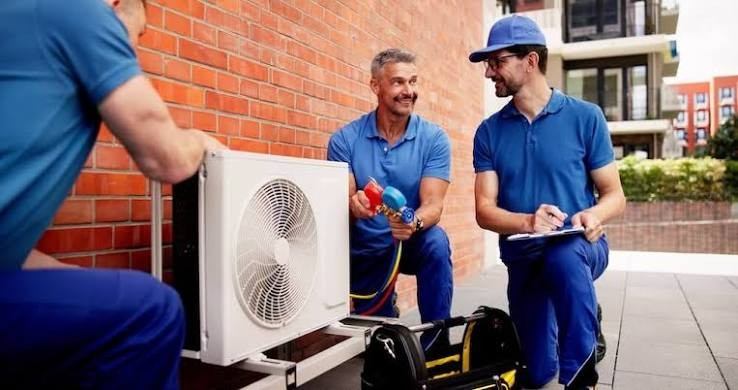
Energy-efficient HVAC systems are essential for reducing operating costs, improving indoor comfort and creating sustainable commercial buildings. In Uganda, where offices, hotels, hospitals, shopping centres and industrial facilities rely on air conditioning and ventilation to maintain comfortable indoor environments, choosing the right heating, ventilation and air-conditioning system can make a significant difference to long-term building expenses.
Heating, ventilation and air conditioning (HVAC) systems help regulate indoor temperature, control humidity, circulate fresh air and maintain suitable indoor air quality. However, poorly designed or inefficient systems can consume excessive electricity, increase maintenance costs and create uncomfortable working environments.
For businesses operating large commercial properties, HVAC energy consumption can become a significant part of monthly operating expenses. An inefficient air-conditioning system may also place unnecessary pressure on electrical infrastructure and increase the cost of maintaining a building.
Investing in energy-efficient HVAC systems provides a practical way to improve building performance while controlling energy consumption. Through appropriate equipment selection, professional installation, effective ventilation, smart controls and regular maintenance, commercial property owners can achieve more reliable and economical building operations.
This guide explains how energy-efficient HVAC systems work, their benefits, the technologies available, installation considerations and practical ways to reduce HVAC operating costs in commercial buildings in Uganda.
What Are Energy-Efficient HVAC Systems?
Energy-efficient HVAC systems are heating, ventilation and air-conditioning solutions designed to provide the required indoor comfort and air quality while using electricity and other energy resources efficiently.
These systems combine suitable equipment, effective building design, efficient controls and proper maintenance to minimise unnecessary energy consumption.
An efficient HVAC installation may include:
- Energy-efficient air-conditioning units.
- Variable-speed compressors and fans.
- Inverter-driven air-conditioning systems.
- Efficient ventilation equipment.
- Heat recovery ventilation where appropriate.
- Programmable thermostats.
- Smart temperature controls.
- Occupancy sensors and scheduling.
- Properly insulated ductwork and refrigerant piping.
- Building management system integration.
The best solution depends on the building’s size, occupancy, location, operating schedule, internal heat loads and ventilation requirements.
An energy-efficient system should not simply be selected because it has a high efficiency rating. It must also be correctly sized, installed, commissioned and maintained.
Why HVAC Energy Efficiency Matters in Uganda
Commercial buildings in Uganda face different cooling and ventilation requirements depending on their location, design, occupancy and business activities.
Offices may require air conditioning throughout working hours, while hotels and hospitals may operate around the clock. Shopping centres, restaurants and industrial facilities also have different temperature-control and ventilation demands.
When HVAC equipment is inefficient or poorly managed, businesses may experience:
- High electricity bills.
- Uneven indoor temperatures.
- Poor indoor air quality.
- Excessive equipment wear.
- Frequent breakdowns.
- Higher maintenance expenses.
- Reduced employee and customer comfort.
- Unnecessary energy consumption outside operating hours.
Energy-efficient HVAC systems help address these challenges by improving how cooling, ventilation and temperature control are delivered.
For commercial property owners, HVAC efficiency should be considered during the planning, construction, renovation and operation of a building.
12 Benefits of Energy-Efficient HVAC Systems for Commercial Buildings
1. Reduced Electricity Consumption
Air-conditioning and ventilation equipment can consume substantial electricity, particularly in buildings that operate for extended hours.
Energy-efficient HVAC equipment is designed to deliver the required cooling or ventilation with less energy than less efficient alternatives under comparable operating conditions.
Features such as inverter compressors, efficient fans and intelligent controls help equipment adjust its output according to actual demand.
This can reduce unnecessary electricity consumption in offices, hotels, hospitals and other commercial facilities.
2. Lower Monthly Operating Costs
Electricity is an important operating expense for many commercial properties.
When HVAC systems consume less electricity, businesses can reduce the cost associated with cooling and ventilation.
The financial benefit depends on factors such as:
- Existing equipment efficiency.
- Building size.
- Cooling demand.
- Operating hours.
- Electricity tariffs.
- Maintenance condition.
- Indoor temperature settings.
- Occupancy levels.
For buildings with extensive air-conditioning requirements, an HVAC energy-efficiency improvement programme can contribute to better long-term cost management.
3. Improved Indoor Comfort
A commercial HVAC system should maintain suitable indoor temperatures without creating uncomfortable hot and cold areas.
Efficient systems, when properly designed, can provide more consistent temperature control throughout different parts of a building.
This is particularly important in:
- Corporate offices.
- Hotels and guest accommodation.
- Hospitals and healthcare facilities.
- Conference centres.
- Shopping malls.
- Educational institutions.
- Restaurants.
Good temperature control helps create a more comfortable environment for employees, visitors, customers and occupants.
4. Better Indoor Air Quality
Ventilation is an essential part of HVAC performance.
A properly designed system helps introduce outdoor air, remove stale indoor air and manage indoor contaminants according to the building’s requirements.
This is important in offices, hospitals, hotels, schools and other spaces where many people spend time indoors.
Depending on the application, HVAC systems may incorporate:
- Appropriate air filtration.
- Mechanical ventilation.
- Exhaust ventilation.
- Humidity management.
- Air distribution systems.
- Outdoor air controls.
Energy efficiency should never be achieved by reducing ventilation below the levels required for occupant health, safety and applicable building standards.
5. Longer Equipment Operating Life
HVAC equipment that operates under appropriate conditions and receives regular maintenance is generally less likely to experience avoidable stress.
Correct sizing, suitable installation, proper airflow and effective control settings can help prevent excessive cycling and unnecessary operating strain.
This can support more reliable equipment performance and reduce premature replacement requirements.
6. Reduced Maintenance and Repair Expenses
Poorly maintained HVAC systems may develop problems such as blocked filters, refrigerant leaks, dirty coils, damaged fans and drainage blockages.
These issues can reduce performance and increase electricity consumption.
A planned maintenance programme helps identify problems before they develop into expensive repairs.
Efficient operation can also reduce unnecessary wear on certain system components.
7. Improved Workplace Productivity
Indoor comfort affects how employees experience their working environment.
Offices that are excessively hot, poorly ventilated or uncomfortable may negatively affect concentration and employee satisfaction.
A suitable HVAC system helps maintain comfortable temperatures and appropriate ventilation, supporting a better workplace environment.
8. Better Temperature and Humidity Control
Humidity management is important in many commercial environments.
Excessive indoor humidity may contribute to discomfort, condensation and moisture-related building problems.
HVAC systems should be selected and configured to provide suitable temperature and humidity management for the building’s intended use.
Hotels, healthcare facilities, laboratories and specialised commercial spaces may have additional environmental requirements.
9. Lower Environmental Impact
Reducing unnecessary electricity consumption can help lower the environmental impact associated with building operations.
Energy-efficient HVAC systems can support wider sustainability objectives when combined with other measures such as:
- Solar power installations.
- Efficient electrical systems.
- LED lighting.
- Smart energy monitoring.
- Building automation.
- Improved insulation.
- Efficient water systems.
Businesses seeking to improve building sustainability should consider HVAC efficiency as part of an integrated energy-management strategy.
10. Improved Building Value and Market Appeal
Modern commercial tenants increasingly consider operating costs, indoor comfort and building efficiency when selecting premises.
A well-designed HVAC system can improve the functionality and attractiveness of a commercial property.
Efficient building utilities may also support better property management and long-term asset performance.
11. Better Control Through Automation
Modern HVAC systems can integrate with automated controls and building management systems.
These technologies allow facility managers to monitor and adjust indoor temperatures, operating schedules and equipment performance.
Automation can reduce unnecessary cooling in unoccupied areas and help coordinate HVAC operation with actual building demand.
12. Greater Operational Reliability
A properly selected and maintained HVAC system is more likely to deliver dependable performance.
For commercial buildings where indoor environmental conditions are important, reliable temperature control and ventilation support daily business operations.
Hospitals, hotels, data rooms and industrial facilities may require additional redundancy, monitoring and emergency planning depending on their operational needs.
Types of Energy-Efficient HVAC Systems Used in Commercial Buildings
Different commercial buildings require different HVAC technologies. The appropriate system depends on building size, layout, cooling demand, ventilation requirements and available infrastructure.
1. Inverter Air-Conditioning Systems
Inverter air conditioners adjust compressor speed according to the cooling demand.
Instead of repeatedly switching between full power and complete shutdown, the system can vary its output to maintain the desired indoor temperature.
Potential benefits include:
- Reduced energy consumption under suitable operating conditions.
- More stable indoor temperatures.
- Reduced compressor start-stop cycling.
- Improved comfort.
- Better control of cooling demand.
Inverter systems are available in different capacities and configurations for offices, hotels, shops and selected commercial spaces.
2. Variable Refrigerant Flow (VRF) Systems
Variable Refrigerant Flow systems are designed to serve multiple indoor units through a shared outdoor system.
They are particularly useful in buildings with different rooms or zones that require independent temperature control.
Common applications include:
- Office complexes.
- Hotels.
- Commercial buildings.
- Large residential developments.
- Conference facilities.
VRF systems can offer flexible zoning and efficient operation when correctly designed for the building’s cooling and heating requirements.
3. Variable Air Volume (VAV) Systems
Variable Air Volume systems regulate the amount of conditioned air delivered to different building zones.
They are commonly considered for larger commercial buildings where different areas have varying occupancy and cooling requirements.
VAV systems can help avoid supplying the same amount of conditioned air to every space regardless of demand.
4. Chilled Water HVAC Systems
Chilled water systems use central equipment to produce chilled water, which is circulated to air-handling units or fan coil units to provide cooling.
They are commonly used in larger facilities with substantial cooling requirements.
Examples include:
- Large office buildings.
- Shopping centres.
- Hospitals.
- Hotels.
- Large institutional facilities.
Their efficiency depends on the design and performance of chillers, pumps, cooling towers where used, air-handling equipment and control systems.
5. High-Efficiency Split Air-Conditioning Systems
Split air-conditioning systems consist of indoor and outdoor units connected through refrigerant piping.
They can be suitable for individual rooms, offices, meeting spaces and smaller commercial facilities.
Choosing appropriately sized, high-efficiency equipment is important for achieving good performance.
6. Energy-Efficient Ventilation Systems
Ventilation systems supply fresh air and remove stale or contaminated indoor air.
Efficient ventilation solutions may incorporate energy-efficient fans, suitable filtration, demand-controlled ventilation and heat recovery where appropriate.
Ventilation design must maintain required indoor air quality while avoiding unnecessary energy use.
How to Reduce HVAC Operating Costs in Commercial Buildings
Installing efficient HVAC equipment is only one part of controlling energy expenses. Building owners and facility managers should also focus on how systems are operated and maintained.
1. Select the Correct HVAC System Size
Oversized and undersized HVAC systems can both create performance problems.
An oversized system may cycle frequently, provide inconsistent temperature control and operate inefficiently under certain conditions.
An undersized system may run continuously without achieving the required indoor temperature.
Correct equipment sizing should be based on a proper cooling and ventilation load assessment.
The assessment should consider:
- Building dimensions.
- Number of occupants.
- Window sizes and orientation.
- Roof and wall insulation.
- Heat generated by lighting and equipment.
- Outdoor climate conditions.
- Air infiltration.
- Ventilation requirements.
- Operating schedules.
2. Use Programmable Thermostats
Programmable thermostats allow building managers to set temperature schedules according to occupancy and working hours.
For example, office cooling can be reduced or adjusted outside normal working hours where operational and comfort requirements allow.
This helps prevent unnecessary cooling when spaces are not being used.
3. Introduce HVAC Zoning
Different parts of a commercial building may have different cooling requirements.
A meeting room, server room, reception area and general office space do not necessarily need identical temperature settings.
Zoning allows selected areas to be controlled independently.
This can help reduce energy waste by avoiding unnecessary cooling in lightly occupied areas.
4. Maintain Air Filters Regularly
Dirty air filters restrict airflow and can reduce HVAC performance.
Blocked filters may force equipment to work harder to deliver the required airflow.
Regular inspection and cleaning or replacement according to manufacturer recommendations help maintain system performance and indoor air quality.
5. Clean Coils and Inspect Equipment
Dirty evaporator and condenser coils can interfere with heat transfer.
Regular servicing should include appropriate inspection and cleaning of relevant equipment components.
Technicians should also check fans, drainage systems, electrical connections and other components according to the manufacturer’s maintenance requirements.
6. Inspect Refrigerant Systems for Leaks
Refrigerant leaks can reduce cooling performance and place additional strain on equipment.
Commercial HVAC systems should be inspected by competent technicians using appropriate procedures.
Refrigerant handling, leak repair and system charging should follow manufacturer requirements and applicable environmental and safety regulations.
7. Improve Building Insulation
A building that gains excessive heat through its roof, walls, windows and doors places greater demand on air-conditioning equipment.
Improving the building envelope can reduce cooling requirements.
Possible improvements include:
- Suitable roof insulation.
- Better window performance.
- Shading for exposed windows.
- Sealing unnecessary air leakage.
- Appropriate wall insulation.
- Reducing direct solar heat gain.
These improvements can complement HVAC upgrades and support lower operating expenses.
8. Use Energy-Efficient Lighting
Traditional lighting can add unnecessary heat to indoor spaces.
Replacing inefficient lighting with LED fixtures can reduce electricity consumption and, in some situations, reduce the cooling load associated with lighting.
This is particularly relevant in offices, shopping centres, hotels and commercial buildings that use many lighting fixtures.
9. Install Smart HVAC Controls
Smart controls allow building operators to monitor and manage HVAC systems more effectively.
Depending on the system, features may include:
- Temperature scheduling.
- Occupancy-based control.
- Remote monitoring.
- Equipment status alerts.
- Zone-level temperature management.
- Energy-use reporting.
These controls can help identify unusual operating patterns and reduce unnecessary energy use.
10. Schedule Preventive Maintenance
Preventive maintenance helps identify developing problems before they lead to major equipment failure.
A maintenance programme should be developed according to the equipment manufacturer’s recommendations, usage levels and building requirements.
Regular maintenance may include:
- Filter inspection and replacement.
- Coil cleaning.
- Drainage inspection.
- Refrigerant leak checks.
- Fan and motor inspection.
- Electrical connection checks.
- Thermostat testing.
- Airflow verification.
- System performance checks.
Energy-Efficient HVAC Systems for Different Commercial Buildings
HVAC Systems for Office Buildings
Offices require suitable temperature control and ventilation for employees, visitors and meeting spaces.
Energy-efficient solutions may include inverter air conditioners, VRF systems, zoning, programmable thermostats and occupancy-based controls.
A good design should consider different operating schedules across offices, conference rooms, reception areas and shared spaces.
HVAC Systems for Hotels
Hotels often have varying cooling requirements across guest rooms, restaurants, kitchens, reception areas, conference facilities and service areas.
A suitable HVAC design should provide comfort while allowing independent control where necessary.
Potential solutions include VRF systems, efficient split air conditioners, centralised cooling and smart room controls.
HVAC Systems for Hospitals
Healthcare facilities require carefully planned temperature control, ventilation and air quality management.
Different departments may have different environmental requirements.
Areas such as operating theatres, isolation rooms, laboratories and patient wards may require specialised HVAC arrangements, pressure control and filtration.
Energy efficiency must never compromise healthcare ventilation, infection-control procedures or required environmental conditions.
HVAC Systems for Shopping Centres
Shopping centres have large occupied spaces, retail units, restaurants and shared facilities.
HVAC systems must account for varying occupancy levels, lighting loads, equipment heat and different tenant requirements.
Centralised systems, zoning, efficient ventilation and smart controls may improve operational management.
HVAC Systems for Industrial Buildings
Industrial facilities may require ventilation and temperature control for production processes, workers, machinery and stored materials.
The appropriate solution depends on the activities taking place.
Possible systems include:
- Industrial ventilation.
- High-capacity air-conditioning.
- Air-handling units.
- Process cooling.
- Exhaust systems.
- Evaporative cooling where suitable.
- Temperature and humidity monitoring.
Industrial HVAC design should consider dust, heat, fumes, machinery and other site-specific conditions.
HVAC Systems for Restaurants and Commercial Kitchens
Restaurants and commercial kitchens produce heat, smoke, grease and odours.
They require appropriate ventilation and extraction arrangements in addition to general air conditioning.
Kitchen exhaust systems must be properly designed, installed and maintained to support safety and suitable indoor conditions.
Important Factors to Consider When Choosing an Energy-Efficient HVAC System
Before selecting an HVAC system, commercial property owners should assess the building’s requirements carefully.
Building Size and Layout
The size, height and internal arrangement of a building influence equipment selection and air distribution.
Occupancy Levels
A building with high occupancy may require greater ventilation and cooling capacity than a similar building with fewer occupants.
Operating Hours
Hotels, hospitals and some industrial facilities may operate continuously, while many offices have fixed working hours.
Operating schedules influence equipment selection and energy-management strategies.
Energy Efficiency Ratings
Compare the efficiency information provided by manufacturers and consider the appropriate performance metrics for the equipment.
For cooling equipment, specifications may include EER, SEER or other applicable efficiency ratings, depending on the product and testing standard.
Maintenance Requirements
Consider equipment accessibility, availability of replacement components, servicing requirements and manufacturer support.
Indoor Air Quality Requirements
The HVAC system must provide appropriate ventilation and filtration for the building’s activities.
Total Cost of Ownership
The cheapest equipment may not offer the best long-term value.
Compare initial purchase and installation expenses with expected energy consumption, maintenance requirements, equipment lifespan and replacement costs.
What Determines the Cost of Installing Energy-Efficient HVAC Systems in Uganda?
The cost of installing an energy-efficient HVAC system depends on the size, purpose and technical requirements of the building.
A small commercial office will generally require a different installation from a large hotel, hospital or shopping centre.
Important cost factors include:
- Building size: Larger buildings usually require greater cooling and ventilation capacity.
- HVAC system type: Split systems, VRF systems, central chilled water systems and industrial ventilation systems have different costs.
- Equipment efficiency: Higher-efficiency equipment may require a greater initial investment.
- Number of indoor units: Multiple rooms and zones may require additional equipment.
- Ductwork and piping: Installation of air ducts, refrigerant pipes and water distribution systems affects project cost.
- Electrical requirements: New circuits, protective devices and electrical upgrades may be necessary.
- Controls and automation: Smart thermostats, sensors and building management systems can add to the initial cost.
- Building modifications: Ceiling works, structural supports and equipment access may influence installation expenses.
- Ventilation requirements: Additional fresh-air and exhaust systems may be needed.
- Installation and commissioning: Labour, testing and system configuration contribute to the overall project budget.
How to Obtain an Accurate HVAC Installation Quotation
A reliable quotation should follow an assessment of the building and its cooling and ventilation requirements.
The quotation should clearly outline:
- Recommended HVAC equipment.
- Cooling and ventilation capacity.
- Number of units and zones.
- Ductwork and piping requirements.
- Electrical installation requirements.
- Control systems.
- Installation labour.
- Testing and commissioning.
- Maintenance recommendations.
- Warranty information.
Property owners should compare quotations based on technical suitability and long-term operating value rather than purchase price alone.
Common Mistakes to Avoid When Installing Commercial HVAC Systems
Poor planning and installation can increase operating expenses even when modern equipment is purchased.
Avoid the following mistakes:
1. Installing oversized equipment: Oversized systems may cycle excessively and fail to provide effective humidity control.
2. Choosing equipment based only on purchase price: Low-cost equipment may have higher energy consumption or maintenance requirements.
3. Ignoring ventilation requirements: Cooling alone does not guarantee suitable indoor air quality.
4. Poor ductwork design: Incorrect duct sizing and air leakage can reduce system performance.
5. Neglecting insulation: A building that gains excessive heat increases the cooling load.
6. Poor thermostat placement: Incorrect sensor locations can result in inaccurate temperature readings.
7. Ignoring zoning: Cooling every area equally can waste energy where occupancy and cooling requirements differ.
8. Failing to maintain equipment: Dirty filters, coils and poorly maintained components can reduce performance.
9. Ignoring system commissioning: Equipment should be tested and adjusted to confirm that it operates as intended.
10. Overlooking future building requirements: HVAC systems should be planned with future occupancy, expansion and operational needs in mind.
The Role of Building Management Systems in HVAC Energy Efficiency
Building Management Systems (BMS) help facility managers monitor and control building services from a centralised platform.
Depending on the installed system, a BMS can coordinate HVAC equipment with lighting, energy monitoring, ventilation and other building utilities.
HVAC-related BMS functions may include:
- Monitoring indoor temperatures.
- Controlling air-conditioning schedules.
- Managing different building zones.
- Monitoring equipment operating status.
- Identifying unusual energy consumption.
- Coordinating ventilation systems.
- Providing equipment fault alerts.
- Supporting preventive maintenance planning.
For large commercial properties, BMS integration can help improve visibility and control over building operations.
A properly configured system should be designed around the building’s operational requirements and the capabilities of the installed equipment.
How Energy Audits Help Reduce HVAC Operating Costs
An energy audit helps property owners understand where electricity is being consumed and identify opportunities for improvement.
For commercial buildings, an HVAC assessment may examine:
- Equipment efficiency.
- Operating schedules.
- Cooling loads.
- Temperature settings.
- Airflow and ventilation.
- Filter and coil condition.
- Ductwork and insulation.
- Building occupancy.
- Energy consumption patterns.
The findings can help facility managers prioritise improvements.
Some buildings may benefit from equipment replacement, while others may achieve savings through better scheduling, maintenance, insulation or control adjustments.
An energy audit can therefore help businesses avoid unnecessary expenditure by identifying the most appropriate improvements.
Why Professional HVAC Installation Matters
The performance of an HVAC system depends on more than the equipment itself.
Correct system design, installation and commissioning are essential for achieving the intended performance.
Professional HVAC installation helps address:
- Correct equipment sizing.
- Suitable system selection.
- Proper refrigerant piping.
- Effective ductwork design.
- Electrical safety.
- Adequate drainage.
- Appropriate ventilation.
- Correct control configuration.
- Testing and commissioning.
Commercial HVAC systems can be complex, particularly in hospitals, hotels, industrial facilities and large office buildings.
Property owners should engage competent HVAC and electrical professionals who understand the technical and operational requirements of the project.
Why Consider Daltrevco Company for Building Utility Solutions?
Commercial buildings require well-planned electrical, mechanical and utility systems to operate efficiently.
HVAC performance is closely connected to electrical installations, lighting, ventilation, automation and overall building design.
Daltrevco Company recognises the importance of integrating building systems to support practical, efficient and reliable property operations.
Whether you are planning a new commercial development, upgrading an existing building or exploring ways to reduce HVAC-related electricity expenses, contact Daltrevco Company to discuss your project requirements and suitable building solutions.
Frequently Asked Questions About Energy-Efficient HVAC Systems
1. What is an energy-efficient HVAC system?
An energy-efficient HVAC system provides appropriate heating, cooling and ventilation while minimising unnecessary energy consumption. It combines efficient equipment, suitable system design, effective controls and regular maintenance.
2. How can HVAC systems reduce electricity bills in commercial buildings?
Electricity consumption can be reduced through efficient equipment, correct system sizing, temperature scheduling, zoning, regular maintenance, suitable insulation and smart controls.
3. Which HVAC system is best for commercial buildings in Uganda?
The best system depends on the building’s size, layout, cooling requirements, occupancy and operating hours. Options include inverter split systems, VRF systems, VAV systems and central chilled water systems.
4. What is a VRF HVAC system?
A Variable Refrigerant Flow system distributes refrigerant to multiple indoor units through a shared outdoor system. It allows different areas of a building to have independent temperature control.
5. How often should commercial HVAC systems be serviced?
Service frequency depends on equipment type, operating hours, environmental conditions and manufacturer recommendations. High-use commercial systems may require more frequent inspection and maintenance than lightly used systems.
6. Can smart controls reduce HVAC energy consumption?
Yes. Smart controls can help manage temperature settings, occupancy, operating schedules and different building zones. Their effectiveness depends on proper configuration and how the building is used.
7. What is the difference between HVAC and air conditioning?
Air conditioning is primarily concerned with cooling and temperature control. HVAC is a broader term covering heating, ventilation and air conditioning, including indoor air circulation and air quality management.
8. Are inverter air conditioners more energy efficient?
Inverter air conditioners can use less electricity than comparable conventional fixed-speed units under suitable operating conditions because they adjust compressor output to match cooling demand. Actual performance depends on equipment selection, sizing and usage.
9. Can solar power operate commercial HVAC systems?
Yes, solar photovoltaic systems can supply electricity to suitable HVAC installations. However, the solar system, inverter, battery storage where required and electrical infrastructure must be designed to accommodate the equipment’s power demand.
10. How much does commercial HVAC installation cost in Uganda?
Installation costs vary according to the building size, equipment type, cooling capacity, ductwork, piping, electrical requirements and control systems. A professional site assessment is necessary for an accurate quotation.
11. What is the role of ventilation in HVAC systems?
Ventilation introduces outdoor air and removes stale or contaminated indoor air. It supports indoor air quality and must be designed to meet the requirements of the building and its occupants.
12. Can an existing HVAC system be upgraded to improve energy efficiency?
Yes. Improvements may include replacing inefficient equipment, installing smart controls, improving insulation, repairing ductwork, cleaning coils, maintaining filters and optimising operating schedules.
Conclusion: Invest in Energy-Efficient HVAC Systems to Reduce Commercial Building Costs
Energy-efficient HVAC systems are an important investment for businesses seeking to control operating expenses, improve indoor comfort and create more sustainable commercial properties in Uganda.
From inverter air conditioners and VRF systems to central cooling, ventilation equipment and smart building controls, the right HVAC solution can improve how a building uses electricity while supporting its daily operations.
However, long-term efficiency depends on proper equipment selection, accurate system sizing, professional installation, effective commissioning and regular maintenance.
For offices, hotels, hospitals, shopping centres, warehouses and industrial facilities, improving HVAC efficiency can contribute to better energy management and more reliable building operations.
If you are planning a new HVAC installation or looking to improve the performance of an existing commercial building, contact Daltrevco Company to discuss your building utility requirements.
Invest in efficient building systems today and create a more comfortable, economical and sustainable commercial property.

