
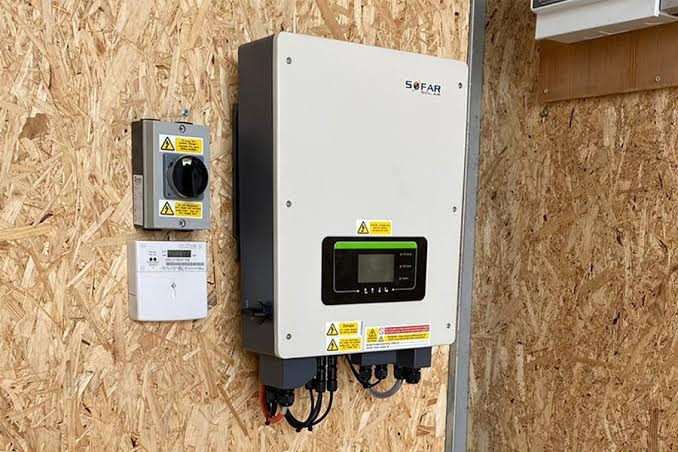
Solar inverters are among the most important components of a solar power system. They convert the electricity generated by solar panels into a form that can power household appliances, office equipment, commercial machinery and other electrical devices.
Whether you are installing solar power for a home, office, hotel, factory, farm or commercial building in Uganda, choosing the right solar inverter is essential for achieving reliable electricity supply, efficient energy management and safe system operation.
However, not all solar inverters work in the same way. Different inverter types are designed for different applications, including grid-connected solar systems, off-grid installations and hybrid systems that combine solar panels, battery storage and grid electricity.
Selecting an unsuitable inverter can result in insufficient power output, poor system performance, battery compatibility problems and unnecessary installation costs.
This guide explains what solar inverters are, how they work, the different types available, their main functions and the important factors to consider when choosing a solar inverter in Uganda.
What Is a Solar Inverter?
A solar inverter is an electrical device that converts direct current (DC) electricity generated by solar panels into alternating current (AC) electricity used by most electrical appliances.
Solar panels produce DC electricity when exposed to sunlight. However, household and commercial electrical installations generally use AC electricity.
The inverter performs the conversion that allows solar-generated electricity to power appliances, supply selected electrical circuits, charge batteries through compatible equipment and interact with the national electricity grid where the system is designed and approved to do so.
Modern solar inverters also perform additional functions, including:
- Managing solar panel energy production.
- Controlling battery charging and discharging in compatible systems.
- Monitoring electricity generation and consumption.
- Managing the interaction between solar power and grid electricity.
- Providing system protection and fault notifications.
- Supporting backup power in appropriately designed systems.
The inverter should therefore be selected according to the solar panel arrangement, battery requirements, electricity demand and intended application.
How Does a Solar Inverter Work?
A solar inverter works by receiving DC electricity from solar panels or batteries and converting it into AC electricity for use within a property.
The operating process depends on the inverter type and the design of the solar power system.
1. Solar Panels Generate DC Electricity
Solar panels capture sunlight and convert it into direct current electricity.
The amount of electricity produced depends on the installed panel capacity, sunlight conditions, shading, temperature and overall system design.
2. The Inverter Receives Solar Electricity
Electricity from the solar panels flows to the inverter through appropriately rated DC cables and protection equipment.
The inverter manages the incoming electricity within its permitted operating voltage and current limits.
3. DC Electricity Is Converted into AC Electricity
The inverter uses electronic switching and control circuits to convert DC electricity into AC electricity.
The output must have the appropriate voltage, frequency and waveform for the connected electrical equipment.
4. Electricity Supplies Connected Appliances
The converted electricity can power household appliances, office equipment, commercial facilities and other connected loads, provided the inverter has sufficient capacity.
5. Excess Energy Is Managed
Depending on the system design, excess solar electricity may be used to charge batteries, exported to the grid under an approved arrangement or curtailed when there is no demand or storage capacity available.
In hybrid systems, the inverter may also coordinate electricity from solar panels, batteries and the grid to meet the property’s energy requirements.
Main Types of Solar Inverters
Different solar inverter technologies are available for residential, commercial and industrial solar installations.
The right option depends on whether the property is connected to the national electricity grid, requires battery backup or needs an independent electricity supply.
1. Grid-Tied Solar Inverters
Grid-tied inverters are designed to operate alongside the national electricity grid.
They convert solar-generated DC electricity into AC electricity that is synchronised with the grid supply.
During daylight hours, solar power can supply connected appliances and reduce the amount of electricity drawn from the grid.
Where an approved export arrangement is available, surplus electricity may also be supplied to the grid according to the applicable utility requirements.
Main features of grid-tied inverters:
- Designed for grid-connected solar installations.
- Synchronise their AC output with the grid.
- Can help reduce grid electricity consumption.
- Commonly operate without battery storage.
- Often include solar generation monitoring.
- Usually incorporate anti-islanding protection.
Important limitation: Conventional grid-tied inverters generally shut down when the grid fails. This is an essential safety feature that prevents electricity from being unintentionally supplied to an isolated grid network.
A standard grid-tied inverter should not be assumed to provide backup electricity during an outage. Backup requires suitable additional equipment and a system specifically designed for that purpose.
Suitable applications:
- Residential properties with reliable grid access.
- Office buildings.
- Retail shops.
- Commercial premises.
- Facilities seeking to reduce daytime grid electricity consumption.
2. Off-Grid Solar Inverters
Off-grid solar inverters are designed for solar installations that operate independently of the national electricity grid.
They convert electricity from solar panels and batteries into AC power for connected appliances.
Many off-grid inverters include integrated battery charging and solar charge controller functions.
Main features of off-grid inverters:
- Designed for independent solar power systems.
- Support battery-based electricity storage.
- Can supply electricity without a grid connection.
- Available in different power ratings.
- Can support remote monitoring on compatible models.
- May include generator input or charging functions.
Suitable applications:
- Rural homes.
- Farms.
- Remote lodges.
- Agricultural facilities.
- Buildings without grid access.
- Independent solar power installations.
Off-grid inverter capacity and battery storage must be carefully calculated to support the expected electricity demand, especially during periods of low solar generation.
3. Hybrid Solar Inverters
Hybrid solar inverters combine solar power management, battery storage and grid interaction within one integrated system.
They can manage electricity from solar panels, batteries and the national electricity grid according to the equipment configuration and programmed operating settings.
Depending on the model, a hybrid inverter may prioritise solar power, charge batteries using surplus generation, draw electricity from the grid when necessary and provide backup power through designated output circuits.
Main features of hybrid inverters:
- Support solar panel integration.
- Allow compatible battery storage.
- Can coordinate grid electricity and solar generation.
- Provide backup capability on supported models.
- Offer advanced energy monitoring.
- Can support different energy management settings.
Suitable applications:
- Residential buildings.
- Offices.
- Hotels and lodges.
- Commercial premises.
- Schools.
- Clinics and healthcare facilities.
- Properties requiring backup electricity.
Hybrid inverters are particularly useful where property owners want to use solar energy, store excess electricity and maintain selected electrical services during grid interruptions.
However, backup performance depends on the inverter’s backup output, battery capacity, system configuration and connected loads.
4. String Solar Inverters
String inverters connect groups of solar panels arranged in series, commonly referred to as strings.
They convert the combined DC electricity from these panel strings into AC electricity.
String inverters are widely used in residential and commercial solar installations.
Advantages include:
- Relatively straightforward system design.
- Suitable for many rooftop solar installations.
- Centralised equipment and monitoring.
- Can provide an economical solution for appropriately designed systems.
Limitations include:
- Shading or performance differences between panels in a string can affect energy production.
- Panel orientation and electrical characteristics must be considered carefully.
- A central inverter can become a single point of failure for the connected strings.
String inverters are suitable for properties with relatively consistent panel orientation and limited shading.
5. Microinverters
Microinverters are small inverters installed at individual solar panels or small groups of panels, depending on the product design.
Instead of sending DC electricity from multiple panels to one central inverter, microinverters convert electricity close to the panels.
Advantages include:
- Independent panel-level conversion.
- Improved flexibility for certain roof layouts.
- Panel-level monitoring on compatible systems.
- Reduced impact of one panel’s performance on other independently converted panels.
Limitations include:
- Higher equipment cost in some installations.
- More electronic devices installed on the roof.
- Maintenance and replacement may require roof access.
- System design must consider equipment compatibility and environmental exposure.
Microinverters may be suitable for rooftops with different orientations, complex layouts or shading conditions.
6. Central Solar Inverters
Central inverters are larger-capacity units commonly used in large commercial and utility-scale solar installations.
They manage electricity generated by multiple solar panel strings and convert it into AC electricity for distribution.
Typical applications include:
- Large commercial buildings.
- Industrial solar installations.
- Solar farms.
- Large institutional facilities.
Central inverter installations require detailed electrical engineering, appropriate protection equipment and careful consideration of system capacity, maintenance access and operational requirements.
Main Functions of a Solar Inverter
A solar inverter does more than convert electricity from DC to AC. Modern units perform several functions that help improve solar system operation and energy management.
1. DC-to-AC Conversion
The primary function is converting DC electricity from solar panels into AC electricity suitable for connected appliances and electrical installations.
2. Maximum Power Point Tracking (MPPT)
Many solar inverters include MPPT technology.
MPPT continuously adjusts the electrical operating point of the solar panel array to help extract available power under changing sunlight and temperature conditions.
This helps improve energy harvesting compared with operating the panels at an unsuitable fixed electrical point.
The number of MPPT inputs and their operating ranges should be considered when designing the solar panel arrangement.
3. Battery Charging Management
Hybrid and off-grid inverters can manage battery charging when compatible storage equipment is connected.
Charging controls regulate important operating parameters according to the battery manufacturer’s specifications.
These settings help maintain safe battery operation and support long-term performance.
4. Battery Discharge Management
In battery-based systems, the inverter controls how stored electricity is supplied to connected appliances.
Depending on the model and configuration, users may be able to set battery discharge limits, reserve capacity and energy priorities.
5. Grid Interaction
Grid-connected and compatible hybrid inverters manage the relationship between solar generation and grid electricity.
They may synchronise with the grid, reduce grid electricity consumption and manage export where permitted and properly configured.
6. Backup Power Management
Hybrid and off-grid inverters can supply designated electrical circuits during grid outages.
The inverter must have suitable backup functionality, and the battery and inverter must be sized to support the connected loads.
7. System Monitoring
Modern solar inverters often include digital monitoring systems.
Depending on the product, users can monitor:
- Solar electricity generation.
- Inverter output.
- Battery charge levels.
- Grid electricity usage.
- Energy consumption.
- Operating status.
- System faults and alerts.
Monitoring helps property owners and technicians identify performance changes and troubleshoot faults.
8. Electrical Protection
Solar inverters may incorporate protective functions such as overvoltage protection, overcurrent protection, temperature monitoring, anti-islanding protection and other safety controls.
These features vary by model and do not replace the need for correctly selected external circuit breakers, isolators, surge protection and earthing arrangements.
How to Choose the Right Solar Inverter in Uganda
Choosing the right solar inverter requires more than comparing product prices and advertised power ratings.
The inverter must match the property’s electricity demand, solar panel configuration, battery requirements and intended operating arrangement.
Consider the following factors before purchasing.
1. Determine Your Electricity Requirements
Start by identifying the electrical appliances and equipment that the solar system must power.
For a home, this may include:
- Lighting.
- Refrigerators and freezers.
- Television sets.
- Computers.
- Internet routers.
- Washing machines.
- Water pumps.
- Air conditioning units.
For commercial and industrial properties, the assessment may include computers, office equipment, refrigeration systems, machinery, lighting, pumps and production equipment.
The installer should calculate both the total energy consumption and the maximum power demand.
Energy consumption is measured in kilowatt-hours (kWh), while inverter output capacity is commonly measured in kilowatts (kW) or kilovolt-amperes (kVA).
These measurements are related but are not interchangeable.
2. Select the Correct Inverter Capacity
The inverter must have sufficient output capacity to operate the appliances expected to run simultaneously.
For example, a property with several appliances operating at the same time may require a larger inverter than a property with a lower simultaneous load.
The selection should consider:
- Continuous output power.
- Peak or surge power.
- Starting current of motors and pumps.
- Power factor of connected equipment.
- Expected future electricity demand.
- Ambient operating temperature and equipment derating.
Motors, compressors, pumps and air conditioners may require substantially more power when starting than during normal operation.
An inverter should therefore not be selected based only on the total wattage of appliances without considering starting requirements.
3. Decide Whether You Need Grid-Tied, Off-Grid or Hybrid Operation
The intended system arrangement determines which inverter type is appropriate.
Choose a grid-tied inverter if your main objective is to use solar electricity alongside a reliable grid supply and battery backup is not required.
Consider an off-grid inverter if the property operates independently of the national electricity grid.
Choose a hybrid inverter if you want to combine solar panels, batteries and grid electricity while supporting backup operation where the model permits it.
The system should be selected according to the property’s electricity supply and backup expectations.
4. Check Battery Compatibility
If you plan to install battery storage, ensure that the inverter supports the selected battery technology and model.
Important compatibility considerations include:
- Battery voltage.
- Charging current.
- Maximum discharge current.
- Battery communication protocols.
- Battery management system compatibility.
- Supported battery configurations.
- Charging and discharge settings.
Some inverters support specific lithium battery models, while others offer broader compatibility.
Always confirm compatibility using the inverter and battery manufacturers’ documentation.
5. Check MPPT Specifications
MPPT capability affects how the solar panels can be connected to the inverter.
Consider:
- Number of independent MPPT trackers.
- Maximum DC input voltage.
- MPPT operating voltage range.
- Maximum input current.
- Maximum permitted solar array power.
- Number of supported panel strings.
These specifications determine whether the proposed solar panel arrangement can operate safely and effectively.
6. Consider Inverter Efficiency
Inverter efficiency describes how effectively the device converts DC electricity into AC electricity.
A more efficient inverter generally loses less energy during conversion under comparable operating conditions.
However, efficiency should not be the only selection factor. Check the manufacturer’s efficiency specifications alongside capacity, operating range, protection features, compatibility and warranty.
7. Review Power Quality and Output Waveform
Most modern solar installations use pure sine wave inverters because they provide an AC output suitable for a wide range of electrical appliances.
Power quality is particularly important for sensitive electronics, computers, communication equipment, motors and other devices.
For commercial and industrial installations, the design may also need to consider voltage regulation, frequency stability, harmonics and compatibility with connected equipment.
8. Check Safety and Protection Features
A suitable inverter should have appropriate built-in protection features.
Depending on the model, these may include:
- Overload protection.
- Short-circuit protection.
- Overtemperature protection.
- Overvoltage protection.
- Undervoltage protection.
- Reverse polarity protection.
- Ground fault monitoring.
- Anti-islanding protection for grid-connected operation.
External protection equipment must still be installed according to the electrical design and applicable requirements.
9. Consider Monitoring and Smart Features
Monitoring features make it easier to understand system performance.
Some inverters offer mobile applications, Wi-Fi connectivity, remote monitoring and energy management controls.
These features can help property owners monitor solar production, battery performance, grid usage and system faults.
For commercial installations, monitoring can also support maintenance planning and energy management.
10. Compare Warranty and After-Sales Support
A solar inverter is an important long-term investment.
Before purchasing, check:
- Manufacturer warranty.
- Local technical support.
- Availability of replacement parts.
- Installation requirements.
- Product documentation.
- Firmware and software support.
- Repair and replacement arrangements.
An inverter with reliable technical support may offer better long-term value than a cheaper product with limited assistance.
Solar Inverter Sizing: Understanding Power Requirements
Correct inverter sizing is essential for reliable solar system operation.
An inverter that is too small may struggle to supply the required electrical load, while an unnecessarily large unit can increase project costs.
The following example illustrates the basic approach.
Suppose a property has the following appliances operating at the same time:
| Appliance | Estimated power |
|---|---|
| Lighting | 200 W |
| Refrigerator | 250 W |
| Television | 120 W |
| Computers | 300 W |
| Internet and networking equipment | 50 W |
| Other small appliances | 300 W |
| Total estimated running load | 1,220 W |
The estimated simultaneous running load is 1,220 watts, or 1.22 kW.
However, this does not automatically mean that a 1.22 kW inverter is sufficient.
The installer must consider the starting current of appliances such as refrigerators, the possibility of additional loads operating at the same time, the inverter’s surge rating and the required operating margin.
For a proper design, all significant electrical loads should be assessed rather than relying on a simple appliance list alone.
Solar Inverter Requirements for Residential Properties
Residential solar inverter selection should be based on household electricity consumption and the desired level of backup power.
A home with basic lighting, refrigeration, television and communication equipment may require a different inverter from a home with air conditioning, water pumps, electric cooking equipment and other high-power appliances.
Important considerations include:
- Number of appliances.
- Maximum simultaneous power demand.
- Daily electricity consumption.
- Required battery storage.
- Backup duration.
- Available roof space for solar panels.
- Existing electrical installation.
- Future household energy requirements.
A hybrid inverter may be appropriate where a homeowner wants solar generation, battery storage and grid backup in one system.
Solar Inverter Requirements for Commercial and Industrial Buildings
Commercial and industrial solar installations often have more complex electrical requirements than residential systems.
Offices, hotels, shopping centres, warehouses, factories and healthcare facilities may have several distribution boards, different load categories and equipment with high starting currents.
Inverter selection should consider:
1. Total Connected Load
The installer should identify all equipment that may operate simultaneously and determine the maximum demand.
2. Critical and Non-Critical Loads
Some equipment must remain operational during a grid outage, while other loads can be disconnected.
Separating critical and non-critical circuits can help optimise inverter and battery capacity.
3. Three-Phase Electrical Supply
Larger commercial and industrial properties may use three-phase electricity.
The inverter must be suitable for the electrical supply arrangement, and the design should consider phase loading and equipment requirements.
4. Motor and Machinery Starting Currents
Industrial motors, pumps, compressors and production equipment may have high starting currents.
The inverter must have sufficient surge capability or be integrated into an appropriate motor-starting arrangement.
5. System Expansion
Businesses may increase their electricity requirements as operations expand.
The solar design should consider whether additional inverter capacity, panels or battery storage may be required in the future.
6. Monitoring and Maintenance
Commercial installations benefit from clear monitoring, fault reporting, maintenance access and documented system performance.
Factors That Affect Solar Inverter Prices in Uganda
Solar inverter prices vary according to the equipment’s capacity, technology, features and intended application.
Important factors include:
Inverter type: Grid-tied, off-grid and hybrid inverters have different capabilities and equipment requirements.
Power capacity: Higher-capacity inverters generally cost more than smaller units.
Battery compatibility: Hybrid and battery-based systems may require additional functionality and communication features.
MPPT capability: The number of MPPT trackers and their electrical specifications can affect the inverter’s price.
Brand and product quality: Manufacturer reputation, product efficiency, warranty and technical support influence purchasing decisions.
Single-phase or three-phase design: The electrical supply arrangement affects equipment selection and overall project cost.
Installation complexity: Electrical modifications, protection equipment, cable requirements and commissioning contribute to the final installation budget.
Property owners should request a detailed quotation showing the inverter model, capacity, specifications, accessories, installation costs and warranty terms.
Common Solar Inverter Problems and How to Prevent Them
Solar inverters can develop faults because of incorrect installation, incompatible equipment, excessive loads, environmental conditions or component ageing.
Common problems include:
1. Inverter Overload
An overload occurs when the connected electrical demand exceeds the inverter’s permitted output capacity.
Prevention: Calculate the maximum expected load before installation and avoid connecting additional high-power appliances without checking inverter capacity.
2. Battery Communication Errors
Hybrid and off-grid inverters may display communication errors when connected batteries are incompatible or incorrectly configured.
Prevention: Use approved battery models and follow the manufacturer’s communication and configuration instructions.
3. Inverter Overheating
Excessive temperatures can cause an inverter to reduce output or shut down for protection.
Prevention: Install the inverter in a suitable location with the required ventilation and operating clearances.
4. Low Solar Generation
Poor sunlight, shading, dirty panels, damaged cables or incorrect panel configuration can reduce the electricity reaching the inverter.
Prevention: Arrange proper solar panel installation, inspect the system and investigate unusual generation changes.
5. Inverter Shutdown During Power Outages
Conventional grid-tied inverters normally shut down when the grid supply fails.
Prevention: If backup electricity is required, select a suitable hybrid or backup-capable system with the necessary battery storage and properly configured backup circuits.
6. Incorrect Inverter Settings
Wrong voltage, charging or operating settings can affect system performance and equipment safety.
Prevention: Configure the inverter according to the solar panel, battery and electrical equipment manufacturers’ requirements.
Inverter repairs and electrical troubleshooting should be carried out by qualified technicians.
Solar Inverter Installation: Important Considerations
Correct installation is essential for reliable solar inverter performance.
Before installation, the contractor should assess the property and prepare an appropriate system design.
Important considerations include:
Suitable location: The inverter should be installed in an area that meets manufacturer requirements for temperature, moisture protection and ventilation.
Secure mounting: The unit should be firmly mounted on an appropriate supporting surface.
Correct cable sizing: DC and AC cables must be selected according to expected current, voltage drop, installation conditions and applicable standards.
Electrical protection: Suitable circuit breakers, isolators, surge protection and earthing arrangements should be provided.
Battery integration: Where batteries are included, the inverter and battery must be compatible and correctly configured.
Grid connection requirements: Grid-connected systems must meet applicable utility connection and approval requirements.
Testing and commissioning: The installer should test the system and verify that it operates correctly before handover.
Solar Inverter Maintenance Best Practices
Although many modern solar inverters require limited routine maintenance, periodic inspection is important for maintaining system performance and identifying potential problems.
Recommended maintenance activities include:
- Check the inverter display for warning messages and fault indicators.
- Monitor solar generation and system performance.
- Keep ventilation openings clear.
- Inspect the installation area for moisture, dust and physical damage.
- Check visible cables and connections for deterioration.
- Review battery charging and communication status where applicable.
- Inspect external electrical protection equipment.
- Arrange periodic professional inspection.
- Keep inverter manuals and warranty documentation.
- Investigate unusual shutdowns or changes in output promptly.
Do not open the inverter casing or attempt repairs on live electrical equipment. Always use qualified technicians.
Common Mistakes to Avoid When Choosing a Solar Inverter
Selecting an inverter without proper technical assessment can lead to poor system performance and unnecessary costs.
Avoid these common mistakes:
- Choosing an inverter based only on its advertised wattage.
- Ignoring the starting current of pumps, refrigerators and motors.
- Buying a hybrid inverter without confirming battery compatibility.
- Installing a grid-tied inverter when backup electricity is required.
- Ignoring MPPT voltage and current limits.
- Selecting equipment without checking warranty conditions.
- Failing to consider future electricity requirements.
- Using poor-quality cables and electrical protection.
- Installing the inverter in a hot or poorly ventilated location.
- Purchasing equipment without a professional system design.
The best inverter is not necessarily the most expensive or the one with the highest advertised capacity. It is the one that correctly meets the property’s electrical and operating requirements.
Frequently Asked Questions About Solar Inverters
1. What is the main function of a solar inverter?
The main function is to convert DC electricity generated by solar panels into AC electricity used by most household and commercial appliances. Modern inverters also manage energy production, battery charging, grid interaction and system monitoring.
2. Which type of solar inverter is best for a home in Uganda?
The best type depends on the home’s electricity supply and backup requirements. A grid-tied inverter may suit a home that mainly wants to reduce grid electricity consumption. A hybrid inverter is suitable where battery storage and backup electricity are required. An off-grid inverter is appropriate for properties without a grid connection.
3. What is the difference between a hybrid inverter and an off-grid inverter?
A hybrid inverter is designed to manage solar generation, battery storage and grid electricity where supported. An off-grid inverter operates independently of the national electricity grid and relies on solar generation, batteries and potentially a generator or another compatible charging source.
4. Can a solar inverter work without batteries?
Yes. Many grid-tied solar inverters operate without batteries. Some solar systems can also use battery-free configurations with other inverter technologies. However, battery-free systems generally cannot provide stored solar electricity at night or conventional backup power during grid outages unless specifically designed with another suitable arrangement.
5. How do I know what size solar inverter I need?
The correct size depends on the total simultaneous power demand, starting currents, power factor, future expansion and system design. A professional load assessment should be completed before selecting the inverter.
6. Can a solar inverter power an entire house?
Yes. A properly sized inverter can supply an entire house if its continuous and surge output ratings are sufficient for the connected appliances. Solar generation and battery storage must also be adequate for the expected energy consumption.
7. Do solar inverters work during power outages?
Conventional grid-tied inverters normally shut down when grid electricity fails. Hybrid and off-grid inverters can provide backup electricity when designed and configured with suitable battery storage and backup circuits.
8. What is MPPT in a solar inverter?
MPPT stands for Maximum Power Point Tracking. It is a technology that adjusts the electrical operating point of solar panels to help extract the available power under changing sunlight and temperature conditions.
9. How long does a solar inverter last?
The operating life varies by product quality, installation conditions, temperature, usage and maintenance. Check the manufacturer’s warranty and product documentation rather than assuming every inverter has the same service life.
10. Can I connect more solar panels to an existing inverter?
Possibly, but the additional panels must remain within the inverter’s permitted DC voltage, current and power limits. The existing panel arrangement, MPPT capacity and system protection must be assessed before expansion.
11. What causes a solar inverter to keep switching off?
Possible causes include overload, overheating, grid voltage problems, battery faults, incorrect settings, wiring problems or equipment failure. The fault code and operating conditions should be checked by a qualified technician.
12. How much does a solar inverter cost in Uganda?
The price depends on inverter type, power capacity, brand, battery compatibility, features and installation requirements. A detailed quotation based on the property’s electrical needs provides a more accurate cost estimate.
Get Professional Solar Power and Electrical Installation Solutions in Uganda
Choosing the right solar inverter is essential for building a solar power system that operates safely, efficiently and reliably. Whether you are installing solar power for a home, office, hotel, commercial building, farm or industrial facility, the inverter must be correctly matched to the solar panels, batteries and electricity demand.
Daltrevco provides building and electrical solutions for residential, commercial and industrial properties. When planning a solar installation, consider professional assessment, appropriate equipment selection, quality electrical protection and proper commissioning.
Contact Daltrevco to discuss your solar power installation requirements and explore a suitable solution for your property in Uganda.
Invest in a properly designed solar energy system that supports reliable electricity, effective energy management and long-term value.

