Security is a major concern for homeowners, businesses, property developers and organisations across Uganda. Whether you are protecting a residential home in Kampala, managing an office in Wakiso, operating a retail shop in Entebbe or overseeing a warehouse or industrial facility, a reliable CCTV system can help you monitor important areas and review security events.
However, selecting CCTV cameras involves more than choosing a brand or comparing camera prices. One of the first decisions is whether to install a wired or wireless CCTV system.
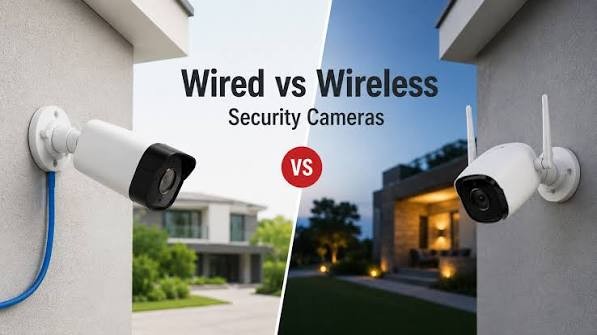
Wired CCTV cameras use physical cables to transmit video signals or network data to recording equipment. Wireless CCTV cameras transmit video through a wireless connection, commonly Wi-Fi, rather than relying on a dedicated data cable between the camera and recording equipment. However, many wireless cameras still require a separate power source.
Both systems have advantages, and neither is automatically the best choice for every property. Wired installations are often preferred for larger properties and projects requiring dependable connectivity, while wireless cameras can offer greater installation flexibility where running cables is difficult.
Understanding these differences is essential before investing in CCTV camera installation in Uganda.
What Are Wired CCTV Cameras?
Wired CCTV cameras are surveillance devices connected to recording or network equipment using physical cables. These cables carry video signals or network data, and in some installations they also provide electrical power.
Wired CCTV technology includes traditional analogue systems and modern network-based IP CCTV systems.
How Do Wired CCTV Cameras Work?
The operation of a wired CCTV system depends on the technology used.
In an analogue CCTV installation, cameras transmit video through compatible coaxial cables to a Digital Video Recorder (DVR). The DVR processes and stores the recorded footage.
In a wired IP CCTV installation, cameras connect to a network using Ethernet cables. Video is transmitted digitally to a Network Video Recorder (NVR) or another compatible recording platform.
Some IP cameras support Power over Ethernet (PoE). This technology allows a compatible Ethernet cable to carry both network data and electrical power, reducing the number of cables required at each camera location.
Main Features of Wired CCTV Cameras
- Physical cable connections.
- Consistent connectivity when properly installed.
- Compatibility with DVR or NVR recording systems, depending on technology.
- Suitable for installations involving multiple cameras.
- Support for high-resolution video on compatible models.
- PoE support on selected IP camera systems.
- Flexible integration with compatible security equipment.
Where Are Wired CCTV Cameras Commonly Used?
Wired CCTV systems are suitable for:
- Residential homes and estates.
- Office buildings.
- Shopping centres.
- Hotels and lodges.
- Schools and educational institutions.
- Hospitals and healthcare facilities.
- Warehouses.
- Factories and industrial facilities.
- Large commercial compounds.
For properties requiring several cameras, centralised recording and structured security monitoring, wired CCTV systems can provide a practical long-term solution.
What Are Wireless CCTV Cameras?
Wireless CCTV cameras transmit video footage through a wireless connection instead of using a dedicated data cable between the camera and the recording or network equipment.
Most consumer wireless CCTV cameras use Wi-Fi, although other wireless technologies are available.
Wireless cameras may connect directly to a wireless router, a compatible wireless NVR or another supported network device. Some models can also store footage locally using a memory card.
It is important to understand that wireless video transmission does not necessarily mean that the camera operates without cables. Many wireless cameras still require electrical power through a power adapter or another supply arrangement.
Battery-powered and solar-assisted models are also available, depending on the product.
How Do Wireless CCTV Cameras Work?
A typical wireless CCTV installation connects cameras to a Wi-Fi network. The cameras transmit video to compatible recording equipment, cloud services or mobile applications, depending on their design.
Authorised users can view live footage or recordings through supported smartphones, tablets or computers.
Some wireless cameras offer additional features such as:
- Motion detection.
- Smartphone notifications.
- Two-way audio.
- Infrared night vision.
- Colour night vision.
- Battery-powered operation.
- Local memory-card recording.
- Cloud storage options.
- Solar-assisted charging on selected models.
Where Are Wireless CCTV Cameras Commonly Used?
Wireless CCTV cameras may be suitable for:
- Residential homes.
- Apartments.
- Small offices.
- Small retail shops.
- Temporary monitoring locations.
- Buildings where cable installation is difficult.
- Selected outdoor locations with suitable network coverage.
Wireless cameras can simplify certain installations, particularly where extensive cable routing would be difficult or disruptive.
However, their reliability depends on wireless signal strength, network capacity, power availability and the camera’s technical specifications.
Wired vs Wireless CCTV Cameras: Key Differences
Although both technologies perform the same basic surveillance function, their installation requirements and operating characteristics differ.
| Feature | Wired CCTV cameras | Wireless CCTV cameras |
|---|---|---|
| Video transmission | Physical cabling | Wireless connection |
| Power supply | Cable, PoE or separate power | Usually separate power, battery or solar-assisted options |
| Installation | Requires cable routing | Often simpler data installation |
| Connectivity | Generally consistent when properly installed | Depends on wireless signal and network conditions |
| Internet dependency | Local recording can work without internet | Local recording can also work without internet on supported systems |
| Remote monitoring | Requires suitable network configuration | Usually supported on compatible connected models |
| Large installations | Often suitable | Requires careful wireless network planning |
| Network interference | Not affected by Wi-Fi interference on the wired video link | Can be affected by wireless interference |
| Maintenance | Requires checking cables, connectors and equipment | Requires checking connectivity, power and batteries where applicable |
| Expansion | Depends on available recorder channels and infrastructure | Depends on network capacity and compatible devices |
| Best suited for | Larger homes, offices and commercial facilities | Selected homes, small premises and difficult cable routes |
The comparison shows that the best choice depends on the property’s requirements rather than the technology alone.
Advantages of Wired CCTV Cameras
Wired CCTV systems remain a popular option for residential, commercial and industrial security installations because they offer several practical advantages.
More Consistent Connectivity
One of the main advantages of wired CCTV cameras is that their video connection does not depend on Wi-Fi signal strength.
When correctly installed, a wired connection can provide predictable communication between the cameras and recording equipment.
This can be especially useful in buildings with thick walls, large floor areas or environments where wireless interference is a concern.
Suitable for Large CCTV Installations
Wired CCTV systems can be designed to support multiple cameras connected to centralised recording equipment.
This makes them suitable for larger properties such as commercial office buildings, hotels, shopping complexes, warehouses, factories, schools, hospitals and large residential estates.
The number of cameras supported depends on the recording equipment, network infrastructure and system design.
Reliable Local Recording
Wired CCTV systems can record footage locally through a DVR or NVR without requiring continuous internet access.
This is useful for properties where local surveillance must continue even when the internet connection is unavailable.
Remote viewing, however, generally requires an appropriate network and internet connection.
Support for High-Resolution Surveillance
Modern wired IP CCTV systems support high-resolution cameras, depending on the recording equipment and network capacity.
This is useful in locations where greater image detail is important, including entrances, vehicle access points, reception areas and loading bays.
Power over Ethernet Capability
Many modern IP cameras support Power over Ethernet.
With compatible PoE cameras, switches and recording equipment, one Ethernet cable can provide both data connectivity and electrical power.
This can simplify installation and reduce the number of separate power connections needed at camera locations.
Suitable for Permanent Installations
For property owners planning a long-term surveillance system, wired CCTV can provide a structured installation with centralised recording and organised cable management.
Once installed properly, the system can operate without the routine battery charging required by battery-powered wireless cameras.
Disadvantages of Wired CCTV Cameras
Despite their advantages, wired CCTV systems also have limitations that should be considered before installation.
More Involved Installation
Wired systems require cables to be routed between cameras and the relevant recording or network equipment.
In completed buildings, this may involve working through ceilings, walls, conduits or other cable routes.
Installation can be more involved where the building has complex architectural features or long distances between camera locations.
Additional Cabling Requirements
The installation may require Ethernet cables, coaxial cables for compatible analogue systems, conduits, trunking, connectors, junction boxes, network switches, power supplies and mounting accessories.
The exact materials depend on the selected CCTV technology.
Cable Damage Can Affect Performance
Damaged cables, loose connectors, poor terminations or unsuitable cable routes can interrupt camera operation.
Professional cable installation and proper protection are therefore important.
Less Flexible After Installation
Moving a wired camera may require additional cable routing and installation work.
This can be inconvenient when property layouts change or new monitoring areas are introduced.
Installation Costs May Be Higher in Some Buildings
The total cost of a wired CCTV installation can increase when cable routes are difficult, distances are long or substantial building modifications are required.
However, this does not mean that wired systems are always more expensive. The actual cost depends on camera specifications, infrastructure, labour and project complexity.
Advantages of Wireless CCTV Cameras
Wireless CCTV cameras offer installation flexibility and useful features that make them attractive for selected residential and commercial applications.
Reduced Data Cabling
Wireless cameras transmit video without requiring a dedicated data cable between each camera and the network or recording equipment.
This can make installation easier in locations where running cables would be difficult.
However, power connections may still be necessary unless the camera is battery-powered or uses another supported power arrangement.
Flexible Camera Positioning
Wireless cameras can be useful where monitoring positions may change or where cable routes are restricted.
For example, a homeowner may want to monitor a driveway, detached garage or selected outdoor area without undertaking extensive network cabling.
Smartphone Monitoring
Many wireless CCTV cameras support mobile applications that allow authorised users to view live footage, review recordings and receive notifications.
This can be convenient for homeowners and small business operators who need to check their properties while away.
Suitable for Selected Small Installations
Wireless cameras may provide a practical solution for smaller properties that require a limited number of surveillance points.
A suitable wireless installation can reduce the amount of cable routing required and may be easier to expand in certain circumstances.
Battery-Powered Options
Some wireless CCTV cameras operate using rechargeable batteries.
These models can be installed in locations where providing electrical power is difficult.
However, battery life depends on camera activity, recording settings, temperature, wireless signal conditions and other factors.
Users must also consider charging or battery replacement.
Solar-Assisted Options
Selected outdoor wireless cameras can operate with compatible solar panels.
These can be useful in locations where grid electricity is limited or where running power cables is difficult.
However, performance depends on sunlight exposure, battery capacity, charging efficiency and the camera’s energy consumption.
Disadvantages of Wireless CCTV Cameras
Wireless CCTV cameras are convenient, but they are not suitable for every installation.
Dependence on Wireless Signal Strength
Wireless cameras need a suitable connection to transmit video reliably.
Thick walls, metal structures, long distances and other physical obstructions can weaken wireless signals.
This is an important consideration for larger Ugandan homes, commercial buildings and industrial facilities.
Wireless Interference
Wi-Fi networks can experience interference from nearby wireless equipment and other sources.
Poor wireless conditions may result in delayed video, interrupted connections or reduced streaming quality.
Power Supply Limitations
Many wireless cameras still require a continuous power source.
Battery-powered models need charging or battery replacement, while solar-assisted models depend on suitable charging conditions.
A camera that loses power cannot continue operating as intended.
Network Capacity Requirements
When several wireless cameras transmit video simultaneously, they can place considerable demands on the wireless network.
High-resolution cameras may require more bandwidth, particularly when several devices are streaming or recording at the same time.
Potential Cybersecurity Risks
Wireless CCTV systems require appropriate security configuration.
Weak passwords, outdated firmware and poorly secured network settings can increase the risk of unauthorised access.
Use strong unique passwords, update supported devices and configure remote access securely.
Performance May Vary Across Large Properties
A wireless camera installed near a router may perform well, while another positioned at the far end of a property may experience weak connectivity.
Larger installations may require additional access points, network planning or a combination of wired and wireless connections.
Which CCTV System Is More Reliable in Uganda?
Reliability is one of the most important factors when choosing between wired and wireless CCTV cameras.
Both systems can work effectively in Uganda when correctly selected and installed. However, their performance depends on the property’s infrastructure and operating conditions.
Wired CCTV Reliability
Wired CCTV systems are often a practical choice where consistent camera connectivity is important.
Their performance does not depend on Wi-Fi coverage for the wired video connection. This makes them useful for large buildings, warehouses, offices and industrial properties.
However, the quality of installation matters. Poor cabling, damaged connectors and inadequate power arrangements can still cause interruptions.
Wireless CCTV Reliability
Wireless systems can be effective where cameras have strong and stable network coverage.
They are useful for selected smaller properties and locations where data cabling is difficult.
However, wireless reliability can be affected by distance from the wireless access point, thick concrete walls, metal structures, network congestion, electrical interference, power interruptions and router performance.
What About Internet Outages?
An important distinction is that Wi-Fi connectivity and internet connectivity are not the same thing.
A CCTV camera may communicate with a local recorder over a local network even when the internet connection is unavailable, provided the system supports local recording and has been configured correctly.
However, cloud recording and remote viewing from outside the property may become unavailable during an internet outage.
For properties where continuous monitoring is important, consider local recording, suitable power backup and a properly designed network.
Wired vs Wireless CCTV Cameras: Which Is More Affordable?
The cost of a CCTV system depends on more than whether it is wired or wireless.
A basic wireless camera may have a relatively low initial purchase price, but a larger wireless system can require additional networking equipment and power arrangements.
Similarly, a wired installation may involve additional cabling and labour, but it can provide a structured solution for larger projects.
Factors Affecting the Cost of Wired CCTV Installation
- Number of cameras.
- Camera resolution and specifications.
- DVR or NVR recording equipment.
- Cable length and type.
- Network switches and PoE equipment.
- Conduits and cable protection.
- Installation complexity.
- Storage capacity.
- Power backup requirements.
- Remote monitoring configuration.
Factors Affecting the Cost of Wireless CCTV Installation
- Number and specifications of cameras.
- Wireless network coverage.
- Wi-Fi access points or network extenders.
- Battery or solar power requirements.
- Memory cards or compatible recording equipment.
- Cloud storage subscriptions, where applicable.
- Network configuration.
- Installation labour.
- Power backup arrangements.
Which System Offers Better Long-Term Value?
The most affordable option is not necessarily the one with the lowest purchase price.
A property owner should consider the complete cost of installation, operation, maintenance, storage and future expansion.
For example, a small home may benefit from a few wireless cameras if network coverage is adequate and cable installation would be difficult.
A large warehouse may be better served by a wired IP CCTV system because of its need for several cameras, centralised recording and consistent connectivity.
The best value comes from selecting a system that meets the property’s requirements without unnecessary equipment or recurring expenses.
Which Is Better for Different Types of Properties?
The best CCTV system depends on the property being protected and the level of surveillance required.
Residential Homes
For smaller homes, wireless CCTV cameras may be suitable where the number of cameras is limited and wireless coverage is strong.
Wired systems may be preferable for larger homes, multi-storey buildings and properties requiring several cameras around the compound.
A combination of wired outdoor cameras and selected wireless cameras may also be considered.
Offices and Commercial Buildings
Wired IP CCTV systems are often suitable for offices and commercial buildings because they can support centralised recording and multiple camera locations.
Wireless cameras may be useful in selected areas where cable installation is difficult, provided the network can support them.
Retail Shops and Supermarkets
Retail premises require monitoring of entrances, checkout areas, stockrooms and other appropriate locations.
Wired CCTV can provide a structured installation for several cameras. Wireless cameras may be considered for smaller shops or additional monitoring points.
Hotels and Lodges
Hotels may require cameras at entrances, reception areas, corridors, parking areas and other appropriate shared spaces.
Wired CCTV systems can provide centralised monitoring across multiple areas. A site assessment is important because building layouts, guest privacy and network requirements vary.
Warehouses and Storage Facilities
Wired IP CCTV is often a practical choice for warehouses because large storage areas may require multiple cameras and reliable network connections.
Wireless cameras can be considered for selected locations where cabling is difficult, but signal coverage should be assessed carefully.
Factories and Industrial Facilities
Industrial facilities often have demanding surveillance requirements, including large compounds, machinery, loading bays and restricted access areas.
A professionally designed wired CCTV system may be suitable for these environments because it supports structured connections and centralised management.
Specialised wireless equipment can be used where appropriate, but industrial conditions and network interference must be considered.
Wired vs Wireless CCTV: Which Is Better During Power Outages?
Power availability is an important consideration when planning CCTV installation in Uganda.
Both wired and wireless CCTV systems need an appropriate power arrangement to continue operating during electricity interruptions.
Power Backup for Wired CCTV Systems
A wired CCTV installation can use an Uninterruptible Power Supply (UPS), suitable backup power system or other compatible solution to keep essential equipment operating during an outage.
The backup arrangement should account for the power consumption of cameras, switches, DVR or NVR equipment and any supporting network devices.
Power Backup for Wireless CCTV Systems
Wireless cameras may use rechargeable batteries, battery backup systems, solar-assisted charging, UPS-supported power adapters or other compatible power arrangements.
Battery-powered cameras may continue operating during an outage, but their operating time depends on battery capacity and camera activity.
Which Option Is Better?
Neither wired nor wireless technology automatically provides better power resilience.
A properly designed backup system is necessary for both. If continuous surveillance is important, include power backup in the original CCTV installation plan.
Can You Combine Wired and Wireless CCTV Cameras?
Yes. A hybrid CCTV installation can combine wired and wireless cameras to address different monitoring requirements across one property.
For example, a large residential property may use wired IP cameras for its main gate, driveway and perimeter while using selected wireless cameras in locations where cable installation is difficult.
A commercial building may use wired cameras for its main surveillance network and additional wireless cameras in suitable areas.
Benefits of Hybrid CCTV Systems
- Greater installation flexibility.
- Reduced cabling in selected locations.
- Ability to use different camera technologies.
- Support for different property layouts.
- Easier accommodation of certain expansion requirements.
However, hybrid installations require compatibility checks. Cameras, recording equipment, network protocols and power arrangements must be suitable for the proposed system.
A professional system design can help ensure that all cameras work together effectively.
Important Factors to Consider Before Installing CCTV Cameras
Before selecting a wired or wireless CCTV system, assess the following requirements.
Property Size and Layout
Consider the number of rooms, floors, entrances, external areas and other locations requiring surveillance.
Large properties may need more cameras and structured network infrastructure.
Security Objectives
Determine whether you need to monitor entrances, identify vehicles, observe general activity, protect stock or supervise selected operational areas.
Different objectives require different camera positions and specifications.
Internet and Network Infrastructure
Wireless cameras depend on suitable wireless coverage, while IP systems require appropriate network infrastructure.
Assess network performance before choosing the equipment.
Camera Resolution
Choose an image resolution that provides sufficient detail for the intended monitoring distance and purpose.
Higher resolution may require additional storage and bandwidth.
Night Vision
Consider whether the cameras will operate in low-light environments and whether infrared or colour night vision is appropriate.
Recording and Storage
Determine how much footage needs to be stored and for how long.
Storage requirements depend on camera quantity, resolution, frame rate, compression and recording settings.
Future Expansion
If you plan to add cameras later, select recording and network equipment with sufficient capacity.
Privacy and Data Protection
Position cameras responsibly and avoid unnecessary surveillance of private areas.
Where personal data is captured, consider applicable Ugandan data protection and privacy requirements.
Why Professional CCTV Installation Matters
Even high-quality CCTV cameras may perform poorly when installed incorrectly.
Professional installation helps ensure that cameras are positioned appropriately, recording equipment is compatible, network connections are configured correctly and the system is tested before handover.
A professional CCTV installation process may include:
- Site assessment: Identifying the property layout, security risks and monitoring requirements.
- System design: Selecting suitable wired, wireless or hybrid CCTV technology.
- Camera selection: Choosing appropriate camera types, resolutions, lenses and features.
- Cable and network planning: Establishing suitable cable routes, wireless coverage and network infrastructure.
- Camera installation: Mounting cameras in appropriate positions.
- Recording equipment setup: Installing and configuring compatible DVR or NVR equipment.
- Storage configuration: Selecting suitable recording settings and storage capacity.
- Remote monitoring setup: Configuring secure access for authorised users where required.
- Power arrangements: Checking power supplies and backup requirements.
- Testing and commissioning: Verifying image quality, connectivity, recording and system operation.
Professional installation is particularly important for commercial and industrial properties where poor camera placement or unreliable connectivity can leave important areas inadequately monitored.
Why Choose Daltrevco for CCTV Installation Solutions in Uganda?
Choosing between wired and wireless CCTV cameras is an important decision, but selecting the right technology is only part of the process. The overall system must also be planned around the property’s layout, security priorities, network infrastructure and long-term operating requirements.
Daltrevco provides a point of contact for customers exploring building-related electrical, mechanical and security installation solutions in Uganda.
When planning a CCTV project, consider the following:
- Whether wired, wireless or hybrid CCTV technology is appropriate.
- The number of cameras required.
- Suitable indoor and outdoor camera specifications.
- Recording and storage requirements.
- Network connectivity and remote monitoring needs.
- Power supply and backup arrangements.
- Future expansion requirements.
- Installation and maintenance considerations.
Whether you are securing a residential home, office, retail shop, hotel, warehouse or industrial facility, a properly planned CCTV system can help improve surveillance coverage and support security management.
Planning to install wired or wireless CCTV cameras in Uganda? Contact Daltrevco to discuss your property security requirements and explore a suitable CCTV installation solution.
Conclusion: Should You Choose Wired or Wireless CCTV Cameras?
Wired and wireless CCTV cameras both provide useful security monitoring capabilities, but they are designed for different installation conditions and requirements.
Wired CCTV systems are often suitable for larger properties, commercial buildings and industrial facilities that require structured connections, centralised recording and dependable connectivity.
Wireless CCTV cameras can be a practical option for smaller homes, offices and locations where running data cables is difficult. They offer installation flexibility but depend on suitable network coverage and power arrangements.
For some properties, a hybrid system combining wired and wireless cameras may provide the most practical solution.
Before making a decision, assess your property, identify the areas requiring surveillance, compare equipment specifications and consider the complete installation and operating costs.
Ultimately, the best CCTV system is not simply the cheapest or most technologically advanced. It is the one that provides suitable coverage, reliable recording, secure operation and long-term value for your property.
For professional CCTV installation planning in Uganda, choose a solution designed around your property’s actual security needs.
Frequently Asked Questions About Wired vs Wireless CCTV Cameras
1. What is the difference between wired and wireless CCTV cameras?
Wired CCTV cameras use physical cables to transmit video or network data to recording equipment. Wireless CCTV cameras transmit video through a wireless connection, commonly Wi-Fi. However, many wireless cameras still require a separate power supply.
2. Are wired CCTV cameras better than wireless cameras?
Wired cameras are often preferable for larger installations requiring consistent connectivity and centralised recording. Wireless cameras may be more convenient for smaller properties or locations where installing cables is difficult. The better option depends on the property’s requirements.
3. Are wireless CCTV cameras reliable?
Wireless CCTV cameras can be reliable when installed within suitable network coverage and provided with sufficient power. However, weak signals, interference, network congestion and power interruptions can affect performance.
4. Do wireless CCTV cameras need internet?
Not all wireless CCTV cameras require an internet connection for local recording. Some can communicate with compatible local recording equipment or store footage on memory cards. However, internet access is generally required for remote viewing from outside the local network and cloud-based services.
5. Do wired CCTV cameras work without internet?
Yes. Many wired CCTV systems can record locally through a DVR or NVR without internet access. However, remote viewing from outside the property generally requires an internet connection and appropriate configuration.
6. Do wireless CCTV cameras need electricity?
Most wireless CCTV cameras require electricity through a power adapter. Some models use rechargeable batteries or solar-assisted power systems. Wireless refers to video transmission, not necessarily the camera’s power supply.
7. Which CCTV system is cheaper to install?
The cost depends on camera specifications, quantity, cabling, network equipment, power arrangements and labour. Wireless cameras may reduce data cabling costs in some installations, while wired systems may offer better value for larger projects. A site assessment is necessary to compare actual costs.
8. Which CCTV cameras are best for home security in Uganda?
Both wired and wireless cameras can be suitable for homes in Uganda. Wireless models may work well in smaller homes with strong Wi-Fi coverage, while wired systems may be preferable for larger homes and properties requiring multiple cameras around the compound.
9. Which CCTV system is best for commercial buildings?
Wired IP CCTV systems are often suitable for commercial buildings because they support multiple cameras, centralised recording and structured network connections. Wireless cameras can supplement the installation where appropriate.
10. Can wireless CCTV cameras work during a power outage?
Battery-powered wireless cameras may continue operating during a power outage if their batteries are charged. Cameras that depend on external power supplies will need a suitable backup arrangement.
11. Can wired CCTV cameras work during a power outage?
Yes, provided the cameras and recording equipment receive power from a suitable backup system, such as a UPS or compatible backup power supply.
12. Can I use wired and wireless CCTV cameras together?
Yes. A hybrid CCTV system can combine wired and wireless cameras, provided the cameras, recording equipment and network infrastructure are compatible.
13. Which CCTV system is best for warehouses?
Wired IP CCTV systems are often suitable for warehouses because they can support multiple cameras and centralised recording. Wireless cameras may be used in selected locations where cable installation is difficult, provided network coverage is adequate.
14. Are wired CCTV cameras harder to install?
Wired systems generally require more cable planning and installation work. The complexity depends on building design, camera locations, cable routes and the type of CCTV equipment being installed.
15. Do wireless CCTV cameras work through walls?
Wireless signals can pass through some walls, but signal strength may decrease depending on wall thickness, construction materials and distance. Metal structures and reinforced concrete can particularly affect wireless connectivity.
16. How many CCTV cameras do I need for my property?
The number depends on property size, layout, entrances, vulnerable areas and security objectives. A site assessment can help determine the appropriate camera quantity and positions.
17. Which CCTV system is best for large properties?
Wired IP CCTV is often a practical option for large properties because it supports structured network connections and centralised recording. A hybrid system may also be suitable where some locations are difficult to cable.
18. How do I choose a CCTV installation company in Uganda?
Consider the provider’s technical competence, proposed equipment specifications, installation approach, recording and storage design, network security configuration, testing process and the clarity of its quotation. Ask for a system design that addresses your property’s actual requirements.