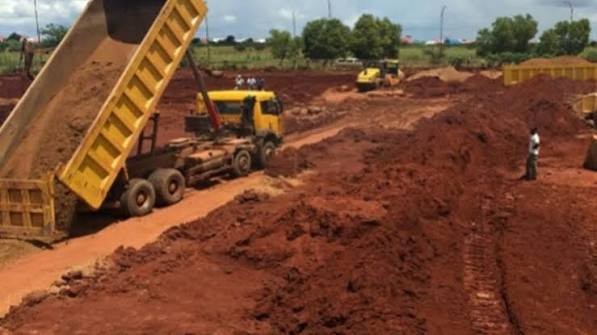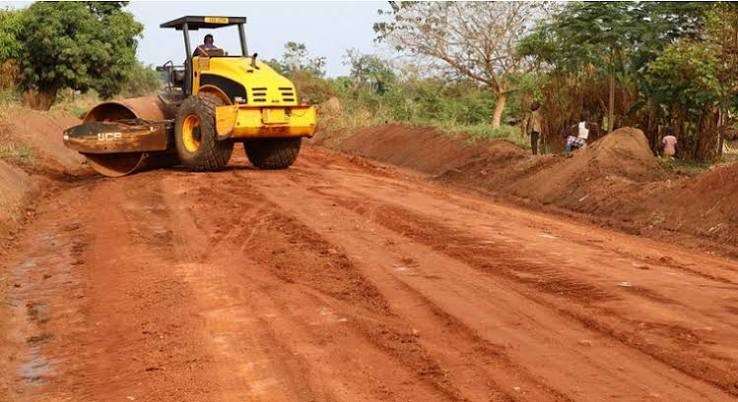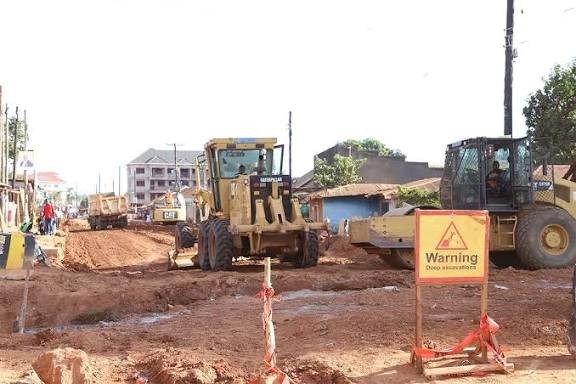
Choosing the right materials is one of the most important decisions when constructing a durable murram road in Uganda. Whether you are building a farm access road, developing a residential estate, improving an industrial access route or constructing a private road, the quality of the materials used will directly influence the road’s strength, drainage, performance and maintenance requirements.
A murram road constructed using unsuitable gravel can develop potholes, muddy sections, erosion, loose surfaces and deep wheel ruts, particularly during rainy seasons. Even when the road is constructed using modern machinery, poor-quality materials can cause premature deterioration and increase maintenance costs.
The challenge is that not all murram is suitable for road construction. Some materials contain too much clay, others have excessive stones, while some lack the particle distribution and strength needed to support vehicle traffic.
Selecting suitable material requires understanding the road’s intended use, the condition of the existing ground, the properties of the available gravel and the construction specification.
At Daltrev Co. Ltd, we provide civil works services in Uganda, including murram road construction, road opening, road grading and improvement, drainage works and related construction services.
This guide explains how to choose the right materials for murram road construction in Uganda, the properties to look for, the tests that may be required, common material selection mistakes and how to achieve a more durable gravel road.
What Materials Are Used in Murram Road Construction?
Murram road construction generally uses naturally occurring gravel or selected granular materials to form the road’s foundation and wearing surface.
Depending on the road design and site conditions, construction materials may include:
- Natural lateritic gravel or murram.
- Selected gravel for subbase or base layers.
- Crushed stone or processed granular material.
- Selected fill for unsuitable or low-lying sections.
- Sand or other approved materials for specific construction purposes.
- Geosynthetic materials where required by the engineering design.
- Concrete, stone or prefabricated components for drainage structures.
The materials used depend on the layer being constructed, the ground conditions and the expected vehicle traffic.
A material that may be suitable for filling a low section of land is not automatically suitable for the road base or finished wearing course. Each material must meet the requirements of its intended use.
1. Understand the Different Road Construction Layers
Before selecting murram, it is important to understand the basic layers of a gravel road.
Each layer performs a different function, and using the wrong material in one layer can affect the performance of the entire road.
A. Subgrade: The Natural Ground Foundation
The subgrade is the prepared natural soil or improved ground that supports the road pavement.
It provides the foundation on which the road layers are constructed.
The condition of the subgrade is important because even good-quality gravel can perform poorly if it is placed over weak, unstable or waterlogged ground.
A suitable subgrade should be assessed for:
- Soil strength and stability.
- Moisture conditions.
- Bearing capacity.
- Settlement potential.
- Drainage conditions.
- Presence of organic or unsuitable material.
Where the existing soil is weak, the design may require excavation and replacement, stabilisation, reinforcement or other ground improvement measures.
B. Subbase Material
The subbase is a layer placed above the prepared subgrade and below the base course or other specified pavement layer.
Its purpose may include distributing traffic loads, providing support and improving the overall road structure.
The material should have appropriate strength, grading and durability for the project’s design.
Depending on the road specification, suitable natural gravel or processed granular materials may be used.
C. Base Course Material
The base course provides structural support to the road surface and helps distribute vehicle loads to the underlying layers.
For roads designed to carry heavier traffic, the base material may need higher strength and stricter quality requirements.
The correct material depends on the design traffic, subgrade strength, pavement arrangement and applicable specification.
D. Gravel Wearing Course
The wearing course is the uppermost gravel layer exposed to vehicle movement and weather.
It should provide a reasonably stable, durable driving surface while resisting excessive erosion, dust, rutting and material loss.
Suitable wearing-course material generally needs a balanced particle distribution, adequate strength and appropriate binding characteristics.
The exact requirements should be established by the project specification and material testing.
2. Choose Suitable Lateritic Gravel or Murram
Lateritic gravel is commonly considered for murram road construction in Uganda because naturally occurring deposits can provide useful road-building materials when they meet the required engineering properties.
However, the name murram alone does not guarantee that a material is suitable.
Two borrow pits located in the same general area can produce gravel with different characteristics. Material colour and appearance are not reliable substitutes for testing.
When selecting lateritic gravel, consider the following:
- Particle-size distribution.
- Strength under the required compaction conditions.
- Plasticity and shrinkage characteristics.
- Resistance to breakdown.
- Moisture sensitivity.
- Suitability for the intended pavement layer.
A suitable lateritic gravel should be selected based on its performance and compliance with the relevant project requirements, not simply because it is readily available.
3. Check the Particle-Size Distribution of the Gravel
Particle-size distribution, also called grading, describes the proportions of different particle sizes within a soil or gravel sample.
A suitable gravel mixture normally contains a combination of coarse particles, smaller particles and fines in proportions appropriate for the specified road layer.
The different particle sizes perform complementary functions.
- Larger particles help provide a granular structure.
- Intermediate particles help fill spaces between larger particles.
- Appropriate fines help bind the mixture and improve surface stability.
A poorly graded material may have too many large stones, excessive fines or insufficient intermediate particles.
Why grading matters
Excessively coarse material: Large stones without enough smaller particles may produce a loose, uneven surface with poor particle interlock.
Excessively fine material: Material containing too much fine soil or clay may become sticky, soft or muddy when wet.
Well-graded material: A suitable distribution of particle sizes can improve compaction, stability and surface performance.
Laboratory sieve analysis helps establish the particle-size distribution and whether the material meets the project specification.
4. Assess the Clay and Silt Content
The amount and type of fine material in gravel can strongly affect its behaviour.
Some fines help bind the gravel particles together. However, excessive clay or unsuitable fine material can cause problems.
Problems associated with excessive clay
- The road may become slippery when wet.
- Water absorption can weaken the surface.
- The road may become muddy during rainy weather.
- Dry material may shrink and crack.
- The surface may develop excessive dust.
- Repeated traffic may cause deformation and rutting.
Silt can also affect moisture sensitivity and road performance.
The correct amount and characteristics of fines depend on the material specification, climate, traffic and intended layer.
How to assess clay content
Laboratory tests such as Atterberg limits and particle-size distribution analysis help determine the properties of fine particles.
These tests are more reliable than judging material suitability by appearance or hand-feel alone.
5. Check the Strength of the Material Using CBR Testing
California Bearing Ratio (CBR) testing is an important method used to assess the strength of soil and granular materials for road construction.
The test helps determine how well a material can support applied loads under specified testing conditions.
CBR results are particularly useful when evaluating:
- Existing subgrade soil.
- Selected fill.
- Subbase materials.
- Natural gravel.
- Base-course materials where the specification uses CBR criteria.
A material with a higher CBR value generally offers greater resistance to penetration under the relevant test conditions. However, the required CBR depends on the intended layer and project design.
It is important to consider whether the test is soaked or unsoaked, the compaction method and the density at which the test is performed.
Do not select a universal CBR value for every murram road. A farm access road, residential estate road and industrial road may have different material requirements because of differences in traffic and ground conditions.
6. Consider Plasticity and Shrinkage Properties
Plasticity describes how fine-grained soil behaves when its moisture content changes.
Some plasticity can help bind gravel particles together. However, excessively plastic material may become unstable when wet and shrink or crack as it dries.
Important material properties include:
Liquid Limit
The liquid limit indicates the moisture content at which fine-grained soil changes from a plastic state to a more liquid state.
Plasticity Index
The plasticity index represents the range of moisture content over which the soil behaves plastically.
Linear Shrinkage
Linear shrinkage helps assess how much a soil sample contracts as it dries under specified test conditions.
These properties help engineers understand whether a gravel material may become excessively soft, sticky, slippery or prone to shrinkage.
The acceptable limits should be taken from the relevant road specification and material class.
7. Select Materials That Compact Properly
Compaction is essential for achieving a stable road layer.
Even suitable gravel can perform poorly if it is not placed and compacted correctly.
When selecting road construction materials, consider whether the material can achieve the required density under the specified compaction procedure.
A laboratory compaction test can establish:
- Maximum Dry Density (MDD).
- Optimum Moisture Content (OMC).
Maximum Dry Density is the highest dry density achieved in the specified laboratory compaction test.
Optimum Moisture Content is the moisture content at which that maximum dry density is achieved under the same test conditions.
These values help guide field moisture conditioning and compaction.
During construction, the material should be spread in controlled layers, conditioned as necessary and compacted using appropriate equipment.
The required field density and testing method must follow the project specification.
8. Consider the Durability of Gravel Materials
A road material must withstand vehicle movement, weather exposure and repeated loading.
Some materials may initially appear strong but break down under compaction or traffic.
This can result in:
- Excessive fines.
- Surface deterioration.
- Loose gravel.
- Dust formation.
- Loss of surface strength.
- Increased maintenance requirements.
Material durability should be considered alongside grading, plasticity and strength.
Where the specification requires it, appropriate aggregate strength or durability tests should be carried out.
The aim is to select materials that maintain their useful properties during construction and throughout the road’s service life.
9. Avoid Unsuitable Materials for Murram Road Construction
Not every soil, gravel or stone deposit is appropriate for road construction.
Some materials may be suitable for general filling but unsuitable for a structural pavement layer or wearing course.
The following materials require particular caution.
Topsoil and Organic Soil
Topsoil contains organic matter and may include roots and decomposing vegetation.
It is generally unsuitable for structural road layers because organic material can decompose and contribute to settlement and instability.
Highly Expansive Clay
Some clay soils swell when wet and shrink when dry.
This movement can damage road layers and create an unstable foundation.
Excessively Silty Material
Material with unsuitable fines may lose strength when wet and contribute to muddy road conditions.
Poorly Graded Sand
Clean, loose sand may lack the particle interlock and binding characteristics required for a stable gravel wearing course.
Oversized Stones
Large stones that exceed the specified particle-size limits can make it difficult to achieve uniform layers and proper compaction.
Contaminated Gravel
Material containing rubbish, roots, organic matter or other unsuitable substances should not be used in road layers.
Where material quality is uncertain, obtain a representative sample and have it assessed before approving its use.
10. Consider the Intended Use of the Road
The correct material depends on the type of traffic expected.
A material that performs adequately on a lightly trafficked private road may not be suitable for an industrial access route carrying heavy trucks.
Materials for Farm Access Roads
Farm roads may serve tractors, pickups, delivery trucks, trailers and agricultural machinery.
Material selection should consider:
- Seasonal access requirements.
- Agricultural vehicle loads.
- Soil conditions.
- Water drainage.
- Frequency of traffic.
- Access to fields and storage facilities.
Suitable gravel should provide a stable surface and support the farm’s operational requirements.
Materials for Residential Estate Roads
Estate roads often serve residents, visitors, delivery vehicles and maintenance services.
Important considerations include:
- Surface stability.
- Dust and mud control.
- Drainage.
- Traffic frequency.
- Pedestrian safety.
- Future estate development.
Where the road will eventually be paved, the initial road design should consider the planned future pavement and utility installations.
Materials for Industrial Roads
Industrial roads may carry loaded trucks, trailers, forklifts and other commercial vehicles.
They may require stronger pavement layers and more demanding quality-control procedures.
Material selection should be based on:
- Expected axle loads.
- Traffic frequency.
- Existing subgrade strength.
- Loading and turning areas.
- Drainage conditions.
- Required pavement design.
Heavy industrial traffic should not be supported by a basic gravel specification intended for light vehicles.
11. Evaluate the Gravel Source and Transportation Distance
The location of a material source affects the overall cost of a road construction project.
A suitable gravel deposit located close to the site may reduce transportation expenses.
However, a nearby borrow pit should not automatically be selected if the material does not meet the required quality.
When comparing gravel sources, consider:
- Material test results.
- Quantity available.
- Consistency of material quality.
- Access for tipper trucks.
- Loading arrangements.
- Haulage distance.
- Borrow-area permissions and environmental requirements.
- Total delivered cost.
The most economical material is the one that provides the required performance at a reasonable total project cost, not necessarily the material with the lowest price at the source.
12. Understand the Importance of Material Testing Before Construction
Material testing helps establish whether proposed gravel is suitable for a particular road layer.
It reduces the risk of selecting materials that may cause premature road failure.
Depending on the project, tests may include:
| Test | What it helps determine |
|---|---|
| Sieve analysis | Particle-size distribution and grading |
| Atterberg limits | Plasticity characteristics of fine material |
| Linear shrinkage | Potential shrinkage behaviour |
| CBR test | Strength under specified test conditions |
| Compaction test | Maximum dry density and optimum moisture content |
| Field density test | Whether the constructed layer achieves the specified density |
| Aggregate durability tests | Resistance to breakdown where required |
The required tests and acceptance limits depend on the project specification and the material’s intended use.
For public road projects in Uganda, the applicable Ministry of Works and Transport specifications should be followed. Private projects should also use an appropriate engineering specification suited to their intended traffic and site conditions.
13. How to Inspect Murram Before Buying or Approving It
A site inspection is useful for identifying obvious problems before materials are transported to a construction project.
However, visual inspection should not replace laboratory testing where testing is required.
When inspecting a proposed gravel source, consider the following:
Check the consistency of the material. Look for significant differences between different sections of the deposit.
Look for organic contamination. Avoid material containing roots, vegetation and excessive organic matter.
Check for excessive clay. Very sticky or highly plastic material may require testing before approval.
Observe the particle sizes. Look for an appropriate mixture rather than material dominated by oversized stones or fine soil.
Inspect access to the source. Confirm whether trucks and loading equipment can reach the material economically.
Request test results. Where the project requires testing, obtain representative results from a competent laboratory.
Confirm the intended application. Material suitable for general fill may not meet the requirements of a base course or wearing course.
14. How to Calculate the Quantity of Murram Required
The quantity of material required depends on the road’s length, width and specified compacted layer thickness.
A basic theoretical volume calculation is:
Volume = Road Length × Road Width × Compacted Layer Thickness
For example, consider a hypothetical road with:
- Length: 1,000 metres.
- Width: 4 metres.
- Specified compacted gravel layer thickness: 0.15 metres.
The theoretical compacted volume is:
1,000 × 4 × 0.15 = 600 cubic metres.
This gives a theoretical compacted volume of 600 cubic metres for the specified layer.
It does not represent the final loose delivery quantity. The actual amount ordered must account for material characteristics, compaction, handling, wastage and the method of measurement.
The specified layer thickness must come from the project design. It should not be assumed that 150 mm is suitable for every road.
Accurate quantity estimation helps prevent material shortages, unnecessary deliveries and avoidable transportation costs.
15. Common Material Selection Mistakes to Avoid
Poor material selection can lead to expensive road repairs and reduced road performance.
Avoid these common mistakes:
- Choosing gravel based only on its colour or appearance.
- Using untested material for layers that require testing.
- Using topsoil or organic material in structural road layers.
- Selecting highly plastic material without considering moisture behaviour.
- Using gravel with unsuitable particle-size distribution.
- Ignoring the strength requirements of the intended layer.
- Selecting material without considering expected traffic.
- Buying from a source without checking material consistency.
- Failing to account for transportation costs.
- Using the same material specification for every road layer.
- Neglecting drainage while focusing only on gravel quality.
- Failing to check compaction during construction.
A good material selection process considers the complete road structure, not just the upper gravel surface.
16. Why Drainage and Material Selection Must Work Together
Even high-quality gravel can deteriorate when water is not properly managed.
Water can enter the road layers, soften weak materials and reduce the strength of the road formation.
For this reason, drainage should be considered alongside material selection and pavement design.
Depending on the site, drainage works may include:
- Side drains.
- Culverts.
- Drainage outlets.
- Cross-drainage structures.
- Catchwater drains.
- Erosion protection.
- Appropriate road camber or crossfall.
The drainage system should direct water away from the road without causing erosion or transferring water-related problems to neighbouring land.
The selected gravel, road shape and drainage arrangements must work together to provide a durable road.
17. How to Choose the Right Materials for Different Road Conditions
Different site conditions require different material selection approaches.
| Road condition | Material selection consideration |
|---|---|
| Firm, well-drained ground | Select gravel meeting the required layer specification |
| Weak or soft subgrade | Assess ground strength and consider improvement or replacement where designed |
| Wet or low-lying sections | Evaluate moisture sensitivity and provide appropriate drainage |
| Steep sections | Consider erosion resistance, surface stability and drainage |
| Heavy industrial traffic | Use materials and pavement design suitable for expected loading |
| Residential estate roads | Consider grading, surface stability, dust and drainage |
| Farm access roads | Consider agricultural vehicles and seasonal operating conditions |
A site-specific assessment helps determine whether natural gravel, selected fill, crushed material or additional ground treatment is necessary.
Why Consider Daltrev Co. Ltd for Murram Road Construction in Uganda?
Choosing suitable materials is only one part of a successful road project. Proper site preparation, road opening, grading, drainage and construction methods are also important.
Daltrev Co. Ltd provides civil works services in Uganda, including:
- Murram road construction.
- Road opening.
- Road grading and improvement.
- Land levelling and landscaping.
- Tarmac road construction.
- Drainage works.
- Bridge construction.
The company also provides construction consultancy and construction project management support.
If you are planning a farm access road, residential estate road, industrial access road or private gravel road, you can contact Daltrev Co. Ltd to discuss the proposed works, project location and requirements for obtaining a quotation.
Learn more about the company’s services on the Daltrev Civil Works page.
You can also explore the Daltrev Works page for additional information about its services.
Frequently Asked Questions About Choosing Materials for Murram Road Construction
1. What is the best material for murram road construction in Uganda?
The best material is gravel or lateritic material that meets the requirements of the specified road layer. Its suitability depends on grading, strength, plasticity, durability, moisture conditions and expected traffic. Laboratory testing helps confirm whether it is appropriate.
2. Is all murram suitable for road construction?
No. Different murram deposits have different engineering properties. Some may contain excessive clay, unsuitable fines, organic matter or oversized stones. Material should be assessed and tested where required before use.
3. What is CBR in road construction?
CBR means California Bearing Ratio. It is a test used to assess the strength of soil and granular materials under specified conditions. It helps engineers evaluate whether a material is suitable for a particular road layer.
4. Why is grading important when selecting gravel?
Grading describes the distribution of particle sizes in a material. Suitable grading helps particles fit together and form a stable layer. Poor grading may contribute to loose surfaces, poor compaction and premature deterioration.
5. Can clay soil be used for murram road construction?
Some materials containing clay fines may be suitable when their properties meet the required specification. However, highly plastic or moisture-sensitive clay may become soft, slippery or unstable when wet. Testing is important before approval.
6. What is the difference between subbase and wearing-course material?
Subbase material forms a supporting layer above the subgrade, while wearing-course material forms the upper surface exposed to traffic and weather. Each layer has different performance requirements, so one material should not automatically be used for both.
7. What laboratory tests are important for murram road materials?
Depending on the project, important tests may include sieve analysis, Atterberg limits, linear shrinkage, CBR testing and laboratory compaction tests. Field density testing may also be required during construction.
8. Why is compaction important in murram road construction?
Compaction increases the density and stability of the placed material when carried out correctly. Poor compaction can contribute to settlement, rutting, loose gravel and premature surface deterioration.
9. Can the same gravel be used for farm, estate and industrial roads?
Not necessarily. The required material depends on traffic loads, road design, ground conditions and the intended use. Industrial roads carrying heavy vehicles may require stronger materials and stricter construction controls.
10. How can I identify poor-quality murram?
Visual inspection may reveal organic contamination, excessive clay, inconsistent particle sizes or oversized stones. However, appearance alone cannot establish engineering suitability. Representative material testing is recommended where required.
11. Does good-quality gravel eliminate the need for drainage?
No. Even suitable gravel can deteriorate if water collects on the surface or enters the road foundation. Proper drainage, road shaping and maintenance remain essential.
12. How do I choose a suitable murram supplier?
Check the material source, availability, consistency, test results, loading arrangements, transportation distance and total delivered cost. Ensure the material meets the specification for the layer where it will be used.
Contact Daltrev Co. Ltd for Murram Road Construction Services in Uganda
Are you planning to construct a new murram road, improve an existing gravel road or prepare access routes for a farm, residential estate or industrial property?
Selecting suitable materials is essential for achieving a road that meets its intended purpose. Proper planning, material assessment, drainage and construction quality can help reduce premature road damage and unnecessary maintenance expenses.
Contact Daltrev Co. Ltd to discuss your civil works and murram road construction requirements in Uganda.
Daltrev Co. Ltd Contact Details
- Website: https://www.daltrevco.com/
- Civil Works: https://www.daltrevco.com/civil-works/
- Contact Page: https://www.daltrevco.com/contact-us/
- Phone: +256 744 702 773
- Email: daltrevco@gmail.com
Daltrev Co. Ltd – Civil Works and Road Construction Solutions in Uganda.