Murram road construction in Uganda plays an important role in improving access to homes, farms, businesses, schools, residential estates, industrial developments and rural communities. Although paved roads are suitable for many busy routes, properly constructed murram roads remain a practical and economical option for numerous private, commercial, agricultural and community access projects.
Across Uganda, property developers, landowners, institutions, businesses and local communities need reliable access roads to support transportation and development. A well-constructed murram road can improve vehicle movement, connect properties to existing road networks and provide an appropriate road surface where tarmac construction may not be necessary.
However, constructing a durable murram road requires more than spreading gravel on the ground. Proper planning, suitable construction materials, ground preparation, grading, compaction and effective drainage all contribute to road performance.
Whether you are planning a new access road, rehabilitating an existing gravel road or preparing land for development, understanding the construction process will help you make better decisions.
Daltrev Co. Ltd provides civil works solutions in Uganda, including murram road construction, road opening, road grading and improvement, drainage works, tarmac roads and related infrastructure projects.
This guide explains everything you need to know about murram road construction in Uganda, from site preparation and material selection to construction costs, maintenance and choosing a road construction company.
1. What Is Murram Road Construction?
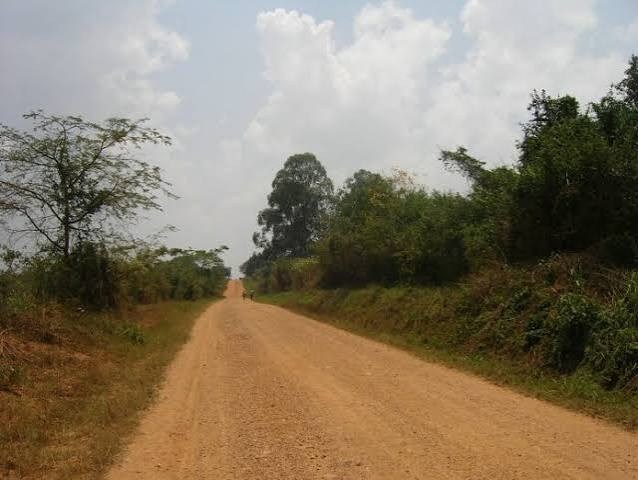
Murram road construction is the process of building an unpaved road using suitable natural gravel or lateritic material, commonly called murram in Uganda.
The material is placed over a prepared road formation, shaped and compacted to create a stable surface suitable for the expected traffic.
Murram roads are commonly used for:
- Residential estate access roads.
- Private property access roads.
- Farm and agricultural roads.
- Commercial property access routes.
- Industrial and warehouse access roads.
- Construction site access roads.
- School and institutional roads.
- Community and rural roads.
- Internal roads within land development projects.
The quality of a murram road depends on the properties of the material, the condition of the underlying soil, the road design, the construction method, drainage and ongoing maintenance.
A road designed for occasional light vehicles may require a different construction specification from one regularly used by trucks, buses and heavy machinery.
2. Why Murram Roads Are Important in Uganda
Uganda has a diverse road network serving urban centres, rural communities, agricultural areas and expanding residential developments.
Murram roads help connect places where paved roads are unavailable, unnecessary or not economically suitable for the intended traffic.
Improved Accessibility
A properly constructed murram road improves access to homes, farms, schools, commercial properties and other developments.
It can also make it easier for construction vehicles, delivery trucks and service providers to reach a project site.
Practical Construction Option
For suitable low-volume roads, murram construction can offer a practical alternative to bituminous surfacing.
The actual cost advantage depends on material availability, transportation, ground conditions, drainage requirements and the required road specification.
Supports Property Development
Access is an important consideration when developing land.
A properly planned road can support the movement of construction materials, equipment, workers and future occupants.
Supports Agricultural Activities
Farm roads help transport agricultural inputs, machinery and harvested produce.
Reliable access can reduce transportation difficulties, particularly during periods of heavy rainfall.
Connects Rural Communities
Murram roads can provide important links between communities, trading centres, schools, health facilities and existing transport networks.
Allows Phased Infrastructure Development
For some developments, a property owner may begin with a properly constructed gravel access road and consider upgrading to a sealed road later as traffic and available resources increase.
Any future upgrade should be considered during the initial design so that the road formation, drainage and other infrastructure can support the intended development.
3. Types of Murram Road Construction Projects in Uganda
Different projects require different construction approaches. The road’s intended purpose, traffic levels, site conditions and available budget should determine the appropriate method.
A. New Murram Road Construction
This involves creating a road where no properly developed access route previously existed.
The work may include vegetation clearing, setting out the alignment, earthworks, preparation of the road formation, murram placement, grading, compaction and drainage construction.
New road construction is common for:
- Residential estates.
- Newly acquired land.
- Commercial developments.
- Farms and agricultural properties.
- Industrial sites.
- Institutional developments.
B. Existing Murram Road Rehabilitation
Road rehabilitation improves an existing road that has deteriorated due to traffic, rainfall, poor drainage or inadequate maintenance.
Depending on the condition, the work may involve pothole repairs, removal of unsuitable material, additional gravel, reshaping, compaction and drainage improvements.
Rehabilitation can be more practical than constructing a completely new road when the existing road formation remains suitable.
C. Murram Road Grading and Levelling
Grading restores the shape and surface condition of an existing road.
It can help correct uneven sections, fill shallow depressions and improve the road’s crossfall so that rainwater drains away.
Grading alone may not solve deeper structural problems. Where the underlying material is weak or drainage is poor, additional rehabilitation work may be necessary.
D. Road Opening and Access Road Construction
Road opening involves clearing and preparing a route to improve access to a property or development.
The work may include vegetation removal, earthworks, excavation, filling, road shaping and construction of a suitable road surface.
E. Murram Road Widening
Existing roads may need widening to accommodate increased traffic, larger vehicles or additional development.
Widening should be planned carefully because the new road section must connect properly with the existing formation and provide adequate drainage and stability.
4. Materials Used in Murram Road Construction
The selection of suitable materials is one of the most important stages of road construction.
Not every soil or gravel deposit is suitable for use as a road wearing course. Materials should be assessed according to the road specification and expected traffic.
1. Murram or Natural Gravel
Murram is the main surfacing material used in many unpaved roads in Uganda.
Suitable gravel should have appropriate particle-size distribution and binding characteristics to form a stable surface after compaction.
The material should be assessed before use rather than selected only because it is readily available.
2. Selected Subgrade Material
The subgrade is the prepared natural ground that supports the road structure.
Where the existing soil is weak, unsuitable or excessively wet, improvement or replacement may be necessary.
The appropriate treatment depends on the ground conditions and engineering assessment.
3. Granular Sub-base Material
Some road projects require an additional granular layer between the subgrade and the wearing course.
This layer can help distribute traffic loads and provide a more stable foundation.
Not every low-volume road requires the same pavement structure. The design should reflect the intended road use and site conditions.
4. Water for Construction
Water may be required during material conditioning and compaction to achieve the moisture conditions specified for the material.
Too much or too little moisture can affect compaction quality.
5. Drainage Construction Materials
Depending on the design, drainage works may require materials such as:
- Concrete pipes for culverts.
- Stone and aggregate.
- Concrete.
- Masonry materials.
- Drainage channel lining materials.
- Erosion protection materials.
The selection depends on water flow, soil conditions, road geometry and the approved drainage design.
5. Step-by-Step Murram Road Construction Process in Uganda
A durable road requires a structured construction process. The exact method and specifications should be determined by qualified road professionals based on the project requirements.
Step 1: Project Consultation and Planning
The first stage is understanding the client’s road construction requirements.
Important information includes:
- Project location.
- Proposed road length.
- Required road width.
- Intended traffic.
- Existing ground conditions.
- Available access.
- Drainage requirements.
- Project budget.
- Expected completion period.
This information helps establish the project scope and identify the necessary technical investigations.
Step 2: Site Inspection and Assessment
A site assessment helps establish the existing conditions before construction begins.
The assessment may consider:
- Ground levels and slopes.
- Soil conditions.
- Existing access routes.
- Vegetation and obstructions.
- Natural water flow.
- Areas prone to flooding.
- Potential drainage crossings.
- Locations requiring excavation or filling.
For more demanding projects, surveying, soil investigation and laboratory material testing may be required.
Step 3: Road Alignment and Setting Out
The road alignment establishes where the road will pass and how it will connect to existing access routes.
Setting out helps guide the construction team and reduces the risk of unnecessary excavation or alignment problems.
The alignment should account for road geometry, drainage, property boundaries, existing infrastructure and relevant road-reserve requirements.
Step 4: Site Clearing and Vegetation Removal
Vegetation, bushes, tree stumps and other obstructions may need to be removed from the approved construction area.
Clearing should follow the agreed road alignment and environmental requirements.
Care should be taken to avoid unnecessary disturbance to neighbouring properties, protected areas and existing infrastructure.
Step 5: Earthworks and Road Formation
Earthworks prepare the ground to the required road profile.
Depending on the site, the work may include:
- Excavation of high areas.
- Filling of low sections.
- Removal of unsuitable soil.
- Ground levelling.
- Formation shaping.
- Preparation of side slopes.
- Establishment of the required road levels.
The objective is to create a suitable foundation for the road pavement layers.
Step 6: Subgrade Preparation
The subgrade is the foundation supporting the road structure.
It should be properly prepared before the upper layers are placed.
Where necessary, weak areas may require improvement, replacement or other engineering treatment.
Building on an unstable subgrade without addressing the underlying problem can result in settlement, rutting and premature road deterioration.
Step 7: Murram Material Selection and Transportation
Suitable murram is selected based on the project specification and material assessment.
The material is transported to the site and placed in the required locations.
Transportation distances, loading arrangements, material availability and the condition of access routes can all affect the project schedule and cost.
Step 8: Spreading and Layer Placement
The material is spread over the prepared road formation.
Layer thickness should follow the approved project specification. Placing excessively thick layers without appropriate construction control can result in inadequate compaction.
Step 9: Grading and Shaping
The placed material is shaped to establish the required road profile.
Proper shaping helps create a suitable driving surface and allows rainwater to move towards the drainage system.
The road should not be left with depressions that collect water.
Step 10: Compaction
Compaction increases the density and stability of the road material.
Suitable equipment is selected according to the material, layer thickness and project requirements.
Moisture content and compaction requirements should follow the approved specification and relevant test results.
Step 11: Drainage Construction
Drainage is essential for protecting the road against water damage.
Depending on the site, construction may include side drains, culverts, water crossings and erosion protection.
Drainage outlets must also be considered so that water is discharged appropriately without causing damage to surrounding land.
Step 12: Final Inspection and Completion
The completed road should be inspected against the agreed project scope and technical requirements.
The inspection may consider:
- Road alignment.
- Surface levels.
- Surface condition.
- Drainage performance.
- Compaction and material quality records.
- Road accessibility.
- Completion of the specified works.
A proper handover should communicate maintenance requirements and any outstanding issues.
6. Machinery and Equipment Used in Murram Road Construction
Road construction machinery helps improve efficiency, material handling, grading and compaction.
The equipment required depends on the project size, road condition, terrain and construction method.
Motor Grader
<Add Image: Motor grader shaping a murram road>
A motor grader is used to shape and level the road surface.
It helps establish the road profile, remove uneven sections and distribute material across the required width.
Excavator
<Add Image: Excavator carrying out road opening and earthworks>
Excavators are used for excavation, removal of unsuitable material, drainage works and other earthmoving activities.
Bulldozer
<Add Image: Bulldozer clearing and preparing a road alignment>
A bulldozer may be used for vegetation clearing, pushing soil, rough grading and preparing road formations.
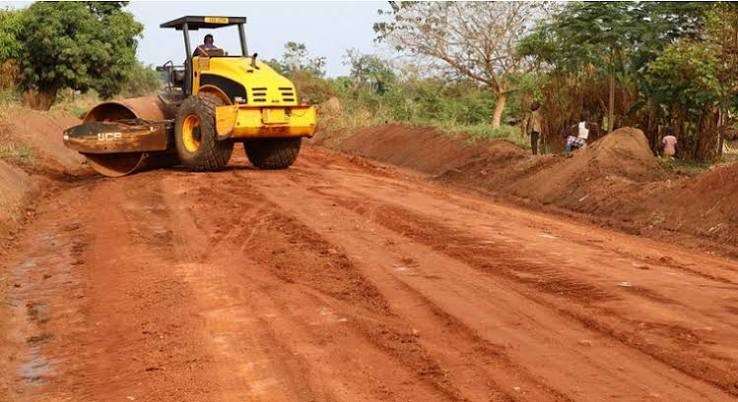
Road Roller
<Add Image: Road roller compacting a gravel road>
A road roller is used to compact road materials and improve the stability of the constructed layers.
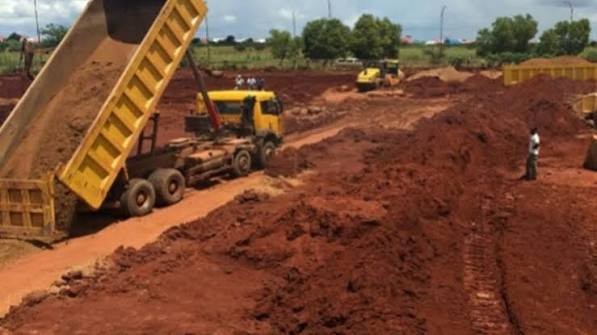
Tipper Trucks
<Add Image: Tipper truck transporting murram to a road construction site>
Tipper trucks transport murram, gravel, excavated soil and other construction materials.
Water Bowser
<Add Image: Water bowser supplying water during road compaction>
A water bowser may be used to distribute water during material conditioning and compaction where required.
The choice of machinery should match the actual project needs. Using unsuitable equipment or unnecessary machinery can increase costs without improving the finished road.
7. Importance of Drainage in Murram Road Construction
Drainage is one of the most important factors affecting the durability of murram roads in Uganda.
Rainwater can weaken road materials, erode the surface, damage shoulders and create potholes when it is not properly managed.
A road that has good-quality murram but inadequate drainage may deteriorate much faster than expected.
Common Road Drainage Structures
Side drains
These channels collect and direct water away from the road surface.
Culverts
Culverts allow water to pass beneath the road where natural drainage paths cross the road alignment.
Mitre drains and turnouts
These structures can help discharge water from side drains at appropriate locations, depending on the road design and terrain.
Erosion protection
Drainage outlets may require stone pitching, concrete structures or other protection to prevent erosion.
Road camber and crossfall
The road surface should be shaped to encourage water to flow away from the carriageway rather than remain in depressions.
What Happens When Drainage Is Poor?
Poor drainage can cause:
- Potholes.
- Roadside erosion.
- Soft and muddy sections.
- Rutting.
- Loss of gravel material.
- Damage to culverts and shoulders.
- Increased maintenance costs.
- Reduced vehicle accessibility.
For this reason, drainage should be included in the initial road planning and construction budget.
8. How Much Does Murram Road Construction Cost in Uganda?
The cost of murram road construction in Uganda varies depending on the project scope and location.
A short private access road will not necessarily have the same construction cost per kilometre as a larger road project. Ground conditions, material availability, drainage and traffic requirements can significantly affect the quotation.
There is no single price that applies to every project.
Main Factors Affecting Murram Road Construction Costs
1. Road Length
Longer roads require more material, transportation, labour and equipment operating time.
2. Road Width
A wider road generally requires more material and additional preparation work.
3. Ground Conditions
Soft soils, swampy areas, steep terrain and unstable ground may require additional earthworks or ground improvement.
4. Murram Material Quality
The suitability of available material affects its selection, processing and potential testing requirements.
5. Transportation Distance
The distance between the material source and the construction site can have a significant effect on transport costs.
6. Drainage Requirements
Side drains, culverts, crossings and erosion protection structures add to the project scope.
7. Equipment Requirements
The type, size and duration of machinery required influence the overall cost.
8. Existing Road Condition
Rehabilitating a road with a suitable existing formation may require a different budget from constructing a completely new road.
9. Labour and Project Duration
The size of the construction team and the time required to complete the work also influence project costs.
How to Get an Accurate Murram Road Construction Quotation
When requesting a quotation, provide the following information:
- Project location and district.
- Approximate road length.
- Required road width.
- Whether the project involves a new road or rehabilitation.
- Expected traffic and vehicle types.
- Existing soil and drainage conditions, if known.
- Availability of murram near the site.
- Whether culverts or other drainage works are needed.
- Photographs or videos of the proposed road.
- Expected project start date.
A site assessment and clearly defined scope help establish a realistic construction budget.
9. Murram Road Construction Challenges in Uganda
Road construction projects in Uganda can encounter several challenges depending on location, terrain, weather and material availability.
Heavy Rainfall
Rain can affect excavation, material transportation, road shaping and compaction.
Poorly drained sites may become inaccessible during wet periods.
Unsuitable Soil Conditions
Some areas have weak or waterlogged soils that cannot adequately support the intended traffic without additional treatment.
Murram Availability
Suitable gravel may not be available close to every project site.
Long transportation distances can increase costs and affect the construction schedule.
Steep Terrain
Hilly or sloping locations may require additional earthworks, drainage and erosion control.
Poor Existing Drainage
Existing water channels and culverts may be blocked, damaged or insufficient for the required water flow.
Equipment Accessibility
Some remote or confined sites may be difficult for large construction machinery to access.
Budget Limitations
Insufficient project budgets can result in reduced construction scope, inadequate drainage or the use of unsuitable materials.
A realistic budget should account for the complete road structure and not only the cost of spreading murram.
10. Murram Road Maintenance: How to Make Your Road Last Longer
Murram roads require regular maintenance to remain functional.
Maintenance needs depend on traffic volume, material quality, drainage, weather and the condition of the underlying road structure.
Regular Road Grading
Periodic grading helps maintain a smooth surface and correct minor uneven areas.
Pothole Repairs
Potholes should be repaired promptly. Simply filling them with loose material without addressing the underlying cause may result in repeated damage.
Drainage Channel Cleaning
Side drains and culverts should be inspected and cleared to maintain water flow.
Gravel Replenishment
Road sections that have lost wearing-course material may require additional suitable gravel.
Erosion Control
Areas affected by concentrated water flow may require appropriate drainage improvements and erosion protection.
Inspection After Heavy Rainfall
Inspecting the road after significant rainfall helps identify drainage problems and damaged sections before they become more serious.
Maintenance Planning
A planned maintenance schedule is more effective than waiting until the road becomes difficult to use.
11. Murram Roads vs Tarmac Roads in Uganda
Choosing between a murram road and a tarmac road depends on the intended use, traffic volume, available budget and long-term infrastructure requirements.
| Comparison | Murram Road | Tarmac Road |
|---|---|---|
| Road surface | Compacted gravel or murram | Bituminous surfacing |
| Initial investment | Often lower for suitable low-volume roads | Generally higher |
| Traffic suitability | Depends on design and material quality | Can accommodate higher traffic when properly designed |
| Rainfall performance | Requires effective drainage and regular maintenance | Generally provides a more weather-resistant surface |
| Maintenance | Grading, drainage and gravel replenishment | Surface repairs and periodic resurfacing |
| Typical applications | Farms, private access roads and suitable low-volume routes | Urban, commercial and higher-volume roads |
When Should You Choose a Murram Road?
A murram road may be appropriate when:
- The expected traffic is relatively low.
- Suitable gravel is available.
- The road is a private access route.
- The project requires a practical unsealed surface.
- The road can be maintained regularly.
- The ground and drainage conditions are suitable.
When Should You Consider Tarmac?
Tarmac may be more appropriate when:
- Traffic volumes are high.
- The road serves busy commercial developments.
- Heavy vehicles use the road frequently.
- A sealed surface is required.
- Long-term maintenance and lifecycle costs justify the investment.
The decision should be based on engineering assessment rather than initial construction cost alone.
12. How to Choose the Best Murram Road Construction Company in Uganda
Choosing a suitable road construction company is an important part of achieving a successful project.
Before engaging a contractor, consider the following factors.
1. Relevant Road Construction Services
Confirm that the company provides the specific services your project requires, such as road opening, murram road construction, grading, drainage and rehabilitation.
2. Project Planning and Site Assessment
A suitable contractor should understand the importance of reviewing the site and defining the project scope before construction begins.
3. Material Quality
Ask how murram and other road construction materials will be selected and assessed.
4. Drainage Considerations
Confirm that drainage is included in the planning process where required.
5. Machinery and Construction Resources
Discuss the equipment and resources required to complete the proposed work.
6. Clear Quotations
A quotation should explain the work included, material requirements, equipment, drainage structures, exclusions and expected project schedule.
7. Quality Control
Ask how the contractor intends to monitor material quality, compaction and construction progress.
8. Project Communication
Clear communication helps clients understand progress, changes in scope and any unexpected site conditions.
9. Relevant Documentation
For projects requiring formal approvals, technical designs or statutory compliance, confirm that the relevant professionals and documentation are in place.
13. Why Consider Daltrev Co. Ltd for Murram Road Construction in Uganda?
If you are planning a murram road project, choosing a company that understands road works, site preparation and infrastructure requirements is important.
Daltrev Co. Ltd provides construction and civil works solutions in Uganda for residential, commercial, institutional and infrastructure developments.
Its civil works services include:
- Murram road construction.
- Road opening.
- Road grading and improvement.
- Land levelling and landscaping.
- Tarmac road construction.
- Drainage construction.
- Bridge construction.
Daltrev’s project approach includes consultation, site assessment, planning and implementation based on the agreed project requirements.
Whether you need a new access road, improvement of an existing murram road, road opening or drainage works, you can contact the company to discuss the scope of your project.
Explore the Daltrev Co. Ltd Civil Works Services to learn more about its construction and infrastructure solutions.
14. Areas in Uganda Where Murram Road Construction Is Relevant
Murram road construction is relevant to different types of developments throughout Uganda.
Examples include:
Central Uganda
- Kampala.
- Wakiso.
- Mukono.
- Luweero.
- Mpigi.
- Mityana.
- Mubende.
- Kayunga.
Eastern Uganda
- Jinja.
- Iganga.
- Mbale.
- Tororo.
- Soroti.
- Busia.
- Pallisa.
- Kamuli.
Western Uganda
- Mbarara.
- Masaka.
- Fort Portal.
- Hoima.
- Kasese.
- Bushenyi.
- Kabale.
- Rukungiri.
Northern Uganda
- Gulu.
- Lira.
- Arua.
- Kitgum.
- Nebbi.
- Adjumani.
- Yumbe.
- Soroti region and surrounding districts.
The suitability and cost of road construction will vary from one location to another depending on terrain, materials, transport distances and project requirements.
Contact Daltrev Co. Ltd to discuss the availability and scope of services for your proposed location.
15. Frequently Asked Questions About Murram Road Construction in Uganda
What is murram road construction?
Murram road construction is the process of preparing an unpaved road using suitable natural gravel or lateritic materials. The material is placed, shaped and compacted over a prepared road formation to create a usable road surface.
How much does murram road construction cost per kilometre in Uganda?
The cost depends on road width, material quality, transportation distance, ground conditions, drainage, machinery and the construction specification. An accurate quotation requires a defined scope and, where necessary, site assessment.
Which materials are used in murram road construction?
Common materials include suitable natural gravel or murram, selected subgrade material, granular sub-base where required, water for compaction and materials for drainage structures.
How long does it take to construct a murram road?
The duration depends on road length, site accessibility, weather, ground conditions, material availability, drainage requirements and the equipment available. A construction programme should be prepared for each project.
Is murram suitable for heavy vehicles?
It can be suitable for some heavy-vehicle applications if the road is properly designed and constructed for the expected loading. Material quality, pavement thickness, subgrade strength and drainage are particularly important.
Can murram roads be constructed during the rainy season?
Construction may be possible during the rainy season, but heavy rainfall can affect material placement, compaction, earthworks and site accessibility. The construction programme should consider local weather and ground conditions.
Why do murram roads develop potholes?
Potholes may result from poor drainage, weak underlying soil, unsuitable materials, insufficient compaction, traffic loading and inadequate maintenance.
How often should a murram road be graded?
There is no single maintenance interval for every road. Grading frequency depends on traffic, rainfall, material quality and the condition of the surface. Regular inspections help determine when grading is necessary.
What is the importance of culverts in murram road construction?
Culverts allow water to pass beneath the road at drainage crossings. Properly designed and maintained culverts help prevent water from flowing over the road and damaging the road structure.
Can an existing murram road be upgraded to tarmac?
Yes. However, upgrading requires an assessment of the existing pavement, subgrade, drainage and traffic requirements. The existing road may need rehabilitation or reconstruction before bituminous surfacing is applied.
Does Daltrev Co. Ltd provide murram road construction services in Uganda?
Yes. Murram road construction is listed among Daltrev Co. Ltd’s civil works services. The company also lists road opening, tarmac roads, drainage works, landscaping and bridge construction.
How can I request a murram road construction quotation from Daltrev?
Contact Daltrev Co. Ltd with your project location, approximate road dimensions, intended use and any available site photographs. The team can discuss your requirements and the appropriate next steps.
Conclusion: Plan Your Murram Road Construction Project with Confidence
Murram road construction remains an important solution for improving accessibility and supporting residential, commercial, agricultural and community development throughout Uganda.
A durable road requires careful planning, suitable materials, proper ground preparation, grading, compaction and effective drainage. Regular inspection and maintenance are also essential for keeping the road in good condition.
Whether you are opening a new access road, developing a residential estate, improving a farm road or rehabilitating an existing gravel road, choosing an appropriate construction approach can help you achieve better long-term results.
Looking for murram road construction services in Uganda? Contact Daltrev Co. Ltd to discuss your road construction, road opening, grading, drainage or other civil works requirements.
Daltrev Co. Ltd – Building Solutions. Delivering Excellence.
Call: +256 744 702 773
Email: daltrevco@gmail.com
Website: https://www.daltrevco.com/
Request a quotation: https://www.daltrevco.com/contact-us/