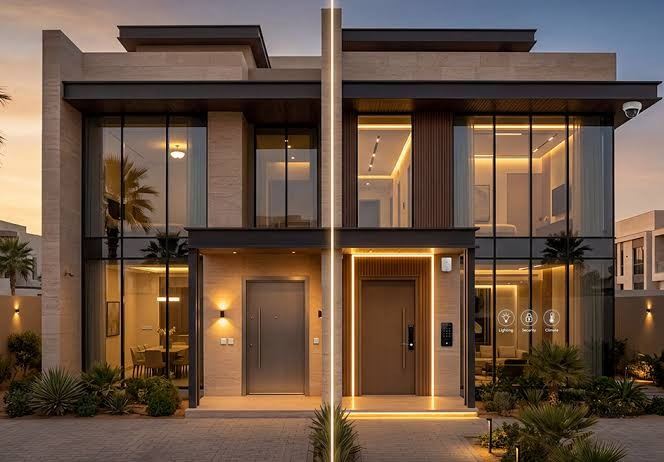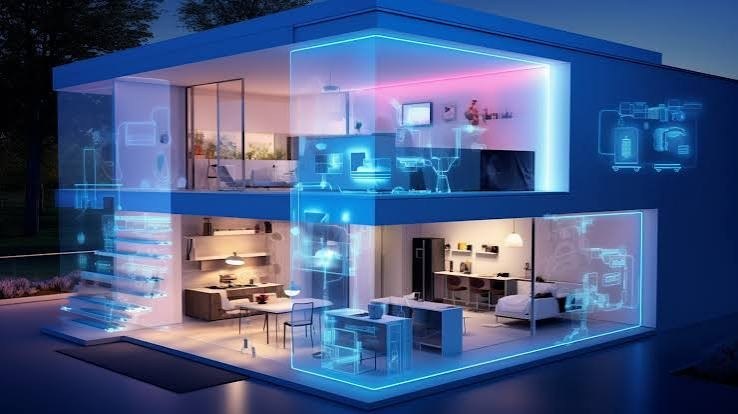
The way people live has changed dramatically over the years, and technology has played a major role in transforming modern residential environments. Traditional houses that once depended entirely on manual operations are gradually becoming intelligent living spaces powered by automation, artificial intelligence (AI) and connected technologies.
Today, homeowners can control lighting, security systems, entertainment devices, appliances and energy consumption using smartphones, voice commands and automated systems.
This transformation is known as the evolution of smart homes. It represents a major advancement in residential technology, creating homes that are more convenient, secure, efficient and responsive to the needs of their occupants.
But how did smart homes develop, what technologies made this transformation possible, and what does the future hold for intelligent living spaces?
Let’s explore the journey from traditional houses to modern smart homes.
1. Traditional Homes: Before the Era of Smart Technology
Traditional homes were designed primarily around basic residential needs such as shelter, comfort, privacy and security.
Most household activities required manual operation. Lighting was controlled using conventional switches, doors were secured with physical keys, and household appliances operated independently.
Homeowners also had limited options for monitoring electricity consumption, managing security remotely or automatically controlling indoor temperatures.
Although traditional homes served their purpose, they lacked the convenience and flexibility offered by modern connected technologies.
The limitations of traditional residential systems created opportunities for innovation and the development of automated household solutions.
2. The Beginning of Home Automation
The evolution of smart homes began with early electronic automation technologies.
One important milestone was the introduction of the X10 home automation protocol in 1975. This technology allowed compatible household devices to communicate using existing electrical wiring.
Early home automation systems introduced basic functions such as remote lighting control, programmable switches, automatic timers and electronic security solutions.
Although these systems were relatively simple, they established the foundation for modern smart home technology.
3. The Rise of Connected Homes and Wireless Technology
The development of the internet and wireless communication transformed residential automation.
Technologies such as Wi-Fi, Bluetooth, Zigbee and Z-Wave made it easier for household devices to communicate without requiring extensive additional wiring.
Smart devices gradually became more accessible, allowing homeowners to control selected household functions through connected applications.
This development marked an important transition from basic electronic automation to interconnected residential environments.
4. The Smartphone Revolution in Smart Home Technology
The introduction and widespread adoption of smartphones changed how homeowners interacted with their properties.
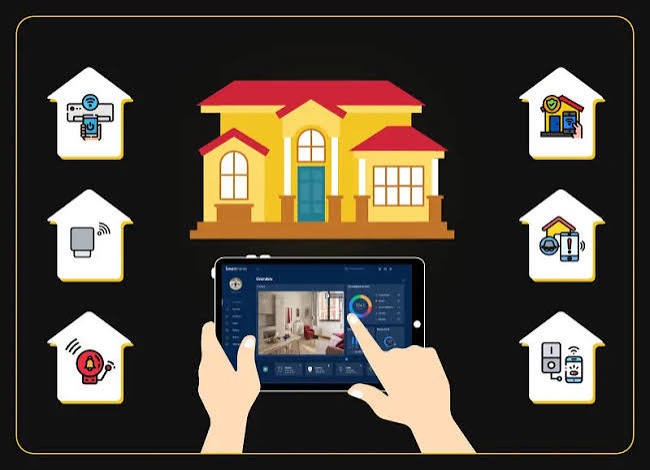
Instead of relying entirely on physical switches and dedicated control panels, homeowners could use mobile applications to manage compatible household devices.
Some of the most popular applications included:
- Remote lighting control.
- Smart security camera monitoring.
- Intelligent door locks.
- Automated curtains and blinds.
- Smart air conditioning systems.
- Connected household appliances.
This innovation made smart home technology more practical and accessible to ordinary homeowners.
5. Artificial Intelligence and Voice-Controlled Smart Homes
Artificial intelligence has introduced a new level of intelligence into modern residential environments.
Earlier automation systems mainly followed predefined instructions. Modern AI-enabled systems can analyse patterns, interpret information and support more personalised automation.
Voice assistants have also made it easier to control connected household equipment.
Homeowners can use spoken commands to adjust lighting, manage entertainment systems and control compatible smart devices.
AI-powered smart home systems can also help analyse energy consumption, recognise activity patterns and recommend more efficient household routines.
As these technologies develop, intelligent living spaces are becoming increasingly responsive to the needs of their occupants.
6. Technologies Driving the Evolution of Smart Homes
Modern intelligent homes depend on several technologies working together.
Internet of Things (IoT)
The Internet of Things connects physical devices through communication networks, allowing them to exchange information and respond to commands.
In smart homes, IoT connects lighting, security equipment, appliances and environmental sensors.
Smart Lighting Systems
Smart lighting allows homeowners to control brightness, schedules and lighting scenes through mobile applications, sensors and voice commands.
Intelligent Security Systems
Modern security solutions include smart cameras, video doorbells, motion sensors, intelligent locks and remote monitoring applications.
Smart Climate Control
Intelligent thermostats and compatible air conditioning systems can regulate indoor temperatures according to programmed schedules and environmental conditions.
Smart Energy Management
Energy monitoring systems help homeowners understand electricity consumption and manage household energy more efficiently.
Automated Curtains and Blinds
Motorised curtains and blinds can operate automatically according to schedules, sunlight levels or user commands.
7. Traditional Homes vs Modern Smart Homes
The transformation from traditional houses to intelligent living spaces has changed how residential systems operate.
| Traditional homes | Modern smart homes |
|---|---|
| Manual lighting switches | Automated lighting |
| Physical door locks | Smart access control |
| Manual temperature adjustment | Intelligent climate control |
| Independent appliances | Connected appliances |
| Basic security systems | Remote smart security |
| Limited energy monitoring | Intelligent energy management |
| Manual household routines | Automated daily routines |
| Conventional controls | Smartphone and voice control |
Modern smart homes offer greater integration, convenience and automation compared with traditional residential environments.
8. Benefits of Intelligent Living Spaces
The adoption of smart home technology offers several advantages.
Improved convenience: Homeowners can manage multiple household functions through smartphones, voice commands and centralised control systems.
Enhanced security: Smart cameras, motion sensors and intelligent locks provide additional monitoring and access control.
Energy efficiency: Automated lighting and intelligent energy monitoring can help reduce unnecessary electricity consumption.
Greater comfort: Smart climate control, lighting and entertainment systems create personalised living environments.
Remote management: Homeowners can monitor compatible household systems even when away from their properties.
Improved accessibility: Voice-controlled devices and automated systems can make homes easier to use for older adults and people with mobility limitations.
9. The Growth of Smart Homes in Uganda and Africa
Smart home technology presents exciting opportunities for residential development across Africa.
In Uganda, increasing interest in modern housing, property development, renewable energy and digital technologies is creating opportunities for intelligent residential solutions.
Practical smart home applications include automated security monitoring, intelligent lighting, solar energy monitoring, smart access control and automated water management.
For example, homeowners can install water-level sensors to monitor storage tanks, smart lighting to reduce unnecessary electricity consumption and connected security cameras to monitor their properties remotely.
Energy management is particularly important when designing smart homes in Uganda.
Integrating appropriate solar power systems, battery storage and intelligent energy monitoring can help homeowners manage electricity consumption and improve the reliability of essential household functions.
As technology becomes more accessible, smart home solutions have the potential to play an increasingly important role in modern residential development across Uganda and Africa.
10. Challenges Facing Smart Home Adoption
Despite the benefits, smart home technology also presents several challenges.
Installation costs: Advanced automation systems may require significant initial investment.
Internet connectivity: Some smart devices depend on reliable internet connections for remote access and cloud-based services.
Cybersecurity: Connected devices can introduce security vulnerabilities if they are not properly configured.
Device compatibility: Not all smart home products work with every automation platform.
Maintenance: Smart home systems require software updates, troubleshooting and occasional equipment replacement.
Homeowners can reduce these challenges by selecting compatible equipment, using secure networks and working with qualified installation professionals.
11. The Future of Smart Homes and Intelligent Living
The future of smart homes will be shaped by continued developments in artificial intelligence, connected devices, renewable energy and automation.
Important emerging trends include:
- AI-powered personalised home automation.
- Intelligent energy management.
- Integration of solar panels and battery storage.
- Improved compatibility through Matter.
- Advanced residential security systems.
- Automated water management.
- Smart indoor air quality monitoring.
- Predictive equipment maintenance.
These innovations will continue transforming traditional residential properties into intelligent environments that support comfort, convenience and sustainability.
12. How to Transform a Traditional House into a Smart Home
You do not need to build a completely new property to benefit from smart home technology.
Existing houses can be upgraded gradually using compatible smart devices.
Here are six practical steps:
- Assess your needs: Identify whether security, lighting, energy management or convenience is your main priority.
- Set a budget: Determine how much you can invest in home automation.
- Choose compatible devices: Select smart products that work together within your preferred ecosystem.
- Start with essential automation: Consider smart bulbs, security cameras, connected plugs and sensors.
- Expand gradually: Introduce intelligent locks, automated curtains, climate control and energy monitoring.
- Maintain system security: Use strong passwords, update software and secure your home network.
A gradual approach makes it possible to transform traditional houses into intelligent living spaces without unnecessary expenditure.
Conclusion: The Future of Living Is Intelligent
The evolution of smart homes represents a significant transformation in modern residential living.
From traditional houses that depended on manual operations to intelligent living spaces powered by artificial intelligence, IoT and automation, residential technology has developed considerably.
Modern smart homes offer opportunities for improved security, greater convenience, better energy management and more comfortable living environments.
As technology continues advancing, intelligent residential solutions will become increasingly important in the design and management of modern properties.
Whether you are a homeowner, property developer, architect or technology enthusiast, understanding the evolution of smart homes provides valuable insight into the future of residential living.
The future of housing is not simply about building better houses. It is about creating intelligent living spaces that make everyday life smarter, safer and more efficient.
Frequently Asked Questions About the Evolution of Smart Homes
What is the evolution of smart homes?
It is the development of residential technology from basic electronic controls and remote-operated appliances to connected, automated and AI-enabled living environments.
When did smart home technology begin?
Early home automation experiments appeared during the 1960s, while the X10 home automation protocol introduced in 1975 helped establish the foundations of consumer home automation.
What is the difference between traditional houses and smart homes?
Traditional houses rely mainly on manual controls, while smart homes use connected devices, sensors and automation to manage household functions.
How does artificial intelligence improve smart homes?
AI can help compatible smart home systems recognise patterns, personalise automation, analyse energy usage and support intelligent monitoring.
Can an existing house become a smart home?
Yes. Existing houses can be upgraded with smart lighting, connected security cameras, intelligent locks, smart plugs and other compatible automation devices.
Are smart homes suitable for Uganda?
Yes. Smart security, automated lighting, solar energy monitoring, water management and remote property monitoring can provide practical benefits for Ugandan homeowners.
Do smart homes require internet access?
Many smart devices use the internet for remote access and cloud services. However, some systems support local communication and automation without an active internet connection.
What is the future of smart homes?
The future includes more advanced artificial intelligence, improved device compatibility, renewable energy integration, intelligent security and automated household management.