As technology continues to transform modern living, intelligent home design is becoming an important consideration for homeowners, architects, property developers, and building professionals. From automated lighting and smart security cameras to energy management systems and artificial intelligence, today’s technologies make it possible to create homes that respond to the needs and preferences of their occupants.
However, designing an intelligent home requires more than purchasing smart devices. It involves careful planning, selecting compatible technologies, establishing reliable connectivity, considering future expansion, and ensuring that all systems work together effectively.
This guide explores the essential technologies, planning considerations, and practical steps involved in designing an intelligent home.
1. What Is an Intelligent Home?
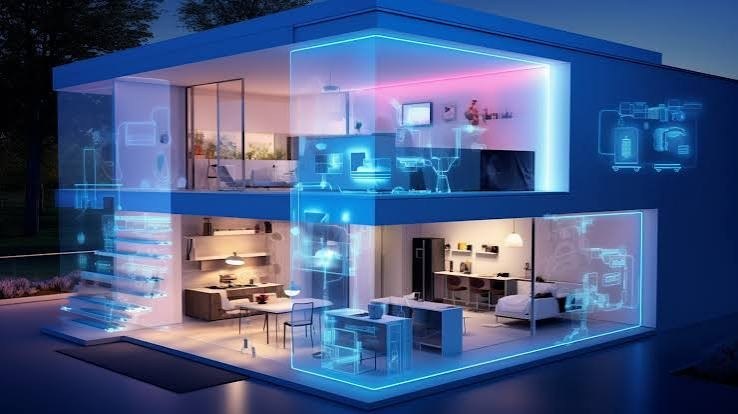
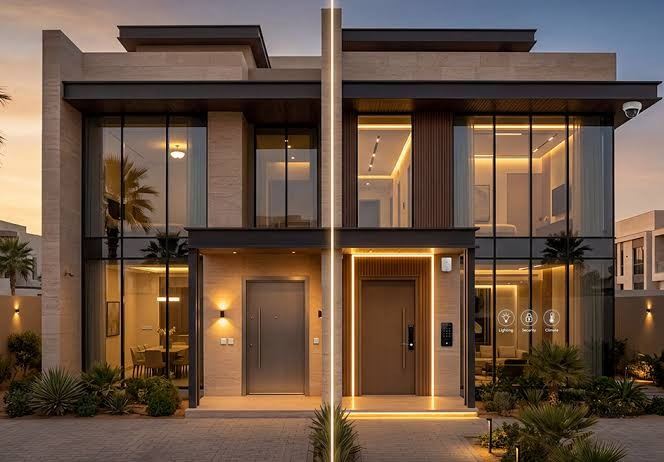
An intelligent home is a residential property equipped with connected technologies that allow different household systems to communicate, operate automatically, and respond to user commands or environmental conditions.
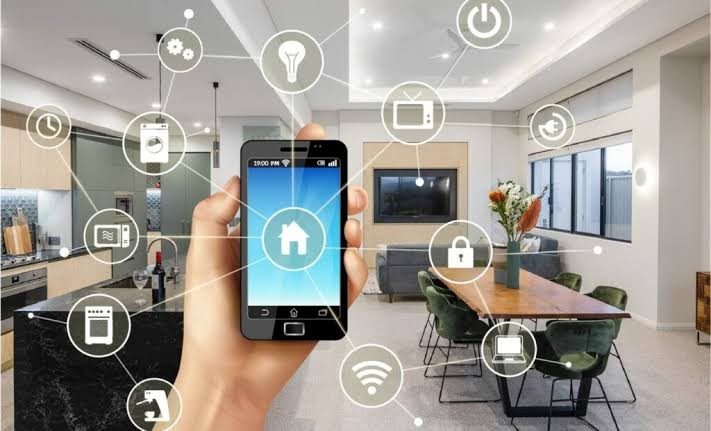
These systems may be controlled through smartphones, tablets, voice assistants, touch panels, automated schedules, or intelligent sensors.
For example, an intelligent home can automatically switch on outdoor lighting when someone approaches, adjust indoor temperatures according to occupancy, notify homeowners about unusual security activity, and reduce unnecessary electricity consumption.
Unlike traditional homes, where most systems operate independently, intelligent homes integrate different technologies into a coordinated environment.
The main objective is to create a living space that is:
- Comfortable and convenient.
- Safe and secure.
- Energy-efficient.
- Easy to manage.
- Adaptable to changing household needs.
- Prepared for future technological developments.
2. Start With a Clear Intelligent Home Design Plan
Before installing smart devices, homeowners should establish a clear plan based on their lifestyle, property design, budget, and long-term objectives.
Planning helps prevent unnecessary purchases, incompatible equipment, and expensive modifications after construction.
Important questions to consider include:
- Which household activities should be automated?
- How many rooms require smart lighting?
- What security features are necessary?
- Should the property have automated temperature control?
- Will the home use solar energy or battery storage?
- How will different smart systems communicate?
- Should the system support future expansion?
It is also important to identify the needs of the people who will use the home. A family may prioritise security and convenience, while a property developer may focus on energy efficiency, centralised control, and long-term property value.
A well-prepared plan provides a foundation for selecting the right technologies.
3. Smart Lighting and Automated Illumination
Smart lighting is one of the most practical technologies to incorporate into an intelligent home.
It allows homeowners to control lighting remotely, create automatic schedules, adjust brightness, and establish different lighting scenes for various activities.
<PRIVATE_PERSON>
Smart lighting systems may include:
- Smart LED bulbs.
- Automated light switches.
- Motion and occupancy sensors.
- Dimmable lighting controllers.
- Smart lighting hubs.
- Daylight sensors.
For example, outdoor lights can automatically turn on at sunset, hallway lights can activate when movement is detected, and bedroom lighting can gradually dim before bedtime.
Homeowners can also create customised scenes such as reading mode, entertainment mode, relaxation mode, and away mode.
When designing smart lighting, consider the location of switches, sensor coverage, lighting circuits, compatibility with existing fittings, and manual control options.
Properly designed lighting automation improves convenience while helping reduce unnecessary electricity consumption.
4. Intelligent Home Security and Surveillance
Security is a major consideration when designing an intelligent home. Modern security technologies allow homeowners to monitor their property, receive alerts, and manage access remotely.
Essential smart security technologies include:
- Smart CCTV cameras.
- Motion detection sensors.
- Smart doorbells.
- Window and door contact sensors.
- Intrusion detection systems.
- Smart alarm systems.
- Remote monitoring applications.
Smart cameras can provide live video feeds through mobile devices, while motion sensors can notify homeowners when unexpected activity is detected.
Some systems also offer intelligent video analytics that can distinguish between people, vehicles, and other movement, depending on the equipment and its capabilities.
For effective security design, cameras should cover important entry points, outdoor areas, driveways, and other vulnerable locations.
Homeowners should also consider secure device accounts, strong passwords, software updates, privacy settings, and backup power.
An intelligent security system should combine technology with appropriate physical security measures rather than relying entirely on connected devices.
5. Smart Climate Control and Indoor Comfort
Climate control technologies help maintain comfortable indoor conditions while improving energy management.
Smart thermostats, automated air-conditioning controllers, temperature sensors, and humidity monitoring devices allow heating, ventilation, and cooling systems to respond to changing indoor conditions.
For example, an intelligent climate control system can:
- Adjust temperatures according to occupancy.
- Switch off air conditioning when rooms are unoccupied.
- Follow programmed daily schedules.
- Monitor indoor temperature and humidity.
- Allow remote adjustment through a smartphone.
- Coordinate with other home automation systems.
In warm climates, including many parts of Uganda, intelligent cooling, ventilation, shading, and airflow management can contribute significantly to indoor comfort.
When designing climate automation, consider room orientation, insulation, window placement, natural ventilation, occupancy patterns, and the efficiency of the installed cooling equipment.
The best results come from combining good architectural design with appropriate automation technology.
6. Smart Home Hubs and Centralised Control Systems
A smart home hub acts as a central coordination point for compatible connected devices.
Instead of managing every device through a separate application, homeowners can use an integrated control platform to operate multiple systems.
Depending on the chosen platform, a smart home hub may connect:
- Lighting systems.
- Security equipment.
- Smart switches and plugs.
- Sensors.
- Climate control devices.
- Automated curtains.
- Entertainment equipment.
Some intelligent homes use a central controller, while others rely on distributed systems and cloud-based services.
When selecting a control platform, compatibility is particularly important. Homeowners should confirm that the devices they intend to install can communicate with the chosen system.
Technologies and standards such as Matter, Thread, Wi-Fi, and Zigbee can support device connectivity, although their capabilities and compatibility vary.
A reliable control system should be simple to operate, secure, and flexible enough to accommodate future additions.
7. Reliable Internet and Smart Home Networking
Internet connectivity is one of the most important foundations of an intelligent home.
Connected devices require reliable communication to exchange information, receive commands, and provide remote access.
A poorly designed network can result in delayed commands, disconnected devices, unreliable cameras, and interruptions in automation.
Important networking components include:
- High-quality wireless routers.
- Wi-Fi access points.
- Network switches.
- Ethernet cabling.
- Structured cabling systems.
- Network security equipment.
For larger houses, multiple access points may be necessary to provide reliable coverage across bedrooms, living areas, outdoor spaces, and other important locations.
Where possible, stationary equipment such as security cameras, network storage devices, and control equipment can benefit from wired Ethernet connections.
It is also advisable to create a separate network for smart home devices where supported, reducing unnecessary exposure of personal computers and other sensitive devices.
A strong network infrastructure makes intelligent home systems more reliable and easier to manage.
8. Smart Energy Management and Electricity Monitoring
Energy management is an essential part of modern intelligent home design.
Smart energy monitoring technologies help homeowners understand how electricity is consumed and identify opportunities to improve efficiency.
These technologies may include:
- Smart electricity meters.
- Energy monitoring devices.
- Smart plugs.
- Automated power controllers.
- Solar monitoring systems.
- Battery management systems.
- Intelligent load management equipment.
For example, an energy monitoring system can identify appliances that consume significant amounts of electricity. Homeowners can then adjust usage patterns or automate selected devices to reduce unnecessary consumption.
Smart plugs can also switch compatible appliances on or off according to schedules.
In homes with solar installations, integrated energy monitoring can help coordinate electricity generation, battery storage, and household demand.
The objective is not simply to automate electricity usage but to make energy consumption more visible, efficient, and manageable.
9. Solar Power and Battery Storage Integration
Solar energy is an important consideration when designing intelligent homes, particularly where homeowners want greater control over electricity costs and backup power.
An intelligent home can integrate solar panels, hybrid inverters, battery storage, and energy monitoring systems into a coordinated energy solution.
The system may monitor:
- Solar electricity generation.
- Household electricity consumption.
- Battery charge levels.
- Grid electricity usage.
- Backup power availability.
- Energy distribution between connected systems.
For example, selected household loads can be prioritised during a power interruption, while energy monitoring helps homeowners understand how much electricity is being generated and consumed.
In Uganda, where electricity reliability and energy costs may influence residential planning, solar integration can be a valuable consideration.
However, system capacity should be determined through a proper assessment of household energy requirements, appliance loads, available roof space, and expected backup duration.
Professional electrical design and installation are essential for safe operation.
10. Smart Door Locks and Intelligent Access Control
Smart access control technologies provide homeowners with more flexible ways to manage entry into their properties.
These systems can replace or supplement traditional keys with digital access methods.
Common solutions include:
- Fingerprint-enabled door locks.
- PIN-code access systems.
- Smartphone-controlled locks.
- RFID card readers.
- Smart intercom systems.
- Video doorbells.
- Remote access management.
Some smart locks allow homeowners to create temporary access codes for visitors, domestic workers, or maintenance personnel.
Other systems can provide notifications when doors are locked or unlocked.
When selecting smart locks, consider door compatibility, emergency access, battery backup, mechanical override options, and the security of the control application.
Access control should also be integrated carefully with the home’s wider security arrangements.
11. Smart Appliances and Connected Household Equipment
Smart appliances make everyday household activities easier by introducing remote control, monitoring, scheduling, and selected automated functions.
Examples include:
- Smart refrigerators.
- Connected washing machines.
- Smart dishwashers.
- Intelligent ovens.
- Smart televisions.
- Automated water heaters.
- Connected air conditioners.
Depending on the model, some appliances can notify homeowners when a washing cycle is complete, monitor operating conditions, or allow remote adjustments.
However, not every appliance needs to be smart.
Homeowners should prioritise appliances where automation provides genuine convenience, energy savings, or improved control.
Compatibility with the main smart home platform should also be checked before purchasing connected appliances.
12. Smart Curtains, Blinds, and Window Automation
Automated curtains and blinds are useful additions to an intelligent home, particularly in bedrooms, living rooms, and large glazed spaces.
Motorised window coverings can be controlled using smartphone applications, remote controls, wall switches, or programmed schedules.
They can be configured to:
- Open automatically in the morning.
- Close during periods of strong sunlight.
- Provide privacy at selected times.
- Coordinate with indoor lighting.
- Respond to compatible environmental sensors.
For example, automated blinds can close during the hottest part of the day to reduce direct solar heat entering a room.
When planning window automation, consider curtain weight, motor capacity, available power connections, window dimensions, and manual operation during power interruptions.
Integrating window coverings with lighting and climate control can create a more comfortable and efficient indoor environment.
13. Smart Sensors and Environmental Monitoring
Sensors provide intelligent homes with information about their surroundings.
They help automation systems detect changes and respond automatically without requiring constant human input.
Important sensors include:
- Motion sensors.
- Occupancy sensors.
- Temperature sensors.
- Humidity sensors.
- Smoke detectors.
- Carbon monoxide detectors.
- Water leak sensors.
- Door and window sensors.
- Light-level sensors.
For example, a water leak sensor placed near a washing machine or water heater can alert homeowners when leakage is detected.
Smoke and carbon monoxide detectors can provide important safety warnings, while occupancy sensors can help control lighting and other compatible systems.
Sensor placement is critical. Devices should be installed in locations where they can accurately detect the conditions they are designed to monitor.
Safety sensors should always be selected and installed according to applicable standards and manufacturer recommendations.
14. Home Entertainment and Multi-Room Audio Systems
Entertainment technology is another important aspect of intelligent home design.
Modern systems allow homeowners to control televisions, speakers, music, and other entertainment equipment through connected applications or central control interfaces.
Popular features include:
- Wireless smart speakers.
- Multi-room audio systems.
- Home theatre automation.
- Smart televisions.
- Automated media control.
- Voice-controlled entertainment.
For example, a homeowner can play music in the living room while controlling the volume of speakers in other rooms.
Home theatre systems can also be programmed to activate selected lighting, close curtains, and switch on entertainment equipment with one command.
When designing entertainment systems, plan speaker positions, display locations, power outlets, network connections, and cable routes before completing interior finishes.
15. Water Management and Leak Detection
Water management is sometimes overlooked when planning intelligent homes, yet it can help protect property and reduce unnecessary water consumption.
Smart water technologies include:
- Water leak sensors.
- Smart water meters.
- Automated irrigation controllers.
- Water tank level sensors.
- Smart water valves.
- Pump monitoring systems.
For homes that use water storage tanks, level monitoring can help homeowners understand when water supplies are running low.
Automated irrigation systems can also schedule garden watering according to programmed times and compatible environmental data.
More advanced systems may detect unusual water usage and notify homeowners about possible leaks.
Where appropriate, automatic shut-off valves can be integrated with leak detection systems to help limit water damage.
16. Artificial Intelligence and Intelligent Home Automation
Artificial intelligence is increasingly influencing how modern homes operate.
AI-enabled technologies can analyse information from sensors, connected appliances, and household usage patterns to support more responsive automation.
Depending on the platform, these technologies may:
- Learn preferred lighting schedules.
- Suggest energy-saving adjustments.
- Identify unusual security activity.
- Optimise selected climate settings.
- Provide personalised voice assistance.
- Support predictive maintenance.
For example, a system may recognise that certain rooms are regularly occupied in the evening and recommend suitable lighting or climate settings.
However, intelligent automation should not be confused with simply connecting devices to the internet.
A well-designed system needs reliable data, appropriate automation rules, user control, privacy safeguards, and the ability to operate essential functions when cloud services are unavailable.
AI should improve the homeowner’s experience rather than make ordinary household tasks unnecessarily complicated.
17. Cybersecurity and Data Privacy
An intelligent home introduces additional connected devices, applications, and communication channels. Without proper protection, these systems may create security and privacy risks.
Homeowners should consider cybersecurity from the beginning of the design process.
Important security practices include:
- Using strong, unique passwords.
- Enabling multi-factor authentication where available.
- Installing software and firmware updates.
- Securing the home Wi-Fi network.
- Using reputable device manufacturers.
- Disabling unnecessary remote access features.
- Reviewing application permissions.
- Separating smart devices from sensitive personal devices where possible.
Privacy is equally important, especially when using indoor cameras, microphones, and voice assistants.
Homeowners should understand what information devices collect, how it is stored, and whether it is shared with third parties.
A secure intelligent home should give residents control over their information while protecting connected systems against unauthorised access.
18. Power Backup and System Reliability
An intelligent home depends on electrical power to operate its connected systems.
Power interruptions can affect internet connectivity, security cameras, smart locks, control hubs, and other important equipment.
A reliable design should therefore consider backup power for essential systems.
Possible solutions include:
- Uninterruptible power supplies (UPS).
- Solar power systems.
- Battery storage.
- Standby generators.
- Surge protection equipment.
Not every device needs backup power. Priority should be given to critical systems such as security equipment, network infrastructure, selected lighting circuits, and essential access control equipment.
It is also important to understand which devices can continue operating locally when the internet is unavailable.
Choosing equipment with suitable offline or local-control capabilities can improve reliability.
19. Integration With Building Management Systems
For larger residential properties, apartments, and modern housing developments, intelligent home technologies can be connected to wider building management systems.
A Building Management System (BMS) monitors and manages selected building services through centralised control and automation.
Depending on the property, these systems may coordinate:
- Lighting.
- Heating, ventilation, and air conditioning.
- Energy monitoring.
- Security systems.
- Access control.
- Water management.
- Equipment monitoring.
In a multi-unit residential development, building management technologies can help property managers monitor shared services while residents maintain control over their individual homes.
However, a residential smart home system and a commercial-grade BMS are not necessarily the same thing. Their functions, scale, architecture, and operational requirements can differ.
For developers and building professionals, planning integration early can reduce installation complexity and improve long-term building performance.
20. Budgeting and Choosing the Right Smart Home Technologies
The cost of designing an intelligent home depends on the size of the property, selected equipment, installation requirements, system complexity, and level of automation.
Homeowners should avoid purchasing every available smart device simply because it is marketed as innovative.
Instead, investment should be prioritised according to practical household needs.
A sensible approach is to divide the project into three stages:
Stage 1: Essential systems
- Reliable home networking.
- Smart lighting.
- Basic security.
- Selected safety sensors.
- Smart switches and plugs.
Stage 2: Comfort and energy management
- Smart climate control.
- Automated curtains.
- Energy monitoring.
- Solar integration.
- Smart appliances.
Stage 3: Advanced automation
- Centralised home control.
- Multi-room entertainment.
- Advanced access control.
- Intelligent building integration.
- AI-supported automation.
This phased approach allows homeowners to build an intelligent home gradually without making unnecessary initial investments.
The total budget should also include installation, configuration, maintenance, subscriptions where applicable, and future upgrades.
21. Future-Proofing an Intelligent Home
Technology continues to evolve, making future-proofing an important part of intelligent home design.
A system that works well today should also provide room for additional devices and changing household requirements.
Future-proofing considerations include:
- Installing sufficient network infrastructure.
- Providing spare electrical and data conduits.
- Selecting widely supported communication standards.
- Choosing expandable control systems.
- Allowing for additional sensors and devices.
- Planning for solar and battery expansion.
- Maintaining clear equipment documentation.
- Avoiding unnecessary dependence on one manufacturer.
It is also useful to select systems that support local control where practical.
Future-proofing does not mean predicting every new technology. It means creating a flexible infrastructure that can accommodate change without requiring major reconstruction.
22. Common Mistakes to Avoid When Designing an Intelligent Home
Even well-funded smart home projects can experience problems when planning and integration are overlooked.
Common mistakes include:
1. Buying devices without checking compatibility
Not all smart devices work together. Always verify communication standards and platform compatibility before purchasing equipment.
2. Ignoring network infrastructure
A weak Wi-Fi network can affect the performance of connected devices. Network planning should be part of the original design.
3. Over-automating the home
Too many complicated automation rules can make a home difficult to operate. Prioritise useful functions that simplify everyday life.
4. Neglecting cybersecurity
Connected cameras, locks, and appliances need proper security settings, updates, and access management.
5. Failing to plan for power interruptions
Essential smart home systems should have suitable backup arrangements where necessary.
6. Ignoring future expansion
Insufficient cabling, network capacity, and installation space can make later upgrades expensive.
7. Choosing technology without considering the occupants
An intelligent home should be easy for residents to understand and use. Simplicity is just as important as advanced functionality.
23. Designing Intelligent Homes in Uganda and Other Emerging Markets
Intelligent home design presents opportunities for homeowners, architects, developers, and construction professionals in Uganda and other emerging markets.
As residential construction evolves, there is growing potential to incorporate connected security, smart lighting, solar integration, energy monitoring, and automated building services into new developments.
However, successful implementation should reflect local conditions.
Important considerations include:
- Electricity reliability and backup requirements.
- Solar energy opportunities.
- Internet availability and network coverage.
- Equipment availability and replacement costs.
- Local installation and maintenance expertise.
- Building layout and ventilation requirements.
- Long-term operating costs.
For example, a home in Uganda may benefit from integrating solar power, battery storage, automated lighting, water tank monitoring, and security systems into a coordinated design.
Property developers can also consider providing structured cabling, network access points, and suitable electrical infrastructure during construction. These features make it easier for future homeowners to install smart technologies without extensive renovations.
The most effective solutions are those that combine modern innovation with practical local requirements.
24. The Future of Intelligent Home Design
The future of intelligent homes will be shaped by greater connectivity, improved automation, energy efficiency, artificial intelligence, and more intuitive control systems.
Emerging developments are expected to include:
- More advanced AI-powered home assistants.
- Improved interoperability between smart devices.
- Predictive energy management.
- Smarter security monitoring.
- Integrated renewable energy systems.
- More sophisticated environmental monitoring.
- Greater automation of household routines.
As these technologies develop, intelligent homes will increasingly move from individual connected devices toward coordinated residential environments.
Architects, developers, electrical engineers, and smart home specialists will therefore need to consider technology as part of the overall building design rather than an addition after construction.
Conclusion: Building a Smarter, Safer, and More Efficient Home
Designing an intelligent home requires a combination of thoughtful planning, reliable infrastructure, compatible technologies, and an understanding of the people who will use the property.
From smart lighting and security systems to energy management, solar integration, automated curtains, and AI-powered controls, each technology can contribute to a more comfortable and efficient living environment.
However, the success of an intelligent home depends on how well its systems work together. Reliable connectivity, cybersecurity, power backup, ease of use, and future expansion should all be considered from the beginning.
For homeowners planning a new property, the best time to incorporate smart home infrastructure is during the design and construction stages. For existing properties, a phased installation approach can make intelligent upgrades more affordable and manageable.
Ultimately, an intelligent home is not defined by the number of devices it contains. It is defined by how effectively technology improves everyday living.