Introduction
The way people live and interact with their homes is changing rapidly as technology continues to transform the residential property industry. Modern homeowners are no longer looking for houses that simply provide shelter. They increasingly expect homes to offer comfort, convenience, security, energy efficiency, connectivity, and intelligent solutions that support their everyday lifestyles.
This shift in expectations is driving the growing adoption of smart home technology and residential automation systems.
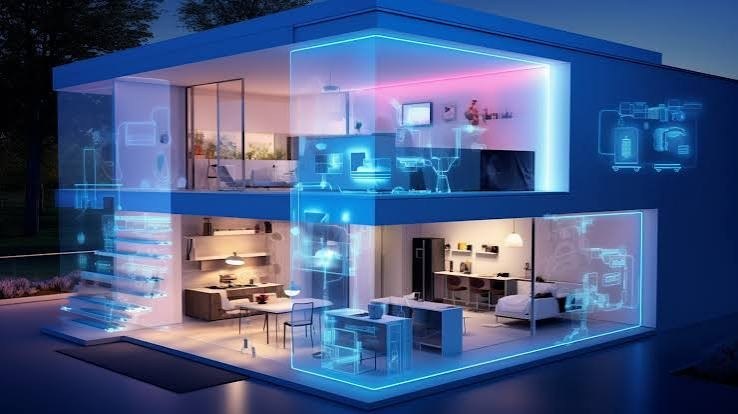
A modern smart home uses connected devices, intelligent sensors, artificial intelligence (AI), and automated control systems to manage different household functions. These technologies allow homeowners to control lighting, security, temperature, entertainment, appliances, and energy consumption through smartphones, voice assistants, or centralised automation platforms.
From automated lighting and smart security cameras to intelligent climate control and energy management systems, smart home technologies are changing what people expect from modern residential properties.
For homeowners, these innovations create more convenient and personalised living environments. For property developers, architects, and construction professionals, they introduce new opportunities to design homes that meet the evolving needs of today’s technology-conscious buyers.
As urbanisation, digital connectivity, and environmental awareness continue to influence residential living, smart home features are becoming increasingly important in modern housing design.
In this article, we explore how smart homes are changing the expectations of modern homeowners, the technologies driving this transformation, the benefits of residential automation, and what the future holds for intelligent living.
1. Modern Homeowners Expect Greater Comfort and Convenience
Comfort and convenience are among the most important expectations shaping the modern housing market.
Traditional homes require residents to manually operate lighting, curtains, electrical appliances, security systems, and temperature controls. Smart homes simplify these activities by connecting different devices and allowing them to operate automatically.
For example, homeowners can configure their houses to switch on selected lights, adjust indoor temperatures, and open automated curtains at specific times.
Smart Technologies Improving Home Comfort
- Smart lighting systems.
- Automated curtains and blinds.
- Intelligent temperature controls.
- Voice-controlled home assistants.
- Smart household appliances.
- Occupancy and environmental sensors.
These technologies allow homeowners to personalise their living environments according to their preferences and daily routines.
The expectation is shifting from simply owning a comfortable house to living in a home that actively helps maintain comfort with minimal manual intervention.
2. Home Security Is Becoming a Major Priority
Modern homeowners increasingly expect residential properties to provide reliable and convenient security solutions.
Traditional locks and basic alarm systems remain important, but connected security technologies offer additional monitoring and access management capabilities.
Smart home security systems allow residents to monitor their properties, receive notifications, and manage selected security devices remotely.
Essential Smart Home Security Features
Smart CCTV Cameras: Provide remote video monitoring, motion detection, and recorded footage.
Video Doorbells: Allow homeowners to see and communicate with visitors before opening their doors.
Smart Door Locks: Provide keyless access through PIN codes, biometric authentication, or compatible mobile applications.
Motion Sensors: Detect movement and trigger selected alarms, lighting, or notifications.
Smart Alarm Systems: Alert residents when suspicious activity or unauthorised access is detected.
Automated Access Control: Allows homeowners to manage access permissions for family members, visitors, and service providers.
For modern homeowners, security is no longer just about locking doors. It increasingly involves having visibility and control over what happens around their properties.
3. Energy Efficiency Is Influencing Home Buying Decisions
Energy efficiency is becoming an important consideration for homeowners because of increasing awareness of electricity consumption, operating costs, and environmental sustainability.
Modern buyers are increasingly interested in properties that incorporate technologies capable of monitoring and managing energy usage.
Smart home automation helps achieve this through intelligent lighting, connected appliances, energy monitoring systems, and automated climate control.
How Smart Homes Improve Energy Efficiency
- Motion sensors switch off selected lights when rooms are unoccupied.
- Smart thermostats optimise heating and cooling schedules.
- Energy monitoring systems provide information about electricity consumption.
- Smart plugs allow compatible appliances to be scheduled.
- Solar energy monitoring helps homeowners understand renewable energy production.
- Battery management systems coordinate stored electricity.
For example, an automated lighting system can reduce unnecessary electricity consumption by switching off lights when nobody is present.
Similarly, smart energy management systems can help homeowners identify appliances that consume excessive electricity.
For modern property buyers, energy efficiency is increasingly part of the value proposition of a residential property.
4. Homeowners Expect Greater Control Through Smartphones
Digital connectivity has changed how people interact with their homes.
Modern homeowners increasingly expect to manage different household functions through their smartphones, whether they are at home, at work, or travelling.
Smart home applications allow residents to control compatible devices remotely through connected platforms.
Examples of Smartphone-Controlled Home Functions
- Switching lights on and off.
- Monitoring CCTV cameras.
- Locking and unlocking compatible doors.
- Adjusting air conditioning.
- Operating automated curtains.
- Managing connected appliances.
- Monitoring electricity consumption.
- Receiving security notifications.
This level of control provides flexibility and makes residential management more convenient.
For homeowners who travel frequently or manage multiple properties, remote monitoring can be particularly valuable.
5. Smart Home Automation Is Becoming an Expected Lifestyle Feature
As smart home technology becomes more accessible, homeowners are increasingly interested in properties that support automated daily routines.
Residential automation reduces the need to perform repetitive household activities manually.
For example, a homeowner can create a morning routine that opens the curtains, activates selected lights, and adjusts indoor temperature.
An evening routine can dim lighting, close curtains, and activate selected entertainment devices.
Common Smart Home Automation Routines
Morning Automation: Opens curtains, adjusts lighting, and activates preferred settings.
Leaving Home Automation: Switches off selected lights, adjusts climate controls, and activates security systems.
Evening Automation: Adjusts indoor lighting and entertainment settings.
Night Automation: Locks compatible doors, switches off unnecessary lights, and activates selected security features.
These routines make daily life more organised and convenient.
Modern homeowners increasingly expect their properties to adapt to their lifestyles rather than requiring constant manual operation.
6. Personalised Living Spaces Are Becoming More Important
Today’s homeowners have different lifestyles, preferences, and household requirements.
Families, professionals, elderly residents, and individuals working from home may all require different residential environments.
Smart home technology makes it easier to personalise living spaces through programmable settings and connected devices.
Examples of Personalised Smart Living
- Adjustable lighting scenes.
- Individual temperature preferences.
- Customised entertainment settings.
- Automated privacy controls.
- Personalised voice assistant routines.
- Occupancy-based lighting.
- Individual access permissions.
For example, a living room can be configured for bright lighting during working hours and softer lighting during relaxation.
Similarly, different family members can use compatible smart home applications to manage their preferred settings.
This flexibility is changing the expectation of what a modern home should provide.
7. Better Internet Connectivity Is Now an Important Housing Requirement
The growth of remote working, online entertainment, digital education, and connected devices has made reliable internet connectivity increasingly important.
Modern homeowners expect residential properties to support multiple digital activities without frequent network interruptions.
Smart homes depend on reliable connectivity to operate security cameras, automation hubs, voice assistants, smart appliances, and other connected devices.
Essential Digital Infrastructure for Modern Homes
- High-speed broadband internet.
- Modern Wi-Fi routers.
- Mesh Wi-Fi systems.
- Ethernet connections.
- Network switches.
- Structured cabling.
- Secure network configurations.
Property developers should consider digital infrastructure during the design and construction stages.
Providing appropriate networking infrastructure can make homes more adaptable to future smart technology requirements.
8. Smart Homes Are Supporting Healthier Indoor Environments
Homeowners are becoming more aware of the relationship between indoor environmental conditions and everyday comfort.
Smart home technologies can help monitor temperature, humidity, ventilation, and selected air quality indicators.
Smart Environmental Monitoring Technologies
Indoor Air Quality Sensors: Monitor selected pollutants and air quality indicators.
Humidity Sensors: Help identify excessive moisture levels that may contribute to mould problems.
Temperature Sensors: Monitor indoor temperatures and support climate control.
Carbon Dioxide Monitors: Provide information about indoor carbon dioxide concentrations.
Smart Ventilation Systems: Adjust compatible ventilation equipment according to environmental conditions.
These technologies help residents understand their indoor environments and identify conditions that may require attention.
Modern homeowners increasingly value properties that support comfortable and healthy indoor living.
9. Sustainability and Solar Energy Are Changing Homeowner Expectations
Environmental sustainability is becoming an important consideration in residential construction and home ownership.
Modern homeowners are increasingly interested in properties that can support renewable energy, efficient electricity use, and responsible resource management.
Smart home technology makes it easier to monitor and coordinate these systems.
Sustainable Smart Home Technologies
- Solar photovoltaic systems.
- Smart electricity meters.
- Intelligent battery storage.
- Energy monitoring platforms.
- Automated lighting.
- Smart irrigation systems.
- Water leak detection.
- Intelligent energy management controllers.
Solar power is particularly relevant in markets where homeowners want greater energy independence or improved resilience during electricity interruptions.
In Uganda, integrating solar panels, battery storage, and intelligent energy monitoring can be an attractive option for residential properties.
However, the effectiveness of these systems depends on proper design, installation, maintenance, and household energy requirements.
10. Homeowners Expect Technology That Is Easy to Use
Although smart home technology offers many benefits, modern homeowners do not necessarily want complicated systems.
They expect technology to be intuitive, reliable, and easy to operate.
A smart home should simplify everyday activities rather than introduce unnecessary technical challenges.
Features of User-Friendly Smart Homes
- Simple smartphone applications.
- Easy-to-use control panels.
- Reliable voice commands.
- Clear device status information.
- Automated routines.
- Compatible devices from different manufacturers.
- Local control options where supported.
Interoperability standards such as Matter are helping improve communication between compatible products from different manufacturers.
Property developers should therefore prioritise user experience and system compatibility when selecting smart home solutions.
11. Artificial Intelligence Is Creating New Homeowner Expectations
Artificial intelligence is changing the way smart home systems respond to household requirements.
Traditional automation depends mainly on predefined instructions. AI-enabled technologies can analyse information, identify patterns, and support more adaptive operations.
How AI Is Changing Smart Homes
Intelligent Lighting: Systems can support personalised lighting routines based on household preferences.
Predictive Energy Management: AI-enabled platforms can analyse electricity consumption and identify potential efficiency improvements.
Advanced Security Monitoring: Intelligent cameras can analyse selected events and provide more meaningful notifications.
Personalised Automation: AI assistants can help residents manage connected devices and routines.
Predictive Maintenance: Connected equipment can provide information about abnormal operating conditions that may require attention.
As these technologies develop, homeowners will increasingly expect residential systems to provide more personalised and responsive experiences.
12. Smart Appliances Are Becoming Part of Modern Residential Living
Modern homeowners are increasingly interested in appliances that provide greater convenience, connectivity, and control.
Smart refrigerators, washing machines, ovens, dishwashers, robotic vacuum cleaners, and other connected appliances can simplify household management.
Benefits of Smart Household Appliances
- Remote monitoring and operation.
- Automated scheduling.
- Maintenance notifications on supported models.
- Improved household convenience.
- Integration with smart home platforms.
- Energy monitoring on selected devices.
For example, homeowners can receive notifications when a washing machine finishes a cycle or schedule a robotic vacuum cleaner to clean selected areas.
Connected appliances are helping redefine the relationship between homeowners and everyday household equipment.
13. Smart Homes Are Influencing Property Developers and Architects
Changing homeowner expectations are also transforming the residential construction industry.
Property developers and architects increasingly have opportunities to incorporate smart technologies into residential projects from the earliest planning stages.
Rather than installing automation as an afterthought, modern housing projects can be designed around connected infrastructure and integrated building systems.
What Modern Home Buyers May Expect From Developers
- Smart security infrastructure.
- Automated lighting provisions.
- Reliable internet connectivity.
- Smart energy management options.
- Solar power integration provisions.
- Access control systems.
- Automated climate control.
- Scalable home automation infrastructure.
Planning these systems during construction can reduce installation complexity and make future upgrades easier.
Developers who understand changing homeowner expectations can create properties that are better prepared for evolving residential technology requirements.
14. Smart Homes Are Becoming More Relevant in Uganda
The adoption of smart home technology presents opportunities for Uganda’s residential construction and property development sectors.
As modern residential developments continue to expand, homeowners are increasingly interested in technologies that improve security, convenience, energy efficiency, and property management.
Important Smart Home Applications in Uganda
Solar-Powered Automation: Integrating solar panels, battery storage, and intelligent energy monitoring.
Smart Security Systems: Installing CCTV cameras, video intercoms, motion sensors, and electronic access control.
Automated Lighting: Using smart switches and occupancy sensors to manage electricity consumption.
Remote Property Monitoring: Allowing homeowners to monitor selected security and automation functions while away.
Smart Water Management: Using connected meters and leak detection systems to monitor water consumption.
Building Management Systems: Integrating selected building services in larger residential estates and apartment complexes.
For property developers in Uganda, incorporating smart technologies during the design stage can help create residential properties that are more adaptable to modern living requirements.
Affordable wireless automation solutions also provide opportunities for homeowners to upgrade existing properties gradually.
15. The Challenges of Meeting Modern Homeowner Expectations
Although smart home technology is becoming increasingly attractive, homeowners and developers must consider several practical challenges.
Installation Costs
Advanced automation systems may require investment in devices, installation, networking, and integration.
A phased installation strategy can help homeowners introduce essential technologies gradually.
Cybersecurity
Connected devices may introduce security risks if poorly configured.
Strong passwords, secure networks, software updates, and multi-factor authentication can help protect smart home systems.
Compatibility
Devices from different manufacturers may not work together seamlessly.
Selecting compatible technologies and supporting interoperability standards helps reduce integration problems.
Electricity and Internet Reliability
Some automation functions depend on reliable electricity and internet connectivity.
Backup power and systems that support local control can improve reliability.
Maintenance
Smart home devices require software updates, maintenance, and occasional replacement.
Homeowners should consider long-term support before investing in complex automation platforms.
Privacy
Smart home devices may collect personal information about household activities and device usage.
Homeowners should understand privacy policies, permissions, and data storage practices before connecting devices.
Addressing these challenges will be essential to making smart homes reliable and practical for everyday living.
16. What Will Modern Homeowners Expect From Smart Homes in the Future?
The next generation of residential properties is expected to place greater emphasis on intelligent automation, sustainability, connectivity, and personalised experiences.
Several trends are likely to influence homeowner expectations.
1. More Intelligent Automation
AI-powered systems will increasingly support adaptive household routines and personalised settings.
2. Greater Energy Independence
Solar energy, battery storage, and smart energy management will become important considerations in residential design.
3. Advanced Security Integration
Connected cameras, access control, intelligent monitoring, and automated alerts will support more comprehensive security solutions.
4. More Connected Household Devices
Improved interoperability will allow compatible household devices to communicate more effectively.
5. Predictive Property Management
Connected sensors and monitoring systems will support more proactive equipment maintenance.
6. Sustainable and Accessible Housing
Smart technologies will increasingly support energy efficiency, water management, and inclusive residential design.
The future homeowner will expect more than a house filled with modern devices. They will increasingly value a home that combines technology into a reliable, secure, and easy-to-use living environment.
Conclusion
Smart homes are changing the expectations of modern homeowners by introducing new standards for comfort, convenience, security, connectivity, and energy efficiency.
Technologies such as intelligent lighting, automated security, smart climate control, connected appliances, artificial intelligence, and energy management systems are transforming how people interact with their residential properties.
For homeowners, these innovations create more personalised and convenient living environments. For architects, property developers, and construction professionals, they present opportunities to design homes that respond to changing consumer expectations.
As digital connectivity, sustainability, and residential automation continue to develop, smart home technologies will play an increasingly important role in the future of housing.
The most successful smart homes will not necessarily be those with the largest number of connected devices. They will be homes where technology works together reliably to improve the everyday experiences of the people living inside them.
The modern homeowner no longer wants just a house. They want an intelligent, secure, connected, and energy-efficient home designed around their lifestyle.