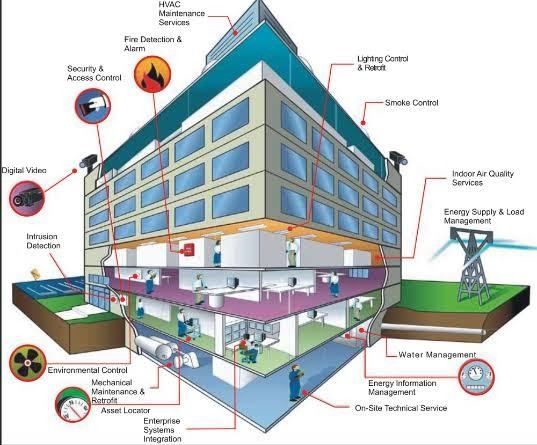
Modern buildings are becoming more intelligent, energy-efficient, secure, and easier to manage. From commercial offices and shopping centres to hospitals, hotels, industrial facilities, and residential developments, technology is transforming how building services operate.
One of the most important technologies driving this transformation is the Building Management System (BMS).
A Building Management System integrates and monitors essential building services, allowing facility managers and building operators to control equipment, monitor performance, improve energy efficiency, and maintain comfortable indoor environments from a centralised platform.
As buildings become more complex, managing lighting, heating, ventilation, air conditioning, security, and energy systems independently can become expensive and inefficient. A properly designed BMS brings these systems together, making building operations more coordinated and manageable.
But what exactly is a Building Management System? What are its main components, how does it work, and where is it used?
This comprehensive guide explains everything you need to know about Building Management Systems, including their components, functions, applications, benefits, challenges, and importance in modern building design.
1. What Is a Building Management System (BMS)?
A Building Management System (BMS) is a computer-based system used to monitor, control, and manage selected mechanical, electrical, and other building services through an integrated control platform.
It is also commonly called a Building Automation System (BAS).
A BMS collects information from sensors and connected equipment, processes that information through controllers, and sends commands to building systems according to programmed instructions or operator requirements.
Depending on the building and system design, a BMS can manage:
- Heating, ventilation, and air conditioning (HVAC).
- Lighting systems.
- Electrical energy monitoring.
- Water supply and pumping systems.
- Fire alarm monitoring and status integration.
- Security and access control integration.
- Equipment operating schedules.
- Environmental monitoring.
- Building alarms and fault notifications.
For example, in a commercial office building, a BMS can monitor indoor temperatures, adjust air-conditioning operation according to occupancy, schedule lighting, and alert maintenance teams when equipment develops a fault.
The primary objective is to improve building performance while supporting occupant comfort, operational efficiency, safety, and effective facility management.
It is important to understand that a BMS does not necessarily replace every individual building control system. Instead, it coordinates and monitors compatible systems through a centralised management environment.
2. How Does a Building Management System Work?
A Building Management System works by collecting information from building equipment, processing that information, and automatically controlling connected systems.
The process generally involves four main stages:
1. Data collection
Sensors and connected devices collect information about building conditions, including temperature, humidity, occupancy, pressure, lighting levels, and equipment status.
2. Data processing
Controllers receive information from the sensors and compare the readings with programmed settings, operating schedules, and control requirements.
3. System control
The controllers send commands to connected equipment, such as fans, pumps, valves, dampers, lighting controllers, and air-conditioning units.
4. Monitoring and reporting
The BMS software presents information through a graphical interface, allowing operators to monitor equipment, review alarms, adjust settings, and analyse building performance.
For example, if the temperature in an occupied office rises above its programmed setting, the system can instruct the relevant air-conditioning equipment to increase cooling.
Once the desired temperature is reached, the system can adjust equipment operation to maintain comfortable conditions without unnecessary energy consumption.
This continuous process allows building services to operate more efficiently and respond to changing conditions.
3. Main Components of a Building Management System
A BMS consists of several interconnected components that work together to monitor and control building services.
Understanding these components is essential when planning, installing, operating, or maintaining a Building Management System.
3.1 Sensors and Field Devices
<AsyncImage query=”Building automation system HVAC temperature humidity occupancy pressure sensors installed in commercial building” aspectRatio=”16:9″ width=”100%”/>
Sensors are among the most important components of a Building Management System because they provide information about the building’s operating conditions.
They detect changes in the environment and send readings to connected controllers.
Common BMS sensors include:
- Temperature sensors.
- Humidity sensors.
- Occupancy and motion sensors.
- Carbon dioxide (CO2) sensors.
- Air pressure sensors.
- Water flow sensors.
- Light-level sensors.
- Water leak detection sensors.
- Equipment status sensors.
For example, temperature sensors installed in different rooms can provide information that helps the BMS regulate heating and cooling.
Occupancy sensors can also help identify whether a room is being used, allowing compatible lighting and HVAC systems to adjust automatically.
The accuracy and positioning of sensors are important because incorrect readings can result in inefficient equipment operation.
3.2 Controllers
<AsyncImage query=”Building management system digital HVAC control panel programmable controllers automation control cabinet” aspectRatio=”16:9″ width=”100%”/>
Controllers are responsible for processing information received from sensors and sending instructions to connected equipment.
They execute programmed control sequences and help automate building operations.
Common controller types include:
- Direct Digital Controllers (DDCs).
- Programmable Logic Controllers (PLCs).
- Application-specific controllers.
- Networked building automation controllers.
For example, a controller may receive a temperature reading from a room sensor and compare it with the desired temperature.
If cooling is required, it can send a command to the relevant HVAC equipment.
Controllers are usually distributed throughout a building, depending on the system architecture and the services being managed.
3.3 Actuators and Control Valves
<AsyncImage query=”HVAC building automation motorized damper actuator control valve installation” aspectRatio=”16:9″ width=”100%”/>
Actuators are devices that convert control signals into physical movement.
They allow a Building Management System to operate equipment by opening, closing, or adjusting mechanical components.
Examples include:
- Motorised valves.
- Damper actuators.
- Electric actuators.
- Variable air volume (VAV) control devices.
- Motorised control mechanisms.
For example, an actuator can adjust a valve controlling chilled water flow to an air-conditioning unit.
Similarly, a damper actuator can regulate airflow through ventilation ducts.
These devices allow the BMS to control physical building operations according to programmed requirements.
3.4 Communication Networks and Protocols
Communication networks allow different BMS components and connected building systems to exchange information.
A building may contain equipment from several manufacturers, making communication standards particularly important.
Common building automation communication protocols include:
- BACnet.
- Modbus.
- KNX.
- LonWorks.
- DALI for lighting control.
- MQTT in selected connected-building applications.
BACnet is widely used in building automation, particularly for HVAC and other building control applications.
Modbus is commonly used to exchange information with equipment such as meters, drives, and industrial controllers.
KNX is frequently used in building and room automation, while DALI is designed for digital lighting control.
The choice of communication protocol depends on the building’s requirements, equipment compatibility, system architecture, and integration strategy.
3.5 Human-Machine Interface (HMI)
<AsyncImage query=”Building management system BMS graphical user interface monitoring dashboard HVAC building floor plan” aspectRatio=”16:9″ width=”100%”/>
The Human-Machine Interface provides a visual way for building operators to interact with the BMS.
It may be accessed through a computer, workstation, control panel, or supported mobile interface.
The interface can display:
- Building floor plans.
- Equipment operating status.
- Temperature readings.
- Energy consumption.
- Alarm notifications.
- Equipment schedules.
- System performance reports.
For example, a facility manager can use the BMS dashboard to view the operating condition of air-conditioning equipment across several floors.
A well-designed interface makes it easier to identify faults, adjust settings, and understand how building systems are performing.
3.6 BMS Software and Central Supervisory Platform
The BMS software acts as the main supervisory environment for monitoring and coordinating connected building systems.
It collects information from controllers and presents it in a format that building operators can understand.
Depending on the platform, the software may support:
- Real-time equipment monitoring.
- Automated schedules.
- Alarm management.
- Historical data storage.
- Energy reporting.
- Trend analysis.
- Maintenance notifications.
- Remote monitoring.
Modern BMS platforms may also provide web-based access, integration with other building applications, and advanced analytical functions.
3.7 Gateways and Integration Devices
Gateways help connect devices and systems that use different communication protocols.
For example, a gateway may allow a BMS using BACnet to exchange information with equipment communicating through Modbus.
Integration devices are particularly useful in large buildings where different manufacturers supply HVAC, lighting, electrical, and other systems.
However, successful integration requires more than connecting communication cables. Equipment points, data formats, control responsibilities, and system permissions must also be configured correctly.
4. Key Functions of a Building Management System
A Building Management System performs several functions that help maintain efficient and coordinated building operations.
4.1 HVAC Monitoring and Control
<AsyncImage query=”Commercial building central HVAC plant room air handling units chillers pumps mechanical installation” aspectRatio=”16:9″ width=”100%”/>
Heating, ventilation, and air conditioning are among the most common systems managed through a BMS.
The system can monitor and control selected HVAC equipment, including:
- Chillers.
- Boilers.
- Air handling units.
- Fan coil units.
- Cooling towers.
- Pumps.
- Ventilation fans.
- Variable air volume systems.
For example, a BMS can schedule air-conditioning operation according to building occupancy and operating hours.
It can also monitor temperature, humidity, and equipment status to help maintain suitable indoor conditions.
Effective HVAC control can improve occupant comfort while reducing unnecessary equipment operation.
4.2 Lighting Control and Automation
A BMS can coordinate building lighting through schedules, occupancy sensors, daylight sensors, and compatible lighting control systems.
Its lighting functions may include:
- Switching lights on and off.
- Adjusting lighting levels.
- Creating operating schedules.
- Monitoring lighting circuit status.
- Coordinating lighting with occupancy.
- Integrating emergency lighting status where supported.
For example, lights in an unoccupied office area may be switched off automatically after a programmed delay.
Daylight-responsive controls can also reduce artificial lighting when sufficient natural light is available.
4.3 Energy Monitoring and Management
Energy management is an important function of modern Building Management Systems.
The system can collect information from electricity meters, energy monitoring devices, and connected equipment to help building operators understand how energy is being consumed.
Energy management functions may include:
- Monitoring electricity consumption.
- Tracking energy usage by floor or department.
- Identifying unusual consumption patterns.
- Monitoring peak demand.
- Reviewing equipment operating schedules.
- Producing energy performance reports.
This information can help facility managers identify opportunities to improve energy efficiency.
For example, energy reports may reveal that ventilation equipment continues operating after normal business hours.
Correcting unnecessary operating schedules can reduce energy consumption.
4.4 Indoor Environmental Quality Monitoring
A comfortable building requires more than temperature control.
Indoor environmental quality is influenced by ventilation, humidity, air movement, lighting, and other environmental conditions.
A BMS can monitor selected parameters such as:
- Indoor temperature.
- Relative humidity.
- Carbon dioxide levels.
- Ventilation status.
- Selected air-quality indicators.
This information helps operators understand indoor conditions and adjust compatible building services where necessary.
It is important to note that a BMS can only monitor the environmental parameters supported by its installed sensors and connected systems.
4.5 Equipment Scheduling and Automation
A BMS can automatically operate building equipment according to programmed schedules.
For example:
- Office lighting can operate during business hours.
- Ventilation systems can start before occupants arrive.
- Pumps can operate according to demand.
- Selected equipment can shut down after working hours.
- Air-conditioning can follow different schedules for different zones.
Scheduling reduces the need for manual operation and helps prevent equipment from running unnecessarily.
4.6 Alarm Monitoring and Fault Detection
Building operators need to know when equipment stops working correctly.
A BMS can generate alarms when connected systems report abnormal conditions or exceed programmed operating limits.
Examples include:
- High or low temperature alarms.
- Pump failure notifications.
- Filter pressure warnings.
- Communication failures.
- Water leak alerts.
- Equipment operating faults.
- Abnormal energy consumption.
Depending on the platform, alarms can be displayed on operator dashboards, recorded for reporting, or sent to authorised personnel.
Some advanced systems also support fault detection and diagnostics, helping maintenance teams identify possible equipment problems before they cause major operational interruptions.
4.7 Reporting and Performance Analysis
BMS platforms can store historical information about building operations.
This data helps operators review equipment performance, identify recurring problems, and evaluate energy consumption.
Common reports include:
- Daily energy consumption.
- Monthly electricity usage.
- HVAC operating hours.
- Equipment fault history.
- Temperature trends.
- Alarm records.
- Maintenance-related reports.
Historical information is useful for making informed decisions about building maintenance and operational improvements.
5. Types of Building Management Systems
Building Management Systems can be classified according to their architecture, communication methods, and level of integration.
5.1 Centralised Building Management Systems
A centralised BMS uses a main supervisory platform to monitor and control building systems.
Information from connected controllers is transmitted to a central management workstation.
This approach can provide a clear overview of building operations, although the design must account for network reliability, system redundancy, and the consequences of central platform failures.
5.2 Distributed Building Management Systems
In a distributed architecture, control functions are shared among multiple controllers located throughout the building.
Each controller manages particular equipment or building zones while communicating with the wider BMS network.
This arrangement can improve flexibility and make it easier to expand or modify systems.
5.3 Networked Building Automation Systems
Networked BMS installations connect controllers, field devices, and supervisory software through communication networks.
These systems may use standard protocols to exchange information between equipment from different manufacturers.
5.4 Integrated Building Management Systems
An integrated BMS brings several building services into a coordinated management environment.
Depending on the project, this may include HVAC, lighting, energy monitoring, access control, and other systems.
The level of integration depends on technical compatibility, project requirements, and the responsibilities assigned to each subsystem.
6. Applications of Building Management Systems
Building Management Systems are used in many types of properties because different facilities require reliable monitoring, control, and management of building services.
6.1 Commercial Office Buildings
<AsyncImage query=”Modern commercial office building interior glass offices automated HVAC lighting ceiling” aspectRatio=”16:9″ width=”100%”/>
Office buildings often have multiple floors, meeting rooms, lighting zones, air-conditioning systems, and electrical services.
A BMS helps facility managers coordinate these systems.
Typical applications include:
- HVAC scheduling.
- Lighting automation.
- Energy monitoring.
- Indoor temperature monitoring.
- Equipment fault notifications.
- Occupancy-based control.
These functions can help improve workplace comfort and reduce unnecessary operating costs.
6.2 Hospitals and Healthcare Facilities
<AsyncImage query=”Modern hospital building mechanical HVAC plant ventilation infrastructure” aspectRatio=”16:9″ width=”100%”/>
Hospitals require carefully managed building services to support patient care and essential operations.
A BMS may monitor and coordinate selected HVAC, ventilation, energy, and equipment systems.
Applications include:
- Monitoring ventilation equipment.
- Maintaining programmed environmental conditions.
- Monitoring critical equipment status.
- Coordinating operating schedules.
- Reporting system alarms.
Healthcare facilities often have strict environmental and safety requirements. A BMS should support, rather than replace, specialised clinical, life-safety, and medical equipment controls.
6.3 Hotels and Hospitality Buildings
<AsyncImage query=”Luxury modern hotel guest room smart room automation lighting air conditioning control panel” aspectRatio=”16:9″ width=”100%”/>
Hotels use building automation to improve guest comfort and manage operational costs.
A BMS can coordinate selected guest-room and common-area services.
Applications include:
- Guest-room climate control.
- Public-area lighting schedules.
- Energy monitoring.
- Ventilation management.
- Equipment fault notifications.
- Integration with compatible room management systems.
For example, an integrated hotel system may adjust a guest room’s energy settings when the room is unoccupied, subject to the hotel’s comfort and operational requirements.
6.4 Shopping Malls and Retail Centres
<AsyncImage query=”Large modern shopping mall interior atrium retail stores lighting HVAC ceiling” aspectRatio=”16:9″ width=”100%”/>
Shopping centres contain many interconnected building services that operate across large spaces.
A BMS helps property managers monitor and coordinate:
- Air-conditioning systems.
- Ventilation.
- Public-area lighting.
- Escalator and equipment status where integrated.
- Energy consumption.
- Selected water systems.
- Building alarms.
This centralised monitoring can support efficient operation across different retail zones.
6.5 Industrial Buildings and Factories
<AsyncImage query=”Modern industrial factory facility mechanical ventilation automation control systems” aspectRatio=”16:9″ width=”100%”/>
Industrial facilities require reliable building infrastructure to support production activities and worker comfort.
A BMS may monitor:
- Industrial building ventilation.
- HVAC equipment.
- Lighting.
- Utility consumption.
- Pumping systems.
- Environmental conditions.
- Selected equipment alarms.
A BMS is not necessarily a replacement for an industrial control system or a Supervisory Control and Data Acquisition (SCADA) platform. These systems have different purposes, although they may exchange information where appropriate.
6.6 Educational Institutions
Schools, colleges, and universities can use Building Management Systems to manage services across classrooms, laboratories, offices, libraries, and shared facilities.
Applications include:
- Classroom lighting control.
- HVAC scheduling.
- Ventilation monitoring.
- Energy consumption reporting.
- Equipment fault notifications.
Automated schedules can help ensure that selected building services operate according to academic timetables.
6.7 Residential Buildings and Smart Apartments
<AsyncImage query=”Modern apartment residential building automation smart home control wall panel lighting HVAC” aspectRatio=”16:9″ width=”100%”/>
Residential developments increasingly incorporate building automation technologies.
In apartment buildings, a BMS may manage shared building services, while individual apartments use separate smart home systems.
Applications can include:
- Common-area lighting.
- Central HVAC equipment.
- Water pumping systems.
- Energy monitoring.
- Shared security infrastructure.
- Equipment and plant-room monitoring.
For large residential developments, a well-planned BMS can support property managers in monitoring shared services and maintaining building operations.
6.8 Airports and Transportation Facilities
Airports and major transportation buildings have complex operational requirements.
A BMS may monitor and coordinate:
- Terminal HVAC systems.
- Public-area lighting.
- Ventilation equipment.
- Energy consumption.
- Selected utility services.
- Equipment alarms.
The system supports facility management by providing a central view of important building services.
7. Benefits of Installing a Building Management System
A properly designed and maintained BMS offers several advantages for property owners, facility managers, building occupants, and developers.
7.1 Improved Energy Efficiency
A BMS helps reduce unnecessary energy consumption by coordinating equipment schedules, monitoring operating conditions, and automating selected building services.
For example, air-conditioning and lighting can be adjusted according to occupancy and operating hours.
Actual energy savings depend on building design, equipment efficiency, control strategies, commissioning, and occupant behaviour.
7.2 Reduced Operational Costs
Automated control and improved monitoring can help reduce avoidable equipment operation and support more efficient facility management.
Energy monitoring can also help identify opportunities to reduce electricity expenses.
7.3 Improved Occupant Comfort
By monitoring indoor conditions and controlling compatible HVAC and lighting systems, a BMS can help maintain comfortable working and living environments.
7.4 Better Equipment Monitoring
A BMS provides operators with information about the operating condition of connected equipment.
This helps maintenance teams identify faults and respond more quickly to equipment problems.
7.5 Centralised Building Control
Instead of operating every system independently, facility managers can monitor multiple building services through a centralised platform.
This improves visibility and simplifies selected operational tasks.
7.6 Improved Maintenance Planning
Historical operating data and alarm records can help maintenance teams identify recurring equipment problems and plan maintenance activities.
Advanced fault detection systems may also identify abnormal operating patterns that require investigation.
7.7 Support for Sustainability Goals
By helping improve energy management, a BMS can contribute to more sustainable building operations.
It can also support energy reporting and monitoring initiatives that form part of wider environmental management strategies.
8. Building Management System vs Building Automation System
The terms Building Management System and Building Automation System are sometimes used interchangeably, but their meanings can vary between manufacturers, consultants, and projects.
A Building Automation System generally refers to the technology responsible for automatically controlling building services.
A Building Management System often refers to the wider supervisory and management environment used to monitor, coordinate, and analyse those services.
| Feature | Building Automation System (BAS) | Building Management System (BMS) |
|---|---|---|
| Main purpose | Automating building services | Monitoring and managing building operations |
| Control functions | Executes automatic control sequences | Supervises and coordinates connected systems |
| Equipment | Controllers, sensors, actuators | BAS infrastructure, supervisory software, interfaces |
| Monitoring | Equipment and process monitoring | Centralised operational monitoring |
| Reporting | Depends on system capabilities | Often includes broader reporting and analysis |
| Integration | Controls connected services | Provides a management view across integrated services |
In practice, many modern systems combine both automation and management functions.
The exact distinction should therefore be understood in the context of the particular project and technology platform.
9. Difference Between BMS, SCADA, and Smart Home Systems
Although BMS, SCADA, and smart home systems involve monitoring and control, they are designed for different applications.
Building Management System (BMS)
A BMS focuses on managing building services such as HVAC, lighting, energy monitoring, and selected security or utility systems.
Supervisory Control and Data Acquisition (SCADA)
SCADA is commonly used to monitor and supervise industrial processes and infrastructure, such as water treatment plants, power distribution networks, and manufacturing operations.
Smart Home System
A smart home system focuses on residential automation, including lighting, security, entertainment, climate control, and household appliances.
The systems may share communication technologies or exchange information, but they should not be treated as identical.
10. Important Considerations Before Installing a Building Management System
Installing a BMS requires careful planning to ensure the system meets the operational and technical requirements of the building.
Before starting a project, consider the following factors.
10.1 Building Size and Complexity
A small commercial building may require a relatively simple system, while a hospital, shopping mall, or large office complex may need a more extensive BMS architecture.
The number of floors, equipment types, control zones, and required integration points should be assessed.
10.2 System Compatibility
Different manufacturers may use different communication protocols and equipment architectures.
Confirm that selected devices can communicate with the proposed BMS platform.
10.3 Energy Management Requirements
Identify the building’s main energy-consuming systems and determine which equipment should be monitored and controlled.
This helps establish measurable energy management objectives.
10.4 Installation and Infrastructure
BMS installation may require:
- Control panels.
- Network cabling.
- Sensors.
- Actuators.
- Electrical connections.
- Communication gateways.
- Software and operator workstations.
Planning these requirements early can reduce installation difficulties.
10.5 Budget and Long-Term Costs
The cost of a BMS depends on the size of the building, equipment, number of control points, integration requirements, software, and installation complexity.
The budget should also account for commissioning, maintenance, software support, training, and future upgrades.
10.6 Cybersecurity
Modern BMS installations increasingly use networked and remotely accessible systems.
Cybersecurity should therefore be included in the design.
Important measures include:
- Strong authentication.
- Network segmentation.
- Restricted user permissions.
- Secure remote access.
- Regular software updates.
- System backups.
- Monitoring of network activity.
Building automation networks should not be exposed unnecessarily to the public internet.
10.7 Professional Installation and Commissioning
A BMS must be correctly designed, installed, configured, and tested.
Professional commissioning helps confirm that sensors, controllers, actuators, communication networks, and programmed control sequences operate as intended.
Without proper commissioning, even expensive systems may perform poorly.
11. Building Management System Maintenance and Troubleshooting
Like other building technologies, a BMS requires regular maintenance to remain reliable.
Maintenance activities may include:
- Inspecting sensors and field devices.
- Testing control panels.
- Checking communication networks.
- Reviewing alarm records.
- Verifying controller operation.
- Checking actuator and valve performance.
- Updating supported software.
- Reviewing user permissions.
- Backing up system configurations.
- Testing programmed control sequences.
Common BMS problems include inaccurate sensor readings, communication failures, incorrect schedules, controller faults, and poorly configured alarms.
For example, a faulty temperature sensor may cause an air-conditioning system to operate inefficiently.
Regular inspection and accurate troubleshooting help maintain system reliability and reduce avoidable operational interruptions.
12. Building Management Systems and Smart Buildings
Smart buildings use connected technologies and intelligent systems to improve how buildings operate.
A BMS is often a central part of this approach because it provides monitoring and control capabilities for important building services.
However, a smart building may include additional technologies beyond a traditional BMS, such as:
- Internet of Things (IoT) sensors.
- Advanced energy analytics.
- Occupancy monitoring.
- Smart access control.
- Connected lighting systems.
- Renewable energy integration.
- Digital building models.
- Predictive maintenance platforms.
When these technologies are properly integrated, building operators can gain a more complete understanding of building performance.
For example, occupancy data can help optimise ventilation schedules, while energy monitoring can identify inefficient operating patterns.
The combination of building automation, data analytics, and connected infrastructure is helping transform conventional buildings into more responsive and efficient environments.
13. The Role of IoT in Modern Building Management Systems
The Internet of Things (IoT) is expanding the capabilities of modern Building Management Systems.
IoT refers to connected devices that collect and exchange information through communication networks.
In building management, IoT sensors can provide additional information about equipment operation, indoor environmental conditions, occupancy, and energy consumption.
Examples include:
- Wireless temperature sensors.
- Smart electricity meters.
- Connected water meters.
- Occupancy sensors.
- Equipment condition monitoring devices.
- Environmental monitoring sensors.
IoT can make it easier to collect information from different parts of a building, especially where traditional cabling would be difficult or expensive.
However, IoT devices should be selected carefully, considering battery life, communication reliability, cybersecurity, maintenance, and compatibility with the BMS.
14. Building Management Systems in Uganda and Emerging Markets
Building Management Systems have growing potential in Uganda and other emerging markets as commercial developments, hotels, hospitals, offices, and modern residential properties become more technologically advanced.
For property owners and developers, a BMS can help improve operational visibility, manage electricity consumption, and coordinate essential building services.
Important considerations for local projects include:
Electricity management: Energy monitoring and equipment scheduling can help building operators understand and manage electricity consumption.
Solar integration: Buildings with solar installations can benefit from monitoring systems that provide information about electricity generation, storage, and consumption.
Power backup: BMS infrastructure should be designed with suitable backup arrangements for critical monitoring and control equipment.
Internet and communication reliability: System architecture should account for local connectivity conditions and provide suitable local control capabilities.
Equipment availability: Selecting supported equipment and accessible replacement components can make long-term maintenance easier.
Technical expertise: Building owners should consider the availability of qualified installers, automation engineers, and maintenance personnel.
For new developments in Kampala and other growing urban areas, incorporating BMS infrastructure during the design and construction stages can help reduce the complexity of future installations.
15. Future Trends in Building Management Systems
Building Management Systems continue to evolve as new technologies improve connectivity, automation, energy management, and building analytics.
Several developments are shaping the future of building automation.
Artificial Intelligence and Predictive Analytics
AI-supported systems can analyse building data to identify patterns, detect unusual operating conditions, and support more informed maintenance and energy management decisions.
Cloud-Based Building Management
Cloud-connected platforms can provide remote monitoring, data storage, and centralised management across multiple properties.
However, essential control functions should be designed with appropriate resilience and local operating capabilities.
Digital Twins
Digital twins are digital representations of physical buildings or systems.
When connected to reliable operational data, they can help building professionals understand system performance, investigate problems, and evaluate proposed changes.
Advanced Energy Management
Future systems are expected to offer more sophisticated coordination of electricity consumption, renewable energy generation, battery storage, and building demand.
Improved Interoperability
Greater adoption of open communication standards can make it easier to integrate equipment from different manufacturers.
Predictive Maintenance
Advanced monitoring and analytics can help identify early signs of equipment deterioration, supporting more proactive maintenance planning.
These developments are expected to make building operations more data-driven, efficient, and responsive.
Conclusion: Why Building Management Systems Matter in Modern Buildings
Building Management Systems have become an important part of modern building infrastructure because they provide a coordinated way to monitor, control, and manage essential building services.
From HVAC and lighting to energy monitoring, environmental control, and equipment maintenance, a well-designed BMS can improve operational efficiency, occupant comfort, and facility management.
Understanding the components of a BMS is equally important. Sensors, controllers, actuators, communication networks, gateways, and supervisory software must work together to deliver reliable building automation.
For property developers, architects, engineers, and facility managers, incorporating BMS technology into building projects can support long-term performance and more efficient operations.
As smart buildings continue to develop, Building Management Systems will remain an important foundation for creating connected, sustainable, and intelligent environments.
The future of building management is not simply about installing more technology. It is about integrating the right systems to make buildings safer, more efficient, easier to operate, and better suited to the people who use them.