Modern commercial buildings are becoming increasingly sophisticated. From office complexes and shopping malls to hotels, hospitals, educational institutions, and industrial facilities, property owners are under growing pressure to create buildings that are energy-efficient, comfortable, secure, sustainable, and cost-effective to operate.
Managing these buildings using separate, manually operated systems can be challenging. Heating, ventilation, air conditioning, lighting, electrical services, water systems, and security equipment all require proper coordination to ensure smooth building operations.
This is where a Building Management System (BMS) becomes essential.
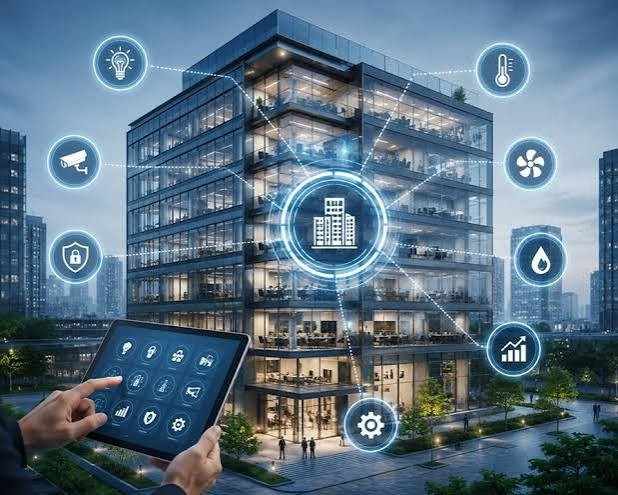
A Building Management System is an integrated technology platform that monitors, controls, and manages selected building services from a centralised interface. It allows facility managers and building operators to monitor equipment performance, automate operations, identify faults, and make informed decisions about building efficiency.
As commercial properties become larger and more technologically advanced, BMS technology is playing an increasingly important role in modern building management.
But why are Building Management Systems so important? What benefits do they offer commercial property owners, and how can they improve the performance of modern commercial buildings?
In this article, we explore the importance of Building Management Systems, their key functions, practical applications, benefits, and considerations for successful implementation.
1. What Is a Building Management System?
A Building Management System, commonly known as BMS, is a computer-based system designed to monitor, control, and manage various building services through an integrated platform.
It collects information from sensors, connected equipment, and controllers, allowing building operators to monitor conditions and automate selected functions.
Depending on the building’s design, a BMS can manage or integrate with:
- Heating, ventilation, and air conditioning (HVAC).
- Lighting control systems.
- Electrical energy monitoring.
- Water pumping systems.
- Temperature and humidity monitoring.
- Building equipment and plant rooms.
- Access control systems.
- Selected security and alarm systems.
- Environmental monitoring equipment.
For example, in a commercial office building, a BMS can automatically adjust air-conditioning schedules according to occupancy, control lighting in selected areas, monitor electricity consumption, and notify maintenance teams when equipment develops a fault.
The objective is to improve how building services operate while supporting occupant comfort, energy efficiency, and effective facility management.
2. Why Building Management Systems Are Important in Modern Commercial Buildings
Commercial buildings contain numerous interconnected systems that must operate reliably throughout the day.
Without proper coordination, equipment may operate unnecessarily, energy may be wasted, maintenance problems may go unnoticed, and occupants may experience uncomfortable indoor conditions.
A Building Management System addresses these challenges by providing centralised monitoring, automated control, and operational information.
Its importance can be understood through several key areas.
2.1 Improved Energy Efficiency and Reduced Electricity Consumption
<AsyncImage query=”Modern commercial building energy management system HVAC lighting smart building control” aspectRatio=”16:9″ width=”100%”/>
Energy consumption is one of the major operating expenses in many commercial buildings.
Air-conditioning systems, ventilation equipment, lighting, lifts, pumps, and other electrical services can consume significant amounts of electricity.
A BMS helps building operators monitor and manage energy usage by coordinating equipment according to building requirements.
For example, a commercial office may use automated schedules to switch off selected lighting and ventilation systems after business hours.
Other energy-saving functions may include:
- Occupancy-based lighting control.
- Automated HVAC scheduling.
- Temperature optimisation.
- Monitoring electricity consumption.
- Identifying unusual energy usage.
- Coordinating equipment operation.
- Monitoring peak electricity demand.
These functions can reduce unnecessary equipment operation and support better energy management.
Actual savings depend on the building’s design, equipment efficiency, occupancy, control strategies, and system commissioning.
2.2 Improved Indoor Comfort and Working Conditions
The indoor environment has a significant influence on the comfort and productivity of people using commercial buildings.
Poor temperature control, inadequate ventilation, excessive humidity, and unsuitable lighting can make working environments uncomfortable.
A BMS helps maintain suitable indoor conditions by monitoring and controlling compatible building systems.
It can monitor:
- Indoor temperature.
- Relative humidity.
- Ventilation performance.
- Carbon dioxide levels.
- Lighting conditions.
- Selected air-quality parameters.
For example, an automated HVAC system can adjust cooling according to programmed temperature settings and occupancy requirements.
In office buildings, this helps create more consistent indoor conditions across different rooms and floors.
Improved environmental management can contribute to a more comfortable working environment for employees, visitors, and customers.
2.3 Centralised Monitoring and Control
<AsyncImage query=”Building management system BMS central control room multiple computer monitors commercial facility” aspectRatio=”16:9″ width=”100%”/>
One of the most important advantages of a BMS is the ability to monitor multiple building services through a centralised platform.
Traditionally, building operators may need to visit different locations or use separate control panels to check individual systems.
A BMS brings information from compatible systems together into one supervisory interface.
Facility managers can use the platform to:
- Monitor equipment operating status.
- Review temperature readings.
- Check energy consumption.
- View system alarms.
- Adjust operating schedules.
- Monitor selected building services.
- Generate performance reports.
For large commercial buildings, centralised monitoring can make daily facility management more organised and efficient.
It also helps operators identify operational problems without constantly inspecting every piece of equipment manually.
2.4 Reduced Building Operating and Maintenance Costs
Commercial property owners must manage ongoing expenses associated with electricity, equipment maintenance, repairs, and facility operations.
A BMS can help reduce avoidable costs by improving equipment scheduling, monitoring system performance, and supporting more effective maintenance planning.
For example, if an air-conditioning unit operates outside its intended schedule, the BMS may help identify the issue through operating records and alarms.
Maintenance teams can investigate the problem before unnecessary operation continues for an extended period.
Potential cost-saving opportunities include:
- Reduced unnecessary electricity consumption.
- Better equipment scheduling.
- Faster identification of system faults.
- Improved maintenance planning.
- Reduced manual monitoring requirements.
- More informed equipment replacement decisions.
The financial benefits depend on the building’s condition, the quality of the BMS installation, and how effectively the system is managed.
2.5 Improved Equipment Performance and Reliability
Commercial buildings depend on many mechanical and electrical systems to operate effectively.
A failure in an important air-conditioning unit, pump, ventilation system, or other building service can disrupt normal operations.
A BMS provides visibility into the operating condition of connected equipment.
It can monitor operating hours, temperatures, pressures, equipment status, and selected performance indicators.
When abnormal conditions are detected, the system can generate alerts for investigation.
This helps maintenance teams respond more quickly and identify recurring equipment problems.
With suitable fault detection and diagnostics, advanced systems can also identify unusual operating patterns that may indicate developing faults.
2.6 Better Building Security and Access Management
<AsyncImage query=”Modern commercial office building smart access control turnstiles security entrance” aspectRatio=”16:9″ width=”100%”/>
Security is a major concern for commercial building owners, tenants, employees, and visitors.
A BMS can integrate with compatible security and access control platforms to provide a more coordinated view of building operations.
Depending on the installation, integration may include:
- Electronic access control.
- Security system status.
- Door monitoring.
- CCTV system status.
- Intrusion alarm notifications.
- Selected emergency-related monitoring.
For example, a facility manager may be able to view access control system status alongside other building information from a central interface.
It is important to distinguish between monitoring and control integration. A BMS does not automatically replace dedicated security systems or their specialist management platforms.
Similarly, fire alarm and life-safety systems must retain their required independent operation and comply with applicable safety standards.
2.7 Better Management of HVAC Systems
<AsyncImage query=”Commercial building HVAC mechanical plant room chillers air handling units pumps industrial” aspectRatio=”16:9″ width=”100%”/>
Heating, ventilation, and air conditioning are among the most important building services in commercial properties.
Large offices, hotels, shopping malls, and hospitals may have multiple air-conditioning units, chillers, pumps, fans, and ventilation systems.
Managing these systems independently can be difficult and inefficient.
A BMS helps coordinate HVAC operations through automated schedules, temperature monitoring, equipment control, and operating alarms.
Its functions may include:
- Monitoring air-handling units.
- Controlling ventilation schedules.
- Monitoring chilled water systems.
- Coordinating pumps and fans.
- Monitoring room temperatures.
- Managing selected cooling equipment.
- Reporting equipment faults.
Properly configured HVAC automation can help maintain indoor comfort while reducing unnecessary energy consumption.
2.8 Improved Lighting Management
Lighting is another important area where Building Management Systems provide practical benefits.
Commercial buildings often contain multiple lighting zones, including offices, corridors, reception areas, meeting rooms, staircases, and outdoor spaces.
A BMS can coordinate compatible lighting systems through schedules, occupancy sensors, daylight sensors, and lighting controllers.
For example:
- Office lights can operate during scheduled working hours.
- Meeting room lights can respond to occupancy.
- Corridor lighting can adjust according to movement.
- Outdoor lighting can follow programmed sunset and sunrise schedules.
- Daylight-responsive controls can reduce artificial lighting when sufficient natural light is available.
These functions improve lighting management and can help reduce unnecessary electricity consumption.
2.9 Support for Sustainable and Green Buildings
Sustainability has become an important consideration in modern commercial property development.
Property owners and developers increasingly need to understand how their buildings consume energy and how operational performance can be improved.
A BMS supports sustainability initiatives by providing information about building energy usage and operating conditions.
It can help with:
- Energy consumption monitoring.
- Efficient HVAC operation.
- Lighting automation.
- Equipment performance analysis.
- Renewable energy monitoring where integrated.
- Operational performance reporting.
This information can support broader energy management and environmental improvement programmes.
A BMS does not automatically make a building green or guarantee a particular environmental certification. Its contribution depends on the overall building design, operational practices, and relevant certification requirements.
3. Key Components of a Building Management System
A BMS relies on several interconnected components to perform its monitoring and control functions.
Understanding these components helps commercial property owners and facility managers appreciate how the system operates.
3.1 Sensors
Sensors collect information about building conditions and connected equipment.
Common examples include:
- Temperature sensors.
- Humidity sensors.
- Occupancy sensors.
- Motion detectors.
- Carbon dioxide sensors.
- Pressure sensors.
- Water flow sensors.
- Light-level sensors.
The information collected by sensors is transmitted to controllers for processing.
3.2 Controllers
Controllers receive sensor information and execute programmed instructions.
They determine how connected equipment should respond to changing conditions.
Examples include Direct Digital Controllers, programmable controllers, and application-specific building automation controllers.
3.3 Actuators
Actuators convert electrical or electronic control signals into physical movement.
They operate devices such as motorised valves, ventilation dampers, and other mechanical control components.
3.4 Communication Networks
Communication networks allow controllers, sensors, and other building systems to exchange information.
Common protocols include BACnet, Modbus, KNX, and other supported communication technologies.
3.5 Central Monitoring Software
The BMS software provides the main supervisory platform used by building operators.
It displays building information, equipment status, alarms, schedules, and selected performance reports.
3.6 Gateways and Integration Devices
Gateways connect equipment that uses different communication protocols.
They help different manufacturers’ systems exchange information within an integrated building management environment.
4. Applications of Building Management Systems in Commercial Buildings
Building Management Systems are useful across many commercial property types because each facility has different operational requirements.
4.1 Office Buildings
<AsyncImage query=”Contemporary commercial office building modern open plan interior glass windows” aspectRatio=”16:9″ width=”100%”/>
Office buildings often contain multiple floors, workspaces, meeting rooms, air-conditioning systems, and lighting zones.
A BMS helps facility managers coordinate these services.
Typical applications include:
- Automated office lighting.
- Air-conditioning schedules.
- Temperature monitoring.
- Energy management.
- Equipment fault notifications.
- Occupancy-based automation.
4.2 Shopping Malls and Retail Centres
<AsyncImage query=”Modern shopping mall large commercial retail atrium interior architecture” aspectRatio=”16:9″ width=”100%”/>
Shopping centres contain extensive lighting, ventilation, air-conditioning, escalator, and utility systems.
A BMS can help property managers monitor selected services across different retail areas.
This supports coordinated building operations and improved energy management.
4.3 Hotels and Hospitality Facilities
<AsyncImage query=”Luxury modern hotel lobby interior lighting air conditioning architecture” aspectRatio=”16:9″ width=”100%”/>
Hotels need to maintain comfortable environments for guests while controlling operating costs.
A BMS can coordinate compatible guest-room systems, common-area lighting, ventilation, and central mechanical equipment.
It can also support monitoring of equipment performance and energy consumption.
4.4 Hospitals and Healthcare Facilities
<AsyncImage query=”Modern hospital building exterior glass architecture healthcare facility” aspectRatio=”16:9″ width=”100%”/>
Hospitals require carefully managed building services to support healthcare operations.
A BMS can monitor selected HVAC, ventilation, energy, and equipment systems.
In healthcare facilities, specialised clinical and life-safety systems must retain their required independent operation and control arrangements.
4.5 Industrial and Manufacturing Facilities
Industrial buildings may use BMS technology to monitor ventilation, air-conditioning, lighting, energy consumption, and utility services.
Where industrial process automation is involved, the BMS may exchange information with specialised industrial control or SCADA systems through appropriately designed interfaces.
5. How Building Management Systems Improve Facility Management
Facility management involves maintaining buildings, equipment, infrastructure, and services to ensure that properties operate effectively.
A BMS gives facility managers access to operational information that can support better decision-making.
Instead of depending entirely on manual inspections, operators can use system dashboards and reports to understand the condition of connected building services.
For example, a facility manager can:
- Identify equipment that is not operating according to schedule.
- Monitor temperatures across different areas.
- Review recurring alarms.
- Check energy consumption trends.
- Identify communication failures.
- Plan maintenance inspections.
- Monitor selected plant-room equipment.
This improves operational visibility and helps maintenance teams prioritise important tasks.
However, a BMS works best when supported by trained personnel, documented procedures, regular inspections, and an effective maintenance programme.
6. Building Management Systems and Energy Cost Reduction
Energy management is one of the strongest reasons commercial property owners invest in BMS technology.
Electricity expenses can represent a significant proportion of the operational budget of commercial buildings.
A BMS helps identify how and when electricity is being consumed.
For example, an office building may discover that ventilation equipment continues operating long after employees have left.
The facility management team can review the schedules and adjust them to better reflect actual occupancy.
Other opportunities may include:
- Reducing unnecessary lighting operation.
- Improving air-conditioning schedules.
- Monitoring equipment efficiency.
- Identifying unusual consumption.
- Optimising selected equipment operating hours.
- Reviewing peak demand patterns.
Energy monitoring also helps property owners evaluate whether operational improvements are producing the expected results.
A BMS should therefore be viewed as a tool for ongoing energy management rather than a one-time installation that automatically guarantees lower electricity bills.
7. The Role of IoT and Artificial Intelligence in Modern BMS Technology
The Internet of Things (IoT) and Artificial Intelligence (AI) are expanding the capabilities of modern building automation.
IoT sensors collect information from connected building equipment and environmental monitoring devices.
AI and advanced analytics can use this information to identify patterns, support operational decisions, and detect unusual equipment behaviour.
Potential applications include:
- Occupancy-based energy management.
- Predictive maintenance.
- Intelligent HVAC optimisation.
- Energy consumption analysis.
- Automated fault detection.
- Building performance forecasting.
For example, advanced analytics may identify that a particular air-conditioning unit is consuming more energy than expected compared with its normal operating pattern.
Maintenance teams can investigate the issue and determine whether the equipment requires servicing or adjustment.
These technologies can make commercial buildings more responsive and data-driven, provided that the underlying data, system integration, and cybersecurity are properly managed.
8. Building Management System Installation: What Commercial Property Owners Should Consider
Installing a BMS is an important investment that requires technical planning and professional implementation.
Before choosing a system, commercial property owners should evaluate the following considerations.
8.1 Building Size and Requirements
The size, design, and complexity of the building determine the type of BMS required.
A small office may need a simple automation system, while a large shopping centre or hospital may require a more advanced integrated platform.
8.2 Compatibility With Existing Equipment
The selected BMS should be compatible with the building’s existing or proposed equipment.
Communication protocols, controller capabilities, and integration requirements should be reviewed before installation.
8.3 Budget and Long-Term Investment
The project budget should include equipment, software, installation, programming, commissioning, training, maintenance, and future upgrades.
Choosing a system based only on its initial purchase price may result in higher long-term costs.
8.4 Network Infrastructure
A reliable communication network is essential for effective BMS operation.
The design should consider structured cabling, network equipment, system segmentation, communication reliability, and secure remote access where required.
8.5 Cybersecurity
Connected building systems require appropriate cybersecurity measures.
These may include strong authentication, controlled user permissions, network segmentation, software updates, secure remote access, and regular configuration backups.
8.6 Professional Commissioning
Commissioning verifies that the installed system operates according to the project requirements.
It should include testing of sensors, controllers, actuators, communication networks, alarms, and programmed control sequences.
Proper commissioning is essential for achieving the expected performance from a BMS installation.
9. Common Challenges of Building Management Systems
Although BMS technology offers many benefits, commercial property owners should understand the challenges associated with implementation and ongoing operation.
9.1 High Initial Installation Costs
A comprehensive BMS can require significant investment, especially in large or complex buildings.
However, the total cost should be evaluated against the expected operational benefits and long-term requirements.
9.2 Integration Difficulties
Equipment from different manufacturers may use different communication protocols and technical configurations.
Integration may require additional gateways, programming, testing, and specialist engineering.
9.3 Technical Expertise Requirements
BMS platforms require trained personnel who understand building automation, networking, HVAC systems, and system configuration.
Without appropriate technical expertise, the system may not deliver its full potential.
9.4 Cybersecurity Risks
Networked building systems may introduce cybersecurity risks if they are poorly configured or inadequately protected.
Secure architecture and regular system maintenance are therefore essential.
9.5 Maintenance and Software Updates
BMS platforms require regular maintenance, software support, and configuration management.
Building owners should plan for ongoing technical support rather than treating installation as the end of the project.
10. Building Management Systems in Uganda and Emerging Commercial Property Markets
Commercial property development continues to create opportunities for improved building automation across Uganda and other emerging markets.
Office buildings, hotels, hospitals, shopping centres, and mixed-use developments increasingly need effective ways to manage energy consumption, equipment performance, and occupant comfort.
In Uganda, commercial property owners should consider local operating conditions when planning BMS installations.
Important factors include:
Electricity management: Energy monitoring and automated equipment schedules can help building operators understand electricity usage and identify opportunities for efficiency.
Solar power integration: Where solar systems are installed, appropriate monitoring and integration can help coordinate energy generation, storage, and consumption.
Backup power: Critical monitoring and control infrastructure should have suitable backup arrangements where necessary.
Internet connectivity: The BMS should be designed to support reliable local operation, even when external internet connectivity is interrupted.
Maintenance support: Selecting equipment with available technical support and replacement components can make long-term maintenance more practical.
Building expansion: New commercial developments should consider BMS infrastructure during architectural, electrical, and mechanical design stages.
For commercial developments in Kampala and other growing urban centres, integrating building automation during construction can reduce the complexity and expense of later upgrades.
11. Future Trends in Building Management Systems
The future of Building Management Systems is closely connected to the development of smart buildings, renewable energy, IoT, and intelligent automation.
Several trends are expected to shape the industry.
AI-Powered Building Optimisation
AI-supported systems can analyse building performance data and recommend adjustments to selected building services.
Predictive Maintenance
Advanced monitoring can help identify unusual equipment behaviour before a fault develops into a major operational problem.
Cloud-Based Monitoring
Cloud-connected platforms can provide authorised operators with remote access to building information and centralised monitoring across multiple properties.
Digital Twins
Digital twins provide digital representations of physical buildings or systems. When connected to operational data, they can help engineers and facility managers understand building performance.
Renewable Energy Integration
Modern BMS platforms are increasingly being designed to work with solar generation, battery storage, and other energy management technologies.
Improved System Interoperability
Greater use of recognised communication standards can make it easier to connect equipment from different manufacturers.
These developments will continue to expand the role of building automation in modern commercial property management.
12. Why Developers Should Include BMS Technology During Building Design
One of the most effective ways to implement a Building Management System is to consider it during the early stages of building design.
When BMS requirements are included before construction, architects, electrical engineers, mechanical engineers, and automation specialists can coordinate the necessary infrastructure.
This allows developers to plan for:
- Sensor locations.
- Control panels.
- Electrical connections.
- Data and communication cabling.
- Equipment interfaces.
- Plant-room access.
- Network infrastructure.
- Future expansion.
Planning early can reduce the need for costly modifications after construction.
It also allows the building’s HVAC, electrical, lighting, and automation systems to be designed with integration in mind.
For developers building commercial offices, hotels, shopping centres, and mixed-use properties, this approach can support better long-term facility management.
Conclusion: Building Management Systems Are Essential for the Future of Commercial Buildings
Building Management Systems are becoming an important part of modern commercial building infrastructure.
As buildings become more complex, property owners need effective ways to monitor equipment, manage energy consumption, maintain comfortable indoor environments, and coordinate essential building services.
A properly designed BMS provides these capabilities through integrated monitoring, automated control, alarm management, and performance reporting.
From office buildings and shopping malls to hotels, hospitals, and industrial facilities, BMS technology can support more efficient operations and better facility management.
For commercial property developers, investing in building automation during the design and construction stages can provide a strong foundation for long-term building performance.
Ultimately, the importance of Building Management Systems lies in their ability to transform buildings from collections of independently operated systems into more coordinated, efficient, and intelligent environments.
As the demand for sustainable and technologically advanced commercial properties continues to grow, Building Management Systems will remain a valuable investment in the future of building management.