
Security is an essential consideration for every property owner. Whether you own a residential home, manage an office building, operate a retail business or oversee an industrial facility, protecting people, property, equipment and valuable assets should be a priority.
With increasing demand for reliable security solutions, CCTV installation has become one of the most effective ways to monitor properties, discourage criminal activities and improve overall security management.
A professionally installed CCTV system allows property owners to monitor activities, record important events and maintain better visibility of their premises. Modern surveillance technology also provides remote monitoring, motion detection, night vision and intelligent video analytics, making it easier to manage security from almost anywhere.
At Daltrevco Company, we recognise the importance of integrating reliable security systems into residential, commercial and industrial properties. Our CCTV installation solutions are designed to support different security requirements, property sizes and operational needs across Uganda.
This guide explains everything you need to know about CCTV installation for commercial and residential properties, including camera types, benefits, installation procedures, system components, cost factors and how to choose the right CCTV installation company in Uganda.
What Is CCTV Installation?
CCTV installation is the process of designing, supplying, installing, configuring and testing a closed-circuit television surveillance system to monitor activities within a property.
The system uses strategically positioned cameras to capture video footage and transmit it to a recording or monitoring device. Depending on the technology used, CCTV footage can be viewed through monitors, computers, smartphones and other authorised devices.
A typical CCTV installation includes cameras, recording equipment, storage devices, cables or network infrastructure, power supplies and monitoring software.
Modern CCTV systems can also include advanced features such as:
- High-definition video recording.
- Infrared night vision.
- Motion detection and alerts.
- Remote viewing through smartphones.
- Cloud or network-based video storage.
- Human and vehicle detection.
- Two-way audio on supported cameras.
- Intelligent video analytics.
The appropriate CCTV solution depends on the property’s security requirements, layout, available infrastructure and desired monitoring capabilities.
Importance of CCTV Installation for Residential and Commercial Properties
Installing CCTV cameras provides several security and operational benefits for property owners.
1. Improved Property Security
One of the main reasons homeowners and businesses install CCTV cameras is to improve property security.
Visible security cameras can discourage unauthorised access, theft, vandalism and other unwanted activities. Cameras positioned at entrances, parking areas, corridors and other vulnerable locations provide additional visibility around the property.
For residential properties, CCTV helps homeowners monitor their surroundings and identify unusual activities.
For businesses, surveillance systems help protect offices, shops, warehouses, factories and commercial buildings.
2. 24-Hour Surveillance
Modern CCTV systems can provide continuous monitoring throughout the day and night.
Cameras equipped with infrared or low-light technology can capture footage in poorly illuminated environments. This makes them suitable for monitoring entrances, outdoor spaces, parking areas and storage facilities.
Depending on the recording configuration, surveillance footage can be stored for later review.
3. Remote Monitoring
Many modern CCTV systems allow authorised users to view live camera feeds remotely.
Through compatible mobile applications or computer software, homeowners and business managers can monitor their properties even when they are away.
Remote monitoring is particularly useful for:
- Homeowners travelling or working away from home.
- Business owners managing multiple branches.
- Property managers overseeing rental buildings.
- Warehouse managers monitoring storage facilities.
- Institutions managing large premises.
4. Evidence and Incident Investigation
Recorded CCTV footage can help property owners investigate incidents such as theft, vandalism, unauthorised access and property damage.
Depending on image quality, camera positioning and recording settings, footage may help identify individuals, vehicles, movements and the sequence of events.
Properly configured recording and storage systems ensure that relevant footage remains available for review when required.
5. Improved Employee and Visitor Monitoring
In commercial environments, CCTV systems help management monitor access points, reception areas, loading zones and other operational spaces.
They can support investigations into workplace incidents, improve visibility of business activities and help enforce established security procedures.
However, surveillance should respect employee privacy and applicable data protection requirements.
6. Better Access Control and Security Management
CCTV systems can complement other security technologies, including access control systems, alarm systems and perimeter security solutions.
For example, cameras installed near access control points allow authorised personnel to visually monitor entrances and exits.
Integrating CCTV with other security technologies creates a more coordinated property protection system.
Types of CCTV Cameras for Residential and Commercial Properties
Choosing the right CCTV camera is essential for achieving effective surveillance. Different cameras are designed for different environments and monitoring requirements.
1. Dome CCTV Cameras
Dome cameras have a rounded housing that makes them suitable for indoor and selected outdoor surveillance applications.
They are commonly installed in:
- Offices.
- Shopping centres.
- Hotels.
- Retail shops.
- Reception areas.
- Commercial corridors.
Their compact appearance makes them suitable for locations where discreet camera installation is preferred.
2. Bullet CCTV Cameras
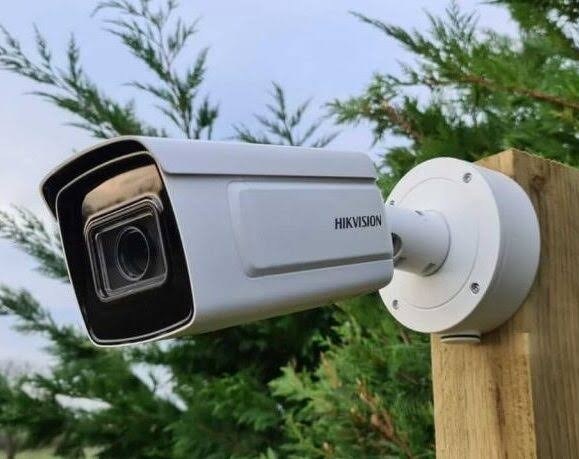
Bullet cameras have a cylindrical design and are commonly used for outdoor surveillance.
They are suitable for monitoring specific areas over longer distances, depending on their lens and imaging specifications.
Typical applications include:
- Residential perimeter walls.
- Building entrances.
- Parking areas.
- Warehouse compounds.
- Factory surroundings.
- Commercial property boundaries.
Many outdoor bullet cameras include weather-resistant housings and infrared night vision.
3. IP CCTV Cameras
Internet Protocol (IP) cameras transmit video through network infrastructure.
They generally offer flexible installation options, high-resolution imaging and integration with network video recorders and compatible surveillance platforms.
IP CCTV systems are suitable for modern residential buildings, offices, commercial developments, hotels, institutions and industrial facilities.
4. Wireless CCTV Cameras
Wireless CCTV cameras transmit video through wireless networks rather than requiring a dedicated video cable for every camera.
They can be useful in locations where running network cables is difficult.
However, wireless cameras still require a reliable power source unless they are specifically designed with battery or solar power capabilities.
Their performance also depends on wireless signal strength, network capacity and interference levels.
5. PTZ CCTV Cameras
Pan-Tilt-Zoom cameras allow operators to remotely adjust the camera’s direction and zoom.
They are particularly useful for monitoring larger areas where a fixed camera may not provide sufficient coverage.
Common applications include:
- Industrial compounds.
- Large commercial buildings.
- Parking facilities.
- Warehouses.
- Institutional premises.
- Large outdoor properties.
6. Infrared and Night Vision Cameras
Night vision cameras are designed to capture images in low-light or dark environments.
Many models use infrared illumination, while others use advanced low-light imaging or supplementary lighting.
They are suitable for monitoring outdoor spaces, building entrances, storage areas and perimeter boundaries after dark.
7. Turret CCTV Cameras
Turret cameras have a compact, adjustable design and are commonly used for indoor and outdoor surveillance.
They are suitable for residential buildings, offices, retail spaces and commercial properties.
Their design can also help reduce infrared light reflection from nearby surfaces in certain installation environments.
CCTV Installation for Residential Properties
Residential CCTV installation helps homeowners improve the security and monitoring of their houses, apartments and surrounding property.
A properly designed home surveillance system should consider the property’s size, number of entrances, surrounding environment and specific security concerns.
Important Areas for Installing Home CCTV Cameras
Main entrance: Cameras should provide a clear view of people approaching and entering the property.
Gates and perimeter walls: Outdoor cameras help monitor access points and vulnerable sections of the property boundary.
Driveways and parking areas: Cameras can monitor vehicles entering, leaving or remaining within the compound.
Back entrances: Secondary doors and less visible access points should receive appropriate surveillance coverage.
Gardens and outdoor spaces: Cameras can help monitor larger residential compounds and external areas.
Indoor common areas: Where appropriate, cameras can be installed in entrances, corridors and shared spaces.
Private areas such as bathrooms and bedrooms should not be subject to surveillance.
Benefits of Installing CCTV at Home
Residential CCTV systems provide several advantages:
- Improved monitoring of entrances and outdoor spaces.
- Remote access to live video feeds.
- Recording of security-related incidents.
- Better visibility around the property.
- Monitoring of visitors and deliveries.
- Additional protection for vehicles and household assets.
For homeowners in Kampala, Wakiso and other parts of Uganda, CCTV installation can be an important part of a wider home security strategy.
CCTV Installation for Commercial Properties
Commercial buildings often require more comprehensive surveillance systems because of their size, occupancy levels, operational activities and security requirements.
Professional CCTV installation helps businesses monitor important areas, protect assets and improve security management.
1. CCTV Installation for Offices
Office CCTV systems help monitor entrances, reception areas, corridors, parking spaces and other appropriate shared locations.
They can support visitor management, incident investigation and general building security.
Camera placement should be carefully planned to protect employee privacy and avoid inappropriate monitoring of private workspaces.
2. CCTV Installation for Shopping Centres and Retail Shops
Retail businesses face security challenges involving shoplifting, unauthorised access, inventory loss and customer safety.
CCTV cameras can be positioned at:
- Main entrances and exits.
- Shopping aisles.
- Cashier and payment areas.
- Storage rooms.
- Loading and delivery zones.
- Parking facilities.
High-resolution cameras can help improve the visibility of important retail activities.
3. CCTV Installation for Hotels and Restaurants
Hotels and restaurants need surveillance systems that support guest safety, staff security and property protection.
Cameras can be installed in suitable locations such as:
- Reception areas.
- Main entrances.
- Corridors.
- Parking areas.
- Service entrances.
- External building surroundings.
Surveillance should not be installed in guest rooms, bathrooms or other private spaces.
4. CCTV Installation for Warehouses
Warehouses store valuable goods, equipment and business inventory, making effective security monitoring important.
CCTV cameras can help monitor loading bays, storage areas, access points, dispatch zones and external boundaries.
Large warehouses may benefit from a combination of fixed cameras and PTZ cameras to provide wider coverage.
5. CCTV Installation for Factories and Industrial Facilities
Industrial facilities require surveillance systems that can withstand demanding operating environments.
Depending on the facility, cameras may be installed around:
- Factory entrances.
- Production areas where permitted.
- Equipment storage facilities.
- Loading and unloading areas.
- Restricted access points.
- External perimeters.
- Vehicle parking spaces.
Industrial CCTV systems should consider environmental conditions such as dust, moisture, vibration, heat and lighting.
6. CCTV Installation for Schools and Hospitals
Educational and healthcare facilities benefit from surveillance systems that support the security of buildings, equipment and common areas.
Appropriate camera locations may include entrances, reception areas, corridors, parking spaces and external access points.
Because these facilities handle sensitive personal information, CCTV installation must carefully consider privacy, restricted areas and access to recorded footage.
Components of a Complete CCTV Installation System
A reliable CCTV installation involves more than purchasing cameras. Every component must work together to deliver effective monitoring and recording.
1. CCTV Cameras
These capture video footage from selected locations.
Camera selection should consider resolution, lens type, field of view, lighting conditions, environmental protection and required features.
2. Digital Video Recorder (DVR)
A DVR is commonly used with analogue CCTV cameras.
It receives video signals, processes footage and stores recordings on an installed hard drive.
3. Network Video Recorder (NVR)
An NVR is designed for IP camera systems.
It records video received through a network and supports compatible cameras, depending on the system configuration.
4. Hard Drives and Storage Devices
Storage devices retain recorded CCTV footage.
The required storage capacity depends on:
- Number of cameras.
- Video resolution.
- Recording frame rate.
- Compression technology.
- Continuous or motion-based recording.
- Required footage retention period.
Surveillance systems should use storage devices designed for continuous recording workloads.
5. Network Infrastructure
IP CCTV systems require suitable network infrastructure, including switches, Ethernet cabling and network connections.
Power over Ethernet (PoE) technology can deliver electrical power and network connectivity through a single compatible Ethernet cable.
6. Power Supply and Backup
CCTV cameras and recording devices require reliable power.
A professionally designed system should consider power protection and backup solutions, particularly where continuous surveillance is important.
UPS systems or suitable backup power arrangements can help keep surveillance equipment operating during power interruptions.
7. Monitoring Devices
Monitoring equipment may include computers, dedicated screens, smartphones and compatible tablets.
These devices allow authorised users to view live camera feeds and access recorded footage.
The CCTV Installation Process: Step-by-Step Guide
Professional CCTV installation requires proper planning, technical expertise and system testing.
At Daltrevco Company, CCTV installation projects should follow a structured approach to ensure that the selected system meets the property’s security requirements.
Step 1: Site Assessment and Security Evaluation
The first step involves assessing the property and identifying security requirements.
This includes evaluating:
- Property size and layout.
- Number of entrances and exits.
- Vulnerable access points.
- Lighting conditions.
- Existing network infrastructure.
- Areas requiring continuous monitoring.
- Available power sources.
The assessment helps determine the most suitable camera types and installation locations.
Step 2: CCTV System Design and Planning
After the assessment, a CCTV system is designed around the property’s requirements.
The design considers camera positioning, coverage areas, recording equipment, storage capacity, connectivity and future expansion.
The objective is to minimise blind spots while avoiding unnecessary camera installations.
Step 3: Selection of CCTV Cameras and Equipment
The next stage involves selecting suitable cameras and supporting equipment.
Factors such as image resolution, viewing angle, night vision, weather resistance and remote monitoring capabilities should guide equipment selection.
Step 4: Cable Routing and Infrastructure Preparation
For wired systems, installers plan and prepare cable routes.
This may involve installing conduits, trunking, network cables, mounting brackets and other supporting infrastructure.
Proper cable management improves system reliability and gives the installation a professional finish.
Step 5: Camera Mounting and Installation
Cameras are mounted at strategically selected positions.
The installation team adjusts camera angles and viewing directions to capture the required areas.
Outdoor cameras should have appropriate weather protection, while mounting positions should reduce obstruction and tampering risks.
Step 6: Recording Equipment and Network Configuration
DVRs or NVRs are installed and configured.
For IP CCTV systems, network settings, camera addresses, recording schedules and remote viewing access are configured.
Where remote monitoring is required, secure access should be established using appropriate authentication and network security settings.
Step 7: Testing and Commissioning
After installation, the entire CCTV system should be tested.
Testing includes:
- Checking camera image quality.
- Confirming camera coverage.
- Testing night vision.
- Verifying recording functionality.
- Checking playback and storage.
- Testing remote monitoring.
- Confirming backup power arrangements where provided.
Any installation issues should be resolved before the system is handed over.
Step 8: User Training and Handover
The final stage involves showing the property owner or authorised personnel how to operate the system.
Training may cover live viewing, playback, exporting footage, managing user accounts and basic troubleshooting.
The owner should also receive relevant system documentation and maintenance recommendations.
Wired vs Wireless CCTV Systems: Which Is Better?
Both wired and wireless CCTV systems have advantages. The best option depends on the property, installation environment, security requirements and available infrastructure.
| Feature | Wired CCTV | Wireless CCTV |
|---|---|---|
| Connectivity | Physical cabling | Wireless network for video transmission |
| Reliability | Generally stable with properly installed cabling | Depends on wireless signal quality |
| Installation | Requires cable routing | May reduce video cabling requirements |
| Power | Usually supplied through cable or separate power | Requires a power source unless battery-powered |
| Scalability | Can be expanded with suitable infrastructure | Depends on network capacity |
| Best suited for | Large homes and commercial facilities | Selected homes and smaller installations |
For large commercial buildings, warehouses and industrial facilities, wired or PoE-based IP CCTV systems are often suitable because they provide reliable network connectivity.
Wireless CCTV systems can be useful for smaller properties or locations where running cables is difficult.
A professional site assessment helps determine the most appropriate solution.
How Much Does CCTV Installation Cost in Uganda?
The cost of CCTV installation in Uganda varies depending on the size of the property, camera specifications, number of cameras, recording equipment and installation complexity.
There is no single installation price that applies to every residential or commercial property.
A small residential CCTV installation will generally require a different budget from a large office building, shopping centre, warehouse or industrial facility.
Factors That Determine CCTV Installation Costs
1. Number of CCTV Cameras
The number of cameras required directly influences the overall project cost.
Larger properties generally need more cameras to achieve appropriate coverage.
2. Camera Quality and Resolution
High-resolution cameras may cost more than basic models.
Features such as advanced night vision, optical zoom, intelligent analytics and specialised outdoor protection can also affect equipment costs.
3. Type of CCTV System
Analogue, IP, wireless and specialised surveillance systems have different equipment and infrastructure requirements.
4. Recording and Storage Capacity
The recording device and hard drive capacity influence the total installation budget.
Properties requiring longer video retention periods may need additional storage.
5. Cabling and Installation Materials
Cable lengths, conduits, trunking, mounting brackets, network switches and other materials contribute to the installation cost.
6. Property Size and Installation Complexity
Large or multi-storey properties may require more labour, equipment and installation time.
Difficult mounting locations and complex cable routes can also increase project costs.
7. Remote Monitoring and System Integration
Remote viewing, additional monitoring stations and integration with access control or alarm systems may affect the overall budget.
How to Get an Accurate CCTV Installation Quotation
Property owners should request a site assessment before committing to a CCTV installation project.
A professional quotation should clearly identify:
- Recommended camera types and quantities.
- Recording equipment and storage capacity.
- Installation materials.
- Cabling and network requirements.
- Labour and installation costs.
- Configuration and testing.
- Maintenance and warranty arrangements.
Daltrevco Company can assess your property’s requirements and help identify an appropriate CCTV installation solution.
How to Choose the Best CCTV Installation Company in Uganda
Choosing the right CCTV installation company is important for achieving a reliable and effective surveillance system.
Before hiring an installer, consider the following factors.
1. Technical Experience
Choose a company with relevant experience in installing surveillance systems for residential, commercial and industrial properties.
2. Professional Site Assessment
A reliable installer should assess the property before recommending cameras and equipment.
Avoid solutions that recommend a fixed number of cameras without considering the property’s layout.
3. Quality Equipment
Ensure the installer recommends suitable equipment from reputable manufacturers.
The cameras, recording devices, storage equipment and supporting infrastructure should be compatible.
4. Professional Installation
Proper camera positioning, cable management, mounting and network configuration are essential for system performance.
5. Remote Monitoring Capabilities
If you need to monitor your property remotely, confirm that the proposed CCTV system supports secure remote access.
6. After-Installation Support
Choose an installation company that can provide technical support, maintenance and troubleshooting when required.
7. Transparent Quotation
A professional quotation should clearly explain the equipment, installation work and other project costs.
CCTV Maintenance: Keeping Your Security System Reliable
Installing CCTV cameras is only the beginning. Regular maintenance is important for ensuring that the system continues operating effectively.
Without proper maintenance, cameras may produce unclear footage, recording devices may fail and network connections may become unreliable.
Important CCTV maintenance practices include:
- Cleaning camera lenses regularly.
- Checking camera mounting brackets.
- Inspecting cables and connectors.
- Testing night vision functionality.
- Checking recording and playback.
- Monitoring available storage capacity.
- Updating camera and recorder firmware.
- Reviewing authorised user accounts.
- Testing backup power systems.
- Checking remote monitoring connections.
Commercial properties with extensive CCTV installations should consider scheduled preventive maintenance to reduce the risk of system failures.
Common CCTV Installation Mistakes to Avoid
Poor installation planning can reduce the effectiveness of a surveillance system.
Property owners should avoid the following mistakes:
1. Installing Too Few Cameras
Insufficient cameras may leave important areas unmonitored.
The installation should be based on a proper coverage assessment rather than an arbitrary camera quantity.
2. Incorrect Camera Positioning
Cameras positioned too high, too low or facing direct light may produce footage that is difficult to use.
Camera angles should be selected according to the purpose of each camera.
3. Ignoring Night-Time Surveillance
A camera that performs well during daylight may produce poor images at night.
Choose suitable low-light or infrared cameras for areas requiring night surveillance.
4. Using Inadequate Storage
Insufficient storage may result in shorter footage retention periods than expected.
Storage capacity should be calculated according to the required recording duration and system specifications.
5. Poor Cable Management
Exposed or poorly installed cables may be vulnerable to damage, tampering and environmental conditions.
Use suitable cable protection and professional installation practices.
6. Neglecting Cybersecurity
Internet-connected cameras and recording devices can become security risks when poorly configured.
Change default passwords, use strong authentication, update firmware and restrict access to authorised users.
7. Failing to Maintain the System
CCTV cameras require periodic inspection and testing to confirm that they remain operational.
Establish a maintenance schedule to identify problems before they affect security monitoring.
CCTV Installation and Data Protection in Uganda
CCTV surveillance should be implemented responsibly.
In Uganda, organisations and property owners should consider applicable privacy and personal data protection requirements, including the Data Protection and Privacy Act, 2019.
Businesses operating CCTV systems should establish clear rules governing how footage is collected, accessed, stored and retained.
Important considerations include:
- Informing people where surveillance is taking place through appropriate notices.
- Limiting cameras to legitimate security purposes.
- Avoiding unnecessary surveillance of private spaces.
- Restricting recorded footage to authorised personnel.
- Protecting recordings against unauthorised access.
- Establishing appropriate footage retention periods.
- Handling requests and disclosures in accordance with applicable requirements.
Commercial organisations should also assess their data protection obligations, including any applicable registration and compliance requirements.
Responsible CCTV installation protects property while respecting the privacy of employees, visitors, customers and residents.
Why Choose Daltrevco Company for CCTV Installation in Uganda?
Selecting a reliable security systems provider is an important part of protecting your property.
Daltrevco Company provides building technology and security-related solutions designed to support modern residential, commercial and industrial developments.
We understand that different properties have different surveillance requirements. A residential home, office building, shopping centre, warehouse and factory cannot all rely on the same CCTV installation design.
Our approach focuses on understanding each property’s requirements and identifying suitable surveillance solutions.
What We Focus On
Property-specific CCTV solutions: We consider the building layout, access points and security requirements when planning surveillance installations.
Suitable camera selection: We help identify appropriate camera types and system components based on the intended application.
Professional installation: Proper positioning, mounting, cabling and system configuration are essential considerations.
System integration: Where required, CCTV can complement other building security technologies, including access control and alarm systems.
Testing and commissioning: Systems should be checked to confirm that cameras, recording equipment and monitoring functions operate correctly.
Ongoing support: Maintenance and technical assistance help property owners maintain the reliability of their surveillance systems.
Whether you need CCTV installation for a home, office, retail shop, hotel, warehouse, factory or other commercial facility, Daltrevco Company can help you explore a suitable solution.
Visit our website: https://www.daltrevco.com/
Frequently Asked Questions About CCTV Installation in Uganda
1. How much does CCTV installation cost in Uganda?
CCTV installation costs depend on the number of cameras, camera quality, recording equipment, storage capacity, cabling requirements and installation complexity. A site assessment is the best way to obtain an accurate quotation.
2. How many CCTV cameras do I need for my home?
The number of cameras depends on your property’s size, layout, entrances, perimeter and security requirements. A small home may require fewer cameras than a large residential compound with several access points.
3. Can I monitor my CCTV cameras using my phone?
Yes. Many modern IP and network-enabled CCTV systems support remote monitoring through compatible smartphone applications. Users can view live footage and, depending on the system, access recorded videos remotely.
4. Do CCTV cameras work at night?
Yes. Cameras equipped with infrared night vision or suitable low-light technology can capture footage in dark or poorly illuminated environments.
5. Which is better: IP CCTV or analogue CCTV?
IP CCTV generally offers greater flexibility for network integration, higher-resolution options and advanced features. Analogue CCTV can be suitable for simpler installations or certain existing systems. The best choice depends on your budget and security requirements.
6. Can CCTV cameras operate during a power outage?
CCTV systems require electricity to operate. However, suitable UPS systems or backup power arrangements can keep cameras and recording equipment running during power interruptions, depending on the system’s power requirements and backup capacity.
7. How long can CCTV cameras record footage?
Recording duration depends on storage capacity, number of cameras, video resolution, compression settings and recording schedules. Larger storage capacity generally allows longer footage retention.
8. Can CCTV systems be installed in offices and factories?
Yes. CCTV systems can be designed for offices, factories, warehouses, shopping centres, hotels and other commercial or industrial facilities. Camera selection and placement should reflect the property’s operational and security requirements.
9. Are wireless CCTV cameras reliable?
Wireless cameras can be reliable when installed within a suitable wireless network environment. However, performance depends on signal strength, interference, network capacity and power availability.
10. Does Daltrevco Company provide CCTV installation for residential and commercial properties?
Daltrevco Company provides building technology and security-related solutions for different property requirements. Contact the company to discuss your CCTV installation project, site requirements and suitable surveillance options.
Get Professional CCTV Installation Services in Uganda
Protecting your property requires more than simply purchasing security cameras. It requires a properly planned surveillance system with suitable cameras, reliable recording equipment, secure connectivity and professional installation.
Whether you are securing a residential home, office, retail shop, hotel, warehouse, factory or large commercial building, investing in the right CCTV system can improve visibility, support incident investigations and strengthen your overall security arrangements.
Daltrevco Company is committed to supporting modern property developments with practical building technology and security solutions.
If you are planning a new CCTV installation or upgrading an existing surveillance system, contact Daltrevco Company to discuss your requirements and request a professional quotation.
Visit: https://www.daltrevco.com/
Explore our services: https://www.daltrevco.com/blog/
Choose a CCTV installation solution that matches your property’s security needs and provides dependable surveillance for the future.

