
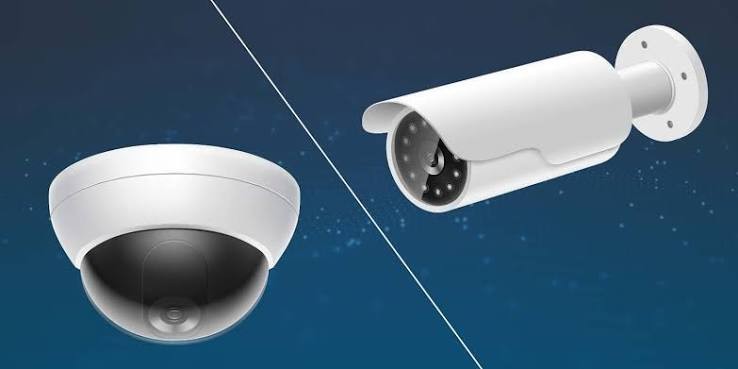
Choosing the right CCTV camera is one of the most important decisions when planning a reliable security system. Although there are many types of surveillance cameras available, dome and bullet CCTV cameras remain two of the most widely used options for residential, commercial and industrial security.
Both camera types can provide effective surveillance, record important security events and help deter criminal activity. However, they differ in design, installation, viewing angles, visibility, weather resistance and suitability for different environments.
So, when comparing dome vs bullet CCTV cameras, which one should you choose for your property in Uganda?
The answer depends on where the cameras will be installed, what you want to monitor, the level of visibility required and the environmental conditions surrounding your property.
This guide explains the differences between dome and bullet CCTV cameras, their advantages, limitations, applications and installation considerations to help you select the best security camera for your home, office, shop, warehouse, factory or other property.
1. What Is a Dome CCTV Camera?
A dome CCTV camera is a surveillance camera enclosed in a rounded, dome-shaped housing. It is commonly installed on ceilings or walls and is frequently used in indoor environments, although weather-resistant models are also available for outdoor surveillance.
Its compact appearance makes it suitable for locations where property owners want effective security monitoring without making the camera unnecessarily prominent.
Dome cameras are available in different technologies, including analogue HD and IP-based systems. Depending on the model, they can support infrared night vision, colour night vision, motion detection, wide dynamic range and high-definition recording.
Key features of dome CCTV cameras
- Rounded, compact housing that provides a neat appearance.
- Suitable for ceiling and wall mounting.
- Available in fixed-view and varifocal models.
- Some models offer wide-angle surveillance.
- Available with infrared or colour night vision.
- Vandal-resistant models are suitable for exposed locations.
- Suitable for offices, shops, reception areas, corridors and other indoor spaces.
<caption>Dome CCTV camera design</caption>
Where are dome CCTV cameras commonly used?
Dome cameras are particularly useful in locations where surveillance needs to cover indoor spaces without creating a visually intrusive installation.
Common applications include:
- Residential living rooms and entrances.
- Office reception areas and workspaces.
- Retail shops and supermarkets.
- Hotels and restaurants.
- Schools and educational institutions.
- Hospitals and healthcare facilities.
- Shopping centres and commercial buildings.
- Indoor corridors, lobbies and waiting areas.
2. What Is a Bullet CCTV Camera?
A bullet CCTV camera is a surveillance camera with a long, cylindrical housing. Its distinctive shape makes it more noticeable than most dome cameras.
Bullet cameras are commonly installed on exterior walls, building corners, perimeter fences and other locations where property owners want visible surveillance.
They are available in different configurations, including IP cameras, analogue HD cameras, infrared cameras and models with advanced night vision.
Many bullet cameras are designed for outdoor use and feature weather-resistant housings to protect their internal components from rain, dust and other environmental conditions.
Key features of bullet CCTV cameras
- Long, cylindrical housing.
- Highly visible design that can help discourage potential intruders.
- Commonly used for outdoor surveillance.
- Available with fixed or varifocal lenses.
- Many models include infrared night vision.
- Weather-resistant models are suitable for exposed locations.
- Adjustable mounting brackets allow installers to direct the camera towards specific areas.
<caption>Bullet CCTV camera design</caption>
Where are bullet CCTV cameras commonly used?
Bullet cameras are especially suitable for monitoring specific outdoor areas and property boundaries.
Typical applications include:
- Residential perimeter walls and gates.
- Commercial building entrances.
- Warehouse loading and unloading areas.
- Factory compounds.
- Parking areas.
- Construction sites.
- Agricultural properties.
- Industrial facilities.
- Outdoor storage areas and access roads.
3. Dome vs Bullet CCTV Cameras: Key Differences
Although dome and bullet cameras can perform similar surveillance functions, their physical designs and installation characteristics make them suitable for different security requirements.
The following table highlights their main differences.
| Feature | Dome CCTV Cameras | Bullet CCTV Cameras |
|---|---|---|
| Design | Rounded dome-shaped housing | Long cylindrical housing |
| Appearance | Compact and relatively discreet | More visible and prominent |
| Common installation | Ceilings and walls | Exterior walls, corners and poles |
| Typical applications | Indoor surveillance and protected outdoor areas | Outdoor and perimeter surveillance |
| Visibility | Generally less noticeable | Highly noticeable |
| Viewing direction | Depends on camera lens and mounting | Easily directed using its mounting bracket |
| Vandal resistance | Vandal-resistant models are available | Depends on housing and mounting design |
| Weather protection | Available in weather-resistant models | Many models are designed for outdoor conditions |
| Night vision | Available on many models | Available on many models |
| Lens options | Fixed and varifocal options | Fixed and varifocal options |
| Best suited for | Offices, shops, corridors and indoor spaces | Gates, walls, parking areas and building exteriors |
Important: Neither camera type automatically provides better image quality, night vision or viewing coverage. These depend on the camera’s resolution, image sensor, lens, illumination, processing technology and overall specifications.
4. Advantages of Dome CCTV Cameras
Dome CCTV cameras offer several benefits that make them a popular choice for indoor security installations.
4.1 Neat and discreet appearance
One of the main advantages of dome cameras is their compact design. They can blend into ceilings and building interiors, making them suitable for offices, reception areas, hotels and retail environments.
This is particularly useful where property owners want surveillance without making the security equipment visually dominant.
4.2 Suitable for indoor surveillance
Dome cameras are commonly used in indoor spaces because they can be installed on ceilings and walls while maintaining a clean appearance.
They are useful for monitoring corridors, reception desks, entrances, retail shelves and office spaces.
4.3 Vandal-resistant options
Some dome cameras come with impact-resistant housings designed to withstand physical interference.
These models can be useful in public-facing environments such as schools, shopping centres, corridors and commercial buildings.
However, not every dome camera is vandal-resistant. Check the manufacturer’s impact-resistance rating, such as IK10, where protection against physical impact is important.
4.4 Flexible camera technologies
Dome cameras are available with different technologies and features, including:
- High-definition recording.
- IP network connectivity.
- Infrared night vision.
- Colour night vision.
- Wide dynamic range.
- Motion detection.
- Remote viewing.
- Varifocal lenses.
This allows property owners to select a model that matches their surveillance requirements and budget.
4.5 Suitable for monitoring busy indoor areas
Dome cameras can be installed in locations where people move in different directions, such as reception areas, retail shops and corridors.
Depending on the lens and mounting position, they can provide useful coverage of entrances, walkways and other important areas.
5. Disadvantages of Dome CCTV Cameras
Despite their advantages, dome cameras have limitations that should be considered before installation.
5.1 Camera direction may be less obvious
The dome housing can make it difficult for people to determine exactly where the camera is pointing.
This may be useful when discreet surveillance is preferred, but it can make precise visual deterrence less obvious.
5.2 Installation and adjustment require care
Some dome cameras can be more difficult to adjust after installation, especially when mounted on high ceilings or in locations with limited access.
Correct positioning is important to ensure the camera covers the intended area.
5.3 Dirt and condensation can affect image quality
Dust, fingerprints, scratches or condensation on the dome cover can reduce image clarity.
Outdoor dome cameras should be inspected and cleaned periodically, particularly in environments exposed to dust, moisture and changing temperatures.
5.4 Not every dome camera is suitable for outdoor use
Indoor dome cameras may not have sufficient protection against rain, dust and moisture.
For exterior installation, select a model with an appropriate Ingress Protection (IP) rating and environmental specifications.
6. Advantages of Bullet CCTV Cameras
Bullet CCTV cameras are widely used for outdoor security because of their visible design and flexible mounting options.
6.1 Highly visible security presence
Bullet cameras are easily recognisable, making them useful where visible surveillance is part of the security strategy.
Their prominent appearance may discourage some opportunistic criminal activity by making it clear that an area is monitored.
6.2 Excellent for perimeter surveillance
Bullet cameras are commonly installed along walls, fences, gates and building exteriors.
Their directional design makes them useful for monitoring specific locations, such as:
- Main entrances.
- Vehicle access points.
- Perimeter walls.
- Parking spaces.
- Loading bays.
- Outdoor storage areas.
6.3 Flexible mounting options
Bullet cameras usually come with adjustable mounting brackets.
Installers can direct the camera towards a particular area and adjust its viewing angle to suit the property’s layout.
This is useful when monitoring long driveways, access roads and specific sections of a building.
6.4 Suitable outdoor models are available
Many bullet cameras are manufactured with weather-resistant housings.
When selected correctly, they can operate in outdoor environments exposed to rain, dust and other weather conditions.
For properties in Uganda, choosing an outdoor-rated camera is important, particularly in locations exposed to heavy rainfall, humidity and dust.
6.5 Available with powerful night vision
Many bullet cameras include infrared LEDs or other low-light technologies to support surveillance after dark.
Some models also provide colour night vision when sufficient illumination is available.
This makes them useful for monitoring entrances, parking areas, compounds and building perimeters at night.
7. Disadvantages of Bullet CCTV Cameras
Bullet cameras are effective for many security applications, but they also have limitations.
7.1 More noticeable appearance
Their prominent design may not suit every building, especially properties where a discreet installation is preferred.
Some homeowners and commercial property managers prefer the compact appearance of dome cameras.
7.2 May be more exposed to physical interference
Because bullet cameras project away from the mounting surface, their positioning can make them accessible to interference in certain locations.
They should be mounted at an appropriate height and, where necessary, protected with suitable security fittings.
7.3 Incorrect positioning can create blind spots
A bullet camera is generally directed towards a particular area. If its position or angle is poorly selected, important sections of the property may remain outside its field of view.
Professional positioning helps reduce blind spots and improve surveillance coverage.
7.4 Outdoor conditions can affect performance
Even weather-resistant cameras require proper installation and maintenance.
Damaged seals, poorly protected connections, direct water exposure and inadequate mounting can affect long-term performance.
8. Dome vs Bullet CCTV Cameras: Which Is Better for Indoor Security?
For many indoor applications, dome cameras are a practical choice because of their compact design and ceiling-mounting options.
They are commonly suitable for:
- Office reception areas.
- Retail shops.
- Supermarket aisles.
- Hotel corridors.
- School classrooms and hallways.
- Hospital waiting areas.
- Residential living spaces.
Their appearance can complement interior designs while providing surveillance of important areas.
However, bullet cameras can also be used indoors where a clearly visible camera is preferred or where a specific long corridor or entrance needs directional monitoring.
Recommendation: Consider dome cameras for general indoor surveillance where a neat appearance is important. Choose the camera based on the actual viewing requirements rather than the shape alone.
9. Dome vs Bullet CCTV Cameras: Which Is Better for Outdoor Security?
Bullet cameras are often a practical choice for outdoor surveillance because many models are designed for exposed environments and offer flexible directional mounting.
They are particularly useful for monitoring:
- Gates and entrances.
- Boundary walls.
- Parking areas.
- Building exteriors.
- Warehouses.
- Industrial compounds.
- Construction sites.
However, weather-resistant dome cameras can also perform well outdoors when correctly specified and installed.
The most important considerations are the camera’s IP rating, mounting location, lens, viewing angle and resistance to environmental conditions.
Recommendation: Consider bullet cameras for visible perimeter monitoring and directional outdoor surveillance. Weather-resistant dome cameras are also suitable where their design and specifications meet the property’s requirements.
10. Which CCTV Camera Is Better for Night Vision?
Both dome and bullet cameras are available with night vision capabilities.
The quality of nighttime footage depends more on the camera’s sensor, lens, illumination technology and installation environment than on whether it has a dome or bullet design.
Infrared night vision
Infrared cameras use infrared illumination to capture images in low-light or dark conditions.
Many infrared CCTV cameras produce black-and-white footage at night.
Colour night vision
Colour night vision cameras use sensitive image sensors and, in some models, built-in white-light illumination to capture colour footage in low-light conditions.
They can be useful when identifying details such as clothing colour or vehicle appearance is important.
Starlight and low-light technology
Some cameras use advanced image sensors to capture clearer images in very low-light environments.
Their performance depends on available light and the camera’s specifications.
What should you consider?
When selecting a camera for nighttime surveillance, examine:
- Infrared illumination range.
- Low-light sensor performance.
- Image resolution.
- Lens aperture.
- White-light illumination options.
- Environmental lighting.
- Whether the camera can capture useful details at the required distance.
Do not assume that every bullet camera has better night vision than every dome camera. Compare the actual specifications.
11. Dome vs Bullet CCTV Cameras for Homes in Uganda
Homeowners in Uganda may need CCTV cameras to protect their houses, monitor visitors and observe activity around their compounds.
The most suitable camera type depends on the property’s layout and security priorities.
Recommended dome camera locations
- Living rooms and indoor common areas.
- Interior corridors.
- Staircases.
- Indoor garages.
- Main entrance halls.
Recommended bullet camera locations
- Main gates.
- Perimeter walls.
- Driveways.
- Parking areas.
- Outdoor entrances.
- Gardens and external compound areas.
For many residential properties, a combination of dome and bullet cameras can provide more balanced coverage than relying on only one camera type.
12. Dome vs Bullet CCTV Cameras for Businesses
Businesses often require surveillance of both indoor operations and outdoor access points.
A retail shop, office, hotel or shopping centre may need cameras to monitor customers, employees, entrances, storage areas and external surroundings.
Retail shops and supermarkets
Dome cameras can be used to monitor sales areas, shelves, counters and customer movement.
Bullet cameras can be installed outside to monitor entrances, parking areas and delivery points.
Offices and commercial buildings
Dome cameras are useful for reception areas, corridors, meeting spaces and internal access points.
Bullet cameras can provide outdoor monitoring of entrances, external walkways and parking facilities.
Hotels and restaurants
Dome cameras can support monitoring of reception areas, corridors and selected service spaces.
Bullet cameras can monitor external entrances, parking areas and building surroundings.
Camera placement should respect privacy, particularly in guest rooms, bathrooms, changing rooms and other private spaces.
Warehouses and factories
Bullet cameras are useful for monitoring loading bays, vehicle access points and external storage areas.
Dome cameras may be suitable for offices, internal corridors and selected production or storage areas.
Industrial environments may require cameras with specialised protection against dust, vibration, moisture or other operating conditions.
13. Can You Use Dome and Bullet CCTV Cameras Together?
Yes. Combining dome and bullet CCTV cameras is often an effective way to protect properties with different surveillance requirements.
Rather than choosing one camera type for every location, a properly planned CCTV system can use each design where it performs best.
For example, a commercial building in Kampala may use:
- Dome cameras in the reception area.
- Dome cameras along internal corridors.
- Bullet cameras at the main gate.
- Bullet cameras around the parking area.
- Outdoor-rated cameras along the perimeter.
- Specialised cameras in loading and storage areas where necessary.
The cameras can be integrated into a compatible recording system, such as a Network Video Recorder (NVR) for supported IP cameras or a Digital Video Recorder (DVR) for compatible analogue cameras.
Compatibility should be confirmed before purchasing equipment, especially when combining different manufacturers, technologies or recording platforms.
14. Important Factors to Consider When Choosing Dome or Bullet CCTV Cameras
Before purchasing CCTV cameras, evaluate the following factors.
14.1 Location of installation
Determine whether the camera will be installed indoors or outdoors.
Indoor installations may prioritise appearance, viewing angles and ceiling mounting. Outdoor installations require appropriate environmental protection and secure mounting.
14.2 Camera resolution
Resolution affects the level of detail captured in recorded footage.
Common options include:
- 2MP (1080p).
- 4MP.
- 5MP.
- 8MP (4K).
Higher resolution can improve detail, but it also increases storage and network requirements. The lens, lighting and viewing distance must also be considered.
14.3 Viewing angle and lens type
A camera’s lens determines how much of an area it can capture.
Wide-angle lenses are useful for monitoring larger spaces at shorter distances, while narrower views may be better for observing specific areas.
Varifocal lenses allow installers to adjust the field of view on supported models.
14.4 Night vision capability
For properties requiring nighttime monitoring, select cameras with suitable infrared or low-light performance.
Consider the actual distance between the camera and the area being monitored.
14.5 Weather resistance
For outdoor installations, check the camera’s IP rating.
An IP66-rated camera, for example, is designed to provide protection against dust and powerful water jets under specified test conditions. It should not automatically be assumed to be suitable for submersion.
14.6 Vandal resistance
In public-facing or exposed locations, consider cameras with appropriate impact protection.
Vandal-resistant dome cameras may be useful in areas where physical interference is a concern.
14.7 Storage and recording
Consider how much footage needs to be retained and how many cameras will be connected.
Storage requirements depend on:
- Number of cameras.
- Resolution.
- Frame rate.
- Compression technology.
- Recording schedule.
- Motion-based or continuous recording.
- Required retention period.
14.8 Remote monitoring
If you want to view cameras remotely, choose a compatible system that supports secure remote access.
Remote viewing usually requires suitable network configuration and internet connectivity at the viewing location. Some recording systems can continue recording locally even when the internet connection is unavailable.
14.9 Installation and maintenance
Correct installation helps ensure that cameras capture useful footage and remain reliable.
Consider cable routing, power supply, network infrastructure, mounting positions and access for future maintenance.
15. How Much Do Dome and Bullet CCTV Cameras Cost in Uganda?
The cost of dome and bullet CCTV cameras in Uganda varies depending on their specifications, brand, technology and intended application.
There is no single price that applies to every installation.
In some cases, two cameras with similar housings may have significantly different prices because of differences in resolution, image sensors, lenses, night vision, analytics and environmental protection.
Factors that influence camera prices
Camera resolution: Higher-resolution models may cost more and require additional recording storage.
Camera technology: IP cameras, analogue HD cameras and advanced smart cameras have different equipment and infrastructure requirements.
Night vision: Cameras with enhanced low-light performance or colour night vision may have higher purchase costs.
Lens specifications: Fixed and varifocal lenses have different capabilities and costs.
Weather and impact protection: Outdoor-rated and vandal-resistant models may cost more than basic indoor cameras.
Brand and quality: Manufacturer, product range and available technical support can influence pricing.
Installation requirements: Difficult mounting positions, long cable routes and additional infrastructure can increase installation costs.
Recording equipment: The overall system cost may include an NVR or DVR, hard drives, switches, power supplies, cabling and accessories.
For an accurate quotation, property owners should first establish how many cameras are required, where they will be installed and what level of coverage is needed.
Daltrevco can be contacted to discuss your CCTV installation requirements and the most suitable security camera arrangement for your property.
16. Common Mistakes to Avoid When Choosing CCTV Cameras
Selecting the wrong camera or installing it incorrectly can reduce the effectiveness of an otherwise good security system.
Avoid these common mistakes:
- Choosing cameras based only on appearance: A camera should be selected according to its technical specifications and intended application.
- Using indoor cameras outdoors: Indoor models may not withstand rain, dust and moisture.
- Ignoring blind spots: Poor camera placement can leave entrances, corners and important areas unmonitored.
- Selecting the wrong lens: An unsuitable lens may provide a view that is too wide or too narrow.
- Ignoring nighttime conditions: A camera may produce poor footage if its night vision capability does not match the environment.
- Buying incompatible equipment: Cameras, recorders and network accessories must work together.
- Underestimating storage requirements: Insufficient storage may prevent the system from retaining footage for the required period.
- Installing cameras too low: Accessible cameras may be vulnerable to interference or damage.
- Ignoring maintenance: Dirty lenses, loose connections and damaged cables can affect performance.
- Overlooking privacy: CCTV cameras should not unnecessarily record private spaces or areas where people have a reasonable expectation of privacy.
17. Why Professional CCTV Installation Matters
Even high-quality CCTV cameras may fail to deliver the expected results when installed incorrectly.
Professional installation helps ensure that the equipment is suitable for the property and positioned to provide useful surveillance coverage.
A properly planned installation should consider:
- Security assessment of the property.
- Identification of vulnerable access points.
- Selection of suitable dome and bullet cameras.
- Correct camera positioning and viewing angles.
- Secure mounting and cable routing.
- Appropriate power and network connections.
- Recorder configuration and storage capacity.
- Night vision and image-quality testing.
- Remote viewing configuration where required.
- User guidance and maintenance planning.
For properties in Kampala, Wakiso, Entebbe and other parts of Uganda, installation requirements may differ depending on the building design, environmental conditions and security objectives.
Daltrevco provides a point of contact for property owners seeking guidance on security and building technology requirements. Contact the company to discuss your project and determine an appropriate CCTV solution.
18. Final Verdict: Dome vs Bullet CCTV Cameras – Which Is Best?
There is no universal winner in the comparison between dome and bullet CCTV cameras. Both offer valuable security benefits when selected and installed correctly.
Choose dome CCTV cameras if:
- You need surveillance inside offices, shops or residential buildings.
- You prefer a compact and discreet camera design.
- You want cameras suitable for ceiling mounting.
- You need vandal-resistant options for selected public-facing areas.
Choose bullet CCTV cameras if:
- You need visible outdoor surveillance.
- You want to monitor gates, walls and parking areas.
- You need directional monitoring of specific locations.
- You prefer a camera design that is easy to recognise as a security device.
Consider using both if:
- Your property has indoor and outdoor security requirements.
- You need to monitor different areas with different viewing angles.
- You want a more comprehensive surveillance arrangement.
The best CCTV system is not necessarily the one with the most expensive cameras. It is the system that provides the right coverage, suitable image quality, reliable recording and appropriate protection for your property.
If you are planning CCTV installation for a home, office, shop, warehouse, factory or commercial building in Uganda, contact Daltrevco to discuss your security requirements and identify suitable camera options.
Frequently Asked Questions About Dome vs Bullet CCTV Cameras
1. What is the main difference between dome and bullet CCTV cameras?
The main difference is their physical design and typical installation application. Dome cameras have a rounded housing and are commonly used indoors, while bullet cameras have a cylindrical design and are frequently used for outdoor and perimeter surveillance.
2. Are dome cameras better than bullet cameras?
Not necessarily. Dome cameras are often preferred for discreet indoor installations, while bullet cameras are useful for visible outdoor monitoring. The best option depends on the location, camera specifications and security requirements.
3. Are bullet cameras better for outdoor use?
Many bullet cameras are designed for outdoor surveillance and have weather-resistant housings. However, weather-resistant dome cameras can also be used outdoors if their specifications are suitable.
4. Can dome CCTV cameras be installed outside?
Yes. Outdoor-rated dome cameras can be installed outside when they have suitable weather protection and are correctly mounted.
5. Can bullet CCTV cameras be installed indoors?
Yes. Bullet cameras can be installed indoors where their directional design and visible appearance are appropriate.
6. Which CCTV camera is better for home security?
A combination of dome and bullet cameras is often suitable for residential properties. Dome cameras can monitor indoor areas, while bullet cameras can cover gates, driveways and perimeter walls.
7. Which camera is better for shops and supermarkets?
Dome cameras are commonly suitable for indoor retail surveillance, including shelves, counters and customer areas. Bullet cameras can monitor external entrances and parking areas.
8. Do dome and bullet cameras have night vision?
Yes. Both types are available with infrared night vision, colour night vision and other low-light technologies, depending on the model.
9. Which CCTV camera has a wider viewing angle?
Neither design automatically has a wider viewing angle. The field of view depends mainly on the lens specifications and camera configuration.
10. Are dome cameras vandal-resistant?
Some dome cameras have vandal-resistant housings designed to withstand physical impact. Check the manufacturer’s IK rating before purchasing.
11. Are bullet cameras waterproof?
Some bullet cameras are designed for outdoor use with weather-resistant housings. Check the manufacturer’s IP rating and installation requirements rather than assuming all bullet cameras are waterproof.
12. Which CCTV camera is more visible?
Bullet cameras are generally more visible because of their elongated design. Dome cameras have a more compact appearance.
13. Can dome and bullet cameras work on the same CCTV system?
Yes, provided the cameras and recording equipment are compatible. A system may combine different camera designs using a suitable NVR, DVR or hybrid recording arrangement.
14. Are IP dome and bullet cameras available?
Yes. Both dome and bullet cameras are available as IP network cameras, as well as in compatible analogue HD technologies.
15. What resolution should I choose for CCTV cameras?
The appropriate resolution depends on the viewing distance and level of detail required. Common options include 1080p, 4MP, 5MP and 4K. Higher resolution may require more storage and network capacity.
16. How many CCTV cameras does a house need?
The number depends on the size and layout of the property, the number of entrances, perimeter length and areas requiring monitoring. A security assessment can help determine the appropriate number and positions.
17. How much does CCTV camera installation cost in Uganda?
The cost depends on the number of cameras, camera specifications, recording equipment, cabling, storage, mounting requirements and installation complexity. A site assessment or detailed project specification helps establish an accurate quotation.
18. Can I view dome and bullet CCTV cameras on my phone?
Yes. Compatible CCTV systems can support remote viewing through a mobile application when correctly configured with secure network access.
19. Do CCTV cameras work without internet?
Many CCTV systems can continue recording locally without an internet connection if they have a functioning power supply, compatible recorder and storage. However, remote viewing and some cloud-based features may be unavailable.
20. Where can I get professional CCTV installation services in Uganda?
Property owners can contact Daltrevco to discuss their security system requirements and explore suitable CCTV camera options for residential, commercial and industrial properties.

