
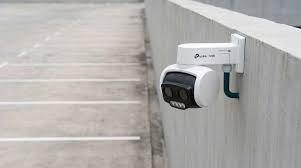
Security surveillance is an essential requirement for modern businesses, commercial buildings, industrial facilities and large properties. As security risks become more complex, organisations increasingly need CCTV systems that provide more than fixed camera views. They need surveillance solutions that can monitor wide areas, follow movement and capture important details from different directions.
This is where PTZ CCTV cameras become valuable.
PTZ cameras are advanced security cameras that allow operators to pan horizontally, tilt vertically and zoom in on specific areas. Unlike conventional fixed CCTV cameras, which continuously monitor one viewing direction, PTZ cameras can move remotely or automatically to observe different sections of a property.
For businesses in Uganda, PTZ CCTV cameras can provide an effective surveillance solution for warehouses, factories, shopping centres, hotels, office complexes, parking facilities, construction sites and other large commercial properties.
But how do PTZ CCTV cameras work? What features should you consider? Are they worth installing for commercial security?
This guide explains everything property owners, business managers, facility operators and developers need to know about PTZ CCTV cameras, including their features, benefits, applications, installation requirements and important considerations when choosing a system.
1. What Are PTZ CCTV Cameras?
PTZ stands for Pan, Tilt and Zoom. It describes the three main movement capabilities of these surveillance cameras.
Unlike fixed CCTV cameras, PTZ cameras can change their viewing direction and zoom level to monitor different areas.
The three main functions include:
- Pan: The camera rotates horizontally from side to side, allowing it to monitor different directions.
- Tilt: The camera moves vertically up and down to observe areas at different heights.
- Zoom: The camera magnifies a specific section of the image to capture more detail.
These functions allow a single PTZ camera to monitor a wider area than a conventional fixed camera in certain situations.
Most modern PTZ CCTV cameras are controlled through a compatible recording system, computer, control keyboard or mobile application. Some models also support automatic patrols, preset viewing positions, motion tracking and intelligent video analytics.
PTZ cameras are available in IP-based and other compatible surveillance technologies, with different resolutions, zoom capabilities, night vision features and environmental protection ratings.
2. How Do PTZ CCTV Cameras Work?
PTZ CCTV cameras use motorised mechanisms that allow the camera assembly to move horizontally and vertically while adjusting its zoom level.
The camera connects to a compatible surveillance system that allows an authorised operator to control its movement.
For example, a security operator monitoring a warehouse may use the control interface to rotate the camera towards a loading bay, tilt it down towards a vehicle entrance and zoom in on activity taking place in that area.
Depending on the model and system configuration, PTZ cameras can operate in several ways.
Manual control
An operator uses a control interface to move the camera in the required direction.
This is useful in security control rooms where personnel monitor live footage and respond to specific events.
Preset positions
A PTZ camera can be programmed to move to selected viewing positions.
For example, a commercial property may have preset positions for:
- Main entrance.
- Parking area.
- Loading bay.
- Perimeter gate.
- Warehouse entrance.
- External storage area.
The operator can select a preset to direct the camera towards a particular location.
Automatic patrol
Some PTZ cameras can move between programmed positions automatically.
This allows the camera to monitor different sections of a property according to a predefined patrol schedule.
Motion tracking
Selected advanced models can detect and follow moving objects within their supported tracking range.
Depending on the camera’s analytics, it may track a person or vehicle as it moves through the monitored area.
The effectiveness of tracking depends on lighting, movement, distance, obstructions, camera specifications and configuration.
Remote monitoring
Compatible PTZ cameras can be controlled remotely through an authorised surveillance platform.
This allows security personnel or property managers to change the camera’s viewing direction without physically accessing the installation location.
3. Key Features of PTZ CCTV Cameras
PTZ CCTV cameras come with different specifications and technologies. Understanding these features helps businesses select equipment that matches their security requirements.
3.1 Pan, Tilt and Zoom Functionality
The most important feature of a PTZ camera is its ability to move and adjust its viewing angle.
This provides flexibility when monitoring large properties with several areas of interest.
The camera’s horizontal and vertical movement ranges vary depending on the model.
3.2 Optical Zoom
Optical zoom uses the camera’s lens to magnify an image while maintaining more image detail than ordinary digital enlargement.
For commercial surveillance, optical zoom is particularly useful when monitoring distant gates, vehicle entrances, loading areas and other locations where additional detail may be required.
PTZ cameras are available with different optical zoom specifications. The appropriate level depends on the distance to the target and the amount of detail needed.
3.3 High-Resolution Imaging
Modern PTZ cameras are available in different resolutions, including:
- 2MP Full HD.
- 4MP.
- 5MP.
- 8MP and selected 4K models.
Higher resolution can provide more image detail, but actual identification performance also depends on the lens, lighting, viewing distance, image processing and camera positioning.
3.4 Automatic Preset Positions
Preset positions allow operators to save specific camera angles and return to them quickly.
For example, a hotel security team may save positions for the main entrance, vehicle parking area and external access road.
This reduces the need to manually adjust the camera every time a different location needs monitoring.
3.5 Auto Patrol Function
Automatic patrol allows a PTZ camera to move between programmed positions.
This can be useful for monitoring large compounds, industrial facilities and commercial premises where several areas require periodic observation.
However, automatic patrol does not guarantee that every location is monitored continuously. A camera may be facing another direction when an event occurs.
3.6 Motion Detection and Smart Tracking
Some advanced PTZ cameras support intelligent features such as:
- Motion detection.
- Human detection.
- Vehicle detection.
- Automatic target tracking.
- Intrusion detection.
- Line-crossing detection.
- Perimeter protection alerts.
These functions vary by manufacturer and model. They may also require configuration, compatible software or additional licensing.
3.7 Infrared and Colour Night Vision
Many PTZ cameras include night surveillance technologies.
Infrared illumination supports monitoring in low-light or dark environments, usually producing black-and-white images.
Other models support colour night vision through sensitive image sensors or built-in white-light illumination.
When selecting a camera for a commercial property, consider the actual nighttime surveillance distance and lighting conditions.
3.8 Weather-Resistant Housing
Outdoor PTZ cameras are available with protective housings designed to withstand environmental conditions.
For outdoor installations in Uganda, check the camera’s IP rating and operating temperature specifications.
This is particularly important for cameras installed on exposed building exteriors, industrial compounds, parking facilities and perimeter structures.
3.9 Remote Access and Control
Compatible PTZ cameras can be connected to a network video recorder (NVR) or surveillance management platform.
Authorised users may be able to view live footage, control camera movement, access recordings and receive selected security alerts remotely.
Secure configuration is important. Default passwords should be changed, access permissions controlled and available firmware updates applied.
3.10 Wide Dynamic Range (WDR)
WDR helps cameras handle scenes with very bright and very dark areas.
This is useful at entrances, gates and other locations where sunlight may create strong differences in brightness.
3.11 Audio and Two-Way Communication
Some PTZ cameras support audio input, built-in microphones or two-way communication.
Where available, these features can support communication between authorised personnel and people near the camera.
Audio recording must be considered separately from video surveillance and should comply with applicable privacy and legal requirements.
4. Benefits of PTZ CCTV Cameras for Commercial Security
PTZ CCTV cameras offer several advantages for businesses and organisations that need flexible surveillance coverage.
4.1 Monitoring Large Areas
One of the biggest advantages of PTZ cameras is their ability to change viewing direction.
This makes them useful for monitoring large spaces such as:
- Industrial compounds.
- Shopping centres.
- Warehouses.
- Parking facilities.
- Hotels.
- Construction sites.
- Commercial estates.
- Distribution centres.
A strategically positioned PTZ camera can observe multiple areas by moving between different viewing directions.
However, it should not automatically be treated as a replacement for all fixed cameras. Areas requiring uninterrupted coverage may still need dedicated fixed cameras.
4.2 Flexible Surveillance
Fixed CCTV cameras continuously monitor a specific direction, while PTZ cameras can be repositioned to observe changing security situations.
For example, a security operator can move the camera towards an unusual activity detected near a building entrance.
This flexibility is particularly useful in environments where security personnel actively monitor camera feeds.
4.3 Zooming In on Important Details
Optical zoom allows operators to examine distant areas more closely.
This can help monitor:
- Vehicle entrances.
- Loading and unloading operations.
- External gates.
- Parking areas.
- Warehouse access points.
- Large outdoor storage facilities.
The ability to zoom in is valuable when a general wide-angle view is not sufficient to observe an event.
4.4 Reduced Need for Multiple Viewing Positions
Depending on the property’s layout and surveillance objectives, a PTZ camera may cover several viewing directions from one mounting position.
This can reduce the need for multiple cameras in some applications.
However, the number of cameras required should be determined through a proper site assessment. A PTZ camera cannot view several directions simultaneously.
4.5 Improved Security Monitoring
PTZ cameras can support security teams by allowing operators to respond to activity and direct the camera towards areas of concern.
When integrated with suitable monitoring systems, they can form part of a wider security arrangement involving fixed CCTV cameras, access control and alarm systems.
4.6 Remote Monitoring
Businesses with multiple locations or large properties can benefit from remote camera control.
Authorised personnel may be able to monitor a property from a central security room or another approved location, depending on the network and system configuration.
4.7 Automatic Surveillance Functions
Preset positions and automatic patrol features can help monitor different areas without requiring constant manual camera movement.
This is particularly useful for facilities that need periodic surveillance of several locations.
5. Commercial Applications of PTZ CCTV Cameras
PTZ cameras are suitable for many commercial and industrial environments where wide-area surveillance and camera movement provide practical benefits.
5.1 Shopping Centres and Shopping Malls
Shopping centres have several security requirements, including monitoring customer movement, entrances, parking facilities and external surroundings.
PTZ cameras can be installed in suitable high-level positions to observe large public areas and allow security personnel to zoom in on specific locations when required.
Potential installation areas include:
- Main entrances.
- Outdoor parking areas.
- External access roads.
- Large open commercial spaces.
- Delivery and loading zones.
- Building surroundings.
Fixed cameras may still be needed for continuous monitoring of tills, corridors and individual retail areas.
5.2 Warehouses and Distribution Centres
Warehouses often cover large floor areas with multiple storage sections, loading bays and vehicle access points.
PTZ CCTV cameras can help monitor:
- Loading and unloading activities.
- Vehicle movement.
- External storage areas.
- Warehouse entrances.
- Yard operations.
- Large open spaces.
Their zoom capabilities can be useful when monitoring distant sections of a warehouse compound.
5.3 Factories and Manufacturing Facilities
Industrial facilities require surveillance of production areas, storage sections, access points and external compounds.
PTZ cameras can help security teams observe different areas and investigate unusual activity.
They may be installed at:
- Factory entrances.
- External production compounds.
- Vehicle access points.
- Industrial yards.
- Raw material storage areas.
- Finished goods loading zones.
Camera selection should consider environmental conditions such as dust, heat, vibration and moisture.
Where a camera is installed near machinery, its location must also be selected carefully to avoid unsafe mounting arrangements or interference with industrial operations.
5.4 Hotels and Resorts
Hotels need to monitor public areas, entrances, parking facilities and external surroundings while respecting guest privacy.
PTZ cameras may be suitable for:
- Main entrances.
- External parking areas.
- Access roads.
- Large outdoor recreational spaces.
- Service entrances.
- Building perimeters.
They should not be directed towards private guest areas, bathrooms, changing rooms or other locations where people reasonably expect privacy.
5.5 Office Complexes and Corporate Buildings
Large office developments may have multiple entrances, parking areas and external access routes.
PTZ cameras can provide flexible monitoring of selected external spaces and large common areas.
They can be integrated with other security systems to support building-wide surveillance.
5.6 Parking Facilities
Parking areas require monitoring of vehicles, pedestrian movement and access points.
PTZ cameras can help operators observe different sections of a large parking facility and zoom in on specific locations.
Important considerations include:
- Camera mounting height.
- Vehicle movement.
- Lighting conditions.
- Viewing distance.
- Obstructions.
- Coverage of entry and exit points.
Fixed cameras may be required to maintain continuous views of vehicle number plates or payment points.
5.7 Construction Sites
Construction sites often contain expensive equipment, materials, vehicles and temporary storage facilities.
PTZ cameras can be useful for monitoring large outdoor areas, site entrances and equipment storage locations.
Potential applications include:
- Main site gates.
- Material storage sections.
- Equipment parking areas.
- Access roads.
- Perimeter surroundings.
- Large construction compounds.
For temporary construction sites, consider the availability of stable power, secure network connectivity and suitable mounting structures.
5.8 Educational Institutions
Universities, colleges and large schools may have extensive grounds, multiple entrances, parking areas and outdoor facilities.
PTZ cameras can help security personnel monitor selected large outdoor spaces.
Their installation should follow appropriate privacy and safeguarding considerations, especially around classrooms, changing facilities and other sensitive areas.
5.9 Hospitals and Healthcare Facilities
Hospitals require carefully planned security surveillance to protect staff, visitors, patients and property.
PTZ cameras may be appropriate for selected external areas, parking facilities, building entrances and large public spaces.
Camera placement must respect patient privacy and applicable healthcare confidentiality requirements.
5.10 Commercial Estates and Industrial Parks
Large commercial estates may include several buildings, roads, parking areas and shared access points.
PTZ cameras can provide flexible monitoring of selected outdoor spaces and help security operators observe different sections of the development.
For extensive sites, PTZ cameras are often most effective when combined with fixed cameras and other security measures.
6. PTZ CCTV Cameras vs Fixed CCTV Cameras
PTZ and fixed CCTV cameras serve different surveillance purposes. Understanding their differences helps property owners select the right system.
| Feature | PTZ CCTV Cameras | Fixed CCTV Cameras |
|---|---|---|
| Camera movement | Pan, tilt and zoom | Remain directed at a fixed area |
| Viewing direction | Can be changed remotely or automatically | Usually remains unchanged after installation |
| Zoom | Often supports optical zoom | Depends on lens specifications |
| Area monitoring | Can observe different areas at different times | Continuously monitors its assigned view |
| Operator control | Often supports active remote control | Usually requires no directional control |
| Automatic patrol | Available on selected models | Not generally applicable |
| Motion tracking | Available on selected advanced models | Depends on camera analytics; no physical tracking movement |
| Installation | May require specialised mounting and configuration | Generally simpler |
| Best applications | Large compounds, parking facilities and industrial sites | Entrances, corridors, tills and continuous monitoring points |
Which one should you choose?
Choose PTZ cameras when you need flexible surveillance, remote camera movement and the ability to zoom in on different areas.
Choose fixed cameras when you need continuous monitoring of specific locations without changing the viewing direction.
For many commercial properties, a combination of PTZ and fixed CCTV cameras provides a more effective surveillance arrangement.
7. Types of PTZ CCTV Cameras
PTZ cameras are available in different designs and technologies depending on the intended application.
7.1 Indoor PTZ Cameras
Indoor PTZ cameras are designed for protected environments such as large halls, commercial buildings and selected indoor public areas.
They may be suitable for monitoring large reception spaces, indoor commercial areas and other locations where flexible viewing is required.
7.2 Outdoor PTZ Cameras
Outdoor PTZ cameras have protective housings designed for exposed environments.
They are commonly used in parking facilities, industrial compounds, commercial estates and construction sites.
When choosing an outdoor model, check its weather protection, temperature range and mounting requirements.
7.3 Infrared PTZ Cameras
Infrared PTZ cameras use infrared illumination to support surveillance in low-light and dark environments.
They are useful for monitoring outdoor compounds and access points at night.
The effective infrared range depends on the model, lighting conditions and installation environment.
7.4 IP PTZ Cameras
IP PTZ cameras transmit video through network infrastructure.
They can integrate with compatible NVRs and surveillance management platforms, allowing users to view footage and control camera movement through authorised devices.
7.5 Thermal PTZ Cameras
Some advanced PTZ systems combine thermal imaging with pan, tilt and zoom functionality.
Thermal cameras detect differences in infrared radiation rather than relying on visible light.
They may be used for specialised perimeter surveillance and industrial monitoring where detecting heat signatures is important.
Thermal imaging is different from ordinary night vision and does not automatically provide recognisable facial or licence plate details.
7.6 High-Zoom PTZ Cameras
High-zoom PTZ cameras have powerful optical zoom lenses designed to observe distant areas.
They may be useful for large industrial compounds, extensive parking facilities, perimeter monitoring and other applications where the target is far from the camera.
The required optical zoom should be selected based on the actual distance and identification objectives.
8. Important Specifications to Check Before Buying PTZ CCTV Cameras
Before purchasing PTZ cameras, evaluate the following technical specifications.
Optical zoom level
Optical zoom determines how much the camera can magnify a distant object using its lens.
Consider the distance between the camera and the area being monitored. A higher zoom specification may be useful for distant targets, but it does not automatically guarantee clear identification.
Pan and tilt range
Check how far the camera can rotate horizontally and vertically.
A wider movement range can help cover more directions from a single mounting position.
Resolution
Common resolutions include 2MP, 4MP, 5MP and 8MP or 4K models.
Higher resolution can improve image detail but may require more network bandwidth and recording storage.
Pan and tilt speed
The camera’s movement speed affects how quickly it can reposition itself.
This is important in applications where operators may need to respond quickly to events.
Night vision range
For nighttime monitoring, examine the manufacturer’s stated infrared or low-light performance and assess whether it is suitable for the actual viewing distance.
Weather protection
Outdoor PTZ cameras should have an appropriate IP rating and operating specifications for the installation environment.
Smart analytics
Some models support person and vehicle detection, intrusion detection, motion tracking and other intelligent features.
Confirm that the required functions are supported by the camera and compatible recording platform.
Storage compatibility
Check whether the PTZ camera is compatible with the intended NVR or surveillance management system.
Also calculate the required recording storage based on the number of cameras, resolution, frame rate and retention period.
Network and power requirements
IP PTZ cameras may require suitable network infrastructure and a compatible power supply.
Some models support Power over Ethernet (PoE), while others require separate power arrangements. High-power PTZ models may need specialised PoE equipment or a dedicated power source.
9. PTZ CCTV Camera Installation Requirements
Proper installation is essential for achieving reliable surveillance performance.
Unlike basic fixed cameras, PTZ cameras have moving components and may require additional consideration when selecting mounting positions and configuring their functions.
9.1 Security Site Assessment
The first step is identifying the areas that require surveillance.
An assessment should consider:
- Property size.
- Main entrances and exits.
- Perimeter boundaries.
- Parking facilities.
- Loading areas.
- Storage locations.
- Existing security infrastructure.
- Potential blind spots.
This helps determine whether PTZ cameras are appropriate and how many additional fixed cameras may be required.
9.2 Selecting the Correct Mounting Position
PTZ cameras are commonly installed on suitable walls, poles, ceilings or dedicated mounting structures.
The mounting position should provide a clear view of the intended surveillance area while allowing sufficient space for camera movement.
It should also provide secure support for the camera’s weight and movement.
9.3 Power Supply
PTZ cameras require a reliable power supply.
Depending on the model, power may be supplied through a dedicated power connection or a compatible PoE arrangement.
Power requirements should be checked carefully, particularly for models with powerful motors, heaters or built-in illuminators.
9.4 Network Infrastructure
IP PTZ cameras require suitable network connectivity for video transmission and remote control.
Large commercial installations may require:
- Network switches.
- Suitable Ethernet cabling.
- Fibre-optic links for long-distance connections.
- Network configuration.
- Appropriate bandwidth.
- Secure remote access.
Network design should account for the number of cameras and the quality of video streams.
9.5 Recording and Storage
PTZ camera footage can be recorded on a compatible NVR or surveillance management platform.
Storage capacity should be planned according to the required recording period, camera resolution and recording settings.
9.6 Camera Configuration
After installation, the system should be configured and tested.
This may include:
- Pan and tilt movement.
- Optical zoom.
- Preset positions.
- Automatic patrol schedules.
- Motion detection.
- Tracking features.
- Night vision.
- Recording settings.
- Remote access.
- User permissions.
9.7 Testing and Commissioning
Before the system is handed over, installers should confirm that the camera moves correctly, captures useful images and records footage as expected.
Testing should also verify remote control, network connectivity, storage operation and relevant security functions.
10. How Much Do PTZ CCTV Cameras Cost in Uganda?
The cost of PTZ CCTV cameras in Uganda varies depending on their specifications, brand, zoom capability, resolution, night vision technology and installation requirements.
A basic PTZ camera and an advanced commercial-grade model can have significantly different prices.
The total installation cost may also include supporting equipment and infrastructure.
Factors that determine PTZ CCTV camera prices
1. Optical zoom: Cameras with higher optical zoom capabilities may cost more because of their more advanced lenses.
2. Resolution: Higher-resolution models may have higher purchase costs and require more storage.
3. Night vision: Advanced infrared and low-light technologies can influence the price.
4. Intelligent analytics: Features such as auto-tracking, person detection and vehicle detection may affect the cost.
5. Weather and environmental protection: Cameras designed for demanding outdoor conditions may require more specialised housings.
6. Recording equipment: The installation may require an NVR, storage drives, switches and other accessories.
7. Installation complexity: Mounting height, cable distances, network infrastructure and site accessibility can affect labour and material requirements.
8. Number of cameras: Larger surveillance projects require additional equipment and may need more extensive network and storage infrastructure.
How to obtain an accurate quotation
Before requesting a quotation, establish:
- The size of the property.
- The number of areas requiring surveillance.
- Whether the cameras will be installed indoors or outdoors.
- Required optical zoom and resolution.
- Whether night surveillance is needed.
- Whether remote monitoring is required.
- How long recordings should be retained.
A site assessment and clear system specification can help determine the appropriate equipment and installation requirements.
Contact Daltrevco to discuss your commercial CCTV requirements and explore suitable surveillance options.
11. Common PTZ CCTV Camera Installation Mistakes to Avoid
Poor installation or configuration can reduce the effectiveness of PTZ surveillance systems.
Avoid these common mistakes:
- Using PTZ cameras without fixed coverage: A PTZ camera cannot monitor every direction simultaneously. Important areas may need dedicated fixed cameras.
- Installing cameras too low: Low mounting positions can expose equipment to interference and restrict viewing coverage.
- Choosing insufficient optical zoom: A camera may not capture useful details if its zoom capability is unsuitable for the target distance.
- Ignoring lighting conditions: Poor lighting can affect image quality and identification.
- Using inadequate network infrastructure: Insufficient bandwidth or poor cabling can affect video transmission and camera control.
- Ignoring power requirements: Some PTZ cameras require more power than ordinary fixed cameras.
- Failing to configure preset positions: Incorrect presets and patrol schedules can leave important areas unmonitored.
- Neglecting storage requirements: Large video streams can consume significant recording capacity.
- Ignoring cybersecurity: Weak passwords and insecure remote access can expose the surveillance system to unauthorised access.
- Failing to maintain moving components: PTZ cameras require periodic inspection to ensure their movement and other functions remain reliable.
12. PTZ CCTV Camera Maintenance
Regular maintenance helps keep PTZ surveillance systems operating effectively.
Commercial property owners should establish a maintenance schedule based on the camera model and installation environment.
Important maintenance activities include:
Cleaning camera lenses and housings
Dust, dirt and water marks can affect image clarity. Clean the camera using suitable materials and manufacturer-approved procedures.
Inspecting mounting brackets
Check that brackets, poles and mounting fittings remain secure.
Testing pan, tilt and zoom functions
Verify that the camera moves smoothly and responds correctly to control commands.
Checking network connections
Inspect network cables, connectors, switches and power supplies for damage or loose connections.
Reviewing recording performance
Confirm that video is being recorded correctly and that storage capacity is sufficient.
Updating firmware
Where supported, apply appropriate manufacturer firmware updates to improve security, stability and functionality.
Testing night vision
Check that infrared or other low-light features operate correctly in the intended surveillance environment.
13. Integrating PTZ CCTV Cameras with Other Security Systems
PTZ CCTV cameras can form part of a broader commercial security solution.
When compatible, they can work alongside other security technologies to improve monitoring and incident response.
Access control systems
Access control systems regulate who can enter selected areas.
CCTV cameras can provide visual monitoring of entry points and help security personnel review access-related events.
Intruder alarm systems
Intruder alarms detect selected security events, while CCTV cameras provide visual information about the affected area.
Where supported, alarm events may trigger camera movement or recording actions through compatible integrations.
Video management systems
A Video Management System (VMS) can help organisations manage multiple cameras, recording devices and monitoring locations.
It may provide centralised camera control, event management and authorised user access.
Perimeter security systems
PTZ cameras can complement perimeter security measures by allowing operators to inspect selected boundary areas.
For large properties, they may be combined with fixed cameras, motion detection and other perimeter protection technologies.
Building Management Systems
Where suitable integration is supported, CCTV may form part of a wider building security and management environment.
Integration capabilities depend on the equipment, software and communication standards used.
14. Are PTZ CCTV Cameras Worth It for Commercial Properties?
PTZ cameras can be a worthwhile investment for businesses that need flexible surveillance over large areas.
They are particularly useful where security operators need to change camera direction, zoom in on specific locations or monitor several areas through programmed patrols.
However, they are not necessarily the best choice for every location.
For example, a small office reception may only require a fixed dome camera, while a large industrial compound may benefit from PTZ cameras supported by fixed perimeter cameras.
Before investing in PTZ technology, consider:
- The size and layout of the property.
- The number of areas requiring continuous monitoring.
- The distance to surveillance targets.
- The need for optical zoom.
- Whether security personnel will actively control the cameras.
- Available power and network infrastructure.
- Equipment and installation costs.
- Future expansion requirements.
The best solution is the one that meets the property’s actual security objectives without unnecessary equipment or coverage gaps.
15. Why Choose Professional CCTV Installation for Your Business?
Commercial CCTV installation requires careful planning, suitable equipment selection and correct system configuration.
A professionally planned system should consider the property’s layout, security risks, monitoring requirements and available infrastructure.
Professional installation helps with:
- Identifying important surveillance locations.
- Selecting suitable PTZ and fixed CCTV cameras.
- Determining appropriate zoom and resolution specifications.
- Planning mounting positions.
- Designing power and network connections.
- Selecting compatible recording equipment.
- Configuring camera movement and presets.
- Setting up recording and remote access.
- Testing system performance.
- Planning maintenance and future upgrades.
For businesses in Kampala, Wakiso, Entebbe and other parts of Uganda, CCTV requirements may vary depending on the size of the premises and the nature of the operations.
Daltrevco provides a point of contact for property owners and businesses planning security and building technology installations.
If you are considering PTZ CCTV cameras for a warehouse, factory, shopping centre, office complex, hotel, commercial estate or construction site, contact Daltrevco to discuss your requirements and identify a suitable surveillance arrangement.
Conclusion: Choosing the Right PTZ CCTV Camera for Your Property
PTZ CCTV cameras provide flexible surveillance through pan, tilt and zoom functionality. Their ability to change viewing direction, zoom in on distant areas and support programmed patrols makes them useful for many large commercial and industrial environments.
They are particularly valuable for warehouses, factories, parking facilities, shopping centres, construction sites, hotels and commercial estates.
However, the effectiveness of a PTZ CCTV system depends on more than the camera itself. Proper positioning, suitable optical zoom, reliable power, network infrastructure, recording capacity and correct configuration all contribute to system performance.
For many commercial properties, combining PTZ cameras with fixed CCTV cameras provides more consistent surveillance coverage.
If you are planning a commercial CCTV installation in Uganda, contact Daltrevco to discuss your project and explore security camera solutions that match your property’s requirements.
Frequently Asked Questions About PTZ CCTV Cameras
1. What does PTZ mean in CCTV cameras?
PTZ stands for Pan, Tilt and Zoom. It refers to cameras that can rotate horizontally, move vertically and magnify images to observe different areas.
2. How do PTZ CCTV cameras work?
PTZ cameras use motorised mechanisms controlled through a compatible surveillance system. Operators can change the camera’s direction and zoom level manually or use programmed presets and automatic patrol functions.
3. What are the main benefits of PTZ cameras?
Their main benefits include flexible viewing angles, optical zoom, remote control, automatic patrols, selected motion-tracking features and the ability to monitor large areas from strategic positions.
4. Are PTZ cameras suitable for commercial buildings?
Yes. They can be used in shopping centres, office complexes, hotels, warehouses, factories, parking facilities and other commercial environments.
5. Can PTZ cameras be used outdoors?
Yes. Outdoor PTZ models are designed with protective housings for exposed environments. Always check the manufacturer’s IP rating and operating specifications.
6. Do PTZ cameras have night vision?
Many PTZ cameras support infrared night vision or other low-light technologies. Some advanced models also provide colour night vision.
7. What is optical zoom in a PTZ camera?
Optical zoom uses the camera lens to magnify distant objects while retaining more image detail than digital enlargement.
8. Can PTZ cameras track moving people?
Selected advanced PTZ cameras support automatic tracking. Their performance depends on the camera’s analytics, lighting, target movement and configuration.
9. What is the difference between PTZ and fixed CCTV cameras?
PTZ cameras can change their viewing direction and zoom level, while fixed cameras continuously monitor a specific field of view.
10. Can PTZ cameras monitor large areas?
Yes. They are useful for monitoring large areas because they can move between different viewing directions. However, they cannot observe every direction simultaneously.
11. Are PTZ cameras better than fixed cameras?
Neither is universally better. PTZ cameras are suitable for flexible monitoring, while fixed cameras are better for continuous surveillance of specific locations. Many commercial properties benefit from using both.
12. Can PTZ cameras be controlled remotely?
Yes. Compatible models can be controlled through authorised computers, mobile applications, control keyboards or surveillance management platforms.
13. Can PTZ cameras record automatically?
Yes. When connected to compatible recording equipment, PTZ cameras can record continuously or according to configured schedules and supported event settings.
14. Can PTZ cameras work without internet?
Many IP PTZ cameras can operate on a local network and record to a compatible NVR without internet access. However, remote viewing and cloud-based services may be unavailable.
15. What resolution is best for PTZ CCTV cameras?
The appropriate resolution depends on the surveillance distance and required level of detail. Options include Full HD, 4MP, 5MP and 4K models.
16. What is the difference between PTZ and optical zoom cameras?
PTZ describes a camera’s ability to pan, tilt and zoom. Optical zoom describes the lens’s ability to magnify an image. A PTZ camera may have optical zoom, but the two terms describe different capabilities.
17. Can PTZ cameras be integrated with access control systems?
Yes, where compatible equipment and software support the integration. This can help security teams associate visual surveillance with selected access events.
18. How many PTZ cameras does a commercial property need?
The number depends on property size, layout, viewing distances and surveillance requirements. A site assessment helps determine the appropriate number and whether fixed cameras are also necessary.
19. How much do PTZ CCTV cameras cost in Uganda?
Prices vary according to brand, resolution, optical zoom, night vision, analytics, weather protection and installation requirements. The complete system may also require recording equipment, storage, network infrastructure and mounting accessories.
20. Where can I get PTZ CCTV camera installation services in Uganda?
You can contact Daltrevco to discuss commercial CCTV installation requirements and explore suitable surveillance solutions for offices, warehouses, factories, shopping centres and other properties.

