
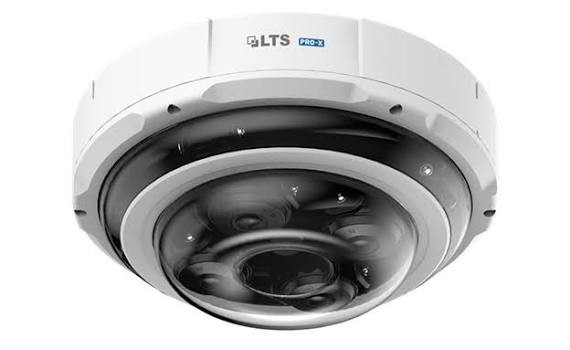
Securing large properties requires more than installing a few conventional surveillance cameras. Commercial buildings, warehouses, factories, shopping centres, hotels, parking facilities and industrial compounds often have extensive spaces, multiple access points and areas that are difficult to monitor using standard CCTV cameras.
One effective solution is panoramic CCTV cameras. These specialised surveillance cameras are designed to capture wide areas, helping property owners and security teams monitor larger spaces with fewer blind spots.
Unlike conventional cameras that usually focus on a relatively narrow viewing direction, panoramic CCTV cameras can provide wide-angle, 180-degree or 360-degree views, depending on their design and installation.
For businesses and property owners in Uganda, panoramic CCTV technology can improve surveillance coverage, simplify monitoring and support more effective security management.
But how do panoramic CCTV cameras work? What makes them different from traditional CCTV cameras? Where should they be installed, and are they suitable for large commercial properties?
This guide explores the features, benefits, types, applications, installation requirements and costs of panoramic CCTV cameras to help you make an informed security investment.
1. What Are Panoramic CCTV Cameras?
Panoramic CCTV cameras are surveillance cameras designed to capture a wide field of view, allowing them to monitor large areas from a single mounting position.
Depending on the model, a panoramic camera may capture a 180-degree view, a 360-degree view or a wide multi-directional image.
Some panoramic cameras use specialised fisheye lenses to capture a very wide image. Others combine multiple image sensors or lenses to create a panoramic view.
Advanced models may also use image-stitching technology and digital dewarping to transform curved or distorted wide-angle footage into more natural-looking views.
These cameras are particularly useful in locations where conventional cameras may require several installation points to achieve similar overall coverage.
How panoramic CCTV cameras work
Panoramic cameras use one or more image sensors and specialised lenses to capture a wider area than standard CCTV cameras.
Depending on the camera design, the footage may be displayed in different viewing formats, including:
- 180-degree panoramic view: Captures a wide horizontal area from one position.
- 360-degree fisheye view: Captures an entire surrounding scene from a ceiling-mounted position.
- Multi-sensor panoramic view: Combines images from multiple sensors to create a wider surveillance image.
- Dewarped view: Uses image processing to correct the curved appearance commonly associated with fisheye footage.
The resulting images can be viewed through a compatible recording system, computer, monitoring screen or mobile application.
2. How Do Panoramic CCTV Cameras Differ from Traditional CCTV Cameras?
Traditional CCTV cameras are generally designed to monitor a particular direction or section of a property.
For example, a fixed bullet camera may be installed to monitor a gate, while a dome camera may cover an office reception area.
Panoramic cameras are designed to capture a much wider field of view from one installation position.
Here are the main differences:
| Feature | Panoramic CCTV Cameras | Traditional CCTV Cameras |
|---|---|---|
| Field of view | Very wide, often 180 or 360 degrees depending on design | Usually narrower and direction-specific |
| Coverage | Can monitor large surrounding areas | Typically covers a selected section |
| Number of cameras | May reduce the number needed in suitable locations | May require multiple cameras for wide coverage |
| Image presentation | May use fisheye, stitched or dewarped images | Usually provides a conventional camera view |
| Installation | Requires careful positioning for wide-area coverage | Depends on the camera type and viewing direction |
| Monitoring | Can provide broad situational awareness | Useful for monitoring specific locations |
| Identification detail | Depends on resolution, sensor arrangement and viewing distance | Depends on resolution, lens and viewing distance |
| Best applications | Large open spaces, halls and common areas | Entrances, corridors, gates and targeted surveillance |
The choice between panoramic and traditional CCTV cameras depends on the property’s layout and security objectives. In many installations, combining both technologies provides more effective coverage.
3. Key Features of Panoramic CCTV Cameras
Panoramic cameras are available in different configurations, resolutions and technologies. Understanding their features helps property owners choose the right equipment.
3.1 Wide-Angle Viewing
The defining feature of panoramic CCTV cameras is their ability to capture a wide field of view.
Depending on the model, a camera may monitor a large section of a room or the surrounding area from a single position.
This is particularly useful in large commercial spaces where several directions need to be observed.
3.2 180-Degree Panoramic Viewing
Some panoramic cameras provide a 180-degree horizontal view.
These cameras are useful for monitoring wide spaces such as:
- Building entrances.
- Retail shop floors.
- Reception areas.
- Parking facilities.
- Warehouse interiors.
- Commercial corridors.
Their wide coverage can reduce the need to install multiple cameras facing different directions in suitable locations.
3.3 360-Degree Surveillance
Some panoramic cameras use fisheye lenses or multiple sensors to capture a 360-degree view.
They are commonly installed on ceilings or other central mounting positions where they can observe the surrounding area.
This makes them useful for large rooms, halls, reception areas and open commercial spaces.
3.4 High-Resolution Imaging
Panoramic cameras are available in different resolutions, including 4MP, 5MP, 8MP and higher-resolution configurations.
Higher resolution can improve image detail, but it is important to understand how the camera distributes that resolution across its wide viewing area.
A high-resolution panoramic image does not necessarily provide the same level of detail in every direction as a dedicated camera with a narrower field of view.
3.5 Image Dewarping
Fisheye cameras often produce curved images because of their extremely wide-angle lenses.
Image dewarping uses software processing to correct this distortion and provide more natural viewing perspectives.
Depending on the camera and recording platform, users may be able to select different viewing layouts, including panoramic strips, multiple virtual views or conventional-looking sections.
3.6 Multiple Virtual Views
Some panoramic cameras allow operators to create several virtual viewing windows from one captured image.
For example, a camera installed in a large reception area may provide separate views of the entrance, waiting area and customer service section.
These views are generated from the camera’s panoramic image rather than from physically separate cameras.
3.7 Motion Detection and Smart Analytics
Selected panoramic CCTV cameras support intelligent surveillance features such as:
- Motion detection.
- Human detection.
- Vehicle detection.
- Intrusion detection.
- Line-crossing alerts.
- Area monitoring.
- Object classification.
The availability of these features depends on the camera model and its software capabilities.
3.8 Night Vision and Low-Light Performance
Some panoramic CCTV cameras support infrared illumination or advanced low-light imaging.
These technologies help capture footage when natural lighting is limited.
For properties that require nighttime surveillance, check the camera’s low-light specifications and whether its illumination is suitable for the entire monitored area.
3.9 Remote Monitoring
Compatible panoramic CCTV cameras can be connected to an NVR or video management platform.
This allows authorised users to monitor live footage, review recordings and access available camera functions remotely.
Remote access requires suitable network configuration and secure user permissions.
3.10 Weather Protection
Outdoor panoramic cameras are available with protective housings designed for exposed environments.
When choosing a camera for outdoor installation in Uganda, check its Ingress Protection (IP) rating, operating temperature range and suitability for the intended mounting location.
Indoor panoramic cameras should not be installed outdoors unless their specifications explicitly permit it.
4. Benefits of Panoramic CCTV Cameras for Large Properties
Panoramic CCTV cameras offer several benefits for organisations that need to monitor extensive spaces.
4.1 Wider Surveillance Coverage
One of the biggest advantages of panoramic CCTV cameras is their wide viewing capability.
A suitably positioned 180-degree or 360-degree camera can monitor a large section of a property from one installation point.
This is useful for:
- Shopping centres.
- Warehouses.
- Factories.
- Hotels.
- Office complexes.
- Parking areas.
- Educational institutions.
- Commercial compounds.
The actual coverage depends on the camera’s field of view, mounting height, obstructions and image quality.
4.2 Reduced Blind Spots
Poorly planned CCTV installations can leave important areas outside camera coverage.
Panoramic cameras help reduce blind spots by capturing a wider scene from a single location.
However, they do not eliminate all blind spots. Walls, columns, shelving, vehicles and other obstructions may still block the camera’s view.
A site assessment is therefore important before installation.
4.3 Potentially Fewer Camera Installation Points
In suitable locations, panoramic cameras may reduce the number of separate camera positions required to monitor a large area.
This can simplify installation and reduce the amount of cabling and mounting hardware needed.
However, panoramic cameras are not always cheaper than conventional cameras. Their purchase price, recording requirements and need for supplementary cameras should be considered when comparing total project costs.
4.4 Better Situational Awareness
Security teams can use panoramic cameras to observe activity across a large area without switching between numerous camera feeds.
This can be particularly useful in commercial environments where several activities take place simultaneously.
For example, a panoramic camera in a warehouse may provide a broad view of staff movement, storage sections and internal access routes.
4.5 Flexible Viewing Options
Some panoramic cameras allow users to create different virtual viewing windows from the same image.
This provides flexibility when monitoring several sections of a large space.
4.6 Improved Security Management
Panoramic cameras can support broader security management by helping operators observe movement and activity across larger areas.
When integrated with other CCTV equipment, access control and alarm systems, they can contribute to a more comprehensive surveillance solution.
4.7 Useful for Large Open Spaces
Traditional cameras may need to be installed at several points to cover large open areas.
Panoramic cameras can provide an alternative in locations where a wide, continuous view is more important than close-up identification.
5. Types of Panoramic CCTV Cameras
Different panoramic camera designs serve different security requirements.
5.1 Fisheye CCTV Cameras
<AsyncImage query=”ceiling mounted fisheye 360 degree panoramic CCTV security camera” aspectRatio=”16:9″ width=”100%”/>
Fisheye cameras use specialised ultra-wide-angle lenses to capture a 180-degree or 360-degree image, depending on the model and mounting arrangement.
They are commonly installed on ceilings in large indoor spaces.
Typical applications include:
- Shopping centres.
- Retail shops.
- Office reception areas.
- Hotels.
- Restaurants.
- Conference halls.
- Warehouses.
The captured image may appear curved, but compatible software can provide dewarped views.
5.2 180-Degree Panoramic Cameras
<AsyncImage query=”180 degree panoramic multi sensor CCTV security camera outdoor wall mounted” aspectRatio=”16:9″ width=”100%”/>
These cameras capture a wide horizontal view, making them suitable for monitoring broad areas from walls or building corners.
They are commonly used for:
- Building entrances.
- Parking areas.
- External walkways.
- Retail spaces.
- Loading zones.
- Building perimeters.
5.3 Multi-Sensor Panoramic Cameras
<AsyncImage query=”multi sensor panoramic CCTV security camera four lens commercial surveillance” aspectRatio=”16:9″ width=”100%”/>
Multi-sensor cameras use multiple image sensors or lenses to capture different sections of a scene.
Some models combine the images into one panoramic view.
They can provide high-resolution wide-area surveillance and are useful for large commercial and industrial environments.
5.4 Outdoor Panoramic Cameras
<AsyncImage query=”outdoor panoramic CCTV camera mounted on commercial building exterior” aspectRatio=”16:9″ width=”100%”/>
Outdoor panoramic cameras are designed for installation in exposed environments.
Depending on the model, they may be used to monitor parking facilities, building exteriors, outdoor commercial spaces and selected perimeter areas.
Weather protection, mounting arrangements and lighting conditions are important considerations.
5.5 Panoramic IP Cameras
IP panoramic cameras transmit digital video over a network.
They can be integrated with compatible NVRs and video management systems, allowing authorised personnel to monitor footage through computers and other approved devices.
Some models support advanced video analytics and multiple viewing layouts.
6. Commercial Applications of Panoramic CCTV Cameras
Panoramic CCTV technology is particularly useful in commercial environments with large open areas and multiple activities.
6.1 Shopping Centres and Shopping Malls
Shopping centres often contain large retail spaces, entrances, corridors and common areas that require continuous surveillance.
Panoramic cameras can help monitor:
- Main shopping areas.
- Customer walkways.
- Food courts.
- Reception spaces.
- Large retail floors.
- Public waiting areas.
They can provide a broad overview of customer movement and activities.
However, individual shops, payment counters and sensitive areas may still require dedicated cameras for close-up monitoring.
6.2 Warehouses and Distribution Centres
Warehouses have large floor areas, storage racks, loading sections and vehicle movement.
Panoramic cameras can provide broad views of open storage and operational areas.
Potential installation locations include:
- Main warehouse floors.
- Loading bays.
- Dispatch areas.
- Packaging sections.
- Internal access routes.
- Distribution spaces.
For warehouses with tall shelving, separate cameras may be necessary to monitor individual aisles and storage locations.
6.3 Factories and Manufacturing Facilities
Manufacturing facilities require surveillance of production environments, staff movement, machinery areas and internal access points.
Panoramic cameras can help monitor large production halls and open working spaces.
They may be installed in selected areas such as:
- Production floors.
- Assembly halls.
- Packaging areas.
- Large internal corridors.
- Factory reception spaces.
- Storage areas.
Camera placement should not interfere with machinery, safety procedures or industrial operations.
6.4 Hotels and Resorts
Hotels have large common areas that may benefit from wide-angle surveillance.
Panoramic cameras can be used in:
- Reception areas.
- Conference halls.
- Restaurant common spaces.
- Large lobbies.
- Selected public corridors.
- Indoor event spaces.
They should be positioned carefully to protect guest privacy. Private rooms, bathrooms, changing rooms and other sensitive spaces should not be monitored.
6.5 Office Complexes
Large office buildings may have reception areas, open-plan workspaces, corridors and shared facilities.
Panoramic cameras can provide broad surveillance of selected common areas, helping security teams monitor movement and identify unusual activity.
6.6 Parking Facilities
Large parking facilities often contain several rows of vehicles and pedestrian movement routes.
Panoramic cameras can provide wide views of selected parking sections and help security operators monitor general activity.
However, a wide-angle panoramic image may not provide enough detail to identify vehicle number plates at a distance. Dedicated cameras with suitable lenses and positioning are more appropriate for that requirement.
6.7 Educational Institutions
Universities, colleges and large schools may have extensive buildings, halls, reception areas and common spaces.
Panoramic cameras can support surveillance of selected public areas, including large indoor halls and shared facilities.
Installation must consider student safety, safeguarding and privacy requirements.
6.8 Hospitals and Healthcare Facilities
Hospitals often have busy reception areas, waiting rooms and large public spaces.
Panoramic CCTV cameras may provide broad surveillance of selected common areas while helping security teams observe movement.
Camera placement must respect patient confidentiality and other applicable privacy requirements.
6.9 Commercial Buildings and Property Developments
Large commercial developments may contain multiple entrances, shared spaces, parking areas and building facilities.
Panoramic cameras can help monitor selected common areas from strategic positions.
They may also form part of an integrated CCTV system covering both internal and external spaces.
6.10 Conference Centres and Event Venues
Large halls and event facilities often need surveillance across wide open spaces.
Panoramic cameras can provide an overview of crowd movement and activities.
For detailed identification or monitoring of specific entrances, additional cameras may be necessary.
7. Panoramic CCTV Cameras vs PTZ CCTV Cameras
Panoramic and PTZ cameras both help monitor large areas, but they work differently.
A panoramic camera captures a wide scene from a fixed position, while a PTZ camera moves horizontally, vertically and uses zoom to observe different directions.
| Feature | Panoramic CCTV Cameras | PTZ CCTV Cameras |
|---|---|---|
| Viewing method | Captures a wide or surrounding scene | Moves to view selected directions |
| Camera movement | Usually fixed in its installed position | Motorised pan and tilt |
| Coverage | Wide-angle or 360-degree view depending on model | Different directions over time |
| Zoom | Depends on lens and model | Often supports optical zoom |
| Monitoring | Provides a broad overview | Allows operators to focus on specific areas |
| Blind spots | Can reduce blind spots in open areas | May leave areas unmonitored when facing another direction |
| Best application | Large open spaces and common areas | Large compounds and targeted surveillance |
| Identification | Depends on resolution and pixel distribution | Optical zoom can help inspect distant targets |
Which is better for large areas?
Choose panoramic cameras when you need a continuous wide-angle view of a large open space.
Choose PTZ cameras when security personnel need to move the camera towards different areas and zoom in on specific activity.
For many commercial properties, combining panoramic, PTZ and fixed CCTV cameras can provide more complete coverage.
8. Important Factors to Consider When Choosing Panoramic CCTV Cameras
Selecting the right panoramic CCTV camera requires more than comparing resolution or price.
Consider the following factors before purchasing.
8.1 Field of View
Determine whether you need a 180-degree, 360-degree or another wide-angle viewing arrangement.
The appropriate field of view depends on the shape and size of the area being monitored.
8.2 Resolution and Image Detail
Check the camera’s resolution and understand how it is distributed across the panoramic image.
A camera with a wide field of view may spread its available pixels across a larger scene.
If you need to identify faces, read labels or capture vehicle number plates, you may require additional dedicated cameras.
8.3 Lens and Image Sensor Quality
The lens and image sensor influence image clarity, colour reproduction and low-light performance.
Compare the manufacturer’s specifications and consider the actual viewing environment.
8.4 Dewarping Capability
For fisheye cameras, check whether the camera or recording software supports image dewarping.
This can make wide-angle footage easier to interpret and review.
8.5 Night Vision
For locations requiring nighttime surveillance, check whether the camera supports infrared illumination or suitable low-light imaging.
Also consider whether the illumination can cover the entire area being monitored.
8.6 Indoor or Outdoor Installation
Indoor and outdoor panoramic cameras have different environmental requirements.
Outdoor cameras should have suitable protection against dust and moisture, while indoor cameras should be selected according to their intended environment.
8.7 Video Analytics
If you require motion detection, intrusion alerts or human and vehicle classification, confirm that the camera supports these features.
Some analytics functions may require compatible recording software or additional licensing.
8.8 Network Compatibility
IP panoramic cameras require a suitable network infrastructure.
Check compatibility with the intended NVR, video management system, network switches and available bandwidth.
8.9 Recording Storage
Panoramic cameras can produce high-resolution video streams, particularly when configured for continuous recording.
Storage requirements depend on:
- Camera resolution.
- Frame rate.
- Compression technology.
- Recording schedule.
- Number of cameras.
- Required footage retention period.
8.10 Installation Position
The camera’s mounting position directly affects the quality and usefulness of its footage.
Consider ceiling height, wall position, surrounding obstacles, lighting and the distance to important surveillance targets.
9. Panoramic CCTV Camera Installation Requirements
Professional installation is important to ensure that panoramic cameras provide the intended coverage.
A camera may have a 180-degree or 360-degree lens, but poor positioning can still create blind spots or reduce image usefulness.
Step 1: Conduct a security assessment
Begin by identifying the areas requiring surveillance.
Consider:
- Building layout.
- Property size.
- Entrances and exits.
- Common areas.
- High-traffic locations.
- Storage and operational areas.
- Existing security infrastructure.
- Potential blind spots.
Step 2: Select suitable camera locations
Choose installation positions that provide the best possible view of the intended area.
For 360-degree fisheye cameras, a central ceiling position may be suitable for some indoor environments.
For 180-degree panoramic cameras, a wall or building corner may provide useful wide-angle coverage.
Step 3: Check mounting height and obstructions
The camera should be positioned at a height that provides useful coverage without excessive distortion or obstruction.
Columns, shelves, partitions, machinery and other objects may block parts of the image.
Step 4: Plan cabling and power supply
IP panoramic cameras may use Ethernet connections and compatible PoE equipment, depending on their specifications.
The installation should include appropriate cabling, power arrangements and secure connections.
Step 5: Configure the recording system
Connect the cameras to a compatible NVR or video management platform.
Configure the recording schedule, image settings, storage and authorised user access.
Step 6: Configure image dewarping and viewing layouts
Where supported, configure panoramic viewing modes and dewarping options to make the footage easier to monitor.
Step 7: Test coverage and image quality
Check the entire monitored area during installation.
Verify image clarity, lighting performance, blind spots, recording and remote viewing functions.
Step 8: Provide user guidance and maintenance planning
Users should understand how to access recordings, review footage and manage system permissions.
A maintenance schedule should also be established to keep the cameras operating reliably.
10. How Much Do Panoramic CCTV Cameras Cost in Uganda?
The cost of panoramic CCTV cameras in Uganda varies according to the camera technology, resolution, field of view, image sensors, manufacturer and installation requirements.
A basic fisheye camera and a specialised multi-sensor panoramic camera can have significantly different prices.
The total project cost may also include recording equipment, storage, network accessories, cabling and installation labour.
Factors that influence panoramic CCTV camera prices
Camera technology: Single-sensor fisheye cameras and multi-sensor panoramic cameras have different designs and capabilities.
Resolution: Higher-resolution cameras may cost more and require additional recording storage.
Field of view: Different panoramic viewing arrangements and lens configurations affect equipment specifications and pricing.
Image processing: Advanced dewarping, image stitching and analytics features may influence the cost.
Night vision: Cameras with advanced low-light capabilities may cost more than basic models.
Weather protection: Outdoor-rated panoramic cameras may require specialised protective housings.
Recording equipment: The system may need a compatible NVR, hard drives, network switches and other accessories.
Installation complexity: Mounting height, cable distances, building structure and network infrastructure affect installation costs.
Number of cameras: Larger properties may require multiple panoramic cameras supported by fixed or PTZ cameras.
How to budget for installation
Before requesting a quotation, establish:
- The size and layout of the property.
- The areas that require wide-angle coverage.
- Whether the cameras will be installed indoors or outdoors.
- The required field of view.
- The level of image detail needed.
- Whether night surveillance is required.
- The desired recording and storage period.
- Whether remote monitoring is necessary.
A properly planned system helps avoid purchasing cameras that do not meet the property’s actual surveillance requirements.
Contact Daltrevco to discuss your CCTV installation needs and explore suitable security camera options for your property.
11. Common Mistakes to Avoid When Installing Panoramic CCTV Cameras
Although panoramic cameras can provide extensive coverage, poor selection or installation can reduce their effectiveness.
Avoid these common mistakes:
- Assuming one camera can cover everything: Large or complex properties may still require several cameras.
- Ignoring image detail: A very wide image may not provide sufficient detail for identifying distant individuals or vehicles.
- Installing cameras in unsuitable positions: Incorrect mounting can create blind spots and reduce coverage.
- Ignoring physical obstructions: Walls, columns, shelves and equipment can block sections of the panoramic view.
- Choosing the wrong camera for outdoor use: Indoor models may not withstand rain, dust or moisture.
- Overlooking night vision requirements: A camera may produce poor nighttime footage if its low-light performance is unsuitable.
- Ignoring dewarping compatibility: Fisheye images may be difficult to interpret without suitable viewing software.
- Underestimating storage requirements: High-resolution panoramic footage may require significant recording capacity.
- Using incompatible recording equipment: Check compatibility between cameras, NVRs and video management software.
- Neglecting maintenance: Dirty lenses, damaged housings and loose connections can affect system performance.
12. Maintaining Panoramic CCTV Cameras
Regular maintenance helps preserve image quality and system reliability.
Property owners and facility managers should arrange periodic inspections based on the camera type and installation environment.
Important maintenance activities include:
Cleaning camera lenses
Dust, dirt and water marks can affect image clarity. Use appropriate cleaning materials and follow the manufacturer’s recommendations.
Inspecting camera housings
Check the camera housing for cracks, loose fittings, moisture ingress or other signs of damage.
Checking network connections
Inspect Ethernet cables, connectors, switches and power supplies to identify loose connections or damage.
Testing recording performance
Confirm that the camera records footage correctly and that the recording system has sufficient storage.
Checking night vision
Test the camera under low-light conditions to confirm that its infrared or other low-light functions operate correctly.
Reviewing image quality
Check for image distortion, poor focus, unusual colour changes or other issues that may affect surveillance.
Updating firmware
Apply appropriate manufacturer firmware updates where available to maintain security and improve system performance.
13. Integrating Panoramic CCTV Cameras with Other Security Systems
Panoramic CCTV cameras can work alongside other security technologies to provide more comprehensive property protection.
Access control systems
Access control systems regulate entry into buildings and restricted areas.
CCTV cameras can provide visual monitoring of selected access points and support the review of security incidents.
Intruder alarm systems
Alarm systems can detect selected security events, while CCTV cameras provide visual information about the affected area.
Where compatible, camera systems can be configured to respond to alarm events.
PTZ CCTV cameras
Panoramic cameras provide a wide overview, while PTZ cameras can be directed towards specific areas for closer observation.
This combination can be useful in large commercial and industrial properties.
Fixed CCTV cameras
Fixed cameras can provide continuous monitoring of important locations such as gates, tills and access points.
They complement panoramic cameras by providing dedicated views of areas requiring consistent surveillance.
Video Management Systems
A Video Management System (VMS) can help manage multiple cameras, recording devices and monitoring locations from a central platform.
Compatibility should be checked before integrating equipment from different manufacturers.
14. Are Panoramic CCTV Cameras Worth Installing for Large Properties?
Panoramic CCTV cameras can be a valuable investment for properties that need wide-area surveillance.
They are particularly useful in locations where a broad view of an open space is more important than close-up identification of a specific target.
They may be suitable for:
- Shopping centres.
- Warehouses.
- Factories.
- Hotels.
- Office complexes.
- Parking facilities.
- Conference halls.
- Educational institutions.
- Commercial buildings.
However, they may not be the best solution for every surveillance requirement.
For example, a camera monitoring a large parking area may provide a useful overview but may not capture vehicle number plates clearly at a distance.
Similarly, a panoramic camera in a warehouse may show the general layout but may not provide sufficient detail inside individual storage aisles.
For these situations, dedicated fixed cameras or PTZ cameras may be necessary.
The best CCTV system should be designed around the property’s actual security requirements rather than relying on one camera technology.
15. Why Choose Professional CCTV Installation for Panoramic Camera Systems?
Panoramic CCTV installation requires careful planning to ensure that the wide field of view provides useful surveillance coverage.
Professional installation helps property owners select suitable cameras, determine the correct mounting positions and configure the recording system.
A well-planned installation should consider:
- Property security assessment.
- Selection of appropriate panoramic camera models.
- Identification of suitable mounting locations.
- Field-of-view planning.
- Lighting and night vision requirements.
- Power and network infrastructure.
- NVR and storage compatibility.
- Image dewarping configuration.
- Remote monitoring setup.
- System testing and commissioning.
- Maintenance requirements.
For commercial and industrial properties in Kampala, Wakiso, Entebbe and other parts of Uganda, installation requirements may vary depending on the building design, property size and security objectives.
Daltrevco provides a point of contact for property owners and businesses planning building technology and security installations.
If you are considering panoramic CCTV cameras for a warehouse, factory, shopping centre, hotel, office complex or other large property, contact Daltrevco to discuss your requirements and identify a suitable surveillance arrangement.
Conclusion: Improving Large-Area Security with Panoramic CCTV Cameras
Panoramic CCTV cameras provide an effective way to monitor large areas through wide-angle, 180-degree or 360-degree surveillance views.
Their ability to capture broad scenes from strategic positions makes them useful for shopping centres, warehouses, factories, office complexes, hotels, parking facilities and other large commercial properties.
They can help reduce blind spots, improve situational awareness and potentially reduce the number of camera installation points required in suitable locations.
However, panoramic cameras should be selected according to the actual surveillance requirements of the property. Image resolution, viewing distance, lighting, mounting position, network compatibility and recording storage all influence system performance.
For the best results, panoramic cameras can be combined with fixed CCTV cameras and PTZ cameras to provide both wide-area monitoring and detailed surveillance of important locations.
If you are planning CCTV installation for a large property in Uganda, contact Daltrevco to discuss your security requirements and explore suitable surveillance solutions.
Frequently Asked Questions About Panoramic CCTV Cameras
1. What are panoramic CCTV cameras?
Panoramic CCTV cameras are surveillance cameras designed to capture wide viewing areas, often using 180-degree or 360-degree lenses or multiple image sensors.
2. How do panoramic CCTV cameras work?
They use specialised lenses, image sensors or multiple cameras to capture a wide scene. Some models process the images through stitching or dewarping technology to provide panoramic viewing layouts.
3. What is a 360-degree CCTV camera?
A 360-degree CCTV camera is designed to capture a full surrounding view from its mounting position. Fisheye cameras are a common example.
4. What is the difference between 180-degree and 360-degree CCTV cameras?
A 180-degree camera captures a wide horizontal view in a particular direction, while a 360-degree camera is designed to capture the surrounding area around its installation position.
5. Are panoramic CCTV cameras suitable for commercial buildings?
Yes. They are useful in large reception areas, shopping centres, warehouses, hotels, factories, conference halls and other commercial environments.
6. Can panoramic CCTV cameras reduce the number of cameras needed?
They can reduce the number of installation points required in suitable locations. However, additional fixed or PTZ cameras may still be necessary for detailed surveillance and continuous monitoring of specific areas.
7. Do panoramic CCTV cameras have night vision?
Some panoramic cameras support infrared illumination or advanced low-light imaging. Night vision capabilities depend on the model and specifications.
8. Are panoramic CCTV cameras suitable for outdoor use?
Yes, if the selected model is designed for outdoor installation and has suitable environmental protection. Always check the manufacturer’s IP rating.
9. What is a fisheye CCTV camera?
A fisheye camera uses an ultra-wide-angle lens to capture a very large field of view, often up to 180 or 360 degrees depending on the design.
10. What is image dewarping in CCTV cameras?
Image dewarping is software processing that corrects the curved appearance of fisheye footage, making the image easier to view and interpret.
11. Are panoramic cameras better than PTZ cameras?
Neither is universally better. Panoramic cameras provide a broad view from a fixed position, while PTZ cameras can move and zoom towards specific areas. Both may be useful in the same surveillance system.
12. Can panoramic CCTV cameras monitor large warehouses?
Yes. They can provide broad views of open warehouse spaces, loading areas and other large sections. Additional cameras may be required for individual aisles and detailed monitoring.
13. Can panoramic CCTV cameras identify faces?
They can capture faces when the camera’s resolution, lens, lighting, viewing distance and installation position provide sufficient detail. A wide-angle view does not automatically guarantee reliable facial identification.
14. Can panoramic CCTV cameras read vehicle number plates?
Some installations may capture number plates under suitable conditions, but general panoramic cameras are not automatically suitable for reliable number plate recognition. Dedicated cameras with appropriate lenses and positioning are often better for this purpose.
15. Can panoramic CCTV cameras connect to an NVR?
Yes, many IP panoramic cameras can connect to compatible NVRs. Confirm camera compatibility, supported resolution and available viewing functions before purchasing.
16. Can panoramic CCTV cameras be viewed on a mobile phone?
Yes. Compatible systems can support remote viewing through authorised mobile applications when correctly configured.
17. How much storage do panoramic CCTV cameras require?
Storage requirements depend on resolution, frame rate, compression, recording schedule, number of cameras and required retention period.
18. How much do panoramic CCTV cameras cost in Uganda?
Prices vary according to camera design, resolution, field of view, image sensors, night vision and manufacturer. Installation costs also depend on cabling, recording equipment, mounting requirements and system complexity.
19. How many panoramic CCTV cameras does a large building need?
The number depends on the building layout, size, mounting positions and areas requiring surveillance. A site assessment helps determine the appropriate number and whether additional fixed or PTZ cameras are necessary.
20. Where can I get panoramic CCTV camera installation services in Uganda?
You can contact Daltrevco to discuss your security requirements and explore suitable CCTV installation solutions for commercial buildings, warehouses, factories and other large properties.

