
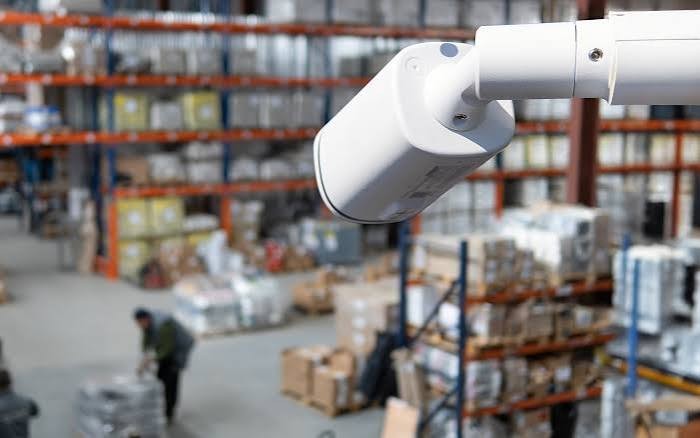
Warehouses and storage facilities play an important role in Uganda’s supply chain, manufacturing, distribution, retail and logistics industries. These facilities often hold valuable inventory, raw materials, machinery, finished products and business equipment. Protecting these assets against theft, unauthorised access, vandalism and other security risks is therefore essential for business continuity.
CCTV installation for warehouses and storage facilities provides an effective way to improve security monitoring, oversee important operational areas, protect stored goods and support investigations when incidents occur.
Unlike ordinary office buildings, warehouses present unique surveillance challenges. They often have large floor areas, high ceilings, loading bays, multiple access points, outdoor storage yards, vehicle movement and sections with limited lighting. A CCTV system must therefore be carefully designed to provide suitable coverage across the entire facility.
In Uganda, warehouses in Kampala, Wakiso, Entebbe, Namanve and other commercial and industrial locations may require different security solutions depending on their size, operations, inventory value and site layout. A small storage facility may need cameras at its entrance, loading area and inventory room, while a large distribution centre may require a network of high-resolution IP cameras, perimeter surveillance, vehicle monitoring and centralised recording.
At Daltrevco, we understand the importance of properly planned building and security infrastructure. This guide explains the benefits, camera types, installation locations, technical requirements, installation process and costs of CCTV systems for warehouses and storage facilities in Uganda.
Why CCTV Systems Are Important for Warehouses and Storage Facilities
Warehouses operate in environments where goods and materials are constantly received, stored, moved and dispatched. Without suitable security monitoring, it can be difficult to identify unauthorised activity or investigate losses.
A professionally designed CCTV system helps businesses improve visibility across important areas of their premises.
1. Preventing Theft and Unauthorised Access
Warehouses may contain valuable products, electronics, construction materials, industrial equipment, agricultural supplies, spare parts and other commercial goods.
These assets can be vulnerable to theft when access points, storage sections and loading areas are not properly monitored.
CCTV cameras can help security personnel observe activity around:
- Main entrances and exits.
- Loading and unloading bays.
- Inventory storage areas.
- Goods receiving sections.
- Dispatch points.
- Perimeter gates.
- Outdoor storage yards.
- Restricted access rooms.
Visible cameras can also discourage opportunistic theft, although CCTV should always be combined with appropriate physical security and access management.
2. Monitoring Loading and Unloading Operations
Loading bays are among the busiest areas in a warehouse. Employees, delivery drivers, contractors, forklifts and trucks may operate in the same space.
CCTV cameras can help businesses monitor activities during the receipt and dispatch of goods.
Recorded footage may assist in investigating:
- Disputes over delivered quantities.
- Damage to goods during handling.
- Unauthorised loading or unloading.
- Suspicious vehicle activity.
- Missing inventory.
- Security incidents involving delivery personnel.
Camera positioning should provide useful views of loading areas without obstructing normal operations.
3. Protecting Valuable Inventory and Stock
Businesses invest significant resources in purchasing, storing and managing inventory.
CCTV cameras can monitor access to high-value storage sections, stockrooms, equipment stores and other sensitive areas.
When combined with inventory management procedures, access control and stock audits, surveillance footage can help businesses investigate discrepancies and identify weaknesses in their security arrangements.
4. Improving Employee and Workplace Security
Warehouses may have employees working across different shifts, including early mornings, evenings and overnight periods.
CCTV can help monitor selected shared operational areas, entrances and outdoor facilities. It may also provide useful information when investigating security incidents, property damage or unauthorised access.
Employee surveillance should be proportionate, transparent and consistent with applicable employment, privacy and data protection requirements.
5. Monitoring Large Warehouse Compounds
Large storage facilities may include multiple buildings, boundary walls, vehicle yards, loading areas and separate storage sections.
Monitoring all these areas manually can be difficult.
A centralised CCTV system allows authorised security personnel to view multiple cameras from a designated control room. Depending on the system design, selected camera feeds may also be accessed remotely through secure devices.
6. Supporting Investigations and Business Accountability
When inventory goes missing or property is damaged, management may need to establish what happened.
CCTV recordings can help authorised personnel review relevant activity and understand the circumstances surrounding an incident.
Footage may support internal investigations involving:
- Missing stock.
- Damaged goods.
- Unauthorised entry.
- Suspicious vehicle movements.
- Vandalism.
- Disputes involving deliveries.
- Security breaches.
For useful evidence, cameras must be positioned correctly, recordings must be retained appropriately and system time settings should be accurate.
7. Protecting Outdoor Storage Areas
Some warehouses store materials, machinery, construction products, vehicles and other goods outside their main buildings.
Outdoor storage yards may be exposed to theft, vandalism and unauthorised movement.
Weather-resistant CCTV cameras can help monitor boundary access points, storage zones, parking areas and vehicle circulation routes.
Best Locations for CCTV Installation in Warehouses
A successful warehouse CCTV project begins with identifying vulnerable locations and understanding how goods and people move through the facility.
The camera layout should provide useful coverage without creating unnecessary blind spots or interfering with warehouse operations.
1. Main Entrances and Exit Points
<AsyncImage query=”warehouse main entrance industrial security CCTV bullet camera mounted on building” aspectRatio=”16:9″ width=”100%”/>
Main entrances and exits are among the most important CCTV locations.
Cameras installed at these points can help monitor employees, visitors, suppliers, contractors and vehicles entering or leaving the premises.
Where identification is required, cameras should be positioned to capture suitable images of people approaching the entrance. Camera height, lens selection, lighting and viewing angle all affect the quality of the footage.
2. Loading and Unloading Bays
<AsyncImage query=”large warehouse loading dock truck delivery bay CCTV security cameras” aspectRatio=”16:9″ width=”100%”/>
Loading bays are high-activity areas where goods are received, checked, moved and dispatched.
CCTV cameras can help monitor vehicle positioning, loading operations, goods handling and movement around bay entrances.
For facilities handling frequent deliveries, it may be useful to install cameras that provide different views of the loading area, including vehicle access and the goods handling zone.
3. Main Warehouse Storage Areas
Large storage facilities may contain rows of shelving, pallet racks, stock sections and specialised storage zones.
Cameras can be positioned to monitor key aisles, access points and high-value inventory areas.
Because high shelving and stacked goods can obstruct camera views, the installation layout should account for the actual height and arrangement of storage racks.
4. Inventory Control and Stock Management Areas
Inventory control departments may handle valuable records, stock documentation and equipment used to manage warehouse operations.
CCTV cameras can monitor suitable entrances and shared work areas.
Where confidential records or computer screens are involved, camera angles should be adjusted to avoid unnecessarily capturing sensitive information.
5. Outdoor Storage Yards
Outdoor storage areas may contain construction materials, machinery, containers, vehicles, timber, metal products and other goods.
CCTV cameras should be selected for outdoor operating conditions and positioned to monitor vulnerable storage sections and access routes.
Depending on the size of the yard, fixed bullet cameras, PTZ cameras or specialised long-range cameras may be considered.
6. Perimeter Walls and Security Gates
<AsyncImage query=”industrial warehouse perimeter security gate CCTV camera mounted on pole” aspectRatio=”16:9″ width=”100%”/>
Warehouse perimeter surveillance helps monitor selected boundary areas and potential access points.
Cameras may be installed around:
- Main security gates.
- Secondary entrances.
- Boundary walls.
- Fence lines.
- External walkways.
- Vehicle access routes.
- Vulnerable corners of the property.
For extensive sites, a combination of fixed cameras and carefully positioned PTZ cameras may be appropriate.
7. Dispatch and Goods Collection Areas
Dispatch areas are important because products leave the warehouse through these sections.
CCTV can help monitor goods being prepared for collection, vehicle loading and movement through dispatch entrances.
For businesses experiencing delivery disputes or stock discrepancies, good camera positioning can provide useful footage for reviewing relevant events.
8. Staff Entrances and Restricted Areas
Some warehouse sections may require controlled access because they contain valuable goods, sensitive documents, machinery or operational equipment.
CCTV can monitor suitable access points and support electronic access control systems.
Examples include:
- Server rooms.
- Equipment stores.
- High-value inventory rooms.
- Maintenance workshops.
- Administrative offices.
- Restricted stock sections.
9. Parking Areas and Vehicle Circulation Routes
Warehouses often accommodate delivery trucks, forklifts, staff vehicles, visitors and company vehicles.
CCTV can monitor vehicle entrances, parking facilities, loading routes and selected circulation areas.
Camera placement should consider vehicle movement, potential obstructions and the need to capture useful footage in different lighting conditions.
Types of CCTV Cameras Suitable for Warehouses and Storage Facilities
Warehouses have different surveillance requirements depending on their size, ceiling height, lighting, storage arrangements and outdoor exposure.
Choosing the right camera type is essential for achieving useful coverage.
1. IP CCTV Cameras
<AsyncImage query=”industrial warehouse IP CCTV security camera installed on ceiling beam” aspectRatio=”16:9″ width=”100%”/>
IP cameras transmit digital video over a network and are commonly used in modern warehouse surveillance systems.
Their features may include:
- High-definition video recording.
- Network-based monitoring.
- Integration with network video recorders.
- Remote viewing through secure connections.
- Support for compatible video analytics.
- Expansion across multiple buildings.
IP cameras are particularly useful for large warehouses that require centralised surveillance and structured network connectivity.
2. Dome CCTV Cameras
<AsyncImage query=”indoor dome CCTV camera mounted on high ceiling warehouse” aspectRatio=”16:9″ width=”100%”/>
Dome cameras are commonly installed indoors in offices, reception areas, corridors and selected warehouse sections.
They are available in different designs, including models with vandal-resistant housings and infrared night vision.
Their suitability depends on ceiling height, viewing distance and the required level of image detail.
3. Bullet CCTV Cameras
<AsyncImage query=”outdoor bullet CCTV security camera industrial warehouse exterior wall” aspectRatio=”16:9″ width=”100%”/>
Bullet cameras are commonly used for outdoor surveillance because their directional design makes them suitable for monitoring specific areas.
They may be installed around loading bays, gates, parking areas, perimeter walls and outdoor storage yards.
When selecting bullet cameras, consider weather resistance, lens options, night vision and mounting requirements.
4. PTZ CCTV Cameras
<AsyncImage query=”PTZ surveillance camera overlooking large industrial warehouse yard” aspectRatio=”16:9″ width=”100%”/>
Pan-Tilt-Zoom cameras allow operators to adjust the viewing direction and zoom into selected areas.
They can be useful in large warehouses, distribution centres, industrial yards and open storage compounds.
However, PTZ cameras cannot continuously monitor every direction while moving or focusing on a particular location. Fixed cameras should be used where uninterrupted coverage is required.
5. Night Vision CCTV Cameras
<AsyncImage query=”infrared night vision CCTV camera monitoring warehouse loading dock at night” aspectRatio=”16:9″ width=”100%”/>
Warehouses may operate overnight or have security personnel monitoring the property outside normal business hours.
Night vision cameras use infrared illumination or other low-light technologies to capture images in dark environments.
They may be suitable for loading bays, perimeter gates, outdoor storage areas and internal sections with limited lighting.
Their performance depends on camera specifications, lighting conditions, mounting distance and environmental factors.
6. Panoramic CCTV Cameras
<AsyncImage query=”panoramic multi sensor CCTV security camera in large industrial warehouse interior” aspectRatio=”16:9″ width=”100%”/>
Panoramic cameras provide wide-area views using specialised lenses or multiple sensors.
They may be useful in large open warehouse sections, loading halls and selected shared areas.
However, a wide field of view does not necessarily provide sufficient detail for identifying people or reading labels at long distances. Camera placement and image quality must be assessed against the actual security objective.
7. Thermal CCTV Cameras
<AsyncImage query=”industrial thermal security surveillance camera mounted on warehouse exterior” aspectRatio=”16:9″ width=”100%”/>
Thermal cameras detect differences in infrared radiation and produce images based on temperature variations.
They may be considered for selected industrial perimeter applications where conventional cameras struggle with certain visibility conditions.
Thermal cameras do not provide ordinary facial or number plate detail and should not be treated as replacements for standard CCTV cameras.
If temperature measurement is required, the selected equipment must specifically support radiometric measurement.
Important Features to Consider When Choosing Warehouse CCTV Cameras
Selecting warehouse CCTV equipment based only on price can result in inadequate coverage, poor image quality and unnecessary maintenance expenses.
Businesses should consider the following technical requirements.
1. Image Resolution and Identification Quality
Camera resolution affects the level of detail captured.
Higher-resolution cameras may be useful at entrances, loading bays, dispatch areas and locations where identifying people or observing specific activity is important.
However, resolution alone does not guarantee identification. Lens quality, lighting, viewing distance, camera positioning and recording settings are equally important.
2. Wide Dynamic Range
Warehouses often have entrances where bright outdoor sunlight meets darker indoor spaces.
Wide Dynamic Range (WDR) helps cameras manage contrasting light levels and can improve image visibility in challenging conditions.
This feature can be particularly useful at loading bays, vehicle entrances and building access points.
3. Night Vision and Low-Light Performance
Some warehouse security incidents occur outside normal operating hours.
Cameras installed in poorly lit areas should have suitable low-light or infrared capabilities.
For outdoor facilities, it is important to test camera performance under actual night-time conditions.
4. Motion Detection and Video Analytics
Modern CCTV systems may include motion detection and advanced video analytics.
Depending on the equipment, these features may support:
- Detection of movement in restricted areas.
- Line-crossing alerts.
- People and vehicle classification.
- Detection of activity outside working hours.
- Monitoring of selected security zones.
Analytics should be tested in the actual environment because forklifts, moving machinery, shadows, changing light and other conditions can generate false alerts.
5. Storage Capacity and Recording Retention
Warehouse CCTV systems may generate large volumes of video data, particularly when many high-resolution cameras are installed.
Storage requirements depend on:
- Number of cameras.
- Resolution and frame rate.
- Video compression.
- Continuous or event-based recording.
- Required footage retention period.
- Number of simultaneous recording channels.
The recording system should be designed to provide sufficient storage for the business’s security and operational requirements.
6. Weather Resistance
Outdoor warehouse cameras must be suitable for exposure to rain, dust, heat and other environmental conditions.
Businesses should consider weather-resistant housings, appropriate ingress protection ratings, corrosion resistance and suitable cable protection.
7. Network Connectivity
IP CCTV systems require appropriate network infrastructure.
Large warehouses may need PoE switches, network cabinets, structured cabling and fibre-optic connections between separate buildings.
Network capacity should be planned according to the number of cameras, video quality and recording requirements.
8. Remote Monitoring
Secure remote monitoring can allow authorised managers and security personnel to view selected cameras from approved devices.
This is useful for businesses managing multiple warehouses or distribution facilities.
Remote access should be protected through strong authentication, secure connections, updated firmware and restricted user permissions.
9. Power Supply and Backup
CCTV cameras, network equipment and recording systems depend on reliable power.
Warehouses should consider UPS equipment and suitable backup power arrangements where continuous monitoring is required.
The backup system should be designed according to the power requirements and expected operating period.
Wired vs Wireless CCTV Systems for Warehouses
Warehouses can use wired or wireless CCTV systems depending on their infrastructure, site layout and surveillance requirements.
| Feature | Wired CCTV | Wireless CCTV |
|---|---|---|
| Connection | Uses network or video cables | Uses wireless connections for video transmission |
| Reliability | Generally stable when correctly installed | Depends on signal strength and interference |
| Installation | Requires cable routing | Can reduce video cabling requirements |
| Large facilities | Suitable for structured multi-camera networks | Depends on wireless coverage and network capacity |
| Power | Requires a suitable power source or PoE | Still requires power or a suitable battery arrangement |
| Common applications | Permanent warehouse surveillance | Selected locations where cabling is difficult |
For large warehouses, wired IP CCTV systems are often a practical option because they support stable network connectivity and centralised recording.
Wireless cameras may be appropriate for selected remote storage areas or locations where installing cables is difficult.
However, wireless transmission does not remove the need for reliable power, network security and sufficient wireless coverage.
A hybrid system can combine wired cameras in main operational areas with wireless equipment in selected locations.
Integrating CCTV with Other Warehouse Security Systems
CCTV becomes more effective when it forms part of a coordinated warehouse security system.
Depending on business requirements, surveillance may be integrated with other security and operational technologies.
CCTV and Access Control Systems
Access control systems regulate who can enter designated buildings, rooms and storage areas.
They may use access cards, PIN codes, credentials or other approved authentication methods.
When integrated with CCTV, authorised personnel can review video associated with selected access events.
This can improve monitoring around high-value inventory rooms, server rooms, equipment stores and restricted operational areas.
CCTV and Intruder Alarm Systems
Intruder alarm systems detect unauthorised access or other defined security events.
When compatible systems are integrated, CCTV footage may help security personnel assess an alarm and understand what is happening.
CCTV and ANPR Systems
Automatic Number Plate Recognition (ANPR), also called License Plate Recognition (LPR), uses specialised cameras and software to capture and interpret vehicle registration plates.
It may be useful for warehouses that receive frequent truck deliveries or operate controlled vehicle entrances.
ANPR can support vehicle access monitoring and help review vehicle movements.
Its accuracy depends on camera positioning, lighting, vehicle speed, plate condition and compatibility with local registration plate formats. It should be tested in the actual operating environment.
CCTV and Warehouse Management Systems
Some businesses use warehouse management systems to manage inventory, receiving, storage, picking and dispatch operations.
CCTV may be incorporated into wider operational workflows where compatible platforms and suitable integrations are available.
For example, authorised staff may use event information to identify the relevant camera footage when investigating a delivery discrepancy.
CCTV does not automatically verify stock quantities or replace barcode scanning, inventory records and physical stock checks.
CCTV and Building Management Systems
Large warehouses may use Building Management Systems to monitor selected building services.
Where compatible, CCTV may be incorporated into a centralised monitoring environment to improve visibility across different building systems.
CCTV Installation Process for Warehouses and Storage Facilities
A successful warehouse CCTV installation requires proper planning, suitable equipment and careful coordination with daily operations.
The following steps help create a reliable surveillance system.
Step 1: Conduct a Warehouse Security Assessment
The installation process begins with an assessment of the warehouse and its security requirements.
The assessment should identify:
- Main entrances and exits.
- Loading and unloading bays.
- High-value storage sections.
- Inventory control areas.
- Outdoor storage yards.
- Perimeter boundaries.
- Vehicle access routes.
- Existing electrical and network infrastructure.
- Areas with poor lighting.
- Potential camera obstructions.
The objective is to identify vulnerable areas and determine where surveillance is most important.
Step 2: Develop a CCTV Camera Layout
After the assessment, a camera layout should be prepared.
The layout identifies the proposed camera positions, viewing angles, mounting heights, equipment types and cable routes.
For warehouses with high ceilings or tall storage racks, the design should consider the actual height and arrangement of stored goods.
It should also identify locations where additional lighting, network equipment or infrastructure improvements may be needed.
Step 3: Select Suitable CCTV Equipment
The next stage involves selecting cameras, recording equipment, network switches, storage devices, power supplies and installation accessories.
The equipment should be compatible and suitable for the warehouse environment.
Businesses should also consider future expansion when choosing recording equipment and network capacity.
Step 4: Plan Cabling and Network Infrastructure
Cabling connects cameras to the recording and monitoring system.
IP CCTV installations may require:
- Structured Ethernet cabling.
- PoE network switches.
- Fibre-optic connections between buildings.
- Network cabinets.
- Cable trays and conduits.
- Appropriate outdoor cable protection.
Cable routes should be coordinated with existing building services and warehouse operations.
Step 5: Install and Position the Cameras
Cameras are mounted according to the approved layout.
Installers should ensure that equipment is securely fixed and positioned to provide the required field of view.
High-level installations may require appropriate access equipment and safe working procedures.
Camera placement should not interfere with forklift routes, loading activities, machinery or other warehouse operations.
Step 6: Configure the Recording System
After installation, the cameras are connected to the network video recorder or other approved recording platform.
Configuration may include:
- Camera names and locations.
- Recording schedules.
- Video resolution.
- Motion detection settings.
- Storage allocation.
- Time and date synchronisation.
- User permissions.
- Remote viewing.
- Network security settings.
Step 7: Test and Commission the CCTV System
Every camera should be tested before handover.
Testing should include:
- Daytime image quality.
- Night-time performance.
- Loading bay coverage.
- Recording and playback.
- Network connectivity.
- Storage operation.
- Motion alerts where applicable.
- Remote monitoring where provided.
- Backup power arrangements.
Any identified blind spots or configuration problems should be corrected.
Step 8: Train Security and Warehouse Personnel
The relevant staff should understand how to operate the CCTV system.
Training may cover live camera viewing, playback, exporting footage, managing authorised accounts and reporting system faults.
The business should also receive relevant system documentation and maintenance recommendations.
CCTV Installation Costs for Warehouses in Uganda
The cost of installing CCTV in a warehouse or storage facility depends on the size of the premises, the number of cameras, equipment specifications and complexity of the installation.
A small warehouse with a few access points may require a relatively simple surveillance system. A large distribution centre with multiple buildings, loading bays, perimeter areas and outdoor storage facilities may need more extensive infrastructure.
The following factors influence the total project cost.
1. Number of CCTV Cameras
The number of cameras required depends on the size of the facility, number of access points, storage layout and security priorities.
Large warehouses generally require more cameras to provide suitable coverage.
2. Camera Types and Specifications
Basic indoor cameras, outdoor bullet cameras, PTZ cameras, panoramic cameras and specialised ANPR cameras have different equipment requirements and costs.
3. Warehouse Size and Layout
A facility with several floors, high ceilings, long aisles and separate storage buildings may require additional installation work and infrastructure.
4. Cabling and Network Infrastructure
The cost depends on cable lengths, cable routes, network switches, fibre-optic connections, cabinets and other infrastructure requirements.
5. Recording and Storage Capacity
The number of cameras, resolution, recording settings and retention period determine the storage capacity required.
6. Power Supply and Backup
The project may require UPS equipment, power supplies and other backup arrangements to maintain surveillance during power interruptions.
7. Monitoring Equipment
A central CCTV monitoring room may require display monitors, workstations, recording equipment and appropriate network infrastructure.
8. Outdoor and Perimeter Surveillance
Monitoring extensive outdoor storage yards and boundary areas may require specialised cameras, mounting poles, weather protection and longer cable routes.
9. Integration with Other Security Systems
Connecting CCTV to access control, intruder alarms, ANPR or other systems may increase project complexity.
10. Maintenance and Technical Support
Businesses should also consider the cost of routine maintenance, technical support, software updates and replacement of faulty equipment.
For accurate pricing, request a site assessment and a detailed quotation based on the warehouse’s actual security requirements.
Data Protection and Privacy Considerations for Warehouse CCTV in Uganda
Warehouse surveillance should be conducted responsibly and in accordance with applicable privacy and data protection requirements.
In Uganda, businesses should consider the Data Protection and Privacy Act, 2019, together with applicable regulations and guidance.
Important considerations include:
Inform Employees and Visitors
Businesses should provide appropriate notices explaining where CCTV monitoring takes place and its purpose.
Employees, contractors, suppliers and visitors should receive relevant information about surveillance.
Establish a Clear Purpose for Each Camera
Every camera should have a legitimate security or operational purpose.
For example, cameras may be installed to monitor loading bays, perimeter access or high-value storage areas.
Avoid unnecessary monitoring that does not serve a clearly defined purpose.
Avoid Private Areas
CCTV should not be installed in toilets, changing rooms or other private spaces where individuals reasonably expect privacy.
Employee monitoring should be proportionate and should avoid unnecessary intrusion into personal activities.
Restrict Access to Recorded Footage
Only authorised personnel should be able to view, export or share CCTV recordings.
Businesses should use individual accounts, suitable permissions and secure authentication.
Establish a Footage Retention Policy
The organisation should determine how long CCTV recordings need to be retained based on legitimate security requirements and applicable legal obligations.
Recordings should not be kept indefinitely without justification.
Protect the CCTV Network
Cameras, recorders and monitoring equipment should be secured against unauthorised access.
Businesses should use strong passwords, update firmware, restrict remote access and apply appropriate network security controls.
Common CCTV Installation Mistakes to Avoid in Warehouses
Poor installation planning can reduce surveillance effectiveness and increase long-term costs.
Warehouse owners and managers should avoid the following mistakes.
1. Installing Cameras Without a Site Assessment
Installing cameras without evaluating the warehouse layout can result in blind spots and unnecessary equipment.
A proper site survey should guide the camera placement plan.
2. Ignoring High Ceilings and Storage Racks
Warehouses often have tall shelving systems and stacked inventory that can obstruct camera views.
Camera positions should be selected according to actual storage arrangements and viewing distances.
3. Choosing Cameras Based Only on Price
Low-cost cameras may not provide sufficient image quality, night-time performance or environmental protection.
Equipment should be selected according to the actual security requirements.
4. Failing to Monitor Loading Bays
Loading and unloading areas are important parts of warehouse operations.
Leaving these areas poorly monitored can make it difficult to investigate delivery discrepancies and security incidents.
5. Ignoring Outdoor Security
A warehouse may have valuable goods stored outside the main building.
Perimeter gates, outdoor storage yards and vehicle access routes should be considered during system design.
6. Underestimating Storage Requirements
Insufficient recording capacity may result in important footage being overwritten too soon.
Storage requirements should be calculated before installation.
7. Ignoring Network and Power Reliability
Poor network connectivity or power interruptions can affect CCTV performance.
The system should include appropriate infrastructure and backup arrangements where required.
8. Neglecting Maintenance
Dust, dirt, vibration, damaged cables and outdated firmware can affect camera performance.
Regular inspection and maintenance are essential.
CCTV Maintenance for Warehouses and Storage Facilities
Regular maintenance helps ensure that warehouse CCTV systems continue to provide reliable surveillance.
A maintenance programme may include:
- Cleaning camera lenses and protective covers.
- Checking camera mounting brackets.
- Inspecting outdoor camera housings.
- Checking network connections and cabling.
- Testing recording and playback.
- Reviewing storage capacity.
- Testing night vision.
- Checking time and date synchronisation.
- Updating firmware and security settings.
- Reviewing authorised user accounts.
- Testing backup power equipment.
- Replacing damaged or unreliable components.
Warehouses exposed to dust, heat, vibration and heavy industrial activity may require more frequent inspections.
A documented maintenance schedule helps identify faults before they affect important surveillance areas.
How to Choose the Best CCTV Installation Company for Warehouses in Uganda
Choosing an experienced CCTV installation provider is important because warehouse surveillance projects often involve large premises, complex cable routes and demanding operating environments.
Before engaging a contractor, consider the following factors.
1. Experience with commercial and industrial facilities: The provider should understand the surveillance requirements of warehouses, factories, distribution centres and storage yards.
2. Site assessment and planning: A suitable installer should inspect the property and prepare a camera layout before recommending equipment.
3. Technical knowledge: The provider should understand IP CCTV, recording systems, network infrastructure, outdoor cameras and storage requirements.
4. Equipment compatibility: Cameras, recorders, network switches and software should be compatible.
5. Understanding of warehouse operations: Installation should account for forklifts, loading activities, storage racks, high ceilings and vehicle movement.
6. Data protection awareness: The provider should understand responsible surveillance and appropriate access restrictions.
7. Testing and commissioning: The project should include testing of camera coverage, recording, playback and system connectivity.
8. Maintenance and support: Ask about available technical support, maintenance services and equipment replacement arrangements.
9. Clear documentation: The business should receive relevant camera layouts, equipment details, system information and operating instructions.
Why Consider Daltrevco for Your Warehouse CCTV Project?
Warehouse security requires a surveillance system designed around the facility’s actual layout, inventory, operational activities and security priorities.
A properly planned CCTV installation can help businesses monitor important access points, loading areas, storage sections, vehicle routes and external facilities.
Daltrevco is a point of contact for property owners, developers and businesses planning building and security infrastructure projects in Uganda.
When planning CCTV installation for a warehouse or storage facility, it is important to consider camera coverage, network infrastructure, recording capacity, power reliability, access management and future expansion.
Contact Daltrevco through www.daltrevco.com to discuss your project requirements and explore suitable solutions for your premises.
Whether you are developing a new warehouse, upgrading an existing surveillance system or improving security across a distribution centre, proper planning can help establish a more organised and effective security environment.
Frequently Asked Questions About CCTV Installation for Warehouses and Storage Facilities
1. Why do warehouses need CCTV systems?
Warehouses use CCTV systems to monitor access points, protect inventory, oversee loading and unloading activities, deter opportunistic theft and support investigations into security incidents.
2. Where should CCTV cameras be installed in a warehouse?
Common locations include main entrances, loading bays, storage areas, dispatch sections, inventory control areas, parking facilities, perimeter gates and outdoor storage yards.
3. Which CCTV cameras are best for warehouses?
IP cameras are commonly suitable for warehouse surveillance because they support network-based monitoring and centralised recording. Dome, bullet, PTZ and panoramic cameras may be selected for specific locations.
4. How many CCTV cameras does a warehouse need?
There is no fixed number. The requirement depends on the facility’s size, storage arrangement, access points, ceiling height and security priorities. A site assessment helps determine the appropriate number.
5. Can CCTV cameras monitor warehouse loading bays?
Yes. Cameras can monitor loading and unloading areas, vehicle positioning, goods handling and access routes. Camera positioning should provide useful views without obstructing normal operations.
6. Are wireless CCTV cameras suitable for warehouses?
Wireless cameras can be suitable for selected locations where installing cables is difficult. However, large warehouses often benefit from wired IP systems because of their structured network connectivity and recording requirements.
7. Can warehouse CCTV systems be monitored remotely?
Yes. Compatible systems can allow authorised managers and security personnel to view selected camera feeds remotely through approved devices. Remote access should be securely configured.
8. Do warehouse CCTV cameras need internet access?
Many CCTV systems can record locally without internet access. Internet connectivity is generally needed for certain remote monitoring and cloud-based features.
9. How much does CCTV installation cost for a warehouse in Uganda?
Costs depend on the number and type of cameras, facility size, cable routes, recording equipment, storage capacity, network infrastructure and installation complexity. A site assessment is necessary for an accurate quotation.
10. Can CCTV cameras monitor outdoor storage yards?
Yes. Weather-resistant cameras can monitor outdoor storage areas, perimeter gates, parking facilities and vehicle routes. The equipment should be selected according to the environmental conditions.
11. What is the best CCTV camera for a large warehouse?
The best option depends on the area being monitored. Fixed IP cameras may provide continuous coverage of important sections, while PTZ cameras may help operators monitor large open spaces.
12. Can CCTV cameras identify people entering a warehouse?
Suitable cameras can capture images of people at entrances. Identification quality depends on resolution, lens selection, viewing distance, lighting and camera positioning.
13. Can CCTV be integrated with warehouse access control?
Yes. Compatible CCTV and access control systems can be integrated to help authorised personnel monitor restricted entrances and review access-related events.
14. Can CCTV systems monitor vehicle movements in warehouses?
Yes. CCTV can monitor vehicle entrances, parking areas, loading bays and circulation routes. ANPR cameras may be considered where vehicle number plate recognition is required.
15. How long should warehouse CCTV footage be stored?
Retention should be based on legitimate business security requirements, storage capacity and applicable data protection obligations. Businesses should establish and document an appropriate retention policy.
16. Can CCTV help reduce inventory losses?
CCTV can help monitor storage areas and investigate suspicious activity, but it does not replace inventory management, stock audits, access control and proper goods-handling procedures.
17. Do warehouse CCTV systems need backup power?
Backup power may be necessary where continuous surveillance is required during electricity interruptions. UPS equipment and other suitable arrangements can help maintain operation.
18. Can CCTV cameras work in dusty warehouse environments?
Yes, provided the selected equipment is suitable for the environment. Businesses should consider appropriate ingress protection, camera housing and regular cleaning.
19. How often should warehouse CCTV systems be maintained?
Maintenance frequency depends on the equipment, operating environment and system size. Regular inspections should include camera cleaning, recording checks, network testing and security updates.
20. How can a business plan a warehouse CCTV installation project?
Start with a site assessment, identify vulnerable locations, prepare a camera layout, select suitable equipment, plan cabling and storage, address privacy requirements, and arrange professional installation, testing and maintenance.
Conclusion
CCTV installation for warehouses and storage facilities is an important investment in protecting inventory, equipment, employees and business operations. A properly designed surveillance system can help monitor entrances, loading bays, storage areas, vehicle routes and outdoor compounds while supporting security investigations and access management.
The most effective warehouse CCTV solution depends on the facility’s size, layout, operating conditions, inventory value, lighting and network infrastructure. Selecting suitable cameras, planning recording capacity and maintaining the system are essential for reliable performance.
For warehouse owners, logistics companies, distributors and businesses operating storage facilities in Uganda, investing in a carefully planned CCTV system can strengthen security and improve visibility across important operational areas.
Contact Daltrevco through www.daltrevco.com to discuss your CCTV installation and building security project requirements.

