
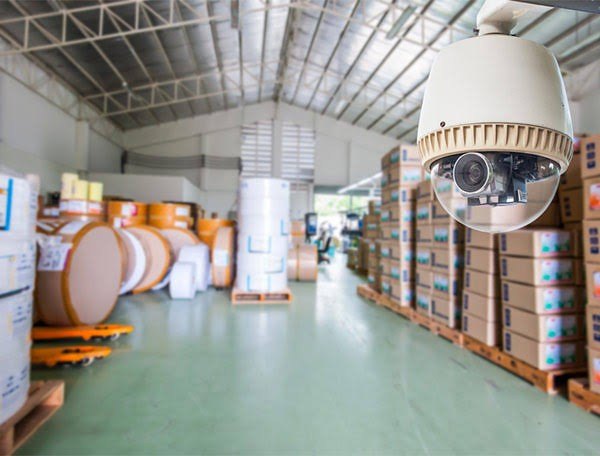
Factories and industrial facilities require reliable security systems to protect employees, machinery, raw materials, finished products, vehicles and critical infrastructure. With large operating areas, multiple access points, expensive equipment and continuous production activities, industrial environments face security challenges that ordinary surveillance systems may not adequately address.
CCTV security solutions for factories and industrial facilities provide businesses with a practical way to monitor operations, deter unauthorised access, investigate security incidents and improve visibility across their premises. Modern CCTV technology combines high-definition cameras, intelligent video analytics, remote monitoring and secure video storage to support more effective industrial security management.
In Uganda, where manufacturing, warehousing, construction materials, food processing, logistics and other industrial activities continue to create demand for secure business premises, professionally planned CCTV systems are an important part of facility protection.
Whether you operate a manufacturing plant in Kampala, a processing facility in Wakiso, an industrial warehouse in Namanve or a large production site elsewhere in Uganda, choosing the right surveillance system can help protect your assets and support safer operations.
This guide explains how CCTV security solutions work in factories and industrial facilities, the best camera types, important installation considerations, system integration, maintenance requirements and factors that influence installation costs.
1. Why Factories and Industrial Facilities Need CCTV Security Systems
Industrial premises often contain valuable assets and complex operational environments that require continuous security oversight. A single security incident can result in financial losses, production interruptions, damaged equipment or safety concerns.
A properly designed CCTV system helps address several security challenges.
Preventing Theft and Unauthorised Access
Factories store valuable machinery, tools, spare parts, raw materials, fuel and finished products. These assets may be vulnerable to theft when access points and storage areas are poorly monitored.
CCTV cameras help security teams monitor entrances, exits, loading bays, stores, production areas and perimeter boundaries. Visible cameras can also discourage opportunistic theft and provide footage for investigating incidents.
Monitoring Factory Entrances and Exits
Industrial facilities may have separate entrances for employees, visitors, contractors, suppliers and delivery vehicles.
CCTV surveillance helps security personnel observe activity at these access points, identify suspicious behaviour and review vehicle movements.
When integrated with access control systems, CCTV can provide visual verification of selected access events.
Protecting Machinery and Industrial Equipment
Manufacturing equipment, electrical installations, generators, compressors and production machinery can represent significant investments.
Strategically positioned cameras allow authorised personnel to monitor selected equipment areas, observe access to restricted rooms and investigate incidents involving damage or interference.
CCTV does not replace machinery safety systems, equipment inspections or industrial maintenance procedures, but it can complement them.
Improving Employee and Workplace Security
Industrial environments often operate across different shifts, including early mornings, evenings and overnight periods.
CCTV helps security teams monitor shared workspaces, access routes, external yards and other appropriate areas. It can also assist in investigating incidents involving unauthorised entry, property damage or workplace disputes.
Camera placement should respect employee privacy and applicable data protection requirements.
Monitoring Loading and Unloading Operations
Loading bays and dispatch areas are particularly important in factories and distribution facilities. Products may be received, transferred, packed and dispatched throughout the working day.
CCTV cameras help businesses review delivery activities, monitor vehicle movements and investigate discrepancies involving goods handling.
Supporting Incident Investigations
When theft, vandalism, property damage or unauthorised access occurs, recorded footage can help establish what happened and when.
A properly configured recording system provides authorised investigators with access to relevant video evidence, subject to appropriate retention, access and privacy controls.
2. Important Areas to Install CCTV Cameras in Factories
Effective industrial surveillance depends on identifying security risks and selecting camera positions that provide useful coverage.
Installing cameras without a proper site assessment can leave important areas unmonitored or produce footage that is unsuitable for identification.
The following areas should be considered when planning CCTV installation for factories.
Factory Gates and Main Entrances
<text> </text>
All major access points should be assessed for suitable surveillance coverage. Cameras can monitor people entering and leaving the facility, vehicle movements and activity around security checkpoints.
Where vehicle identification is required, dedicated ANPR/LPR cameras may be appropriate.
Production and Manufacturing Areas
Production floors often contain machinery, assembly lines, processing equipment and valuable materials.
Cameras can provide visibility over selected operational areas, help investigate incidents and support authorised management reviews.
Their positions must not interfere with machinery operation, emergency exits, employee movement or workplace safety procedures.
Warehouses and Raw Material Stores
Raw materials, spare parts and finished products can represent a significant proportion of a factory’s assets.
CCTV cameras can monitor storage entrances, warehouse aisles, inventory handling areas and goods transfer points.
Loading and Dispatch Bays
Loading bays require careful camera placement because goods are frequently moved between vehicles and storage facilities.
Cameras should provide suitable views of loading activities, delivery vehicles, dispatch doors and relevant transaction areas.
Perimeter Walls and External Boundaries
Industrial facilities often occupy large plots with long perimeter boundaries.
Weather-resistant outdoor cameras can help monitor gates, boundary walls, vehicle routes and vulnerable external areas.
Where lighting is limited, cameras with suitable low-light or infrared capabilities may be required.
Server Rooms and Electrical Control Rooms
Server rooms, control rooms and electrical distribution areas may contain sensitive equipment and infrastructure.
Access to these locations should be restricted and monitored appropriately. CCTV can help establish who entered a protected area and assist in investigating security incidents.
Parking Areas and Vehicle Yards
Factories may have designated parking areas for employees, visitors, suppliers and company vehicles.
CCTV surveillance can help monitor vehicle movements, deter vandalism and investigate incidents involving parked vehicles.
Fuel Storage and Utility Areas
Fuel storage locations, generator rooms, water treatment facilities and other utility areas may require additional security.
Camera selection and installation must account for the specific environmental and hazardous-area requirements. Ordinary CCTV equipment should not be installed in classified hazardous locations unless it is appropriately certified for that environment.
3. Types of CCTV Cameras for Factories and Industrial Facilities
Different industrial environments require different camera capabilities. A camera suitable for a small office may not provide adequate coverage for an outdoor production yard or a large manufacturing plant.
The following CCTV camera types are commonly considered for industrial applications.
IP CCTV Cameras
IP cameras transmit digital video over an internet protocol network. They are widely used in modern industrial surveillance systems because they support high-resolution video, network-based management and integration with compatible security platforms.
Benefits include:
- High-definition video recording.
- Flexible network-based installation.
- Remote monitoring through authorised devices.
- Integration with network video recorders.
- Support for compatible video analytics.
- Scalability across multiple buildings and locations.
IP CCTV systems are suitable for factories that require centralised monitoring and room for future expansion.
Dome CCTV Cameras
<AsyncImage query=”industrial indoor dome CCTV security camera installed factory production facility ceiling” aspectRatio=”16:9″ width=”100%”/>
Dome cameras are commonly installed indoors, including offices, reception areas, corridors, production support areas and warehouse entrances.
Their compact design can make them suitable for locations where a less prominent camera is preferred.
Bullet CCTV Cameras
<AsyncImage query=”outdoor bullet CCTV surveillance cameras mounted on industrial factory building exterior” aspectRatio=”16:9″ width=”100%”/>
Bullet cameras are often used for outdoor surveillance because their directional design is suitable for monitoring specific locations such as gates, boundary walls, loading bays and vehicle routes.
Depending on the model, they may include infrared illumination, weather-resistant housing and advanced image-processing features.
PTZ CCTV Cameras
<AsyncImage query=”PTZ CCTV camera mounted on industrial factory warehouse exterior surveillance” aspectRatio=”16:9″ width=”100%”/>
Pan-tilt-zoom cameras allow authorised operators to change the camera’s direction and zoom level remotely.
They can be useful in large industrial yards, open storage areas and facilities where security personnel need to inspect different locations.
However, a PTZ camera only observes the direction in which it is currently pointing. Fixed cameras should be used where continuous coverage of critical areas is necessary.
Night Vision CCTV Cameras
Factories that operate at night or have poorly illuminated external areas may require cameras with infrared or other low-light capabilities.
These cameras help maintain surveillance when visible lighting is limited.
The actual image quality depends on illumination, camera sensitivity, distance, environmental conditions and the presence of obstructions.
Panoramic CCTV Cameras
Panoramic cameras can provide a wide field of view from a single installation point.
They may be useful in selected open production areas, large rooms and warehouse spaces. However, the image must be assessed carefully to determine whether it provides enough detail for identification at important distances.
Thermal CCTV Cameras
Thermal cameras detect differences in heat radiation and can be useful for perimeter monitoring in certain industrial environments.
They may help identify people or vehicles under conditions where ordinary visible-light cameras struggle.
Thermal cameras do not normally provide conventional facial or vehicle number plate detail and should not be treated as a replacement for standard identification cameras.
4. Essential Features of Industrial CCTV Security Solutions
When selecting CCTV security systems for factories, businesses should consider more than camera resolution. The entire surveillance system must be suitable for the facility’s operating environment.
High-Resolution Video Quality
High-resolution cameras can capture more image detail, which may help when reviewing incidents or identifying activity.
However, resolution alone does not guarantee useful footage. Camera positioning, lens selection, lighting, distance, motion and recording configuration also influence image quality.
Wide Dynamic Range (WDR)
Factories may have areas with strong differences in lighting, such as entrances exposed to sunlight and darker indoor spaces.
Wide Dynamic Range technology helps cameras manage bright and dark areas within the same scene.
This can improve visibility around entrances, loading bays and other challenging locations.
Low-Light Performance
Industrial premises may operate at night or have sections with limited lighting.
Cameras should be selected according to the actual lighting conditions. Infrared, low-light sensors and supplementary lighting may be considered where appropriate.
Weather-Resistant Camera Housing
Outdoor cameras may be exposed to rain, dust, humidity, heat and other environmental conditions.
Choose equipment with appropriate environmental protection ratings for the installation location. A suitable IP rating, correct cable glands and proper installation practices help protect equipment from environmental damage.
Video Analytics and Intelligent Monitoring
Modern CCTV platforms may support intelligent features such as:
- Motion detection.
- Line-crossing detection.
- Intrusion detection.
- Restricted-area monitoring.
- Object classification.
- People and vehicle detection.
- Loitering alerts.
- Selected crowd or occupancy analytics.
The availability and accuracy of these features depend on the camera model, software platform, installation conditions and configuration.
Analytics should be tested on site because environmental conditions, moving machinery, lighting changes and other factors can produce false alerts or missed detections.
Secure Video Storage
Factories may need to retain surveillance recordings for an established period to support security reviews and incident investigations.
Storage requirements depend on the number of cameras, resolution, frame rate, recording schedule, compression, motion activity and retention policy.
A suitable storage design should also consider redundancy, system health monitoring and backup arrangements where required.
Remote Monitoring
Authorised managers and security personnel may need to monitor selected camera feeds when away from the factory.
Remote monitoring can provide visibility across different buildings or sites, subject to secure configuration.
Remote access should use strong passwords, appropriate user permissions, multi-factor authentication where supported and secure network connections.
5. CCTV System Design for Different Industrial Facilities
Not all factories have the same security requirements. A surveillance system should be designed around the facility’s layout, operations, assets and risk profile.
CCTV Solutions for Manufacturing Plants
Manufacturing plants may contain assembly lines, production machinery, raw material stores, packaging areas and finished goods sections.
A suitable system may combine fixed cameras for continuous coverage, selected PTZ cameras for wider external areas and access-point surveillance.
Camera positions should be coordinated with production processes and workplace safety requirements.
CCTV Solutions for Food Processing Factories
Food processing facilities may include production rooms, packaging sections, cold storage, loading bays and hygiene-controlled areas.
Camera selection should account for moisture, cleaning processes, temperature conditions and the facility’s hygiene requirements.
Equipment must be suitable for the environment in which it is installed, and cameras should not compromise food safety procedures.
CCTV Solutions for Warehouses and Distribution Centres
Warehouses often require monitoring of storage aisles, receiving areas, dispatch points, loading bays and external yards.
Cameras should be positioned to provide useful visibility of goods handling and vehicle movements.
For large facilities, a centralised video management system can help authorised staff monitor multiple areas.
CCTV Solutions for Cement and Construction Material Factories
Cement plants, concrete production facilities and other construction material factories can contain dusty environments, heavy machinery and large vehicle movement areas.
Camera housing, lens protection, mounting locations and maintenance schedules should account for these conditions.
CCTV Solutions for Pharmaceutical and Chemical Facilities
Pharmaceutical and chemical facilities may have restricted areas, sensitive production processes and specialised environmental requirements.
CCTV should be designed to support security and access monitoring without interfering with regulated operations or exposing confidential information.
Where cameras are required in potentially explosive or hazardous areas, the equipment and installation must meet the relevant hazardous-area certification requirements.
6. Integrating CCTV with Other Industrial Security Systems
CCTV becomes more effective when it forms part of a coordinated security system.
Factories can integrate surveillance with other technologies to improve incident detection, access management and security response.
CCTV and Access Control Systems
<AsyncImage query=”industrial factory access control card reader security turnstile CCTV camera” aspectRatio=”16:9″ width=”100%”/>
Access control systems regulate entry into buildings, restricted rooms and other protected areas.
When integrated with CCTV, access events can be associated with video footage, helping authorised security teams review selected entry and exit activities.
CCTV and Intruder Alarm Systems
Intruder alarms detect selected security events, such as unauthorised entry into protected areas.
When integrated with compatible CCTV platforms, alarms can trigger associated camera views or recording events.
This helps security personnel investigate alerts more efficiently.
CCTV and ANPR/LPR Systems
Automatic Number Plate Recognition and License Plate Recognition systems can capture and process vehicle registration plates.
They may be useful at factory gates, delivery entrances and vehicle checkpoints.
ANPR/LPR cameras require appropriate positioning, shutter settings, lighting and testing under local operating conditions. A standard general-purpose CCTV camera may not provide reliable number plate recognition.
CCTV and Building Management Systems
Some facilities integrate CCTV with wider building management or security platforms.
Depending on compatibility, this may allow selected security events to be viewed alongside information from other building systems.
Integration should be planned carefully to ensure that security systems remain reliable and that access to video footage is properly controlled.
CCTV and Central Monitoring Platforms
For businesses with multiple buildings or factory locations, centralised video management can help authorised personnel monitor different sites from a common control room.
The platform should support the required camera capacity, user permissions, storage, network architecture and future expansion.
7. Wired vs Wireless CCTV Systems for Factories
Choosing between wired and wireless CCTV depends on the facility layout, network infrastructure, installation conditions and reliability requirements.
| Feature | Wired CCTV | Wireless CCTV |
|---|---|---|
| Connection | Physical network or video cable | Wireless network connection |
| Reliability | Generally suitable for stable permanent installations | Depends on signal quality and network conditions |
| Installation | Requires cable routing | May reduce data cabling |
| Large facilities | Suitable for structured, scalable deployments | Requires careful wireless coverage planning |
| Interference | Less affected by wireless interference | Can be affected by signal interference |
| Expansion | Requires additional cabling and network capacity | May be easier in suitable locations |
| Power | Usually requires a separate power source or PoE | Still requires power unless using an appropriate battery or solar arrangement |
For most permanent factory installations, wired IP CCTV is a strong option because it supports reliable network connections and structured system management.
Wireless cameras may be appropriate for selected remote locations or temporary installations where cabling is difficult.
However, wireless CCTV still requires dependable power, secure network configuration and adequate signal coverage.
8. CCTV Installation Process for Factories and Industrial Facilities
Professional CCTV installation begins with understanding the security requirements of the facility. The installation process should consider the factory’s operations, building layout, environmental conditions and future needs.
Step 1: Conduct a Security Site Assessment
The installer should assess the entire facility, including entrances, production areas, storage sections, loading bays, parking areas and external boundaries.
The assessment should identify security risks, vulnerable locations, lighting conditions and areas requiring restricted access.
Step 2: Develop a CCTV Camera Layout
After the assessment, a camera placement plan should be prepared.
The plan should show proposed camera locations, coverage areas, viewing directions, cable routes and equipment positions.
Particular attention should be given to entrances, vehicle checkpoints, critical equipment and high-value storage areas.
Step 3: Select Suitable Cameras and Equipment
Camera selection should be based on the specific application.
The system may include IP cameras, dome cameras, bullet cameras, PTZ cameras, night vision cameras, network video recorders, storage devices, network switches and monitoring equipment.
Step 4: Install Cabling and Network Infrastructure
The installation team should prepare the required cable routes and network connections.
Industrial installations may require protected conduits, suitable cable trays, outdoor-rated cables, surge protection and appropriate separation from electrical power cables.
Where Power over Ethernet (PoE) is used, the network switches and power budget must be suitable for the connected cameras.
Step 5: Mount and Configure Cameras
Cameras should be installed at positions that provide the required field of view without creating unnecessary blind spots.
The installer should configure image quality, recording settings, motion detection, time synchronisation, user permissions and other required features.
Step 6: Configure Recording and Monitoring
The recording system should be configured according to the agreed retention policy and operational requirements.
Where remote monitoring is required, secure access should be established and tested.
Step 7: Test and Commission the System
Every camera should be tested to confirm that it provides the expected coverage and image quality.
Testing should include day and night conditions where relevant, recording and playback, network connectivity, alerts, remote viewing and backup arrangements.
Step 8: Provide Handover and User Guidance
The business should receive relevant system documentation, access credentials through a secure handover process and guidance on monitoring, playback, exporting footage and routine maintenance.
9. CCTV Installation Costs for Factories in Uganda
The cost of installing CCTV security solutions for factories and industrial facilities in Uganda depends on the size of the project and the technical requirements of the surveillance system.
A small production facility may require a relatively straightforward installation, while a large manufacturing plant may need multiple cameras, extensive network infrastructure, centralised recording and integration with other security technologies.
There is no single price that applies to every factory.
The following factors influence the total installation cost.
Number of CCTV Cameras
The number of cameras is one of the main cost considerations.
Large factories with several buildings, warehouses, entrances and external yards generally require more cameras than smaller facilities.
However, the correct number should be determined by the coverage and identification requirements rather than simply installing as many cameras as possible.
Type and Quality of Cameras
Different camera technologies have different costs.
Standard IP cameras, PTZ cameras, specialist low-light cameras, thermal cameras and ANPR/LPR cameras have different capabilities and equipment requirements.
Size and Layout of the Factory
A facility with multiple buildings, long corridors, high ceilings and large external areas may require additional cabling, mounting equipment and network infrastructure.
Network Infrastructure
The existing network may need upgrades to support additional CCTV cameras.
This may include PoE switches, fibre-optic links, network cabinets, structured cabling and suitable network configuration.
Recording and Storage Requirements
Storage costs depend on the number of cameras, recording quality, frame rates, retention period and recording schedule.
Businesses requiring longer retention periods or centralised recording across several sites may need additional storage capacity.
Remote Monitoring Requirements
Remote viewing may require additional network configuration, secure connectivity and monitoring equipment.
Power Backup and Surge Protection
Power interruptions and electrical surges can affect surveillance equipment.
Depending on the facility, the project may require UPS systems, surge protection and backup power arrangements.
Integration with Other Security Systems
Connecting CCTV with access control, intruder alarms, ANPR/LPR and other platforms may increase installation and configuration requirements.
Maintenance and Technical Support
The total cost of ownership should also consider cleaning, inspection, software updates, storage checks, repairs and replacement of faulty equipment.
For an accurate quotation, a factory should request a site assessment and a detailed proposal showing the proposed equipment, camera locations, recording requirements, network infrastructure and installation scope.
10. Common Mistakes to Avoid When Installing Factory CCTV Systems
Poor planning can reduce the effectiveness of an otherwise expensive surveillance system.
The following mistakes should be avoided.
Installing cameras without a security assessment: Camera positions should be selected according to identified risks and operational requirements.
Choosing cameras based only on resolution: High resolution does not automatically guarantee useful identification. Lens selection, distance, lighting and camera positioning are equally important.
Leaving important areas uncovered: Entrances, loading bays, storage areas and vulnerable perimeter sections should be reviewed carefully to reduce security blind spots.
Ignoring night-time conditions: A camera that performs well during daylight may produce poor footage at night if lighting and low-light performance are inadequate.
Using unsuitable outdoor equipment: Cameras exposed to dust, rain, heat and moisture need appropriate environmental protection.
Ignoring network capacity: Large IP CCTV systems require sufficient bandwidth, suitable switches and reliable network infrastructure.
Failing to secure remote access: Default passwords, shared accounts and unsecured internet access can expose CCTV systems to unauthorised viewing or tampering.
Neglecting maintenance: Dirty lenses, damaged cables, failed storage devices and incorrect recording settings can undermine system performance.
Failing to plan for expansion: Factories should consider future production areas, additional warehouses and new access points when designing the initial system.
Ignoring employee privacy: Surveillance should have a legitimate purpose, clear policies and appropriate restrictions on access to recordings.
11. CCTV Maintenance for Industrial Facilities
CCTV systems require regular maintenance to remain reliable. Industrial environments can expose equipment to dust, vibration, heat, moisture and other conditions that affect performance.
A maintenance programme should include the following activities.
- Clean camera lenses and external housings.
- Inspect camera mounts and brackets.
- Check cable connections and protective conduits.
- Confirm that all cameras are recording correctly.
- Review recording storage and retention settings.
- Test remote viewing and authorised user access.
- Check network switches and power supplies.
- Inspect UPS systems and surge protection.
- Review motion detection and analytics settings.
- Update firmware and software where appropriate.
- Remove unnecessary user accounts and review permissions.
- Test selected footage export and playback procedures.
Businesses should also periodically review whether the existing camera layout still meets their security requirements.
Changes to factory operations, new buildings, expanded storage areas and additional access points may require adjustments to the surveillance system.
12. CCTV Security and Data Protection Requirements in Uganda
Factories installing CCTV systems should consider their responsibilities under Uganda’s Data Protection and Privacy Act, 2019, and applicable regulations.
Video footage that identifies or can identify individuals may constitute personal data. Businesses should therefore manage surveillance responsibly.
Important considerations include:
Establish a Legitimate Purpose
The business should identify why CCTV is necessary, such as protecting property, monitoring access points or investigating security incidents.
Inform People About Surveillance
Appropriate notices should be displayed in monitored areas so that employees, visitors, contractors and other relevant individuals are informed about CCTV surveillance.
Avoid Unnecessary Monitoring
Cameras should be positioned to meet legitimate security objectives without unnecessarily intruding into private spaces.
Bathrooms, changing rooms and other highly private areas should not be monitored.
Restrict Access to Recordings
Only authorised personnel should access CCTV footage. Businesses should establish clear procedures for viewing, exporting, sharing and storing recordings.
Establish a Retention Policy
Video recordings should not be retained indefinitely without justification. The business should establish an appropriate retention period based on its operational and legal requirements.
Secure the CCTV Network
Default passwords should be changed, access permissions controlled and software updated. Network segmentation and secure remote access can help reduce cybersecurity risks.
Factories should seek appropriate guidance on their obligations where CCTV processing involves employees, contractors, visitors or other identifiable individuals.
13. How to Choose the Best CCTV Installation Company in Uganda
Selecting a suitable CCTV installation company is an important part of protecting an industrial facility.
The installer should understand the requirements of commercial and industrial surveillance rather than treating a factory like a small residential installation.
Before selecting a provider, consider the following:
Industrial installation experience: Look for a provider that understands large premises, production environments, warehouses and outdoor surveillance requirements.
Technical assessment: The company should assess the facility before recommending camera quantities, equipment and installation positions.
Suitable equipment: Cameras, recorders, network switches and accessories should match the environment and intended application.
System design: Request a clear camera layout and explanation of how the proposed system addresses the facility’s security needs.
Network and storage knowledge: The installer should understand bandwidth, recording capacity, network security and retention requirements.
Integration capability: Where necessary, the company should be able to plan CCTV integration with access control and other security technologies.
Testing and commissioning: The completed system should be tested before handover.
Maintenance arrangements: Ask about ongoing inspection, troubleshooting, repairs and technical support.
Documentation: A professional handover should include relevant system information, camera locations and operating guidance.
The right installation partner should recommend a practical surveillance solution based on the factory’s actual requirements and budget.
14. Why Professional CCTV Security Solutions Matter for Industrial Businesses
Industrial facilities have security requirements that extend beyond installing cameras at entrances and office corridors.
A well-designed CCTV system provides coordinated surveillance across important areas, including production floors, warehouses, vehicle routes, perimeter boundaries and restricted rooms.
Professional planning helps businesses select appropriate cameras, establish reliable network connections, configure recording systems and position equipment to provide useful coverage.
It also helps reduce avoidable installation problems, improve system reliability and make future expansion easier.
For Ugandan manufacturers, distributors, processing companies and industrial property owners, investing in an appropriately designed CCTV system can contribute to better asset protection and more effective security management.
15. CCTV Security Solutions for Factories and Industrial Facilities by Daltrevco
Protecting a factory requires a surveillance system designed around the facility’s layout, assets, operations and security risks.
Daltrevco provides a point of contact for businesses and property owners exploring CCTV and security system requirements for commercial and industrial premises in Uganda.
Whether you are planning surveillance for a manufacturing plant, warehouse, processing facility, industrial yard or other business premises, it is important to consider camera selection, strategic placement, video storage, network infrastructure and system integration before installation.
Visit the Daltrevco website to learn more about the company and explore its services.
For additional information and practical guidance, visit the Daltrevco blog.
Planning CCTV security for a factory or industrial facility in Uganda? Contact Daltrevco to discuss your project requirements and explore a suitable surveillance solution for your premises.
Frequently Asked Questions About CCTV Security Solutions for Factories and Industrial Facilities
1. What are CCTV security solutions for factories?
CCTV security solutions for factories are surveillance systems designed to monitor industrial premises, including production areas, warehouses, entrances, loading bays, parking areas and perimeter boundaries. They help businesses deter unauthorised access, protect assets and investigate security incidents.
2. Why do factories need CCTV security systems?
Factories use CCTV to monitor valuable equipment, raw materials, finished products, employees’ shared work areas, delivery operations and access points. Surveillance can help deter theft, identify security incidents and improve visibility across large facilities.
3. What is the best CCTV camera for a factory?
There is no single best camera for every factory. IP cameras are commonly used for general industrial surveillance, while bullet cameras may suit outdoor areas, dome cameras may suit indoor spaces, and PTZ cameras can support monitoring of large yards. The right choice depends on the location and security objective.
4. How many CCTV cameras does a factory need?
The number depends on the size of the factory, number of buildings, access points, storage areas, production sections and required coverage. A professional site assessment helps determine the appropriate camera quantity and placement.
5. Can CCTV cameras monitor factory production areas?
Yes. Cameras can monitor selected production areas, machinery access points and operational spaces. Their positioning should respect employee privacy, workplace safety requirements and production processes.
6. Can CCTV cameras operate in dusty industrial environments?
Yes, provided the equipment is suitable for the environmental conditions. Dust-resistant housing, appropriate protection ratings, suitable mounting and regular cleaning are important for maintaining reliable performance.
7. Are night vision CCTV cameras suitable for factories?
Yes. Night vision cameras can support surveillance in poorly illuminated production areas, external yards, entrances and perimeter locations. Their effectiveness depends on camera performance, infrared range, lighting and installation conditions.
8. Can CCTV systems monitor a factory remotely?
Yes. Compatible IP CCTV systems can allow authorised managers and security personnel to view live footage and recordings remotely through approved devices and secure connections.
9. What is the difference between IP CCTV and analogue CCTV?
IP CCTV cameras transmit digital video over a network and generally offer greater flexibility for modern network-based surveillance. Analogue systems use traditional video transmission methods. The best choice depends on existing infrastructure, image requirements, budget and future expansion plans.
10. Can CCTV be integrated with factory access control systems?
Yes. Compatible CCTV and access control platforms can associate selected access events with video footage. This helps security teams review activity around restricted doors, gates and other controlled locations.
11. Can CCTV cameras monitor factory loading bays?
Yes. Cameras can be positioned to monitor vehicle movements, loading activities, dispatch doors and goods transfer areas. Camera angles should provide useful views without obstructing operations.
12. Can CCTV systems be installed around factory perimeter walls?
Yes. Outdoor cameras can monitor selected perimeter sections, gates, boundary walls and vehicle routes. The system should be designed around the site’s layout, lighting, environmental conditions and security risks.
13. What is the difference between PTZ and fixed CCTV cameras?
Fixed cameras continuously monitor a particular field of view, while PTZ cameras can be moved and zoomed remotely. PTZ cameras are useful for inspecting larger areas, but they do not provide simultaneous continuous coverage of every direction.
14. How long can factory CCTV footage be stored?
Storage duration depends on recording capacity, camera count, resolution, frame rate, compression, recording schedule and retention policy. Businesses should calculate storage requirements based on their operational and legal needs.
15. Can CCTV systems detect movement in restricted factory areas?
Many modern systems support motion detection and analytics such as intrusion or line-crossing detection. Performance depends on camera capabilities, installation conditions and correct configuration.
16. How much does CCTV installation cost for a factory in Uganda?
The cost depends on camera quantity, equipment type, factory size, cabling, network infrastructure, recording storage, remote monitoring and integration requirements. A site assessment is necessary to prepare an accurate quotation.
17. Are wireless CCTV cameras suitable for industrial facilities?
Wireless cameras can be suitable for selected locations where cabling is difficult. However, network coverage, interference, power supply and cybersecurity must be considered. Wired IP systems are often preferred for permanent installations.
18. How often should factory CCTV systems be maintained?
Maintenance frequency depends on the environment, equipment and operational requirements. Regular inspections should include lens cleaning, cable checks, recording tests, storage reviews, network checks and verification of remote access.
19. Should factories integrate CCTV with alarm systems?
Where appropriate, integration can help security personnel respond to selected alarm events by displaying associated camera views or recordings. Compatibility and configuration should be checked before implementation.
20. Which CCTV installation company should I choose for my factory in Uganda?
Choose a provider that can assess your facility, recommend appropriate equipment, design camera positions, configure network and recording infrastructure, test the completed installation and explain ongoing maintenance requirements. Daltrevco is a point of contact for businesses exploring CCTV and security solutions for industrial premises in Uganda.
Conclusion
CCTV security solutions for factories and industrial facilities are an important part of protecting industrial assets, monitoring access points and improving security visibility across production environments.
From manufacturing plants and food processing facilities to warehouses, distribution centres and construction material factories, each industrial environment requires a surveillance system designed around its specific risks and operating conditions.
By selecting suitable cameras, planning strategic coverage, providing reliable video storage, securing network access and maintaining the system regularly, businesses can establish a more effective approach to industrial surveillance.
For factories and industrial businesses in Uganda, the best starting point is a professional assessment of the premises and its security requirements.
Explore CCTV and security system solutions with Daltrevco and take the next step towards a more secure industrial facility.

