
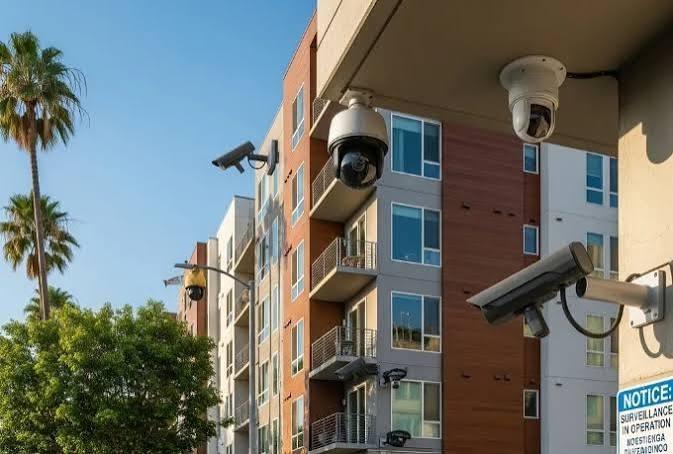
Apartment buildings and residential estates require reliable security systems to protect residents, visitors, property, vehicles and shared facilities. With multiple occupants, common access points, parking areas, shared corridors and external boundaries, residential developments face security challenges that require more than a few cameras installed around the main entrance.
CCTV installation for apartment buildings and residential estates provides property developers, landlords, estate managers and residential property owners with an effective way to monitor common areas, discourage unauthorised access, investigate security incidents and improve visibility across residential premises.
In Uganda, the growth of apartments, gated communities and multi-unit residential developments in Kampala, Wakiso, Entebbe and other urban areas has increased the importance of professionally planned residential security systems. Whether managing a small apartment block or a large residential estate, choosing the right CCTV solution can help protect shared spaces and support more effective property management.
Modern CCTV systems use high-definition IP cameras, intelligent video analytics, network video recorders, secure remote monitoring and integration with access control systems. When properly designed, these technologies provide surveillance coverage across important areas without unnecessarily interfering with residents’ privacy.
This guide explains how CCTV installation works for apartment buildings and residential estates, where cameras should be installed, which camera types are suitable, how much installation may cost in Uganda and what property owners should consider when choosing a CCTV installation company.
1. Why Apartment Buildings and Residential Estates Need CCTV Systems
Residential properties have several shared spaces where security incidents can occur. These include entrances, parking areas, staircases, lifts, corridors, perimeter gates and recreational facilities.
A professionally designed CCTV system helps property managers monitor these areas and respond more effectively to security concerns.
Improving Residential Security
CCTV cameras provide visibility across shared areas and help security personnel observe activity around the property.
Surveillance can discourage opportunistic theft, vandalism, trespassing and other unwanted behaviour. Recorded footage may also help establish what happened when an incident occurs.
Monitoring Apartment Entrances and Exits
Apartment buildings receive regular visitors, deliveries, contractors, maintenance personnel and residents.
CCTV cameras positioned around entrances and exits can help monitor movement into and out of the building.
Where appropriate, cameras can be integrated with access control systems to provide additional visibility around controlled entry points.
Protecting Vehicles in Residential Parking Areas
Vehicle parking areas are important surveillance locations in apartment buildings and residential estates.
Cars and motorcycles may be vulnerable to theft, vandalism, accidental damage and disputes involving parking spaces.
Strategically positioned cameras can monitor vehicle entrances, parking bays, driveways and selected pedestrian routes.
Monitoring Shared Facilities
Residential developments may include lifts, staircases, corridors, reception areas, gardens, playgrounds, swimming pool access points, gyms and community halls.
CCTV can help property managers monitor appropriate shared spaces and investigate incidents involving damage, unauthorised access or misuse of facilities.
Camera placement should be carefully planned to protect private residential spaces.
Supporting Estate Management
Property managers and security teams often need to oversee several buildings, gates and common areas.
A centralised CCTV system can make it easier for authorised personnel to monitor selected locations from a security office or approved remote device.
Investigating Security Incidents
When theft, vandalism, unauthorised entry or property damage occurs, recorded video may help investigators understand the circumstances.
A properly configured recording system should provide clear footage, accurate timestamps and controlled access to recordings.
2. Best Places to Install CCTV Cameras in Apartment Buildings
The effectiveness of an apartment CCTV system depends heavily on camera placement.
Installing cameras in the wrong locations may leave important areas unmonitored while producing unnecessary footage from locations that do not contribute meaningfully to security.
The following areas should be considered when designing a surveillance system for an apartment building.
Main Building Entrance
<AsyncImage query=”modern apartment building main entrance CCTV security dome camera ceiling” aspectRatio=”16:9″ width=”100%”/>
The main entrance is one of the most important locations for CCTV installation.
A camera positioned appropriately can monitor people entering and leaving the building, reception activity and movement around the entrance.
Where identification is required, the camera should be selected and positioned to capture sufficient facial detail under the actual lighting conditions.
Reception and Lobby Areas
Reception areas may experience frequent interaction between residents, visitors, delivery personnel and security staff.
CCTV can help monitor activity around reception desks, waiting areas and shared entrance spaces.
The camera layout should avoid unnecessary monitoring of private conversations or sensitive information displayed on reception screens.
Staircases and Corridors
Shared staircases and corridors provide access to individual apartments and other building facilities.
Cameras may be installed in suitable common areas to monitor movement, investigate damage and discourage unauthorised activity.
However, camera angles must be carefully designed so they do not unnecessarily capture the interiors of apartments or private residential activities.
Lift Lobbies and Lift Entrances
Lift areas are important shared spaces in multi-storey apartment buildings.
CCTV cameras positioned around lift entrances and appropriate lobby areas can help monitor movement between floors.
Where cameras are considered inside lifts, the property manager should assess the privacy implications, building policies and applicable legal requirements.
Parking Areas and Basement Garages
<AsyncImage query=”modern residential apartment basement parking CCTV surveillance camera” aspectRatio=”16:9″ width=”100%”/>
Parking facilities may include basement garages, outdoor parking bays and multi-level parking structures.
Cameras should be positioned to monitor:
- Vehicle entry and exit points.
- Parking bays and driveways.
- Pedestrian access routes.
- Garage entrances.
- Areas with limited visibility.
- Vehicle circulation routes.
Lighting, vehicle movement and structural columns should be considered when selecting camera positions.
Perimeter Walls and Estate Boundaries
For gated residential estates, CCTV cameras can help monitor perimeter walls, boundary gates, pedestrian entrances and vulnerable external sections.
Outdoor cameras should have suitable weather protection and be positioned to provide useful views of the intended surveillance area.
Gatehouses and Security Checkpoints
Gatehouses are important control points in residential estates.
Cameras can monitor visitor registration areas, vehicle access, pedestrian gates and security personnel’s workspaces.
Where vehicle number plate capture is required, dedicated ANPR/LPR equipment may be more appropriate than an ordinary CCTV camera.
Shared Recreational Facilities
Apartment complexes and residential estates may have swimming pools, gardens, playgrounds, gyms and community halls.
Cameras can be installed at appropriate entrances and shared access routes to monitor security and facility access.
They should not be positioned to intrude into changing rooms, bathrooms or other private spaces. Special care is also required around swimming pools and children’s recreational areas.
3. CCTV Solutions for Different Types of Residential Developments
Different residential developments have different layouts, occupancy levels and security requirements. CCTV systems should be designed according to the type and size of the property.
CCTV for Small Apartment Buildings
Small apartment buildings may have a single entrance, a few floors, shared corridors and a limited parking area.
A suitable system may include cameras at the main entrance, reception, staircase access points, parking area and external perimeter.
The installation should provide sufficient coverage without unnecessary complexity.
CCTV for Multi-Storey Apartment Buildings
Multi-storey residential buildings may have several entrances, multiple lift lobbies, basement parking and shared facilities.
These properties may require a larger network-based CCTV system with centralised recording and monitoring.
IP cameras are particularly useful where multiple floors and buildings need to be connected to a common surveillance platform.
CCTV for Gated Residential Estates
<AsyncImage query=”modern gated residential estate entrance security gate CCTV cameras landscaped houses” aspectRatio=”16:9″ width=”100%”/>
Gated estates often have perimeter walls, vehicle entrances, pedestrian gates, internal roads, parking areas and shared recreational facilities.
A comprehensive surveillance design may combine fixed cameras at important locations, PTZ cameras for selected large open areas and dedicated cameras for vehicle identification.
CCTV for Luxury Apartments and Residential Complexes
High-end residential developments may require more advanced surveillance features, including high-resolution cameras, secure access control, central monitoring, visitor management and remote viewing.
The design should balance security requirements with residents’ expectations of privacy and comfort.
CCTV for Mixed-Use Residential Developments
Some developments combine apartments with retail shops, offices, restaurants and other commercial facilities.
These properties may require separate surveillance zones for residential entrances, commercial areas, shared parking and service access points.
Access permissions and video management should reflect the different responsibilities of property managers and commercial tenants.
4. Types of CCTV Cameras Suitable for Apartment Buildings and Residential Estates
Selecting appropriate cameras is important for achieving useful surveillance coverage.
The best camera depends on the location, lighting, distance, viewing angle, environmental conditions and level of detail required.
IP CCTV Cameras
<AsyncImage query=”IP CCTV camera installed modern apartment building hallway residential security” aspectRatio=”16:9″ width=”100%”/>
Internet Protocol cameras transmit digital video over a network and are widely used in modern residential surveillance systems.
Their advantages include:
- High-definition video recording.
- Network-based system management.
- Remote monitoring through authorised devices.
- Integration with compatible video management systems.
- Flexible expansion across multiple buildings.
- Support for selected intelligent video analytics.
IP CCTV is suitable for apartment buildings and estates that require centralised monitoring and future expansion.
Dome CCTV Cameras
Dome cameras are commonly used in indoor shared spaces such as reception areas, corridors, lift lobbies and covered entrances.
Their compact design makes them suitable for locations where a discreet installation is preferred.
Bullet CCTV Cameras
<AsyncImage query=”outdoor bullet CCTV security cameras installed on apartment residential building exterior” aspectRatio=”16:9″ width=”100%”/>
Bullet cameras are commonly used for outdoor surveillance.
They may be installed around perimeter walls, parking entrances, building exteriors and estate access roads.
Depending on the model, they may include infrared illumination, weather-resistant housing and wide dynamic range.
PTZ CCTV Cameras
Pan-tilt-zoom cameras allow authorised operators to move the camera and zoom in on selected areas remotely.
They can be useful in large residential estates, open parking areas and extensive outdoor spaces.
However, a PTZ camera only monitors the direction in which it is currently pointing. Fixed cameras should provide continuous coverage of critical access points and other important locations.
Night Vision CCTV Cameras
Residential developments may require surveillance during night-time hours when lighting is limited.
Night vision cameras use infrared illumination or other low-light technologies to support recording in darker areas.
They may be suitable for external entrances, parking areas, perimeter boundaries and poorly illuminated shared spaces.
Panoramic CCTV Cameras
Panoramic cameras provide a wide field of view and may be useful in large lobbies, open parking areas and selected shared spaces.
The image must be evaluated to ensure that it provides adequate detail for the intended surveillance purpose.
ANPR/LPR Cameras for Residential Estate Gates
Automatic Number Plate Recognition and License Plate Recognition cameras are designed to capture and process vehicle registration plates.
They may be used at estate entrances to support vehicle identification and integration with compatible access control platforms.
These systems require suitable camera positioning, lighting and testing with locally used number plates. An ordinary CCTV camera does not automatically provide reliable number plate recognition.
5. Essential Features to Consider When Choosing Residential CCTV Systems
A reliable CCTV system should be selected based on more than camera resolution or purchase price.
Property owners and estate managers should consider the following features.
High-Definition Video Quality
High-resolution cameras can capture more image detail, which may assist when reviewing incidents.
However, resolution alone does not guarantee identification. Camera distance, lens selection, viewing angle, lighting and movement also influence image quality.
Wide Dynamic Range (WDR)
Residential entrances may experience strong differences between outdoor sunlight and indoor lighting.
Wide Dynamic Range technology helps manage bright and dark areas within the same scene.
This can improve visibility at building entrances, reception areas and parking access points.
Motion Detection and Intelligent Analytics
Some modern CCTV systems support features such as:
- Motion detection.
- Line-crossing detection.
- Intrusion detection.
- Restricted-area monitoring.
- People and vehicle classification.
- Loitering detection.
- Selected crowd and occupancy analytics.
These features can help security personnel identify relevant activity.
However, analytics may generate false alerts or miss events. Their accuracy depends on the equipment, environment, camera positioning and configuration.
Night-Time Performance
Cameras should be selected according to the actual lighting conditions at the property.
Infrared illumination, low-light sensors and suitable external lighting may improve surveillance in poorly illuminated locations.
Weather Resistance
Outdoor cameras should be suitable for exposure to rain, dust, humidity and temperature changes.
Choose appropriate environmental protection ratings and ensure that mounting, cable connections and enclosures are installed correctly.
Secure Video Storage
A CCTV system should have sufficient recording capacity to meet the property’s retention requirements.
Storage needs depend on camera quantity, image resolution, frame rate, compression, recording schedules and retention periods.
Remote Monitoring
Authorised property managers and security personnel may need to view cameras remotely.
Remote access should be configured securely, using strong passwords, individual user accounts, appropriate permissions and multi-factor authentication where supported.
Power Backup
Power interruptions can affect CCTV recording and monitoring.
Depending on the property, a suitable system may require UPS equipment, surge protection and integration with an available backup power arrangement.
6. Wired vs Wireless CCTV Installation for Residential Properties
One important decision when planning apartment CCTV installation is whether to use wired or wireless cameras.
Both technologies have applications, but the best choice depends on the building layout, existing infrastructure and reliability requirements.
| Feature | Wired CCTV | Wireless CCTV |
|---|---|---|
| Connection | Physical network or video cable | Wireless network |
| Reliability | Generally suitable for permanent installations | Depends on wireless coverage and interference |
| Installation | Requires cable routing | May reduce data cabling |
| Multi-storey buildings | Suitable with structured cabling | Requires careful signal planning |
| Expansion | May require additional cabling | Can be easier in suitable locations |
| Power | Requires a power source or PoE | Still requires power unless supported by a battery or solar system |
| Security | Network security still required | Wireless encryption and network security are essential |
For most permanent apartment and residential estate installations, wired IP CCTV systems are a practical choice because they provide structured connections and can support centralised recording.
Wireless cameras may be suitable for selected external locations where cable installation is difficult.
However, wireless CCTV should not be treated as a solution that requires no infrastructure. Power, signal coverage and cybersecurity remain important considerations.
7. Integrating CCTV with Access Control Systems in Apartment Buildings
CCTV is more effective when it works alongside other residential security technologies.
Integrating surveillance with access control can improve visibility around entrances and restricted areas.
CCTV and Access Control
<AsyncImage query=”modern apartment building access control card reader security entrance CCTV camera” aspectRatio=”16:9″ width=”100%”/>
Access control systems regulate entry into buildings, parking facilities and restricted shared spaces.
Depending on the equipment, residents may use access cards, PIN codes, mobile credentials or other authorised methods.
When integrated with CCTV, access events can be associated with relevant video footage, making it easier to review selected entry and exit activities.
CCTV and Video Intercom Systems
Video intercom systems allow residents or security personnel to communicate with visitors before granting access.
When compatible systems are integrated, video surveillance can provide additional visibility around visitor entrances and reception areas.
CCTV and Automatic Gate Systems
Some gated estates use automatic barriers or motorised gates.
CCTV can monitor vehicle entry and exit points, while access control systems manage permission to enter.
The gate mechanism should retain suitable safety devices and manual override arrangements. CCTV should not replace vehicle safety sensors.
CCTV and Intruder Alarm Systems
Intruder alarms can detect selected security events, such as unauthorised entry into protected rooms or buildings.
Integration with CCTV may allow associated camera views or recordings to be displayed when an alarm is triggered.
Centralised Security Monitoring
Large apartment complexes and gated estates may require a central security control room.
A video management system can allow authorised security staff to monitor selected cameras across different buildings, entrances and shared facilities.
8. CCTV Installation Process for Apartment Buildings and Residential Estates
A successful CCTV project should begin with a proper assessment of the property rather than selecting cameras without understanding the site’s security requirements.
The following steps help guide a professional installation.
Step 1: Conduct a Property Security Assessment
The installer should examine the building or estate to identify important security locations.
The assessment may include:
- Main entrances and exits.
- Reception and lobby areas.
- Parking facilities.
- Corridors and staircases.
- Lift lobbies.
- Perimeter boundaries.
- Shared recreational facilities.
- Visitor access points.
- Areas with limited lighting.
The assessment should also consider residents’ privacy and the property’s existing network and electrical infrastructure.
Step 2: Prepare a CCTV Camera Layout
The proposed camera layout should show camera positions, viewing directions, coverage areas and equipment locations.
The design should minimise blind spots and avoid unnecessary duplication.
It should also identify areas where additional lighting or specialist cameras may be needed.
Step 3: Select Suitable Cameras and Equipment
Based on the assessment, the installer should recommend suitable cameras, recorders, storage devices, network switches, cabling and monitoring equipment.
Equipment should be appropriate for each installation location.
Step 4: Install Cabling and Network Infrastructure
Cable routes should be planned to protect the system and maintain a neat installation.
Multi-storey apartment buildings may require structured cabling, network cabinets, PoE switches and fibre-optic connections between buildings or floors.
Cables should be protected from physical damage and installed in accordance with relevant electrical and building requirements.
Step 5: Mount and Configure Cameras
Cameras should be mounted securely at appropriate heights and angles.
Configuration may include image resolution, recording schedules, motion detection, time synchronisation, user permissions and remote access.
Step 6: Configure Recording and Monitoring
The recording system should be configured according to the agreed retention requirements.
For large estates, centralised monitoring may be required to allow authorised security personnel to view selected locations.
Step 7: Test and Commission the System
Every camera should be tested to confirm that it provides the intended coverage.
Testing should include:
- Day and night image quality.
- Recording and playback.
- Network connectivity.
- Motion detection and analytics.
- Remote viewing.
- Storage operation.
- User access permissions.
- Power backup arrangements where applicable.
Step 8: Handover and User Training
The property manager or designated security team should receive relevant operating instructions.
Handover should explain how to view live footage, search recordings, export authorised video evidence, manage user accounts and report system faults.
9. CCTV Installation Costs for Apartment Buildings and Residential Estates in Uganda
The cost of installing CCTV cameras in apartment buildings and residential estates in Uganda varies according to the size of the development, equipment specifications and installation requirements.
A small apartment block with a few common areas may require a relatively straightforward CCTV system. A large gated estate with multiple buildings, parking facilities, perimeter walls and central monitoring may require a much more extensive installation.
The main cost factors include the following.
Number of Cameras Required
The number of cameras affects equipment, cabling, storage and installation costs.
A larger development may require more cameras to cover entrances, corridors, parking facilities, perimeter boundaries and shared amenities.
The correct camera quantity should be based on the required coverage rather than an arbitrary number.
Type of CCTV Cameras
Different cameras have different prices depending on their capabilities.
Standard IP cameras, dome cameras, bullet cameras, PTZ cameras, panoramic cameras and ANPR/LPR cameras serve different purposes.
Specialist cameras may require additional equipment and configuration.
Size and Layout of the Property
The number of floors, distance between buildings, parking design and complexity of the property affect installation requirements.
Long cable routes and multiple buildings may require additional network infrastructure.
Cabling and Network Infrastructure
Costs may include network cables, conduits, fibre-optic connections, network switches, cabinets and other accessories.
If the property has an existing network, some infrastructure may be reusable following a technical assessment.
Recording and Storage Capacity
The cost of storage depends on camera quantity, recording quality, frame rate and retention requirements.
Properties requiring longer retention periods may need larger storage capacity.
Remote Monitoring and Access Control Integration
Remote monitoring and integration with access control, video intercoms or automatic gates may increase system design and configuration costs.
Power Backup and Protection
UPS systems, surge protection and other power arrangements may be required depending on the reliability of the existing electrical supply.
Installation Complexity
Multi-storey buildings, concealed cable routes, high mounting positions and occupied residential premises may require additional installation planning and labour.
Maintenance Requirements
Property managers should consider the cost of routine maintenance, troubleshooting, software updates, cleaning and replacement of faulty equipment.
For an accurate quotation, request a site assessment and a detailed proposal showing camera locations, equipment specifications, storage requirements, network infrastructure and installation scope.
10. Common CCTV Installation Mistakes in Apartment Buildings and Estates
Poorly planned surveillance can leave residential properties with security gaps, unnecessary expenses and privacy concerns.
Property owners and estate managers should avoid the following mistakes.
Installing Cameras Without a Security Assessment
Cameras should be placed according to actual security risks and the property’s layout.
A site assessment helps identify priority areas and reduce unnecessary camera installations.
Leaving Important Entrances Unmonitored
Main entrances, pedestrian gates, vehicle gates and other access points should be assessed carefully.
Poor camera angles may make it difficult to identify activity around these locations.
Using Low-Quality Cameras
Low-quality cameras may produce unclear footage, particularly at night or in challenging lighting conditions.
Select cameras according to the level of detail required.
Ignoring Parking Area Coverage
Parking areas often contain valuable vehicles and experience frequent movement.
Camera placement should consider vehicle entrances, exits, parking bays and pedestrian routes.
Overlooking Network Infrastructure
Large apartment buildings may require sufficient network capacity to support many IP cameras.
Inadequate switches, poor cabling and unreliable connections can affect recording and monitoring.
Failing to Secure Remote Access
Default passwords and shared user accounts can expose CCTV systems to unauthorised access.
Use individual accounts, strong authentication and appropriate permissions.
Ignoring Residents’ Privacy
Cameras should not unnecessarily monitor apartment interiors, bathrooms, changing rooms or other private spaces.
Estate managers should establish clear surveillance policies and inform residents and visitors about monitoring.
Neglecting Maintenance
Dust, moisture, damaged cables, failed storage devices and incorrect settings can reduce CCTV performance.
Regular inspections help maintain reliable operation.
11. CCTV Maintenance for Apartment Buildings and Residential Estates
CCTV systems need regular maintenance to ensure that cameras and recording equipment continue working correctly.
Property managers should establish a maintenance programme that includes:
- Cleaning camera lenses and housings.
- Inspecting external camera mounts.
- Checking cable connections and conduits.
- Confirming that all cameras are recording.
- Testing live viewing and recorded playback.
- Checking storage capacity and retention settings.
- Inspecting network switches and power supplies.
- Testing UPS and surge protection equipment.
- Reviewing motion detection and analytics settings.
- Updating firmware and software where appropriate.
- Reviewing user accounts and access permissions.
- Testing the export of authorised recordings.
Outdoor cameras may require more frequent inspection because they are exposed to rain, dust and other environmental conditions.
Property managers should also review the camera layout whenever a building is renovated, parking arrangements change or new shared facilities are introduced.
12. CCTV Privacy and Data Protection Requirements in Uganda
CCTV installation in apartment buildings and residential estates must balance security with the privacy rights of residents, visitors, workers and contractors.
Video footage that identifies or can identify an individual may constitute personal data under Uganda’s Data Protection and Privacy Act, 2019.
Property owners, estate managers and other responsible organisations should consider the following.
Establish a Clear Surveillance Purpose
Identify why CCTV is being installed. Examples include monitoring common entrances, protecting shared property, managing vehicle access and investigating security incidents.
Inform Residents and Visitors
Appropriate notices should inform people that CCTV surveillance is taking place in monitored areas.
Residents should also be given clear information about the property’s surveillance arrangements.
Avoid Monitoring Private Residential Spaces
Cameras should generally focus on shared areas where there is a legitimate security purpose.
Avoid positioning cameras to capture apartment interiors, private balconies or other spaces where residents reasonably expect privacy.
Bathrooms, changing rooms and similar private facilities must not be monitored.
Control Access to Video Footage
Only authorised individuals should be able to view, download or share recordings.
Property managers should establish procedures for handling requests for footage and investigating incidents.
Establish Appropriate Retention Periods
Recordings should be retained according to a defined policy that reflects the property’s security needs and applicable legal obligations.
Footage should not be kept indefinitely without justification.
Protect the CCTV Network
Change default passwords, restrict user access, update software and secure remote connections.
Where appropriate, CCTV equipment should be separated from general residential networks to reduce cybersecurity risks.
For developments with extensive surveillance or more complex processing arrangements, property managers should obtain appropriate data protection guidance.
13. How to Choose the Best CCTV Installation Company in Uganda
Choosing the right CCTV installation company is important for ensuring that an apartment building or residential estate receives a reliable and appropriately designed surveillance system.
Before selecting an installer, consider the following factors.
Experience with residential developments: Look for a provider that understands apartment buildings, multi-storey properties, gated estates and shared residential facilities.
Professional site assessment: The installer should inspect the property before recommending camera quantities and equipment.
Camera placement expertise: Ask how the proposed layout will cover entrances, parking facilities, corridors, staircases and perimeter boundaries.
Suitable equipment: Cameras should be selected according to lighting, weather exposure, distance and the level of image detail required.
Network and storage knowledge: The installer should understand structured cabling, network capacity, video storage and secure remote monitoring.
Integration capability: Where required, the company should be able to plan CCTV integration with access control, video intercoms and automatic gate systems.
Privacy awareness: The installer should understand the importance of avoiding unnecessary surveillance of private residential spaces.
Testing and commissioning: The completed system should be tested before handover.
Maintenance and technical support: Ask about inspections, repairs, troubleshooting and ongoing support.
Clear project documentation: The proposal should explain the equipment, camera locations, installation scope and recording arrangements.
A reliable installation partner should recommend a solution that matches the property’s security needs, operational requirements and available budget.
14. Benefits of Professional CCTV Installation for Property Developers and Estate Managers
Investing in a professionally designed CCTV system can provide several benefits for residential developments.
Better Security Management
CCTV provides visual monitoring of important shared areas and helps security personnel identify incidents more efficiently.
Improved Protection of Shared Property
Surveillance can help monitor parking facilities, reception areas, shared equipment, gardens and other communal facilities.
More Effective Visitor and Vehicle Monitoring
Cameras at entrances and parking access points can improve visibility around visitor movements and vehicle activity.
Centralised Monitoring Across Multiple Buildings
Large estates can use centralised video management to monitor selected cameras from one authorised location.
Support for Incident Investigation
Recorded footage can help property managers review reported incidents and establish relevant details.
Better Planning for Future Security Expansion
A well-designed network-based CCTV system can often be expanded as residential developments grow or add new facilities, subject to infrastructure capacity.
15. CCTV Installation for Apartment Buildings and Residential Estates by Daltrevco
Residential security requires more than simply installing cameras around a building. The system should be designed around the development’s entrances, shared facilities, parking arrangements, perimeter boundaries and privacy requirements.
Daltrevco provides a point of contact for property owners, developers, landlords and estate managers exploring CCTV and security system requirements for residential and commercial premises in Uganda.
Whether you are planning surveillance for a multi-storey apartment building, a gated residential community, a rental property or a large residential estate, careful planning is important when selecting cameras, designing coverage, establishing recording capacity and considering integration with other security technologies.
Visit the Daltrevco website to learn more about the company and explore its services.
You can also visit the Daltrevco blog for additional information and practical guidance on security and building systems.
Planning CCTV installation for an apartment building or residential estate in Uganda? Contact Daltrevco to discuss your property requirements and explore a suitable surveillance solution.
Frequently Asked Questions About CCTV Installation for Apartment Buildings and Residential Estates
1. Why is CCTV installation important for apartment buildings?
CCTV installation helps apartment buildings monitor entrances, parking areas, corridors, staircases and other shared facilities. It can discourage unauthorised access, support security management and provide footage for investigating incidents.
2. Where should CCTV cameras be installed in an apartment building?
Important locations include main entrances, reception areas, lift lobbies, shared corridors, staircases, parking facilities, basement garages and selected external areas. Camera placement should reflect security needs while protecting residents’ privacy.
3. What is the best CCTV system for an apartment building?
IP CCTV systems are a popular option because they support digital video recording, network-based management and remote monitoring. The best system depends on the building’s size, number of cameras, network infrastructure and security requirements.
4. How many CCTV cameras does an apartment building need?
The number depends on the number of floors, entrances, parking areas, shared facilities and required coverage. A site assessment is the best way to determine the appropriate camera quantity.
5. Can CCTV cameras be installed in apartment corridors?
Yes. Shared corridors may be monitored where there is a legitimate security purpose. Cameras should be positioned carefully to avoid unnecessary surveillance of apartment interiors and private activities.
6. Can CCTV cameras be installed inside apartment lifts?
Cameras may be installed inside lifts where justified, subject to appropriate privacy assessment, building policies and applicable legal requirements. Property managers should inform residents and ensure that footage access is controlled.
7. Can CCTV monitor apartment parking areas?
Yes. Cameras can monitor vehicle entrances, exits, parking bays, basement garages and pedestrian routes. Appropriate lighting and camera positioning are important for useful footage.
8. Are wireless CCTV cameras suitable for residential estates?
Wireless cameras can be suitable for selected locations where cabling is difficult. However, reliable power, network coverage, interference and cybersecurity must be considered. Wired IP systems are often preferred for permanent installations.
9. Can residents view CCTV cameras on their phones?
Some systems support remote viewing through authorised mobile applications. However, access should be controlled by the property manager or responsible organisation to protect residents’ privacy and prevent unauthorised sharing.
10. Can CCTV be integrated with apartment access control systems?
Yes. Compatible systems can associate selected access events with relevant video footage. This can help security teams review activity around controlled entrances and restricted areas.
11. Can CCTV cameras monitor visitors entering a gated estate?
Yes. Cameras can monitor visitor entrances, reception points, pedestrian gates and vehicle access routes. A suitable visitor management or access control system can complement the surveillance system.
12. What CCTV cameras are best for outdoor residential surveillance?
Weather-resistant bullet cameras and suitable outdoor IP cameras are commonly used for perimeter boundaries, entrances and parking areas. PTZ cameras may also be useful in selected large open spaces.
13. Can CCTV cameras work at night in residential estates?
Yes. Night vision and low-light cameras can support surveillance in poorly illuminated areas. Their performance depends on lighting, camera specifications, distance and environmental conditions.
14. How much does CCTV installation cost for an apartment building in Uganda?
The cost depends on the number and type of cameras, building size, cabling, network infrastructure, storage, remote monitoring and installation complexity. A site assessment is necessary to establish an accurate quotation.
15. Can CCTV be integrated with automatic residential gates?
Yes. Compatible CCTV and access control systems can work alongside automatic gates to monitor vehicle entrances and manage authorised access. Appropriate gate safety devices must remain in place.
16. How long should apartment CCTV footage be stored?
The retention period depends on the property’s security requirements, available storage and applicable legal obligations. Property managers should establish a clear retention policy and avoid keeping recordings longer than necessary.
17. Is CCTV allowed in residential estates in Uganda?
CCTV may be used for legitimate security purposes, but surveillance must respect applicable data protection and privacy requirements. People should be appropriately informed, footage access controlled and private spaces protected.
18. Should CCTV cameras be installed in apartment bathrooms or changing rooms?
No. Bathrooms, changing rooms and other highly private areas should not be monitored. Surveillance should focus on appropriate shared areas where there is a legitimate security purpose.
19. How often should residential CCTV systems be maintained?
Maintenance frequency depends on equipment and environmental conditions. Regular checks should cover camera cleanliness, recording operation, network connections, storage capacity, power supplies and remote access.
20. Which company can help with CCTV installation for apartment buildings in Uganda?
Property developers and estate managers should choose an installer that can assess the property, design camera coverage, recommend suitable equipment, configure recording and network infrastructure, test the system and explain maintenance requirements. Daltrevco is a point of contact for businesses and property owners exploring CCTV and security system requirements in Uganda.
Conclusion
CCTV installation for apartment buildings and residential estates is an important investment in residential security and property management. From monitoring entrances and parking areas to protecting shared facilities and estate boundaries, a properly designed surveillance system helps improve visibility across residential premises.
The best CCTV solution depends on the building’s layout, number of occupants, access arrangements, lighting conditions and security risks. Selecting suitable cameras, planning strategic coverage, establishing secure video storage and maintaining the system regularly are essential for reliable performance.
For apartment developers, landlords and estate managers in Uganda, professional CCTV planning provides a practical starting point for creating more secure residential environments.
Contact Daltrevco to discuss CCTV security requirements for your apartment building or residential estate.

