
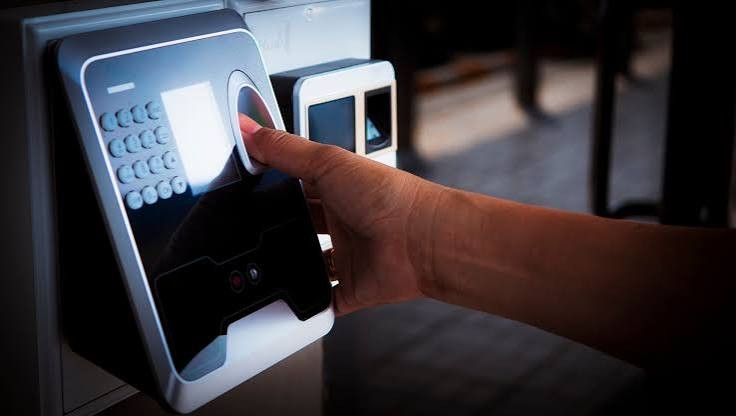
Security requirements in modern offices, commercial buildings and industrial facilities are becoming more demanding. Businesses need reliable ways to identify authorised individuals, protect restricted areas and manage access without depending entirely on traditional keys or shared access codes.
Biometric access control systems provide a modern approach to building security by using unique human characteristics to verify identity before granting access. Technologies such as fingerprint scanning and facial recognition allow organisations to manage entry using biometric credentials instead of relying exclusively on physical access cards or PIN codes.
In Uganda, biometric access control technology is relevant to corporate offices, banks, hospitals, hotels, universities, warehouses, factories and other facilities that require controlled entry. These systems can help protect confidential information, secure valuable equipment and improve the management of employee and visitor access.
However, fingerprint and facial recognition technologies are not identical. Each has different operating requirements, advantages, limitations, installation considerations and privacy implications. Choosing the right solution requires understanding how the technologies work and how they fit the building’s security requirements.
This guide explains biometric access control systems, compares fingerprint and facial recognition technology, explores their commercial applications and discusses installation, costs, maintenance and important considerations for businesses in Uganda.
What Are Biometric Access Control Systems?
Biometric access control systems are electronic security solutions that identify or verify individuals using measurable biological or behavioural characteristics.
Unlike traditional access systems that depend on keys, cards or PIN codes, biometric systems use characteristics associated with an individual to determine whether access should be granted.
Common biometric technologies include:
- Fingerprint recognition.
- Facial recognition.
- Iris recognition.
- Retina recognition.
- Palm recognition.
- Voice recognition.
Fingerprint and facial recognition are among the most widely recognised biometric technologies used in commercial access control applications.
A biometric access control system generally involves enrolling authorised users, capturing biometric information, comparing a presented biometric sample against an enrolled template and making an access decision.
When verification is successful, the system communicates with an electronic locking mechanism to allow entry. If verification fails, access is denied or referred for another approved verification method.
The system can also record access events, depending on its configuration.
How Do Biometric Access Control Systems Work?
Biometric access control systems use specialised sensors, processing software and electronic locking devices to manage entry.
Although the technology differs between fingerprint and facial recognition systems, the general process follows several stages.
1. User Registration and Enrolment
Before someone can use a biometric access control system, their biometric credential must be enrolled.
For a fingerprint system, an authorised administrator captures the user’s fingerprint using a scanner.
For a facial recognition system, the system captures suitable facial images or data according to the manufacturer’s enrolment process.
The system then creates a digital biometric template for subsequent comparison.
2. Biometric Verification
When the individual approaches a controlled entrance, the system captures a new biometric sample.
For fingerprint access control, the person places their finger on the scanner.
For facial recognition, the camera captures the person’s face.
The system processes the sample and compares it with the relevant enrolled template or templates.
3. Access Authorisation
The system determines whether the biometric verification meets its configured acceptance requirements.
It may also check whether the individual has permission to enter that particular door at that time.
For example, an employee may be authorised to enter the main office and their department but not the server room or finance office.
4. Door Release
If the system approves access, it sends a signal to the connected electronic locking mechanism.
Depending on the installation, the door may use an electromagnetic lock, electric strike, electronic mortise lock or another compatible locking device.
5. Access Event Recording
Many biometric access control systems record events such as successful verification, denied access and other configured system activities.
Administrators may review these records to understand access activity and investigate selected security incidents.
An important distinction is that biometric verification and access authorisation are separate functions. A person may be successfully identified but still be denied entry because they do not have permission to enter that particular area.
Types of Biometric Access Control Technology
Different biometric technologies have different requirements and applications. The most suitable choice depends on the security level, number of users, environment, budget and privacy considerations.
1. Fingerprint Access Control Systems
Fingerprint access control systems use the distinctive patterns found on an individual’s fingertip to verify identity.
A fingerprint reader captures the fingerprint and processes its features into a digital template. When the person attempts to enter, the system compares the new scan with the enrolled template.
<AsyncImage query=”professional fingerprint biometric access control reader installed beside modern commercial office door” aspectRatio=”16:9″ width=”100%”/>
How fingerprint recognition works
Fingerprint scanners use different sensing technologies, including:
- Optical scanners: Capture an image of the fingerprint using light and an imaging sensor.
- Capacitive scanners: Detect variations in electrical capacitance across the fingerprint surface.
- Ultrasonic scanners: Use sound waves to capture fingerprint characteristics.
The specific technology affects the scanner’s design, performance and environmental requirements.
Benefits of fingerprint access control
- Does not require users to carry a physical access card.
- Supports individual user enrolment.
- Can be convenient for employees entering controlled areas regularly.
- Works with a range of electronic locking systems.
- Can be incorporated into standalone or networked access control platforms.
- May provide useful access records when properly configured.
Limitations of fingerprint access control
Fingerprint systems also have limitations that businesses should understand.
- Wet, dirty or damaged fingers may affect scanning.
- Some users may have difficulty providing a consistent fingerprint sample.
- Heavy usage can increase the need for reader cleaning and inspection.
- Certain readers may be affected by dust or unsuitable environmental conditions.
- Biometric data must be properly protected.
- A fingerprint reader alone does not guarantee protection against every form of spoofing or credential attack.
Fingerprint access control is commonly considered for office departments, staff entrances, laboratories, records rooms and other restricted facilities.
2. Facial Recognition Access Control Systems
Facial recognition access control systems use specialised cameras and biometric algorithms to analyse facial characteristics and verify an enrolled individual.
The system captures a facial sample and compares it with previously enrolled biometric information.
<AsyncImage query=”modern facial recognition biometric access control terminal at corporate office building entrance” aspectRatio=”16:9″ width=”100%”/>
How facial recognition works
A typical facial recognition process involves:
- Capturing a facial image using a compatible camera.
- Detecting the face within the image.
- Extracting measurable facial characteristics.
- Creating or processing a facial biometric template.
- Comparing the sample with an enrolled template.
- Applying the configured verification and access rules.
Some systems use infrared or depth-sensing technology in addition to visible-light cameras. These features may help improve performance under certain conditions or support presentation-attack detection.
Benefits of facial recognition access control
- Can provide convenient hands-free authentication.
- Reduces dependence on physical access cards.
- Can support efficient access management in busy environments.
- May be suitable for entrances with frequent employee movement.
- Can be integrated with compatible access control platforms.
- Supports individual biometric enrolment and access permissions.
Limitations of facial recognition access control
- Performance can be affected by lighting and camera positioning.
- Face coverings and changes in appearance may affect verification.
- Camera placement and installation quality are important.
- Some systems may produce false matches or reject legitimate users.
- Advanced systems may require higher equipment and software investment.
- Facial biometric information creates significant privacy and data protection responsibilities.
Facial recognition may be considered for suitable corporate entrances, commercial facilities and selected restricted areas where the technology is justified by the security requirements.
3. Iris Recognition Access Control Systems
Iris recognition uses patterns in the coloured ring surrounding the pupil of the eye.
A specialised camera captures the iris pattern and compares it with an enrolled template.
<AsyncImage query=”iris recognition biometric access control scanner commercial security terminal” aspectRatio=”16:9″ width=”100%”/>
Iris recognition can be considered for specialised high-security environments. However, equipment availability, user convenience, installation requirements and overall cost should be evaluated before selection.
4. Palm Recognition Systems
Palm recognition systems use characteristics of the hand, such as palm patterns or vein structures, depending on the technology.
<AsyncImage query=”palm vein biometric access control scanner installed at secure corporate entrance” aspectRatio=”16:9″ width=”100%”/>
These systems may be useful in specialised commercial or institutional environments where the required hardware and software are available.
5. Multimodal Biometric Access Control Systems
Multimodal biometric systems use more than one biometric characteristic to verify an individual.
For example, a system may combine fingerprint and facial recognition or another supported biometric method.
<AsyncImage query=”modern multimodal biometric access control terminal fingerprint and facial recognition office entrance” aspectRatio=”16:9″ width=”100%”/>
The purpose is to provide additional verification options or improve identification performance in suitable applications.
However, multimodal systems may increase equipment costs, enrolment complexity and privacy responsibilities. Businesses should establish whether the additional technology provides a meaningful security benefit.
Fingerprint vs Facial Recognition Access Control: Which Is Better?
Fingerprint and facial recognition are both useful technologies, but they serve different operational requirements.
The best choice depends on the building environment, number of users, expected traffic, security risks and user experience.
| Comparison factor | Fingerprint access control | Facial recognition access control |
|---|---|---|
| Verification method | Fingerprint scan | Facial biometric comparison |
| User interaction | Usually requires touching a reader | Often hands-free |
| Physical contact | Usually required | Generally not required |
| Environmental considerations | Finger condition, dirt and moisture | Lighting, camera position and facial presentation |
| User convenience | Requires finger placement | Can allow users to authenticate while approaching |
| Installation requirements | Suitable reader positioning | Appropriate camera positioning and lighting |
| Privacy considerations | Fingerprint biometric information | Facial biometric information |
| Common applications | Restricted rooms and staff entrances | Office entrances and selected high-traffic areas |
| Equipment requirements | Fingerprint reader and compatible controller | Facial recognition terminal or camera and compatible platform |
When Should You Choose Fingerprint Access Control?
Fingerprint access control may be appropriate when:
- The building has a manageable number of authorised users.
- Employees regularly enter controlled areas.
- A physical interaction with the reader is acceptable.
- The environment is suitable for fingerprint scanning.
- The business wants to reduce dependence on access cards.
- The organisation can implement appropriate biometric privacy safeguards.
When Should You Choose Facial Recognition?
Facial recognition may be appropriate when:
- Hands-free access is an important operational requirement.
- The entrance has suitable lighting and camera positioning.
- The system can handle the expected user traffic.
- The business has assessed privacy and data protection implications.
- The organisation requires a convenient biometric verification option.
- The selected platform offers appropriate security and anti-spoofing features.
Can Fingerprint and Facial Recognition Be Used Together?
Yes. Compatible systems can combine fingerprint and facial recognition technologies.
A business may use facial recognition at a main employee entrance and fingerprint verification at a restricted room, for example.
The design should reflect the security requirements of each access point rather than automatically applying the same technology throughout the building.
Key Components of a Biometric Access Control System
A complete biometric installation requires several interconnected components.
1. Biometric Readers and Terminals
These devices capture fingerprint or facial biometric samples.
The reader’s technology, accuracy, environmental suitability and compatibility with the access control platform should be evaluated before purchase.
2. Access Control Panel
The access control panel communicates with readers, processes access decisions and controls connected door hardware.
Some systems incorporate control functions directly into the biometric terminal, while others use separate controllers.
3. Electronic Door Locks
Electronic locks secure controlled entrances and release when the system authorises access.
Common options include:
- Electromagnetic locks.
- Electric strikes.
- Electronic mortise locks.
- Electric drop bolts.
- Compatible electronic locking devices.
The correct choice depends on door construction, security requirements and emergency exit arrangements.
4. Power Supply and Backup Batteries
Biometric readers, controllers and electronic locks require suitable electrical power.
Backup power may be necessary to support operation during electricity interruptions.
The system should be designed so that each lock behaves appropriately during power failure, including safe emergency egress.
5. Exit Buttons and Emergency Release Devices
Exit devices allow occupants to leave controlled areas from inside.
The design may also include emergency release arrangements and interfaces with compatible fire alarm systems.
These functions must be designed and tested to meet applicable life-safety requirements.
6. Door Sensors
Door sensors monitor whether controlled doors are open or closed.
Depending on the platform, they may help detect doors left open, forced entry or other abnormal conditions.
7. Access Control Management Software
Management software allows authorised administrators to enrol users, configure permissions, manage biometric credentials and review access events.
The available features depend on the system manufacturer and platform.
Applications of Biometric Access Control Systems in Uganda
Biometric technology can support access management across a wide range of commercial and institutional facilities.
1. Corporate Offices
<AsyncImage query=”modern corporate office entrance biometric fingerprint access control system glass doors” aspectRatio=”16:9″ width=”100%”/>
Corporate offices can use biometric access control to manage employee entry and restrict sensitive departments.
Potential applications include:
- Main employee entrances.
- Executive offices.
- Finance departments.
- Human resource offices.
- IT and server rooms.
- Records storage areas.
- Restricted meeting rooms.
Businesses can assign different access permissions based on employees’ responsibilities.
2. Banks and Financial Institutions
Banks require strong security controls around areas containing financial records, cash-handling operations, sensitive equipment and confidential information.
Biometric access control may be considered for selected staff-only entrances and restricted operational areas.
The system should form part of a wider security design involving CCTV, alarms, secure procedures and appropriate physical protection.
3. Hospitals and Healthcare Facilities
Hospitals can use controlled access to manage entry into administrative offices, pharmacies, laboratories, medical records departments and selected clinical areas.
However, healthcare facilities must balance security with patient safety, emergency access and privacy.
Biometric systems should never create unnecessary barriers to urgent medical assistance or safe evacuation.
4. Hotels and Hospitality Facilities
Hotels and hospitality businesses can use biometric access control for selected staff entrances, administration areas, stores and restricted operational rooms.
Guest room access is a separate requirement that should use an appropriate hospitality locking system.
5. Schools and Universities
Educational institutions may use biometric access control for staff entrances, administration offices, laboratories, computer rooms and other restricted facilities.
Any deployment should consider student safeguarding, employee privacy and emergency evacuation requirements.
6. Warehouses and Industrial Facilities
Warehouses and factories may use biometric readers to control entry into restricted areas containing equipment, stock, tools and operational infrastructure.
Fingerprint or facial recognition can help manage authorised employee access, subject to the suitability of the working environment.
7. Government and Institutional Buildings
Selected government and institutional facilities may require controlled access to offices, records rooms and restricted operational areas.
The system should be designed around the organisation’s security classification, operational procedures and applicable legal requirements.
Benefits of Biometric Access Control Systems for Businesses
Investing in biometric access control can offer several operational and security advantages.
Improved Identity Verification
Biometric systems verify a presented biometric characteristic against an enrolled record rather than relying solely on a physical card or shared PIN.
This can reduce some credential-sharing risks, although no biometric system is completely immune to misuse or attack.
Reduced Dependence on Physical Access Cards
Employees do not necessarily need to carry access cards when using biometric authentication.
This can simplify credential management and reduce some problems associated with lost or forgotten cards.
Better Management of Restricted Areas
Businesses can assign access permissions according to employee roles and responsibilities.
This helps limit unnecessary access to sensitive departments and valuable equipment.
Convenient Employee Access
Fingerprint and facial recognition can provide convenient authentication for authorised employees.
The most suitable technology depends on the entrance layout and how frequently people use the system.
Centralised Access Administration
Networked biometric access control platforms can allow authorised administrators to manage users and permissions from a central location.
This can be particularly useful in larger commercial buildings and organisations operating several branches.
Support for Security Investigations
Access records may help administrators review entry attempts and identify unusual access activity.
When combined with compatible CCTV footage, these records can support investigations.
Flexible Security Management
Businesses can update access permissions when employees join, change departments or leave an organisation.
This reduces dependence on traditional lock replacement for every personnel change, although physical security arrangements still require proper management.
Integrating Biometric Access Control with CCTV and Other Security Systems
Biometric access control is most effective when it is part of a coordinated security strategy.
Biometric Access Control and CCTV Integration
CCTV cameras monitor entrances and other areas, while biometric access control verifies authorised users.
Compatible systems may associate access events with video footage from relevant cameras.
This can help security personnel investigate:
- Unauthorised access attempts.
- Forced door openings.
- Suspicious activity near restricted areas.
- Doors left open.
- Selected security incidents involving controlled entrances.
Businesses should ensure that camera positioning respects privacy and does not unnecessarily capture confidential information.
Integration with Intruder Alarm Systems
Biometric access control may be integrated with compatible intruder alarm systems to coordinate security procedures.
For example, authorised access to a restricted room may form part of an approved alarm-management process.
The system must be configured carefully to avoid unintended alarm activation or security weaknesses.
Integration with Fire Alarm Systems
Access control systems may require interfaces with fire alarm systems to release selected doors during emergencies.
The exact arrangement depends on the building design, locking equipment and applicable life-safety requirements.
Emergency exit routes must remain safe and usable regardless of the normal access control procedure.
Integration with Time and Attendance Systems
Some biometric terminals support employee time and attendance functions.
However, attendance recording and physical access control are different applications.
Businesses should confirm that the selected platform supports the required functions and assess employee privacy, accuracy and appropriate use of attendance information.
Integration with Building Management Systems
Compatible access control platforms may integrate with building management systems to support selected building operations.
Integration possibilities vary between manufacturers, so compatibility should be confirmed during system design.
Biometric Access Control Installation Process
Professional installation is essential for ensuring that biometric readers, controllers, electronic locks and software operate reliably.
A typical installation involves the following stages.
Step 1: Conduct a Site Assessment
The first stage involves examining the building and identifying its access control requirements.
The assessment should establish:
- Number of entrances and controlled doors.
- Number of employees and authorised users.
- Areas requiring restricted access.
- Expected entry traffic.
- Door materials and construction.
- Available electrical infrastructure.
- Network connectivity.
- Environmental conditions.
- Emergency exit requirements.
- Future expansion plans.
Step 2: Determine the Appropriate Biometric Technology
The installer and property owner should evaluate whether fingerprint, facial recognition or a combination is appropriate.
The decision should consider user convenience, accuracy requirements, environmental conditions, equipment cost and data protection responsibilities.
Step 3: Design the Access Control System
The system design identifies reader locations, controller positions, electronic locking mechanisms, power supplies and communication infrastructure.
It should also establish access groups, user permissions and emergency release arrangements.
Step 4: Select Compatible Equipment
The appropriate readers, controllers, locks, software and supporting equipment are selected.
Compatibility is particularly important where the biometric system will be integrated with existing CCTV or other security equipment.
Step 5: Install Readers and Electronic Locks
The biometric terminals are installed at suitable locations near the controlled doors.
Electronic locks and associated hardware are fitted according to the door design.
Installers should ensure that equipment is protected from unsuitable environmental conditions and physical damage.
Step 6: Install Cabling and Power Infrastructure
Required power, communication and network connections are installed.
Cables should be routed and protected appropriately, with consideration for future maintenance.
Step 7: Configure the System and Enrol Users
The system is configured with authorised user accounts, biometric templates, access groups and door permissions.
Biometric enrolment should follow secure procedures, with access to enrolment functions limited to authorised personnel.
Step 8: Test and Commission the System
The completed installation should be tested to confirm that:
- Enrolled users can authenticate correctly.
- Unauthorised users are denied access.
- Access permissions are applied correctly.
- Electronic locks operate reliably.
- Exit devices work correctly.
- Door sensors report the correct status.
- Backup power arrangements operate as intended.
- Emergency release functions work correctly.
- Access events are recorded appropriately.
- Any integrated CCTV or alarm functions operate as designed.
Step 9: Train Administrators and Handover the Installation
The business’s authorised personnel should receive training on user enrolment, permission management, access record reviews, basic troubleshooting and system maintenance.
The organisation should also receive relevant system documentation and operating guidance.
Factors That Determine Biometric Access Control Installation Costs in Uganda
The cost of installing biometric access control systems in Uganda depends on the size and complexity of the project.
A small office requiring one fingerprint reader will have different requirements from a multi-storey commercial building with several facial recognition terminals.
The main cost factors include:
1. Type of Biometric Technology
Fingerprint and facial recognition equipment have different hardware, software and installation requirements.
Advanced biometric terminals may include additional security and verification features.
2. Number of Controlled Doors
The number of doors affects the quantity of readers, locks, controllers, power supplies and cabling required.
3. Number of Users
A system supporting a large number of employees may require greater enrolment capacity, management resources and software functionality.
4. Electronic Locking Mechanisms
Different doors require different locking solutions.
Glass doors, metal doors, wooden doors and specialised security doors may require different equipment and installation work.
5. Building Layout and Installation Complexity
Large buildings, long cable routes, multiple floors and difficult installation locations can increase project complexity.
6. Software and Licensing
Some platforms require paid licences, subscriptions or additional software features.
Businesses should consider ongoing charges as well as the initial purchase and installation cost.
7. CCTV and Security Integration
Integrating biometric access control with CCTV, alarms, intercoms or building management systems may require additional hardware and configuration.
8. Power Backup and Network Infrastructure
Backup batteries, power supplies, network equipment and other supporting infrastructure may contribute to the project cost.
9. Maintenance and Technical Support
Businesses should consider the long-term cost of equipment inspection, software updates, repairs, replacement parts and technical support.
For an accurate quotation, the property should first undergo a site assessment to determine the equipment and installation requirements.
Common Biometric Access Control Problems and How to Avoid Them
Although biometric access control can improve security, poor equipment selection, installation or maintenance may reduce system reliability.
Fingerprint Reader Fails to Recognise Users
This may happen because of dirty sensors, wet fingers, damaged fingerprints, incorrect enrolment or unsuitable scanner performance.
Recommended measures:
- Clean the scanner according to manufacturer instructions.
- Re-enrol users where necessary.
- Use suitable readers for the working environment.
- Provide an approved alternative authentication method.
Facial Recognition Fails to Verify Users
Facial recognition may be affected by poor lighting, camera positioning, face coverings, significant appearance changes or unsuitable camera settings.
Recommended measures:
- Position the camera appropriately.
- Provide suitable lighting.
- Use equipment designed for the installation environment.
- Configure appropriate verification settings.
- Provide an alternative access method for unsuccessful verification.
Slow Authentication
Slow verification may result from unsuitable equipment, poor network performance, excessive system load or incorrect configuration.
Businesses should select equipment with sufficient capacity for expected usage and ensure that the network infrastructure is suitable.
Electronic Door Locks Fail to Release
Lock problems may be caused by power interruptions, incorrect wiring, damaged hardware, controller faults or configuration errors.
The installer should inspect the power supply, lock connections, controller and emergency release arrangements.
System Stops Working During Power Interruptions
Biometric readers and electronic locks require reliable electrical power.
Appropriate backup power should be included in the system design, and the behaviour of each door during power failure should be tested.
Unauthorised Access Through Credential Misuse
Biometric systems reduce dependence on shared cards and PINs but do not eliminate every security risk.
Businesses should use appropriate anti-spoofing features, secure administration, system updates and additional security controls where necessary.
Data Protection and Privacy Considerations for Biometric Systems in Uganda
Biometric information is sensitive because it is connected to an individual’s physical characteristics and can be difficult or impossible to replace if compromised.
Businesses deploying fingerprint or facial recognition systems in Uganda should pay particular attention to the Data Protection and Privacy Act, 2019, and applicable regulations.
Before introducing biometric access control, organisations should consider the following responsibilities.
Establish a Lawful Basis for Processing
A business should establish an appropriate legal basis for collecting and processing biometric information.
Employees should not automatically be assumed to have freely consented simply because biometric enrolment is required as part of workplace access procedures.
Where consent is relied upon, its validity and suitability should be assessed carefully.
Explain Why Biometric Information Is Collected
Affected employees and other individuals should receive appropriate information about:
- What biometric information is collected.
- Why it is collected.
- How the system uses it.
- Who can access the information.
- How long the information is retained.
- How individuals can exercise applicable data protection rights.
Protect Biometric Templates and Records
Biometric templates, access logs and related personal information should be protected through appropriate technical and organisational measures.
Access to administrative functions should be restricted to authorised personnel.
Consider Retention and Deletion
Organisations should establish appropriate retention periods and procedures for deleting biometric records when they are no longer required.
For example, an employee’s biometric access record should be handled appropriately when their employment or access authorisation ends.
Evaluate Cloud-Based Systems
Some biometric access control systems store or process information through cloud services.
Businesses should understand where information is stored, how it is protected, who processes it and whether any international data transfers are involved.
Consider Less Intrusive Alternatives
Biometric verification is not automatically necessary for every office entrance.
Where access cards, PINs or another less intrusive solution can meet the security requirement, organisations should assess whether collecting biometric information is justified.
Businesses should seek appropriate data protection or legal advice when planning deployments involving biometric information, particularly where large numbers of employees or other individuals are affected.
Common Mistakes to Avoid When Installing Biometric Access Control Systems
Selecting biometric technology without understanding the building’s requirements can lead to unnecessary expenses and unreliable security.
Avoid these common mistakes:
- Choosing technology based only on price: Cheap equipment may lack the performance, capacity or security features required.
- Ignoring environmental conditions: Dust, moisture, lighting and temperature can affect equipment performance.
- Installing readers in unsuitable positions: Poor placement can make authentication difficult.
- Ignoring emergency exits: Electronic locks must never compromise safe evacuation.
- Failing to provide alternative authentication: Legitimate users may occasionally be unable to complete biometric verification.
- Overlooking data protection: Biometric information must be handled responsibly and securely.
- Using incompatible equipment: Readers, controllers, locks and software must work together.
- Neglecting maintenance: Regular inspections help identify problems before they disrupt building operations.
- Giving too many people administrator privileges: Administrative access should be restricted and monitored.
- Failing to plan for future expansion: The system should accommodate anticipated changes in users, doors and business operations.
How to Choose the Best Biometric Access Control System for Your Business
Before investing in biometric security, property owners and business managers should evaluate the following factors.
Security requirements: Identify which entrances and rooms need biometric verification and determine the appropriate level of security.
Number of users: Consider the number of employees, contractors and other authorised individuals who will use the system.
Technology performance: Evaluate fingerprint or facial recognition performance in the actual operating environment.
User convenience: Consider whether employees can comfortably use the selected technology throughout the working day.
System capacity: Ensure that the platform can support the required number of users and controlled doors.
Integration capability: Confirm compatibility with CCTV, alarms, electronic locks and other security equipment.
Power and network reliability: Assess backup power, offline operation and communication arrangements.
Privacy and legal compliance: Determine whether biometric collection is necessary and how the information will be protected.
Maintenance and support: Choose equipment that can be properly serviced and supported.
Scalability: Consider whether the system can accommodate additional departments, entrances or business locations.
Why Professional Biometric Access Control Installation Matters
Biometric access control is more than installing a fingerprint scanner or facial recognition terminal beside a door.
The complete solution must combine suitable biometric equipment, electronic locks, controllers, power supplies, network connections and management software.
Professional installation helps ensure that the system is appropriate for the building and that all components work together correctly.
It also helps address important issues such as user permissions, emergency exit arrangements, equipment compatibility, backup power, privacy and future maintenance.
For commercial properties in Kampala, Wakiso, Entebbe and other parts of Uganda, a site assessment is an important first step towards selecting a suitable biometric access control solution.
Biometric Access Control Systems by Daltrevco
Businesses planning to improve building security need access control solutions that match their premises, operational requirements and security priorities.
Daltrevco is a point of contact for organisations considering access control and wider building security improvements. Businesses can discuss their requirements, including controlled entrances, biometric authentication, electronic door locks and potential integration with CCTV and other security systems.
Whether securing a corporate office, commercial building, institutional facility, warehouse or industrial property, the right approach begins with understanding the building and selecting appropriate technology.
Visit Daltrevco to learn more about its services and discuss your building security requirements.
Frequently Asked Questions About Biometric Access Control Systems
1. What is a biometric access control system?
A biometric access control system is an electronic security solution that verifies a person’s identity using biological characteristics such as fingerprints or facial features before granting access to a controlled area.
2. What are the main types of biometric access control systems?
Common types include fingerprint recognition, facial recognition, iris recognition, palm recognition and multimodal biometric systems that combine more than one verification method.
3. What is the difference between fingerprint and facial recognition access control?
Fingerprint access control verifies users through fingerprint patterns captured by a scanner. Facial recognition uses specialised cameras and algorithms to compare facial characteristics with an enrolled biometric template.
4. Which is better: fingerprint or facial recognition?
Neither technology is universally better. Fingerprint systems may suit controlled rooms and staff entrances, while facial recognition may be useful where hands-free verification is important. The choice depends on the environment, security requirements, user needs and privacy considerations.
5. Are biometric access control systems suitable for offices?
Yes. They can be used to manage access to office entrances, management departments, finance offices, server rooms, records departments and other restricted areas.
6. Can biometric access control systems work with CCTV?
Yes. Compatible systems can be integrated so that selected access events can be associated with relevant CCTV footage, supporting security monitoring and incident investigations.
7. How much does biometric access control installation cost in Uganda?
The cost depends on the biometric technology, number of doors, number of users, electronic locks, software, cabling, building layout and integration requirements. A site assessment is necessary to establish the project cost.
8. Can fingerprint access control systems be used outdoors?
Some fingerprint readers are designed for outdoor use, but not all models are suitable. The equipment should have an appropriate environmental protection rating and be selected according to the installation conditions.
9. Does facial recognition work in low light?
Performance depends on the camera and recognition technology. Some systems include infrared illumination or other low-light capabilities, but suitable camera positioning and lighting remain important.
10. Can biometric access control systems operate without internet?
Many systems can perform local verification without continuous internet access. However, remote administration, cloud features and some integrations may require connectivity. This should be confirmed before installation.
11. What happens when an employee leaves the organisation?
An authorised administrator should revoke the employee’s access permissions and remove or deactivate their biometric credentials in accordance with the organisation’s retention procedures.
12. Can biometric access control systems manage multiple doors?
Yes. Compatible networked systems can manage several controlled doors through a central management platform.
13. Are biometric access control systems secure?
They can strengthen access management, but security depends on the quality of the equipment, system configuration, anti-spoofing features, administrator controls, data protection and maintenance.
14. What happens if a fingerprint scanner cannot recognise an employee?
The user may be asked to try again or use an approved alternative authentication method. Businesses should plan for cases involving damaged fingers, scanning difficulties or equipment faults.
15. Can facial recognition access control be used with face masks?
Performance depends on the system’s design and whether it supports masked-face verification. Businesses should test the selected equipment under actual operating conditions rather than assuming compatibility.
16. Do biometric systems require regular maintenance?
Yes. Readers, cameras, locks, power supplies, network connections and software should be inspected periodically according to manufacturer recommendations and system usage.
17. Can biometric access control systems be integrated with time and attendance software?
Some biometric platforms support both access control and attendance functions. Businesses should confirm the required features and consider the privacy and accuracy implications of using biometric information for attendance monitoring.
18. Are biometric systems suitable for hospitals and schools?
They can be suitable for selected restricted areas, but deployment must consider patient safety, student safeguarding, emergency access and personal data protection.
19. Can biometric access control be combined with access cards?
Yes. Some systems support multiple credential types, allowing businesses to combine biometric verification with cards, PINs or other approved authentication methods.
20. What should businesses consider before installing biometric access control in Uganda?
Businesses should evaluate security requirements, technology suitability, installation costs, power backup, network infrastructure, integration, maintenance, emergency exit arrangements and compliance with applicable data protection requirements.
Conclusion
Biometric access control systems provide businesses with a modern way to verify authorised users and manage access to restricted areas. Fingerprint and facial recognition technology can reduce dependence on traditional keys and access cards while supporting more structured security management.
However, choosing the right system requires more than comparing equipment specifications. Businesses must consider the building environment, user requirements, installation quality, equipment compatibility, emergency exit arrangements and the protection of biometric information.
For offices and commercial buildings in Uganda, a properly planned biometric access control installation can strengthen building security and support more efficient access management.
Whether choosing fingerprint recognition, facial recognition or a combination of technologies, businesses should select a solution that meets their actual security requirements and can be reliably maintained over time.

