
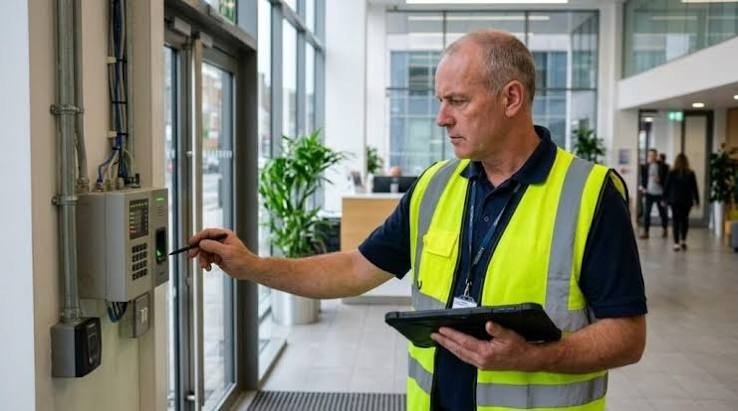
Commercial properties contain valuable equipment, business information, inventory, vehicles and other assets that require appropriate protection. From office buildings and shopping centres to warehouses, factories, hotels and commercial complexes, security risks can affect business operations, employees, customers and property owners.
However, installing CCTV cameras, burglar alarms or access control systems without first understanding the property’s security weaknesses may result in inadequate protection and unnecessary expenditure.
The most effective approach begins with a professional security risk assessment.
A security risk assessment for commercial properties is a structured process of identifying potential security threats, examining vulnerabilities, evaluating the possible consequences of security incidents and determining suitable measures to reduce those risks.
In Uganda, commercial properties face different security challenges depending on their location, building design, business activities, access arrangements and operating environment. A warehouse in an industrial area may have different vulnerabilities from an office building in Kampala or a shopping complex in Wakiso.
Conducting a proper assessment helps property owners and business managers understand where protection is needed, which security systems are appropriate and how available resources should be prioritised.
This guide explains how to conduct a security risk assessment for commercial properties, the important areas to inspect, the security technologies to consider and how to develop an effective property protection strategy.
1. What Is a Security Risk Assessment for Commercial Properties?
A commercial property security risk assessment is an organised examination of a building, business premises or facility to identify security threats and weaknesses that could lead to loss, damage, disruption or harm.
It examines how people enter the property, how assets are stored, how employees and visitors move around the premises and how existing security arrangements operate.
The assessment also considers whether current security measures are suitable for the property’s actual risks.
A typical commercial security assessment examines:
- Building entrances and exits.
- Boundary walls, fences and gates.
- CCTV surveillance coverage.
- Electronic access control systems.
- Burglar and intruder alarm systems.
- Parking areas and vehicle access.
- Warehouses and storage facilities.
- Offices and restricted rooms.
- Lighting and visibility.
- Security personnel and operating procedures.
- Network infrastructure and connected security devices.
- Emergency access and incident response arrangements.
The outcome should be a practical report identifying important risks, existing controls, weaknesses and recommended improvements.
A security risk assessment is not simply a list of security equipment to purchase. It is a decision-making process that helps determine what protection is necessary and why.
2. Why Commercial Properties Need Regular Security Risk Assessments
Commercial properties change over time. Businesses expand, employees change, buildings are renovated, new equipment is installed and operating procedures evolve.
A security arrangement that was suitable several years ago may no longer address current risks.
Regular assessments help property owners identify weaknesses before they develop into more serious security problems.
Identify security vulnerabilities
An assessment helps uncover weaknesses such as poorly controlled entrances, inadequate lighting, uncovered CCTV areas, damaged boundary fencing and unsecured storage rooms.
Identifying these problems allows management to prioritise corrective action.
Protect business assets and equipment
Commercial buildings may contain computers, machinery, stock, cash-handling facilities, vehicles, documents and other valuable assets.
A security assessment helps identify where these assets are exposed and what controls may reduce the risk of loss or damage.
Improve employee and visitor safety
Employees, customers, contractors and visitors move through commercial premises every day.
Assessing entrances, reception areas, parking facilities and restricted spaces helps identify risks affecting people who use the property.
Reduce business interruptions
Security incidents can interrupt normal business activities, damage equipment, affect customer confidence and create unexpected costs.
Appropriate security planning can help reduce exposure and support business continuity.
Improve security investment decisions
Without an assessment, businesses may spend money on equipment that does not address their most important vulnerabilities.
A risk-based approach helps management prioritise essential improvements before investing in additional features.
Support responsible property management
Documented security assessments provide management with a clearer understanding of property risks, existing controls, outstanding weaknesses and improvement priorities.
3. Step One: Define the Scope and Objectives of the Assessment
Before inspecting a commercial property, establish what the assessment is intended to cover.
Different buildings have different operational requirements. A retail outlet, office complex, factory and warehouse should not automatically be assessed using identical criteria.
Start by identifying:
- The property or facilities being assessed.
- The type of business operating at the premises.
- The number of buildings and floors.
- Operating hours and shift arrangements.
- Employee and visitor access requirements.
- Valuable assets and sensitive information.
- Existing security equipment.
- Previous security incidents, where documented.
- Areas requiring special protection.
Establish the assessment objectives
Objectives may include:
- Identifying unauthorised entry risks.
- Evaluating CCTV coverage.
- Reviewing access control arrangements.
- Examining perimeter protection.
- Assessing warehouse and stockroom security.
- Identifying weaknesses in alarm systems.
- Reviewing visitor and contractor management.
- Evaluating security system reliability.
- Reviewing cybersecurity risks affecting connected devices.
- Recommending improvements based on risk priorities.
Clear objectives ensure that the assessment remains focused on the property’s actual security requirements.
4. Step Two: Identify the Assets That Need Protection
A security assessment should establish what needs to be protected before examining how those assets could be exposed.
Commercial properties contain different categories of assets, and each may require different security controls.
Physical assets
These include:
- Office furniture.
- Computers and electronic equipment.
- Industrial machinery.
- Vehicles.
- Raw materials.
- Finished products.
- Warehouse inventory.
- Tools and maintenance equipment.
- Cash and valuable merchandise.
Information and digital assets
Businesses may also hold sensitive information, including:
- Employee records.
- Customer information.
- Financial documents.
- Business contracts.
- Digital records.
- Computer systems.
- Network equipment.
- Access credentials.
- CCTV recordings.
Digital information should be considered because connected security systems and business networks can introduce risks that are not visible during a physical inspection.
People
Employees, visitors, customers, contractors and other authorised occupants are important considerations.
The assessment should examine how people enter the premises, which areas they can access and whether appropriate procedures exist to protect them.
Critical business operations
Some areas and processes are essential to business continuity.
Examples include:
- Server rooms.
- Production facilities.
- Distribution areas.
- Cash-handling operations.
- Communication rooms.
- Electrical control rooms.
- Dispatch and loading facilities.
Identifying critical assets helps determine where stronger or additional security controls may be justified.
5. Step Three: Identify Potential Security Threats
A threat is a potential source of an incident that could cause harm, loss, damage or disruption.
Threat identification should consider the property’s location, activities, operating environment and previous incident records.
Theft and unauthorised removal of property
Theft may involve inventory, machinery, computers, tools, vehicles or other business assets.
Potential exposure points include poorly controlled entrances, unsecured storage areas and loading facilities.
Unauthorised access
Individuals may attempt to enter restricted offices, warehouses, production areas or other sensitive locations without permission.
Weak access procedures, shared credentials and uncontrolled visitor movement can increase exposure.
Burglary and forced entry
Commercial properties may be vulnerable through doors, windows, gates, loading bays, roof access points or poorly secured external structures.
The assessment should examine how these locations are protected and monitored.
Vandalism and property damage
External equipment, boundary structures, vehicles, windows and building infrastructure may be exposed to deliberate damage.
Internal security risks
Security threats can also originate from within an organisation.
Examples include:
- Misuse of authorised access.
- Unauthorised removal of stock.
- Sharing access credentials.
- Improper handling of confidential information.
- Failure to follow security procedures.
An assessment should focus on appropriate controls and documented evidence rather than making assumptions about particular employees.
Cybersecurity threats
Modern commercial properties increasingly rely on IP cameras, network recorders, electronic access control and connected monitoring systems.
Potential cyber risks include:
- Weak passwords.
- Unauthorised remote access.
- Outdated device firmware.
- Poorly secured network connections.
- Unrestricted administrator accounts.
- Exposure of CCTV recordings.
- Compromised access credentials.
Physical and digital security should therefore be considered together.
6. Step Four: Inspect the Property Perimeter and External Areas
The perimeter is the first physical boundary protecting a commercial property.
Weaknesses around the boundary can create opportunities for unauthorised entry before an individual reaches the main building.
A perimeter inspection should cover:
Boundary walls and fencing
Check for damaged walls, gaps, weak fencing sections and areas that are difficult to observe.
Determine whether the existing boundary provides suitable physical separation and whether additional protection is necessary.
Main gates and pedestrian entrances
Inspect the condition and security of entrance gates.
Consider whether entry is controlled, whether visitors can be identified and whether unauthorised vehicles can enter easily.
Electric fencing
Where electric fencing is installed, examine:
- The condition of fence conductors.
- Energiser operation.
- Earthing arrangements.
- Warning signs.
- Vegetation interference.
- Alarm functionality, where fitted.
- Power and backup arrangements.
Testing should be performed safely by suitably competent personnel.
Outdoor lighting
Poor lighting can make it difficult to observe entrances, parking areas, boundary sections and external equipment.
Assess whether important locations have suitable illumination for the intended security and surveillance arrangements.
Parking and vehicle access
Examine whether vehicles enter through controlled points and whether parking areas have suitable surveillance and lighting.
For larger properties, consider whether visitor parking, staff parking, delivery vehicles and restricted vehicle areas should be managed separately.
7. Step Five: Assess Building Entrances, Doors and Windows
Building openings are important security assessment points because they provide routes into offices, warehouses, shops and other facilities.
Inspect all significant access points, including:
- Main entrances.
- Rear doors.
- Emergency exits.
- Ground-floor windows.
- Loading bay doors.
- Basement entrances.
- Staircase access doors.
- Roof access points.
- Service entrances.
Examine door security
Check the condition of doors, frames, hinges, locks and electronic access devices.
Identify doors that remain open unnecessarily or allow access to restricted areas without appropriate authorisation.
Evaluate window protection
Consider whether vulnerable windows require suitable physical protection, sensors or CCTV coverage.
Review emergency exits
Emergency exits must remain accessible and comply with applicable fire and life-safety requirements.
Electronic access arrangements should never create unsafe restrictions on emergency escape.
Examine loading and delivery areas
Loading bays can create security challenges because goods, contractors and vehicles frequently move through these locations.
Assess whether deliveries are supervised, whether access is restricted and whether stock movements are appropriately documented.
8. Step Six: Evaluate the Existing CCTV Surveillance System
CCTV surveillance is an important component of commercial property security.
During the assessment, determine whether existing cameras provide useful coverage and whether recorded footage can be accessed when required.
Inspect camera placement
Review cameras installed around:
- Main entrances.
- Reception areas.
- Parking facilities.
- Perimeter gates.
- Loading bays.
- Warehouses.
- Corridors and shared areas.
- Restricted rooms.
Look for blind spots, obstructed views, unsuitable camera angles and areas that require more detailed monitoring.
Check image quality
Determine whether cameras provide sufficient image detail for their intended purpose.
Consider:
- Resolution.
- Lighting conditions.
- Camera positioning.
- Lens selection.
- Night-time performance.
- Weather protection.
- Motion and video analytics features, where applicable.
A camera that displays a general view of an entrance may not necessarily capture enough detail to identify a person or vehicle.
Inspect the recording system
Check the condition and configuration of DVRs, NVRs and associated storage systems.
Review:
- Whether cameras are recording.
- Whether timestamps are accurate.
- Whether footage can be retrieved.
- Available storage capacity.
- Recording schedules.
- User permissions.
- Retention arrangements.
- Backup procedures.
Evaluate remote monitoring
If remote viewing is used, examine how access is provided and whether accounts and network connections are adequately protected.
Remote access should use secure methods and avoid unnecessary exposure of recording equipment to the public internet.
Review privacy considerations
Cameras should be positioned for legitimate security purposes.
Avoid unnecessary surveillance of private areas, and consider how footage is accessed, retained and shared.
CCTV footage may contain personal data and should be managed with appropriate safeguards under Uganda’s data protection framework.
9. Step Seven: Assess Access Control Systems
Access control systems determine who can enter specific areas and under what conditions.
They are particularly important for commercial properties with employees, visitors, contractors and restricted operational spaces.
An assessment should examine:
Access credentials
Review the credentials currently used, including:
- Access cards.
- RFID credentials.
- Fingerprint recognition.
- Facial recognition.
- PIN codes.
- Mobile access credentials.
Determine whether credentials are assigned to individual users and whether lost or expired credentials are promptly disabled.
Access permissions
Check whether employees have access only to areas relevant to their responsibilities.
For example, warehouse employees may need access to storage facilities but not necessarily server rooms or management offices.
Access records
Determine whether the system records relevant entry events and whether authorised management personnel can review those records.
Electronic locks and door controllers
Inspect the condition and operation of controlled doors, readers, locking devices and door sensors.
Verify that emergency egress remains safe and that the locking arrangement is appropriate for the door’s function.
Visitor and contractor access
Examine how visitors are registered, approved and escorted where necessary.
Temporary credentials should have suitable access restrictions and expiry arrangements.
10. Step Eight: Review Intruder Alarm Systems and Detection Devices
Intruder alarm systems provide alerts when configured sensors detect specified events.
They can help protect offices, warehouses, retail premises and other restricted areas.
During the assessment, inspect the following components.
Motion detectors
Determine whether motion detectors cover their intended areas and whether furniture, partitions or other obstacles interfere with detection.
Door and window sensors
Check whether magnetic contacts are correctly positioned and whether opening protected doors or windows generates the expected response.
Glass-break detectors
Assess whether detectors are suitable for the protected environment and positioned according to manufacturer specifications.
Alarm control panels
Review the condition of the control panel, configuration, user permissions and communication arrangements.
Alarm notification
Confirm that alarm events reach the appropriate authorised users or monitoring service according to the agreed arrangement.
Backup batteries
Check battery condition and whether the backup arrangement meets the system’s intended operating requirements.
Testing should follow manufacturer instructions and any relevant monitoring procedures to avoid unnecessary false alarms.
11. Step Nine: Examine Security Procedures and Personnel Arrangements
Technology alone cannot provide a complete security programme.
Commercial property security also depends on people, responsibilities and operating procedures.
The assessment should examine how security activities are managed.
Security personnel
Review responsibilities for monitoring entrances, checking visitors, responding to alarms and reporting incidents.
Where security personnel are deployed, consider whether duties and escalation procedures are clearly documented.
Visitor management procedures
Examine whether visitors are identified, registered and directed to the appropriate areas.
Key and credential management
Determine how physical keys, access cards, passwords and other credentials are issued, stored and withdrawn.
Delivery and contractor procedures
Review how suppliers, maintenance teams and delivery personnel are authorised to enter the property.
Incident reporting
Check whether security incidents are recorded and whether management reviews reports to identify recurring weaknesses.
Employee awareness
Employees should understand relevant security rules, reporting channels and their responsibilities for protecting company property and information.
12. Step Ten: Assess Cybersecurity Risks in Connected Security Systems
Commercial security infrastructure increasingly uses network-connected equipment.
A security risk assessment should therefore examine both physical devices and the networks that support them.
Check device passwords and accounts
Confirm that default credentials have been changed and that each authorised user has appropriate permissions.
Shared administrator accounts should be avoided where individual accounts are supported.
Review firmware and software updates
Determine whether cameras, recorders, access controllers and other connected devices receive appropriate security updates.
Inspect network configuration
Review how security devices connect to the wider business network.
Where appropriate, use network segmentation, firewall rules and access restrictions to limit unnecessary communication between systems.
Evaluate remote access
Review remote access arrangements for CCTV and access control systems.
Use supported secure methods, multi-factor authentication where available and carefully controlled user permissions.
Protect recorded footage and access information
Consider who can view, export, change or delete security records.
Sensitive footage and access logs should be protected against unauthorised access and unnecessary disclosure.
13. Step Eleven: Evaluate and Rank Identified Security Risks
After identifying threats and vulnerabilities, the next step is to evaluate their significance.
Not every weakness presents the same level of risk.
A damaged perimeter fence around a large warehouse may require more urgent attention than a minor CCTV coverage issue in a low-priority area.
A practical assessment can use a likelihood-and-impact method.
Understand likelihood
Likelihood describes how probable a particular security incident is within the assessment period.
A simple rating scale may include:
- Low: The incident is considered unlikely under current conditions.
- Medium: The incident is reasonably possible.
- High: The incident is considered likely or there are significant indicators of exposure.
Understand impact
Impact describes the potential consequences if the incident occurs.
Consider:
- Financial losses.
- Physical damage.
- Injury or harm to people.
- Business interruption.
- Loss of confidential information.
- Reputational damage.
- Legal or regulatory consequences.
A simple impact scale may include low, medium and high.
Use a risk matrix
The following example illustrates how likelihood and impact can be combined to prioritise security risks.
| Likelihood | Low impact | Medium impact | High impact |
|---|---|---|---|
| Low | Low risk | Low risk | Medium risk |
| Medium | Low risk | Medium risk | High risk |
| High | Medium risk | High risk | High risk |
This is an illustrative matrix, not a universal standard. Organisations may adopt more detailed scoring systems based on their operational requirements.
Example of a commercial property risk assessment
| Identified weakness | Potential consequence | Priority | Suggested improvement |
|---|---|---|---|
| Uncontrolled rear entrance | Unauthorised entry | High | Improve access control and monitoring |
| CCTV blind spot at loading bay | Reduced incident visibility | Medium | Review camera placement |
| Weak warehouse door security | Theft or unauthorised access | High | Upgrade physical protection and access control |
| Outdated CCTV passwords | Unauthorised camera access | High | Secure accounts and update configurations |
| Poor external lighting | Reduced visibility | Medium | Improve lighting around vulnerable areas |
| No documented visitor procedure | Uncontrolled visitor movement | Medium | Introduce visitor management procedures |
Actual risk ratings should be based on site conditions, incident information and the effectiveness of existing controls.
14. Step Twelve: Recommend Appropriate Security Improvements
Once risks have been evaluated, prepare recommendations that address the identified weaknesses.
Recommendations should be practical, proportionate and linked to the risks discovered during the assessment.
Improve CCTV surveillance
Where surveillance coverage is inadequate, consider repositioning existing cameras, adding suitable cameras or upgrading recording equipment.
The objective should be useful coverage rather than simply increasing the number of devices.
Strengthen access control
Consider electronic access control for restricted doors, server rooms, storage areas and other locations requiring controlled entry.
Review credential management and access permissions.
Upgrade perimeter protection
Where boundary weaknesses exist, consider suitable fencing, electric fencing, gate improvements, outdoor sensors and additional CCTV coverage.
Improve alarm detection
Install or reposition suitable sensors in areas where unauthorised access needs to be detected.
Introduce visitor management
Improve visitor registration, contractor authorisation and temporary access procedures.
Improve cybersecurity
Secure connected security devices, restrict administrative access, update firmware and review network protection.
Establish maintenance procedures
Introduce regular inspection, testing and servicing for cameras, alarms, access control, perimeter detection and network equipment.
15. Security Risk Assessment for Different Commercial Property Types
Although the assessment process is similar, each type of commercial property has specific risks that should influence the recommendations.
Office buildings
Office buildings may contain confidential information, computers, business documents and employee facilities.
Important assessment areas include:
- Reception and visitor entrances.
- Office access permissions.
- Server rooms.
- Meeting rooms.
- Parking facilities.
- Emergency exits.
- CCTV coverage.
- Employee and contractor procedures.
Recommended solutions may include CCTV, card-based or biometric access control, visitor management, electronic locks and intruder alarms.
Warehouses and distribution centres
Warehouses often contain inventory, equipment, raw materials and goods awaiting distribution.
The assessment should examine:
- Boundary security.
- Loading and unloading areas.
- Vehicle entrances.
- Storage areas.
- Stock control procedures.
- Perimeter surveillance.
- Access permissions.
- Night-time security.
Suitable protection may include CCTV, electric fencing, intrusion detection, vehicle access control and warehouse alarm systems.
Factories and industrial facilities
Industrial facilities may contain machinery, production equipment, raw materials, hazardous areas and restricted operational zones.
Assessment considerations include:
- Perimeter protection.
- Production area access.
- Equipment storage.
- Control rooms.
- Loading bays.
- Vehicle movements.
- Environmental conditions.
- Emergency routes.
Equipment used in hazardous environments must be appropriately rated for the specific conditions.
Shopping centres and retail properties
Retail developments have public entrances, shops, storage areas, parking facilities and delivery locations.
Important areas include:
- Customer entrances.
- Cash-handling areas.
- Stockrooms.
- Loading bays.
- Parking facilities.
- Staff-only areas.
- Shared corridors.
- Security control rooms.
CCTV, access control, alarms, visitor management and parking surveillance may form part of the recommended solution.
Hotels and hospitality properties
Hotels require security arrangements that support guest safety while maintaining privacy and convenient access.
Assessment areas may include:
- Reception.
- Guest entrances.
- Staff-only areas.
- Parking.
- Service entrances.
- Stores and maintenance rooms.
- Cash-handling areas.
- Restricted facilities.
Surveillance should be designed carefully to avoid inappropriate monitoring of private guest spaces.
16. How Often Should Commercial Properties Conduct Security Risk Assessments?
The appropriate assessment frequency depends on the property’s size, risk exposure, operating environment and changes in business activities.
A commercial property should not wait for a security incident before reviewing its protection arrangements.
Consider conducting an assessment:
- Before a new commercial property begins operations.
- When a business moves into new premises.
- After major renovations or building extensions.
- When security systems are upgraded.
- Following a significant security incident.
- When business operations or occupancy change.
- When new valuable assets are introduced.
- When new access points are created.
- As part of a planned periodic security review.
A simple office may require a different review schedule from a large industrial facility or distribution centre.
Management should establish a review programme appropriate to the property’s risks and operating needs.
17. Common Mistakes to Avoid During a Commercial Security Risk Assessment
A poorly conducted assessment may overlook important vulnerabilities or recommend unsuitable security investments.
Avoid the following mistakes.
Assessing equipment instead of assessing risk
Simply listing existing cameras, alarms and access readers does not establish whether the property is adequately protected.
Better approach: Examine threats, vulnerabilities, assets and the effectiveness of existing controls.
Ignoring internal security risks
Focusing exclusively on external threats can overlook misuse of access credentials, poor visitor procedures and weak internal controls.
Better approach: Review both external and internal security arrangements.
Overlooking cybersecurity
Connected cameras, recorders and access controllers may introduce digital vulnerabilities.
Better approach: Include device security, network configuration and remote access in the assessment.
Failing to prioritise risks
Treating every weakness as equally urgent can lead to inefficient spending.
Better approach: Rank risks according to likelihood, impact and the effectiveness of existing safeguards.
Recommending unnecessary equipment
More cameras and sensors do not automatically produce better security.
Better approach: Recommend technology that addresses a clearly identified vulnerability.
Ignoring maintenance
Even a well-designed security system can become unreliable without regular inspection and servicing.
Better approach: Include maintenance and testing recommendations in the final report.
Failing to document findings
Verbal recommendations may be forgotten or difficult to track.
Better approach: Prepare a written assessment with findings, risk ratings, photographs where appropriate and recommended corrective actions.
18. What Should a Commercial Property Security Risk Assessment Report Include?
A written report makes assessment findings easier to understand, approve and implement.
A professional report should normally contain the following sections.
1. Property information: Name, location, property type, size and intended use.
2. Assessment scope: The buildings, areas, systems and activities included.
3. Asset identification: Important physical assets, people, information and business operations requiring protection.
4. Threat identification: Potential sources of security incidents relevant to the property.
5. Vulnerability findings: Identified weaknesses in the building, security equipment and operating procedures.
6. Existing security controls: CCTV, alarms, access control, fencing, guards and other measures already in place.
7. Risk evaluation: Likelihood, impact and priority ratings for identified risks.
8. Recommendations: Proposed physical, electronic, procedural and cybersecurity improvements.
9. Implementation priorities: Actions grouped according to urgency, resources and project requirements.
10. Review arrangements: Suggested inspection, testing, maintenance and reassessment activities.
The report should distinguish between observed facts, reported information and professional recommendations.
19. Factors That Influence the Cost of a Commercial Security Risk Assessment in Uganda
The cost of conducting a security risk assessment varies according to the property’s size, complexity and assessment requirements.
Important factors include:
- Size of the property.
- Number of buildings and floors.
- Type of commercial activity.
- Number of entrances and access points.
- Complexity of existing security systems.
- Number of assets and restricted areas.
- Requirement for CCTV system testing.
- Need to assess access control and alarm equipment.
- Network and cybersecurity assessment requirements.
- Documentation and reporting requirements.
- Travel and site inspection arrangements.
A basic assessment of a small commercial premises will generally require a different level of work from a detailed assessment of a large warehouse, factory or multi-storey commercial complex.
Businesses should request a quotation based on the actual property and the scope of work rather than relying on a general price estimate.
20. How Daltrevco Can Help with Commercial Security Planning
Identifying security vulnerabilities is an important first step towards developing an effective property protection strategy.
Daltrevco provides a point of contact for property owners, developers and businesses seeking to discuss security and building infrastructure requirements.
Whether you manage an office building, commercial complex, warehouse, factory, shopping centre or residential-commercial development, it is important to understand the property’s risks before selecting security equipment.
When discussing a project with Daltrevco, you can outline:
- The type and size of the property.
- Its location and building layout.
- Existing security arrangements.
- Areas requiring additional protection.
- Your CCTV and access control requirements.
- Perimeter and alarm system considerations.
- Future expansion plans.
This information can help establish the requirements for suitable security solutions and identify the next steps for improving property protection.
Planning to improve security at your commercial property in Uganda? Visit Daltrevco to discuss your security and building infrastructure requirements.
Frequently Asked Questions About Security Risk Assessments for Commercial Properties
1. What is a security risk assessment for a commercial property?
It is a structured evaluation of a business premises to identify security threats, vulnerabilities and potential consequences. It helps property owners determine appropriate measures to protect people, assets, information and business operations.
2. Why should businesses conduct security risk assessments?
Assessments help businesses identify weaknesses, improve protection, prioritise security investments and reduce exposure to theft, unauthorised access, property damage and operational disruption.
3. Who should conduct a commercial property security risk assessment?
It should be conducted by suitably competent security professionals with relevant knowledge of physical security, electronic security systems and the property’s operating environment. Specialist cybersecurity expertise may also be required.
4. What areas should be inspected during a security assessment?
Important areas include building entrances, doors, windows, boundary walls, parking facilities, warehouses, loading bays, CCTV systems, access control devices, alarm systems and network infrastructure.
5. What are the common security risks in commercial buildings?
Common risks include theft, burglary, unauthorised access, vandalism, internal security weaknesses, poor visitor management, inadequate surveillance and cybersecurity vulnerabilities.
6. How does CCTV help reduce commercial property security risks?
CCTV can provide surveillance of selected areas, support monitoring and help preserve recordings for incident investigation. Its effectiveness depends on camera placement, image quality, lighting, recording arrangements and system maintenance.
7. Is access control necessary for commercial properties?
Access control is useful where businesses need to restrict entry to offices, server rooms, warehouses, storage areas and other sensitive locations. The appropriate system depends on the property’s access requirements.
8. What is the difference between a security threat and a vulnerability?
A threat is a potential source of harm, such as theft or unauthorised entry. A vulnerability is a weakness that may allow the threat to affect the property, such as an unsecured door or poorly controlled entrance.
9. How are commercial security risks prioritised?
Risks are commonly evaluated by considering their likelihood and potential impact. High-priority risks are addressed before lower-priority issues, taking existing safeguards and business requirements into account.
10. How often should a commercial property undergo a security assessment?
The frequency depends on the property’s risk level and operational changes. Assessments should be considered after major renovations, new security incidents, business expansion, changes in occupancy or significant changes to security infrastructure.
11. Can small businesses benefit from security risk assessments?
Yes. Small businesses may have valuable stock, equipment, customer information and restricted areas that require protection. An assessment helps identify practical improvements within available resources.
12. Should cybersecurity be included in a physical security assessment?
Yes, particularly where CCTV cameras, network recorders, access control systems and other security devices connect to computer networks or the internet.
13. What is included in a security risk assessment report?
A report normally includes the assessment scope, property information, assets, identified threats, vulnerabilities, existing controls, risk ratings, recommendations and suggested implementation priorities.
14. Does every commercial building need CCTV cameras?
Not necessarily in every room or area. CCTV requirements depend on the property’s risks, layout, monitoring objectives and privacy considerations. Cameras should be installed where they provide a legitimate security benefit.
15. What is the importance of perimeter security?
Perimeter security helps protect property boundaries and control access before individuals reach buildings or restricted facilities. Measures may include suitable fencing, gates, CCTV, lighting and intrusion detection.
16. How can businesses improve warehouse security?
Businesses can review boundary protection, loading bay access, stockroom security, CCTV coverage, vehicle controls, alarm systems and employee access permissions. Inventory management procedures should also be considered.
17. Can existing security systems be evaluated without replacing them?
Yes. An assessment can examine existing equipment, configuration, coverage, performance and maintenance condition. Recommendations may involve repositioning, repairs, configuration improvements or selective upgrades rather than complete replacement.
18. How much does a commercial security risk assessment cost in Uganda?
The cost depends on property size, complexity, the number of systems being assessed, inspection requirements and reporting scope. Businesses should request a quotation based on their actual requirements.
19. What should businesses do after identifying security weaknesses?
They should prioritise the identified risks, approve appropriate corrective actions, assign responsibilities, implement improvements and establish arrangements for testing and reviewing the controls.
20. Can Daltrevco help businesses plan security improvements?
Businesses and property owners can contact Daltrevco to discuss their building and security infrastructure requirements and explore suitable solutions for their commercial properties.
Conclusion
Conducting a security risk assessment for commercial properties is an important part of responsible property and business management. It helps identify vulnerabilities, evaluate potential threats and establish which security improvements should receive priority.
An effective assessment should examine the entire property, including perimeter protection, building entrances, CCTV surveillance, access control, intruder alarms, visitor procedures, security personnel and connected network infrastructure.
The findings should then be documented, prioritised and translated into practical improvements that match the property’s risks and operational requirements.
For businesses in Uganda, taking a structured approach to commercial property security can support better protection of employees, customers, equipment, inventory and business operations.
Before investing in new security equipment, understand the risks that need to be addressed. Contact Daltrevco through https://www.daltrevco.com/ to discuss security and building infrastructure requirements for your commercial property.

