Choosing the right concrete blocks is an important decision when constructing a house, commercial building, warehouse, boundary wall or other development in Uganda. The quality and type of blocks used can influence structural performance, construction costs, wall durability, labour requirements and the overall success of a building project.
Two common options are solid concrete blocks and hollow concrete blocks. Although both are manufactured using cement, aggregates and water, they differ in their internal structure, weight, material requirements and potential applications.
So, between solid concrete blocks and hollow concrete blocks, which is better for your construction project?
The answer depends on the intended application, structural requirements, block quality, building design and available budget. Solid blocks may be appropriate where a largely solid masonry unit is required, while hollow blocks can offer advantages in handling, material efficiency and certain walling applications.
This guide compares solid concrete blocks vs hollow concrete blocks in Uganda, explaining their differences, advantages, disadvantages, uses, prices and important factors to consider before purchasing.
Whether you are a homeowner, contractor, property developer or construction professional, understanding these differences will help you select suitable concrete blocks for a durable and cost-effective building.
1. What Are Solid Concrete Blocks?
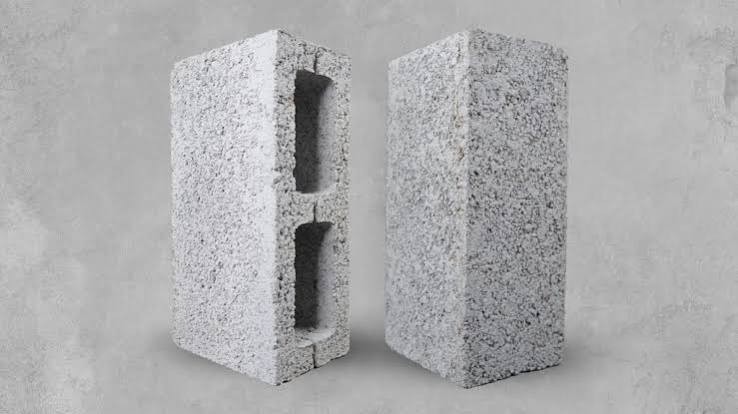
Solid concrete blocks are masonry units manufactured from cement, aggregates and water. Unlike hollow concrete blocks, they have a largely filled cross-section with no large hollow cores running through the unit.
They are manufactured using moulding and compaction processes, followed by curing to develop the required strength.
Solid concrete blocks are generally heavier than comparable hollow blocks because they contain more concrete material.
Common uses of solid concrete blocks
Depending on their strength, dimensions and the project specifications, solid concrete blocks may be used for:
- Boundary and perimeter walls
- Selected residential walling applications
- Heavy-duty masonry applications
- Landscaping and enclosure structures
- Certain substructure masonry applications where specified
- Other construction works requiring solid masonry units
The suitability of a solid block for a particular structural application must be confirmed by the project engineer. Being solid does not automatically mean that a block is suitable for foundations or load-bearing walls.
Advantages of solid concrete blocks
1. Substantial construction units
Their largely filled cross-section makes them suitable for applications where a solid masonry unit is required.
2. Robustness
When properly manufactured and used in appropriate applications, solid blocks can provide durable masonry construction.
3. Versatility
They can be used in different masonry applications depending on their specified strength and dimensions.
4. Less dependence on cavity detailing
Because they do not have the large internal cavities typical of hollow blocks, their installation does not require the same consideration of hollow-core orientation and treatment.
5. Suitable for selected heavy-duty applications
Some construction designs specify solid concrete masonry units where their physical characteristics are appropriate.
Disadvantages of solid concrete blocks
Despite their advantages, solid concrete blocks also have limitations.
- They are generally heavier than comparable hollow blocks.
- They may require more effort during handling and installation.
- They use more concrete material than comparable hollow units of similar external dimensions.
- Transportation costs may be affected by their weight.
- Their weight can influence the design loads of a building.
- Some applications may be more efficiently constructed using suitable hollow blocks.
These disadvantages should be evaluated against the actual requirements of the project.
2. What Are Hollow Concrete Blocks?
Hollow concrete blocks are masonry units manufactured with one or more cavities through their internal structure.
The cavities reduce the amount of concrete required compared with a similarly sized solid unit. This generally makes hollow blocks lighter and easier to handle.
Hollow blocks are commonly used in residential, commercial and industrial wall construction, provided their dimensions and strength meet the relevant project specifications.
Common uses of hollow concrete blocks
Hollow concrete blocks may be used for:
- External building walls
- Internal partition walls
- Residential house construction
- Commercial building enclosures
- Warehouse and industrial facility walls
- Boundary walls where suitably designed
- Selected reinforced masonry applications
Their suitability depends on the block’s strength, cavity design, wall thickness, reinforcement arrangements and structural requirements.
Advantages of hollow concrete blocks
1. Lower weight
Hollow blocks are generally lighter than comparable solid blocks, which can make handling, transportation and installation easier.
2. Reduced material consumption
The cavities mean that less concrete is required to manufacture a hollow block than a comparable solid block with the same external dimensions.
3. Efficient wall construction
Their larger unit sizes can help cover wall areas efficiently, depending on the block dimensions and construction method.
4. Potential thermal benefits
Air spaces within hollow blocks may contribute to thermal performance. However, actual insulation depends on cavity design, wall thickness, block density, finishes and the complete building envelope.
5. Potential service integration
Certain hollow-block systems can accommodate specified reinforcement or services, subject to proper design and installation. Cores should not be cut or modified without checking structural and technical requirements.
6. Easier handling in many situations
Their lower weight can reduce manual handling effort compared with similar-sized solid units.
Disadvantages of hollow concrete blocks
Hollow concrete blocks also have limitations that buyers should understand.
- Not every hollow block is suitable for load-bearing construction.
- Poorly manufactured units may have weak webs or damaged edges.
- Their cavities may complicate certain cutting and fixing operations.
- Some applications require additional detailing or reinforcement.
- Poor installation can result in weak wall sections.
- Their performance depends heavily on the quality of the block and the construction design.
Choosing hollow blocks should therefore involve checking the specified strength and intended use rather than relying on appearance alone.
3. Solid Concrete Blocks vs Hollow Concrete Blocks: Key Differences
The main difference between solid and hollow concrete blocks is their internal structure. This affects weight, material consumption, handling and potential construction applications.
The following table summarises their important differences.
| Comparison factor | Solid concrete blocks | Hollow concrete blocks |
|---|---|---|
| Internal structure | Largely filled cross-section | Contains internal cavities |
| Weight | Generally heavier | Generally lighter |
| Concrete consumption | Usually higher for comparable external dimensions | Usually lower for comparable external dimensions |
| Handling | May require more effort | Often easier to handle |
| Transportation | Weight may increase transport requirements | Lower unit weight may improve handling and transport efficiency |
| Wall construction | Suitable for specified solid masonry applications | Suitable for various walling applications |
| Thermal performance | Depends on density, thickness and wall design | Cavities may contribute to thermal performance |
| Reinforcement | Depends on the masonry design | Some systems can accommodate reinforcement in designated cores |
| Purchase price | Depends on size, strength and production costs | Depends on size, strength and production costs |
| Best selection criteria | Intended application and specified performance | Intended application and specified performance |
Neither type is automatically better in every situation. The correct choice should be based on the building design and technical requirements.
4. Which Is Stronger: Solid or Hollow Concrete Blocks?
One of the most common questions among builders in Uganda is whether solid concrete blocks are stronger than hollow concrete blocks.
It is easy to assume that solid blocks are always stronger because they contain more concrete. However, this is not necessarily correct.
The strength of a concrete block depends on several factors, including:
- Cement quality
- Aggregate quality and grading
- Mix proportions
- Water content
- Manufacturing process
- Compaction
- Curing conditions
- Block dimensions and geometry
- Quality control and testing
A properly manufactured hollow concrete block can meet the strength requirements of a specified walling application. Similarly, a poorly manufactured solid block may fail to achieve the required performance.
Understanding compressive strength
Compressive strength measures the ability of a concrete masonry unit to resist compressive loading under specified test conditions.
When purchasing blocks, consider:
- The compressive strength required by the structural design.
- Whether the supplier can provide relevant test documentation.
- Whether the product meets applicable standards and project specifications.
- Whether the test results relate to the actual block type and dimensions being purchased.
Do not choose blocks based only on how heavy they feel or how difficult they are to break by hand.
For structural masonry, the engineer should specify the required unit strength and the appropriate construction system.
5. Which Concrete Blocks Are Better for Building a House in Uganda?
Both solid and hollow concrete blocks can be used in residential construction, but their suitability depends on the building design.
Hollow blocks for residential construction
Hollow concrete blocks may be appropriate for:
- External walling where specified
- Internal walls
- Selected partition walls
- Residential developments requiring efficient wall construction
- Certain reinforced masonry systems
Their relatively lower weight can be useful in projects where handling efficiency and material consumption are important.
Solid blocks for residential construction
Solid concrete blocks may be appropriate for:
- Selected boundary walls
- Specific masonry applications requiring solid units
- Certain walling details
- Other applications specified by the building design
For both options, the required strength, wall thickness and installation details must be confirmed.
What should homeowners consider?
Before selecting concrete blocks for a house, consider:
- Number of storeys
- Structural design
- External and internal wall requirements
- Wall thickness
- Foundation and load-transfer arrangements
- Exposure to moisture
- Fire and acoustic requirements
- Available budget
- Material availability and delivery arrangements
For multi-storey residential buildings, the structural engineer must determine the appropriate masonry units and walling system.
6. Solid vs Hollow Concrete Blocks for Boundary Walls
Boundary walls are common around residential homes, commercial premises, schools, factories and other properties in Uganda.
Both solid and hollow blocks may be considered for boundary wall construction.
When solid blocks may be suitable
Solid blocks may be selected where the design specifies a solid masonry unit or where particular physical characteristics are required.
When hollow blocks may be suitable
Hollow blocks may be used where the specified block strength and wall design are suitable for the boundary enclosure.
Important boundary wall considerations
A durable boundary wall requires more than selecting the right blocks.
The design should consider:
- Foundation depth and dimensions
- Soil conditions
- Wall height
- Wind exposure
- Reinforcement requirements
- Supporting piers or columns
- Drainage
- Ground levels
- Stability and lateral loading
A high boundary wall should be designed by a qualified professional. Neither solid nor hollow blocks should be assumed suitable without checking the complete wall design.
7. Which Blocks Are Better for Commercial and Industrial Buildings?
Commercial and industrial construction projects have different requirements from ordinary residential buildings.
Offices, shopping complexes, warehouses, workshops and factories may require masonry walls that meet specific structural, fire, acoustic, security and operational requirements.
Hollow concrete blocks in commercial construction
Hollow blocks may be suitable for specified internal partitions and external walling applications where their strength and performance meet the design requirements.
Their lower weight can be useful in some building systems.
Solid concrete blocks in commercial construction
Solid blocks may be considered for selected applications where solid masonry units are required by the design.
The choice should consider the building’s structural arrangement, expected loads and intended wall function.
Industrial construction considerations
Industrial buildings may be exposed to:
- Mechanical impact
- Heavy operational activities
- Moisture
- Chemicals
- High levels of vibration
- Special fire-safety requirements
The selected masonry system must be suitable for the actual operating environment. In some cases, neither conventional solid nor conventional hollow blocks alone will meet all project requirements.
8. Solid Concrete Blocks vs Hollow Concrete Blocks: Which Is Cheaper?
The cost of concrete blocks in Uganda varies according to the product specifications, manufacturer, location, order quantity and delivery arrangements.
It is not always correct to assume that hollow blocks are cheaper or that solid blocks are more expensive in every market situation.
The total cost should be evaluated rather than looking only at the unit purchase price.
Factors affecting solid concrete block prices
The price of solid concrete blocks may be influenced by:
- Block dimensions
- Cement and aggregate costs
- Required compressive strength
- Production methods
- Curing and quality control
- Order quantity
- Transportation distance
- Delivery arrangements
Factors affecting hollow concrete block prices
Hollow block prices may depend on:
- Block dimensions and cavity design
- Required strength
- Material proportions
- Production equipment
- Manufacturing consistency
- Order quantity
- Transport and handling costs
Compare the total wall construction cost
When comparing the two options, consider:
| Cost component | What to evaluate |
|---|---|
| Block purchase price | Cost per unit for equivalent specifications |
| Number of blocks | Quantity required for the wall area |
| Mortar | Mortar consumption and joint requirements |
| Labour | Handling, laying and installation time |
| Transportation | Delivery charges and vehicle requirements |
| Wastage | Breakages and cutting losses |
| Finishing | Plastering and other surface treatments |
| Structural requirements | Any additional reinforcement or detailing required |
A block with a lower unit price may not necessarily produce the lowest overall wall construction cost.
For accurate budgeting, obtain quotations based on the same block dimensions, strength requirements, quantities and delivery location.
9. How to Identify Quality Solid and Hollow Concrete Blocks
The quality of concrete blocks is important regardless of whether they are solid or hollow.
Poor-quality blocks can contribute to cracking, weak masonry, uneven walls, excessive wastage and costly repairs.
Use the following checks when evaluating concrete blocks.
1. Check the dimensions
Measure representative blocks and compare them with the specified dimensions.
Inconsistent sizes can cause uneven mortar joints and alignment problems.
2. Inspect the edges and surfaces
Look for major cracks, damaged corners, excessive chipping, poorly formed surfaces and other visible defects.
3. Examine the hollow cores
For hollow blocks, check that the cavities are properly formed and that the webs and face shells are not visibly damaged or excessively irregular.
4. Ask about compressive strength
Request the specified strength and relevant test documentation where available.
This is especially important for structural applications.
5. Check the curing process
Proper curing helps concrete develop its intended strength.
Ask the supplier about production dates, curing methods and product readiness for delivery and installation.
6. Verify applicable standards
Confirm the relevant Uganda Standards and conformity requirements with the Uganda National Bureau of Standards (UNBS), particularly for products intended for regulated or structural applications.
7. Inspect the delivery
Check the delivered products for breakages, inconsistencies and differences from the approved sample.
Do not assume that the entire order is acceptable because one sample looked good.
10. Common Mistakes When Choosing Between Solid and Hollow Blocks
Avoid these mistakes when purchasing concrete blocks for a construction project.
Choosing blocks based only on weight: A heavier block is not automatically stronger or more suitable.
Assuming solid blocks are always stronger: Strength depends on manufacturing quality, geometry, materials and testing.
Assuming hollow blocks are unsuitable for structural applications: Some hollow masonry units are designed for structural use, provided they meet the specified requirements and are used in an appropriate system.
Buying without checking dimensions: Incorrect dimensions can increase mortar consumption and installation difficulties.
Ignoring the structural drawings: Block selection should follow the engineer’s design rather than assumptions made at the purchasing stage.
Comparing prices without comparing specifications: Products with different sizes and strength characteristics cannot be fairly compared using unit price alone.
Ignoring curing and quality control: Poor manufacturing practices can affect the performance of both block types.
Ordering without checking delivery arrangements: Damaged products and delayed deliveries can interrupt construction.
11. Which Type of Concrete Block Should You Choose?
The best concrete block depends on your project requirements.
The following guide summarises common selection situations.
| Project requirement | Option to consider | Important qualification |
|---|---|---|
| General residential walling | Solid or hollow blocks | Follow structural drawings and specified strength |
| Internal partitions | Suitable hollow or solid blocks | Consider wall thickness, stability and acoustic requirements |
| Boundary walls | Solid or hollow blocks | Check height, foundation, reinforcement and stability |
| Commercial building walls | Solid or hollow blocks | Confirm structural, fire and other performance requirements |
| Industrial enclosures | Project-specified masonry units | Consider operational conditions and impact exposure |
| Reinforced masonry systems | Suitable hollow blocks or purpose-designed units | Follow the engineered reinforcement details |
| Heavy-duty masonry applications | Specified solid or engineered masonry units | Confirm design loads and tested performance |
A simple decision-making approach
Choose solid concrete blocks when the project specification calls for a solid masonry unit and the additional weight and material requirements are appropriate.
Choose hollow concrete blocks when the specified block strength, cavity design and walling requirements make them suitable, particularly where lower unit weight and efficient material use are beneficial.
If you are unsure, consult the architect, structural engineer or construction professional responsible for the project.
12. Why Professional Material Selection Matters
Choosing concrete blocks is part of a wider construction planning process.
A successful building project requires coordination between material specifications, structural design, procurement, site supervision and workmanship.
Professional construction planning helps ensure that:
- The selected blocks meet the project requirements.
- Materials are purchased in the correct quantities.
- Block dimensions match the construction drawings.
- Walling methods are appropriate for the intended application.
- Materials are inspected before installation.
- Reinforcement and structural connections follow the approved design.
- Defects are identified and addressed early.
- Construction costs and material wastage are properly managed.
Daltrev Co. Ltd. supports construction-related enquiries and project solutions for building and development projects in Uganda.
Explore Daltrev’s construction materials, construction works and construction consultancy pages to learn more about its services.
13. Frequently Asked Questions About Solid and Hollow Concrete Blocks
1. What is the main difference between solid and hollow concrete blocks?
Solid concrete blocks have a largely filled cross-section, while hollow concrete blocks contain internal cavities. This difference affects their weight, material consumption, handling and potential applications.
2. Are solid concrete blocks stronger than hollow blocks?
Not necessarily. Strength depends on the materials, mix proportions, compaction, curing, manufacturing quality, dimensions and testing. A properly manufactured hollow block can meet the required strength for a specified application.
3. Which is better for building a house in Uganda: solid or hollow blocks?
Both can be suitable for different residential walling applications. The best option depends on the structural design, wall function, specified strength, dimensions and budget.
4. Are hollow concrete blocks suitable for load-bearing walls?
Some hollow concrete blocks are manufactured for structural masonry applications. However, they must meet the required strength and be used according to an appropriate structural design. Not every hollow block is suitable for load-bearing walls.
5. Are solid concrete blocks more expensive than hollow blocks?
Not in every case. Prices depend on dimensions, strength, materials, production costs, quantities and transport. Compare quotations for blocks with equivalent specifications.
6. Which concrete blocks are better for boundary walls?
Both types may be used where appropriately specified. The choice should consider wall height, soil conditions, foundations, wind exposure, reinforcement and stability.
7. Do hollow concrete blocks reduce construction costs?
They may reduce material consumption and handling effort in suitable applications. However, actual savings depend on purchase prices, labour, mortar, wastage, transport and structural requirements.
8. How can I check whether concrete blocks are good quality?
Inspect dimensions, surfaces, edges and cavities. Ask about manufacturing and curing procedures, and request relevant compressive-strength test results or product documentation where available.
9. Can solid and hollow blocks be used in the same building?
Yes, different masonry units may be used in different parts of a building when the construction drawings and technical specifications allow it. Their use should be coordinated by the responsible design and construction professionals.
10. Where can I buy concrete blocks in Uganda?
Concrete blocks are available from construction-material manufacturers and suppliers in Uganda. Before purchasing, confirm the product specifications, quality, quantity, delivery arrangements and suitability for your project.
Conclusion: Solid or Hollow Concrete Blocks – Make the Right Choice
Solid concrete blocks and hollow concrete blocks both have important applications in Uganda’s construction industry. However, they are not interchangeable in every situation.
Solid blocks may be suitable where a largely filled masonry unit is required, while hollow blocks can offer benefits in weight, material consumption and handling when properly manufactured and specified.
The best option is the one that meets your building’s structural requirements, dimensions, durability expectations and overall construction budget.
Before purchasing, compare product specifications, inspect samples, check available quality documentation and seek professional guidance for structural applications.
For construction materials enquiries and professional project support, visit Daltrev Co. Ltd. or contact the team to discuss your building project requirements.