Concrete blocks are among the most commonly used building materials in Uganda. They are widely used in residential houses, commercial buildings, warehouses, boundary walls, schools, factories and other construction developments. Their strength, versatility and availability make them an important consideration when planning a building project.
However, concrete block prices in Uganda vary depending on several factors, including block type, dimensions, compressive strength, manufacturing quality, order quantity and transportation costs. Understanding these factors is essential when preparing a construction budget and choosing suitable materials.
Whether you are constructing a family home in Kampala, developing rental apartments in Wakiso, building commercial premises or undertaking an industrial project, knowing what determines concrete block prices can help you avoid unnecessary expenses and make better purchasing decisions.
One important consideration is that the cheapest concrete blocks are not always the most economical option. Blocks that do not meet the required specifications can contribute to wall defects, excessive wastage, additional finishing costs and expensive repairs.
This complete guide explains concrete block prices in Uganda, the different types available, factors that influence their costs, how to compare suppliers, how to estimate quantities and what to check before purchasing.
1. How Much Do Concrete Blocks Cost in Uganda?
Concrete block prices in Uganda differ between manufacturers and suppliers. There is no single price that applies to all concrete blocks because products vary in size, design, strength, production quality and intended application.
For example, a solid concrete block may have a different price from a hollow block of comparable external dimensions because the two products use different quantities of concrete. Special-purpose blocks may also have different production and pricing requirements.
The final amount you pay may depend on:
- Type of concrete block
- Block dimensions and thickness
- Required compressive strength
- Cement and aggregate costs
- Manufacturing process
- Curing and quality control
- Number of blocks ordered
- Supplier location
- Transportation and delivery arrangements
- Availability of the required product
Why you should request current quotations
Concrete block prices can change as production costs and market conditions change. A price quoted by one supplier may also exclude transportation, offloading or other charges.
For accurate budgeting, request written quotations from several suppliers using the same product specifications.
Your quotation should clearly state:
- Type of concrete block.
- Block dimensions.
- Required strength or product specification.
- Quantity required.
- Price per block.
- Transportation charges.
- Delivery arrangements.
- Applicable taxes and other charges.
- Expected delivery date.
This makes it easier to compare suppliers and identify the actual cost of purchasing the required materials.
2. Types of Concrete Blocks Available in Uganda and Their Price Differences
Concrete blocks are manufactured in different shapes, dimensions and designs to meet various construction requirements.
The type you choose affects the purchase price, handling requirements and overall cost of wall construction.
A. Solid Concrete Blocks
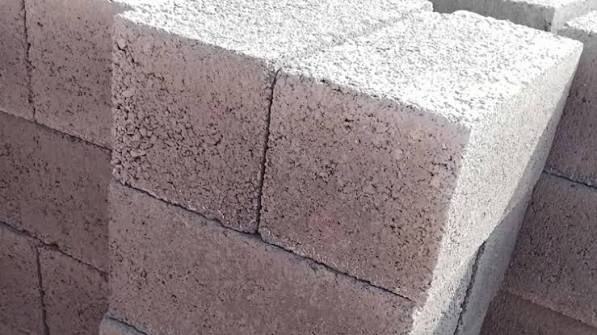
Solid concrete blocks have a largely filled cross-section without the large cavities found in hollow blocks.
They are generally heavier than comparable hollow blocks because they contain more concrete material.
Common applications include:
- Boundary and perimeter walls
- Selected residential walling applications
- Heavy-duty masonry applications
- Landscaping and enclosure structures
- Other applications where solid masonry units are specified
What influences their prices?
Solid concrete block prices may be affected by:
- External dimensions
- Concrete mix proportions
- Cement and aggregate quality
- Required strength
- Manufacturing and compaction processes
- Curing arrangements
- Order quantities
- Delivery distance
Solid blocks may use more concrete than comparable hollow units, but this does not mean they are always more expensive in every market situation. Actual quotations should be compared using equivalent specifications.
B. Hollow Concrete Blocks
Hollow concrete blocks contain internal cavities running through the block. These cavities reduce the amount of concrete used compared with a similarly sized solid block.
They are widely used for different walling applications in residential, commercial and industrial developments.
Common applications include:
- External walls
- Internal partitions
- Commercial building enclosures
- Warehouse walls
- Selected boundary wall applications
- Specially designed reinforced masonry systems
What influences their prices?
Their prices may depend on:
- Number and size of cavities
- Overall block dimensions
- Face-shell and web thickness
- Required compressive strength
- Manufacturing equipment
- Production consistency
- Curing and testing
- Quantity ordered
- Transportation requirements
When purchasing hollow blocks, do not evaluate them based on their external appearance alone. The thickness and quality of the concrete surrounding the cavities are also important.
C. Interlocking Concrete Blocks
Interlocking concrete blocks have specially shaped edges or profiles designed to fit together during installation.
Depending on the system, they may be installed with conventional mortar or using a dry-stacking arrangement.
Common applications include:
- Selected boundary walls
- Landscaping projects
- Garden walls
- Partitioning systems
- Specially designed low-rise structures
- Engineered retaining wall systems
Interlocking block prices depend on their shape, dimensions, production requirements, strength and intended application.
Some designs require specialised moulds and production processes, which may influence their cost.
D. Decorative Concrete Blocks
Decorative blocks are manufactured with patterns, openings or architectural finishes to improve the appearance of walls and outdoor spaces.
Common applications include:
- Decorative boundary walls
- Garden enclosures
- Ventilated wall sections
- Architectural screens
- Landscaping features
- Selected commercial and residential designs
Their prices may differ from standard masonry blocks because of their specialised shapes, moulds, finishing requirements and production quantities.
E. Special-Purpose Concrete Blocks
Some construction projects require specially shaped concrete masonry units.
Examples include:
- Lintel blocks
- Channel or bond-beam blocks
- Corner blocks
- Half blocks
- Pier blocks
- Specially dimensioned masonry units
Their prices depend on the complexity of their design, manufacturing requirements, strength and availability.
These products should be selected according to the architectural and structural drawings.
3. Main Factors That Determine Concrete Block Prices in Uganda
Understanding the factors that influence concrete block prices helps you evaluate quotations and prepare a realistic construction budget.
1. Type of Concrete Block
Different block types require different quantities of materials and manufacturing arrangements.
For example, solid blocks generally contain more concrete than comparable hollow blocks, while decorative and interlocking blocks may require specialised moulds.
Always identify the exact block type before requesting a quotation.
2. Block Dimensions
The size of a concrete block has a direct influence on the materials used during production.
Larger blocks may require more concrete, while special dimensions may involve additional manufacturing arrangements.
When comparing suppliers, confirm that the products have equivalent dimensions.
Also establish whether the quoted measurements are actual or nominal dimensions.
3. Compressive Strength Requirements
Compressive strength refers to the ability of a concrete masonry unit to resist compressive loading under specified test conditions.
Blocks manufactured to meet different strength requirements may have different production and quality-control costs.
The required strength should be determined by the intended application and structural design.
For structural masonry, request the relevant product specifications and test documentation where available.
4. Quality of Cement and Aggregates
Cement and aggregates are major materials used in concrete block production.
The quality and cost of these materials can influence the final product price.
Important considerations include:
- Cement quality
- Aggregate grading
- Aggregate cleanliness
- Material consistency
- Appropriate mix proportions
- Water quality and quantity
Poor-quality raw materials can affect the strength, durability and consistency of finished blocks.
5. Manufacturing Process
The production method can influence the cost and quality of concrete blocks.
Manufacturing activities include:
- Material selection.
- Batching.
- Mixing.
- Moulding.
- Compaction.
- Demoulding.
- Curing.
- Inspection and testing.
Properly controlled production helps achieve more consistent dimensions and performance.
Manufacturers using appropriate equipment and quality-control procedures may have different production costs from those using less controlled methods.
6. Curing and Quality Control
Curing is an important part of concrete block production because it allows concrete to develop strength under suitable conditions.
Proper curing requires appropriate moisture and time, according to the production method and product requirements.
Quality-control activities may include:
- Visual inspection
- Dimensional checks
- Compressive-strength testing
- Assessment of product consistency
- Monitoring of production processes
These activities can influence production costs but are important for supplying reliable building materials.
7. Order Quantity
The number of blocks you purchase can affect the quotation you receive.
Large orders may provide opportunities for negotiated pricing or more efficient delivery arrangements. However, bulk purchasing should not come at the expense of product quality.
Before ordering large quantities, confirm:
- Whether the supplier can fulfil the full order
- Whether production batches will be consistent
- Whether the required delivery schedule is achievable
- Whether storage space is available at the site
For major projects, organise procurement according to the construction programme.
8. Transportation and Delivery Costs
Transportation is an important part of concrete block purchasing in Uganda.
The total delivered cost may depend on:
- Distance between the supplier and construction site
- Vehicle capacity
- Number of delivery trips
- Road conditions
- Accessibility of the site
- Offloading arrangements
- Risk of breakages during transportation
A supplier offering a lower unit price may not necessarily provide the lowest delivered cost.
Always ask whether transportation and offloading are included in the quotation.
9. Location of the Supplier
Supplier location can affect the overall purchase cost.
For example, purchasing blocks from a supplier located far from your construction site may increase transportation expenses.
However, choosing a nearby supplier should not be based on distance alone. The product must still meet the required dimensions, strength and quality specifications.
10. Market Conditions and Production Costs
Concrete block prices may also be affected by changes in:
- Cement prices
- Aggregate prices
- Fuel costs
- Electricity costs
- Labour expenses
- Equipment maintenance
- Transportation charges
- General production expenses
These factors can cause prices to vary over time.
For this reason, use recent quotations when preparing a construction budget rather than relying on old price information.
4. Solid Concrete Blocks vs Hollow Concrete Blocks: Which Is More Affordable?
One common question among property owners and contractors is whether solid or hollow concrete blocks are cheaper.
Hollow blocks generally use less concrete than comparable solid blocks of the same external dimensions. However, their final prices depend on their design, strength, production quality and market availability.
Solid blocks contain more concrete material and are generally heavier, which can affect production, handling and transportation costs.
Cost comparison
| Cost consideration | Solid concrete blocks | Hollow concrete blocks |
|---|---|---|
| Concrete consumption | Generally higher for comparable external dimensions | Generally lower for comparable external dimensions |
| Unit weight | Usually heavier | Usually lighter |
| Handling | May require more effort | Often easier to handle |
| Transportation | Weight may influence transport costs | Lower unit weight may improve transport efficiency |
| Production | Depends on block dimensions and production process | Depends on cavity design and production process |
| Purchase price | Varies by specification and supplier | Varies by specification and supplier |
| Construction suitability | Depends on the specified application | Depends on the specified application |
Which should you choose?
Choose solid blocks when the project specification requires solid masonry units and their weight and material requirements are appropriate.
Consider hollow blocks where the required strength, cavity design and structural details make them suitable.
Do not select one type simply because its unit price is lower. Compare the overall cost and suitability for the intended wall construction.
5. How to Calculate the Total Cost of Concrete Blocks for Your Building
Calculating the required quantity of blocks before purchasing helps prevent unnecessary spending, construction delays and material shortages.
The total cost depends on the number of blocks required and the complete delivered price.
Step 1: Calculate the total wall area
Measure the length and height of each wall.
For a rectangular wall:
Wall area = Wall length × Wall height
For multiple walls, calculate each wall separately and add the results together.
Step 2: Deduct doors and windows
Subtract the areas occupied by doors, windows and other openings.
Net wall area = Total wall area − Total opening area
This gives the approximate area that requires masonry.
Step 3: Determine the coverage of one block
Use the actual laying dimensions of the block and the specified mortar joint to determine its approximate wall coverage.
Do not rely on the external block dimensions alone if the calculation needs to account for mortar joints.
Step 4: Calculate the number of blocks
Number of blocks = Net wall area ÷ Coverage per block
Step 5: Include a wastage allowance
Add a suitable allowance for cutting, breakages, handling losses and construction adjustments.
The allowance should reflect the project layout, block type and site conditions.
Step 6: Calculate the purchase cost
Block purchase cost = Number of blocks × Price per block
Then include transportation, offloading and other applicable charges.
Illustrative concrete block cost calculation
Assume a building requires 100 square metres of net walling.
For illustration, suppose the selected block and mortar-joint arrangement provides coverage of 0.08 square metres per block.
Estimated quantity:
100 ÷ 0.08 = 1,250 blocks.
If a supplier quotes a hypothetical price of UGX 2,000 per block:
1,250 × UGX 2,000 = UGX 2,500,000.
This is an illustration of the calculation method, not a current Ugandan market quotation. Actual quantities and prices must be confirmed using the selected block specifications and supplier quotations. A suitable wastage allowance and delivery costs should also be included in the project budget.
6. How to Compare Concrete Block Prices from Different Suppliers
Comparing suppliers is important when purchasing concrete blocks for residential, commercial or industrial construction.
However, comparing only the quoted price per block can produce misleading results.
Two suppliers may offer different prices because they are supplying products with different dimensions, strength characteristics or quality levels.
Use the following process when evaluating quotations.
1. Compare equivalent block types
Confirm that all suppliers are quoting for the same type of product.
Do not compare a solid block from one supplier with a hollow block from another without accounting for their differences.
2. Confirm the dimensions
Check the specified length, height and thickness.
A small difference in dimensions can affect the number of blocks required and the total walling cost.
3. Compare strength specifications
Ask each supplier for the required strength information and available test documentation.
This is especially important when blocks are intended for structural applications.
4. Inspect product samples
Request representative samples before placing a major order.
Inspect their surfaces, dimensions, edges, cavities and general consistency.
5. Include transportation
Ask whether the quoted price includes delivery to your construction site.
A complete quotation should make transportation and offloading charges clear.
6. Assess supplier reliability
Consider whether the supplier can provide the required quantities consistently and deliver according to your project schedule.
7. Evaluate the total cost
Compare the full purchase and delivery cost rather than the unit price alone.
This helps identify the supplier offering the best overall value.
7. How to Identify Quality Concrete Blocks Before Buying
Choosing quality concrete blocks is important for the durability and performance of a building.
Poor-quality blocks may contribute to cracking, uneven walls, excessive plastering, material wastage and costly repairs.
Before purchasing, consider the following quality checks.
Check the block dimensions
Measure sample blocks and compare them with the specified dimensions.
Consistent dimensions help achieve uniform mortar joints and properly aligned walls.
Inspect the block surface
Look for:
- Major cracks
- Excessive chipping
- Damaged corners
- Uneven surfaces
- Visible honeycombing
- Poorly formed edges
- Inconsistent appearance
Visible defects may indicate manufacturing or handling problems.
Examine hollow block cavities
For hollow blocks, inspect the face shells and internal webs.
They should be properly formed and free from serious damage.
Ask about compressive strength
Request relevant strength specifications and test reports where available.
Do not rely entirely on a supplier’s verbal assurance that the blocks are strong.
Check the curing process
Ask how the blocks are cured and how long they are allowed to develop the required properties before delivery.
Poor curing can affect concrete performance.
Confirm applicable standards
Check the relevant Uganda Standards and conformity requirements through the Uganda National Bureau of Standards (UNBS), particularly for structural or regulated applications.
The block specifications should also match the requirements of the building project.
8. Questions to Ask Before Buying Concrete Blocks in Uganda
Before placing an order, ask the supplier the following questions:
- What type of concrete blocks do you supply?
- What are the exact dimensions?
- What strength requirements does the product meet?
- Are product specifications or test reports available?
- How are the blocks manufactured and cured?
- What is the current price per block?
- Are discounts available for larger orders?
- Is transportation included?
- Can you deliver the required quantity?
- What is the expected delivery schedule?
- How are damaged or non-conforming products handled?
- Can I inspect samples before purchasing?
These questions help you understand what you are paying for and reduce the risk of receiving unsuitable materials.
9. Common Mistakes to Avoid When Buying Concrete Blocks
Many construction budget problems arise from poor procurement planning and inadequate material inspection.
Avoid the following mistakes.
Buying the Cheapest Blocks Without Checking Quality
Low-priced blocks may fail to meet the required specifications.
Always assess dimensions, strength, manufacturing quality and available documentation before purchasing.
Ignoring the Intended Application
A block designed for a non-load-bearing partition may not be appropriate for a load-bearing wall.
Follow the structural drawings and specifications.
Ordering the Wrong Block Dimensions
Incorrect dimensions can affect wall thickness, mortar consumption and the total quantity required.
Confirm measurements before ordering.
Failing to Budget for Transportation
Delivery charges can increase the final purchase cost, particularly where the supplier is far from the construction site.
Include transportation in your budget.
Purchasing Too Many Blocks
Excessive purchasing can tie up funds and create storage challenges.
Prepare accurate quantity estimates before placing an order.
Purchasing Too Few Blocks
Under-ordering can interrupt construction and require additional deliveries at potentially higher costs.
Coordinate material procurement with the construction schedule.
Ignoring Storage and Handling
Poor storage and rough handling can damage blocks before installation.
Ensure that there is adequate space for safe storage and organised handling.
Failing to Inspect Deliveries
Inspect delivered blocks before accepting the order. Report significant damage or differences from the agreed specifications promptly.
10. How to Reduce Concrete Block Purchasing Costs Without Compromising Quality
Reducing material expenses does not mean choosing poor-quality products.
A better approach is to improve procurement planning and avoid unnecessary wastage.
Plan material quantities accurately
Use approved building drawings and quantity estimates to determine the required number of blocks.
Purchase according to construction stages
Coordinate deliveries with the building programme to reduce excessive storage and handling.
Compare several suppliers
Obtain quotations from different suppliers using identical product specifications.
Consider delivered prices
Compare the total delivered cost rather than the factory or yard price alone.
Choose appropriate block dimensions
Select dimensions that suit the wall design and help reduce unnecessary cutting and wastage.
Inspect samples before ordering
Checking samples helps reduce the risk of purchasing large quantities of unsuitable products.
Avoid unnecessary material substitutions
Changing block types or dimensions without technical approval can create additional construction costs and design problems.
Protect delivered materials
Proper storage and handling reduce breakages and replacement expenses.
11. Why Professional Material Selection Matters in Building Construction
Concrete blocks are only one component of a successful construction project.
The overall quality of a building depends on proper planning, suitable material specifications, structural design, workmanship and site supervision.
Professional construction planning helps ensure that:
- Materials match the approved construction drawings.
- Block types are suitable for their intended applications.
- Quantities are estimated accurately.
- Product quality is checked before installation.
- Procurement is coordinated with construction activities.
- Material wastage is controlled.
- Masonry workmanship meets the project requirements.
- Construction defects are identified and corrected early.
For homeowners and property developers, professional guidance can help prevent costly material selection errors and improve project coordination.
Daltrev Co. Ltd. supports construction-related enquiries and project solutions in Uganda.
Explore its construction materials, construction works and construction consultancy pages to learn more about its services.
12. Frequently Asked Questions About Concrete Block Prices in Uganda
1. How much are concrete blocks in Uganda?
Concrete block prices vary according to block type, dimensions, strength, manufacturing quality, supplier location, order quantity and transportation. Request current quotations from suppliers using the same specifications for accurate comparisons.
2. What determines the price of concrete blocks in Uganda?
The main factors include cement and aggregate costs, block dimensions, required strength, manufacturing methods, curing, quality control, order quantity and delivery costs.
3. Are hollow concrete blocks cheaper than solid concrete blocks?
Hollow blocks generally use less concrete than comparable solid blocks of the same external dimensions. However, actual purchase prices depend on the design, strength, manufacturing quality and supplier.
4. Which concrete blocks are best for building a house?
The best blocks depend on the structural design and intended wall application. Both solid and hollow concrete blocks may be suitable for different residential walling requirements when they meet the specified strength and dimensions.
5. How many concrete blocks are required to build a house in Uganda?
The quantity depends on the total wall area, block dimensions, openings, wall thickness and construction details. A contractor or quantity surveyor can calculate the requirement from the building drawings.
6. Where can I buy concrete blocks in Kampala and Wakiso?
Concrete blocks can be sourced from construction-material manufacturers and suppliers serving Kampala, Wakiso and other parts of Uganda. Compare specifications, product quality, delivery arrangements and total costs before purchasing.
7. How do I know whether concrete blocks are strong?
Ask for relevant compressive-strength specifications and test documentation. Inspect the blocks for manufacturing defects and confirm that they meet the requirements of the intended application.
8. Does transportation affect concrete block prices?
Yes. Transportation can influence the total cost depending on supplier distance, vehicle capacity, delivery frequency, road conditions and site accessibility.
9. Should I buy concrete blocks in bulk?
Bulk purchasing may offer pricing or delivery efficiencies, but only when the supplier can maintain consistent quality and the site has suitable storage space. Plan purchases according to the construction schedule.
10. What should I check before accepting a concrete block delivery?
Check the block type, dimensions, quantity, visible condition and consistency with the approved sample and quotation. Identify damaged or non-conforming products before they are installed.
Conclusion: Make Informed Decisions When Buying Concrete Blocks in Uganda
Concrete blocks are essential materials for many residential, commercial, industrial and infrastructure construction projects in Uganda. However, their prices vary depending on product type, dimensions, strength, manufacturing quality, order quantity and transportation.
When preparing your construction budget, avoid focusing only on the cheapest price per block. Compare equivalent specifications, inspect product samples, request quality documentation and consider the full delivered cost.
Accurate quantity estimation and proper procurement planning can also help reduce wastage, prevent material shortages and keep construction activities on schedule.
Whether you are building a home, developing rental properties, constructing commercial premises or managing a large project, choosing suitable concrete blocks is an important step towards achieving durable and cost-effective construction.
For construction materials enquiries and professional project support, visit Daltrev Co. Ltd. or contact the team to discuss your construction requirements.