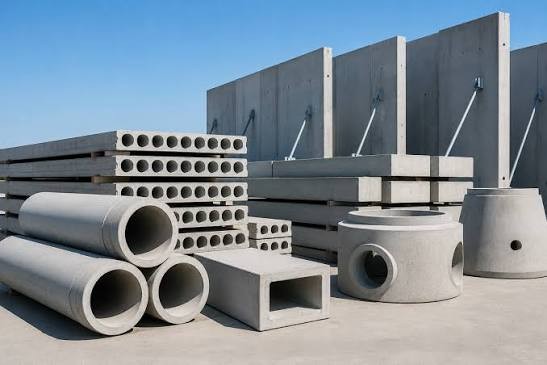
Concrete blocks are among the most widely used building materials in Uganda. They are essential for constructing residential houses, commercial buildings, schools, warehouses, boundary walls and other infrastructure projects. Their strength, durability, versatility and availability make them a practical choice for many types of construction.
However, not all concrete blocks are suitable for every building project. Different block types have different dimensions, strengths, weight characteristics and applications. Choosing the wrong blocks can lead to cracking, excessive mortar consumption, poor wall performance, unnecessary construction costs and long-term maintenance problems.
Whether you are building a family home in Kampala, developing rental apartments in Wakiso, constructing commercial premises or undertaking an industrial project, understanding the available concrete blocks is important.
This guide explains the main types of concrete blocks in Uganda, their uses, advantages, quality requirements, selection criteria and factors that influence their prices. It also highlights what builders and property developers should consider before purchasing concrete blocks for construction.
What Are Concrete Blocks?
Concrete blocks are manufactured masonry units made by combining cement, aggregates and water in controlled proportions. The mixture is placed into moulds and compacted to produce blocks of specific shapes and dimensions. The blocks are then cured to develop the required strength and durability.
Depending on their design, concrete blocks may be solid, hollow, interlocking or specially manufactured for particular construction applications.
They are commonly used to construct:
- External and internal building walls
- Load-bearing and non-load-bearing walls
- Partition walls
- Boundary walls and perimeter enclosures
- Retaining and landscaping structures, where suitably designed
- Commercial and industrial building enclosures
- Storage facilities and warehouses
The suitability of a concrete block depends on its strength, dimensions, density, intended application and compliance with the project’s structural and technical requirements.
Types of Concrete Blocks in Uganda
Concrete blocks are available in different designs to meet the needs of residential, commercial, industrial and infrastructure construction projects.
Understanding the differences helps contractors and property owners select the most appropriate products.
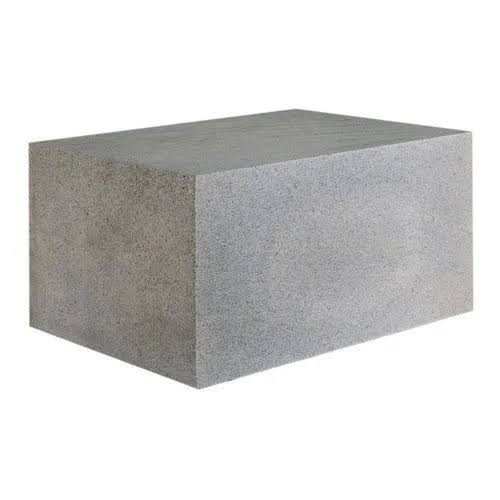
1. Solid Concrete Blocks
Solid concrete blocks have a largely filled cross-section, without the large hollow cores found in hollow blocks. They are generally heavier than comparable hollow units and may be selected where a solid masonry unit is required.
Common applications include:
- Boundary and perimeter walls
- Foundations and substructure masonry where specified
- Heavy-duty masonry applications
- Small retaining or landscaping structures when properly engineered
- Areas requiring particular mass or robustness
Advantages of solid concrete blocks:
- Substantial and robust construction units
- Suitable for applications requiring solid masonry
- Can provide good durability when correctly manufactured and installed
- Useful for selected external and boundary wall applications
Solid blocks should not automatically be treated as suitable for every foundation or structural application. The engineer’s design must determine the appropriate masonry unit and construction method.
2. Hollow Concrete Blocks
Hollow concrete blocks contain one or more cavities running through the block. These openings reduce the amount of concrete used and make the blocks lighter than comparable solid units.
They are widely considered for wall construction in residential, commercial and industrial developments.
Common applications include:
- External building walls
- Internal wall construction
- Partition walls
- Commercial building enclosures
- Warehouse and industrial facility walls
- Boundary walls, depending on design requirements
Advantages of hollow concrete blocks:
- Lower unit weight than comparable solid blocks
- Easier handling in many construction situations
- Reduced material use in the block itself
- Potentially improved thermal performance depending on block design and wall construction
- Suitable for various masonry applications
However, hollow blocks must be selected according to their specified strength and intended use. Not every hollow block is suitable for load-bearing construction.
3. Interlocking Concrete Blocks
Interlocking concrete blocks are designed with shaped edges or profiles that fit together when placed in position. Their design can help align blocks and may reduce dependence on conventional mortar in systems specifically designed for dry stacking.
Different interlocking systems have different installation requirements, reinforcement details and structural limitations.
Common applications include:
- Selected boundary walls
- Landscaping projects
- Garden walls
- Partitioning and enclosure systems
- Specially designed low-rise structures
- Retaining wall systems where engineered for that purpose
Advantages include:
- Improved alignment during installation
- Potentially faster construction with suitable systems
- Consistent block positioning
- Reduced mortar use in systems designed for dry assembly
- A distinctive construction finish
Before using interlocking blocks, confirm the manufacturer’s installation instructions and the engineer’s requirements. The block profile alone does not establish structural suitability.
4. Paving Blocks
Concrete paving blocks are manufactured units designed for external ground surfaces. They are different from conventional walling blocks and should not be confused with masonry units.
They are commonly used to create durable paved surfaces for pedestrian and vehicle movement.
Applications include:
- Driveways
- Parking areas
- Walkways
- Compound paving
- Commercial premises
- Industrial yards
- Courtyards and outdoor spaces
Their performance depends on factors such as block thickness, strength, laying pattern, bedding material, edge restraints, sub-base preparation and drainage.
For areas exposed to vehicle traffic, the paving design should be based on the expected loads and ground conditions.
5. Decorative Concrete Blocks
Decorative concrete blocks are designed to provide both enclosure and visual appeal. They may have patterned surfaces, openings or other architectural features.
Common applications include:
- Garden walls
- Ventilated wall sections
- Decorative boundary walls
- Screens and partitions
- Architectural landscaping
- Selected commercial and residential features
Decorative blocks should be selected according to their intended function. Units designed mainly for appearance may not be appropriate for load-bearing walls or security enclosures.
6. Special-Purpose Concrete Blocks
Some projects require concrete masonry units with specific shapes, dimensions or performance characteristics.
Examples include:
- Lintel blocks
- Channel or bond-beam blocks
- Corner blocks
- Half blocks
- Pier blocks
- Specially shaped masonry units
These products can help accommodate structural details, openings, wall intersections and particular construction arrangements.
Their use should follow the project drawings and technical specifications. Special-shaped units should not replace properly designed reinforced concrete elements unless the design specifically allows them.
Common Uses of Concrete Blocks in Uganda
Concrete blocks serve different purposes across Uganda’s construction industry. Their application depends on the type of building, structural design, environmental conditions and expected performance.
1. Residential House Construction
Concrete blocks are commonly used to construct walls for bungalows, maisonettes, apartment buildings and other residential developments.
They may be used for:
- External walls
- Internal partitions
- Garage walls
- Utility rooms
- Boundary walls
- Selected architectural features
For residential buildings, homeowners should consider block strength, dimensional accuracy, durability and the requirements of the building design.
2. Commercial Building Construction
Commercial developments such as offices, retail shops, shopping complexes, hotels and business premises require suitable masonry materials.
Concrete blocks can be used for external enclosures, internal partitions, service areas and other walling applications.
The selected blocks should meet the building’s structural, fire-safety, acoustic and other applicable performance requirements.
3. Industrial Construction
Factories, workshops, warehouses and storage facilities may use concrete blocks for selected walling and enclosure applications.
Industrial projects often require careful consideration of:
- Wall height and stability
- Expected impact and operational loads
- Exposure to moisture and chemicals
- Fire-safety requirements
- Ventilation requirements
- Security considerations
The project engineer should determine the appropriate masonry system for the facility.
4. Boundary Wall Construction
Concrete blocks are widely used for perimeter walls around homes, institutions, commercial properties and industrial sites.
The appropriate block type depends on the required wall height, ground conditions, wind exposure, security needs and structural design.
A boundary wall should not be treated as a simple arrangement of blocks. Its foundation, piers, reinforcement, drainage and stability must be properly considered.
5. Agricultural and Institutional Buildings
Concrete blocks can also be used in agricultural buildings, schools, clinics, community facilities and other institutional developments.
They may form walls for storage rooms, offices, classrooms, workshops and utility buildings, provided the selected units meet the project’s requirements.
How to Choose the Right Concrete Blocks for Your Building Project
Selecting suitable concrete blocks is important for achieving strong, durable and cost-effective construction.
The following considerations can help property owners, contractors and developers make informed purchasing decisions.
1. Identify the Intended Application
Start by determining where the blocks will be used.
Are they required for external walls, internal partitions, boundary walls, commercial enclosures or another application?
Different applications have different requirements. A block suitable for a non-load-bearing partition may not be appropriate for a load-bearing wall.
Consult the architectural and structural drawings before placing an order.
2. Check the Required Compressive Strength
Compressive strength is one of the most important characteristics of concrete masonry units.
It indicates the ability of a block to withstand compressive loading under specified test conditions.
When evaluating concrete blocks, consider:
- The strength required by the project specification
- The intended wall application
- The manufacturer’s declared product characteristics
- Available test reports
- Applicable Uganda Standards and relevant project requirements
Do not select blocks based only on their appearance or the seller’s verbal assurance. Where strength is important, request appropriate test documentation or arrange independent testing.
3. Confirm Block Dimensions
Concrete blocks should have dimensions that are suitable for the project drawings and construction requirements.
Inaccurate dimensions can result in:
- Uneven wall surfaces
- Inconsistent mortar joints
- Additional plastering work
- Increased mortar consumption
- Difficulty aligning walls
- Delays during construction
Check the actual dimensions of sample blocks rather than relying only on the advertised measurements.
Also confirm whether the stated dimensions are nominal or actual dimensions.
4. Inspect the Physical Condition
A quality concrete block should be reasonably uniform and free from serious defects that could affect its performance.
During inspection, look for:
- Major cracks
- Broken corners and edges
- Excessive chipping
- Poorly formed cavities
- Uneven surfaces
- Visible honeycombing
- Significant variations between units
Minor surface variations may occur, but widespread defects can indicate poor production, handling or curing practices.
5. Consider Water Absorption and Durability
Concrete blocks used in external walls and moisture-exposed locations should be suitable for the environmental conditions in which they will operate.
Excessive water absorption may contribute to moisture-related problems, depending on the block, wall detailing and exposure conditions.
Ask whether the manufacturer can provide relevant test information. Also consider damp-proofing, external finishes, drainage and other protective measures specified for the building.
6. Evaluate the Manufacturing and Curing Process
The quality of concrete blocks depends heavily on the materials and production process.
Important manufacturing considerations include:
- Suitable cement and aggregates
- Accurate batching
- Appropriate water content
- Effective mixing
- Proper moulding and compaction
- Adequate curing
- Careful handling and storage
- Quality inspection and testing
Proper curing is particularly important because concrete needs suitable moisture and time to develop its intended strength.
Avoid purchasing blocks solely because they look dry, hard or ready for immediate use. Ask the supplier about the production date and curing arrangements.
7. Check Compliance With Applicable Standards
Concrete blocks should meet the applicable product requirements and project specifications.
In Uganda, buyers should confirm the relevant Uganda Standards and applicable conformity requirements through the Uganda National Bureau of Standards (UNBS), particularly where the blocks are intended for structural or regulated applications.
A supplier should be able to explain the product specifications and provide supporting documentation where available.
Do not assume that every block sold in the market automatically meets the requirements for every type of building.
8. Compare Suppliers, Not Just Prices
Different suppliers may offer concrete blocks at different prices because of variations in raw materials, production processes, dimensions, strength, quality control and transport arrangements.
When comparing suppliers, evaluate:
- Product specifications
- Consistency of dimensions
- Manufacturing quality
- Available test reports
- Order quantities
- Delivery arrangements
- Replacement policies for damaged products
- Reliability of supply
A lower purchase price does not necessarily mean a lower total construction cost.
Factors That Affect Concrete Block Quality
The quality of concrete blocks is influenced by several production and handling factors.
| Quality factor | Why it matters |
|---|---|
| Cement quality | Influences the strength and binding performance of the concrete mix |
| Aggregate quality | Affects the strength, texture and consistency of the finished block |
| Mix proportions | Determine the balance of materials used in production |
| Water content | Influences workability, compaction and final performance |
| Compaction | Helps achieve a more consistent and properly formed unit |
| Curing | Allows concrete to develop strength under suitable conditions |
| Mould condition | Influences dimensions, shape and surface consistency |
| Storage and handling | Helps prevent damage before delivery and installation |
| Quality testing | Provides evidence that products meet specified requirements |
A reliable concrete block manufacturer should pay attention to these factors throughout production.
Concrete Block Prices in Uganda: What Determines the Cost?
Concrete block prices in Uganda vary depending on the product type, dimensions, strength, manufacturing process, order quantity and delivery location.
There is no single price that applies to every concrete block because different products serve different purposes and have different specifications.
The main factors influencing concrete block prices include:
1. Type of Concrete Block
Solid blocks, hollow blocks, interlocking blocks and decorative blocks have different manufacturing requirements and material quantities.
Special-purpose blocks may also cost more because of their shapes, moulds or production processes.
2. Block Dimensions
Larger or specially dimensioned blocks may require different quantities of materials and production arrangements.
Always compare products with equivalent dimensions when requesting quotations.
3. Strength Requirements
Blocks manufactured to meet higher specified strength requirements may involve different material proportions, production controls and testing requirements.
Buyers should compare products according to their required performance rather than assuming that blocks of similar appearance have the same strength.
4. Order Quantity
The quantity ordered can influence the supplier’s pricing, production arrangements and delivery costs.
Large projects may benefit from planned bulk orders, but buyers should ensure that the supplier can maintain consistent quality across the entire delivery.
5. Transport and Delivery
Transportation is an important part of the total cost of purchasing concrete blocks.
The final amount may depend on:
- Distance from the production facility
- Delivery location
- Vehicle capacity
- Accessibility of the construction site
- Number of deliveries required
- Offloading arrangements
When comparing quotations, ask whether transportation and offloading are included.
6. Manufacturing and Quality Control
Production methods, equipment, labour, curing arrangements and quality assurance procedures can all affect the final price.
A product manufactured with proper controls may have a different price from one produced under inconsistent conditions.
How to Compare Concrete Block Quotations
Before accepting a quotation, confirm that the suppliers are offering equivalent products.
Your comparison should include:
- Block type
- Dimensions
- Required strength
- Quantity
- Unit price
- Delivery charges
- Expected delivery schedule
- Applicable taxes and other charges
- Product documentation and quality assurance arrangements
This approach helps prevent misleading price comparisons and unexpected expenses.
How Many Concrete Blocks Do You Need for Your Building?
Estimating the number of blocks required is an important part of construction planning.
The quantity depends on the total wall area, block dimensions, openings, wall thickness, construction details and wastage allowance.
A basic estimation process involves:
Step 1: Calculate the total wall area.
Multiply the length of each wall by its height, then add the areas together.
Step 2: Deduct openings.
Subtract the areas occupied by doors, windows and other openings where blocks will not be installed.
Step 3: Determine the coverage of one block.
Use the block’s actual or specified laying dimensions, including the intended mortar joint, to establish its approximate wall coverage.
Step 4: Divide the net wall area by the coverage of one block.
This gives an initial estimate of the number of blocks required.
Step 5: Add an appropriate allowance.
Include a project-specific allowance for cutting, breakages, handling losses and design adjustments.
Example of a Basic Block Quantity Calculation
Assume a building has a net wall area of 100 square metres after deducting openings.
If the selected block and mortar-joint arrangement provides an approximate coverage of 0.08 square metres per block:
100 ÷ 0.08 = 1,250 blocks.
This is only an illustrative calculation. Actual block coverage depends on the product’s dimensions and the specified mortar joints. A contractor or quantity surveyor should verify the final quantities using the building drawings.
Common Mistakes to Avoid When Buying Concrete Blocks
Choosing unsuitable concrete blocks can affect construction quality, costs and project timelines.
Avoid the following mistakes:
1. Buying Blocks Based Only on Price
The cheapest blocks may not meet the required strength, dimensions or durability requirements.
Compare specifications and quality before making a purchasing decision.
2. Ignoring the Intended Application
A block suitable for a partition wall may not be suitable for a load-bearing wall.
Always follow the structural design and project specifications.
3. Failing to Inspect Samples
Do not place a large order without inspecting representative samples.
Check the dimensions, appearance, cavities, edges and consistency of the products.
4. Ignoring Curing and Manufacturing Quality
Poor curing and inconsistent production can affect block strength and durability.
Ask the supplier about production controls and available quality documentation.
5. Overlooking Transportation Costs
A supplier may offer an attractive unit price, but delivery charges can significantly affect the total purchase cost.
Request a complete quotation that includes transportation arrangements.
6. Ordering Without Accurate Quantity Estimates
Under-ordering can interrupt construction, while excessive ordering can tie up project funds and create storage problems.
Prepare a block schedule or quantity estimate before purchasing.
7. Storing Blocks Improperly
Poor storage and rough handling can cause damage before the blocks are installed.
Store blocks on a stable, well-drained surface and handle them carefully.
8. Using Blocks Without Professional Guidance
Structural applications require appropriate technical design.
Do not use concrete blocks for load-bearing walls, retaining walls or other critical structural elements without confirming their suitability with the responsible construction professional.
Best Practices for Storing and Handling Concrete Blocks
Proper storage and handling help maintain product quality between delivery and installation.
Consider the following practices:
- Store blocks on firm, level and well-drained ground.
- Keep them organised to reduce unnecessary movement.
- Avoid excessive stacking that may cause instability or damage.
- Protect products from contamination by soil, mud and construction waste.
- Separate damaged blocks from acceptable units.
- Handle blocks carefully during loading, unloading and movement.
- Follow supplier guidance on curing, storage and the appropriate time for use.
Blocks should be inspected when delivered so that any damaged or non-conforming products can be identified before construction progresses.
Why Professional Construction Planning Matters When Using Concrete Blocks
Selecting quality concrete blocks is only one part of achieving a durable building. Proper planning, structural design, material specification, workmanship and site supervision are equally important.
A well-managed project should ensure that:
- The selected blocks match the architectural and structural drawings.
- Wall thicknesses and layouts are correctly specified.
- Openings and wall intersections are properly detailed.
- Mortar is prepared and used appropriately.
- Masonry walls are correctly aligned and levelled.
- Reinforcement and structural connections follow the design.
- Materials are inspected before installation.
- Construction defects are identified and corrected early.
For developers and property owners, professional construction guidance can help reduce material wastage, avoid unsuitable product selection and improve project coordination.
Daltrev Co. Ltd. supports construction-related enquiries and project solutions. For information about its services, explore the construction materials, construction works and construction consultancy pages.
How to Choose a Reliable Concrete Block Supplier in Uganda
The supplier you choose can influence the quality, availability and cost of materials used on your construction project.
Before making a commitment, consider the following:
Product specifications: Confirm the type, dimensions and strength requirements of the blocks.
Quality consistency: Ask how the supplier maintains consistency between production batches.
Testing and documentation: Request relevant test reports or product information where available.
Production capacity: Establish whether the supplier can meet your required quantities and delivery schedule.
Delivery reliability: Confirm transport arrangements, access to the site and offloading responsibilities.
Transparent pricing: Request a written quotation with clear product descriptions and charges.
Customer communication: Choose a supplier who can explain product differences and respond to technical questions.
For large construction projects, it is advisable to approve samples and verify product specifications before placing major orders.
Concrete Blocks vs Other Walling Materials: What Should You Consider?
Concrete blocks are not the only materials available for wall construction. Depending on the project, builders may also consider fired-clay bricks, stabilised soil blocks and other masonry systems.
| Consideration | Concrete blocks | Fired-clay bricks | Stabilised soil blocks |
|---|---|---|---|
| Manufacturing materials | Cement, aggregates and water | Processed clay and other suitable materials | Suitable soil, stabiliser and water |
| Product form | Solid, hollow and special shapes | Generally smaller masonry units | Often compressed blocks |
| Typical applications | Residential, commercial and industrial masonry | General wall construction and selected architectural applications | Suitable projects based on design and material performance |
| Installation considerations | Block dimensions, mortar joints and handling | More units and joints may be required for a given wall area | Depends on block type, stabilisation and construction method |
| Selection priorities | Strength, dimensions, curing and durability | Quality of firing, dimensions and durability | Soil suitability, stabilisation, strength and moisture resistance |
The best option depends on the building design, local material availability, technical requirements, labour skills, construction budget and long-term performance expectations.
Frequently Asked Questions About Concrete Blocks in Uganda
1. What are the main types of concrete blocks used in Uganda?
Common types include solid concrete blocks, hollow concrete blocks, interlocking blocks, decorative blocks and special-purpose masonry units. Concrete paving blocks are also widely used for external surfaces, although they are not conventional walling blocks.
2. Which concrete blocks are best for building a house in Uganda?
The best blocks depend on the building design and their intended use. Hollow or solid concrete blocks may be suitable for different wall applications, but the required strength, dimensions and wall specification should be confirmed by the project engineer.
3. Are hollow concrete blocks strong enough for building construction?
Hollow concrete blocks can be suitable for various building applications when they meet the required strength and design specifications. However, not every hollow block is suitable for load-bearing walls. Always check the structural requirements before purchasing.
4. What is the difference between solid and hollow concrete blocks?
Solid concrete blocks have a largely filled cross-section, while hollow concrete blocks contain cavities. Hollow blocks are generally lighter than comparable solid units, while solid blocks may be selected where a solid masonry unit is required.
5. How can I identify quality concrete blocks?
Inspect dimensions, shape, edges, surface condition and consistency. Ask about the manufacturing and curing process, and request relevant strength test reports or product documentation where available.
6. How much do concrete blocks cost in Uganda?
Prices vary according to block type, dimensions, strength, manufacturing quality, order quantity and delivery location. Request quotations from suppliers using the same product specifications to make a meaningful comparison.
7. How many concrete blocks are needed to build a house?
The quantity depends on the total wall area, block dimensions, openings, wall thickness and construction details. A quantity surveyor or contractor can calculate the requirement from the building drawings and include an appropriate allowance for wastage.
8. Can concrete blocks be used for boundary walls?
Yes. Concrete blocks are commonly used for boundary walls, but the design must account for wall height, foundations, stability, wind exposure, soil conditions and any required reinforcement.
9. What causes concrete blocks to crack?
Cracking may result from inadequate manufacturing, poor curing, unsuitable materials, handling damage, excessive loading, foundation movement, poor installation or inadequate structural detailing. The cause should be investigated before repairs are selected.
10. Where can I get concrete blocks for a construction project in Uganda?
Concrete blocks can be sourced from construction-material manufacturers and suppliers. Before purchasing, verify the product specifications, quality documentation, quantities, delivery arrangements and suitability for the intended application.
Conclusion: Choose the Right Concrete Blocks for Durable Construction
Concrete blocks are important building materials for residential, commercial, industrial and infrastructure developments across Uganda. However, selecting the right product requires more than comparing prices or choosing blocks based on appearance.
Builders and property developers should consider block type, compressive strength, dimensions, manufacturing quality, curing, durability, applicable standards and the intended construction application.
By inspecting products, comparing suppliers and following professional construction specifications, you can make better purchasing decisions and reduce the risk of material-related problems.
For construction materials enquiries, project support and professional construction-related services, visit Daltrev Co. Ltd. or contact the team to discuss your project requirements.