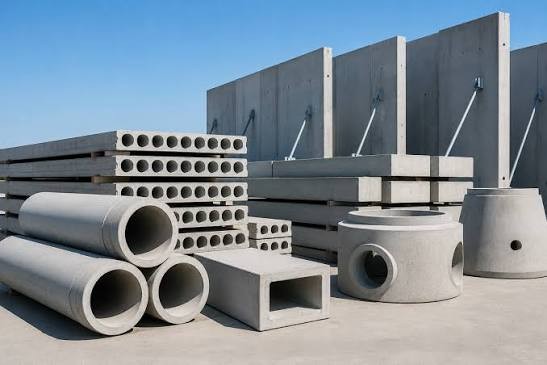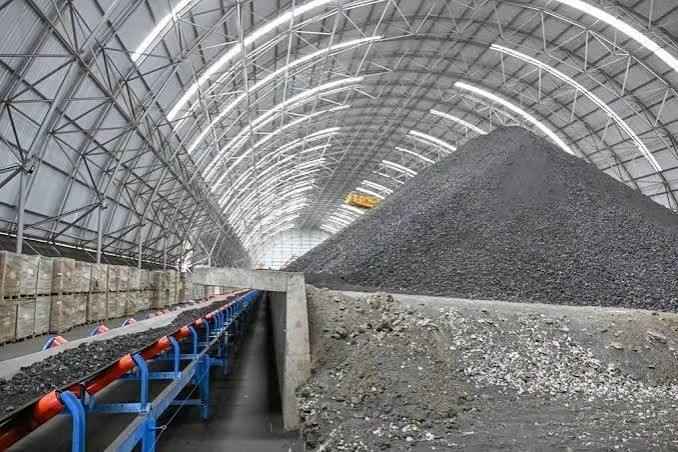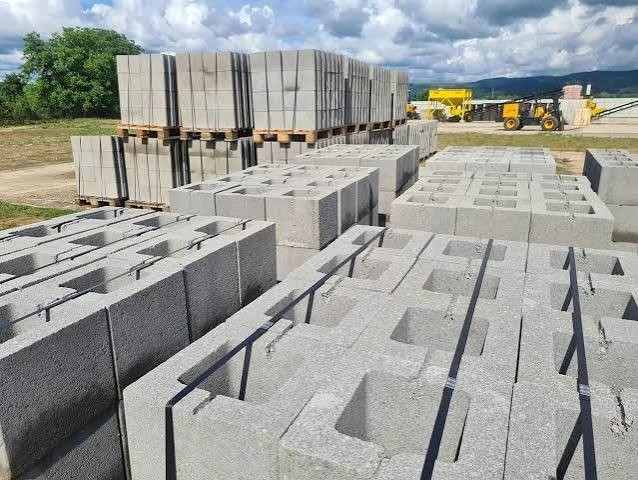
Concrete blocks are among the most widely used building materials in Uganda. They are used in residential houses, commercial buildings, schools, warehouses, boundary walls and other construction projects because they are durable, versatile and suitable for different types of building work.
However, the quality of a concrete block depends on much more than the cement used to manufacture it. The selection of aggregates, water quality, mix proportions, batching accuracy, machine compaction, curing and quality control all influence the strength and durability of the finished product.
For manufacturers, understanding these factors is essential for producing consistent blocks that meet construction requirements. For builders and property developers, knowing how concrete blocks are manufactured makes it easier to identify reliable products and avoid materials that may compromise a building.
This guide explains concrete block manufacturing in Uganda, including the materials required, production processes, machinery, quality standards, common defects and factors to consider when choosing concrete blocks for a construction project.
1. What Is Concrete Block Manufacturing?
Concrete block manufacturing is the process of producing masonry units by combining cement, aggregates and water in carefully controlled proportions, placing the mixture into moulds, compacting it and allowing it to cure until it develops the required strength.
Concrete blocks are commonly manufactured in solid or hollow forms, depending on their intended application and design requirements.
The manufacturing process can be carried out using manual moulds, semi-automatic machines or fully automatic block-making equipment. The choice of production method depends on the required output, available investment, product specifications and level of quality control.
In Uganda, concrete blocks are used in projects such as:
- Residential houses and apartments.
- Commercial buildings and office developments.
- Schools, hospitals and institutional facilities.
- Warehouses and industrial buildings.
- Boundary walls and perimeter enclosures.
- Garages, workshops and storage facilities.
- Selected infrastructure and landscaping works.
The correct block type should always be selected according to the structural design, engineering specifications and intended use.
2. Materials Used in Concrete Block Manufacturing
The quality of concrete blocks begins with the selection of suitable raw materials. Poor-quality ingredients can result in weak blocks, inconsistent dimensions, excessive water absorption and premature deterioration.
The main materials used in concrete block manufacturing in Uganda include cement, aggregates and clean water.
2.1 Cement
Cement is the binding material that holds the aggregates together. When mixed with water, it forms a paste that binds the particles and hardens over time.
Manufacturers should use suitable cement that complies with the applicable product requirements and is stored correctly.
Important considerations include:
- Use cement from reputable and reliable sources.
- Check packaging and product condition before use.
- Avoid cement that has absorbed moisture or formed hard lumps.
- Store cement in a dry, covered area.
- Apply the correct cement content based on the approved mix design.
Using more cement does not automatically guarantee stronger blocks. The overall mix design, aggregate quality, compaction and curing process must also be controlled.
2.2 Fine Aggregates
Fine aggregates, commonly referred to as sand, help fill spaces between larger particles and contribute to the density and workability of the concrete mixture.
Suitable sand should be clean and free from excessive clay, silt, organic matter and other harmful impurities.
Manufacturers should pay attention to:
- Sand grading and particle size distribution.
- Excessive clay or silt content.
- Organic contamination.
- Consistency of supply.
- Moisture content, which can affect the amount of water required.
Poor-quality sand can weaken the finished blocks and make production results inconsistent.
2.3 Coarse Aggregates
Coarse aggregates provide the particle structure needed to produce concrete blocks. Depending on the block type and production method, manufacturers may use suitable crushed stone, graded aggregate or other approved materials.
The aggregate size should be appropriate for the mould dimensions and the required surface finish.
Good coarse aggregates should be:
- Clean and free from harmful contamination.
- Properly graded.
- Durable and suitable for concrete production.
- Compatible with the block-making equipment.
- Consistent in size and quality.
Oversized or poorly graded aggregates may affect compaction, block dimensions and surface quality.
2.4 Water
Water is required for cement hydration and to achieve the appropriate moisture condition for block production.
Clean water suitable for concrete production should be used. Water contaminated with excessive salts, oils, chemicals or organic matter can interfere with cement hydration and affect the quality of the finished blocks.
The amount of water must be controlled carefully. Too much water may reduce strength and cause dimensional instability, while insufficient water may make proper mixing and compaction difficult.
2.5 Optional Additives and Pigments
Some manufacturers use approved admixtures or pigments to improve particular properties or produce coloured concrete blocks.
These materials should only be introduced where appropriate, and their effects should be evaluated through suitable trials. Manufacturers should follow the product manufacturer’s instructions and applicable technical requirements.
3. The Concrete Block Manufacturing Process in Uganda
Producing quality concrete blocks requires a controlled sequence of activities. Although equipment and production capacity differ between manufacturers, the main stages remain similar.
Step 1: Selecting and Preparing Raw Materials
The first stage involves sourcing suitable cement, sand, coarse aggregates and water.
Materials should be inspected before production begins. Sand and aggregates should be checked for contamination, grading and consistency, while cement should be stored in dry conditions.
A reliable supply of consistent materials helps manufacturers maintain uniform block quality from one production batch to another.
Step 2: Measuring and Batching Materials
Batching is the process of measuring the ingredients required for a concrete mix.
Accurate batching is important because variations in cement, aggregate and water quantities can affect the strength, density and appearance of the blocks.
Manufacturers may use weight-based or carefully controlled volume-based batching systems, depending on the production setup. Weight-based batching generally provides better control and repeatability.
The mix proportions should be established through an appropriate mix design and verified by production trials rather than relying on guesswork.
Step 3: Mixing the Concrete
The measured materials are combined using a suitable concrete mixer or other approved mixing method.
The objective is to achieve a uniform mixture in which cement and water are distributed throughout the aggregates.
Concrete block mixtures are often designed to be relatively stiff compared with conventional wet concrete because the blocks must retain their shape immediately after moulding.
Poor mixing can result in weak areas, uneven cement distribution and inconsistent block quality.
Step 4: Filling the Moulds
The prepared mixture is transferred into moulds designed to produce the required block shape and dimensions.
The moulds may be configured to produce solid blocks, hollow blocks or other specialised masonry units.
The mixture should be distributed evenly to prevent incomplete filling, irregular edges and variations in block density.
Step 5: Compaction and Vibration
Compaction is one of the most important stages in concrete block manufacturing.
The mixture is compressed inside the mould using mechanical pressure, vibration or a combination of both, depending on the machine design.
Proper compaction helps remove unwanted air spaces and produces blocks with better density, shape and consistency.
Insufficient compaction may cause:
- Weak or fragile blocks.
- Poorly formed edges and corners.
- Excessive surface voids.
- Inconsistent dimensions.
- Reduced resistance to handling and transportation.
Excessive or poorly controlled vibration can also affect production quality. The equipment should be operated according to the manufacturer’s instructions and the established production procedure.
Step 6: Demoulding and Initial Handling
Once the mixture has been compacted sufficiently to retain its shape, the newly formed blocks are removed from the moulds.
Fresh blocks should be handled carefully because they have not yet developed their full strength.
They should be placed on suitable, level surfaces where they can remain undisturbed during the initial setting period.
Rough handling can cause cracks, chipped edges and deformation.
Step 7: Curing the Concrete Blocks
Curing is essential because it allows cement hydration to continue and helps the blocks develop their required strength.
Concrete blocks should be protected from rapid moisture loss, excessive heat, direct harsh sunlight and physical damage during the curing period.
Depending on the production method and site conditions, curing may involve controlled water spraying, covering or other suitable moisture-retention methods.
Manufacturers should establish a consistent curing procedure and maintain records of production and curing periods.
A block that appears dry or hard on the outside is not necessarily fully cured or ready for every intended application.
Step 8: Quality Inspection, Testing and Storage
After curing, blocks should be inspected and tested according to the applicable product specification and intended use.
Inspection should consider:
- Dimensions and dimensional consistency.
- Shape and appearance.
- Cracks, chips and visible defects.
- Density and uniformity.
- Compressive strength.
- Water absorption, where required by the applicable specification.
Finished blocks should be stacked carefully on stable ground and protected from damage before transportation or delivery.
Manufacturers should not release products for use simply because they have been moulded and stored for a few days. Product acceptance should be based on the relevant requirements and test results.
4. Machinery and Equipment Used in Concrete Block Manufacturing
The equipment used in concrete block manufacturing depends on production capacity, available capital, labour and the level of automation required.
Common equipment includes:
Concrete Block-Making Machine
A block-making machine forms concrete into the required shape and dimensions. Depending on its design, it may use manual pressure, hydraulic systems, mechanical compression or vibration.
Concrete Mixer
A concrete mixer combines cement, aggregates and water to achieve a consistent mixture before moulding.
Block Moulds
Moulds determine the shape, thickness, length, width and configuration of the finished blocks. They should be maintained in good condition to prevent dimensional variations.
Batching Equipment
Batching equipment helps measure materials accurately and maintain consistent mix proportions.
Curing and Storage Facilities
A suitable curing area protects newly manufactured blocks from damage and excessive moisture loss. Storage space should also allow finished blocks to be stacked safely.
Testing Equipment
Manufacturers may require access to suitable testing equipment or an accredited testing laboratory to evaluate properties such as compressive strength and water absorption.
5. Types of Concrete Blocks Manufactured in Uganda
Different types of concrete blocks are used for different construction purposes. Their selection should be based on engineering specifications, building design and performance requirements.
5.1 Solid Concrete Blocks
Solid concrete blocks contain no large hollow cores and are used in applications where the specified masonry design requires a solid unit.
They may be used for selected load-bearing or non-load-bearing masonry applications, depending on their verified strength and design suitability.
<PLACEHOLDER: Insert image of solid concrete blocks>
5.2 Hollow Concrete Blocks
Hollow concrete blocks contain internal voids that reduce the amount of concrete used in each unit and may reduce the overall weight of the masonry.
They are commonly used in building walls, subject to the structural and architectural requirements of the project.
The size, web thickness and strength of hollow blocks must be suitable for their intended application.
<PLACEHOLDER: Insert image of hollow concrete blocks>
5.3 Interlocking Concrete Blocks
Interlocking blocks are designed with profiles that allow adjoining units to fit together in a particular arrangement.
They may be used in selected walling and landscaping applications. Their installation requirements depend on the design, product specification and whether reinforcement, grout or other supporting elements are required.
5.4 Decorative Concrete Blocks
Decorative blocks are manufactured to provide visual patterns, ventilation or architectural finishes.
They are commonly used in boundary walls, screens, garden features and selected building façades.
5.5 Specialised Concrete Masonry Units
Manufacturers may also produce specialised units for particular building applications, provided the products are designed and tested to meet the required specifications.
These may include corner units, partition units and other purpose-made masonry components.
6. Quality Standards for Concrete Blocks in Uganda
Quality control is essential in concrete block manufacturing because blocks form part of a building’s walls and may contribute to its structural performance.
Manufacturers and buyers should identify the applicable Uganda Standards (US) and any relevant East African or other recognised standards referenced by the project specification.
The applicable standard depends on the product type, intended use and whether the block is load-bearing or non-load-bearing.
Manufacturers should confirm the current standard, edition and conformity requirements with the Uganda National Bureau of Standards (UNBS) rather than relying on outdated or informal specifications.
Important quality requirements include the following.
6.1 Compressive Strength
Compressive strength measures the ability of a concrete block to withstand crushing loads.
It is particularly important when blocks are intended for load-bearing masonry or other applications where they are required to resist significant forces.
The required strength should be specified by the applicable product standard and the project engineer. Manufacturers should use suitable test methods and keep records of results.
A block’s appearance alone cannot establish its compressive strength.
6.2 Dimensional Accuracy
Concrete blocks should have consistent dimensions so that they can be laid correctly and produce uniform wall thicknesses and mortar joints.
Poor dimensional accuracy can increase mortar consumption, slow down construction and create alignment problems.
Manufacturers should inspect block dimensions regularly and maintain moulds and machines in good condition.
6.3 Water Absorption
Water absorption indicates how much water a block takes in under a specified test procedure.
Excessive absorption may affect moisture performance, durability and the behaviour of masonry finishes.
Acceptable limits depend on the applicable standard and product classification. Testing should follow the specified method.
6.4 Density and Uniformity
Block density can influence handling, weight and certain performance characteristics.
Manufacturers should maintain consistent batching, mixing and compaction procedures to minimise differences between individual units and production batches.
6.5 Appearance and Workmanship
Finished blocks should be inspected for visible defects such as:
- Major cracks.
- Broken corners and edges.
- Excessive surface voids.
- Poorly formed faces.
- Distorted shapes.
- Inconsistent finishes.
Minor appearance variations should be assessed against the relevant product specification rather than judged without reference to the intended use.
6.6 Durability
Concrete blocks should be suitable for the environmental conditions and exposure associated with their intended application.
Material quality, mix design, compaction, curing and workmanship all contribute to long-term performance.
Where blocks will be exposed to moisture, aggressive environments or other demanding conditions, the project specification should address the relevant durability requirements.
7. Quality Control Measures During Block Manufacturing
Quality should be managed throughout production, not only when the finished blocks are inspected.
A consistent quality-control system helps manufacturers identify problems early and reduce waste.
Important measures include:
Raw material inspection: Check cement, sand, aggregates and water before production. Reject or investigate materials that do not meet the required specifications.
Accurate batching: Use controlled measuring procedures and record the quantities used for each production batch.
Mixing control: Maintain consistent mixing procedures and ensure that materials are evenly distributed.
Machine maintenance: Inspect block-making machines, moulds, vibration systems and mixers regularly.
Compaction monitoring: Maintain consistent machine settings and operating procedures.
Curing management: Protect blocks and follow a documented curing procedure.
Routine testing: Arrange appropriate testing at the required frequency and retain test reports.
Batch identification: Keep records that connect production dates, raw materials, mix details, curing and test results.
These measures help manufacturers maintain consistency and provide buyers with greater confidence in the products supplied.
8. Common Problems in Concrete Block Manufacturing and How to Prevent Them
Even when manufacturers have suitable machinery, production problems can occur if materials and processes are not properly controlled.
| Common problem | Possible cause | Recommended prevention |
|---|---|---|
| Weak blocks | Poor mix design, inadequate cement content, poor compaction or insufficient curing | Review mix design, batching, compaction and curing |
| Cracked blocks | Poor handling, rapid moisture loss or unsuitable mix conditions | Improve handling and curing procedures |
| Broken corners | Early handling, weak moulding or rough transportation | Improve demoulding, stacking and transportation |
| Uneven dimensions | Damaged moulds, inconsistent filling or machine problems | Maintain moulds and inspect production settings |
| Excessive surface voids | Poor grading, inadequate filling or insufficient compaction | Improve aggregate selection and compaction |
| Inconsistent block quality | Uncontrolled material quantities or changing production conditions | Standardise batching and maintain production records |
| High water absorption | Unsuitable materials, poor compaction or inadequate curing | Review material quality and production controls |
Identifying the actual cause of a defect is important. Increasing cement content without investigating the production process may not solve the problem.
9. Factors Affecting the Cost of Concrete Block Manufacturing in Uganda
The cost of manufacturing concrete blocks varies according to production capacity, raw material prices, equipment, labour and operating conditions.
There is no single manufacturing cost that applies to every block producer in Uganda.
The main cost factors include:
Raw Material Prices
Cement, sand, aggregates and water contribute significantly to production costs. Prices may vary depending on location, supplier, transport distance and availability.
Machinery and Equipment
Manual, semi-automatic and automatic machines have different purchase, installation, maintenance and operating costs.
Labour Costs
The number of workers required depends on production capacity, equipment and the level of automation.
Electricity and Fuel
Energy costs may arise from operating mixers, block-making machines, water pumps and other production equipment.
Production Capacity
Higher production volumes may improve operational efficiency, but only where demand, equipment performance, labour and material supply are properly managed.
Transport and Distribution
Moving raw materials to the production site and delivering finished blocks to customers can significantly affect the final selling price.
Quality Testing and Compliance
Testing, inspection, certification and other conformity-related requirements should be included in the manufacturer’s operating budget.
Manufacturers should evaluate all these factors before setting selling prices or investing in a block-making operation.
10. How to Choose Quality Concrete Blocks for Construction Projects in Uganda
Builders and property developers should assess concrete blocks carefully before purchasing them. Low prices may appear attractive, but weak or inconsistent blocks can create additional costs during construction and throughout the building’s service life.
Consider the following factors when selecting a supplier.
1. Confirm the Intended Application
Establish whether the blocks will be used for load-bearing walls, non-load-bearing partitions, boundary walls or another purpose. The required product specification will depend on the application.
2. Ask About Product Specifications
Request information about block dimensions, strength classification, intended use and applicable standards.
3. Request Test Results
Where strength or other performance characteristics are important, ask for relevant laboratory test reports. Reports should identify the product tested, the test method and the results.
4. Inspect the Blocks
Check for visible cracks, damaged edges, irregular shapes and significant variations in dimensions.
5. Assess Production Consistency
Where possible, inspect more than one block and consider whether the supplier can maintain consistent quality across the quantities required.
6. Consider Transportation and Handling
Blocks may be damaged during loading, transportation and unloading. Confirm that the supplier has appropriate handling and delivery arrangements.
7. Compare Value, Not Just Price
Compare products based on verified quality, dimensions, suitability, availability and delivery costs rather than selecting a supplier solely because of the lowest quoted price.
For load-bearing applications, the project engineer should confirm that the selected block type and strength are suitable for the design.
11. Why Quality Concrete Block Manufacturing Matters to Uganda’s Construction Industry
The demand for residential, commercial, institutional and industrial developments makes reliable building materials important to Uganda’s construction industry.
Consistent concrete block manufacturing supports better construction outcomes in several ways.
- Improved building quality: Properly manufactured blocks help contractors achieve the specified masonry performance.
- Reduced material wastage: Consistent dimensions and fewer defective units can reduce unnecessary waste.
- Better construction efficiency: Uniform blocks are easier to lay and can support more predictable construction progress.
- Greater customer confidence: Documented quality control and test results help buyers assess product suitability.
- More reliable project planning: Consistent product specifications make it easier to estimate quantities and coordinate material deliveries.
Manufacturers, suppliers, contractors and developers all have a role in ensuring that concrete blocks used in construction are suitable for their intended applications.
12. How Daltrev Co. Ltd Supports Construction Projects in Uganda
Choosing suitable construction materials is an important part of delivering durable and well-managed building projects.
Daltrev Co. Ltd provides construction-related services and supports clients with construction materials enquiries and sourcing based on project requirements, specifications, quantities and availability.
Whether you are planning a residential development, commercial building, industrial facility or infrastructure project, selecting appropriate materials and coordinating them with the construction requirements can help improve project planning and execution.
Daltrev Co. Ltd also provides construction and civil engineering works, construction consultancy and related project support services.
Explore our construction materials services, learn more about our construction and civil works, or visit our construction consultancy services.
For assistance with your next construction project in Uganda, contact Daltrev Co. Ltd.
13. Frequently Asked Questions About Concrete Block Manufacturing in Uganda
What materials are used to manufacture concrete blocks in Uganda?
The main materials are cement, fine aggregates such as sand, suitable coarse aggregates and clean water. Some manufacturers may also use approved admixtures or pigments for specialised products.
How are concrete blocks manufactured?
Concrete blocks are manufactured by measuring and mixing cement, aggregates and water, filling moulds, compacting the mixture, demoulding the units, curing them and carrying out quality inspections and testing.
Which machine is used to manufacture concrete blocks?
Concrete blocks can be produced using manual, semi-automatic or automatic block-making machines. The appropriate machine depends on the desired production capacity, block design, available investment and quality-control requirements.
What determines the strength of concrete blocks?
Block strength depends on the quality of raw materials, mix design, batching accuracy, mixing, compaction, curing and production consistency. Strength should be verified through appropriate testing.
What is the difference between solid and hollow concrete blocks?
Solid blocks have no large internal hollow cores, while hollow blocks contain internal voids. Their weight, material use and applications differ. The correct type should be selected according to the building design and engineering requirements.
How long should concrete blocks be cured?
Curing requirements depend on the mix, manufacturing method, environmental conditions and applicable product specification. Blocks should be protected against rapid moisture loss and tested or released for use according to the relevant requirements rather than relying on appearance alone.
How can I identify good-quality concrete blocks?
Check the dimensions, appearance, consistency and condition of the blocks. For projects with specific strength requirements, request relevant test results and confirm that the products comply with the applicable standard.
Are concrete blocks suitable for load-bearing walls?
Some concrete blocks are suitable for load-bearing masonry, but not every block is designed for that purpose. The required strength, dimensions and other properties must meet the project specification, and the structural engineer should approve their use.
What affects the price of concrete blocks in Uganda?
Prices are influenced by block size and type, cement and aggregate costs, production methods, manufacturing location, quality requirements, order quantities and transportation.
Where can I find concrete block suppliers in Uganda?
You can identify suppliers through local construction-material networks and manufacturers. Before purchasing, inspect the products, confirm their specifications and request test documentation where necessary.