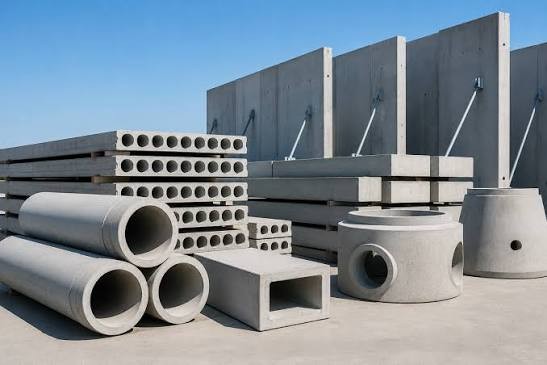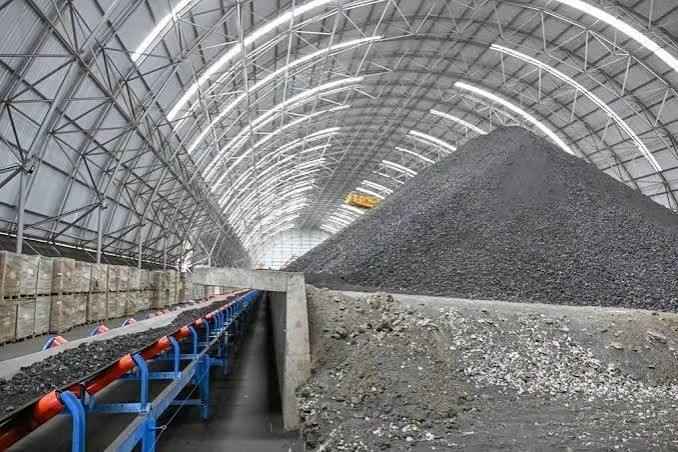
Ready-mix concrete is an important construction material used in residential, commercial, industrial and infrastructure projects. As construction projects in Uganda become increasingly demanding, property developers and contractors are looking for reliable concrete solutions that offer consistent quality, efficient placement and better control over construction activities.
Whether you are constructing a residential house, apartment building, office complex, warehouse, factory, road or drainage structure, concrete quality plays a major role in determining the strength, durability and long-term performance of the finished project.
Ready-mix concrete provides an alternative to traditional site-mixed concrete by allowing concrete to be batched at a production facility according to a specified mix design and delivered to the construction site while fresh. This approach can improve consistency, reduce certain on-site activities and make concrete production easier to coordinate with construction schedules.
However, achieving good results requires more than simply ordering concrete. Developers and contractors must understand the required concrete grade, mix specifications, delivery arrangements, placement conditions, quality-control procedures and the capabilities of the supplier.
This guide explains everything you need to know about ready-mix concrete in Uganda, including its benefits, applications, production process, cost factors and important considerations when selecting a supplier.
1. What Is Ready-Mix Concrete?
Ready-mix concrete is concrete manufactured at a batching plant or designated production facility according to an approved mix design and delivered to a construction site in a fresh, workable condition.
It is produced by combining carefully measured quantities of cement, aggregates, water and, where required, chemical admixtures or supplementary cementitious materials.
The proportions are determined according to the required concrete performance, intended application, exposure conditions and project specifications.
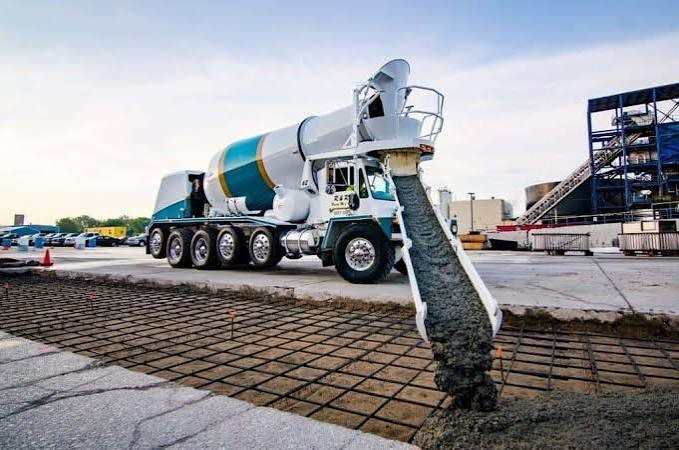
After batching, the concrete is transported to the construction site, commonly in a truck mixer designed to maintain the concrete in a workable condition during transit.
Ready-mix concrete is used in many construction activities, including:
- Building foundations.
- Reinforced concrete columns and beams.
- Suspended and ground floor slabs.
- Concrete walls.
- Roads and pavements.
- Drainage structures.
- Retaining walls.
- Industrial floors.
- Infrastructure developments.
The main difference between ready-mix concrete and traditional site-mixed concrete is where and how the concrete ingredients are measured and combined.
With ready-mix concrete, batching is undertaken at a production facility, while site-mixed concrete is prepared at the construction site using the available equipment and mixing arrangements.
2. How Is Ready-Mix Concrete Produced?
Ready-mix concrete production involves several stages to ensure that the finished material meets the required specifications.
2.1 Mix Design Preparation
The production process begins with determining the appropriate concrete mix design.
The mix design establishes the required proportions of cement, aggregates, water and any approved admixtures.
It considers factors such as:
- Required compressive strength.
- Workability.
- Aggregate properties.
- Water-cement ratio.
- Exposure conditions.
- Concrete placement method.
- Structural application.
- Applicable project specifications.
The mix should be appropriate for the intended construction activity rather than selected based on strength alone.
2.2 Raw Material Selection
The quality of ready-mix concrete depends on the materials used during production.
Common ingredients include:
Cement: Acts as the binding material that holds the concrete ingredients together.
Fine aggregates: Usually sand, which fills spaces between larger aggregate particles and contributes to the concrete mix.
Coarse aggregates: Crushed stone or gravel that forms the main granular structure of concrete.
Water: Required for cement hydration and workability.
Admixtures: Special additives used where necessary to modify properties such as setting time, workability or water demand.
Materials should be suitable for the specified concrete mix and project requirements.
2.3 Batching and Mixing
The ingredients are measured according to the approved mix design.
Modern batching facilities may use automated weighing and control systems to improve accuracy and consistency.
The materials are then mixed to achieve a uniform concrete mixture with the required properties.
2.4 Transportation to the Construction Site
Fresh ready-mix concrete is commonly transported using truck mixers.
The transportation process must be properly planned to reduce delays and maintain the required workability.
The distance from the batching plant, traffic conditions, site accessibility and weather can all affect delivery arrangements.
2.5 Concrete Placement and Finishing
Once delivered, concrete should be inspected and placed using an appropriate method.
Depending on the construction activity, placement may involve direct discharge, concrete pumps or other approved equipment.
The concrete is then compacted, levelled and finished according to the project specifications.
2.6 Curing
Curing is an important stage in concrete construction.
After placement and finishing, concrete should be protected and cured appropriately to support strength development and durability.
Poor curing can lead to surface cracking, reduced strength development and other performance problems.
3. Types and Grades of Ready-Mix Concrete
Ready-mix concrete can be produced in different mix designs depending on the strength, workability and performance requirements of a construction project.
The correct concrete grade should be specified by the project engineer or relevant design professional.
3.1 Standard-Strength Concrete
Standard-strength concrete is used in a range of general construction applications where the design specifies the corresponding strength class.
Depending on the project requirements, it may be used for selected foundations, slabs, walkways and other concrete works.
3.2 Structural Concrete
Structural concrete is designed to carry loads in building and infrastructure components.
Common applications include:
- Reinforced concrete foundations.
- Columns.
- Beams.
- Structural slabs.
- Retaining walls.
- Structural staircases.
The required strength and other properties must follow the structural design.
3.3 High-Strength Concrete
High-strength concrete is specified for applications requiring higher compressive strength than ordinary structural mixes.
It may be used in selected columns, heavily loaded structural components and specialised construction projects.
Its production requires appropriate mix design, material selection and quality control.
3.4 Pumpable Concrete
Pumpable concrete is designed to flow through concrete pumping equipment without unacceptable segregation or blockage.
It is useful for construction sites where concrete must be placed at elevated levels, in confined areas or at locations that are difficult to reach using conventional discharge methods.
3.5 Specialised Concrete Mixes
Some projects require specialised concrete designed for particular conditions.
Examples include:
- Concrete with controlled setting characteristics.
- Concrete designed for aggressive exposure conditions.
- Low-permeability concrete.
- Fibre-reinforced concrete.
- Concrete with specified workability requirements.
- Concrete designed for particular mass-concrete applications.
The suitability of each mix must be confirmed through the project specifications and appropriate technical assessment.
Important: Concrete grades, strength classes and mix descriptions should not be treated as interchangeable. Always confirm the specified characteristic strength, testing age, exposure requirements and other relevant properties before ordering.
4. Applications of Ready-Mix Concrete in Uganda
Ready-mix concrete is suitable for a wide range of construction and infrastructure applications.
4.1 Residential Building Construction
Residential developments require concrete for several structural and non-structural components.
Ready-mix concrete may be used in:
- Strip and pad foundations.
- Ground beams.
- Reinforced concrete columns.
- Beams and suspended slabs.
- Staircases.
- Ground floor slabs.
- Retaining structures.
- External concrete pavements.
For homeowners and residential contractors, ready-mix concrete can help simplify concrete production and improve batching consistency when compared with poorly controlled site mixing.
The required mix must still be selected according to the structural drawings and engineering specifications.
4.2 Commercial Building Construction
Commercial developments such as office buildings, shopping centres, hotels, retail premises and apartment complexes often require substantial quantities of concrete.
Ready-mix concrete can be used for:
- Foundations.
- Reinforced concrete frames.
- Floor slabs.
- Columns and beams.
- Staircases.
- Parking areas.
- Loading bays.
- External paving.
For larger projects, scheduled concrete deliveries can help coordinate construction activities and reduce interruptions during major pours.
4.3 Industrial Building Construction
Factories, warehouses and industrial facilities require concrete structures capable of meeting specific loading and operational conditions.
Ready-mix concrete may be used for:
- Industrial floor slabs.
- Machine foundations.
- Reinforced concrete structures.
- Loading and unloading areas.
- Retaining walls.
- Equipment support structures.
- External pavements.
Industrial floor concrete should be specified according to expected traffic, equipment loads, abrasion, jointing requirements and the intended service environment.
4.4 Road Construction and Infrastructure
Ready-mix concrete is used in various infrastructure applications where concrete construction is specified.
Examples include:
- Concrete roads and pavements.
- Bridge components.
- Drainage structures.
- Culvert headwalls.
- Roadside channels.
- Kerbs.
- Retaining structures.
- Access platforms.
Infrastructure projects require careful consideration of concrete strength, exposure conditions, placement methods and curing.
4.5 Drainage and Water Management Structures
Concrete is widely used in drainage and water management infrastructure.
Ready-mix concrete can be used for:
- Drainage channels.
- Manholes.
- Inspection chambers.
- Culvert structures.
- Concrete pipe surrounds where specified.
- Water management structures.
The concrete mix should be appropriate for the expected moisture exposure and other environmental conditions.
4.6 Institutional Construction
Schools, hospitals, churches and other institutional developments require concrete for foundations, floors, structural frames, stairs, walkways and external works.
Ready-mix concrete can support construction programmes where reliable batching and coordinated deliveries are important.
5. Benefits of Using Ready-Mix Concrete
Ready-mix concrete offers several advantages over conventional site mixing when the production, delivery and placement processes are properly managed.
5.1 Consistent Concrete Quality
One of the main advantages of ready-mix concrete is the potential for more consistent batching.
At a properly managed batching plant, ingredients are measured according to an established mix design.
This reduces dependence on informal site measurements, which can vary between batches.
Consistency is particularly important for structural components where concrete must meet specified strength and durability requirements.
5.2 Accurate Material Proportions
Ready-mix concrete production can use weighing and batching systems to control the quantities of cement, aggregates, water and admixtures.
Accurate batching helps achieve the intended concrete properties.
However, accuracy still depends on equipment calibration, material control, mix design and production supervision.
5.3 Reduced On-Site Mixing Activities
Using ready-mix concrete reduces the need to store and measure all concrete ingredients separately at the construction site.
This can reduce certain labour requirements, equipment needs and site activities associated with concrete production.
It may be particularly useful on sites with limited working space.
5.4 Faster Concrete Placement
Ready-mix concrete can be delivered in planned quantities for scheduled construction activities.
This is beneficial when casting foundations, slabs, columns, beams and other components that require continuous or coordinated placement.
When deliveries are properly scheduled, contractors can reduce interruptions caused by preparing individual batches on site.
5.5 Better Construction Scheduling
Concrete production can take place separately from other construction activities.
This allows contractors to focus on formwork, reinforcement, access preparation and placement arrangements while the concrete is being produced.
Coordinated deliveries can improve construction planning and help reduce avoidable delays.
5.6 Reduced Material Storage Requirements
Site mixing requires storage space for cement, sand, aggregates and other ingredients.
Ready-mix concrete reduces the need to store all these materials at the construction site in large quantities.
This can improve site organisation, especially in urban developments and projects with limited storage areas.
5.7 Potential Reduction in Material Wastage
Controlled batching and ordering concrete according to calculated quantities can help reduce material wastage.
However, accurate quantity estimation is essential. Ordering too much concrete can still result in unnecessary waste, while ordering too little may interrupt construction.
5.8 Improved Project Cost Management
Although ready-mix concrete may have a different purchase cost from site-mixed concrete, its overall value should be assessed by considering labour, equipment, material handling, quality control, wastage and construction time.
For some projects, the reduced site mixing requirements and improved batching consistency can support better cost management.
5.9 Suitable for Large and Small Projects
Ready-mix concrete can be used for different construction project sizes, depending on supplier availability, delivery capacity, minimum order quantities and site access.
It is suitable for residential developments, commercial buildings, industrial facilities and infrastructure works where the required supply arrangements can be established.
6. Ready-Mix Concrete vs Site-Mixed Concrete
Both ready-mix concrete and site-mixed concrete are used in Uganda’s construction industry.
The most appropriate option depends on project size, site conditions, quality requirements, available equipment, budget and delivery logistics.
| Factor | Ready-mix concrete | Site-mixed concrete |
|---|---|---|
| Production location | Batching plant or production facility | Construction site |
| Batching | Measured according to mix design | Measured and mixed at site |
| Consistency | Can offer controlled batching | Depends heavily on site procedures |
| Storage | Less need to store separate ingredients on site | Requires storage for cement and aggregates |
| Labour | Less on-site mixing labour | Requires mixing and material-handling labour |
| Delivery | Requires transport from batching plant | Materials are stored and mixed on site |
| Scheduling | Requires coordinated delivery slots | Production can be arranged in smaller batches |
| Quality control | Production and delivery controls are essential | Site batching and supervision are essential |
| Suitable applications | Projects requiring planned concrete volumes and controlled batching | Smaller or remote projects where batching on site is practical |
Ready-mix concrete is not automatically better for every project. A properly designed and controlled site-mixed concrete operation can also achieve the required quality.
The decision should be based on the project’s technical requirements and total construction cost.
7. Factors to Consider Before Ordering Ready-Mix Concrete in Uganda
Ordering ready-mix concrete requires proper planning to ensure that the delivered concrete meets the project’s requirements.
7.1 Required Concrete Grade
Establish the concrete grade or strength class specified by the structural engineer.
Do not select a mix based only on what is commonly available or what the supplier recommends without checking the project requirements.
7.2 Workability Requirements
Concrete workability describes how easily fresh concrete can be mixed, transported, placed and compacted.
The required workability depends on the placement method, reinforcement arrangement, formwork geometry and whether concrete pumping will be used.
The specified slump or other workability requirements should be agreed before production.
7.3 Aggregate Size
The maximum aggregate size must be suitable for the member dimensions, reinforcement spacing and placement method.
Incorrect aggregate selection can make concrete placement and compaction difficult.
7.4 Water-Cement Ratio
The water-cement ratio has a major influence on concrete strength and durability.
Adding excessive water at the construction site can reduce strength and increase permeability, shrinkage and other performance problems.
Any adjustment to the concrete mix should be authorised and documented by the responsible technical personnel.
7.5 Delivery Distance and Time
Ready-mix concrete must be transported while maintaining the required workability.
Consider the distance from the batching plant, expected traffic, weather, site access and the time required for discharge.
Delivery schedules should account for local traffic conditions, particularly in busy urban areas.
7.6 Site Accessibility
Confirm that delivery trucks can reach the construction site safely.
Check road width, turning space, ground conditions, overhead obstructions and the availability of suitable discharge or pumping positions.
7.7 Quantity Requirements
Calculate the required concrete volume accurately using the construction drawings and measurements.
Allow for appropriate project-specific contingencies, but avoid ordering excessive quantities.
For large pours, coordinate the required volume and delivery sequence with the supplier and site team.
7.8 Placement and Compaction Equipment
Ensure that the site has the necessary equipment and labour to place and compact the concrete promptly.
Depending on the project, this may include concrete vibrators, pumps, screeds, finishing tools and adequate labour.
7.9 Weather Conditions
Rainfall and high temperatures can affect concrete placement, finishing and curing.
Prepare appropriate protection and placement arrangements based on the weather conditions expected during the pour.
7.10 Quality Documentation
Establish what documentation will accompany the concrete delivery.
Depending on the project, this may include delivery tickets, mix identification, batch information, relevant test documentation and other quality records.
8. How to Calculate the Quantity of Ready-Mix Concrete Required
Accurate quantity estimation is essential when ordering ready-mix concrete.
Concrete is generally ordered by volume, commonly expressed in cubic metres (m³).
For a simple rectangular concrete slab, the basic calculation is:
Concrete volume = Length × Width × Thickness
All dimensions must be converted into metres before calculating the volume.
For example, consider a slab with the following dimensions:
- Length: 10 metres.
- Width: 8 metres.
- Thickness: 0.15 metres.
The calculation is:
10 × 8 × 0.15 = 12 m³.
The calculated concrete volume is therefore 12 cubic metres before any project-specific allowance.
For foundations, beams, columns, walls and more complicated structures, calculate the volume of each component separately and combine the results.
The final order quantity should be checked against the construction drawings, actual site measurements, formwork dimensions and expected placement losses.
For complex projects, a quantity surveyor or construction professional should verify the concrete quantities before ordering.
9. What Determines the Cost of Ready-Mix Concrete in Uganda?
The price of ready-mix concrete in Uganda varies depending on several factors.
There is no single price that applies to every project because concrete mixes differ in strength, workability, ingredients and delivery requirements.
The main cost factors include:
9.1 Concrete Grade and Mix Design
Higher specified strength or specialised performance requirements may require different mix proportions and materials.
These differences can affect the price per cubic metre.
9.2 Cement and Aggregate Costs
Cement, sand and coarse aggregates are major components of concrete production.
Changes in the cost, availability and transportation of these materials can affect ready-mix concrete prices.
9.3 Admixtures and Special Requirements
Some concrete mixes require chemical admixtures to achieve particular workability, setting or durability characteristics.
Specialised mix requirements may increase production costs.
9.4 Order Volume
The quantity ordered can influence pricing and delivery arrangements.
Larger orders may offer production or transportation efficiencies, depending on the supplier’s capacity and operating conditions.
9.5 Delivery Distance
The distance between the batching plant and the construction site affects transportation costs and delivery planning.
Sites located far from the production facility may require additional transport arrangements.
9.6 Concrete Pumping Requirements
Some construction sites require concrete pumps to place concrete at elevated levels or in areas that are difficult to access.
Pumping may involve additional charges for equipment, mobilisation and operation.
9.7 Site Accessibility
Difficult access, restricted delivery hours, poor road conditions and complicated offloading arrangements can increase supply costs.
9.8 Testing and Quality-Control Requirements
Projects requiring additional testing, technical documentation or specialised quality-control procedures may incur additional costs.
9.9 Minimum Order Quantities and Waiting Time
Suppliers may have minimum delivery quantities or additional charges for waiting time, cancelled deliveries or other special arrangements.
Confirm these conditions before placing an order.
How to get an accurate quotation: Provide the supplier with the concrete grade, required volume, delivery location, placement method, expected delivery date and any special project specifications.
10. Quality Control and Testing of Ready-Mix Concrete
Quality control is essential because the strength and durability of concrete affect the safety and performance of buildings and infrastructure.
Both the concrete supplier and the construction team have responsibilities during production, delivery, placement and curing.
Important quality-control activities include:
10.1 Inspection of Fresh Concrete
Fresh concrete should be checked to confirm that it is suitable for the intended application.
Depending on the project specifications, checks may include visual assessment, temperature measurement and workability testing.
10.2 Slump Testing
A slump test is commonly used to assess the consistency and workability of fresh concrete.
The test helps establish whether the concrete’s workability is within the specified range.
A slump test does not directly measure compressive strength.
10.3 Concrete Cube or Cylinder Testing
Concrete samples may be prepared and tested to assess compressive strength at specified ages.
The testing method, sample preparation, curing and acceptance criteria should follow the applicable project requirements and relevant standards.
10.4 Delivery Ticket Verification
Check the delivery documentation to confirm that the concrete delivered matches the approved order.
Relevant details may include:
- Concrete grade or mix identification.
- Batch information.
- Delivery time.
- Quantity supplied.
- Specified workability.
- Any approved admixture requirements.
10.5 Proper Placement and Compaction
Concrete should be placed and compacted correctly to reduce the risk of honeycombing, voids, segregation and other defects.
10.6 Proper Curing
After placement, concrete should be protected and cured according to the specified procedures.
Proper curing supports strength development, reduces premature moisture loss and contributes to long-term durability.
For critical structural works, testing and acceptance should be managed by the responsible project professionals.
11. Common Mistakes to Avoid When Using Ready-Mix Concrete
Even quality ready-mix concrete can produce poor results if it is not ordered, delivered and placed correctly.
Avoid these common mistakes:
Ordering the wrong concrete grade: Always confirm the specified grade or strength class before placing an order.
Estimating the wrong volume: Inaccurate measurements can cause shortages or unnecessary excess concrete.
Ignoring delivery schedules: Delays can affect workability and interrupt continuous placement activities.
Adding water without authorisation: Uncontrolled water addition can change the mix properties and compromise the intended performance.
Failing to prepare the site: Formwork, reinforcement, access, equipment and labour should be ready before delivery.
Ignoring workability requirements: Concrete must be suitable for the placement method and reinforcement arrangement.
Poor compaction: Inadequate vibration or unsuitable placement techniques can leave voids and honeycombing.
Neglecting curing: Failure to cure concrete properly can affect strength development and durability.
Failing to inspect deliveries: Verify delivery details and carry out the required fresh-concrete checks.
Choosing a supplier based on price alone: Compare technical capability, quality control, delivery reliability and the total cost of supply.
12. How to Choose a Reliable Ready-Mix Concrete Supplier in Uganda
The quality of ready-mix concrete depends partly on the supplier’s ability to produce and deliver concrete according to the agreed specifications.
Before selecting a supplier, consider the following factors.
Production Capacity
Confirm that the supplier can provide the required concrete volume within your construction programme.
Large projects may require several coordinated deliveries.
Quality-Control Procedures
Ask how materials are tested, batching equipment is controlled and finished concrete mixes are monitored.
A reliable supplier should be able to explain its quality-control arrangements.
Mix Design Capability
Confirm that the supplier can provide the specified concrete grade, workability and other project requirements.
Delivery Reliability
Ask about delivery scheduling, fleet capacity, service area and procedures for managing delays.
Technical Support
Choose a supplier who can communicate clearly about concrete specifications, delivery requirements and quality documentation.
Transparent Pricing
Request a detailed quotation showing the concrete grade, price per cubic metre, minimum order, transport, pumping and any other applicable charges.
Relevant Experience
Where possible, assess the supplier’s experience with projects involving similar concrete volumes, specifications and placement requirements.
Documentation and Testing
Confirm whether delivery tickets, test results and other relevant quality records can be provided.
For structural projects, the supplier should work in coordination with the contractor, engineer and other responsible professionals.
13. When Is Ready-Mix Concrete the Best Choice?
Ready-mix concrete can be particularly useful in projects where consistent batching, larger concrete volumes and coordinated placement are important.
It may be a suitable choice when:
- A project requires substantial concrete volumes.
- Structural components have specified strength requirements.
- Concrete must be placed within a planned construction programme.
- The construction site has limited space for storing cement and aggregates.
- Concrete pumping is required.
- Repeated concrete pours need consistent mix specifications.
- The contractor wants to reduce certain site-mixing activities.
However, site-mixed concrete may be more practical for small projects, remote locations or situations where ready-mix delivery is not commercially or logistically feasible.
The most appropriate option should be established through technical and cost evaluation.
14. Ready-Mix Concrete and Modern Construction in Uganda
Uganda’s construction industry includes residential developments, commercial buildings, industrial facilities, roads, drainage systems and public infrastructure.
These projects require construction materials that meet technical specifications while supporting effective project planning and cost management.
Ready-mix concrete can contribute to these objectives by providing a controlled batching process and allowing concrete production to be coordinated with site activities.
Its use is particularly relevant where concrete quality, production volume and placement schedules need close coordination.
However, successful implementation requires proper mix design, reliable production, efficient delivery, competent placement, compaction, curing and quality assurance.
As construction methods continue to develop, ready-mix concrete remains an important option for projects seeking practical and well-managed concrete supply arrangements.
15. Construction Materials and Professional Construction Services from Daltrev Co. Ltd
Successful building projects depend on selecting appropriate construction materials and coordinating their use with the overall construction programme.
Daltrev Co. Ltd supports construction and development projects in Uganda through construction materials enquiries and a wider range of professional construction services.
Clients undertaking residential, commercial, industrial and infrastructure developments can make enquiries about concrete products and other construction materials according to their project specifications, quantities and availability requirements.
Daltrev’s broader construction-related services include:
- Building construction and civil engineering works.
- Road construction and rehabilitation.
- Drainage and infrastructure works.
- Construction consultancy and project management.
- Quantity surveying and cost management.
- Architectural and structural design.
- Interior design.
- Facilities maintenance.
For clients planning concrete-intensive construction projects, coordinating material requirements with professional construction planning and cost management can help improve procurement and project execution.
Explore Daltrev Co. Ltd’s construction materials and building supplies to learn more about construction materials enquiries.
You can also explore Daltrev’s construction and civil works and construction consultancy and project management services.
For enquiries about construction materials or project requirements, contact Daltrev Co. Ltd.
16. Frequently Asked Questions About Ready-Mix Concrete in Uganda
1. What is ready-mix concrete?
Ready-mix concrete is concrete produced at a batching plant according to a specified mix design and delivered fresh to a construction site for placement.
2. What is ready-mix concrete used for?
It is used in foundations, columns, beams, floor slabs, reinforced concrete structures, industrial floors, roads, pavements, drainage structures and other construction applications.
3. What are the benefits of ready-mix concrete?
Its potential benefits include controlled batching, consistent mix proportions, reduced site-mixing activities, coordinated deliveries, reduced ingredient storage requirements and improved construction scheduling.
4. How much does ready-mix concrete cost in Uganda?
The price depends on the concrete grade, mix design, order volume, delivery distance, pumping requirements and other supply conditions. Request a current quotation based on your project specifications and location.
5. What is the difference between ready-mix concrete and site-mixed concrete?
Ready-mix concrete is produced at a batching plant and delivered to the site. Site-mixed concrete is prepared at the construction site using locally measured ingredients and mixing equipment.
6. Is ready-mix concrete stronger than site-mixed concrete?
Not automatically. Strength depends on the mix design, materials, water-cement ratio, batching accuracy, placement, compaction and curing. Both methods can achieve specified strength when properly controlled.
7. How is ready-mix concrete delivered?
It is commonly delivered using truck mixers that maintain the concrete in a workable condition during transportation. Other equipment, such as concrete pumps, may be used where necessary.
8. What is a concrete slump test?
A slump test is a field test used to assess the consistency and workability of fresh concrete. It helps determine whether the concrete meets the specified workability requirement.
9. Can ready-mix concrete be used for house construction?
Yes. It can be used for foundations, ground beams, columns, slabs, staircases and other concrete components in residential construction, provided the mix meets the design specifications.
10. What information is needed when ordering ready-mix concrete?
You should provide the required concrete grade, volume, delivery location, expected delivery date, placement method and any special technical requirements.
11. Can ready-mix concrete be pumped?
Yes. Pumpable concrete can be supplied where the mix design and workability are suitable for the pumping equipment and placement conditions.
12. Why is curing important after placing ready-mix concrete?
Curing helps maintain suitable moisture and temperature conditions for cement hydration and strength development. Poor curing can affect concrete performance and durability.
13. How long does ready-mix concrete take to harden?
Concrete begins to stiffen and set after placement, but strength develops over time. A commonly specified compressive-strength testing age is 28 days, although the required testing schedule and acceptance criteria depend on the project specifications.
14. Can ready-mix concrete be used in large commercial and industrial projects?
Yes. It is commonly suitable for large concrete pours and structural works where the supplier has sufficient production and delivery capacity and the site can accommodate the required operations.
17. Conclusion: Is Ready-Mix Concrete the Right Choice for Your Construction Project?
Ready-mix concrete offers a practical solution for many residential, commercial, industrial and infrastructure construction projects in Uganda.
Its advantages include controlled batching, consistent mix proportions, reduced on-site mixing activities, coordinated delivery and the potential for better construction scheduling.
However, good results depend on selecting the correct concrete grade, confirming the required workability, planning deliveries, preparing the site, placing and compacting the concrete correctly and following appropriate curing procedures.
Before ordering, compare suppliers based on their technical capability, quality-control arrangements, production capacity, delivery reliability and total supply cost.
Whether you are constructing a house, apartment complex, commercial building, warehouse, factory or infrastructure project, proper concrete planning is essential for achieving durable and reliable construction results.
Planning a construction project in Uganda? Contact Daltrev Co. Ltd to discuss your construction materials requirements and professional construction service needs.