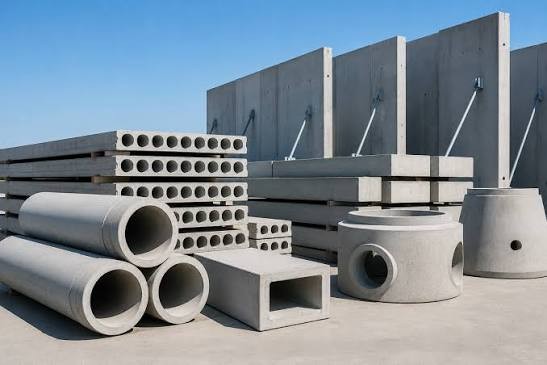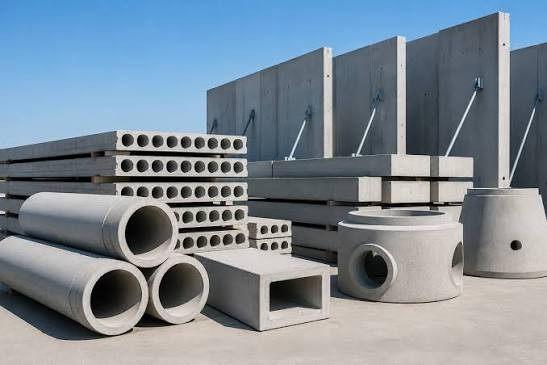
Precast concrete products are becoming increasingly important in modern construction because they offer practical solutions for building projects that require durable, consistent and efficiently manufactured components. From residential houses and commercial buildings to warehouses, roads, drainage systems and large infrastructure developments, precast concrete is used in a wide range of construction applications.
In Uganda, property developers, contractors and construction companies are continually looking for building materials that provide reliable performance, reduce unnecessary construction delays and support better project cost management. Precast concrete products can help meet these requirements when they are properly designed, manufactured, transported and installed.
Unlike conventional cast-in-place concrete, which is poured into formwork at the construction site, precast concrete components are manufactured in advance at a factory or designated production facility. Once they have achieved the required condition for handling and transportation, they are delivered to the site for installation.
This manufacturing approach allows certain construction activities to take place before the components are needed on site, potentially improving construction scheduling and reducing some site-based work.
Whether you are planning a residential development, apartment complex, office building, industrial facility, road project or drainage system, understanding precast concrete products can help you make better construction decisions.
This guide explains the types of precast concrete products available for construction projects in Uganda, their applications, benefits, advantages and the important factors to consider when selecting a reliable supplier.
1. What Are Precast Concrete Products?
Precast concrete products are construction components manufactured in moulds before being transported to a construction site for installation.
They are generally produced using cement, aggregates, water and, where required, reinforcement such as steel bars or welded wire reinforcement. Their design and composition depend on the intended application and required structural performance.
During manufacturing, concrete is placed into prepared moulds, compacted and cured under appropriate conditions. The finished components are then inspected, stored and transported according to their handling and installation requirements.
Examples of precast concrete products include:
- Precast concrete slabs.
- Precast beams and columns.
- Precast wall panels.
- Precast concrete stairs.
- Concrete lintels.
- Concrete culverts.
- Concrete pipes.
- Precast drainage channels.
- Concrete kerbstones.
- Precast boundary wall components.
- Manhole rings and covers.
- Concrete paving blocks.
Precast products can be manufactured in standard sizes or designed for specific construction projects, depending on production capabilities and technical requirements.
2. Types of Precast Concrete Products Used in Uganda
Different precast concrete products serve different construction purposes. Selecting the appropriate type depends on the building design, engineering specifications, site conditions and intended application.
2.1 Precast Concrete Slabs
Precast concrete slabs are manufactured concrete elements used in selected floor systems, external surfaces and other structural or non-structural applications.
Depending on the design, they may be solid, hollow-core or part of a composite floor system.
Applications include:
- Residential buildings.
- Apartment developments.
- Commercial buildings.
- Office complexes.
- Industrial facilities.
- Selected access platforms and external areas.
Advantages of precast concrete slabs:
- Manufactured to specified dimensions.
- Reduced need for certain on-site formwork operations.
- Potentially faster floor installation.
- Consistent production conditions.
- Suitable for repetitive building layouts.
The type of slab, span, reinforcement, bearing arrangements and lifting requirements must be established by the structural engineer.
2.2 Precast Concrete Beams
Precast concrete beams are structural elements designed to support loads and transfer them to columns, walls or other supporting structures.
They may be reinforced or prestressed depending on the design and application.
Common applications include:
- Commercial buildings.
- Industrial warehouses.
- Multi-storey developments.
- Parking structures.
- Selected infrastructure projects.
Precast beams can reduce certain on-site concrete casting activities. However, their connections, bearing details, lifting points and structural capacity must be carefully designed.
2.3 Precast Concrete Columns
Precast concrete columns are manufactured vertical structural components used to support beams, slabs and other building elements.
They are produced according to the required dimensions, reinforcement arrangement and structural design.
Applications include:
- Commercial developments.
- Industrial buildings.
- Warehouses.
- Multi-storey structures.
- Selected institutional developments.
Benefits include:
- Controlled manufacturing dimensions.
- Potentially faster structural installation.
- Reduced on-site formwork for selected applications.
- Consistency for repetitive structural layouts.
Proper alignment, connections, temporary bracing and installation procedures are essential for safe construction.
2.4 Precast Concrete Wall Panels
Precast concrete wall panels are manufactured flat concrete components used for external walls, internal partitions, boundary structures and selected structural applications.
They can be produced in different thicknesses, sizes and surface finishes.
Applications include:
- Commercial buildings.
- Industrial facilities.
- Warehouses.
- Residential developments.
- Boundary walls.
- Institutional buildings.
Advantages include:
- Faster installation where designs are standardised.
- Consistent panel dimensions.
- Variety of surface finishes.
- Reduced on-site masonry or casting activities for selected applications.
- Potentially improved construction scheduling.
Panel connections, lifting arrangements, joint sealing, stability and weatherproofing must be considered during design and installation.
2.5 Precast Concrete Stairs
Precast concrete staircases are manufactured before delivery and installed as complete flights or individual components.
They are used in buildings where repeated staircase layouts or faster installation are beneficial.
Applications include:
- Apartment buildings.
- Commercial developments.
- Office blocks.
- Schools and institutional buildings.
- Industrial facilities.
Benefits include:
- Factory-controlled production.
- Consistent step dimensions.
- Reduced on-site formwork.
- Faster installation when properly coordinated.
- Durable construction.
The staircase design must account for loading, dimensions, reinforcement, connections, access and lifting equipment.
2.6 Precast Concrete Culverts
Precast concrete culverts are drainage components manufactured to allow water to flow beneath roads, access routes, embankments and other infrastructure.
Common types include reinforced concrete pipe culverts and precast box culverts.
Applications include:
- Road construction.
- Estate access roads.
- Agricultural developments.
- Industrial sites.
- Stormwater management systems.
- Infrastructure projects.
Advantages include:
- Factory production under controlled conditions.
- Availability in different sizes and configurations.
- Reduced on-site casting requirements.
- Faster installation in suitable projects.
- Durable drainage solutions when correctly designed.
Culverts must be selected according to hydraulic requirements, soil conditions, loading, installation depth and engineering specifications.
2.7 Precast Concrete Pipes
Concrete pipes are manufactured for underground drainage and other infrastructure applications.
They are available in different diameters, lengths and joint configurations depending on their intended purpose.
Applications include:
- Stormwater drainage.
- Roadside drainage systems.
- Underground drainage networks.
- Selected sewerage systems.
- Agricultural drainage.
- Industrial infrastructure.
Their selection should consider pipe diameter, wall thickness, strength class, jointing system, soil conditions, installation depth and expected external loading.
2.8 Precast Concrete Drainage Channels
Precast drainage channels are manufactured components designed to collect and direct surface water away from buildings, roads, parking areas and other paved spaces.
Some designs include covers or grating systems, depending on their intended location.
Applications include:
- Residential compounds.
- Commercial properties.
- Industrial facilities.
- Roadside drainage.
- Parking areas.
- Pedestrian walkways.
- Landscaping developments.
Precast channels can simplify installation where the site layout and drainage design are established in advance.
2.9 Precast Concrete Kerbstones
Concrete kerbstones are manufactured components used to define road edges, pavements, parking spaces and landscaped areas.
They provide edge restraint and help separate different paved surfaces.
Applications include:
- Road construction.
- Residential driveways.
- Commercial parking areas.
- Estate developments.
- Footpaths.
- Landscaping projects.
Their dimensions and profiles should be selected according to the pavement design and expected service conditions.
2.10 Precast Concrete Lintels
Precast concrete lintels are manufactured components installed above openings in masonry walls, including doors and windows.
They support loads above the opening and transfer them to the wall sections on either side.
Applications include:
- Residential houses.
- Apartment blocks.
- Commercial buildings.
- Schools.
- Institutional developments.
- Selected industrial buildings.
Lintels should be manufactured and selected according to the required span, loading, bearing length, reinforcement and structural design.
2.11 Precast Concrete Manhole Components
Manhole components are manufactured concrete units used in underground drainage, sewerage and utility access systems.
They may include rings, sections, bases and covers.
Applications include:
- Stormwater networks.
- Sewerage systems.
- Underground inspection chambers.
- Commercial developments.
- Residential infrastructure.
- Industrial drainage systems.
The dimensions, joints, reinforcement and loading capacity must be suitable for the specific installation.
2.12 Precast Concrete Fence Posts and Boundary Wall Components
Concrete fence posts and boundary wall components are manufactured for property perimeter structures.
They may be used with different fencing systems depending on the project requirements.
Applications include:
- Residential properties.
- Farms.
- Industrial premises.
- Schools and institutions.
- Commercial developments.
- Security boundaries.
Their suitability depends on the fencing system, soil conditions, dimensions, reinforcement and installation method.
3. Applications of Precast Concrete Products in Uganda
Precast concrete products are used across several sectors of Uganda’s construction industry.
3.1 Residential Building Construction
Residential construction is one of the important applications of precast concrete products.
Developers and homeowners may use precast components in houses, apartments, housing estates and other residential developments.
Common applications include:
- Precast concrete slabs.
- Lintels.
- Staircase components.
- Boundary wall panels.
- Drainage channels.
- Kerbstones.
- Concrete paving blocks.
Precast components can help coordinate construction activities, especially where several buildings have similar layouts.
3.2 Commercial Building Construction
Commercial developments such as office buildings, shopping centres, hotels and retail complexes often require durable structural and external construction components.
Precast concrete may be used for selected beams, columns, wall panels, floor systems, stairs and drainage components.
The use of precast products can support construction scheduling where the building design and production programme are coordinated.
3.3 Industrial Building Construction
Industrial developments require construction materials that meet specific operational and structural requirements.
Factories, warehouses and processing facilities may incorporate precast concrete components in structural systems, external walls, drainage infrastructure and access areas.
The product specifications must account for building loads, equipment requirements, environmental exposure and operational conditions.
3.4 Road Construction and Infrastructure Projects
Precast concrete products are widely used in infrastructure works.
Road and drainage projects may require:
- Reinforced concrete culverts.
- Concrete pipes.
- Drainage channels.
- Kerbstones.
- Manhole components.
- Precast concrete slabs.
These products support water management, road-edge protection and selected infrastructure construction activities.
3.5 Institutional Construction
Schools, hospitals, churches and government facilities may use precast concrete components in building structures, external works, drainage systems and access areas.
Standardised components can be useful for developments involving repeated building designs or similar construction requirements.
3.6 Agricultural and Estate Developments
Agricultural and estate projects may require concrete drainage components, culverts, fence posts, paving units and other precast products.
These materials can support access roads, water management, boundary construction and external development works.
4. Benefits and Advantages of Precast Concrete Products
Precast concrete offers several potential advantages over certain conventional on-site construction methods. The actual benefits depend on the project design, production arrangements, transportation and installation conditions.
4.1 Faster Construction and Installation
One of the major advantages of precast concrete is that components can be manufactured before they are required on site.
While site preparation and foundation works are taking place, the precast components may be produced separately.
This parallel approach can reduce the time required for selected construction activities, provided that production, transportation and installation are properly coordinated.
4.2 Consistent Product Quality
Precast concrete products are often manufactured in controlled production environments.
This allows manufacturers to manage mix proportions, mould dimensions, compaction and curing more consistently than may be possible under variable site conditions.
Quality still depends on production controls, testing, materials and workmanship.
4.3 Reduced On-Site Formwork
Many precast products are manufactured using reusable moulds.
This reduces the need to construct and remove certain types of formwork at the construction site.
It can also reduce some associated labour and site activities.
4.4 Better Construction Scheduling
Precast manufacturing can take place while other construction activities continue.
For example, floor components or drainage sections may be manufactured while foundations and other site preparations are being completed.
This can improve project coordination and reduce delays when materials are delivered according to the construction programme.
4.5 Durability and Long-Term Performance
Properly designed and manufactured precast concrete products can provide durable construction solutions.
Their service life depends on concrete quality, reinforcement detailing, exposure conditions, installation and maintenance.
4.6 Reduced Material Waste on Site
Precast production can improve material control because components are manufactured according to planned dimensions and quantities.
This may reduce some forms of site-based waste, although manufacturing waste and transport damage still need to be managed.
4.7 Design Flexibility
Precast concrete can be moulded into different shapes, dimensions and surface finishes.
This allows designers to incorporate different architectural and functional features into buildings and infrastructure projects.
4.8 Suitable for Repetitive Construction Projects
Projects involving repeated building layouts can benefit from standardised precast components.
For example, apartment developments, housing estates and institutional buildings may use repeated elements such as stairs, wall panels and selected structural components.
4.9 Improved Site Organisation
Using precast products can reduce certain on-site manufacturing activities.
This may help improve site organisation, particularly where space is limited or construction activities need to be coordinated carefully.
However, suitable storage areas, delivery access and lifting equipment must still be provided.
5. Precast Concrete vs Cast-in-Place Concrete: What Is the Difference?
Precast concrete and cast-in-place concrete are both important construction methods. The choice between them depends on the building design, project size, site conditions, cost and construction programme.
| Factor | Precast concrete | Cast-in-place concrete |
|---|---|---|
| Manufacturing location | Factory or designated production facility | Construction site |
| Formwork | Reusable production moulds | Site-installed formwork |
| Quality control | Production conditions can be more controlled | Depends on site conditions and supervision |
| Installation | Requires transportation and lifting | Concrete is placed in its final position |
| Construction planning | Production must be coordinated in advance | Casting is coordinated with site activities |
| Design flexibility | Depends on moulds and production capabilities | Can accommodate many site-specific shapes |
| Transportation | Large components may require special transport | Fresh concrete or materials are delivered to site |
| Site requirements | Storage, access and lifting space | Formwork, reinforcement and concrete placement space |
Neither method is automatically better for every project.
Precast concrete may be suitable for repetitive components and projects requiring controlled manufacturing. Cast-in-place concrete may be more practical for complex shapes, site-specific elements or locations where transportation of large components is difficult.
Many modern projects combine both methods to achieve the most appropriate construction solution.
6. Factors to Consider When Choosing Precast Concrete Products in Uganda
Selecting the right precast concrete products requires careful consideration of the project’s technical and practical requirements.
6.1 Product Specifications
Confirm that the product dimensions, strength, reinforcement and other characteristics meet the approved drawings and project specifications.
Do not select structural components based on appearance or price alone.
6.2 Concrete Strength
The required concrete strength depends on the component’s intended application and design.
For structural elements, request relevant test documentation and ensure the specifications have been reviewed by the project’s engineer.
6.3 Manufacturing Quality
Ask about the production process, material quality, compaction, mould condition and curing practices.
A supplier should be able to explain how product quality is monitored.
6.4 Reinforcement Details
Where reinforcement is required, confirm the specified bar sizes, spacing, positioning, cover and detailing.
Reinforcement should be checked against the approved structural drawings.
6.5 Product Dimensions and Tolerances
Precast components should be manufactured within the dimensions and tolerances required for installation.
Dimensional inconsistencies can cause difficulties when connecting, aligning or assembling components.
6.6 Transportation and Handling
Large precast components may require specialised vehicles, lifting equipment and careful handling.
Before ordering, confirm how products will be loaded, transported, offloaded and stored.
6.7 Installation Requirements
Some precast products require cranes, lifting points, temporary supports, special connections or skilled installation teams.
These requirements should be considered during project planning.
6.8 Supplier Reliability
Choose a supplier who can meet the required specifications, quantities and delivery programme.
Review their product range, technical capabilities, production capacity and communication.
6.9 Total Project Cost
Consider the full cost of the precast solution, including manufacturing, transportation, lifting, installation, connections and any additional site work.
A product with a lower purchase price may not necessarily result in the lowest overall project cost.
7. What Determines the Cost of Precast Concrete Products in Uganda?
The price of precast concrete products in Uganda varies according to product type, size, strength, reinforcement, production complexity and delivery requirements.
Some standard products may be available from existing production stock, while specialised components may require project-specific moulds and manufacturing arrangements.
Important cost factors include:
1. Product dimensions: Larger or thicker components generally require more material and may need additional handling.
2. Concrete strength: Products requiring specific strength characteristics may involve different mix designs, materials and quality-control requirements.
3. Reinforcement: Reinforced products require additional materials, labour and manufacturing processes.
4. Design complexity: Components with specialised shapes, connections or mould requirements may cost more to produce.
5. Production quantity: Larger orders may provide opportunities for production efficiencies, depending on the supplier’s capacity.
6. Manufacturing method: Production equipment, moulds, labour and curing requirements affect manufacturing costs.
7. Transportation distance: Large and heavy components can be expensive to transport, particularly to sites with difficult access.
8. Lifting and installation: Cranes, lifting equipment, temporary supports and specialist installation teams may add to the total project cost.
9. Availability: Standard products and specialised products may have different lead times and pricing arrangements.
For accurate pricing, provide suppliers with product drawings, specifications, quantities and the project delivery location.
8. Common Challenges Associated with Precast Concrete Construction
Although precast concrete offers several benefits, it also presents challenges that should be considered before choosing this construction method.
Transportation Limitations
Large or heavy components may require specialised transportation arrangements.
Poor road access, vehicle restrictions and long distances can affect delivery costs and schedules.
Lifting and Installation Requirements
Some components require cranes or other lifting equipment.
The construction site must have adequate access and working space for safe lifting operations.
Connection and Joint Details
Precast elements must be connected correctly to achieve the intended structural performance.
Incorrect connections or poor joint detailing can affect stability, durability and water resistance.
Storage Requirements
Precast components may need designated storage areas before installation.
Improper stacking or handling can cause cracking, edge damage or other defects.
Early Design Coordination
Precast construction often requires design decisions to be made early.
Late changes to dimensions, openings, reinforcement or connections may affect manufacturing and create additional costs.
These challenges can be managed through proper design coordination, supplier selection, logistics planning and professional supervision.
9. Quality Control in Precast Concrete Manufacturing
Quality control is essential to ensuring that precast concrete products meet the required performance and dimensional specifications.
Manufacturers should implement suitable quality checks throughout production.
Important quality-control activities include:
Raw Material Inspection
Cement, aggregates, water and reinforcement should be suitable for the intended product.
Mix Proportion Control
Concrete mix proportions should be controlled to achieve the required workability, strength and durability.
Mould Inspection
Moulds should be checked for cleanliness, condition, dimensions and correct preparation before production.
Compaction and Casting Control
Concrete should be placed and compacted appropriately to minimise defects and achieve the required product quality.
Curing Management
Proper curing is essential for strength development and durability.
Products should not be handled, transported or installed before they have achieved the required condition for those activities.
Dimensional Inspection
Finished components should be checked against approved drawings and manufacturing tolerances.
Strength Testing
Compressive strength testing and other relevant tests should be carried out where required by the product specifications and applicable standards.
Storage and Transportation Inspection
Finished products should be stored, loaded and transported in a way that minimises damage.
For critical structural components, the project engineer should review the relevant technical documentation before acceptance and installation.
10. Is Precast Concrete Suitable for Residential, Commercial and Industrial Projects?
Yes. Precast concrete can be used in all three sectors, although the most appropriate products and construction methods vary.
Residential Projects
Precast products may be used in houses, apartment blocks, housing estates and residential boundary structures.
Typical applications include lintels, stairs, slabs, drainage channels, paving products and selected wall components.
Commercial Projects
Office buildings, shopping centres, hotels and retail developments may use precast slabs, beams, columns, stairs, wall panels and drainage components.
The benefits can be particularly useful where construction schedules and repeated building elements are important.
Industrial Projects
Factories, warehouses and processing facilities may use precast structural components, wall panels, culverts, drainage systems and external paving products.
Product selection must account for structural loads, operational conditions and the intended service environment.
The suitability of precast concrete for each development should be established during design and construction planning.
11. How to Choose a Reliable Precast Concrete Supplier in Uganda
Choosing a reliable supplier is an important part of ensuring that precast products meet the required specifications and arrive when needed.
Consider the following factors before placing an order.
Product range: Confirm that the supplier can provide the specific precast products required for your project.
Technical specifications: Request information about dimensions, strength, reinforcement and intended applications.
Manufacturing processes: Ask about material quality, production controls and curing procedures.
Quality documentation: Check whether relevant test reports and technical documents are available.
Production capacity: Confirm whether the supplier can meet the required quantities and delivery programme.
Transportation arrangements: Establish how the products will be delivered and offloaded.
Pricing transparency: Request a detailed quotation that includes product specifications and applicable delivery costs.
Communication: Choose a supplier who responds clearly to technical and procurement enquiries.
For large or specialised projects, involve the design engineer and procurement team when evaluating suppliers.
12. Why Work with Daltrev Co. Ltd for Construction Materials and Project Solutions?
Successful construction projects require more than good designs. They also depend on suitable materials, effective planning, reliable procurement and proper execution.
Daltrev Co. Ltd supports construction and development projects in Uganda through construction materials enquiries and a wider range of professional construction services.
Clients undertaking residential, commercial, industrial and infrastructure developments can make enquiries about concrete products and other building materials according to their project specifications, quantities and availability requirements.
In addition to construction materials, Daltrev Co. Ltd provides services in areas such as:
- Building construction and civil engineering works.
- Road construction and rehabilitation.
- Drainage and infrastructure works.
- Construction consultancy and project management.
- Quantity surveying and cost management.
- Architectural and structural design.
- Interior design.
- Facilities maintenance.
These services support clients with different construction requirements, from early project planning to building works and ongoing property maintenance.
Explore Daltrev Co. Ltd’s construction materials and building supplies to learn more about construction material enquiries.
You can also explore Daltrev’s construction and civil works and professional construction consultancy services.
For enquiries about precast concrete products, construction materials or broader project requirements, contact Daltrev Co. Ltd.
13. Frequently Asked Questions About Precast Concrete Products in Uganda
1. What are precast concrete products?
Precast concrete products are construction components manufactured in moulds at a factory or designated production facility before being transported to a construction site for installation.
Examples include slabs, beams, columns, wall panels, stairs, culverts, pipes, lintels and drainage channels.
2. What are the most common precast concrete products used in Uganda?
Common products include concrete culverts, pipes, kerbstones, paving blocks, lintels, slabs, drainage channels, manhole components and selected structural elements.
Availability varies by manufacturer and supplier.
3. What are the advantages of precast concrete?
Precast concrete can offer controlled manufacturing conditions, consistent dimensions, reduced on-site formwork for selected applications, faster installation and improved construction scheduling when properly planned.
4. Is precast concrete stronger than cast-in-place concrete?
Neither method is automatically stronger. The strength of concrete depends on its mix design, materials, curing, reinforcement, workmanship and quality control.
Both precast and cast-in-place concrete can achieve the required strength when properly designed and manufactured or constructed.
5. How much do precast concrete products cost in Uganda?
Prices depend on product dimensions, strength, reinforcement, manufacturing complexity, order quantities, transportation and installation requirements.
A supplier should provide a quotation based on the exact product specifications and project location.
6. Are precast concrete products suitable for multi-storey buildings?
Yes. Precast concrete slabs, beams, columns, stairs and wall panels can be used in multi-storey buildings where the structural system is properly designed and connections are appropriately detailed.
7. What is the difference between precast concrete and prestressed concrete?
Precast concrete describes where a component is manufactured: away from its final installation position.
Prestressed concrete describes a method of introducing controlled stresses into concrete, usually through tensioned steel tendons, to improve structural performance.
A concrete component can be both precast and prestressed.
8. How long do precast concrete products last?
Their service life depends on concrete quality, design, reinforcement protection, exposure conditions, installation and maintenance.
Properly designed and maintained products can provide long-lasting construction solutions.
9. Can precast concrete products be customised?
Yes. Some manufacturers can produce components to project-specific dimensions, shapes and reinforcement details, subject to their production capabilities and approved designs.
Custom products may require additional design coordination and mould preparation.
10. What should I check before purchasing precast concrete products?
Check dimensions, strength requirements, reinforcement details, manufacturing quality, curing, technical documentation, transportation arrangements and installation requirements.
11. Where can I find precast concrete products in Uganda?
You can approach concrete product manufacturers, precast concrete specialists and construction materials suppliers. Compare product specifications, quality, production capacity, pricing and delivery arrangements before making a purchasing decision.
12. Are precast concrete products environmentally friendly?
Their environmental performance depends on material sourcing, cement content, production energy, transportation, durability and end-of-life management.
Precast production can reduce certain types of construction waste and improve material control, but the overall environmental impact should be evaluated across the product lifecycle.
14. Conclusion: Precast Concrete Products for Efficient and Durable Construction in Uganda
Precast concrete products offer practical solutions for modern building construction and infrastructure development in Uganda.
From slabs, beams, columns and wall panels to culverts, drainage channels, kerbstones and lintels, these components serve important roles in residential, commercial, industrial and public infrastructure projects.
Their advantages include controlled manufacturing, consistent dimensions, reduced on-site formwork for selected applications, efficient installation and improved construction scheduling when production and site activities are properly coordinated.
However, achieving these benefits requires choosing products that meet the required technical specifications and ensuring that transportation, handling, connections and installation are properly managed.
Builders, contractors and property developers should evaluate product quality, strength, dimensions, supplier reliability and total project cost before making procurement decisions.
Planning a construction or infrastructure project in Uganda? Contact Daltrev Co. Ltd to discuss your construction materials requirements and professional construction service needs.