Crushed stone aggregates are among the most important materials used in modern construction. From building foundations and reinforced concrete structures to roads, drainage systems, driveways and commercial developments, crushed stone provides the strength, stability and durability required for successful construction projects.
In Uganda, crushed stone aggregates are widely used in residential, commercial, industrial and infrastructure development. They are produced by mechanically crushing suitable rock into different particle sizes to meet specific construction requirements. Depending on their size, grading, strength and quality, crushed stone aggregates can be used in concrete production, road construction, drainage works, paving, foundations and other engineering applications.
However, not all crushed stone aggregates are suitable for every construction activity. Selecting the wrong aggregate size or using material with excessive dust, weak particles or unsuitable grading can affect concrete performance, road stability, drainage efficiency and the long-term durability of a structure.
Understanding the different types of crushed stone aggregates, their uses and the factors that determine their quality helps contractors, engineers, developers and property owners make informed material decisions.
This guide explains everything you need to know about crushed stone aggregates in Uganda, including their types, applications, quality requirements, selection considerations, prices and benefits in construction.
What Are Crushed Stone Aggregates?
Crushed stone aggregates are construction materials produced by mechanically breaking larger rocks into smaller pieces using crushing equipment. The resulting particles are screened and separated into different sizes according to their intended applications.
Common source rocks include:
- Granite.
- Basalt.
- Limestone.
- Quartzite.
- Other suitable hard and durable rock formations.
The suitability of a particular rock depends on its strength, durability, mineral composition, weathering condition and intended construction application.
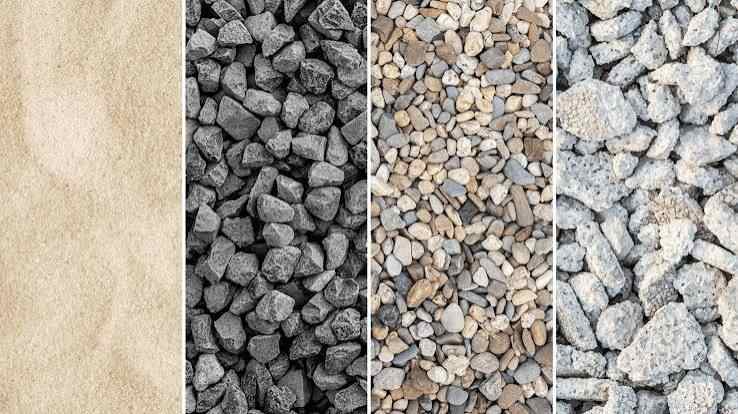
Unlike naturally rounded gravel, crushed stone generally has angular particles and rougher surfaces. These characteristics can improve mechanical interlocking between aggregate particles and contribute to bonding within concrete, although the final performance depends on the entire mix design and aggregate properties.
Crushed stone aggregates are commonly classified according to particle size, grading, source material and intended use.
Types of Crushed Stone Aggregates Used in Construction
Crushed stone aggregates are available in different sizes and grades. Each type serves a particular purpose depending on the structural, drainage or finishing requirements of a project.
1. Coarse Crushed Stone Aggregates
Coarse aggregates consist of larger crushed stone particles used mainly in concrete production and selected civil engineering applications.
They form an important part of concrete mixtures, providing a substantial portion of the aggregate skeleton.
Common applications include:
- Reinforced concrete construction.
- Building foundations.
- Concrete columns and beams.
- Concrete floor slabs.
- Bridge construction.
- Precast concrete products.
- Concrete roads and pavements.
The appropriate maximum aggregate size depends on the structural design, reinforcement spacing, member dimensions, placement method and concrete specification.
2. Fine Crushed Stone Aggregates
Fine crushed aggregates consist of smaller particles produced during the crushing and screening process. Depending on their grading and properties, they may be used as manufactured sand or as part of blended aggregate mixtures.
Common applications include:
- Concrete production.
- Masonry mortar, where suitable.
- Precast concrete products.
- Paving block manufacture.
- Selected surface finishing applications.
Fine aggregates should have controlled particle-size distribution and acceptable levels of harmful impurities. Excessive stone dust or poorly graded fines may increase water demand and affect workability.
3. Crushed Stone Dust
Crushed stone dust, also known as quarry dust or crusher dust, is a fine material generated during the crushing of rock.
Its particle size and composition depend on the crushing and screening process.
Common applications include:
- Manufactured sand production and blending.
- Selected concrete applications after testing.
- Paving block production.
- Filling and levelling applications where specified.
- Selected road construction layers.
- Bedding and other approved construction uses.
Crushed stone dust should not automatically be treated as a direct replacement for natural sand. Its suitability depends on grading, fines content, particle characteristics and the requirements of the application.
4. Crushed Stone Base Material
Crushed stone base material consists of graded aggregate used to form stable layers beneath roads, paved surfaces and other structures.
It is commonly produced by blending different particle sizes to achieve the required grading and compaction characteristics.
Common applications include:
- Road base construction.
- Parking area foundations.
- Driveway construction.
- Access roads.
- Industrial yards.
- Paved walkways.
The material should meet the specified grading, strength, plasticity and compaction requirements for the project.
5. Crushed Stone Sub-Base Material
Sub-base aggregate is used as a supporting layer beneath the road base or pavement structure.
It helps distribute traffic loads, provides a stable construction platform and may contribute to drainage depending on the pavement design and material properties.
Common applications include:
- Road construction.
- Estate access roads.
- Parking areas.
- Industrial access routes.
- Footpaths and paved surfaces.
Sub-base materials must be selected according to the pavement design, ground conditions, traffic requirements and applicable project specifications.
6. Single-Sized Crushed Stone
Single-sized aggregate consists of particles within a relatively narrow size range.
It is produced through crushing and screening to separate specific aggregate sizes.
Common applications include:
- Concrete production.
- Drainage systems.
- Landscaping.
- Selected pavement applications.
- Decorative stone finishes.
The appropriate size depends on the design and intended function.
7. Graded Crushed Stone
Graded crushed stone contains a range of particle sizes blended within specified limits.
The combination of different sizes allows smaller particles to fill spaces between larger particles, helping achieve a denser and more stable aggregate arrangement.
Common applications include:
- Road base construction.
- Sub-base construction.
- Compacted access roads.
- Hardstandings.
- Selected foundation and filling applications.
Grading must be controlled because the presence of too many fines or an unsuitable particle distribution can affect compaction, drainage and performance.
Common Crushed Stone Aggregate Sizes and Their Uses
Aggregate sizes are important because different construction activities require different particle dimensions.
The following table provides general examples of common nominal aggregate sizes and their possible applications. Actual size ranges and acceptance requirements should be confirmed against the supplier’s grading information and the project’s specifications.
| Aggregate size | Typical applications |
|---|---|
| Fine crushed aggregate | Manufactured sand, selected concrete and paving applications |
| 5–10 mm | Selected concrete and precast applications |
| 10–14 mm | Concrete production and selected drainage applications |
| 14–20 mm | General concrete applications, subject to design |
| 20–40 mm | Selected concrete, drainage and civil engineering works |
| Larger graded stone | Road construction, filling and selected heavy-duty applications |
| Stone dust | Manufactured sand, selected paving and approved filling applications |
Important: These are indicative descriptions, not universal grading specifications. Suppliers may use different commercial size labels. For structural concrete, roadworks and other engineered applications, confirm the actual sieve grading and specified aggregate properties before purchase.
Major Uses of Crushed Stone Aggregates in Construction
Crushed stone aggregates are used across many construction activities because they can provide strength, stability, load distribution and suitable drainage characteristics when properly selected.
1. Concrete Production
One of the most important applications of crushed stone aggregates is concrete production.
Concrete is made by combining cement, water, fine aggregates and coarse aggregates in proportions determined by the mix design.
Crushed stone provides the coarse aggregate component in many concrete mixtures.
Applications include:
- Building foundations.
- Columns and beams.
- Suspended and ground-bearing slabs.
- Staircases.
- Concrete floors.
- Retaining walls.
- Bridges.
- Precast concrete products.
Why crushed stone is used in concrete:
- It contributes to the strength and stiffness of the hardened concrete.
- Angular particles can provide mechanical interlocking.
- Appropriate grading helps improve aggregate packing.
- Durable stone can support long-term concrete performance.
- Different sizes can be selected to suit structural requirements.
However, concrete quality depends on more than aggregate size. Cement quality, water-cement ratio, aggregate grading, mix design, batching, compaction and curing all influence the final performance.
2. Road Construction
Crushed stone aggregates are essential materials in road construction.
They are used in different pavement layers to provide load-bearing capacity, stability and a suitable foundation for the road surface.
Common applications include:
- Road base layers.
- Sub-base layers.
- Crushed stone surfacing.
- Shoulders.
- Access roads.
- Estate roads.
- Industrial roads.
- Selected drainage layers.
For road construction, aggregate strength, grading, particle shape, durability and resistance to abrasion are important.
The correct material must be selected according to traffic loading, soil conditions, pavement design and the relevant roadwork specifications.
3. Building Foundations
Crushed stone aggregates can be used in foundation-related construction activities.
Depending on the engineering design, they may form part of concrete foundations, selected compacted layers or drainage arrangements.
Applications include:
- Concrete strip foundations.
- Pad foundations.
- Raft foundation concrete.
- Selected foundation bedding.
- Compacted support layers where specified.
For foundation construction, the aggregate must meet the requirements of the concrete mix or engineered layer in which it is used.
4. Drainage Systems
Certain crushed stone aggregates are suitable for drainage applications because their particle sizes and void spaces allow water to pass through.
Clean, appropriately sized stone can be used around drainage pipes and in selected drainage structures.
Applications include:
- French drains.
- Perimeter foundation drains.
- Subsurface drainage systems.
- Drainage trenches.
- Selected soakaway systems.
- Filter and drainage layers.
Drainage stone should be selected according to the drainage design. Particle size, cleanliness, filter compatibility and the risk of soil migration must be considered.
Not every graded crushed aggregate is suitable for drainage. Materials with excessive fines may restrict water movement.
5. Paving and Driveway Construction
Crushed stone is widely used beneath paving blocks, concrete paving and other external surfaces.
It provides a supporting layer that helps distribute loads and reduce movement when properly designed and compacted.
Applications include:
- Residential driveways.
- Commercial parking areas.
- Walkways.
- Estate roads.
- Industrial yards.
- Outdoor paved spaces.
A properly prepared subgrade, suitable sub-base, correct bedding material and effective drainage are all necessary for durable paving.
6. Precast Concrete Products
Crushed stone aggregates are used in manufacturing different precast concrete products.
They contribute to the strength, dimensional stability and durability of the finished products.
Examples include:
- Concrete blocks.
- Concrete paving blocks.
- Precast kerbs.
- Concrete drainage channels.
- Concrete slabs.
- Precast pipes.
- Other precast components.
Aggregate grading and consistency are particularly important in precast manufacturing because variations can affect workability, surface finish, compaction and product quality.
7. Concrete Floor Construction
Crushed stone aggregates are used in concrete floors for residential, commercial and industrial buildings.
The appropriate aggregate size is selected according to the slab thickness, reinforcement arrangement, placement method and concrete specification.
Common applications include:
- Residential floor slabs.
- Commercial building floors.
- Warehouse floors.
- Factory floors.
- Workshop floors.
- Parking structures.
Industrial floors may require carefully designed concrete mixes to withstand heavy loads, abrasion and operational demands.
8. Retaining Walls and Civil Engineering Structures
Crushed stone aggregates are used in the concrete and selected drainage components of retaining walls and other civil engineering structures.
Applications include:
- Reinforced concrete retaining walls.
- Bridge components.
- Culverts.
- Drainage structures.
- Concrete barriers.
- Other engineered structures.
Where stone is used as drainage material behind retaining walls, the design should address drainage, filter compatibility and hydrostatic pressure.
9. Landscaping and Decorative Applications
Selected crushed stone aggregates can also be used for landscaping and outdoor decorative works.
Their colours, textures and particle sizes provide different design possibilities.
Applications include:
- Garden pathways.
- Decorative ground cover.
- Outdoor seating areas.
- Landscape borders.
- Rock gardens.
- Selected erosion-control works.
The material should be selected according to appearance, particle stability, drainage needs and intended use.
How Crushed Stone Aggregates Are Produced
The production of crushed stone aggregates involves several stages designed to transform large rock deposits into construction materials of different sizes.
Step 1: Rock Extraction
Suitable rock is obtained from an approved quarry or other permitted source.
The source rock is assessed for properties such as strength, durability and suitability for aggregate production.
Step 2: Primary Crushing
Large rock pieces are fed into primary crushers, which reduce them into smaller fragments.
Jaw crushers are commonly used at this stage.
Step 3: Secondary Crushing
The material may pass through secondary crushing equipment to achieve smaller and more controlled particle sizes.
Depending on the production process, cone crushers or impact crushers may be used.
Step 4: Screening
Crushed material passes through screening equipment that separates particles into different size categories.
This allows producers to supply specific aggregate grades for different construction applications.
Step 5: Washing and Processing
Where necessary, aggregates may be washed or otherwise processed to remove excessive dust, clay and unwanted impurities.
Processing requirements depend on the quality of the source rock and the intended product.
Step 6: Storage and Transportation
Finished aggregates are stored in separate stockpiles to reduce contamination and mixing between grades.
They are then loaded and transported to construction sites or material distribution centres.
Proper stockpile management helps preserve the consistency of the supplied material.
Characteristics of Quality Crushed Stone Aggregates
The performance of crushed stone aggregates depends on their physical and mechanical properties.
Before purchasing aggregates, contractors and engineers should consider the following characteristics.
1. Strength
Aggregates used in structural concrete and road construction must have sufficient strength to withstand the expected loads.
Weak particles may break down under loading and affect the performance of the finished material.
2. Durability
Durable aggregates should resist weathering and deterioration under the environmental and service conditions expected in the project.
This is especially important in road construction, exposed concrete and infrastructure projects.
3. Proper Particle Size and Grading
Aggregate grading determines how particles of different sizes are distributed within the material.
Suitable grading supports effective packing, workability and performance.
The required grading depends on the concrete mix or engineered layer specification.
4. Particle Shape and Texture
Crushed stone particles are generally angular and may have rough surfaces.
These characteristics can support interlocking and bonding, but excessive flaky or elongated particles may create problems in certain applications.
Particle shape should meet the requirements of the relevant specification.
5. Cleanliness
Quality aggregates should be free from harmful quantities of clay, soil, organic matter and other contaminants.
Excessive dust and unwanted fines can affect water demand, compaction and concrete performance.
6. Resistance to Abrasion
Aggregates used in road surfaces and other heavily trafficked areas need suitable resistance to wear and breakdown.
Laboratory tests such as the Los Angeles abrasion test may be specified to assess resistance to abrasion and impact.
7. Water Absorption
Aggregate absorption affects the amount of water that may be taken up by the particles during concrete production.
High absorption may require adjustments to moisture corrections and mix design.
8. Consistency
Consistent aggregate quality helps contractors maintain reliable production and construction performance.
For larger projects, suppliers should be able to provide grading information and relevant test results.
Quality Tests for Crushed Stone Aggregates
For important construction applications, aggregate quality should be verified through appropriate laboratory tests.
Depending on the project specification, these may include:
| Test | Purpose |
|---|---|
| Sieve analysis | Determines particle-size distribution |
| Los Angeles abrasion test | Assesses resistance to abrasion and impact |
| Aggregate crushing value | Evaluates resistance to crushing under a specified test |
| Flakiness and elongation tests | Assess particle shape |
| Specific gravity test | Determines relative density |
| Water absorption test | Measures water absorbed by aggregate |
| Material finer than specified sieve | Assesses fine material content |
| Soundness test | Evaluates resistance to weathering-related deterioration where specified |
Not every project requires every test. The engineer, materials specialist or project specification should determine the appropriate testing programme and acceptance limits.
Crushed Stone Aggregates vs Natural Gravel
Crushed stone and natural gravel are both used as construction aggregates, but they have different particle characteristics.
| Feature | Crushed stone aggregates | Natural gravel |
|---|---|---|
| Production | Mechanically crushed rock | Naturally deposited and extracted |
| Particle shape | Generally angular | Generally rounded or sub-rounded |
| Surface texture | Often rougher | Often smoother |
| Grading | Can be controlled through crushing and screening | Depends on natural deposit and processing |
| Common applications | Concrete, road base, drainage and paving | Concrete, drainage and road construction |
| Quality control | Depends on rock source and processing | Depends on deposit, washing and grading |
Neither material is automatically superior for every application.
The correct choice depends on the design requirements, particle characteristics, availability, cost and verified quality of the material.
Factors to Consider When Choosing Crushed Stone Aggregates
Selecting the right aggregate requires consideration of the intended application and project conditions.
1. Intended Construction Application
First, identify where the aggregate will be used.
Concrete production, road base construction, drainage and paving require different material properties.
A material suitable for drainage may not be suitable for structural concrete.
2. Required Aggregate Size
Choose the size specified for the construction activity.
For concrete, consider the reinforcement spacing, member dimensions and placement requirements. For roadworks, follow the pavement layer grading specification.
3. Rock Type and Source
The quality of crushed stone depends partly on the source rock.
Confirm that the source provides suitable strength, durability and resistance to weathering for the intended application.
4. Grading and Particle Shape
Check the supplier’s grading information and determine whether the particle distribution and shape meet the project requirements.
Do not rely only on commercial labels such as 10 mm, 14 mm or 20 mm without confirming the actual grading.
5. Cleanliness and Dust Content
Inspect the aggregate for excessive dust, clay, soil and other impurities.
Where the material is intended for structural concrete or engineered pavement layers, arrange testing as required.
6. Project Specifications
Always follow the approved drawings, technical specifications and applicable standards.
For structural concrete, use aggregates that meet the requirements of the approved mix design.
7. Supplier Reliability
Choose suppliers who can provide consistent material quality, reliable deliveries and clear information about the aggregate source and grading.
8. Total Delivered Cost
Compare material cost, transportation, loading, offloading and other delivery charges.
The cheapest aggregate may not be the most economical if it does not meet the project’s quality requirements.
Factors Affecting Crushed Stone Aggregate Prices in Uganda
Crushed stone aggregate prices in Uganda vary depending on several factors.
There is no single price that applies to all aggregate types, sizes, suppliers and delivery locations.
1. Aggregate Size and Grade
Different aggregate sizes may have different production and screening costs.
Specialised grades may also require additional processing.
2. Quarry Location
The distance between the quarry and construction site affects the cost of transporting aggregates.
Projects in Kampala, Wakiso, Mukono, Jinja and other locations should consider the distance from the source when comparing supplier quotations.
3. Transportation Costs
Fuel prices, truck availability, vehicle capacity, road conditions and delivery distance influence the final delivered price.
4. Processing and Washing
Aggregates that require additional crushing, screening or washing may have higher production costs.
5. Order Quantity
The quantity ordered may influence loading, transportation and delivery arrangements.
For large projects, planned bulk procurement may help improve supply coordination.
6. Market Demand and Availability
Local construction activity, quarry production levels and seasonal supply conditions can affect aggregate availability and pricing.
7. Loading and Offloading
Always confirm whether the quotation includes loading, transportation and offloading.
Also verify the agreed measurement unit and the quantity delivered.
Buying tip: Compare quotations based on the same aggregate grading, quality requirements, measurement unit and delivery location. A lower price is not a genuine saving if the material fails to meet the project specification.
Common Mistakes to Avoid When Using Crushed Stone Aggregates
Even good aggregates can produce poor construction results if they are selected, handled or used incorrectly.
Avoid these common mistakes:
1. Using the Wrong Aggregate Size
Using aggregate that is too large for a reinforced concrete member can make placement and compaction difficult.
Always select aggregate size according to the structural design and concrete specification.
2. Ignoring Aggregate Grading
Poor grading can affect workability, packing density and the performance of concrete or compacted pavement layers.
Request grading information and conduct testing where required.
3. Buying Contaminated Aggregates
Aggregates mixed with soil, clay, rubbish or excessive dust may affect construction quality.
Inspect deliveries and reject material that does not meet the acceptance requirements.
4. Using Stone Dust Without Checking Its Suitability
Stone dust is not automatically suitable as a replacement for natural sand or as a direct ingredient in every concrete mixture.
Its use should be supported by grading information, testing and an appropriate mix design.
5. Poor Aggregate Storage
Mixing different aggregate sizes or allowing stockpiles to become contaminated can affect material consistency.
Store each grade separately on clean, properly prepared surfaces.
6. Failing to Control Concrete Mix Proportions
Changing aggregate quantities without considering the mix design can affect concrete workability and strength.
Use approved mix proportions and proper batching procedures.
7. Neglecting Compaction in Road Construction
Suitable road aggregates still require proper spreading, moisture control and compaction.
Poor compaction may lead to settlement, rutting and pavement failure.
Benefits of Using Quality Crushed Stone Aggregates
When properly selected and used, crushed stone aggregates provide several important benefits.
1. Strong construction materials: Suitable aggregates contribute to the performance of concrete and other engineered construction materials.
2. Improved stability: Well-graded crushed stone can provide stable supporting layers for roads, parking areas and paved surfaces.
3. Versatility: Different aggregate sizes can serve concrete, roadworks, drainage, paving and landscaping applications.
4. Better load distribution: Properly designed aggregate layers help distribute applied loads across supporting surfaces.
5. Efficient drainage: Clean, suitably sized open-graded stone can allow water to move through drainage layers.
6. Reliable construction performance: Consistent grading and quality help contractors achieve more predictable construction results.
7. Availability of different grades: Crushing and screening processes allow producers to supply materials for a wide range of project requirements.
Environmental and Responsible Sourcing Considerations
Crushed stone aggregate production involves quarrying, crushing, screening, transportation and stockpiling. These activities can have environmental and community impacts if not properly managed.
Responsible sourcing should consider:
- Whether the quarry operates with the required approvals and permits.
- Proper management of dust and noise.
- Safe quarry operations.
- Responsible land rehabilitation.
- Appropriate water management.
- Efficient transportation and material handling.
- Prevention of unnecessary material waste.
Contractors and developers should consider environmental requirements when selecting aggregate suppliers, especially for large construction and infrastructure projects.
Frequently Asked Questions About Crushed Stone Aggregates
1. What are crushed stone aggregates used for?
Crushed stone aggregates are used in concrete production, road construction, building foundations, drainage systems, paving, precast concrete manufacturing, retaining walls and landscaping.
2. What are the main types of crushed stone aggregates?
Common categories include coarse crushed aggregates, fine crushed aggregates, stone dust, graded crushed stone, single-sized aggregate, road base material and sub-base material.
3. What is the best crushed stone size for concrete?
The best size depends on the concrete specification, structural member dimensions, reinforcement spacing and placement method. Common nominal sizes include 10 mm, 14 mm and 20 mm, but the specified grading must be confirmed before use.
4. What is the difference between crushed stone and gravel?
Crushed stone is produced by mechanically breaking rock into smaller particles and generally has angular shapes. Natural gravel is formed through geological processes and often has rounded or sub-rounded particles.
5. Is crushed stone suitable for road construction?
Yes. Properly graded and tested crushed stone is widely used in road base, sub-base and other pavement layers. Its suitability depends on strength, grading, durability and the road design requirements.
6. What is crushed stone dust?
Crushed stone dust is a fine material produced during the crushing of rock. It may be used in manufactured sand, selected concrete and paving applications, and approved filling works, depending on its grading and quality.
7. Can crushed stone replace natural sand in concrete?
Suitable fine crushed stone can be used as manufactured sand or blended with natural sand where the material meets the required specifications and the concrete mix is properly designed. Stone dust should not be substituted without testing.
8. How do you determine the quality of crushed stone aggregates?
Quality can be assessed through sieve analysis, abrasion testing, crushing value, particle-shape assessment, specific gravity, water absorption and other tests specified for the project.
9. What determines crushed stone aggregate prices in Uganda?
Prices depend on aggregate size, source, processing, quarry location, transportation, order quantity, supplier availability and delivery arrangements.
10. Are crushed stone aggregates suitable for drainage?
Certain clean, open-graded crushed stone aggregates are suitable for drainage systems. The selected material must meet the drainage design requirements, including particle size and filter compatibility.
11. What is the difference between aggregate base and sub-base?
The sub-base is generally the supporting layer placed above the prepared subgrade, while the base is normally placed above the sub-base and directly beneath the pavement surface. Their material requirements depend on the pavement design and traffic conditions.
12. Why is aggregate grading important?
Aggregate grading determines the distribution of particle sizes. Suitable grading helps improve packing, workability, compaction and the performance of concrete and pavement materials.
Conclusion
Crushed stone aggregates are essential materials in residential, commercial, industrial and infrastructure construction. Their applications range from concrete production and building foundations to road construction, drainage, paving and precast concrete manufacturing.
However, achieving good construction results requires more than purchasing crushed stone in the required size. Contractors and developers must consider aggregate grading, strength, durability, particle shape, cleanliness and suitability for the intended application.
In Uganda, where construction projects vary in scale and engineering requirements, selecting quality aggregates and following project specifications can help prevent defects, improve construction performance and manage long-term costs.
Whether you are constructing a residential home, commercial building, industrial facility, road, parking area or drainage system, choosing the right crushed stone aggregates is an important step towards achieving a durable and reliable result.
Planning a construction or infrastructure project in Uganda? Visit Daltrevco to explore construction solutions and discuss your project requirements.